Skip to content

TRIP REPORT

Blue Haze Season visit

Butterflying in KwaZulu-Natal April 2026

In February 2026, I was contacted by Ren, a nature reserve manager from the UK. She had found me online while planning a visit to South Africa and wanted to know whether I could help with venues, guiding, and the practicalities of finding butterflies in the area. The answer, of course, was yes.

Ren and her partner, Paul, organised their own flights, accommodation, and car hire, and took me on as a “pickup guide”. Because I live in a naturally butterfly-rich area, this arrangement works well: clients collect me from home, we head out to the best localities, and I guide them from there. From base, there are many excellent butterfly-watching sites ranging from just a few minutes away to a couple of hours’ drive.

They chose to visit during what I call “Blue Haze” season, which runs from late February to early May. This coincides with the flowering of Tetraselago natalensis, the Natal Blue Haze flower: It is also when butterfly numbers peak in our area, as several years of butterfly monitoring have shown

The plan was simple: visit a few local hotspots and look for some of the specials.

Day 1 - Sunday April 12

Giba Gorge near Hillcrest

Our first port of call was Giba Gorge, the impressive, forest-filled chasm that cuts through the southern edge of the Kloof Escarpment. Its upper slopes include KwaZulu-Natal Sandstone Sourveld grassland, while Scarp Forest follows the Giba Stream through the valley below. The weather forecast was fine with scattered afternoon clouds with a high of 30°C.

BUTTERFLY SPECIES
0

We left my house for the grassy slopes at the Mountbatten Place entrance to the reserve, at 630m elevation, starting at about 9 a.m., when autumn butterfly activity usually begins around here. 

We walked slowly down through the grassland, scanning the Blue Haze and the surrounding vegetation. Butterfly numbers were lower than usual by Giba’s standards, but there was still plenty to see.

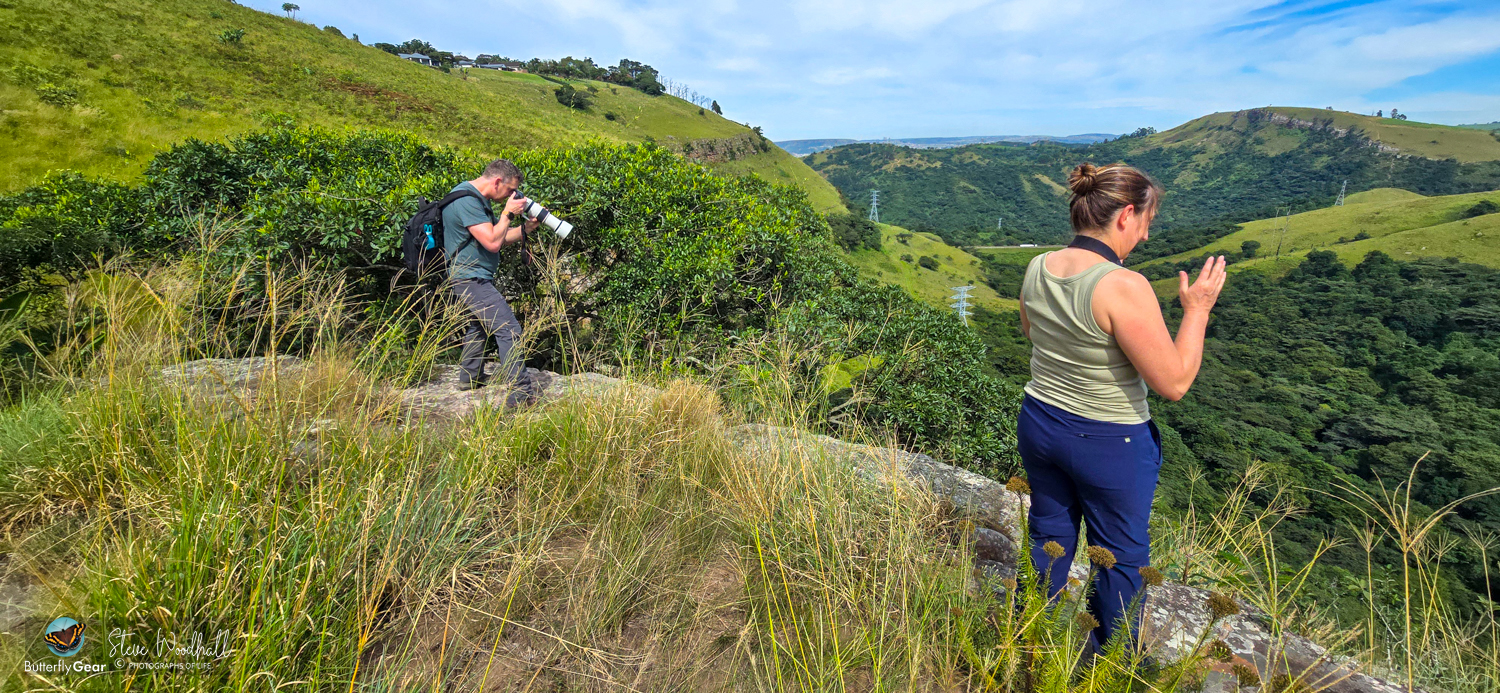
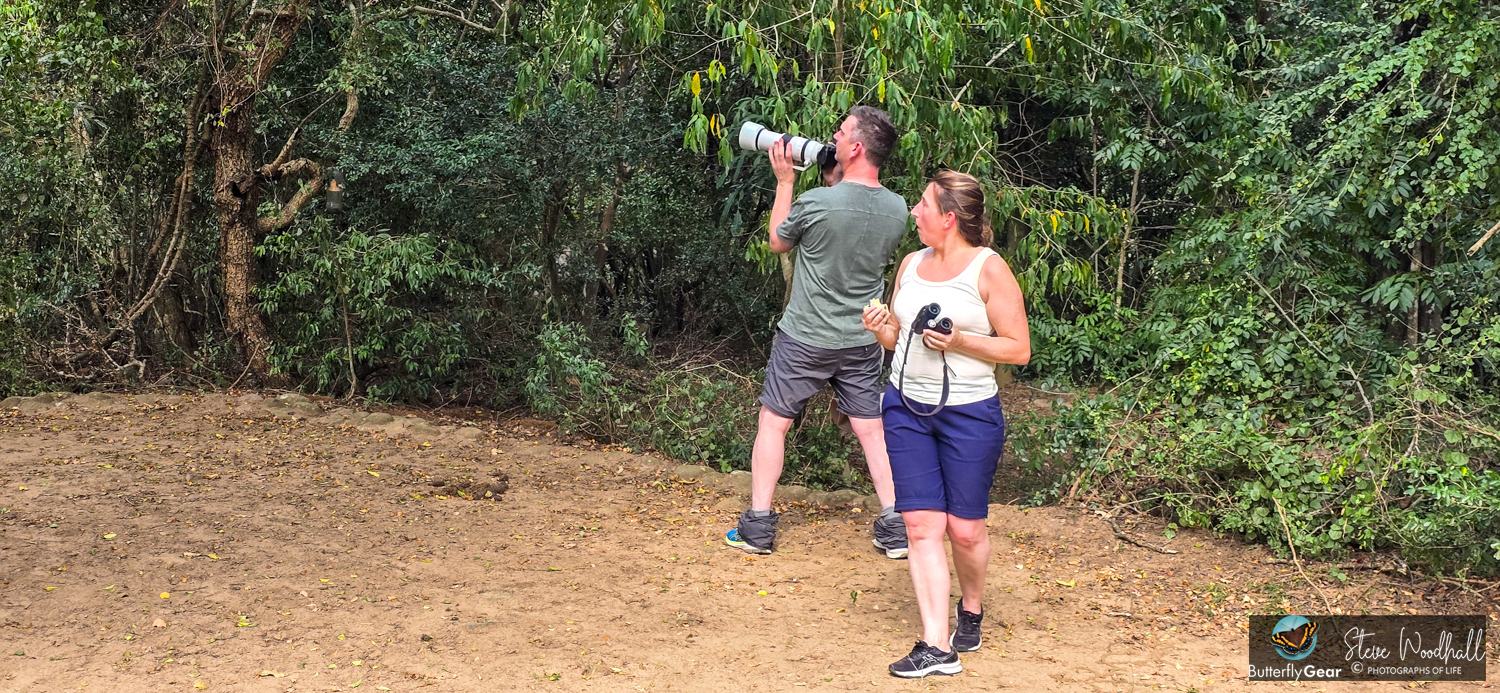
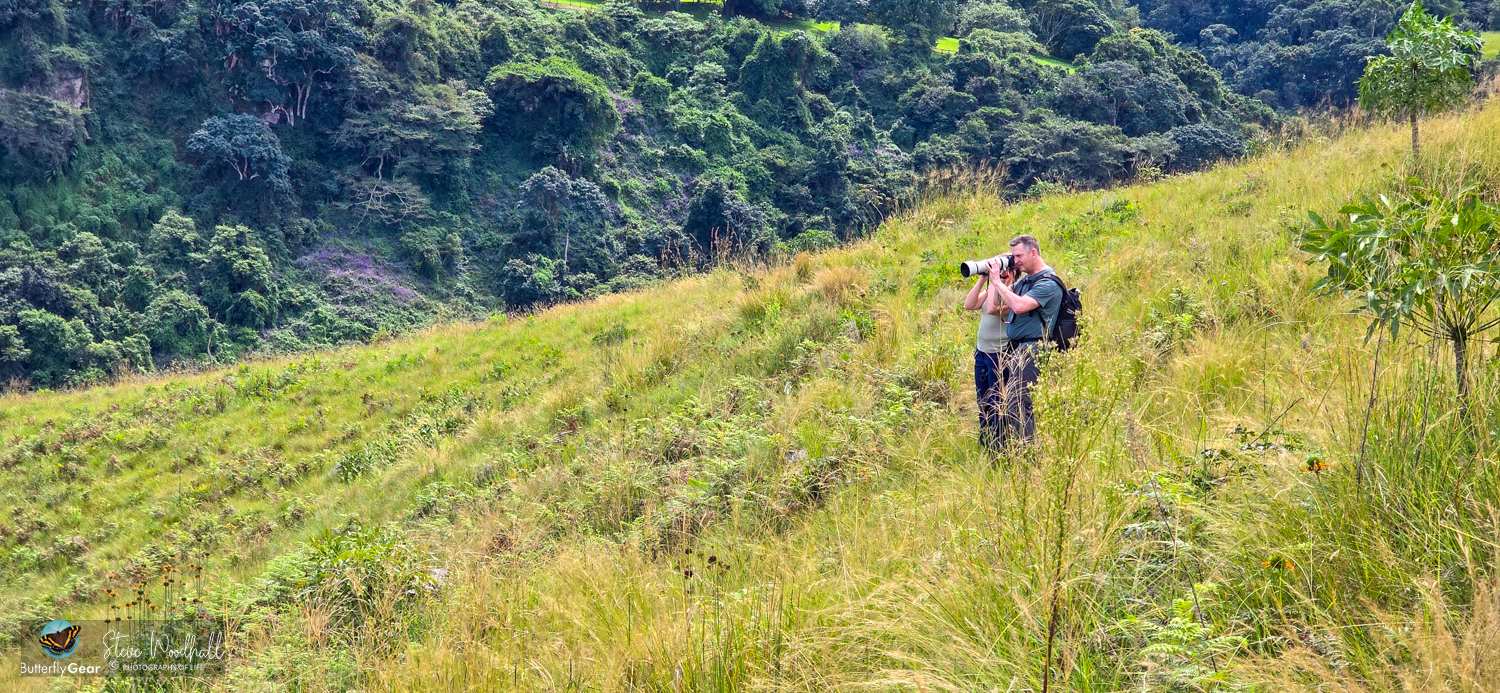
Paul and Ren in the grassland above Giba Gorge

By 10 a.m., we had reached the cliff edge overlooking the gorge, where the forest species began to appear. Satyr Charaxes Eriboea ethalion ethalion were dogfighting in the canopy, along with Blue-spotted Charaxes Charaxes cithaeron cithaeron and Southern White-barred Charaxes Charaxes brutus natalensis. Narrow Green-banded Swallowtails Papilio nireus lyaeus were also on the wing, as were Blue Spot (was Dark Blue) Pansies Junonia oenone oenone and Lowland Bush Beauty, Paralethe dendrophilus indosa. The latter is a South African endemic in a genus of its own. It is not especially rare, but South Africa is the only place where it can be seen.

Lowland Bush Beauty ♀

Paralethe dendrophilus indosa
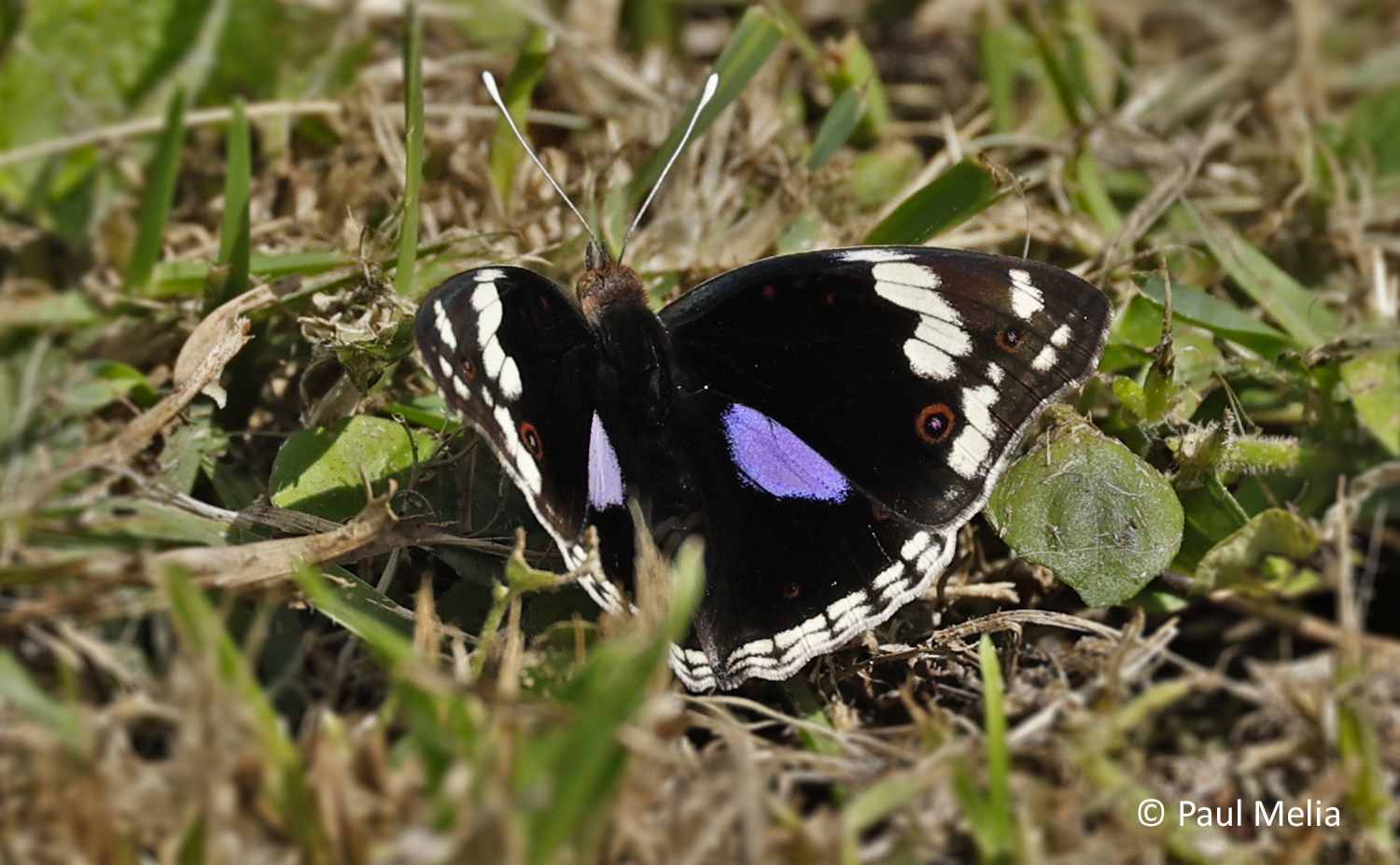
Blue Spot Pansy ♂

Junonia oenone oenone
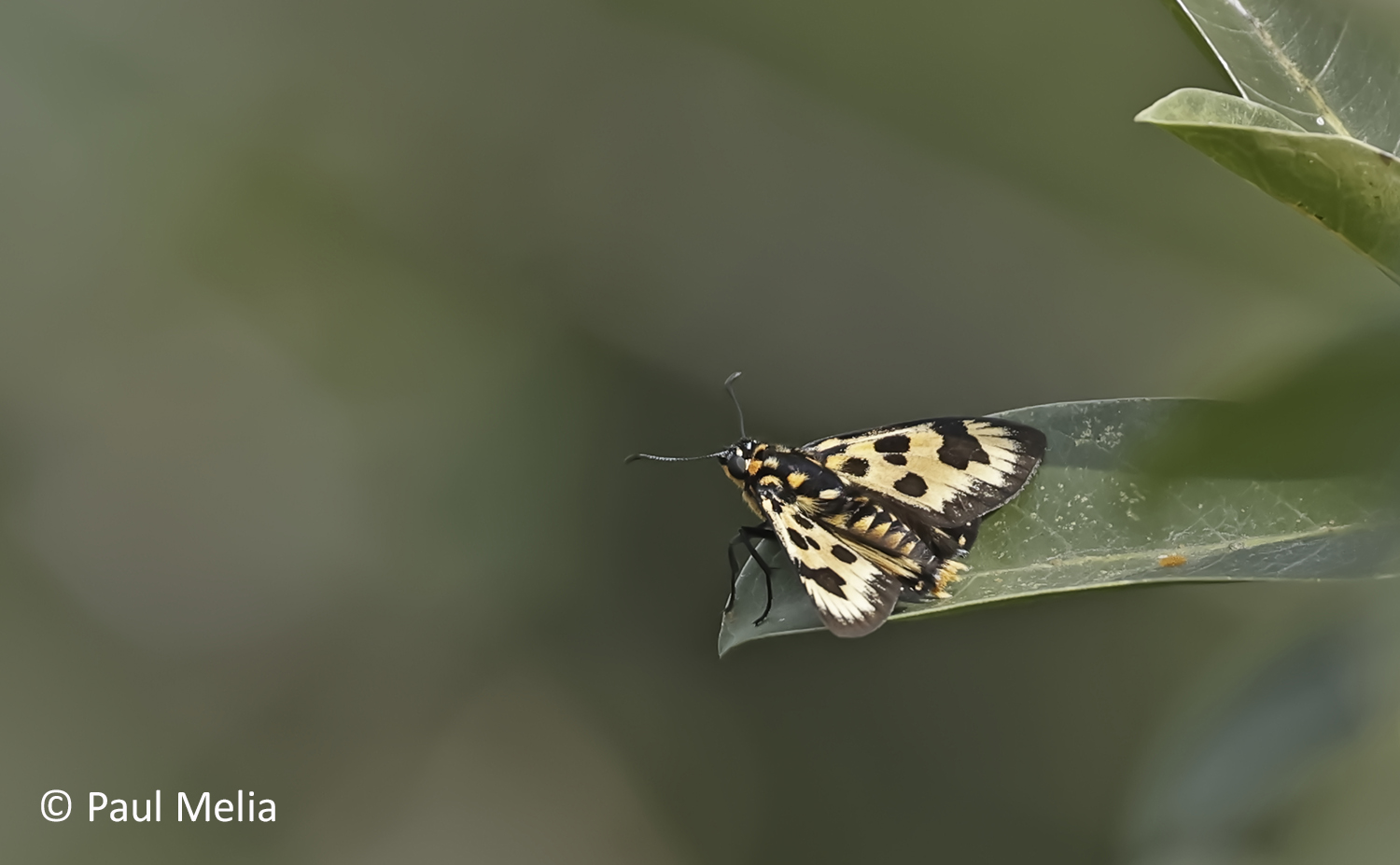
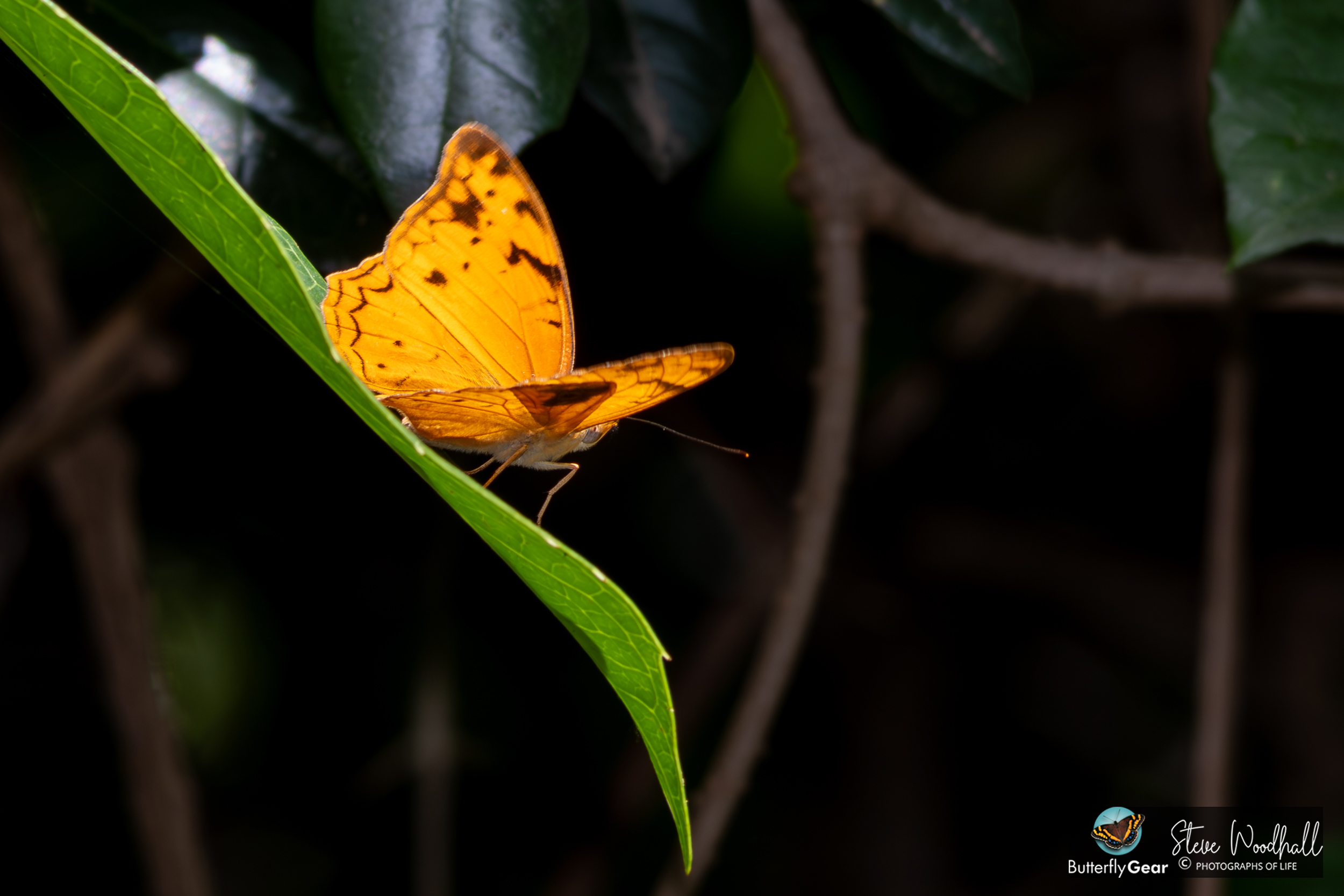
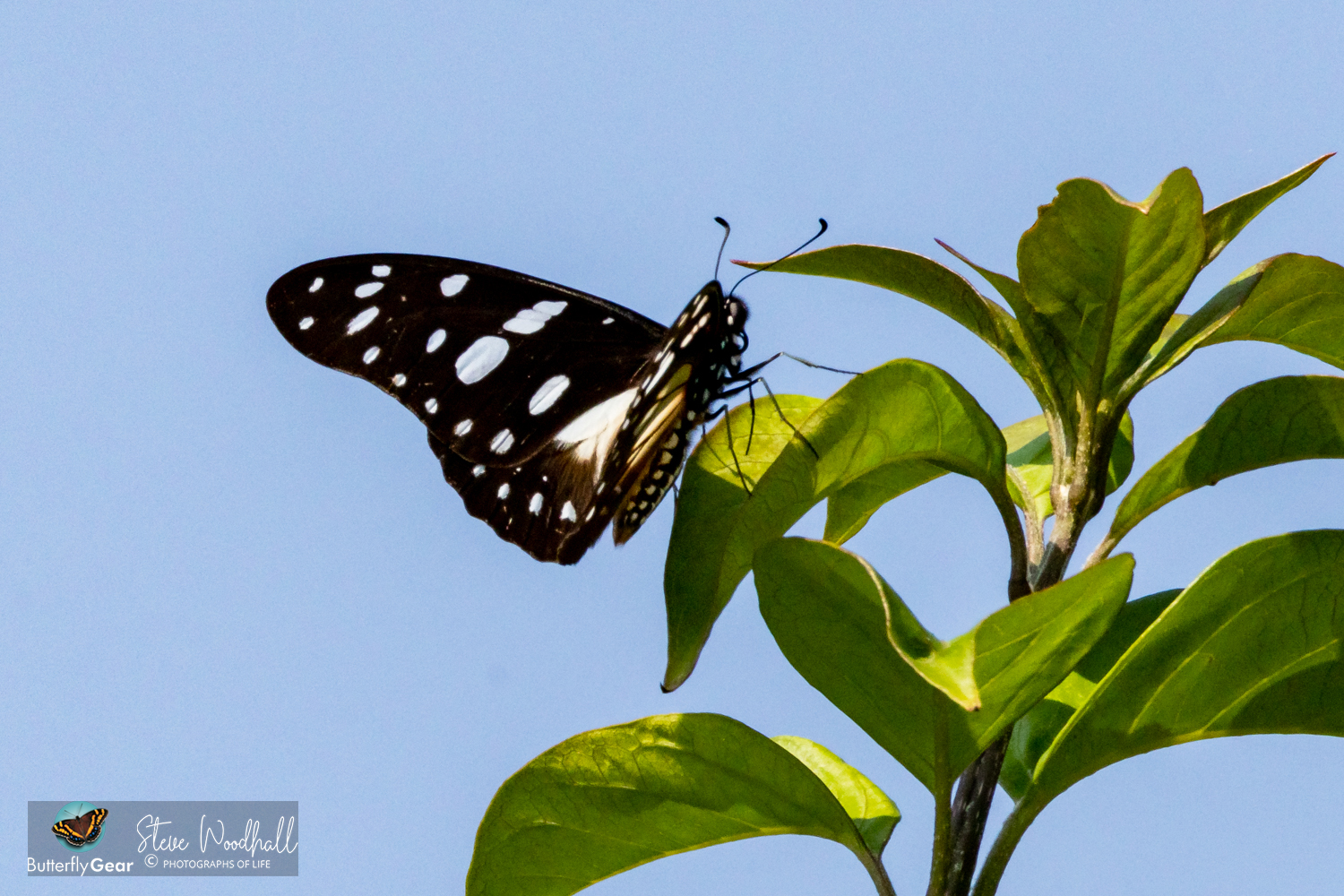
Paul then found the butterfly of the trip: another endemic, and this one genuinely rare — Bicoloured Skipper, Abantis bicolor. The genus occurs widely across tropical Africa, but this species is unmistakable, with its striking yellow-and-black spotted markings. I had been hoping we might encounter one, as I have seen them at that spot before, but it was especially pleasing that Paul found it himself. It was perched on a canopy leaf, neatly framed in his camera, when he asked what it was. Bicoloured Skipper is an IUCN Red Listed “Near Threatened” species, confined to a narrow belt of Scarp Forest and coastal grasslands in the Eastern Cape and KwaZulu-Natal.

Bicoloured Skipper ♂

Abantis bicolor

Photographing the Bicoloured Skipper

Watch the edge!
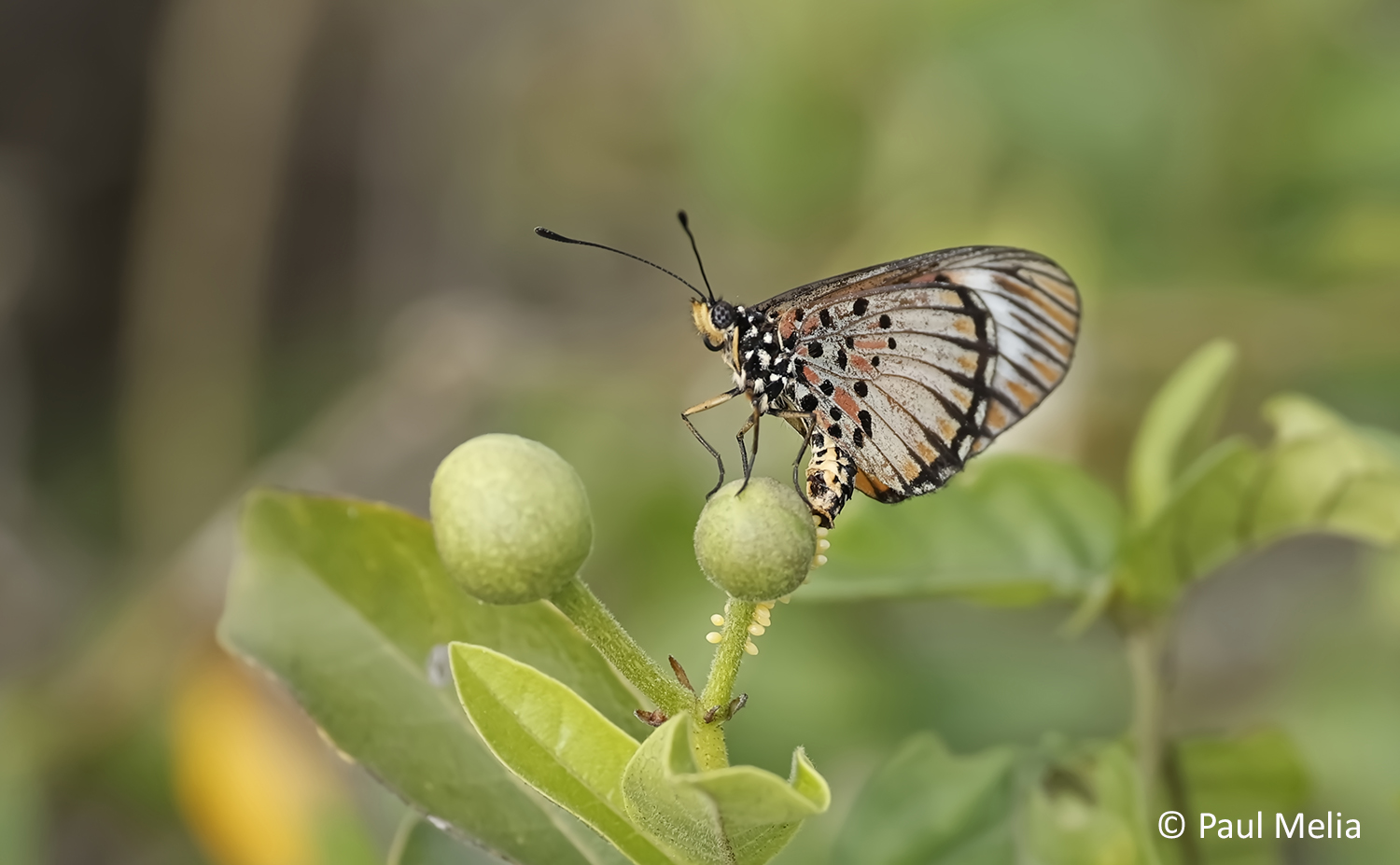
We spent a little more time exploring the clifftops. There, we found a female Blood-red Acraea Rubraea petraea laying eggs on the flower buds of an African Dog-rose Xylotheca kraussiana, its host plant, which grows among the fractured rocks along the cliff edge. We also found a Garden Commodore Precis archesia archesia in its maroon and blue winter form, nectaring on a Natal Blue Haze flowerhead. These are usually quite numerous at Giba, but on this occasion we saw only a couple.

Blood-red Acraea ♀ ovipositing on African Dog Rose

Rubraea petraea on Xylotheca kraussiana
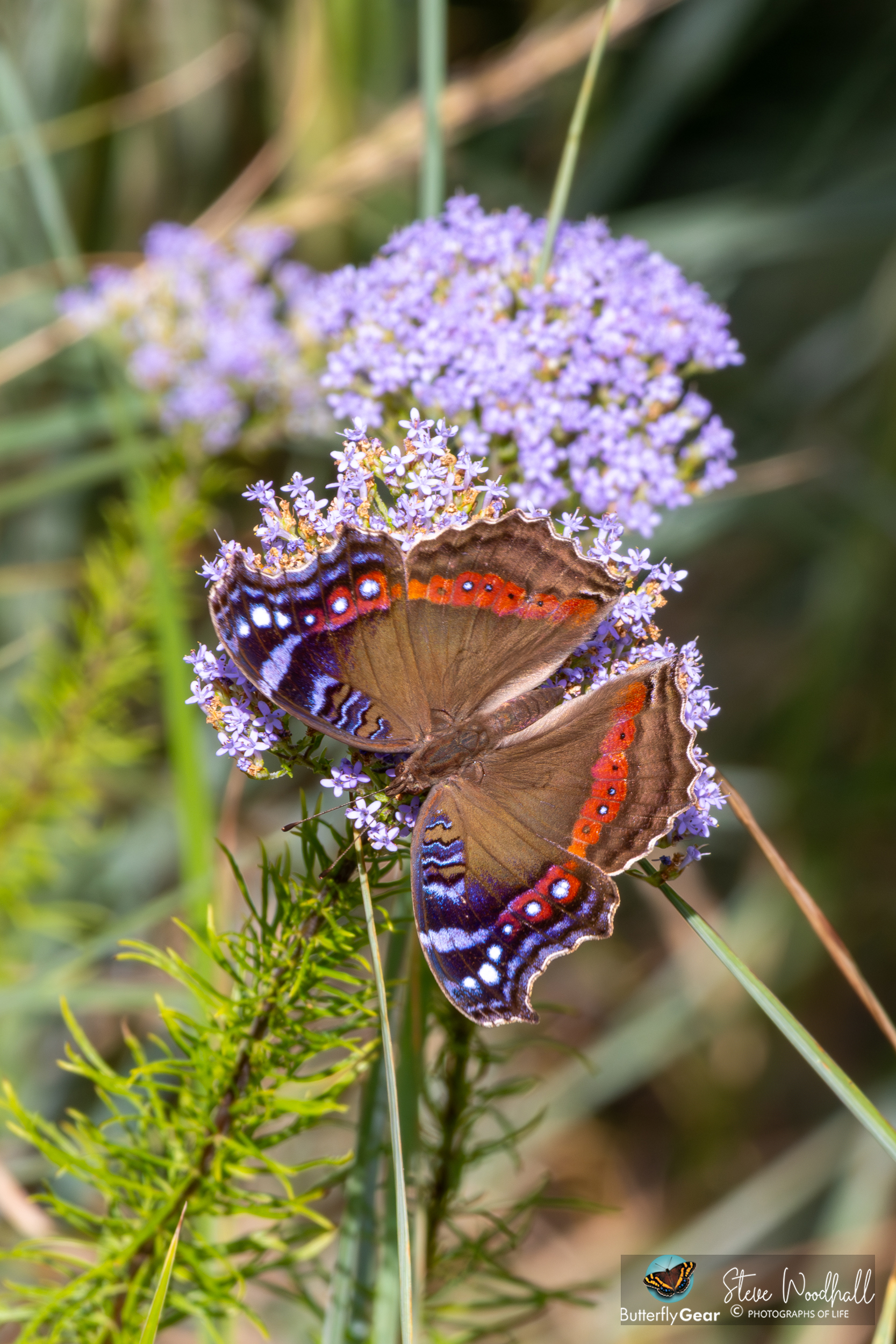
Garden Commodore on Natal Blue Haze

Precis archesia archesia form archesia ♂
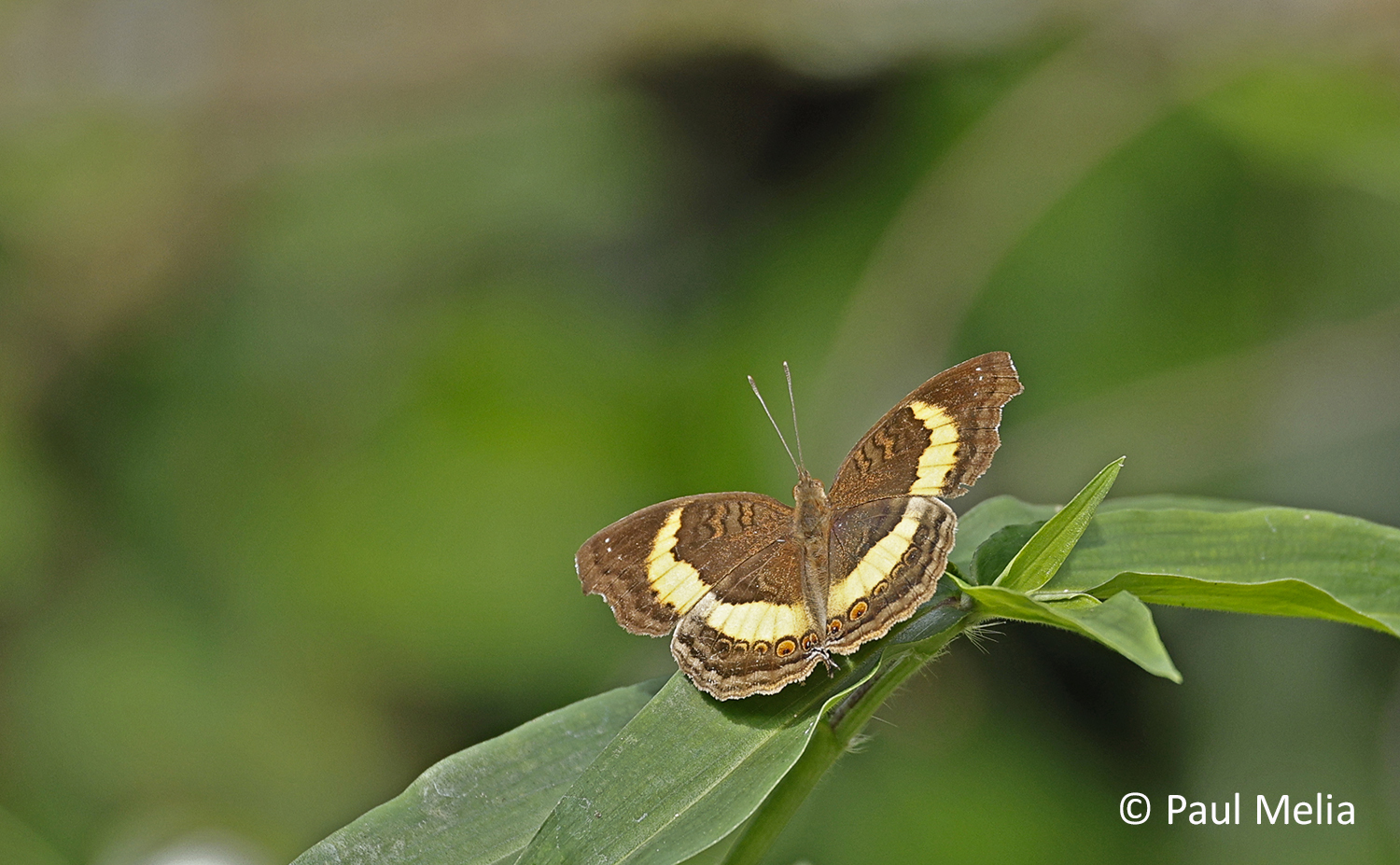
From there, we drove down to the car park at the start of the valley-bottom trail. This shady forest habitat offers a different mix of butterflies from the sunlit clifftops. Before setting off along the trail, we explored the riverine vegetation where the stream enters the forest. A Variable Diadem Hypolimnas anthedon wahlbergi was nectaring on Pink Hibiscus flowers growing in the marsh, but it flew off when we tried to photograph it. Spotted Brown Pansies Junonia natalica and Yellow-banded Pansies Junonia elgiva flew along the forest road. Farther down, near the Giba Stream crossing, we found more Bush Beauties and a single Eastern Battling Glider Cymothoë alcimeda trimeni. Occasionally, an Emperor Swallowtail Papilio ophidicephalus phalusco swept rapidly through the canopy above us, but none settled for a photograph.

Soldier Pansy (now Yellow-banded Pansy) ♂

Junonia elgiva
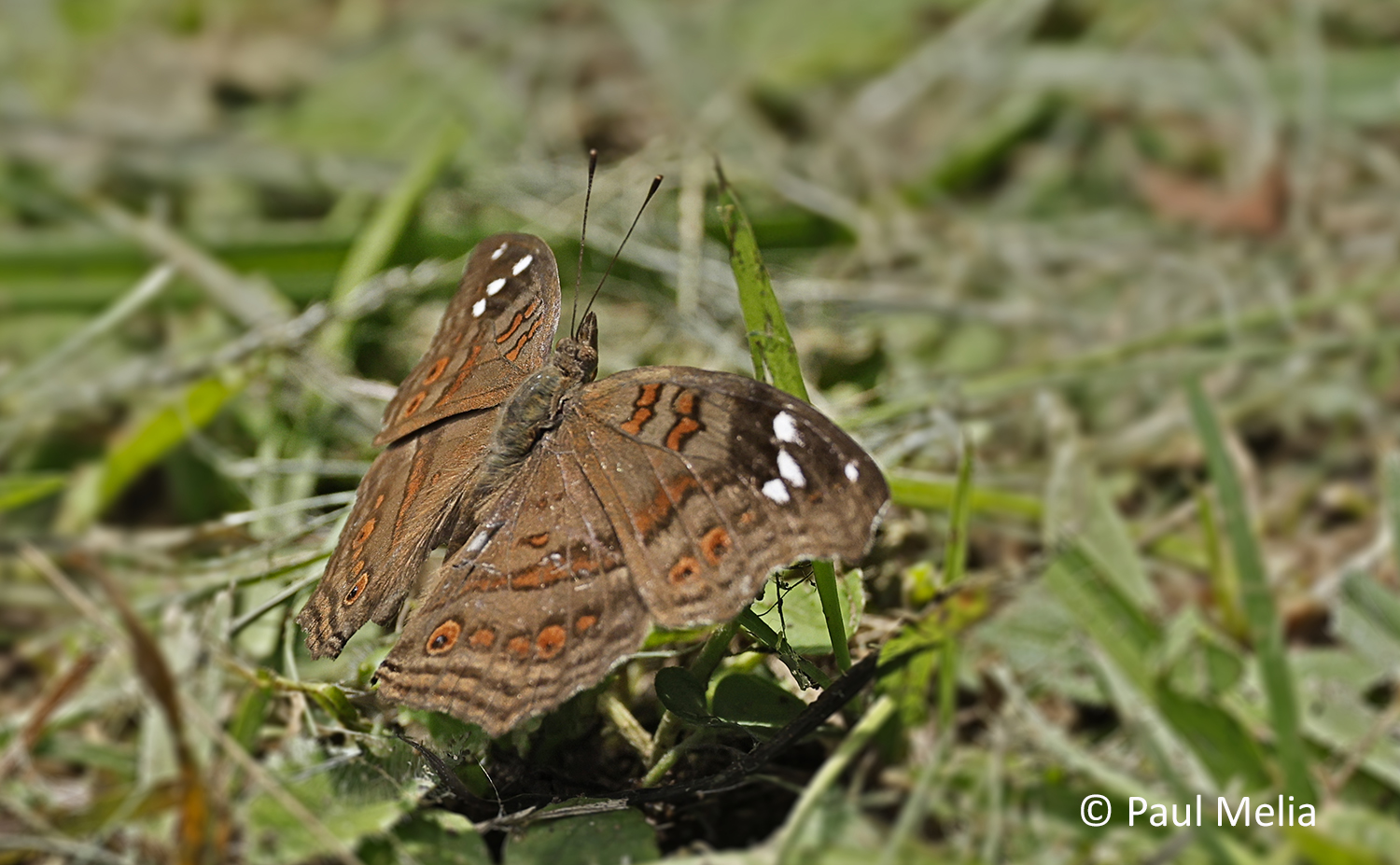
Spotted Brown Pansy ♂

Junonia natalica natalica

White-tipped Ash Blue ♂

Eicochrysops hippocrates
Eastern Battling Glider ♂

Cymothoë alcimeda trimeni
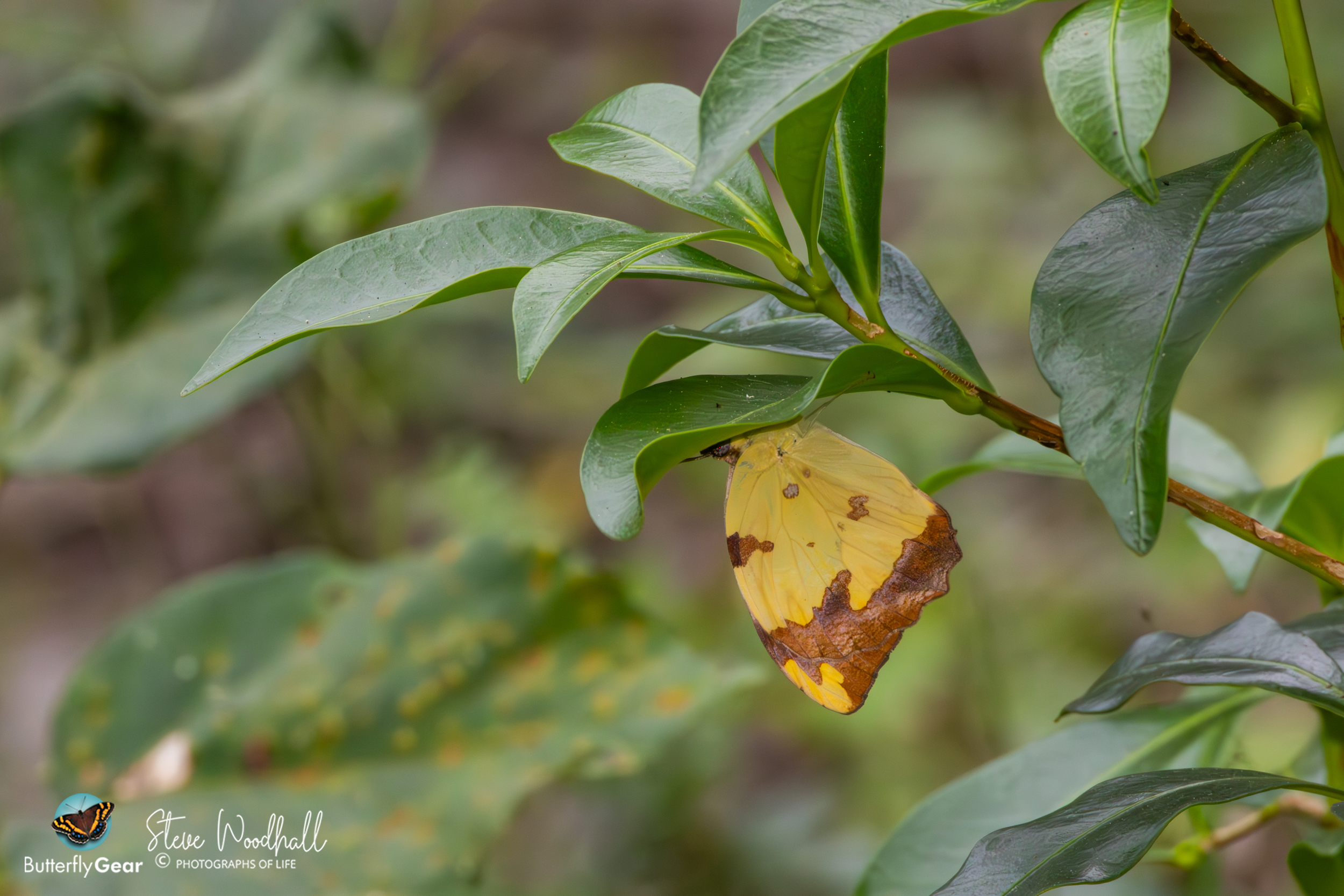
By 14:00, the sun was dropping lower and the bottom of the gorge (elevation ~ 500m) had fallen into shadow, bringing butterfly activity to a close. Before leaving, we spotted a White-tipped Ash Blue Eicochrysops hippocrates, a lycaenid whose caterpillars use aquatic plants growing along the streamside.

In total, we saw 30 species of butterfly at Giba Gorge.

Day 2 - Monday April 19

Kenneth Stainbank Nature Reserve

On our second day, I took Ren and Paul to Kenneth Stainbank Nature Reserve, a 253-hectare coastal forest–grassland mosaic 8 km south of Durban and 100–150 m above sea level.

BUTTERFLY SPECIES
0

The forecast promised cooler weather than the previous day, with highs of 20–26°C and afternoon cloud. We entered the reserve around 9:30 a.m. and parked near the gate, then followed the forest road northeast into woodland edged with grassy fields. Forest butterflies appeared almost at once, including Vine-leaf Vagrant, Eronia cleodora. Blotched Leopard, Lachnoptera ayresii, flew above the road; its host plant, Forest Peach, Rawsonia lucida, is common at Kenneth Stainbank. Variable Bush Browns, Bicyclus safitza safitza, bounced through the understorey, and we saw three swallowtail species: Citrus, Papilio demodocus; Southern Mocker, Papilio dardanus cenea; and Narrow Green-banded, Papilio nireus lyaeus.

Vine-leaf Vagrant ♀

Eronia cleodora

Blotched Leopard ♂

Lachnoptera ayresi
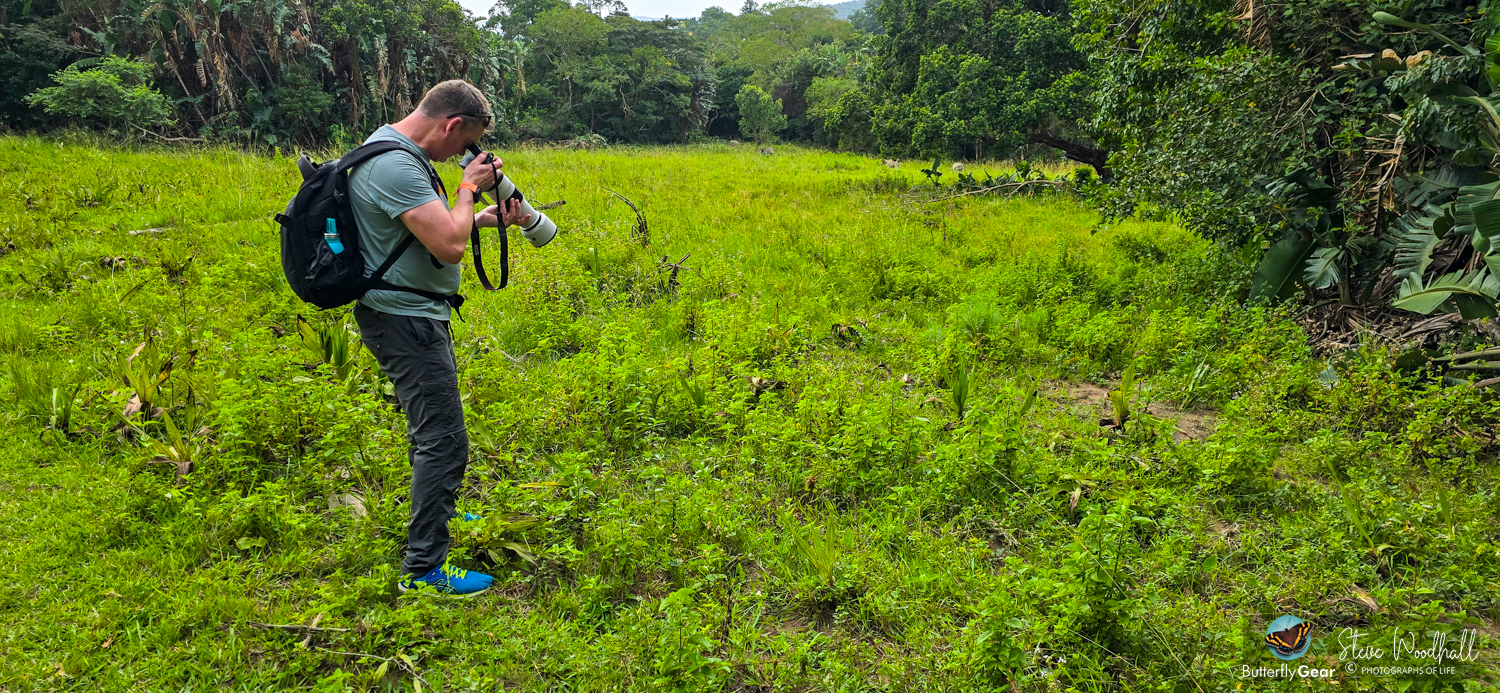
Paul in the grassland along the Kenneth Stainbank lower trail

Shooting an African Caper White
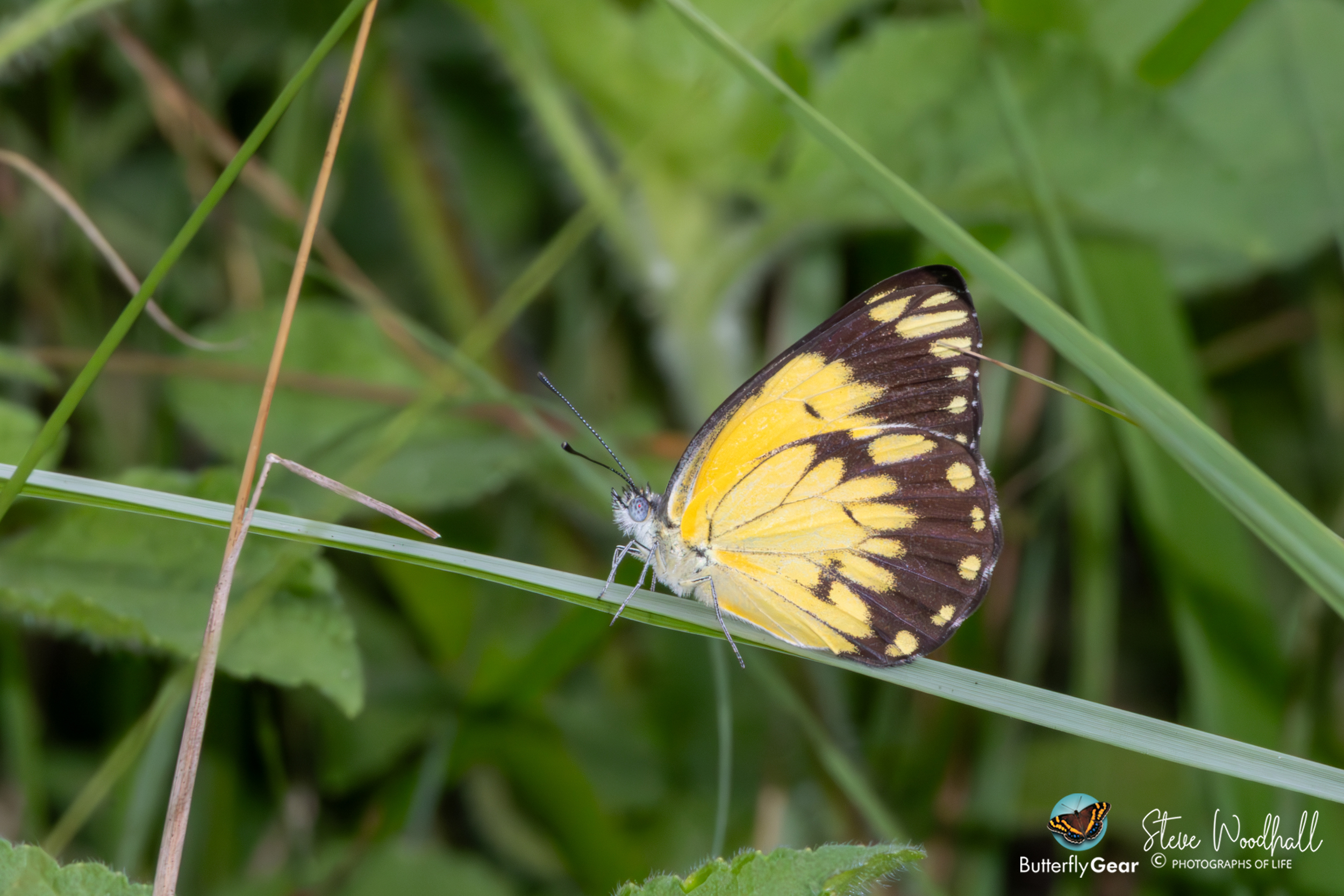
Farther along the road, we moved into the grassy areas. Several Pieridae appeared, including the striking Autumn-leaf Vagrant, Afrodryas leda, followed by Zebra White, Pinacopteryx eriphia eriphia. We also saw several African Caper Whites, Belenois creona severina, including beautifully marked females, as well as Eastern Pointed Caper Whites, Pseudanaphaeis gidica abyssinica, in their transitional dry-season form.

African Caper White ♀

Belenois creona severina
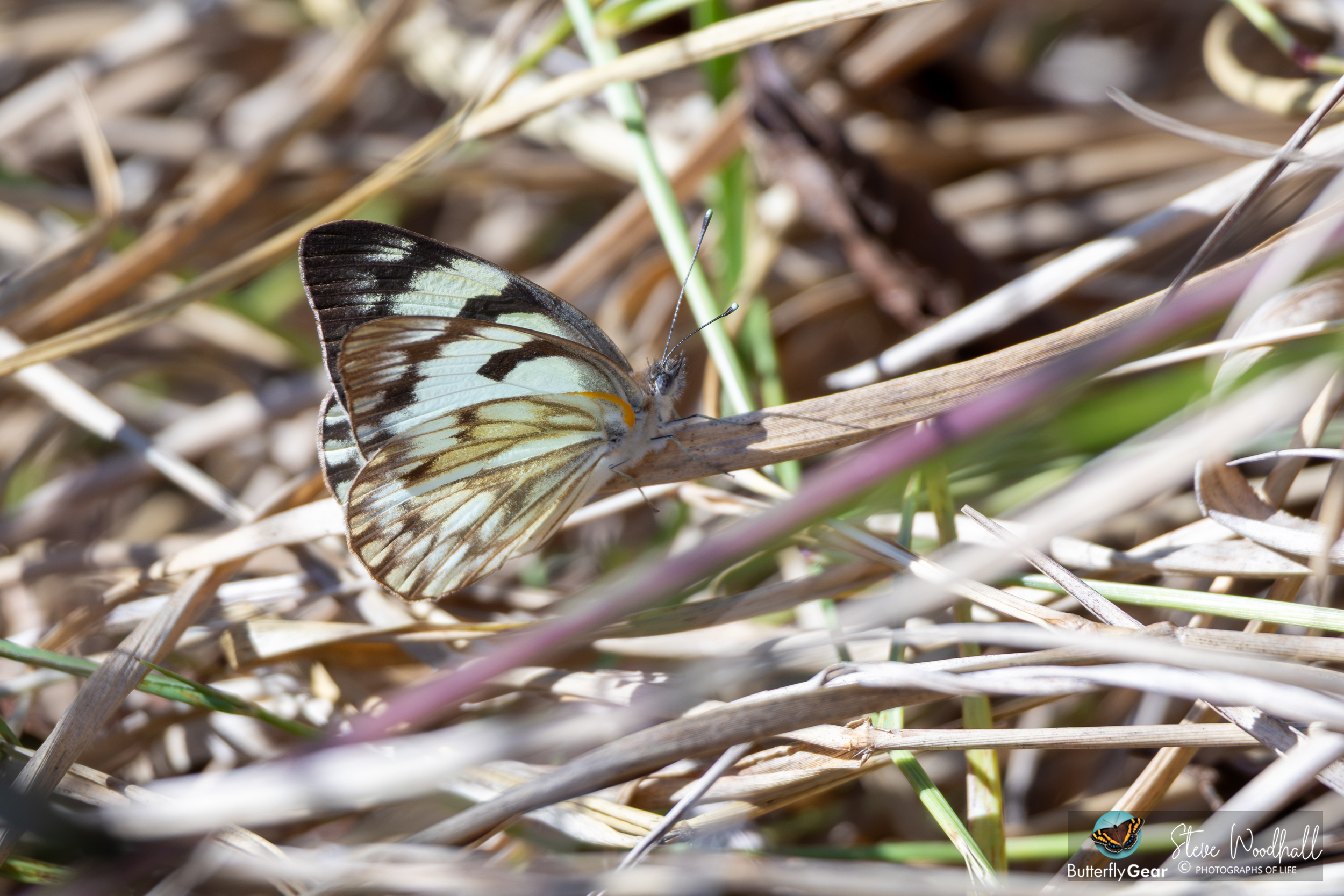
Eastern Pointed Caper White ♀

Pseudanaphaeis gidica abyssinica
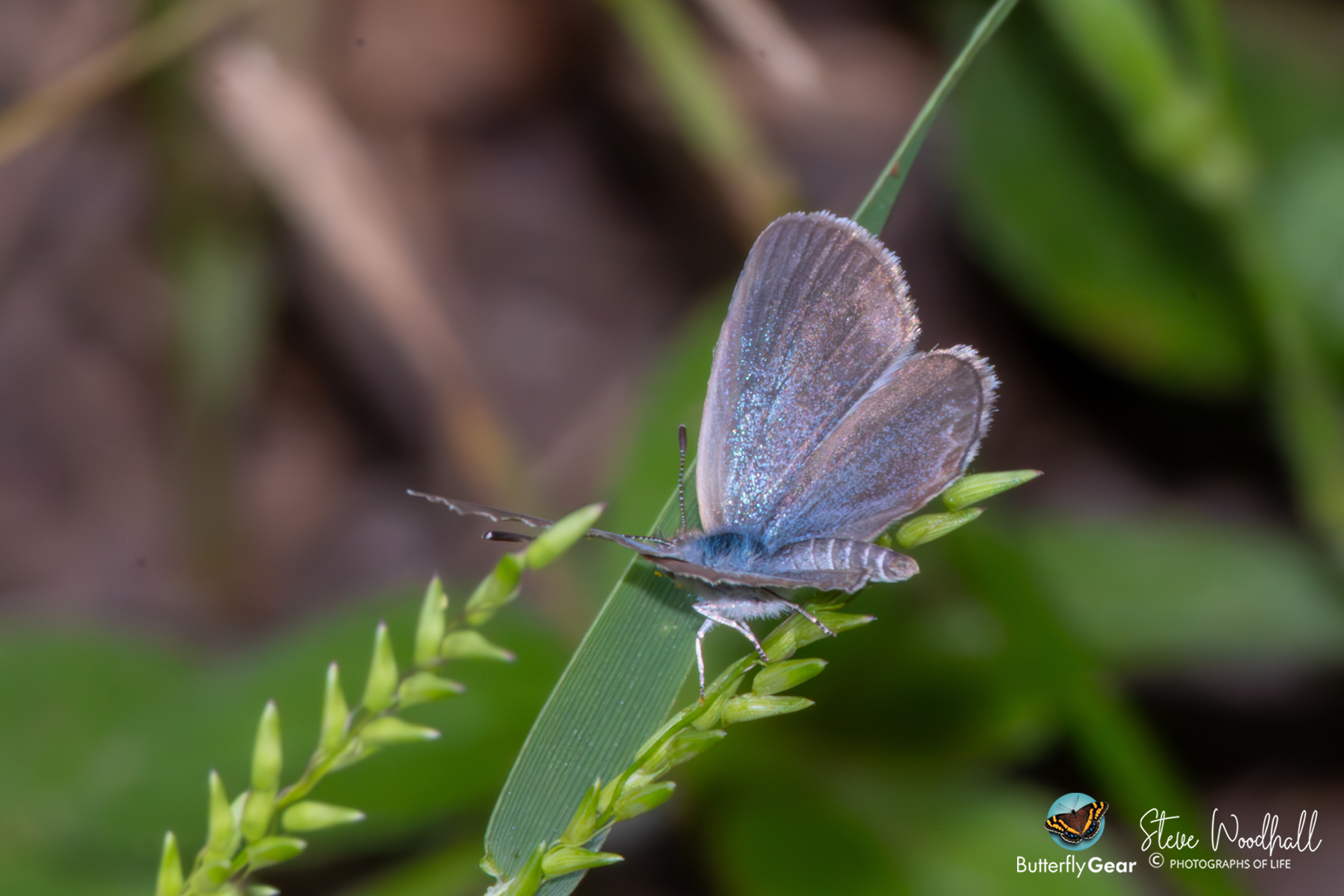
Grasslands often support Blues in the Polyommatinae subfamily of Lycaenidae, and we found two species there: African Clover Blue, Zizina otis antanossa, and Meadow Blue, Cupidopsis cissus cissus.

African Clover Blue ♂

Zizina otis antanossa
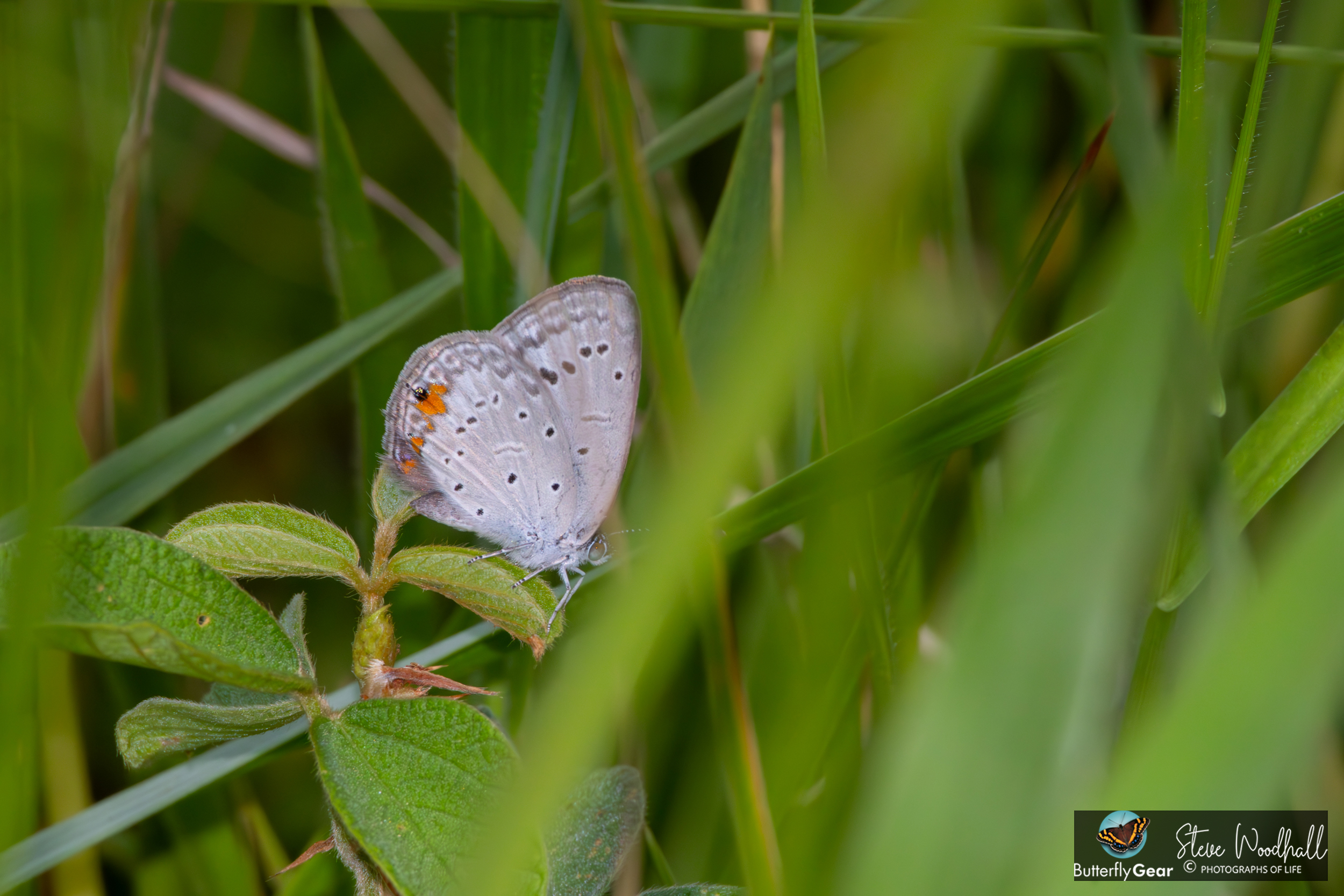
Meadow Blue ♀

Cupidopsis cissus cissus
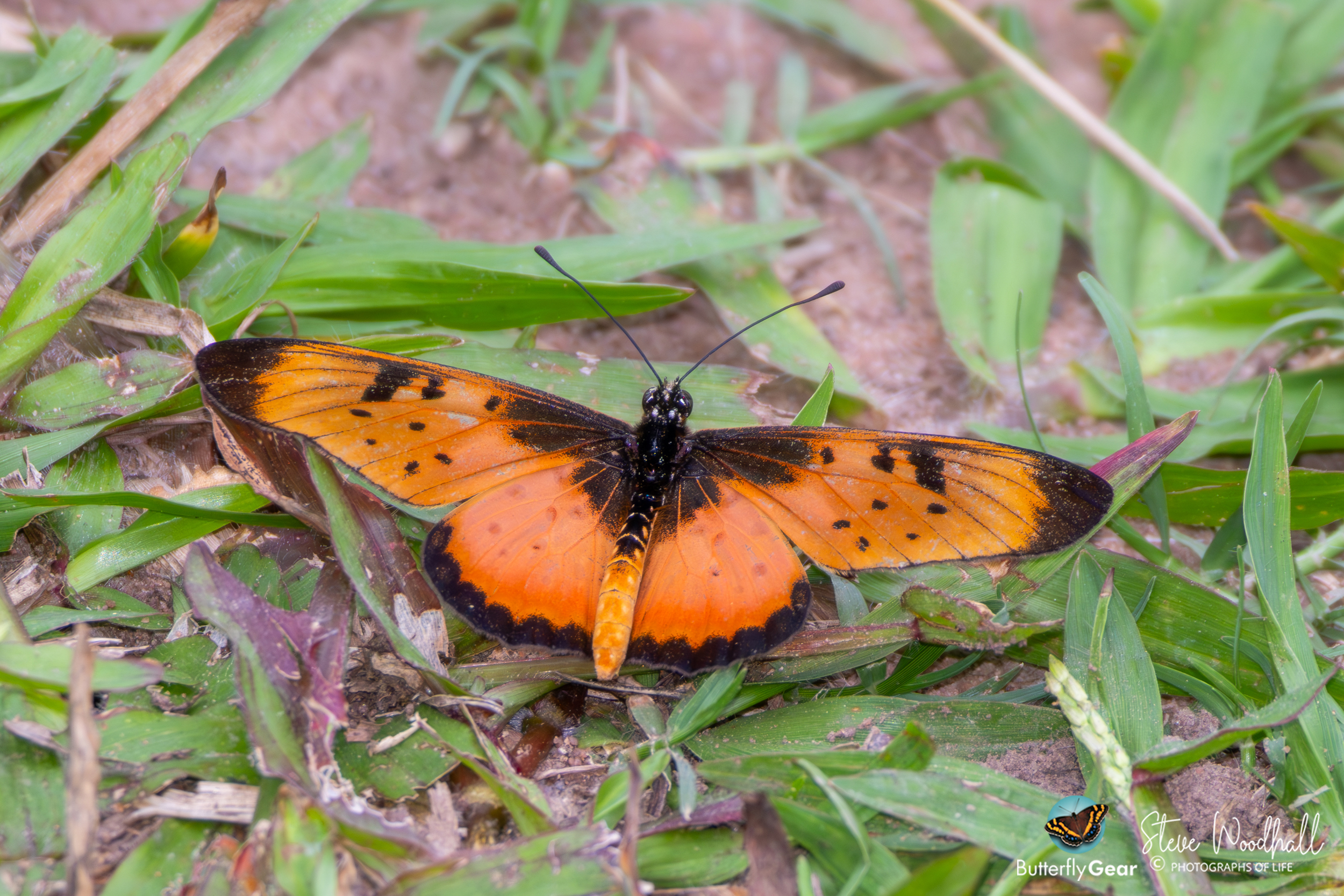
We returned to the car and drove to the parking area near the lower picnic site. There, we hung a banana-baited Charaxes trap before walking uphill to the upper picnic site. The path passed through more grassland, then a band of dense woodland, before reaching the site where we had lunch and watched butterflies in the canopy. Near one of the staff houses, flowering plants had attracted a male Black-based Acraea, Stephenia natalica, along with a few African Grass Blues, Zizeeria knysna knysna. A male African Grass Yellow Eurema floricola floricola was hiding under a leaf nearby.

Black-based Acraea ♂

Stephenia natalica
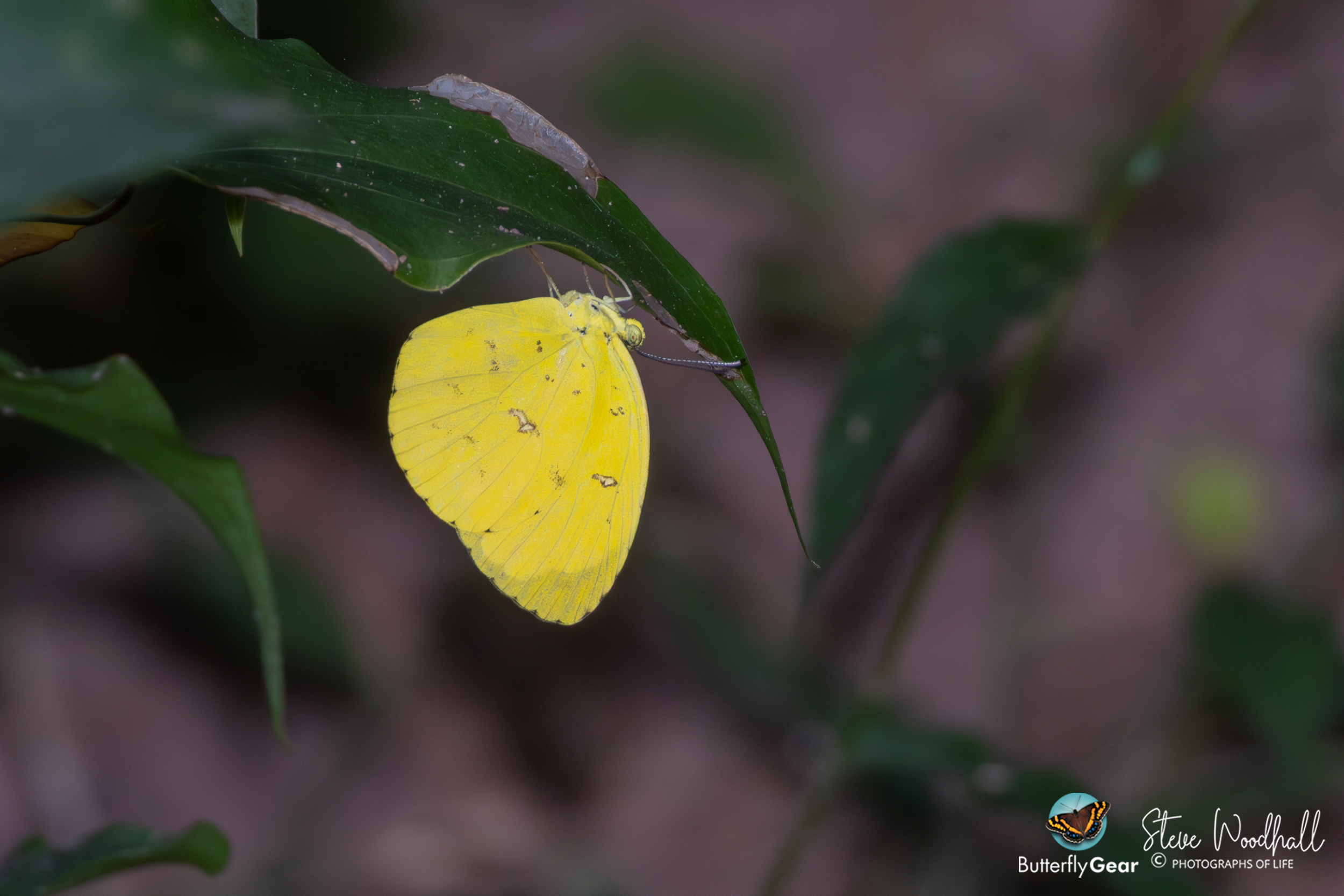
African Grass Yellow ♂

Eurema floricola floricola
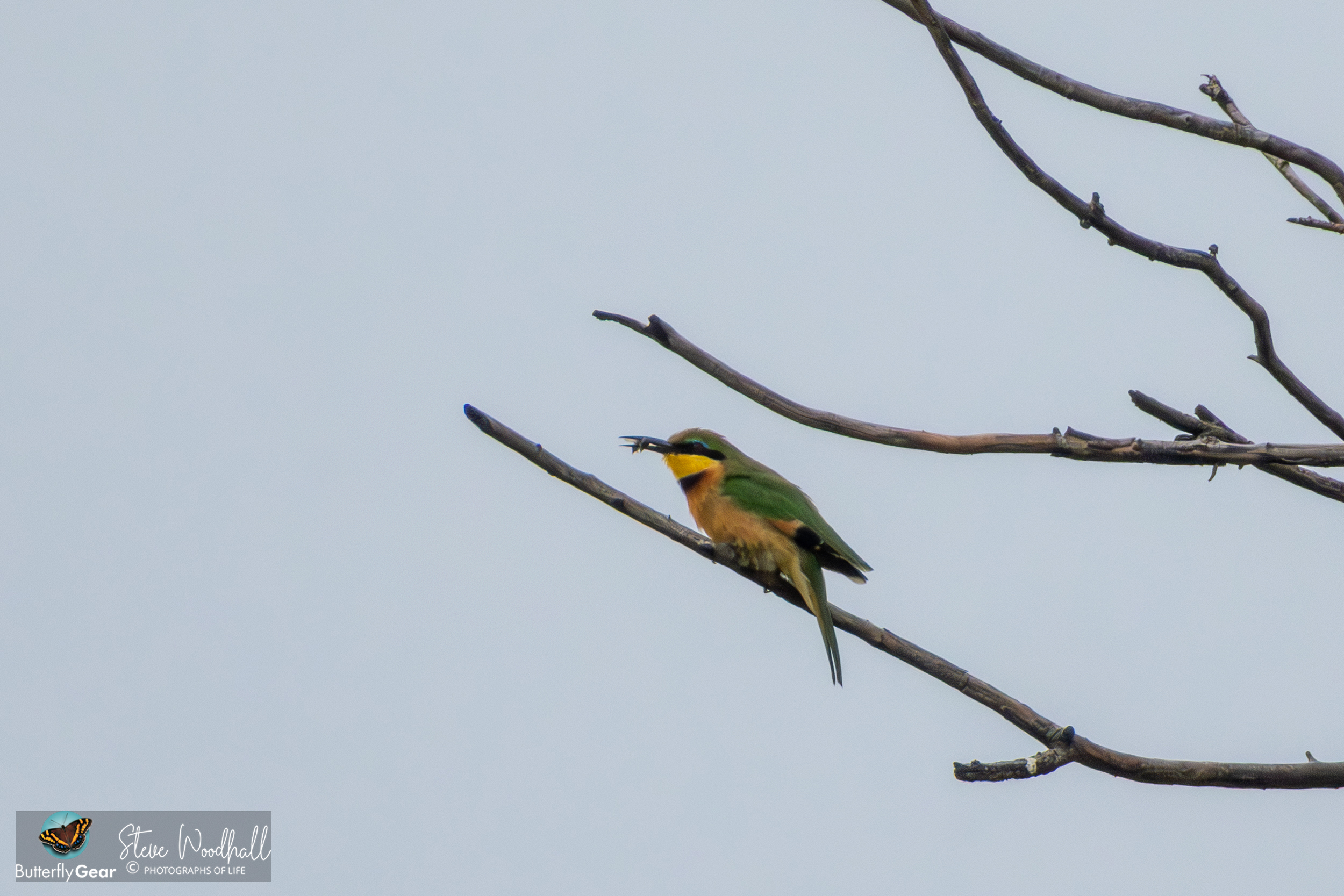
Next, we followed a road through the central grassland toward a dam and a spot where I often find Little Bee-eaters, Merops pusillus. Although this was not a birding trip, Ren was keen to see them. We found the bee-eaters along a grassy rise, perched on bushes and hawking insects in the air. The grasslands also held attractive Blues, including Pale Smoky Blue, Euchrysops barkeri.

Little Bee-eater

Merops pusillus

Pale Smoky Blue

Euchrysops barkeri
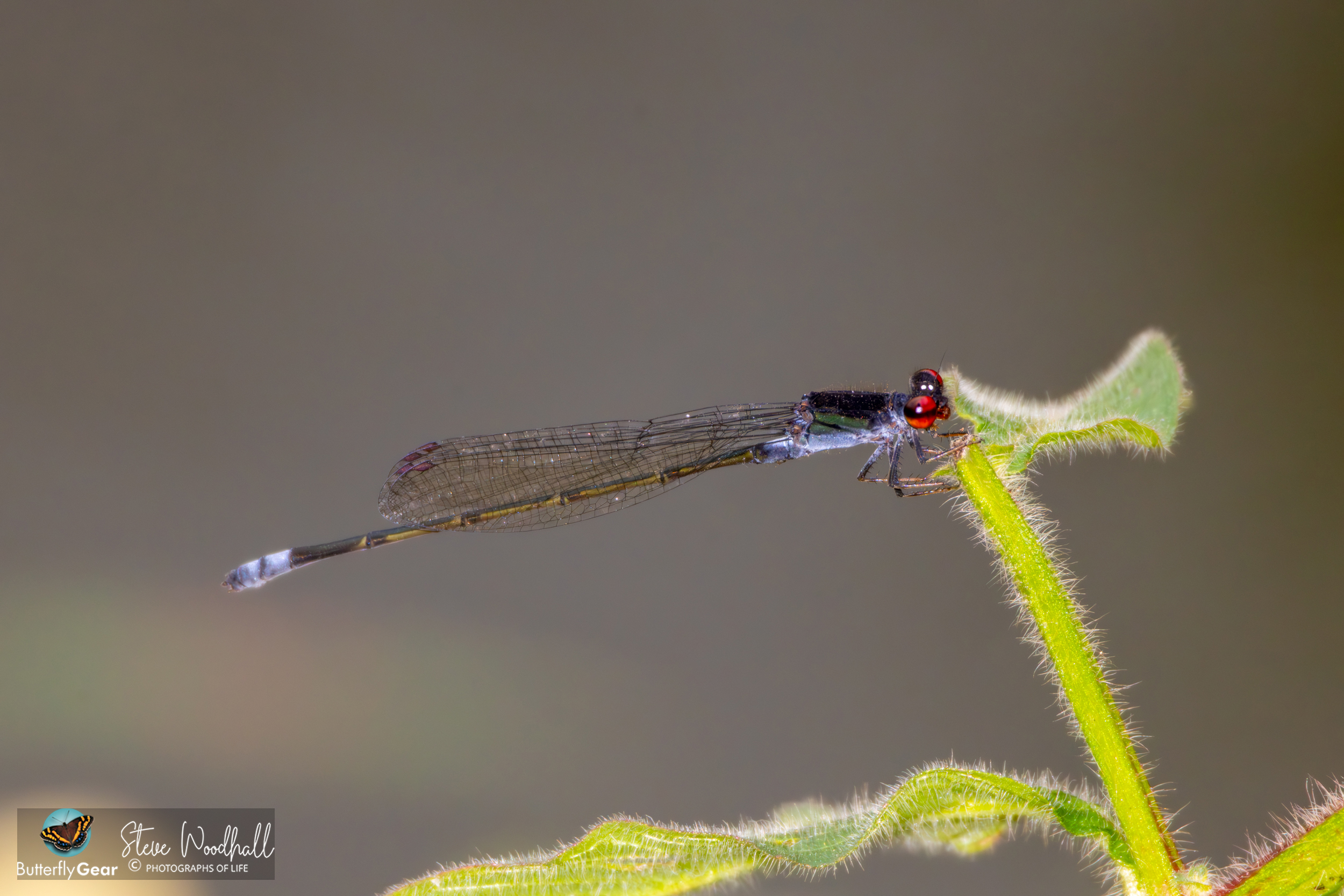
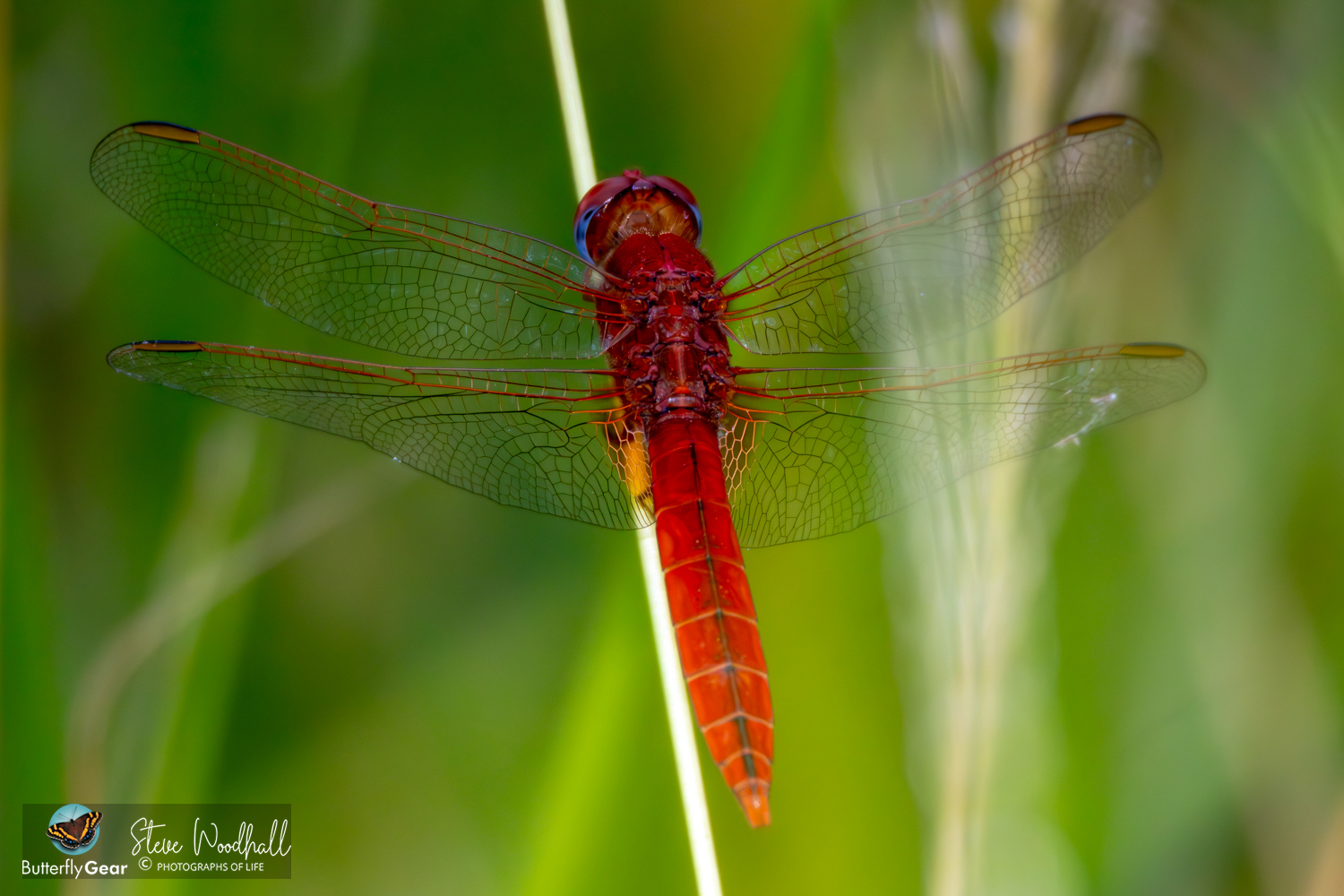
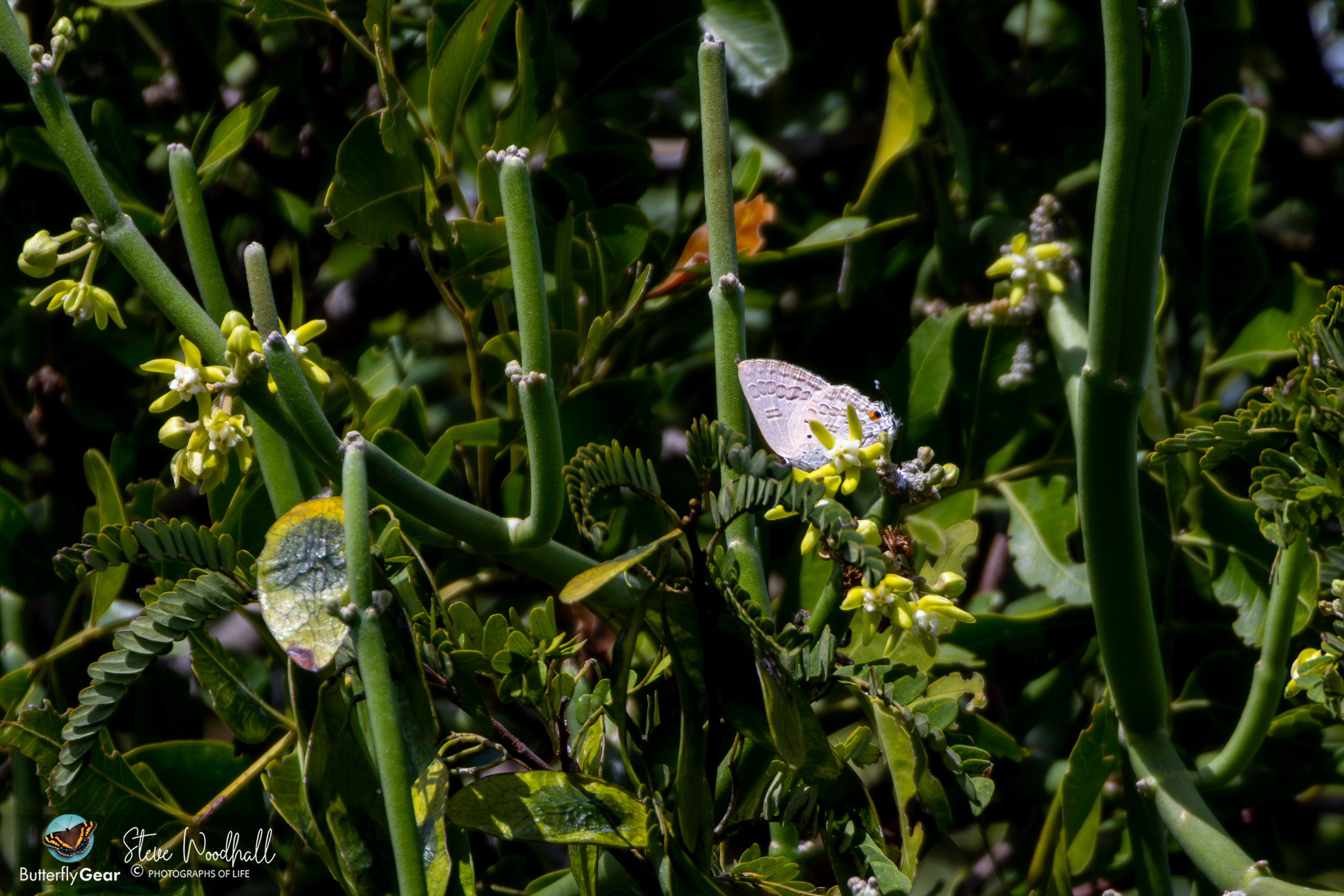
At the dam, we found a female Spotted Ciliate Blue, Anthene larydas, along with several interesting dragonflies and damselflies. The Broad Scarlet Crocothemis erythraea is an eye-catching red against the green aquatic grasses. Swarthy Sprite Pseudagrion hageni is quite uncommon in the Durban area – it has conspicuous red eyes and there are always a few of them near that dam.

Back at the car park, we found a Pearl Charaxes, Charaxes varanes varanes, in the trap. After drinking the alcoholic banana bait all day, he was unusually tame and posed well for photos.

We recorded 31 species of butterfly in Kenneth Stainbank Nature Reserve.

Swarthy Sprite ♂

Pseudagrion hageni

Broad Scarlet ♂

Crocothemis erythraea
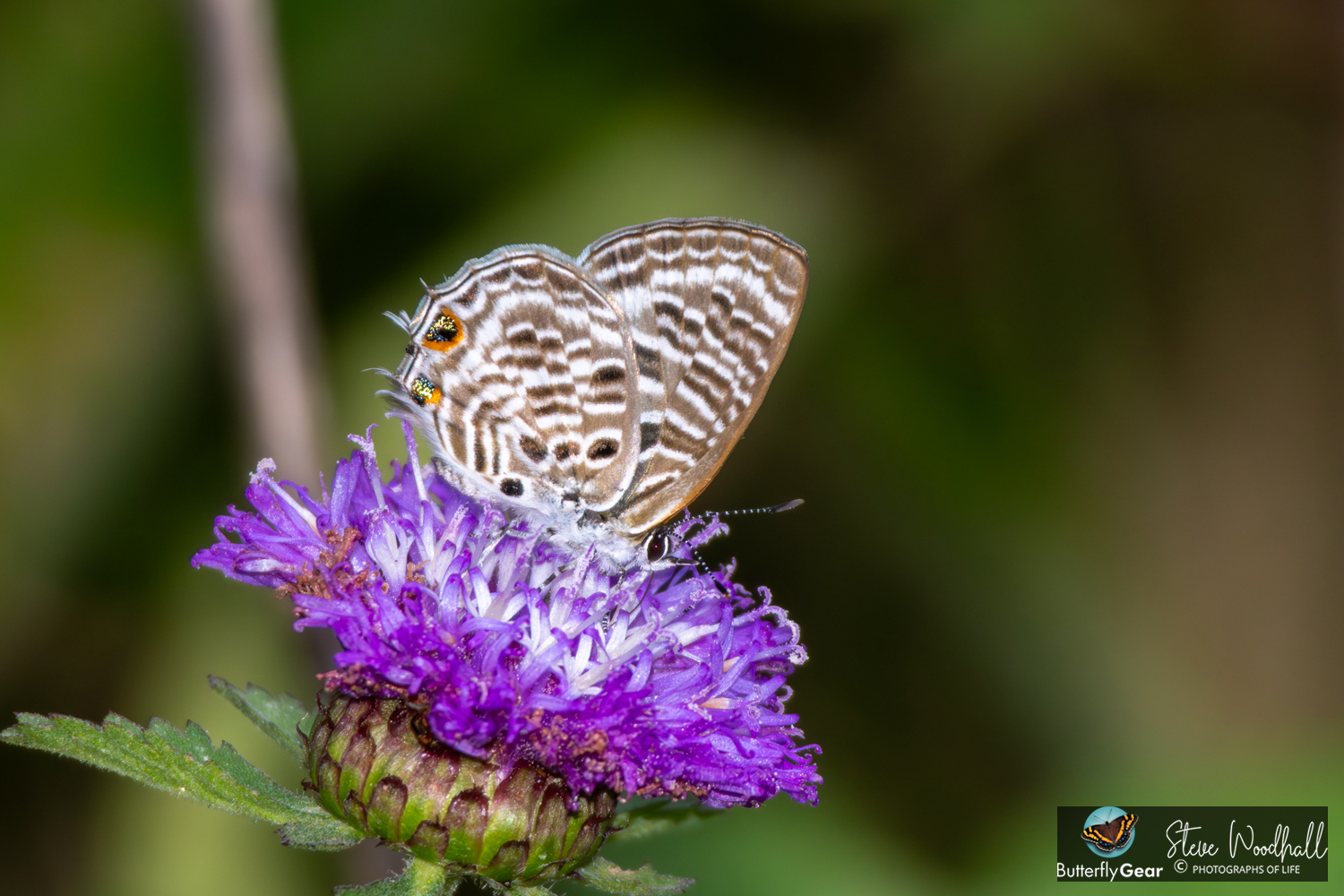
Spotted Ciliate Blue/Hairtail ♀

Anthene larydas
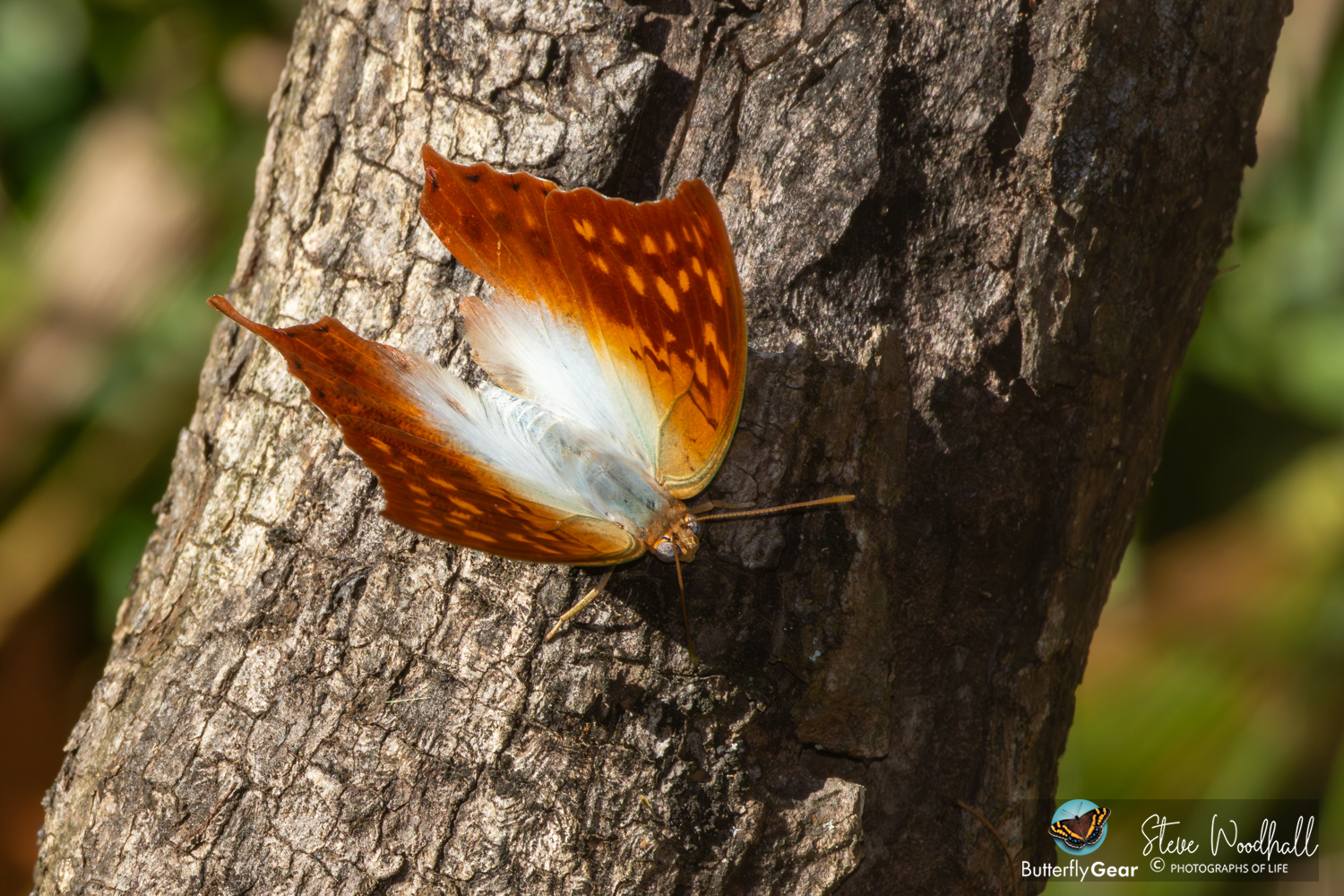
White Pearl Charaxes ♂

Charaxes varanes varanes

Day 3 - Wednesday, April 15

Harold Johnson Nature Reserve

We needed an early start for the 90-minute drive from Gillitts to Harold Johnson Nature Reserve at Tugela Mouth, allowing time for coffee and breakfast on the way. The reserve is situated on the south bank of the Tugela River, the border between the old British ‘Natal’ colony and Zululand. It is where the Anglo-Zulu War began when Lord Chelmsford invaded in January 1879.

We reached the main picnic site and gazebo at around 8:30 a.m., resisting the temptation to stop at the clearings on the way in. There was not much flying along the approach road, but by the time we reached the gazebo-cum-office, the fun had started.

BUTTERFLY SPECIES
0

While we were setting up some traps, the first Charaxes appeared: a Club-tailed, Polyura zoolina. We got busy with my usual start-up at Harold Johnson: mooching around the big hilltop clearing and watching the forest edges, waiting for the big game to show up. Eastern Dotted Borders, Mylothris agathina agathina, floated around, as did Vine-leaf Vagrant, Eronia cleodora. Citrus Swallowtails, Papilio demodocus demodocus, were hilltopping, and there were loads of Southern Golden Pipers, Eurytela dryope angulata. A Shade Swallowtail, Papilio constantinus constantinus, appeared; this is one swallowtail that is not often seen.

Club-tailed Charaxes ♂

Polyura zoolina
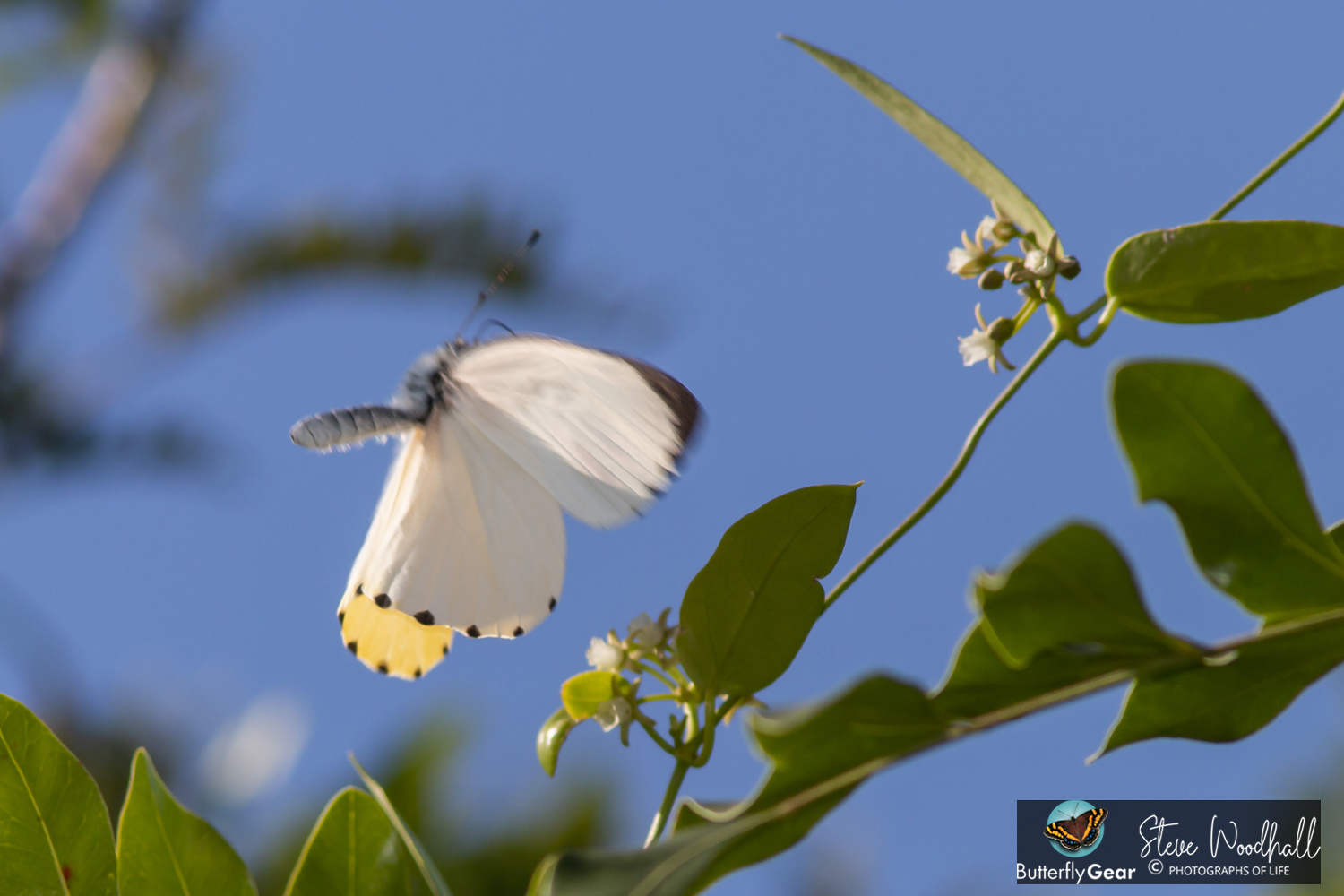
Eastern Dotted Border ♀

Mylothris agathina agathina

Vine-leaf Vagrant ♂

Eronia cleodora
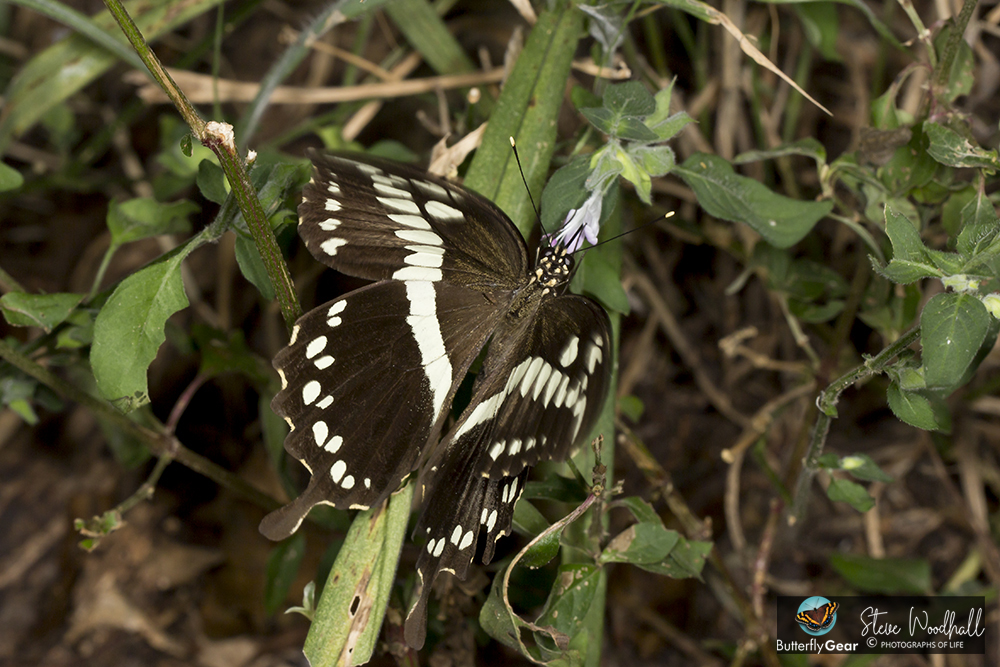
Shade Swallowtail ♀

Papilio constantinus constantinus
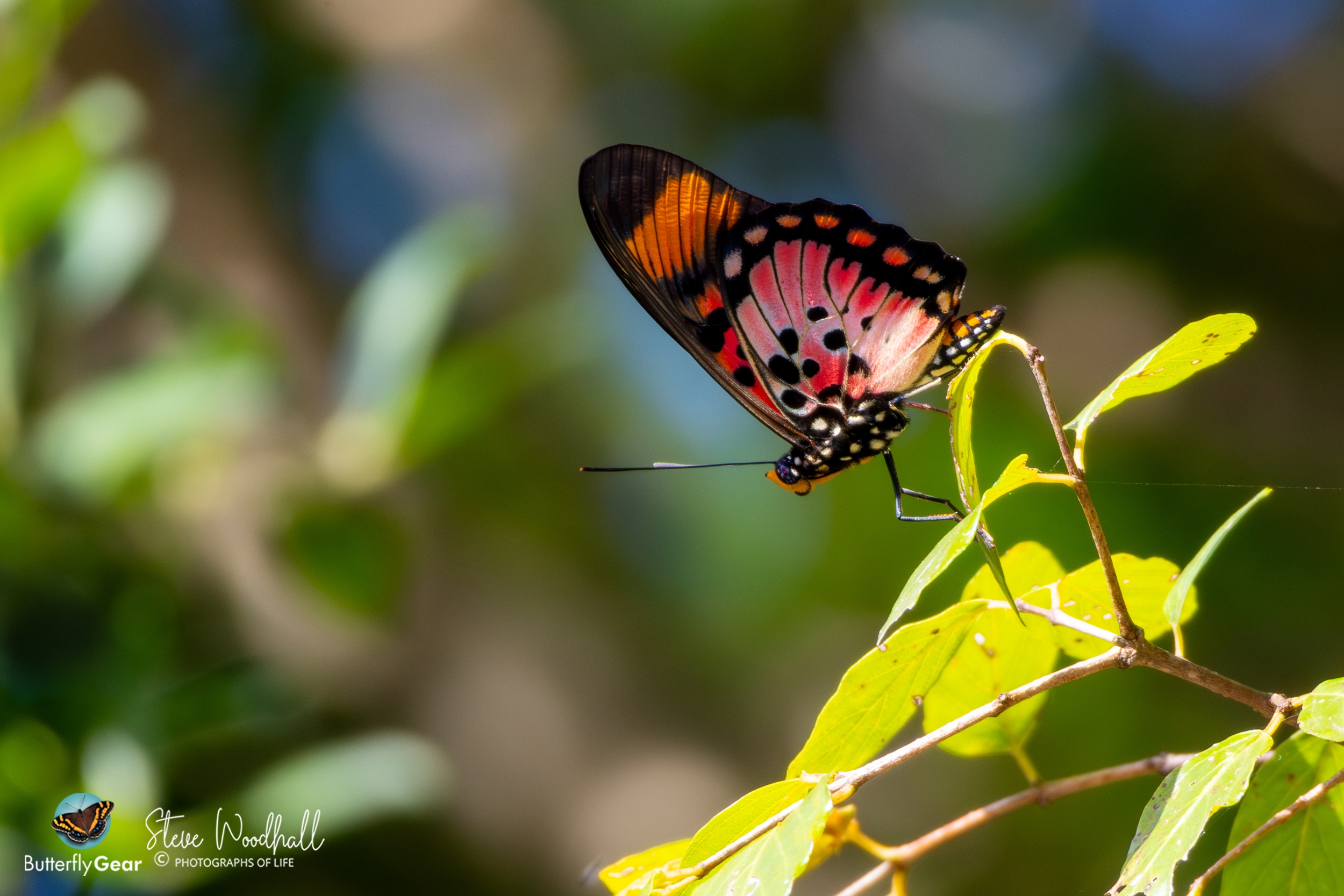
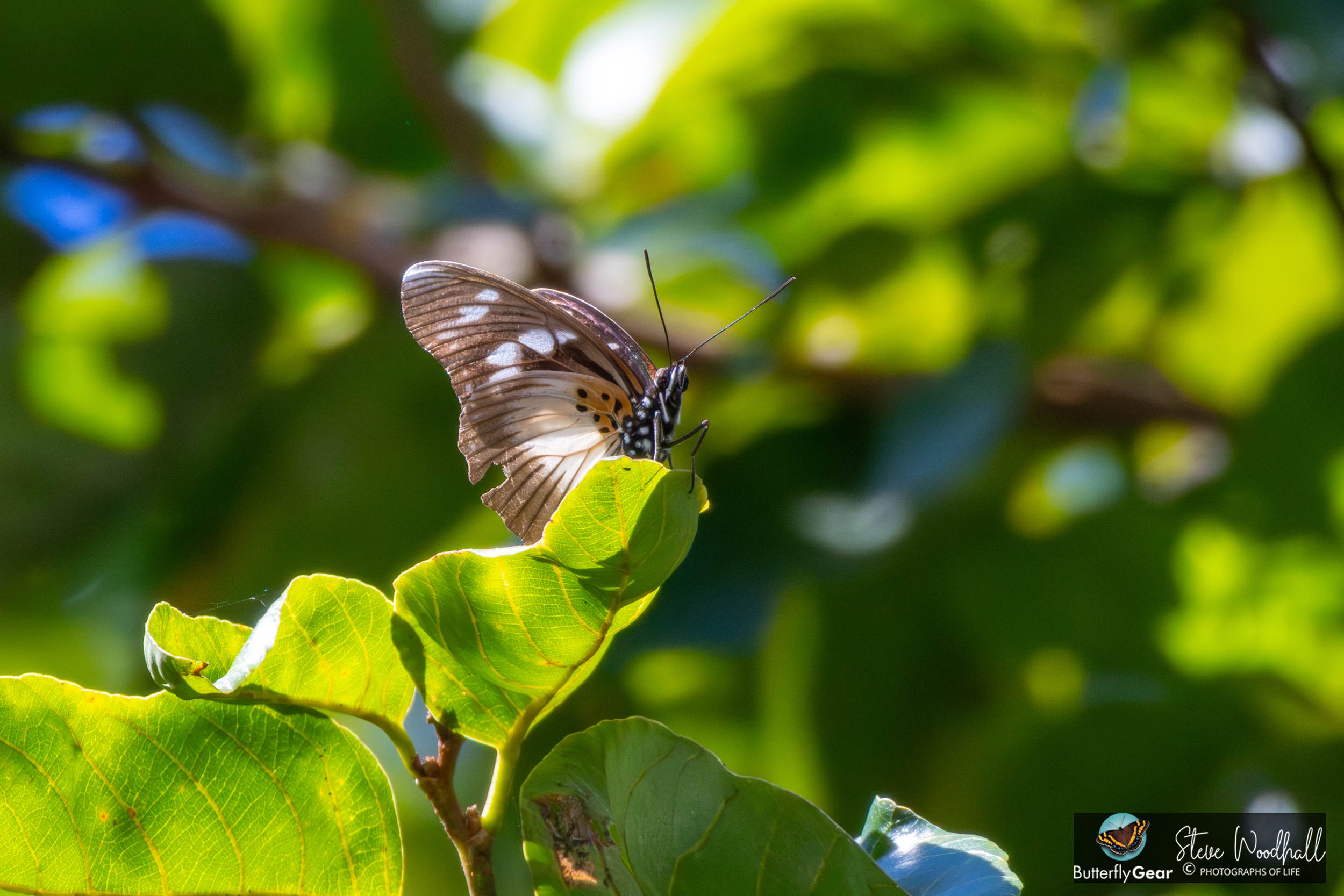
A Boisduval’s False Acraea, or Southern Grand Imitator, Pseudacraea boisduvalii trimenii, was floating around the canopy near the museum at the eastern end of the site. This produced oohs and aahs from Ren and Paul, along with much long-lens wielding. It was a superb, fresh, well-marked male, and he posed nicely for a photo opportunity.

Boisduval's False Acraea, or Southern Grand Imitator ♂

Pseudacraea boisduvalii trimenii
Target acquired!

Pseudacraea boisduvalii trimenii in focus
The weather was superb; in fact, it got quite hot. We met up with some friends of mine from our local nature conservation department, Ezemvelo. It was good to introduce them to Ren and Paul because Ren manages a nature reserve in eastern England. They had a lot in common and had an interesting discussion.

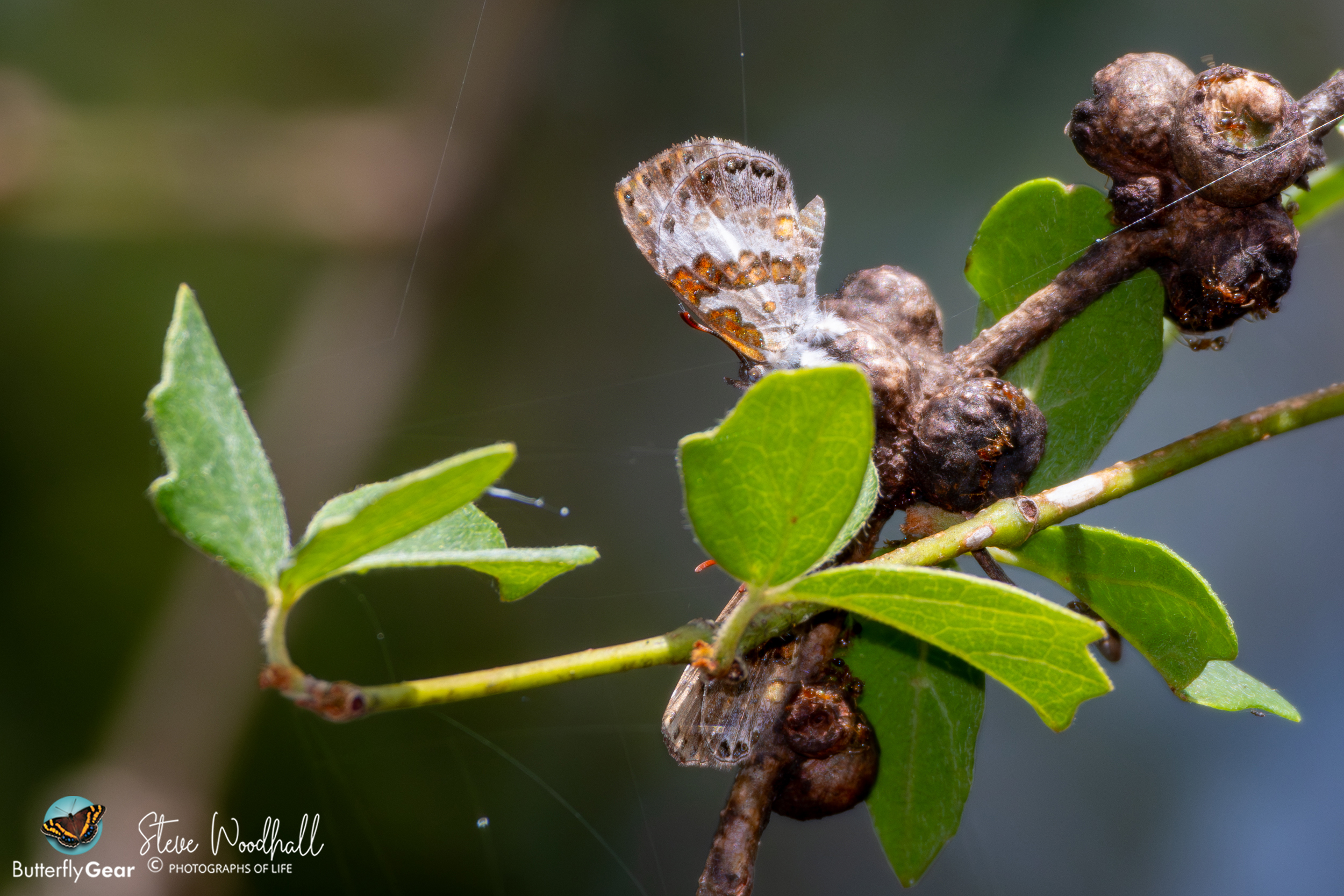
As is often the case, the reserve turned up some interesting butterflies. We set off along the Bushbuck Trail, which leads north-east and downhill from the eastern end of the hilltop camp. There is a braai, or barbecue, area where the wooded area gives way to the surrounding grassland. A group of Southern Pied Woolly Legs, Lachnocnema laches, was whirling around the bushes there. We managed to get photos, and one of the females obligingly opened her wings, which allowed me to identify her and distinguish her from the Common Woolly Legs, Lachnocnema bibulus, which also flies there. A male Common Diadem, Hypolimnas misippus, was hilltopping there.

Southern Pied Woolly Legs ♀

Lachnocnema laches
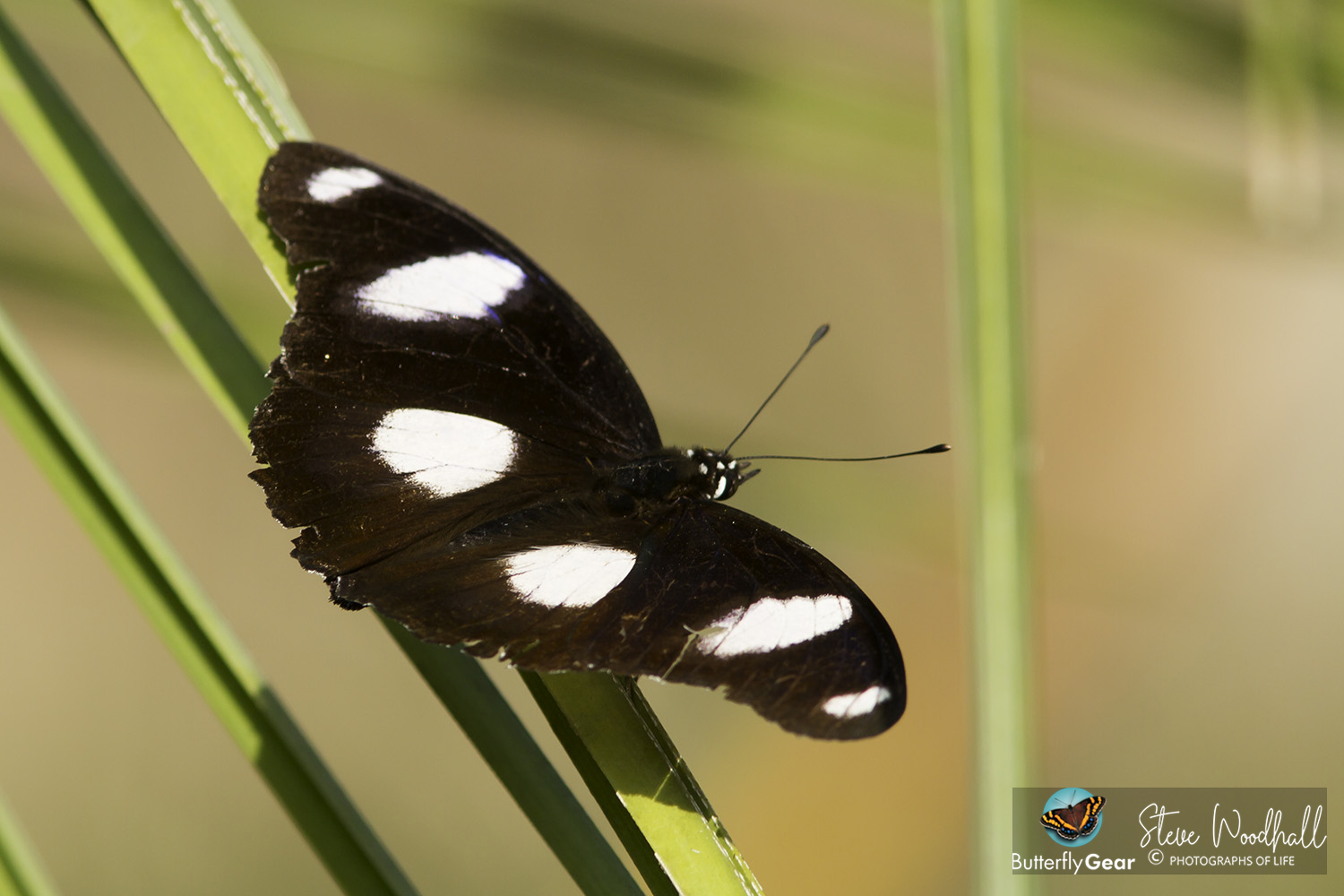
Common Diadem ♂

Hypolimnas misippus
We followed the trail to where it forks and leads into another wooded area. This is a good place for butterflies, since it skirts a hill and one can easily see into the canopy and observe what is flying there. Here we saw Pearl Charaxes, Charaxes varanes varanes, and Southern False Chief, Pseudacraea lucretia tarquinia, as well as the superb Acara, or Warrior, Acraea, Tildia acara, which is the mimetic model for Pseudacraea boisduvalii trimenii. It was interesting to see mimic and model so close to one another. The mimic is much larger than the model, probably because its generous size helps reinforce the message in the eyes of would-be bird predators.

False Chief ♂

Pseudacraea lucretia tarquinea
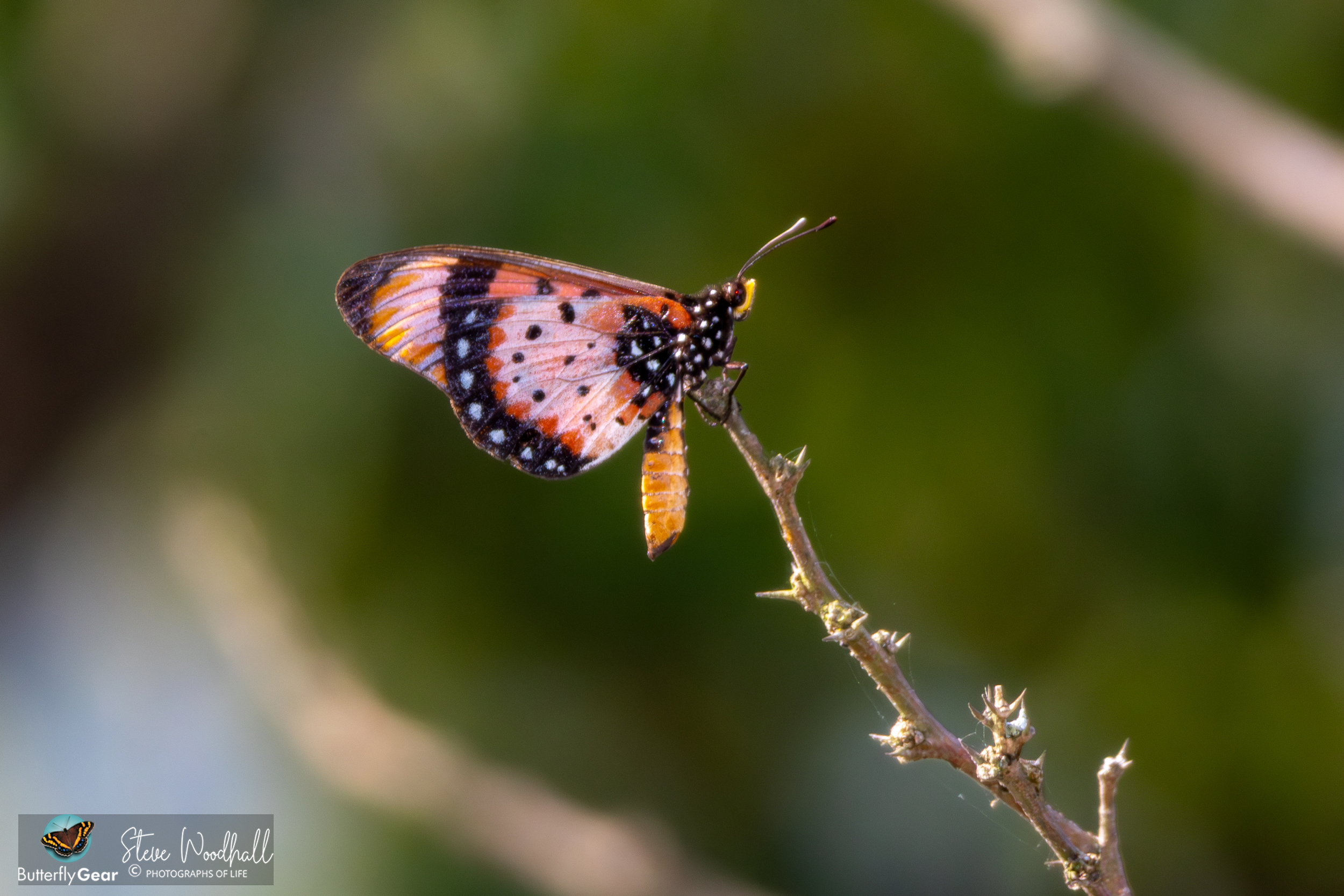
Warrior Acraea ♂

Tildia acara

The trail leads to another hilltop before taking a steep downhill turn. On top, there were some Buff-tipped Skippers, Abantis canopus, chasing one another around and settling on treetops and fence posts. These are excellent bird-dropping mimics, with their white and brown wings. They even have transparent patches that allow the surface they are resting on to show through the wings and reinforce the resemblance.

Buff-tipped Skipper ♂

Abantis canopus
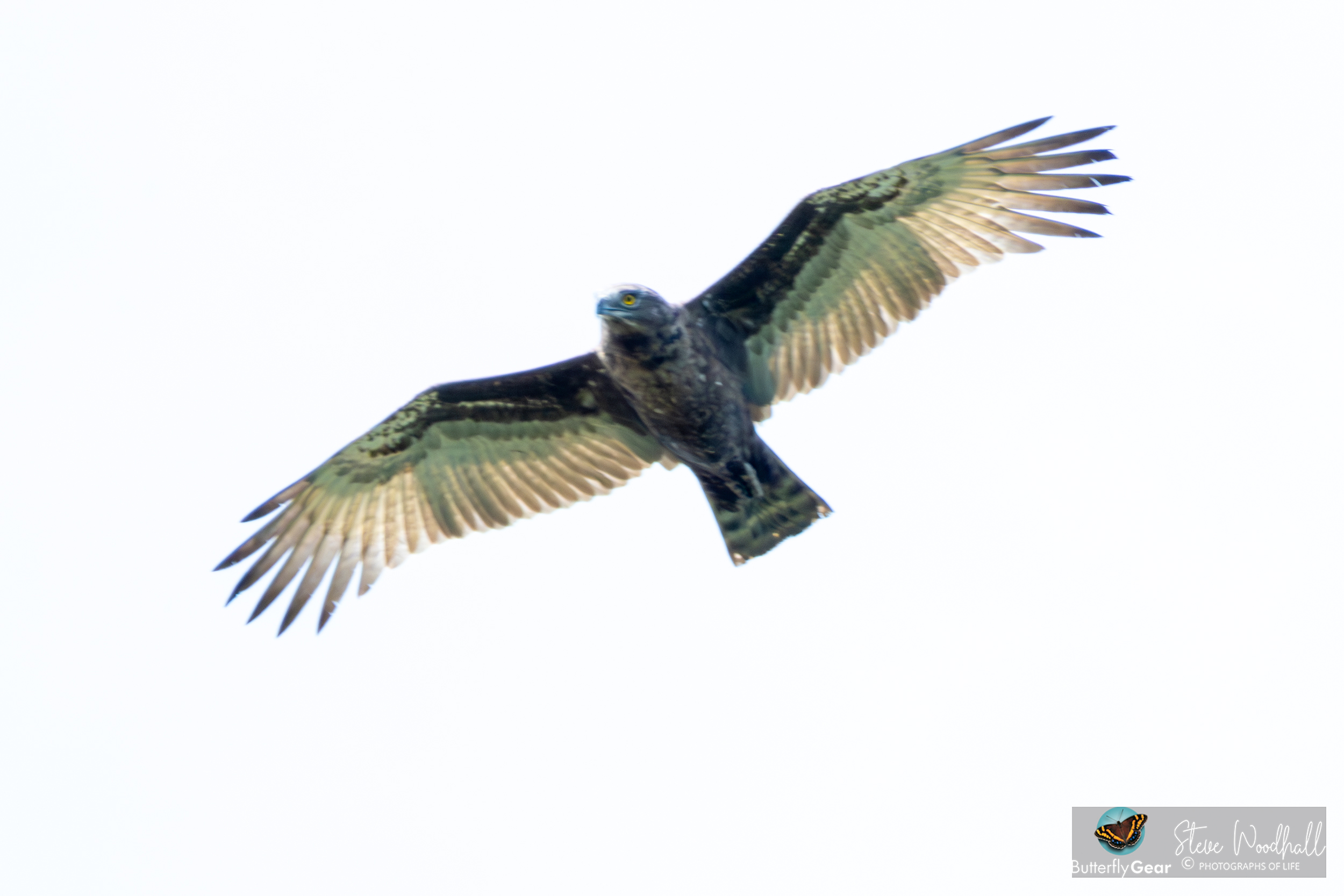
We decided not to go down the hill but walked back along the trail to the gazebo. Along the way, we were watched from the sky by a Brown Snake Eagle, Circaetus cinereus. A climbing succulent, Caustic Vine, Cynanchum viminale, was flowering in the bushes and attracting butterflies such as Sulphur Ant-heap White, Dixeia spilleri, and a female Brown Playboy, Capys antalus. Eastern Pointed Caper Whites, Pseudanaphaeis gidica abyssinica, visited low-growing flowers, while Blonde Gliders, Cymothoë coranus coranus, and Satyr Charaxes, Eriboea ethalion ethalion, soared around the canopy. False Dotted Borders, Belenois thysa thysa, flew low down in the shade of the bush edges.

Brown Snake Eagle

Circaerus cinereus

Brown Playboy ♀ on Caustic Vine

Capys antalus on Cynanchum viminale
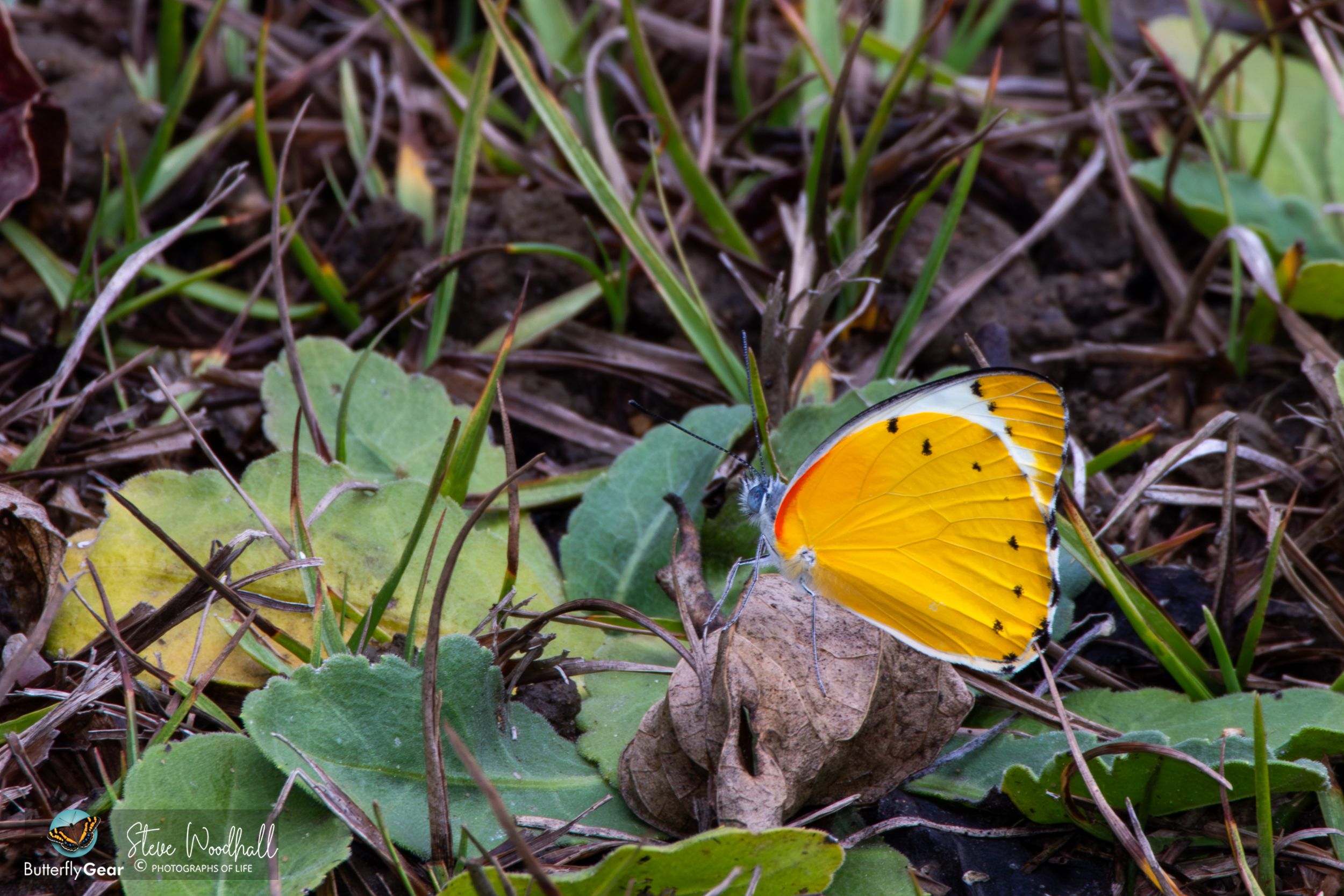
False Dotted Border ♂

Belenois thysa thysa
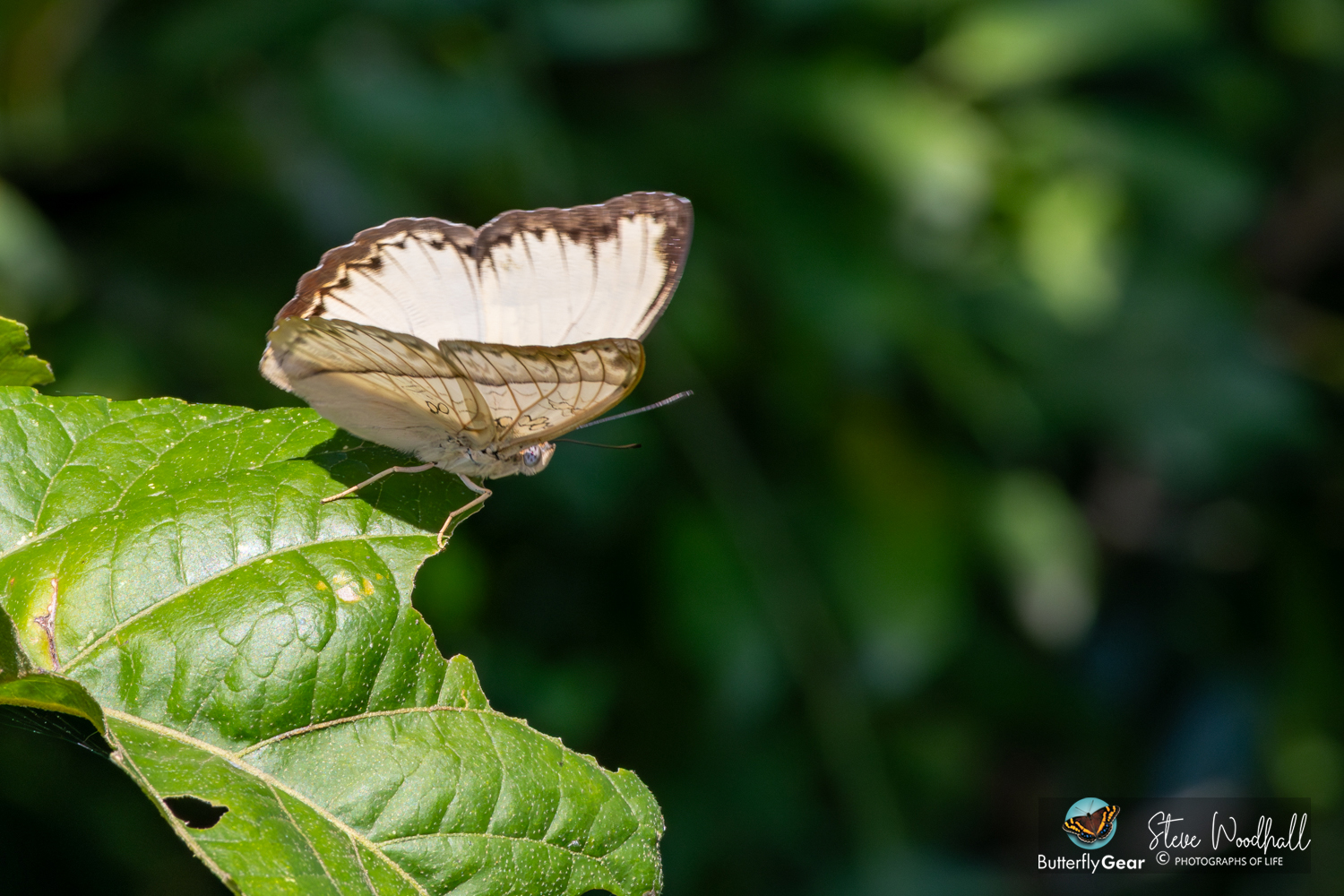
Blonde Glider ♂

Cymothoë coranus coranus
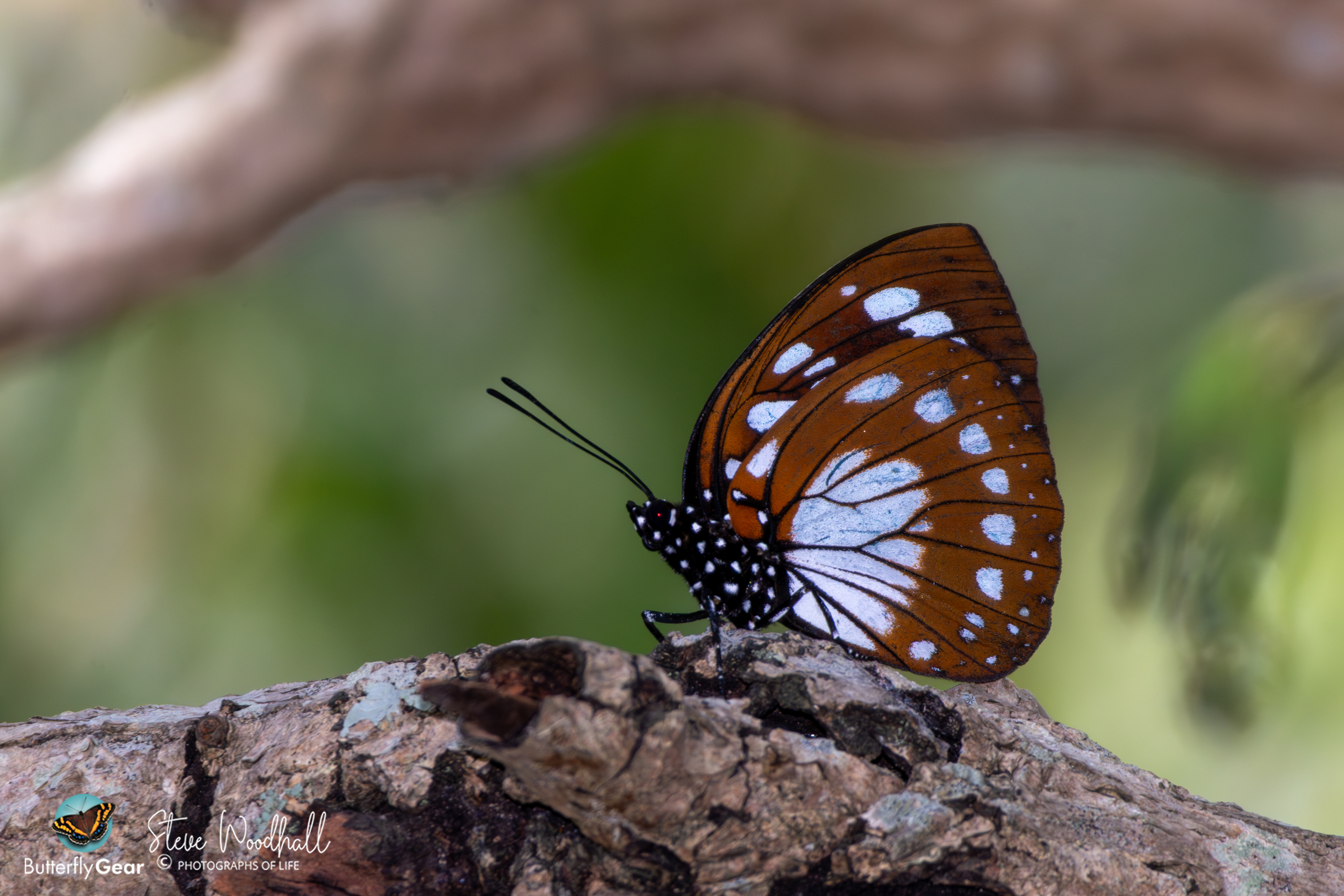
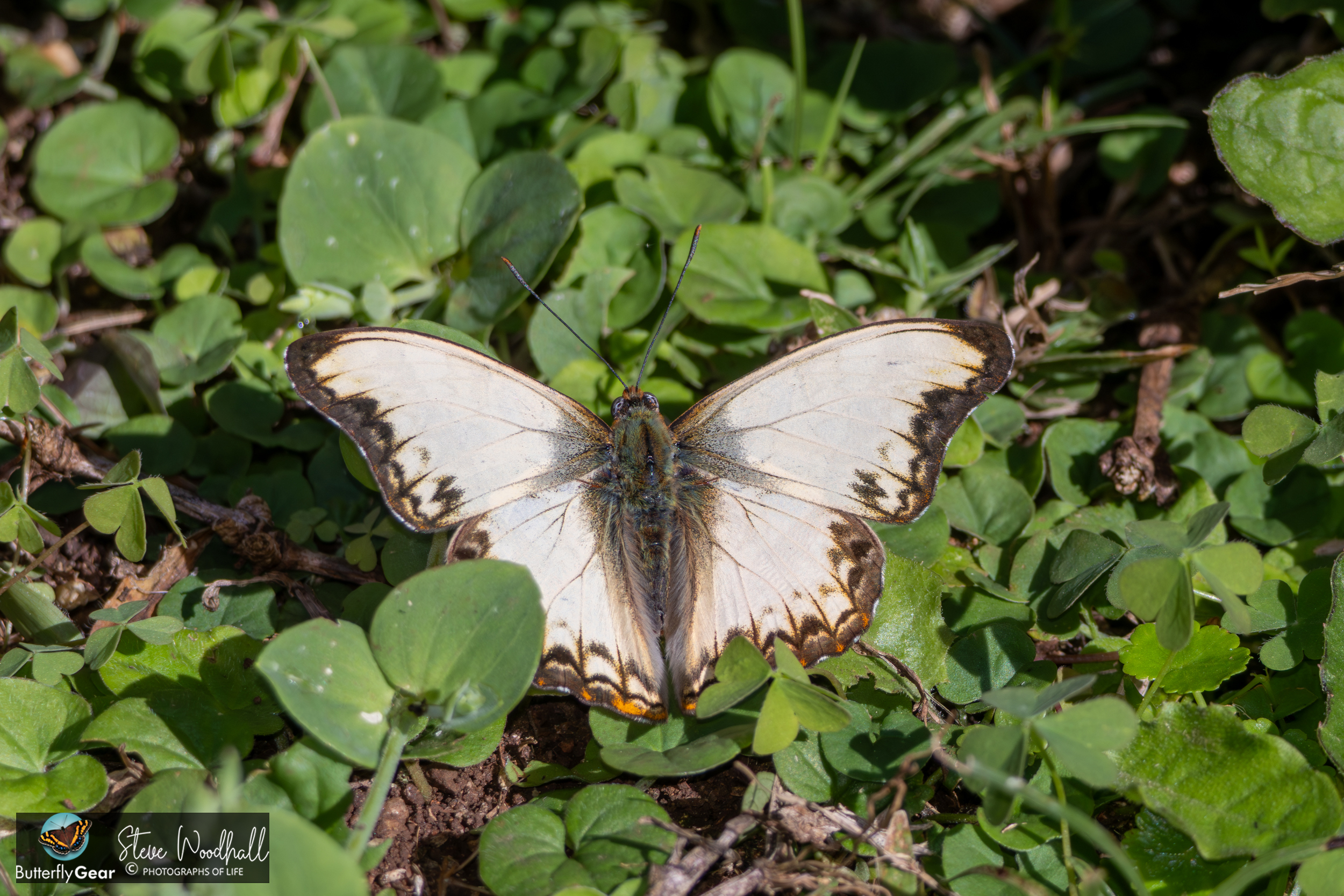
When we got back to the gazebo area, we found another exciting species: a male Forest Queen, Euxanthe wakefieldi. He was persuaded to sit on some banana bait while we all took photos. Nearby, a Green-veined Charaxes, Charaxes candiope, watched from above.

One of the butterfly traps had attracted a Common Mother-of-pearl, Protogoniomorpha parhassus. In my experience, this species seldom visits banana bait, being more partial to flower nectar.

Forest Queen ♂

Euxanthe wakefieldi

Paul shooting a Forest Queen

Euxanthe wakefieldi
When we got back to the gazebo area, we found another exciting species: a male Forest Queen, Euxanthe wakefieldi. He was persuaded to sit on some banana bait while we all took photos. Nearby, a Green-veined Charaxes, Charaxes candiope, watched from above.

One of the butterfly traps had attracted a Common Mother-of-pearl, Protogoniomorpha parhassus. In my experience, this species seldom visits banana bait, being more partial to flower nectar.

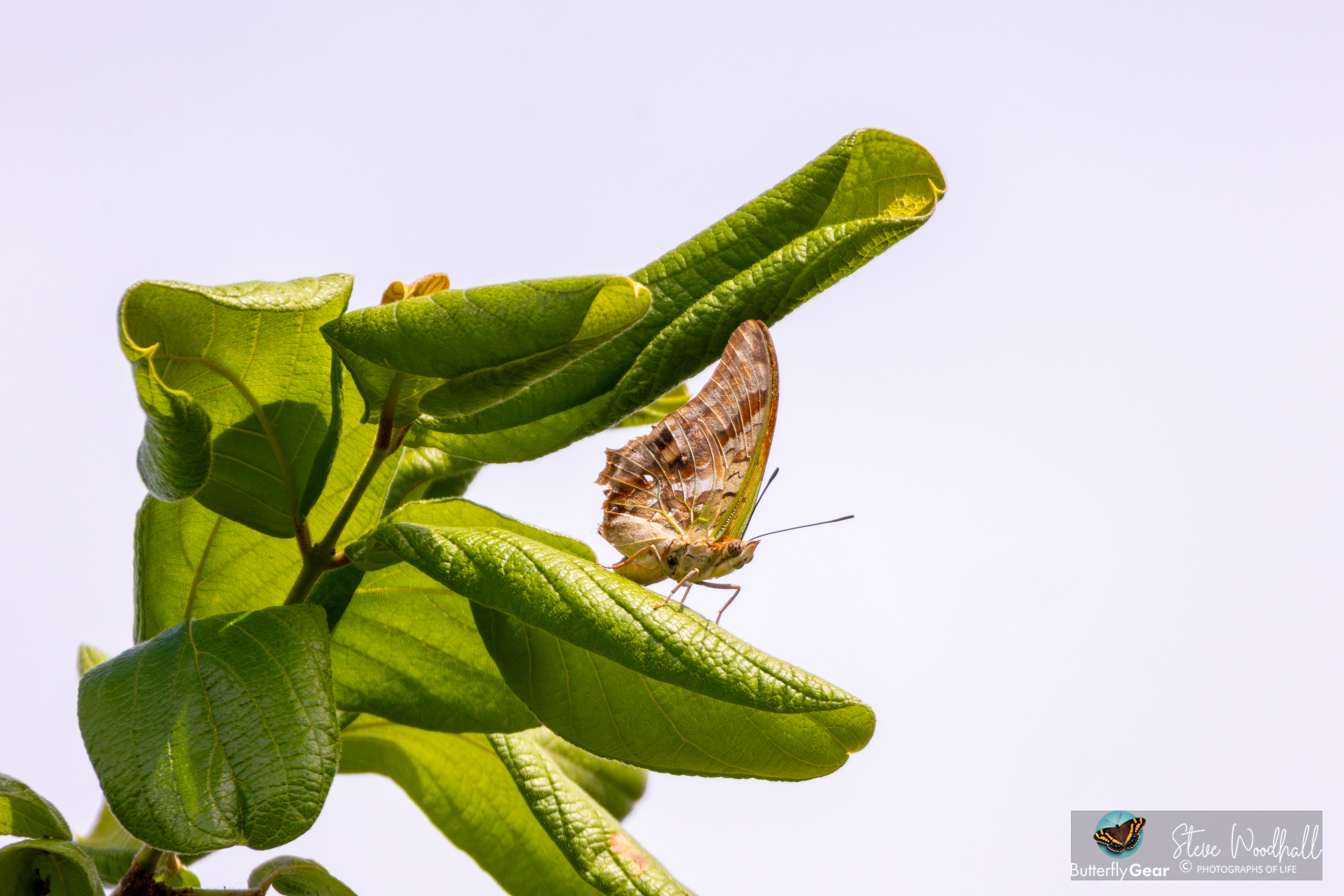
Green-veined Charaxes ♂

Charaxes candiope

Common Mother-of-Pearl ♂

Protogoniomorpha parhassus

Next to the road, we found a ‘sucking tree’, the term we use for trees being attacked by borer beetle larvae, which causes sap to leak and ferment. The main leak was hidden by vegetation, but the circling Charaxes gave its location away. Deep inside was a female Blue-spotted Charaxes, Charaxes cithaeron cithaeronwith a Pearl Charaxes Charaxes varanes varanes just below her.

Blue-spotted Charaxes ♀ on leaking sap with a Pearl Charaxes

Charaxes cithaeron cithaeron and Charaxes varanes varanes
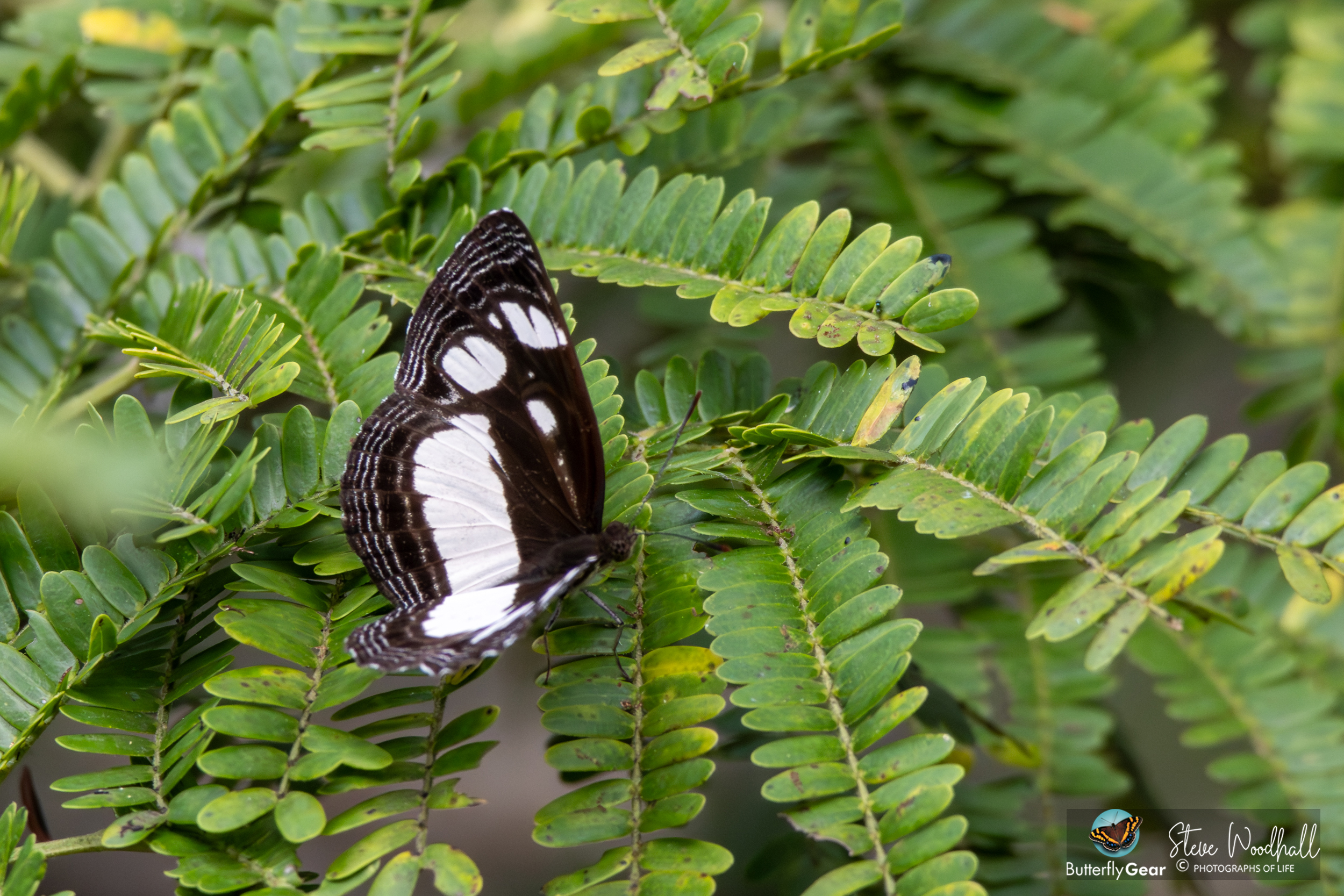
We spent some time walking along the western side of the Bushbuck Trail, where it leaves the approach road just after the entrance gate. We saw some other butterflies here, including Veined Swordtail, Graphium leonidas leonidas; African Wood White, Leptosia alcesta inalcesta; and Streaked Sailer, Neptis goochii, which is rare where I live but more commonly seen in Zululand.

Streaked Sailer ♂

Neptis goochii

Veined Swordtail ♂

Graphium leonidas
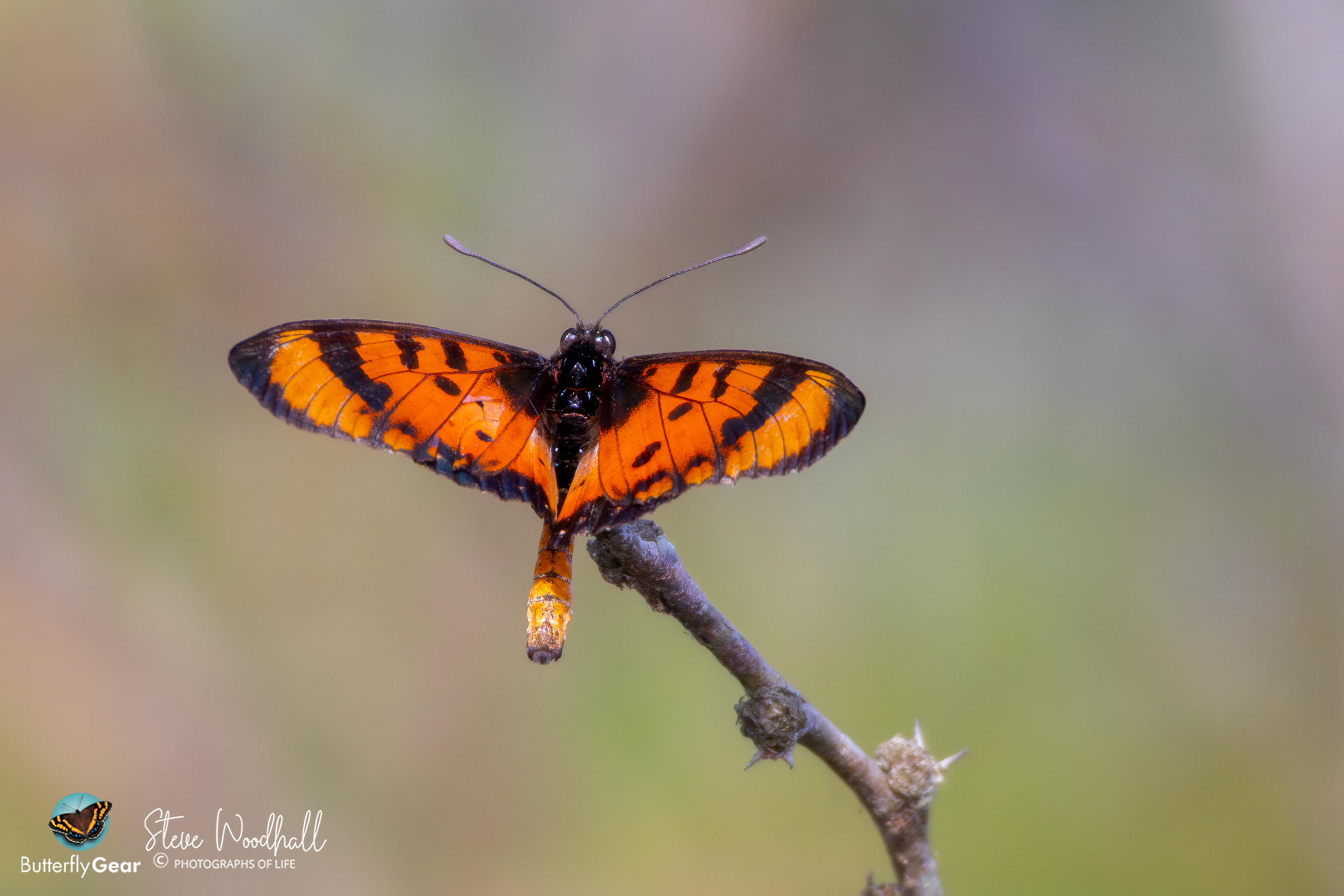
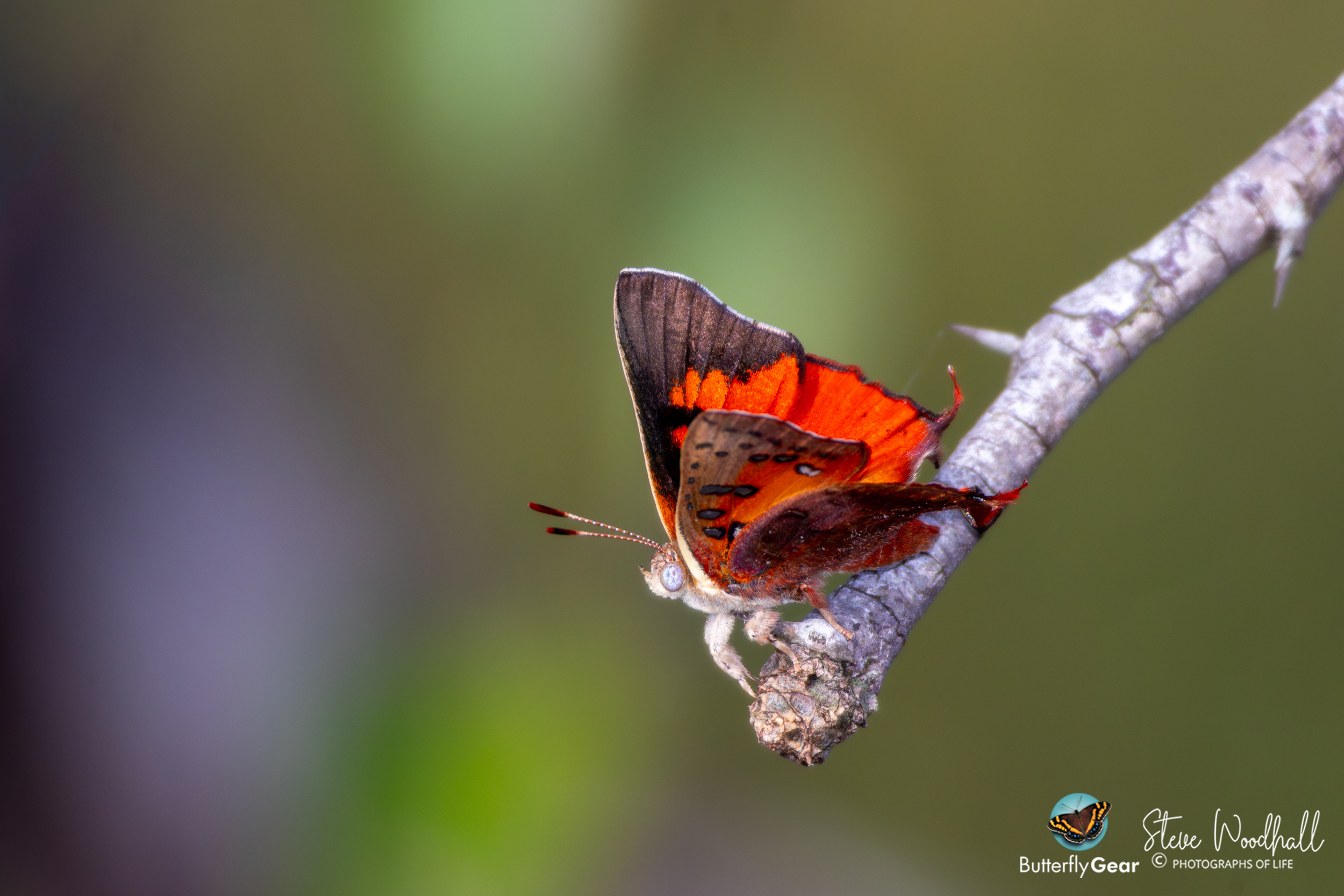
Finally, we walked back down the north-east side of the trail to the edge of the bush, where hilltopping butterflies often gather in the afternoon to bask in the sun. A Tildia acara was floating around a tree, settling occasionally to bask with wings open. Eastern Scarlets, Axiocerses tjoane tjoane, were perching at head height, one of them in mint condition. His fiery wings opened to catch the rays, always an attractive photo opportunity. Finally, a fresh male Brown Playboy, Capys antalus, came along and posed beautifully, showing his violet wing bases and why we’re insulting him by calling him just ‘Brown’.

By then, it was 3:00 p.m. and time to pack up and drive back. In total, we saw 48 species of butterfly at Harold Johnson Nature Reserve.

Warrior Acraea

Tildia acara

Eastern Scarlet ♂

Axiocerses tjoane tjoane

Eastern Scarlet ♂

Axiocerses tjoane tjoane
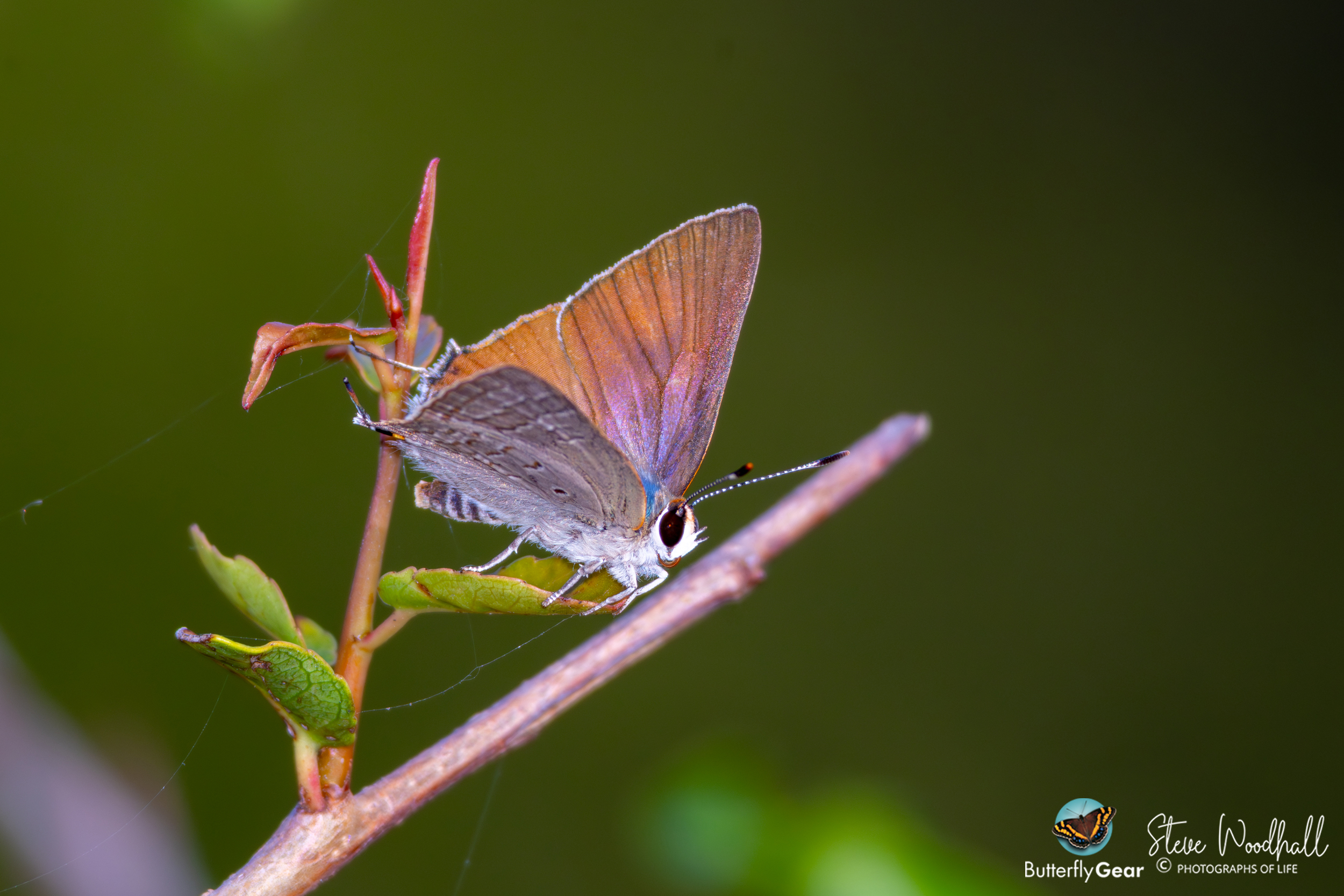
Brown Playboy ♂

Capys antalus

Day 4 - Monday, april 19

Monteseel

Our final outing took us to Monteseel, a suburb west of Durban at 750–800m above sea level. It sits on a massive sandstone spur, 150–200m above the bushveld savanna of the Valley of a Thousand Hills and is surrounded by protected KwaZulu-Natal Sandstone Sourveld grassland. This superb wildflower site supports many butterfly species, with the occasional savanna species reaching the grasslands. It is also excellent for birding, with Lanner Falcons and Crowned Eagles sometimes seen there.

BUTTERFLY SPECIES
0

A huge fig tree grows from the tall rocks at Monteseel’s summit, where a Southern White-barred Charaxes Charaxes brutus natalensis was using it as a territorial marker. Garden Inspectors Precis archesia archesia flew around the rocks, while Narrow Green-banded Swallowtails Papilio nireus lyaeus and Citrus Swallowtails Papilio demodocus demodocus occasionally passed overhead.

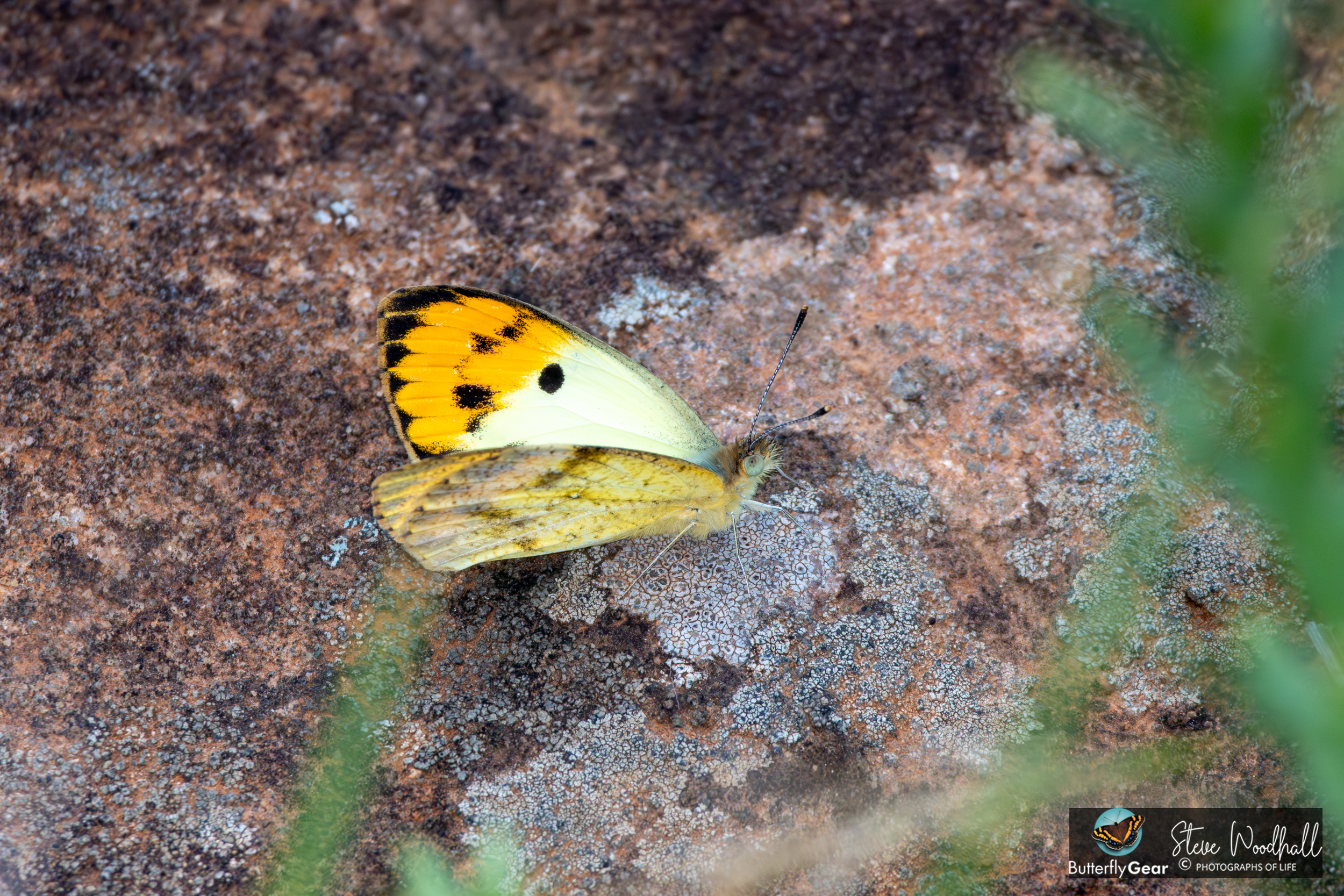
A savanna species, a female Sulphur Orange Tip Colotis auxo auxo, had made her way up from the savanna below and was sheltering in the grass at the top of the cliffs.

Lanner Falcon

Falco biarmicus

Sulphur Orange Tip ♀

Colotis auxo auxo
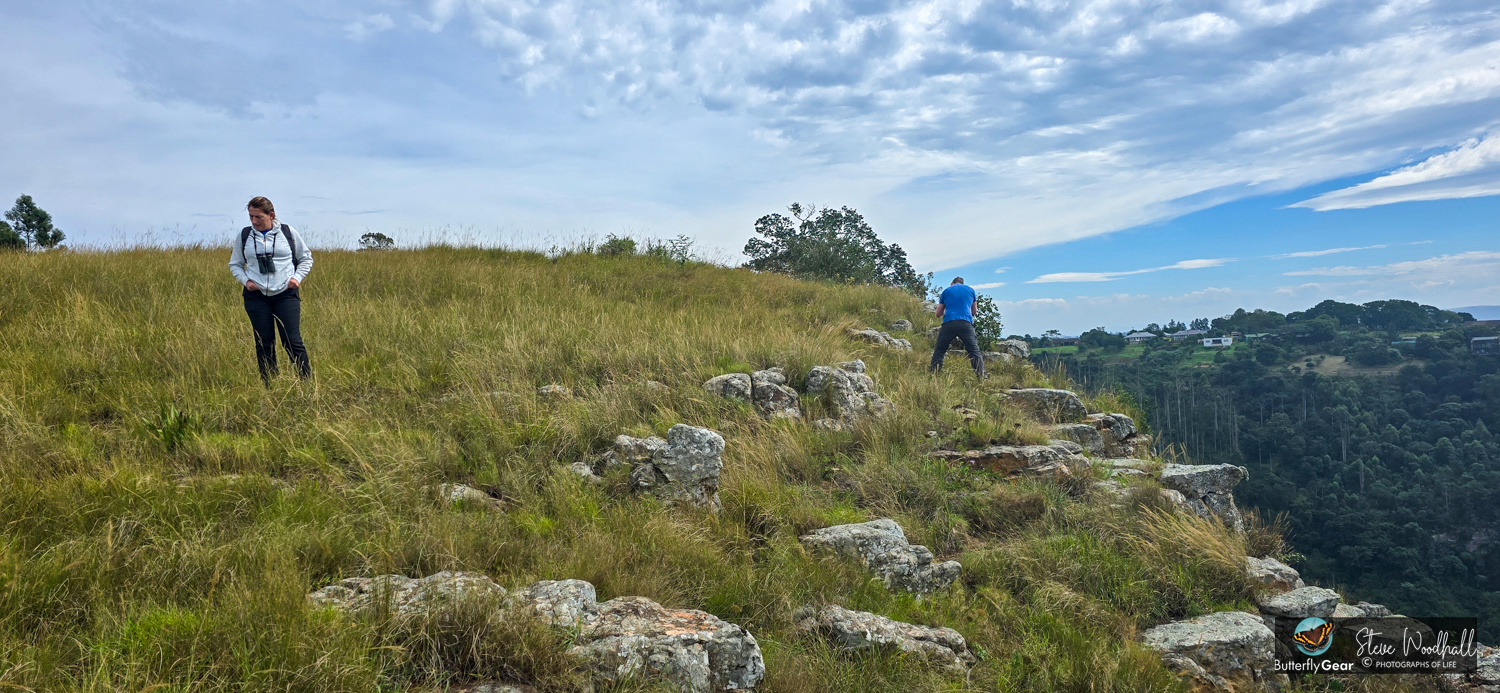
The forecast had been promising, but by the time we arrived around 11:00 am, high cloud was beginning to build. Undeterred, we started searching the grass. Rayed Blues Actizera lucida were active; although tiny, the males have striking bright-blue uppersides, while a diagonal white streak across the hindwing underside gives the species its common name. Another small blue, the Grass Jewel Blue Freyeria trochylus, was also flying, along with Pale Smoky Blues Euchrysops barkeri.

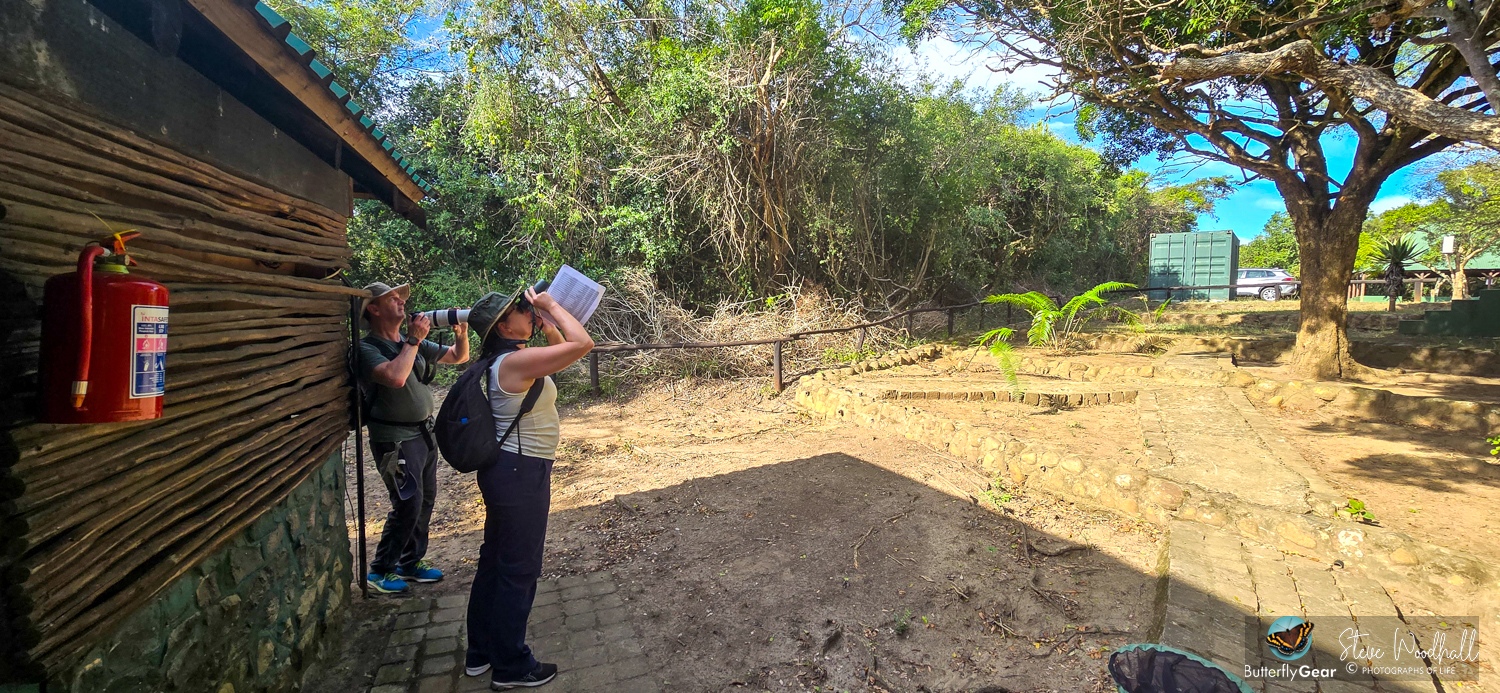
Ren and Paul under the high canopy of altocumulus clouds that greeted us

Paul is photographing the Colotis auxo
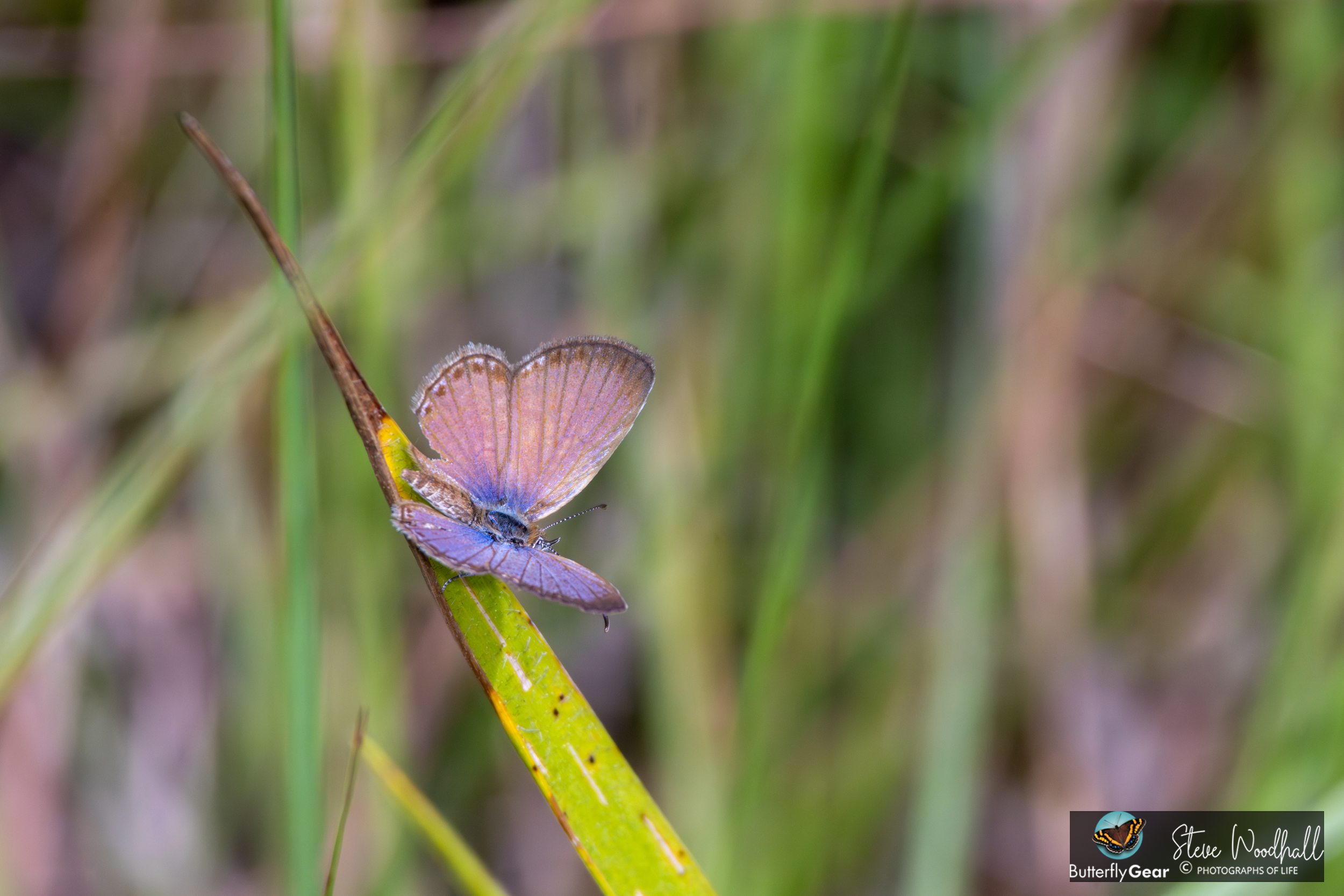
Rayed Blue ♂

Actizera lucida

Pale Smoky Blue ♀

Euchrysops barkeri
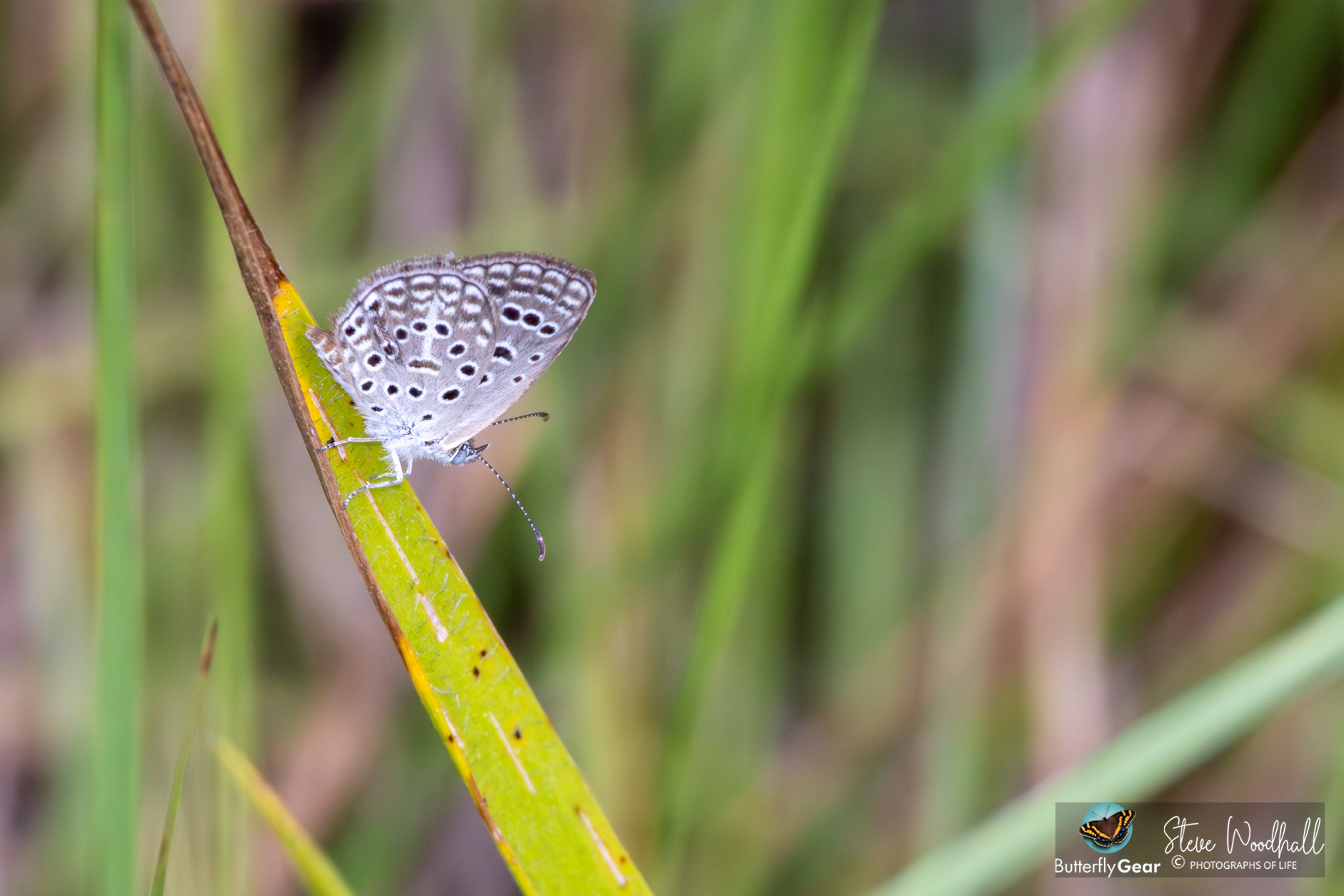
Rayed Blue ♂

Actizera lucida
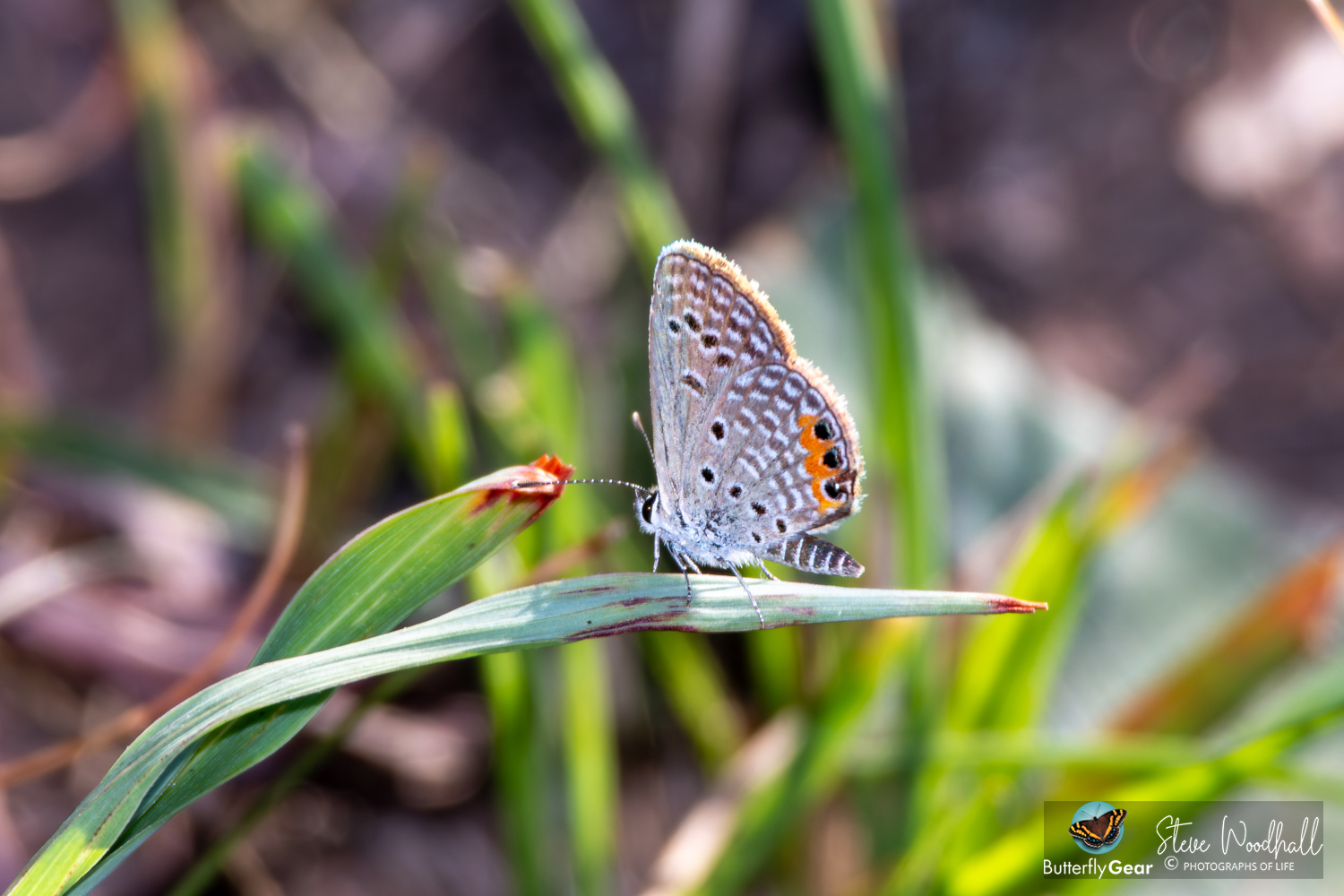
Brown Grass Jewel ♂

Freyeria trochylus
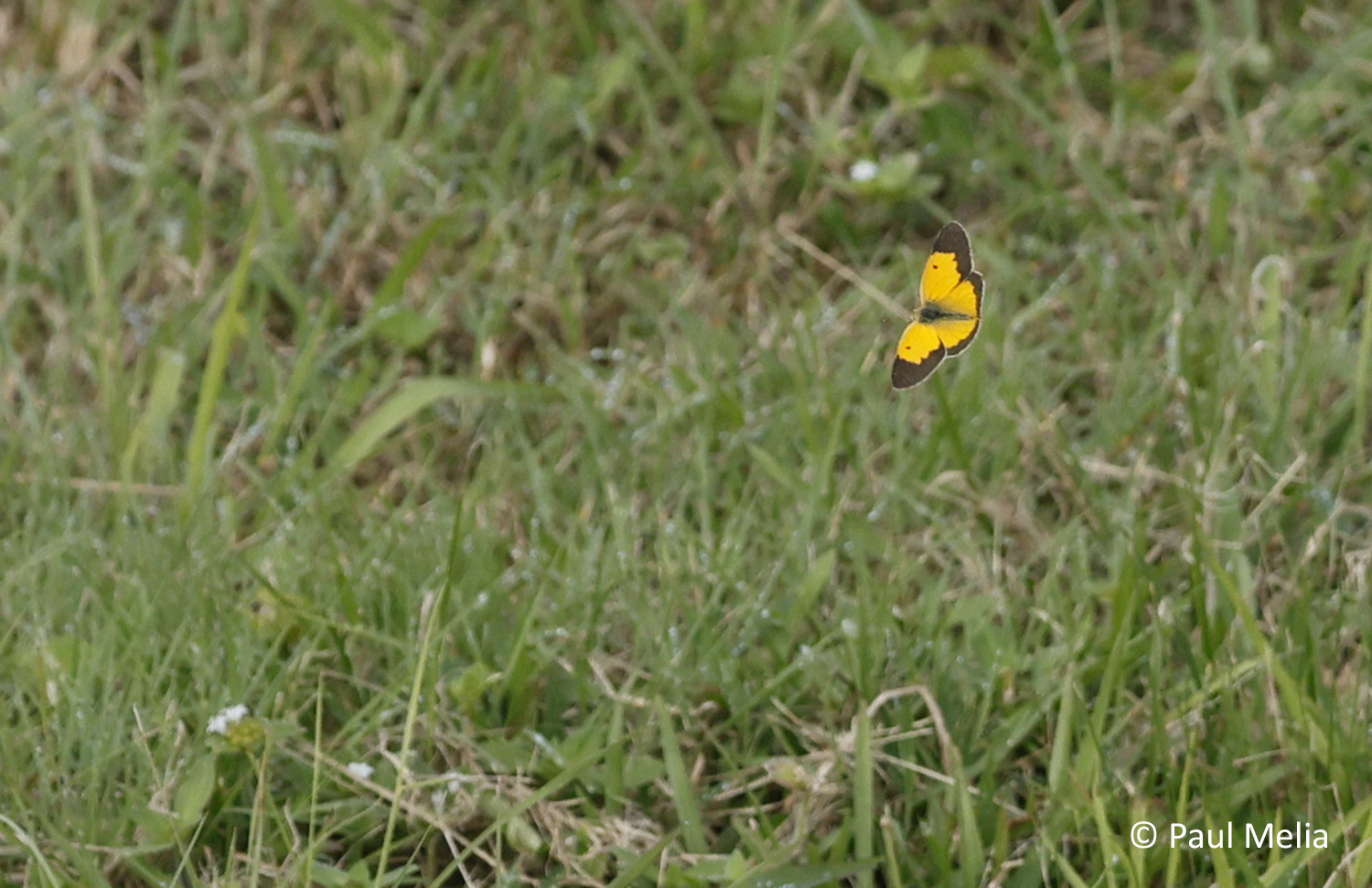
We then walked downhill to another grassland patch that had produced good lycaenids on previous visits. On the way, we were surprised by an African Clouded Yellow Colias electo electo, a species uncommon in the Durban area. Paul managed to photograph it in flight with open wings using the machine-gun mode on his Canon R8.

African Clouded Yellow ♂

Colias electo electo

African Clouded Yellow ♂

Colias electo electo
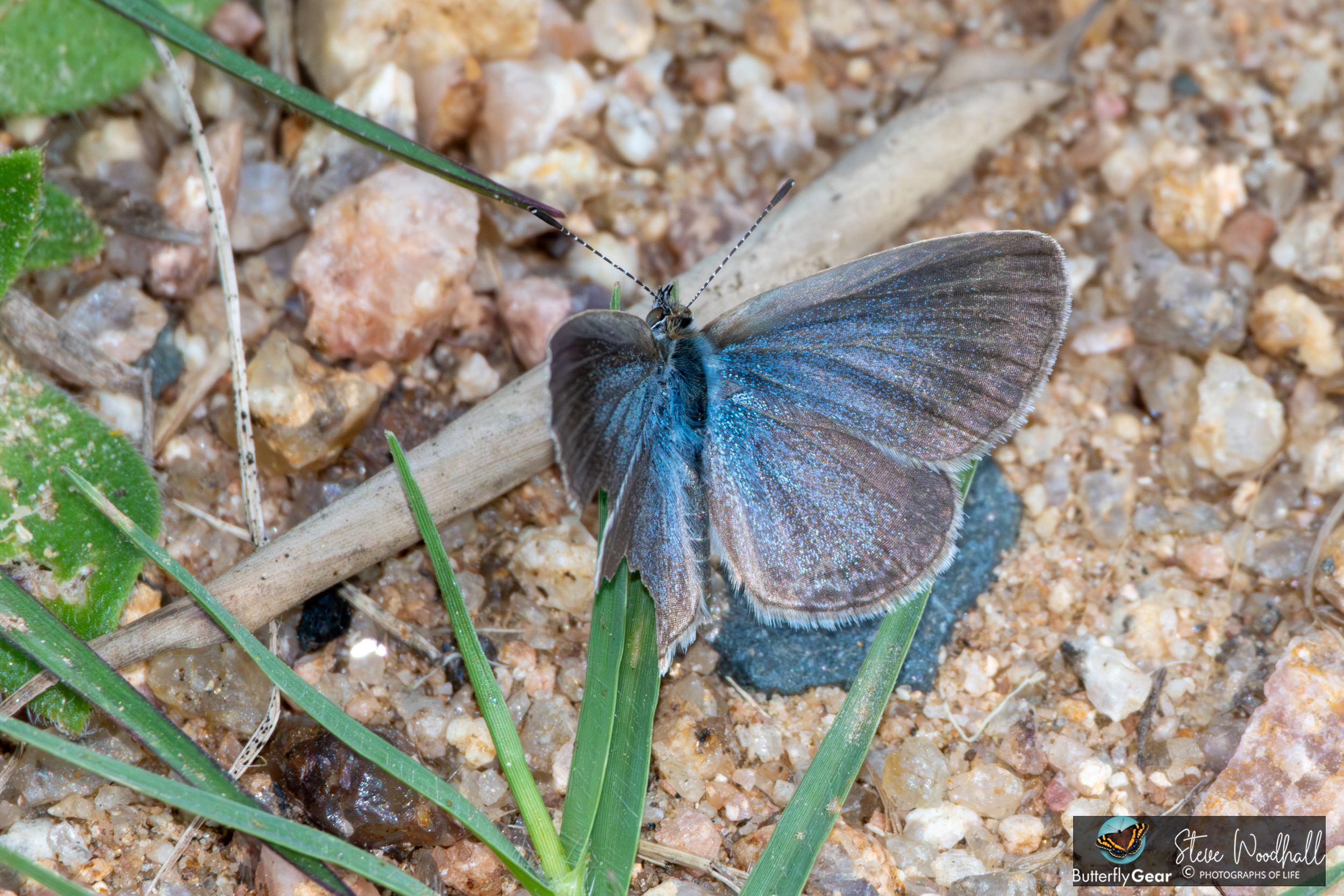
We found an African Clover Blue Zizina otis antanossa and a Bush Bronze Cacyreus lingeus, along with a few Dancing Telchinias Telchinia serena and a Yellow-banded Telchinia Telchinia cabira, a related species that shares the same host plant. The grassland was badly overgrown, so we missed the Apricot Russets Aloeides aranda I had seen there before.

There was compensation, however: several Lion’s Ear plants Leonotis leonurus were growing nearby. Although no large butterflies visited them that day, they attracted Greater Double-collared Sunbirds Cinnyris afer, which gave us excellent close views through our binoculars and telephoto lenses. Nearby, we also found a Painted Lady Vanessa cardui, one of the few butterfly species found in both South Africa and the UK, where Ren and Paul live.

African Clover Blue ♂

Zizina otis antanossa
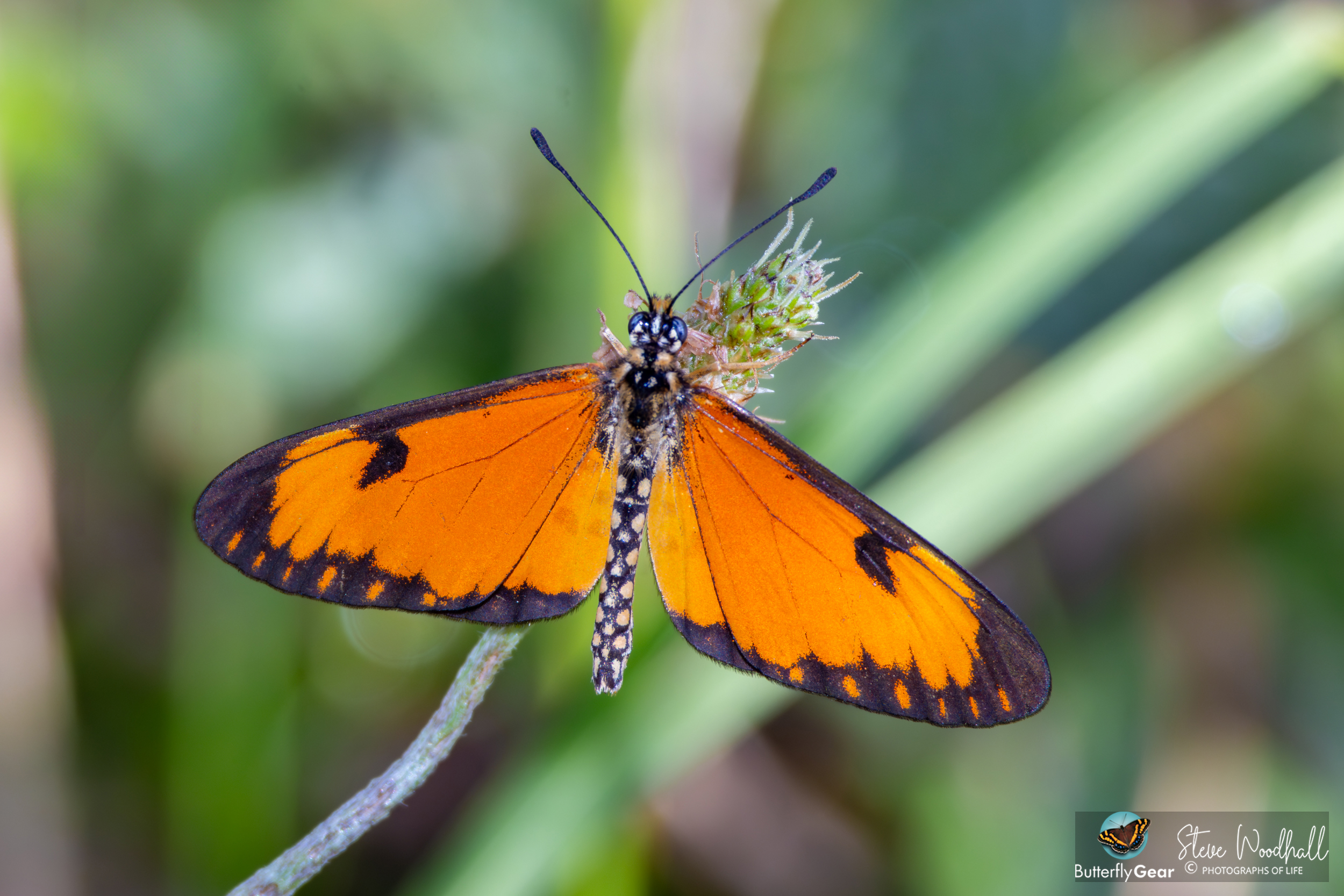
Dancing Telchinia ♂

Telchinia serena

Greater Double-collared Sunbird ♂

Cinnyris afer

Painted Lady ♀

Colias electo electo
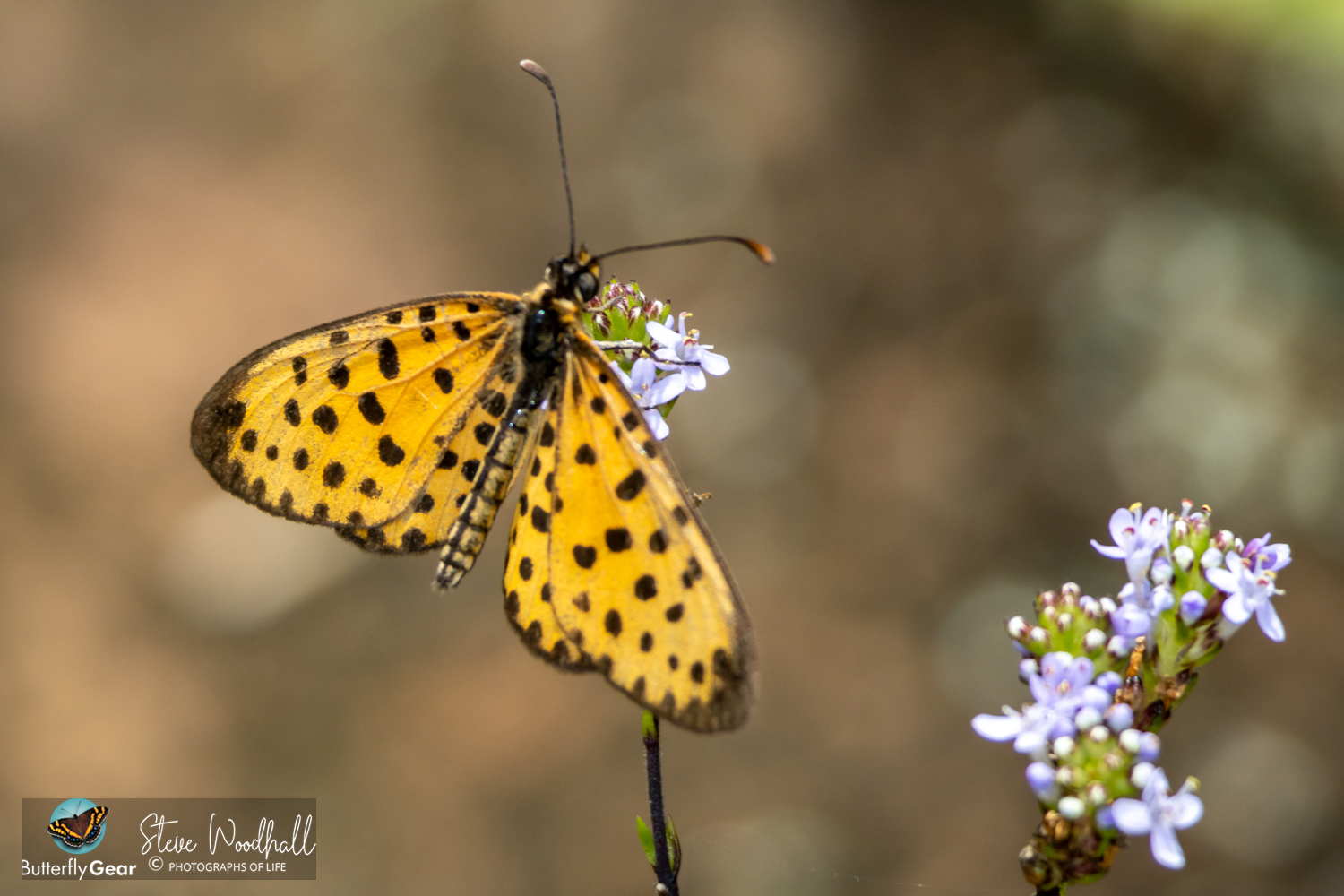
As the weather continued to deteriorate, we headed to a flower-rich grassland on Monteseel’s western side. Although flowers were abundant, butterflies were scarce. We saw a Grey Smoky Blue Euchrysops malathana and a Southern Gaudy Commodore Precis octavia sesamus. We managed to find a special of the area: Polka Dot Pardopsis punctatissima. Its caterpillar host plant, Spade Flower Pigea enneasperma, belongs to the violet family. The Polka Dot’s relatives, the fritillaries in the same subfamily, Heliconiinae, also use violets. These are absent from South Africa, but Ren and Paul would know them well from home in England.

We saw 26 species of butterfly at Monteseel.

With that, it was time to say goodbye to Ren and Paul. I hope it was only au revoir, as they were great fun to show around.

Polka Dot ♂

Pardopsis puntatissima

Southern Gaudy Commodore ♂

Precis octavia sesamus form sesamus

Appendix

Butterflies (Papilionoidea)