The Lepidoptera Log - by Steve Woodhall
Here comes the spring!
Some butterflies herald the season - September to November
South Africa’s southern location means it experiences distinct spring and autumn seasons. In the southern hemisphere, spring lasts from September 1st to November 30th, when dormant plants bloom and many butterfly species emerge from their chrysalis to feast on abundant nectar.
These species appear as adults at that time of year, coinciding with a burst of spring flowers and fresh green foliage.
These are the butterflies that make you say, ‘Ah, there’s an ‘xxxx‘! It must be spring!’
Let’s look at a few examples. We will begin with the tribe Dirini, which is unique to southern Africa and has evolved alongside the region’s specialised grasslands. I discussed these butterflies in the ‘Autumn Specials’ article

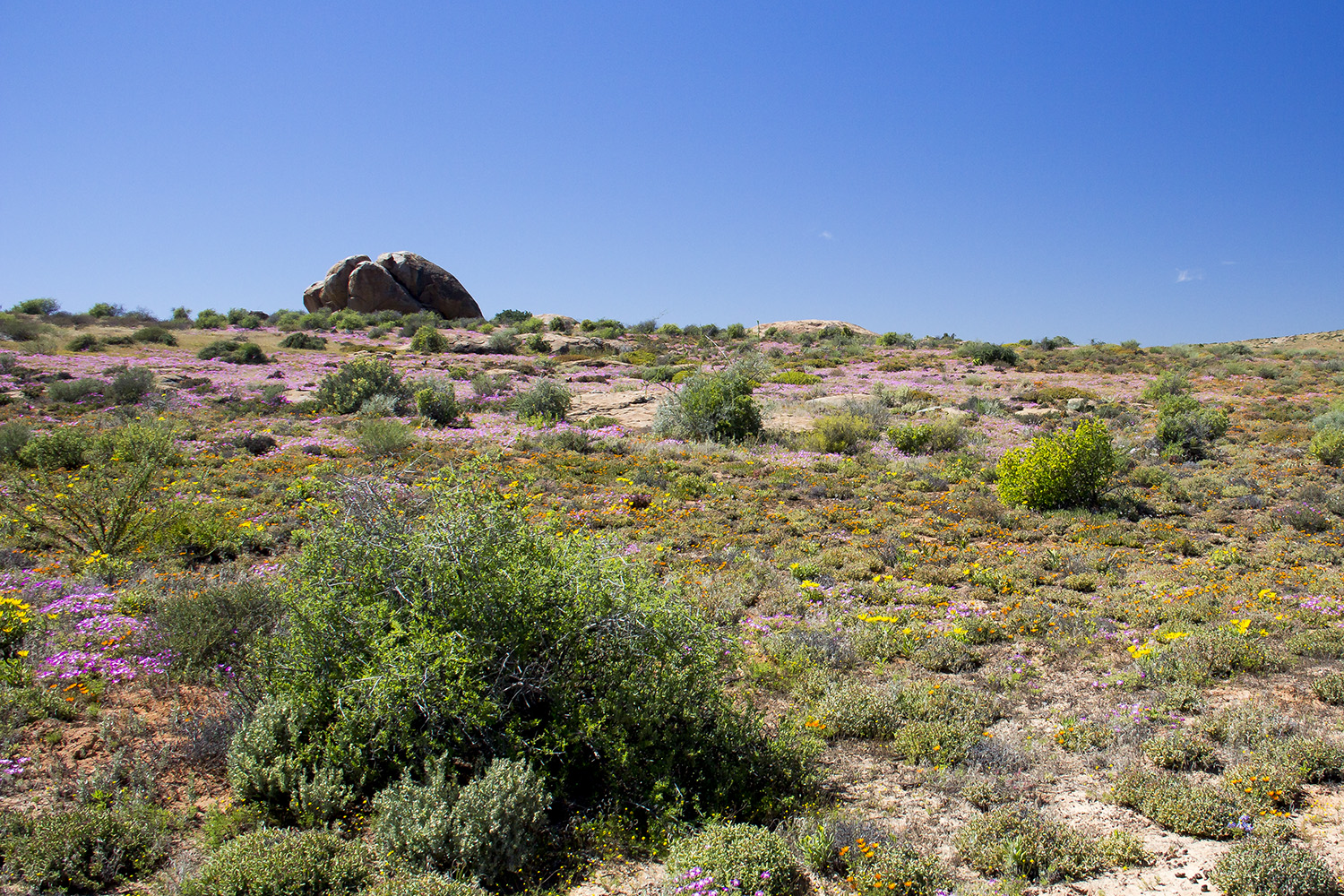
A place to find Spring Widows
Near Soebatsfontein, Namaqualand
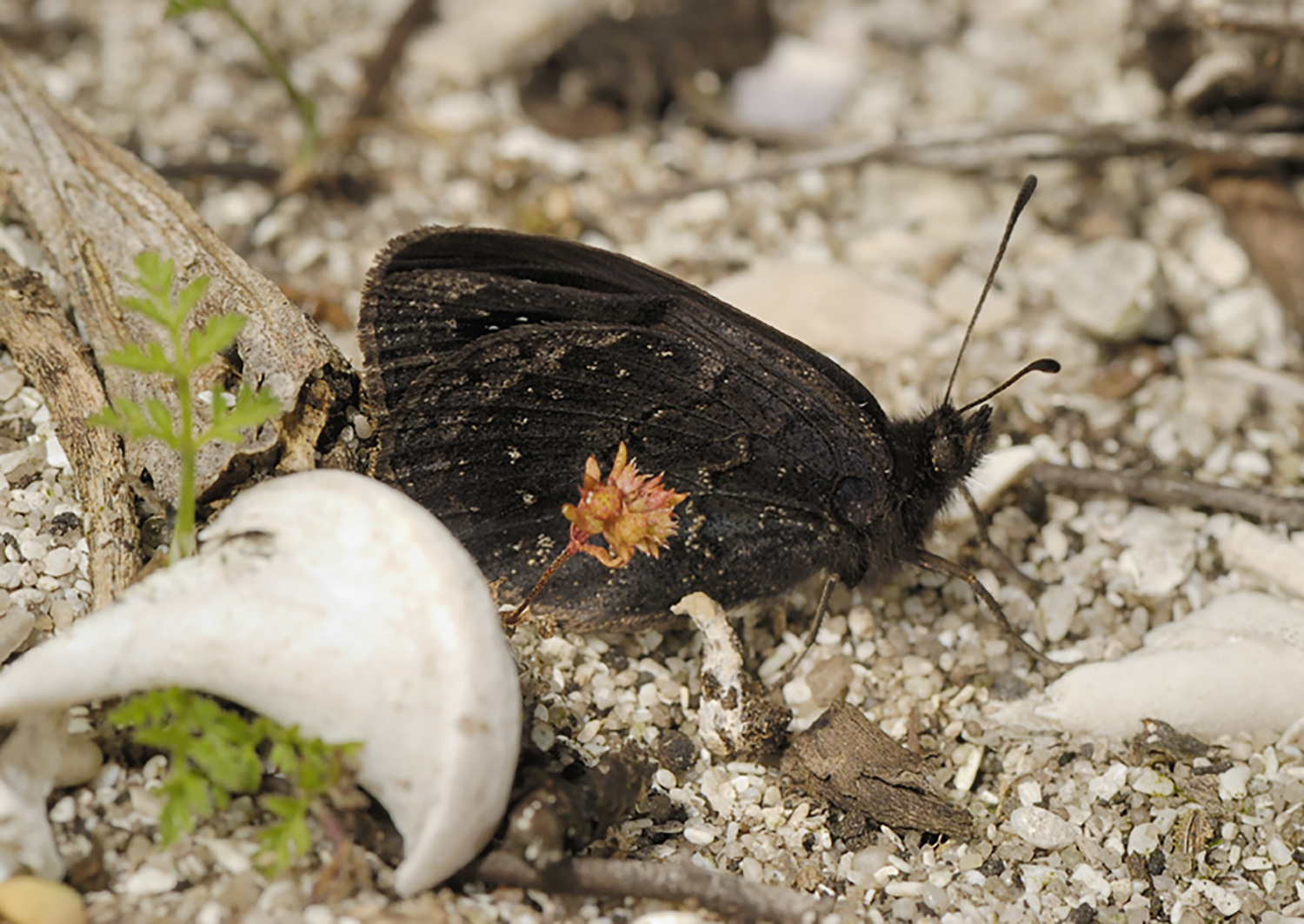
Sand-dune Spring Widow ♂
Tarsocera cassina
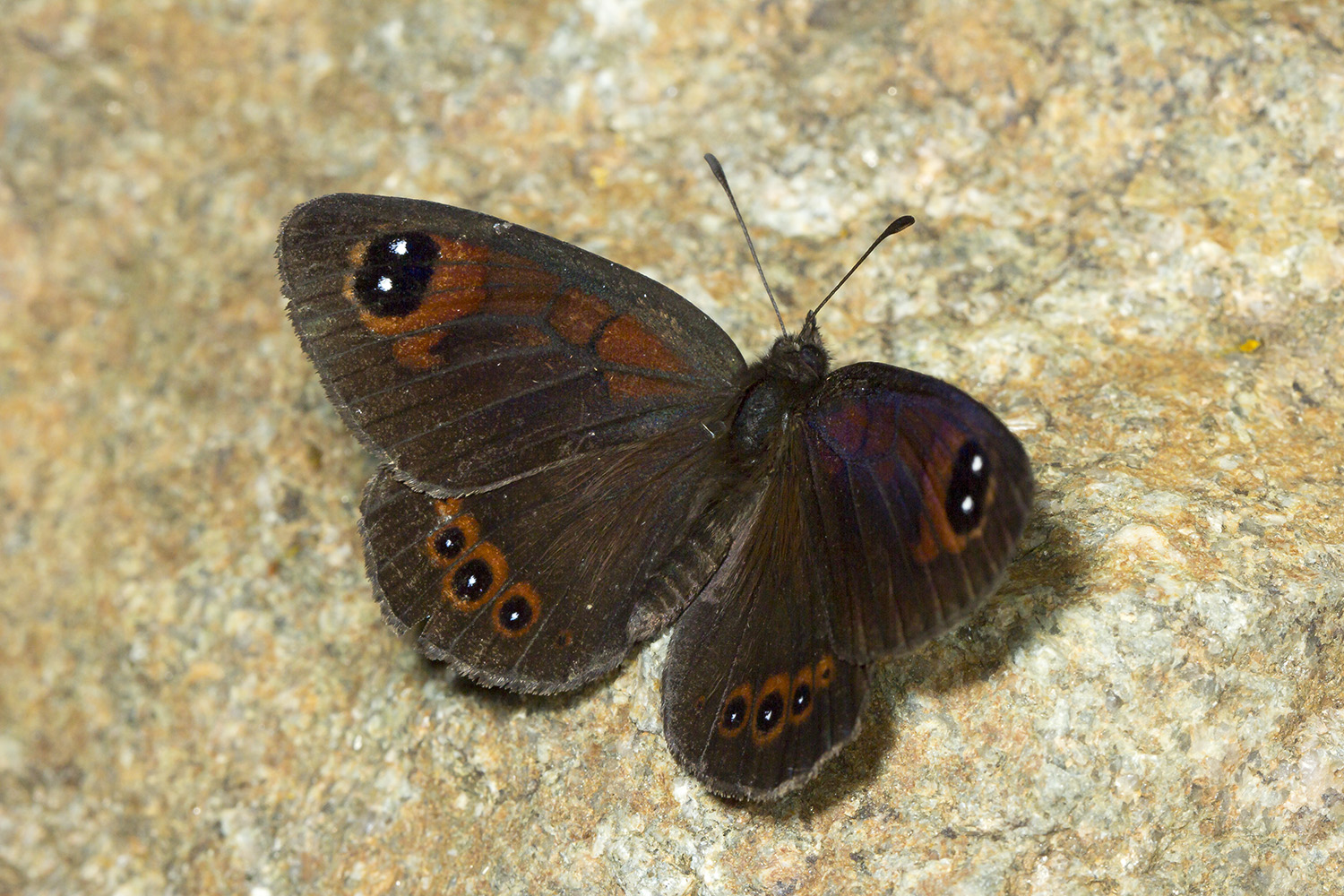
Namaqualand Spring Widow ♂
Tarsocera namaquensis (we think!)
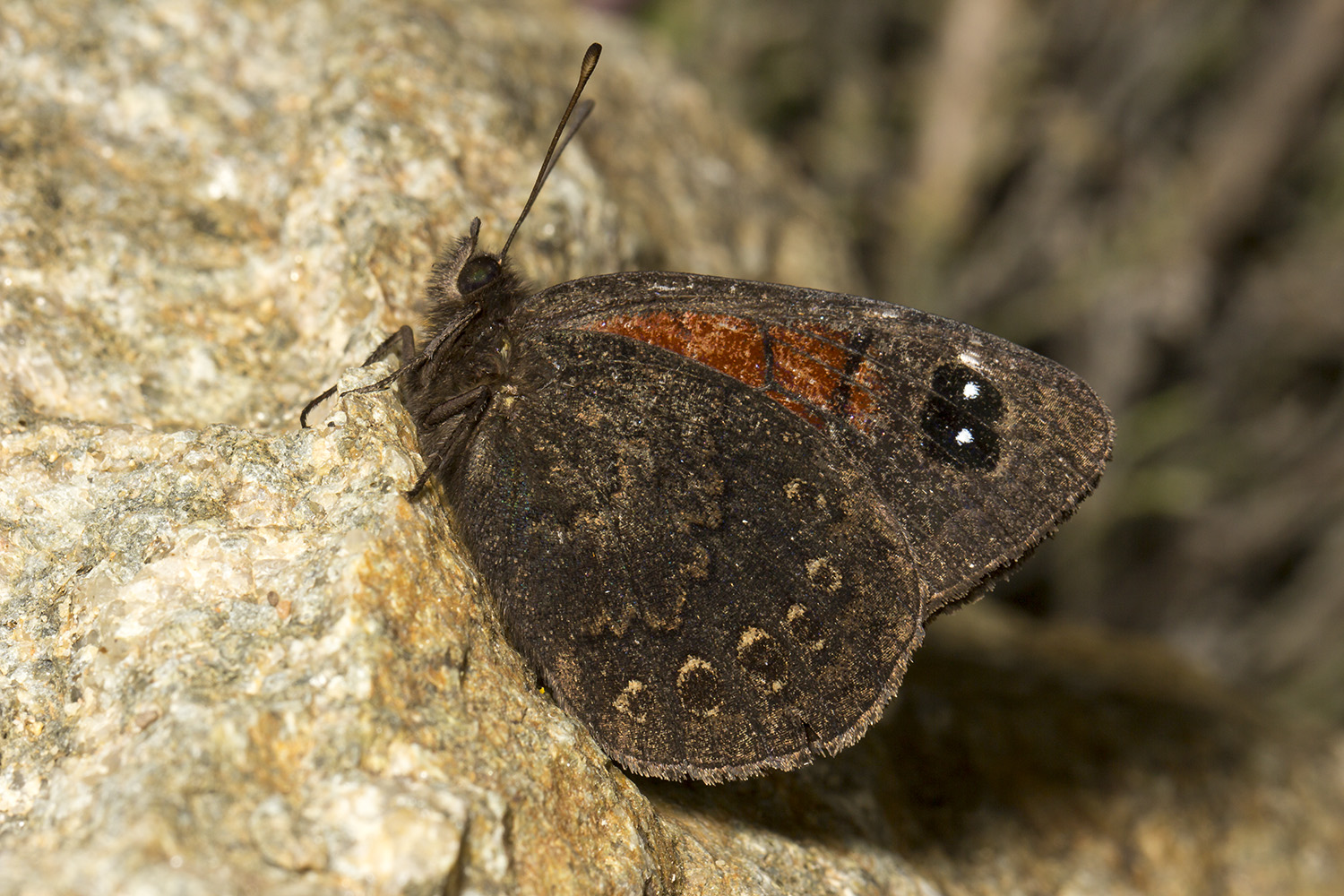
Namaqualand Spring Widow ♂
Tarsocera namaquensis (we think!)

Graskop Gorge
Home of the Narrow-banded Widow
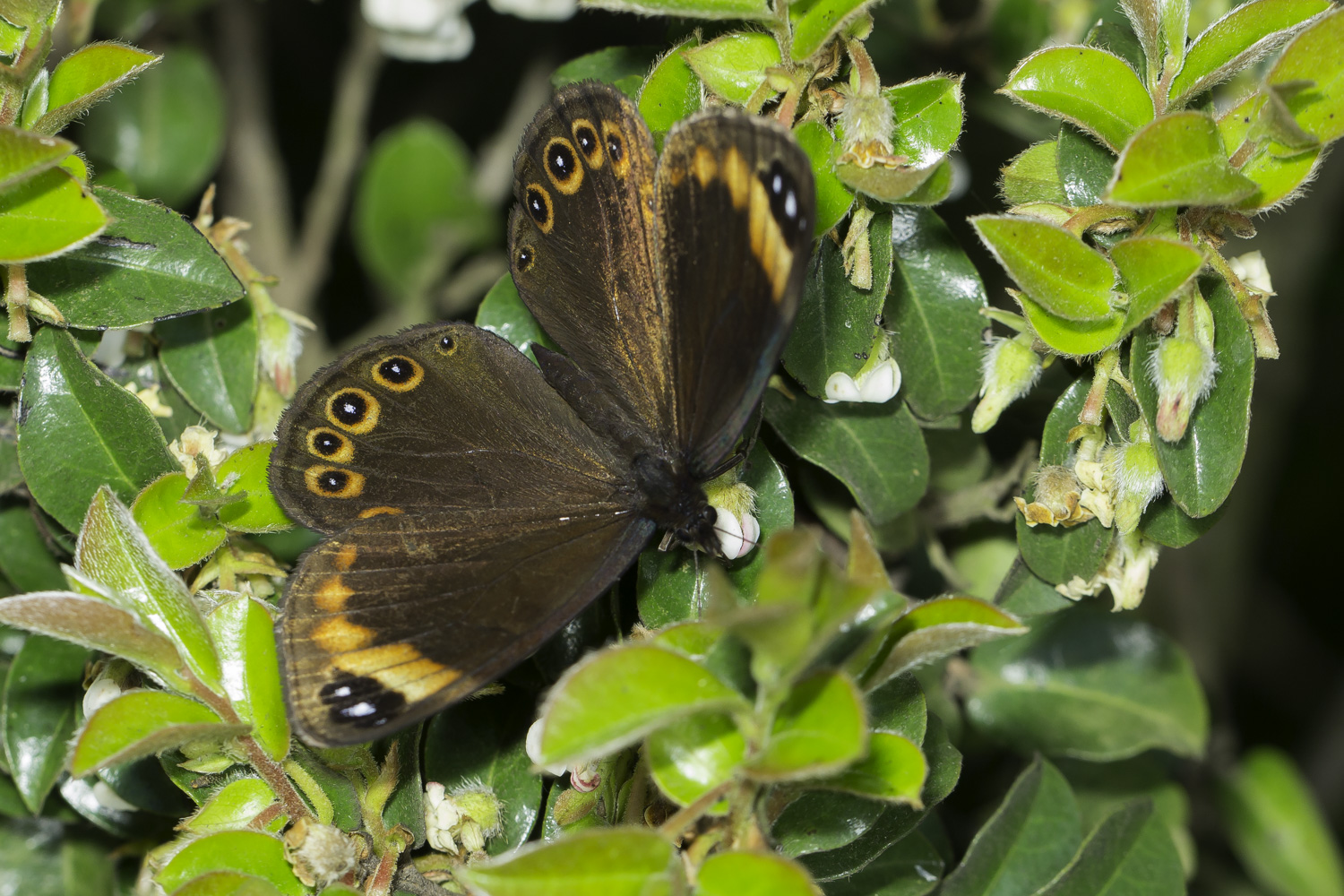
Midlands Widow ♂
Dingana dingana on Diospyros blossom
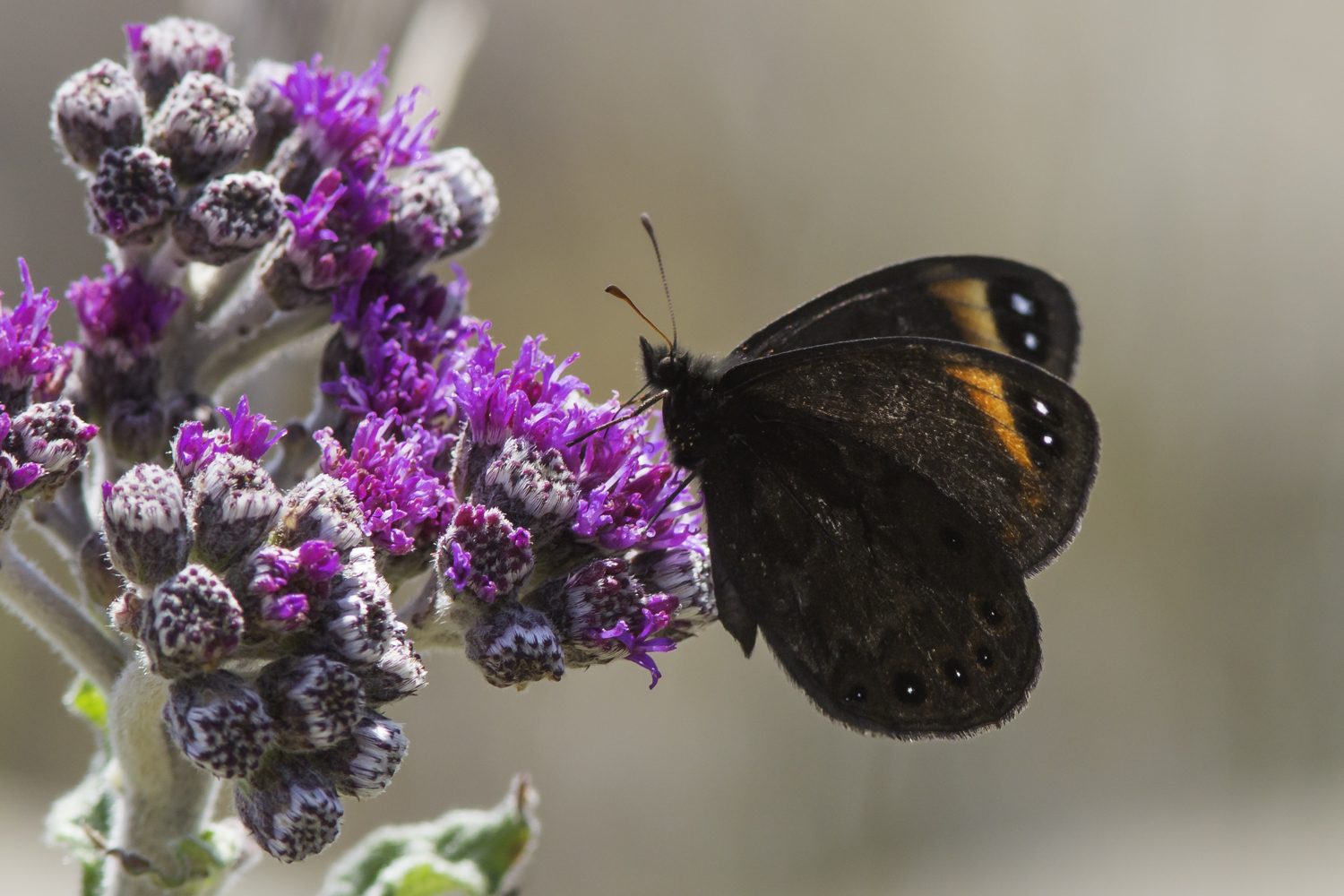
Midlands Widow ♂
Dingana dingana on Vernonia flowers
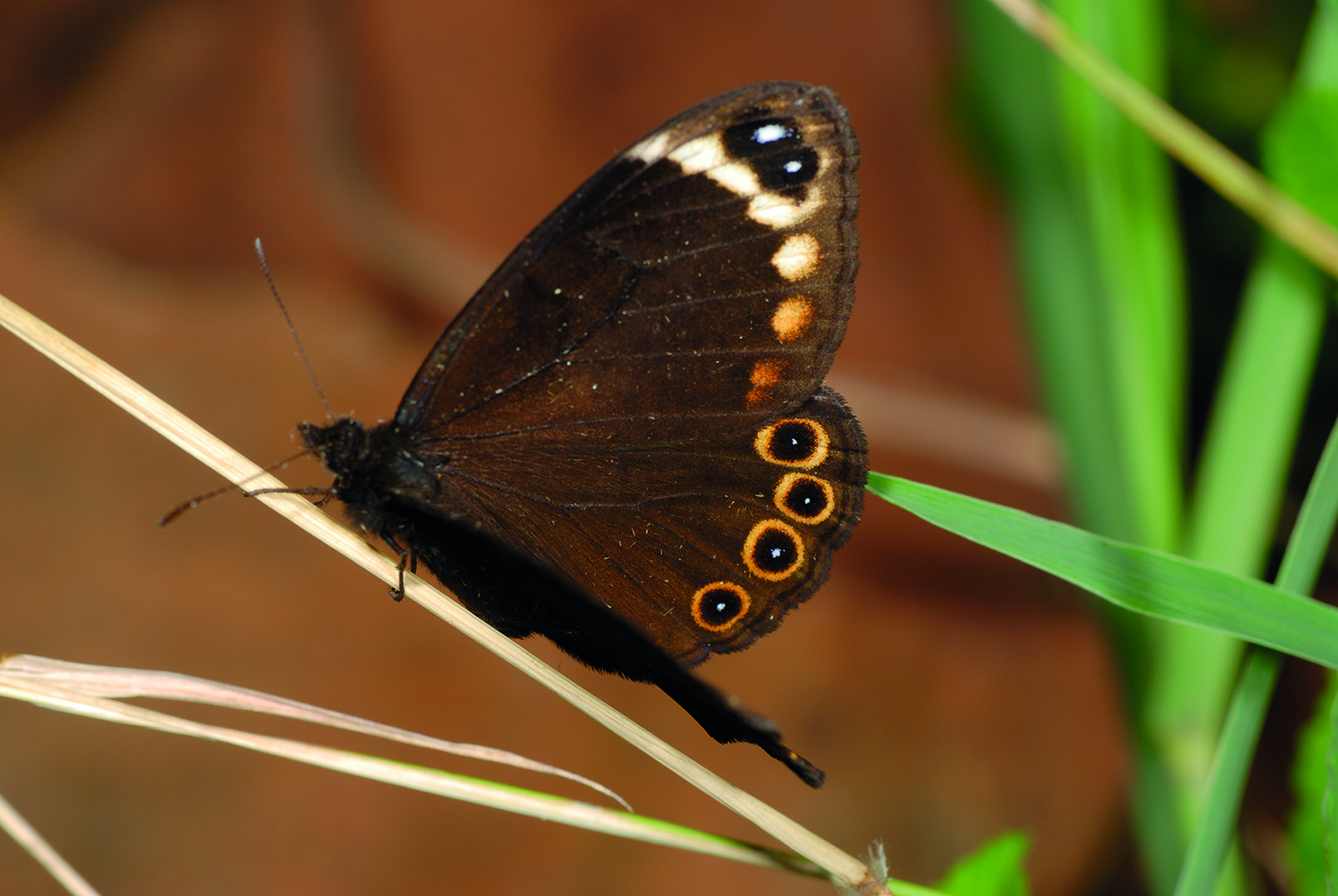
Wolkberg Widow ♂
Dingana clara

Narrow-banded Widow ♀
Dingana angusta

Wakkerstroom Widow ♂
Dingana alaedeus
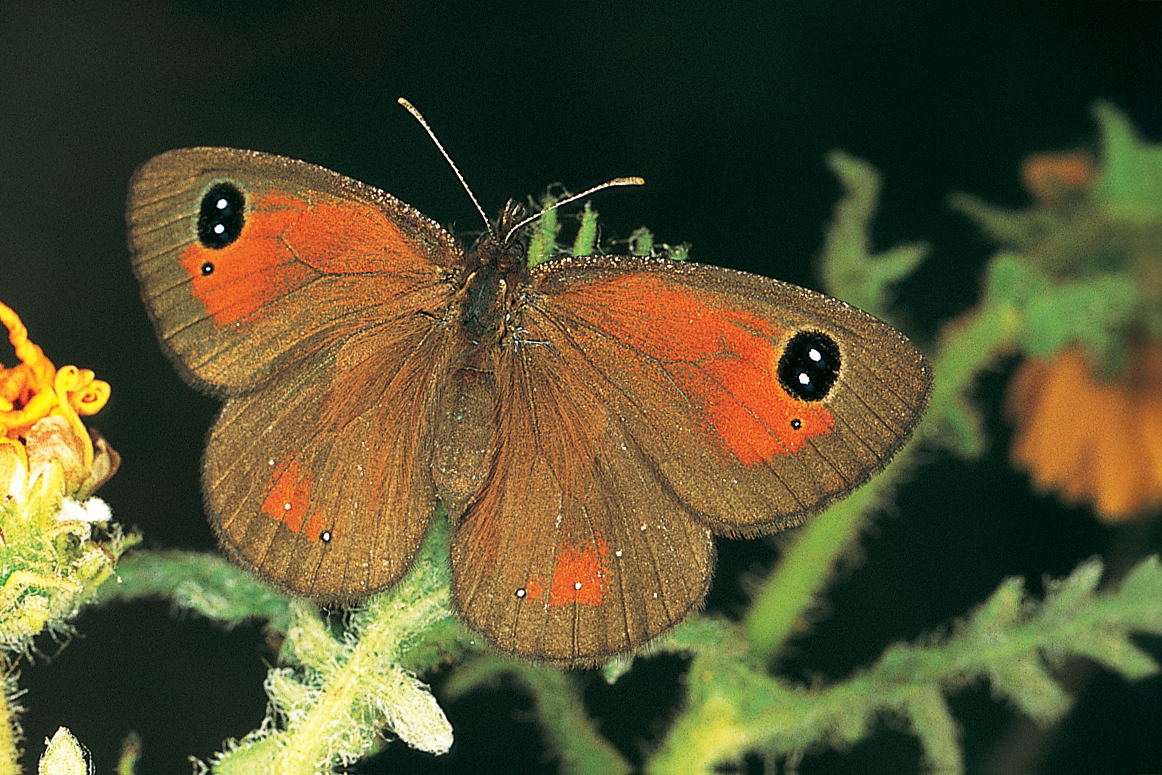
Dirini comprises a group of 29 butterfly species within the subfamily Satyrinae (Nymphalidae), nearly all endemic to Southern Africa, particularly South Africa and Lesotho. Within this tribe, the genera Dingana and Tarsocera are spring butterflies.
In the Fynbos and Karoo biomes, we find the Tarsocera Spring Widows. They are often the first butterflies to emerge in numbers when the winter rains end, and the weather begins to warm. The tiny, dark Sand-dune Spring Widow, Tarsocera cassina, flies among the spring flowers of the west coast. In the arid hills of Namaqualand, species such as the Namaqua Spring Widow, Tarsocera namaquensis, appear. There are seven Spring Widow species in total. Only the Sand-dune Spring Widow is easy to distinguish; the others look remarkably similar and require extensive local knowledge, as well as examination of their genitalia, to identify accurately.
Further north, spring arrives in the montane grasslands after the long, frigid winter. Fresh grass sprouts after fires, and a multitude of flowers bursts into bloom. This is when butterflies such as the Midlands Widow, Dingana dingana, take flight in the Drakensberg foothills of KwaZulu-Natal. In Mpumalanga, the Narrow-banded Widow, Dingana angusta, occurs around Graskop and Sabie, while the Wolkberg Widow, Dingana clara, inhabits grasslands in places such as Lekgalameetse Nature Reserve. Several related species occur along the mountains near Dullstroom and Wakkerstroom, extending as far west as the Waterberg above Thabazimbi.
Depending on the timing of the rains, these butterflies appear from late September to November. Like all Dirini, they can gather in large numbers, dotting the grassy hillsides with dark, bouncing forms.
These closely related species, or their common ancestor, were likely more broadly distributed across southern Africa prior to geological uplift and subsequent aridification at the end of the Miocene epoch approximately five million years ago. Their larvae exhibit adaptations (like a very long larval stage) allowing them to feed on tough, mountain-dwelling grasses such as Tenaxia Wire-grass. Populations are consistently located around patches of these grasses.
Why these populations have split between the seasons is a matter for debate. It may be that they are adapted to the cooler conditions in spring and autumn, and the original ancestors were ‘double-brooded’ or bivoltine. Over millions of years the broods became reproductively isolated in time, resulting in what is called allochronic speciation.

Boland Brown ♀
Melampias hübneri hübneri
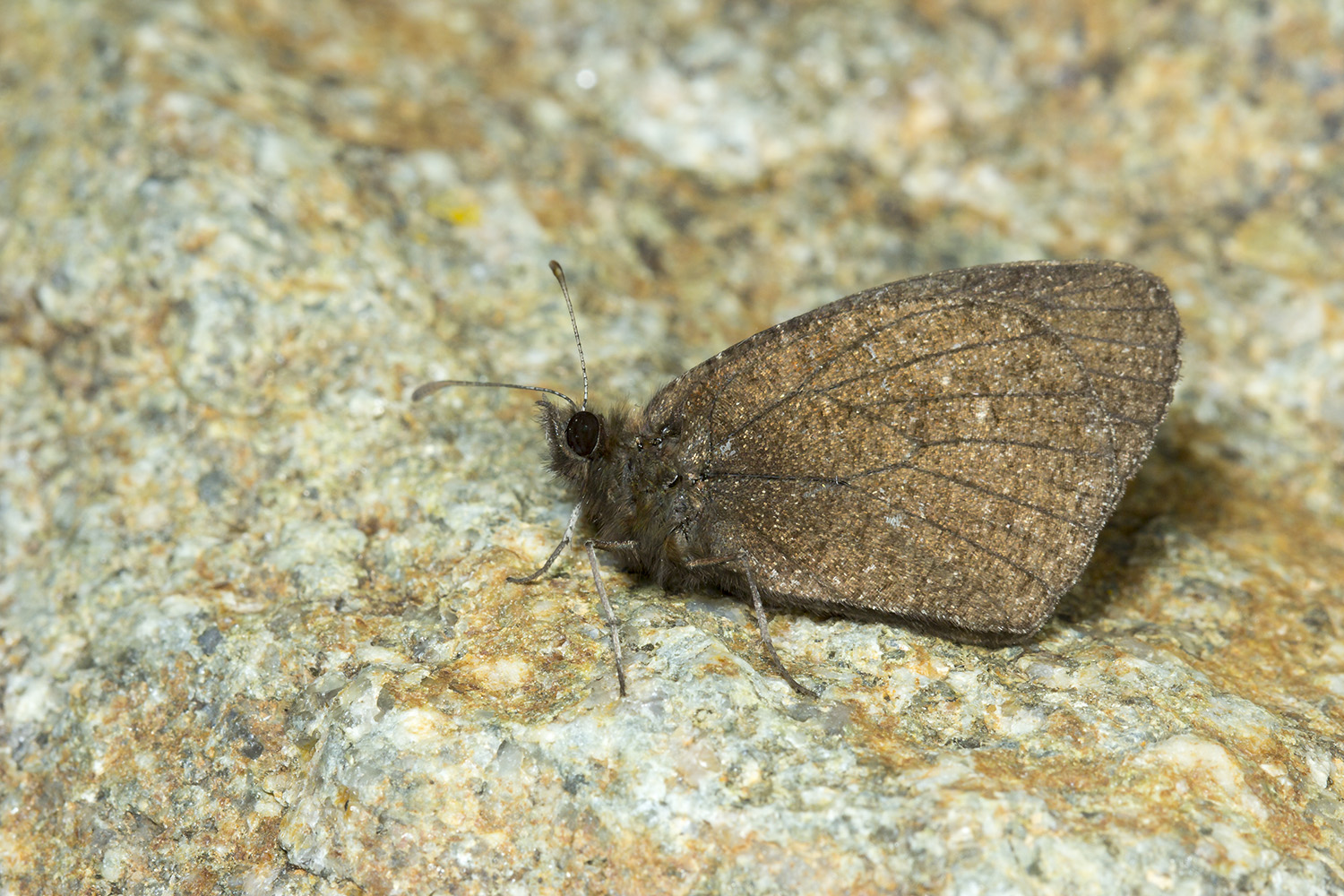
Northern Boland Brown ♂
Melampias hübneri steniptera
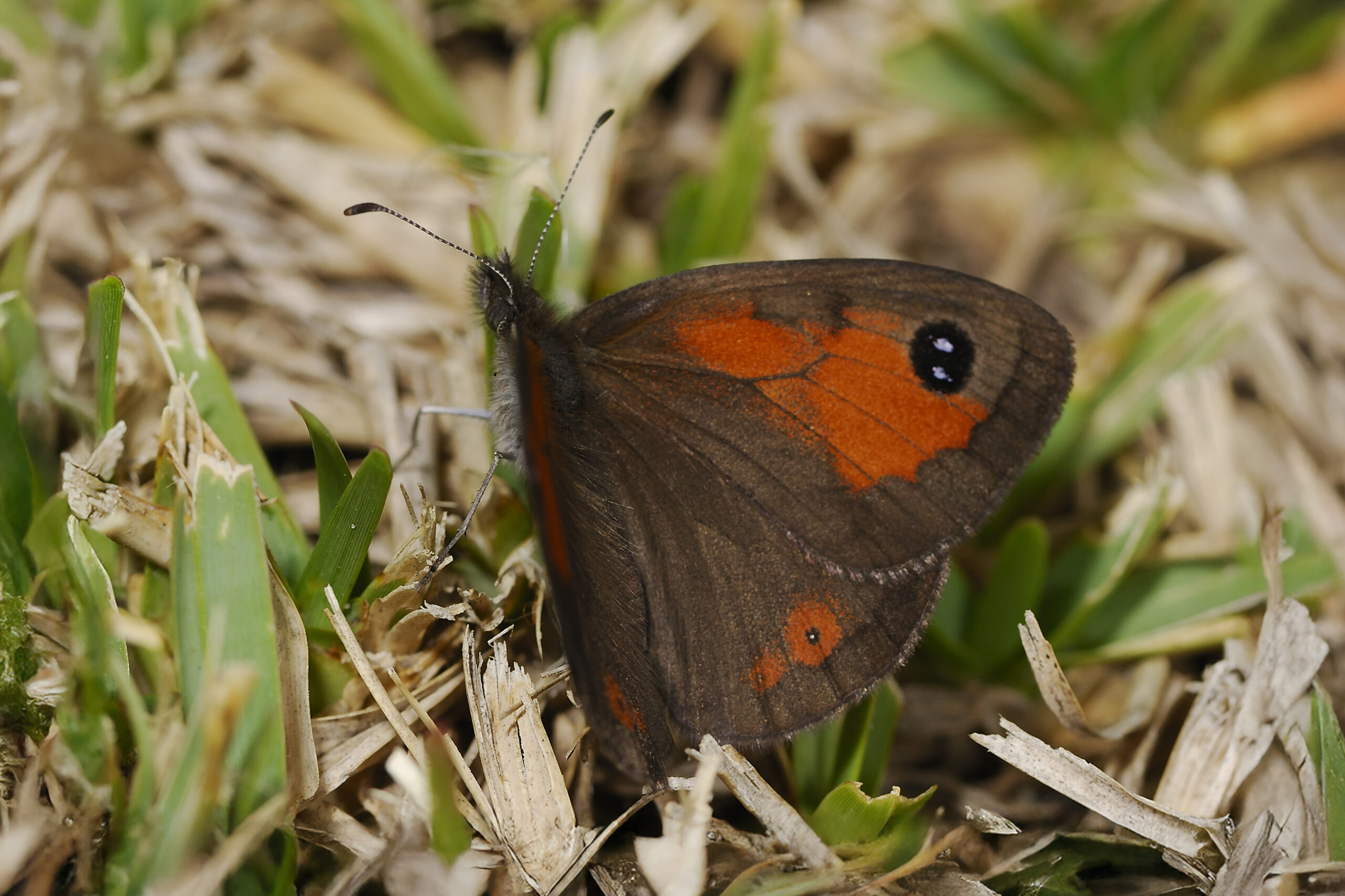
Dirini are not the only Satyrinae to emerge in spring. In the Western Cape and Namaqualand, the Boland Brown, Melampias hübneri, is among the first spring butterflies to appear, sometimes emerging as early as June during warm winters. It belongs to another tribe within the Satyrinae, the Satyrini, which also includes the Pseudonympha Browns.

Silver-bottom Brown ♂
Pseudonympha magus
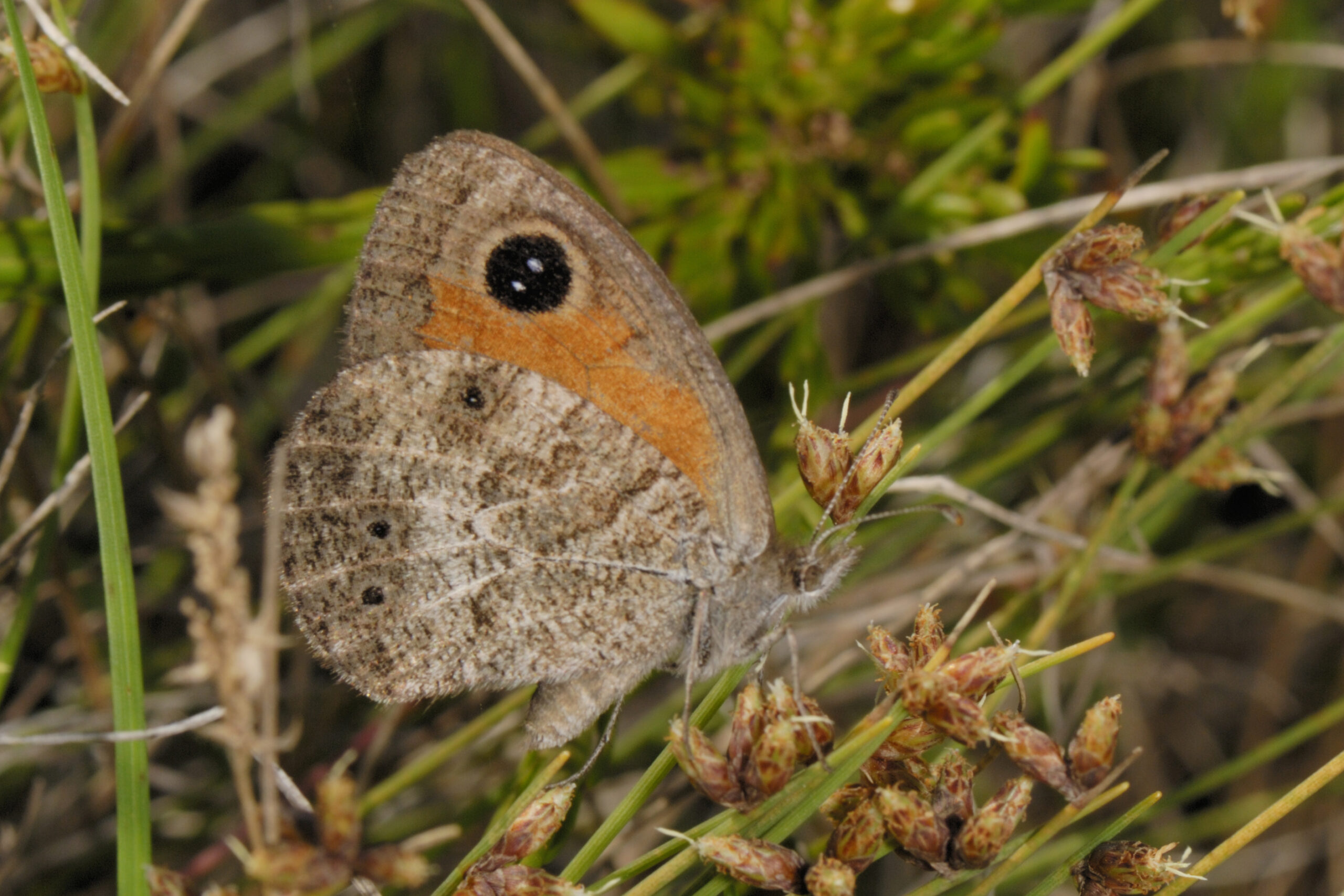
Silver-bottom Brown ♀
Pseudonympha magus
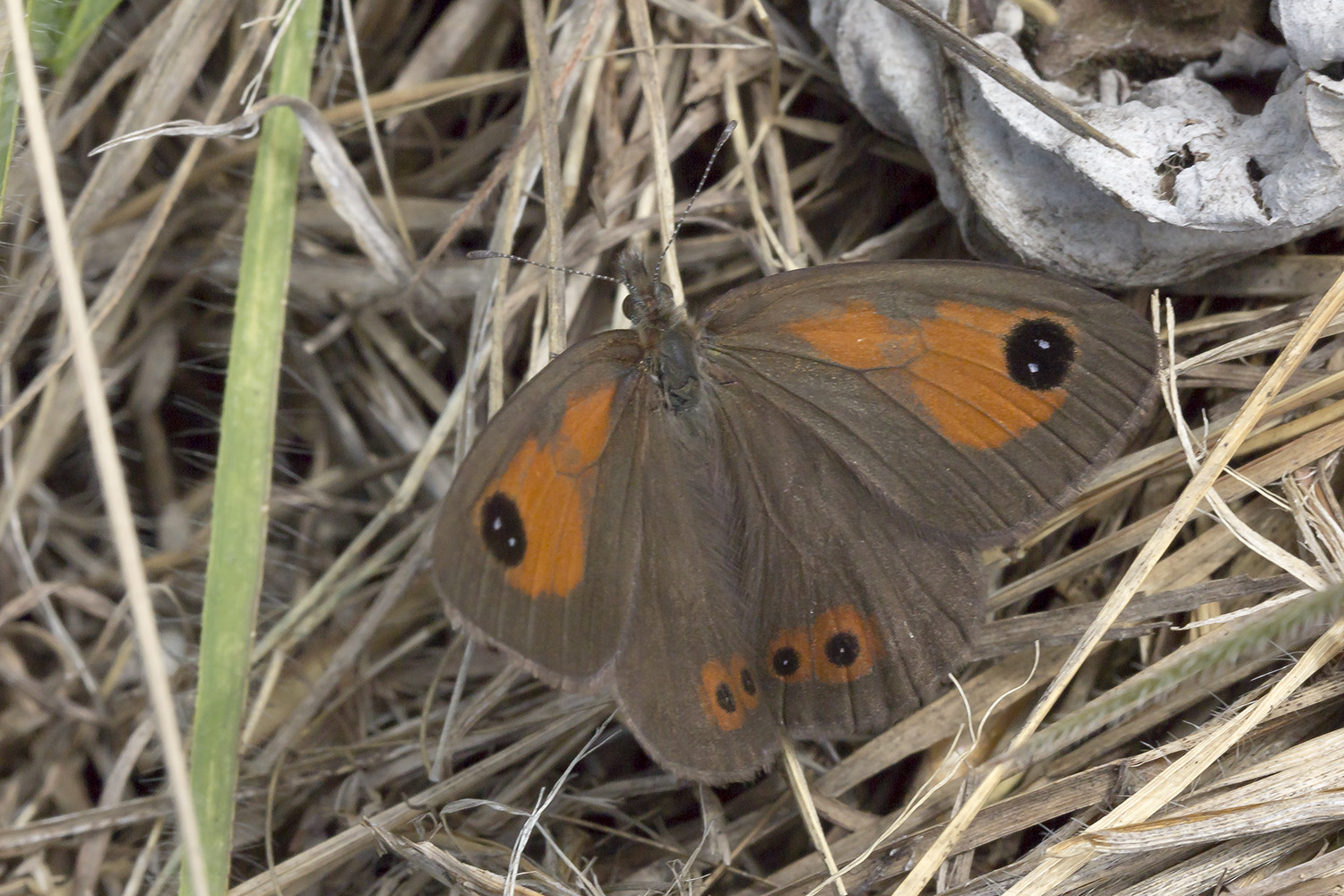
False Silver-bottom Brown ♂
Pseudonympha magoides
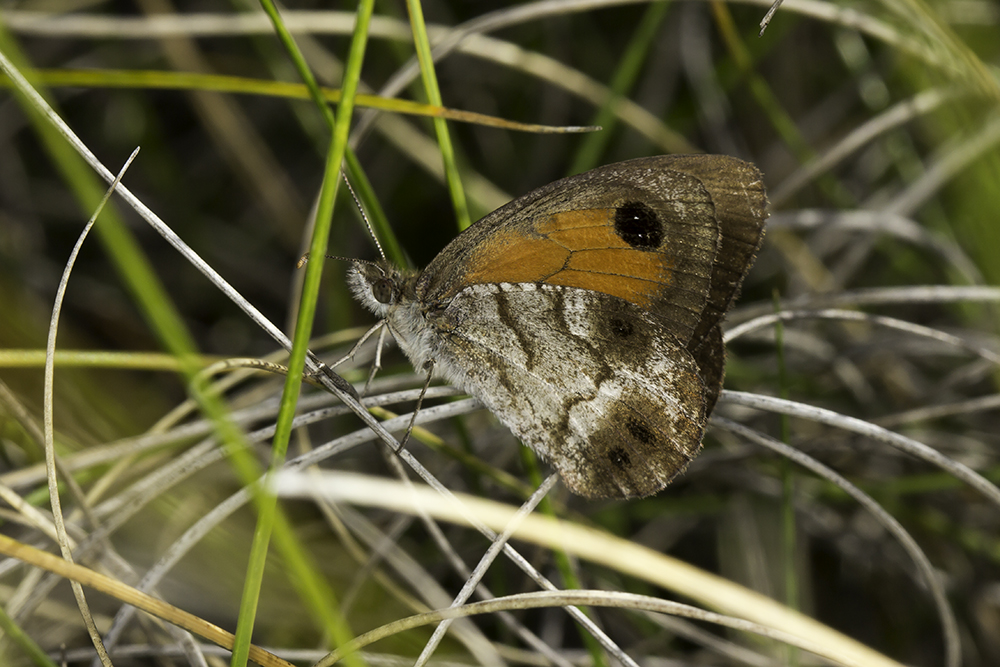
False Silver-bottom Brown ♂
Pseudonympha magoides
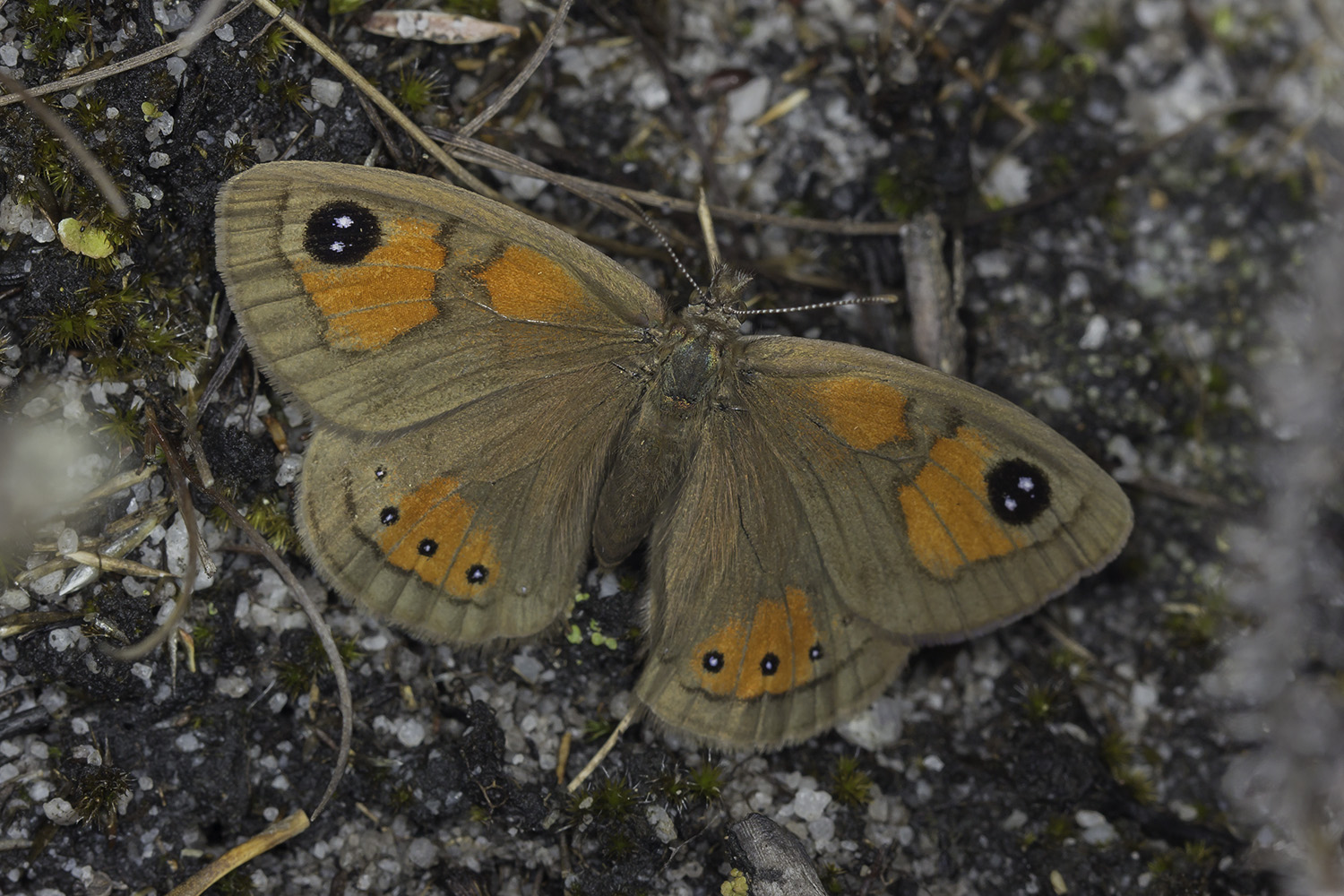
Netted Brown ♀
Pseudonympha trimenii trimenii
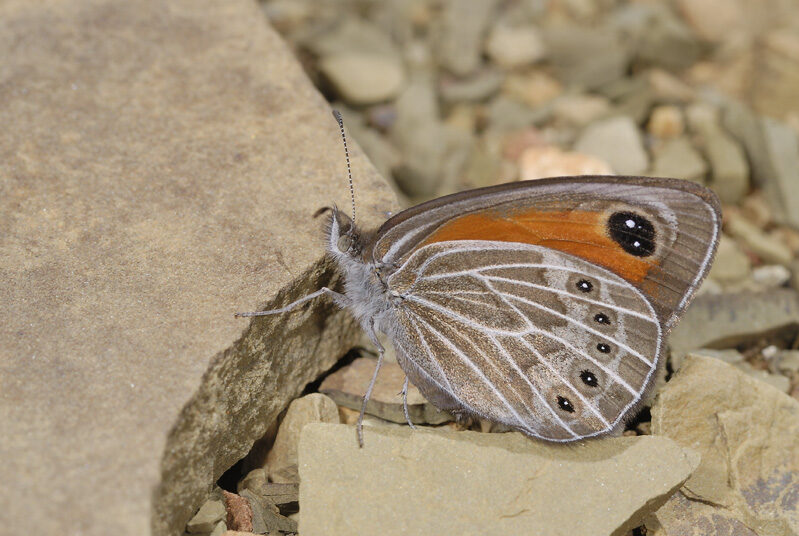
Namaqua Netted Brown
Paralethe dendrophilus dendrophilus
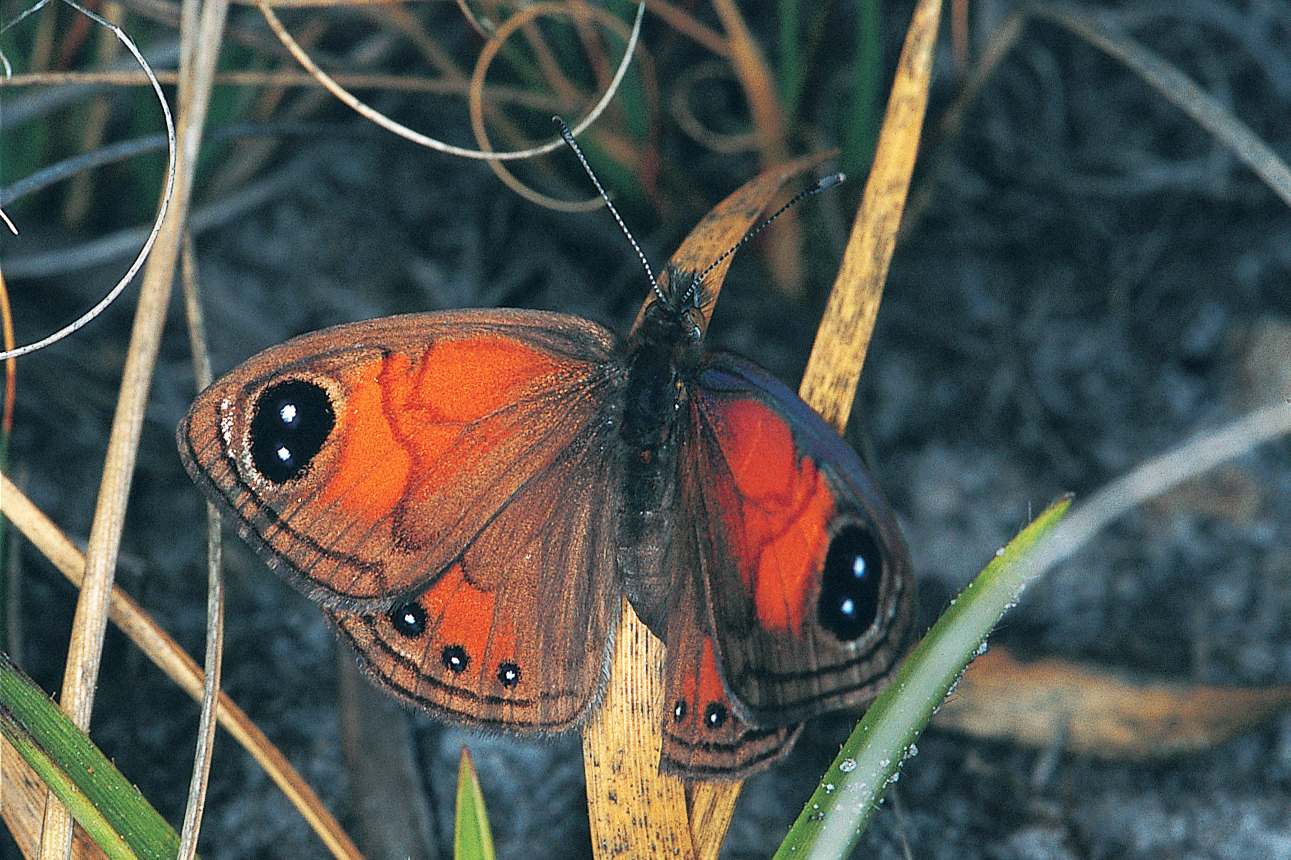
Drakensberg Brown ♀
Pseudonympha poetula
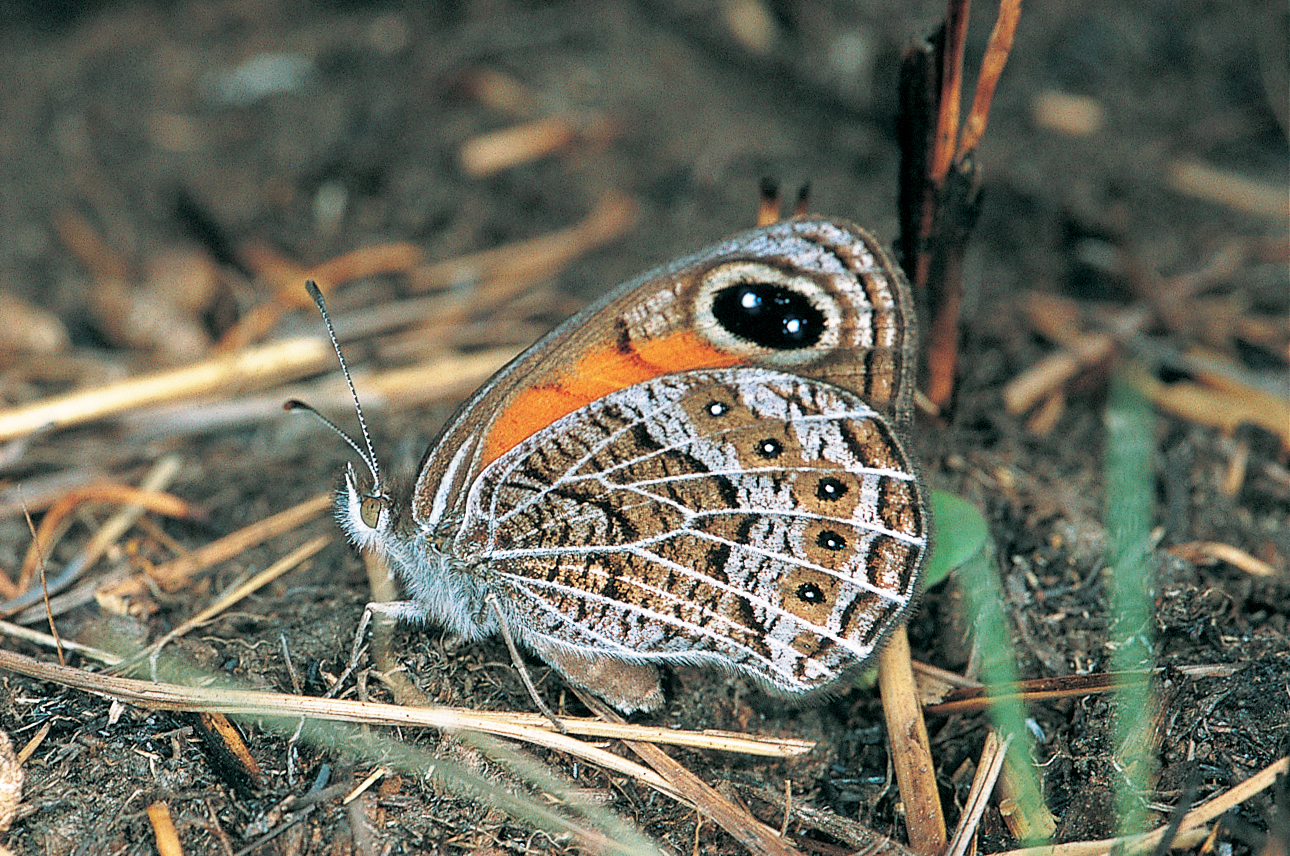
Drakensberg Brown ♀
Pseudonympha poetula
The Silver-bottom Brown, Pseudonympha magus, begins flying in September and has an overlapping autumn brood. It has a very wide range, from sea level to the high mountains. The Netted Brown, Pseudonympha trimenii, is single-brooded and appears only in spring. Its four subspecies occur across the Fynbos, Nama Karoo and Succulent Karoo biomes, and its distinctive netted underside is especially attractive.
Further north, in the Drakensberg and Wolkberg, the similar False Silver-bottom Brown, Pseudonympha magoides, flies in mid-elevation grasslands during spring. The earliest member of this genus to emerge in the area, however, is the Drakensberg Brown, Pseudonympha poetula, another attractive species. Unlike the Dirini, these butterflies tend to be solitary and fly fast and low.

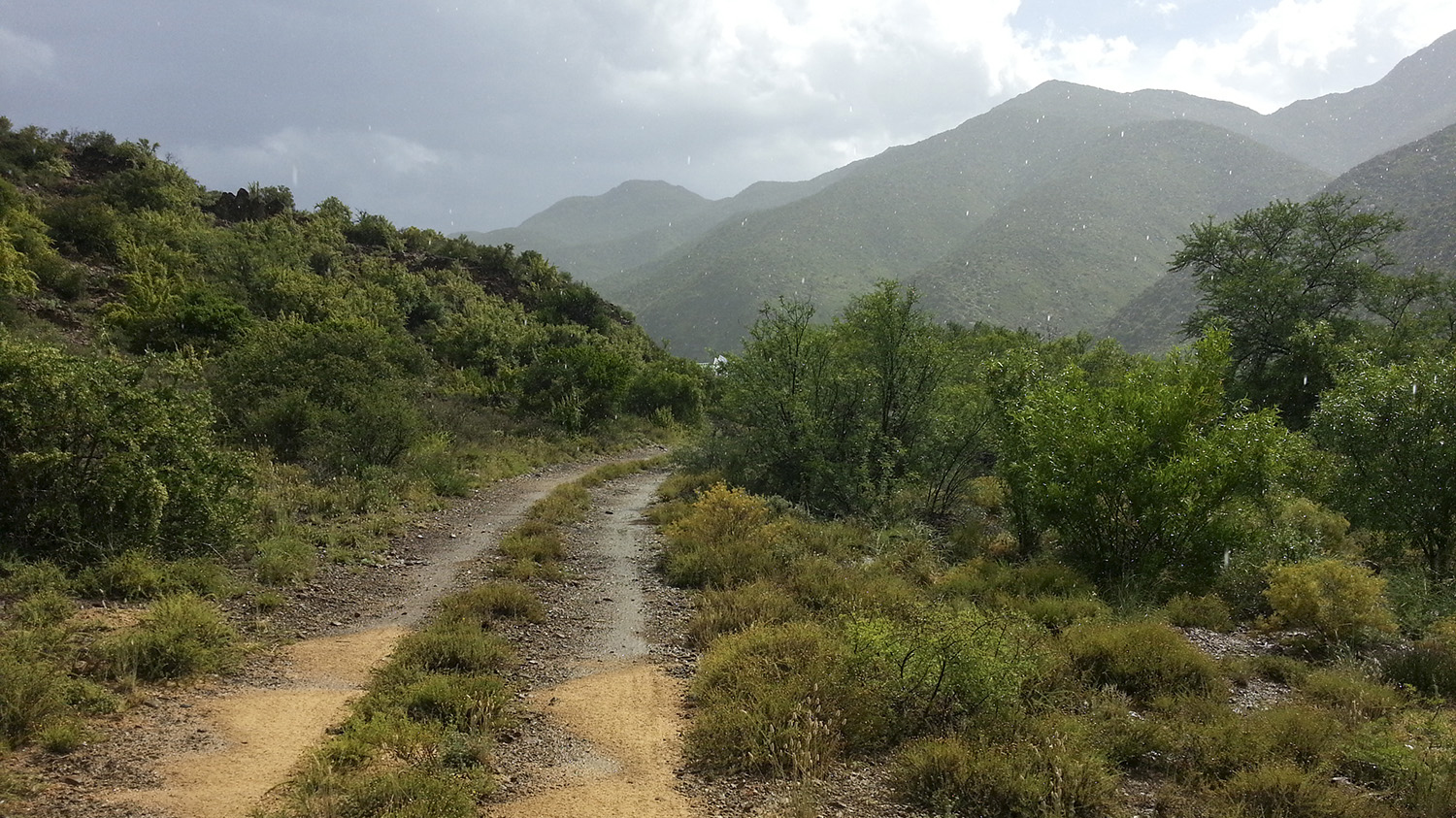
Gamka River Valley
Little Karoo habitat for Karoo Hillside Brown
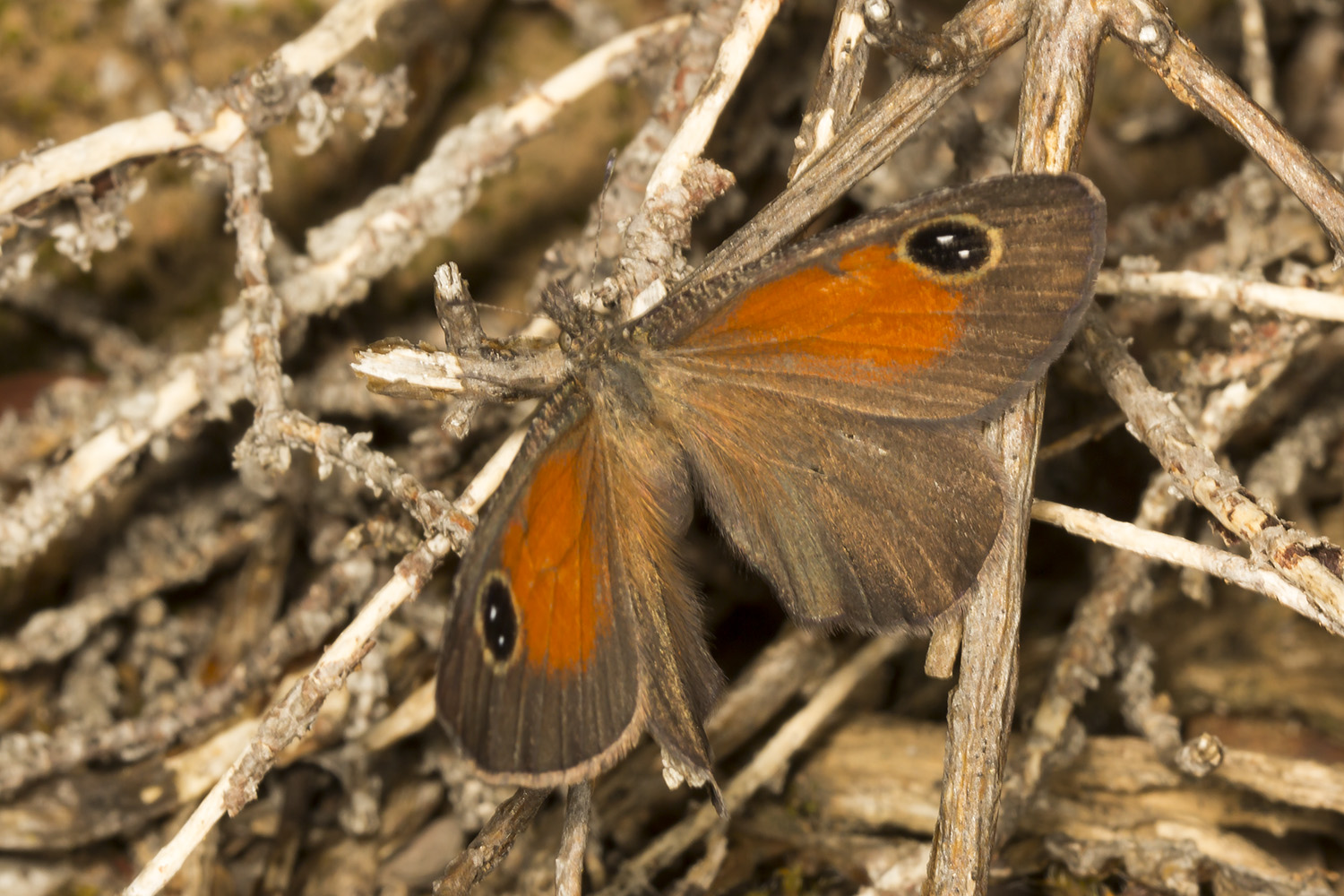
Karoo Hillside Brown ♀
Stygionympha irrorata
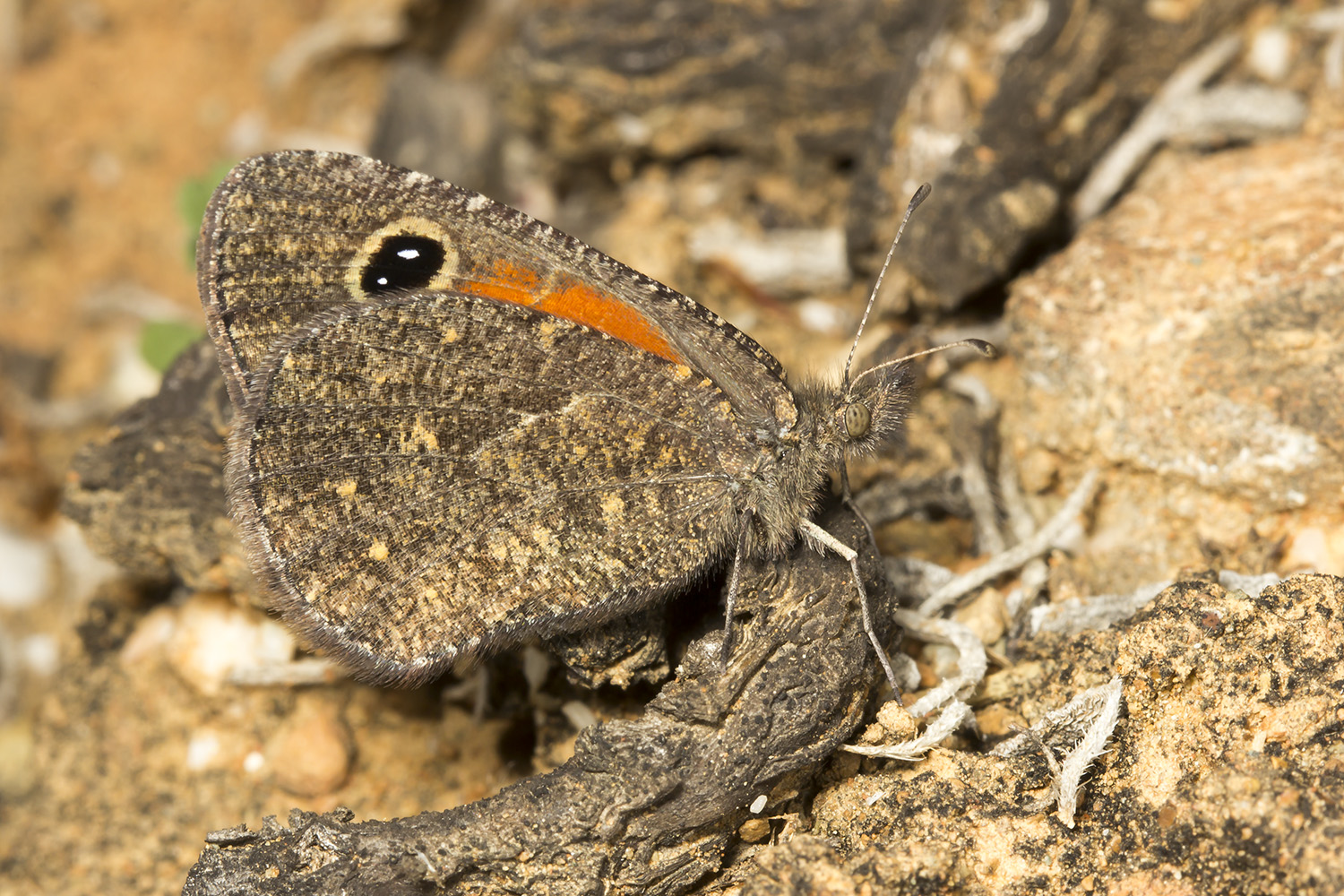
Karoo Hillside Brown ♀
Stygionympha irrorata
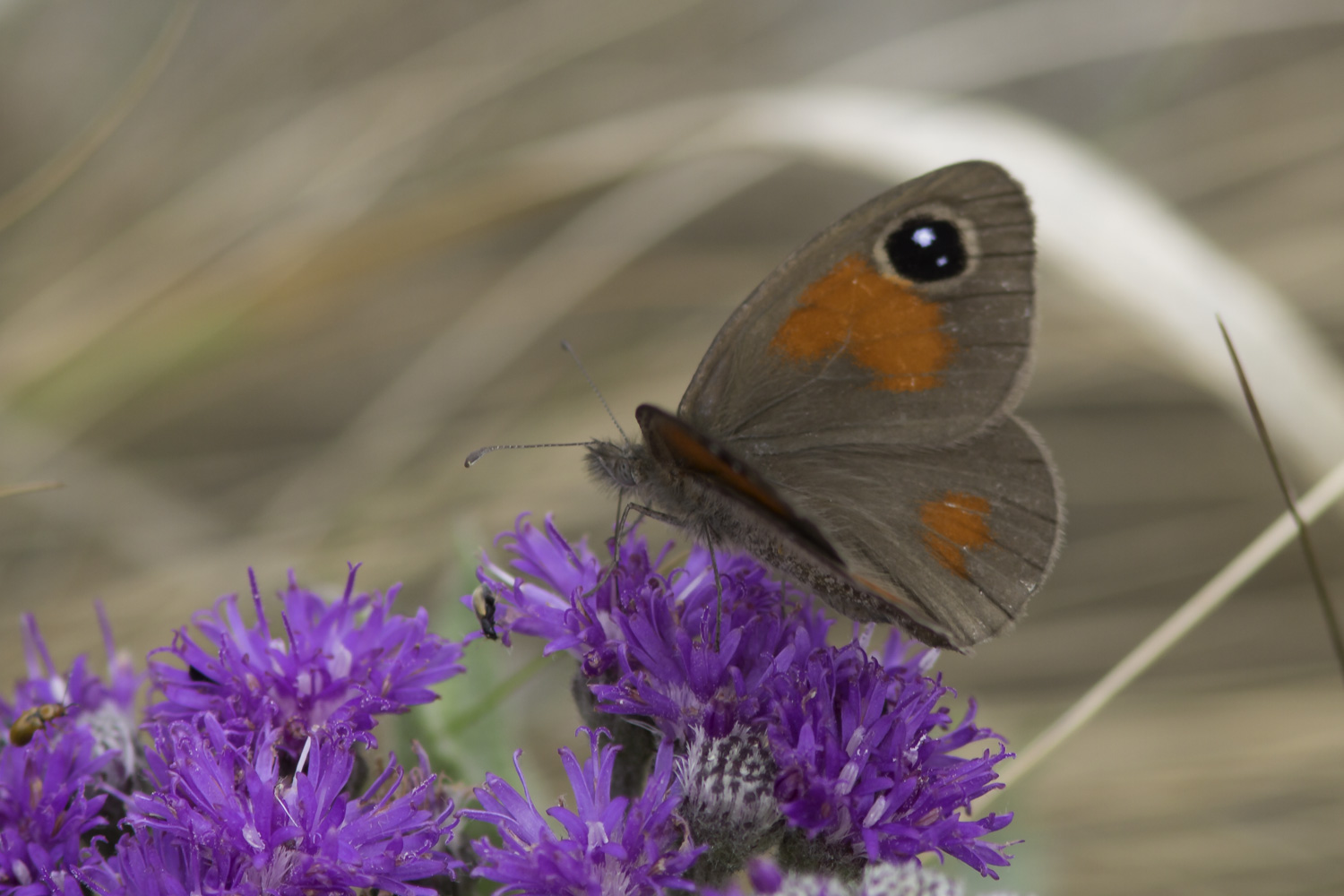
Mountain Rocky Hillside Brown ♂
Stygionympha wichgrafi williami
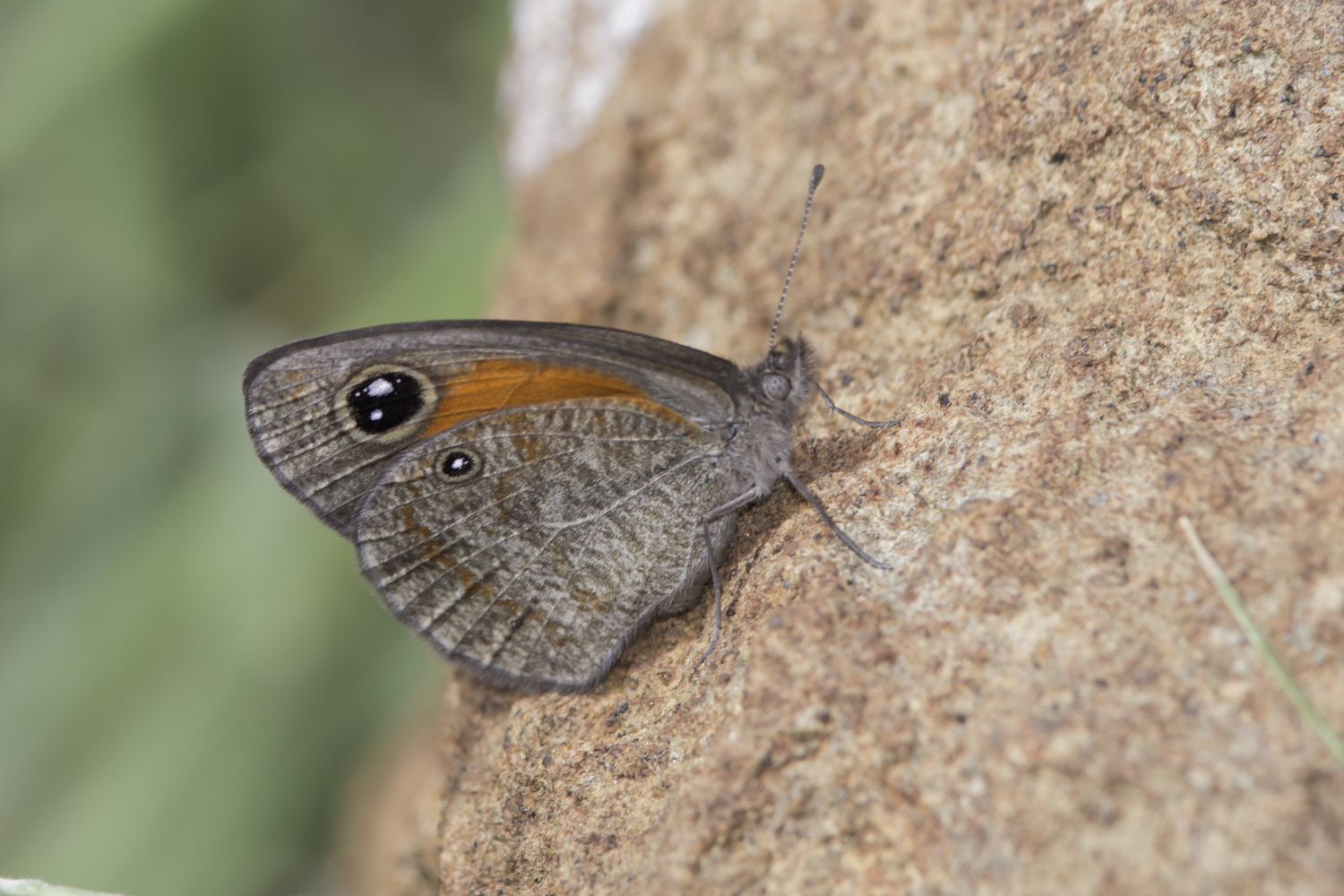
Mountain Rocky Hillside Brown ♂
Stygionympha wichgrafi williami
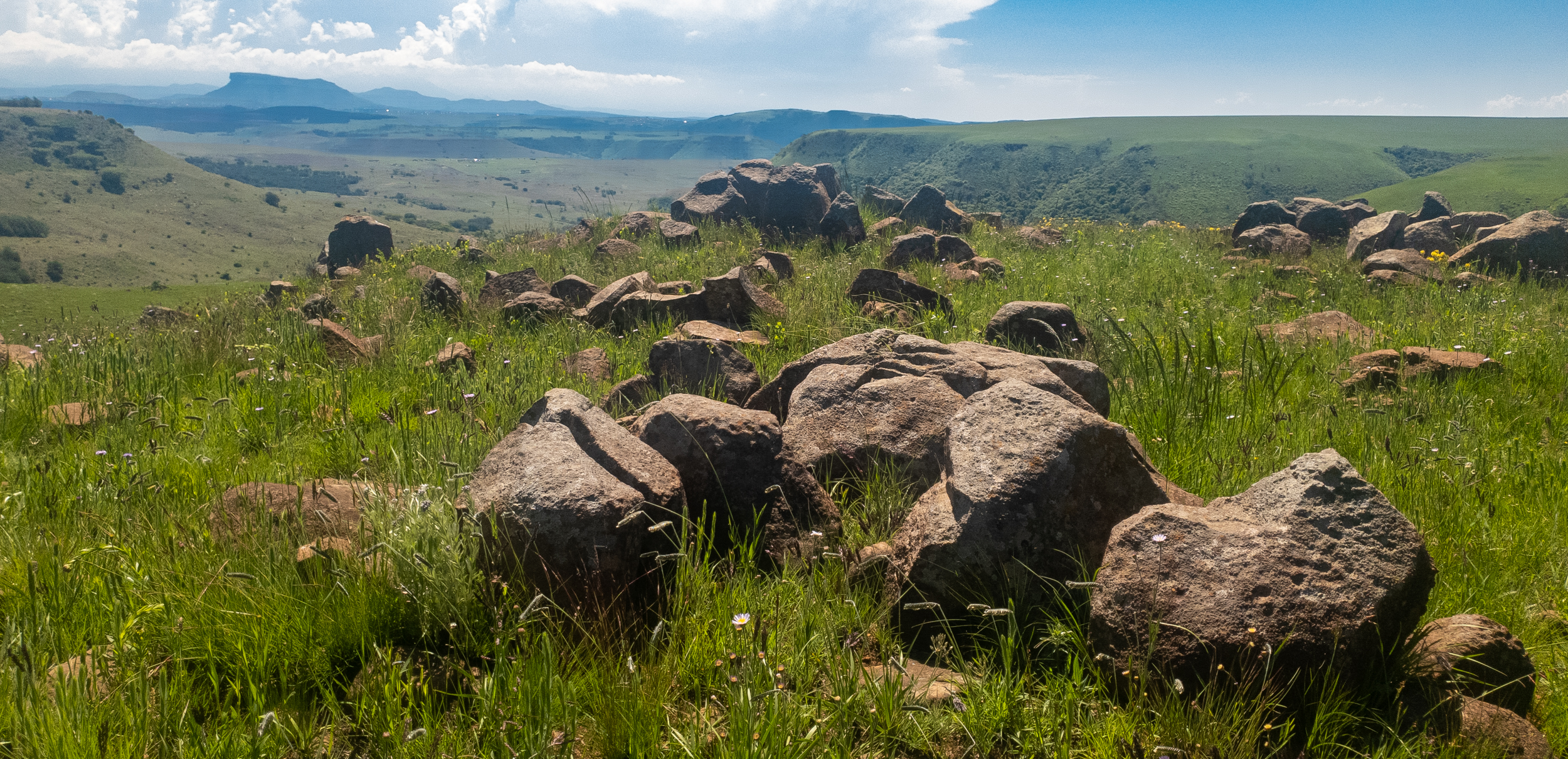
Spitzkop in the KwaZulu-Natal Midlands
Habitat for Giant Cupids and Rocky Hillside Browns
Stygionympha Hillside Browns are a related genus with similar markings and a faster, more agile flight. Photographing them can be great fun. The Rocky Hillside Brown, Stygionympha wichgrafi, is aptly named: its three subspecies fly rapidly over rocky hillsides from southern KwaZulu-Natal to Limpopo. Watch your step when trying to photograph one. Cameras and hard rocks do not mix!
The Karoo Hillside Brown, Stygionympha irrorata, is another early spring butterfly, found in the Little Karoo and the southern half of the Great Karoo. Like others in this group, it flies rapidly close to the ground and settles among grass and rocks. For photographers, its behaviour can be frustrating. It lands, opens its wings for a few seconds, then snaps them shut. Dirini often reopen their wings before flying, but these butterflies stay still until disturbed, then dart between rocks and bossies while you try to follow without tripping. Once one settles, you have only a few heartbeats to capture an upper-side photograph before it takes off again. An underside photograph can be just as difficult. These butterflies often land facing you, perhaps to keep watch, and will usually flush again if you try to circle around for a better angle. Knee pads and a good sense of balance are essential when photographing them!

Monteseel Hilltop in early October
a good spot to see Precis octavia sesamus form natalensis

Southern Gaudy Commodore ♂ summer form
Precis octavia sesamus form natalensis
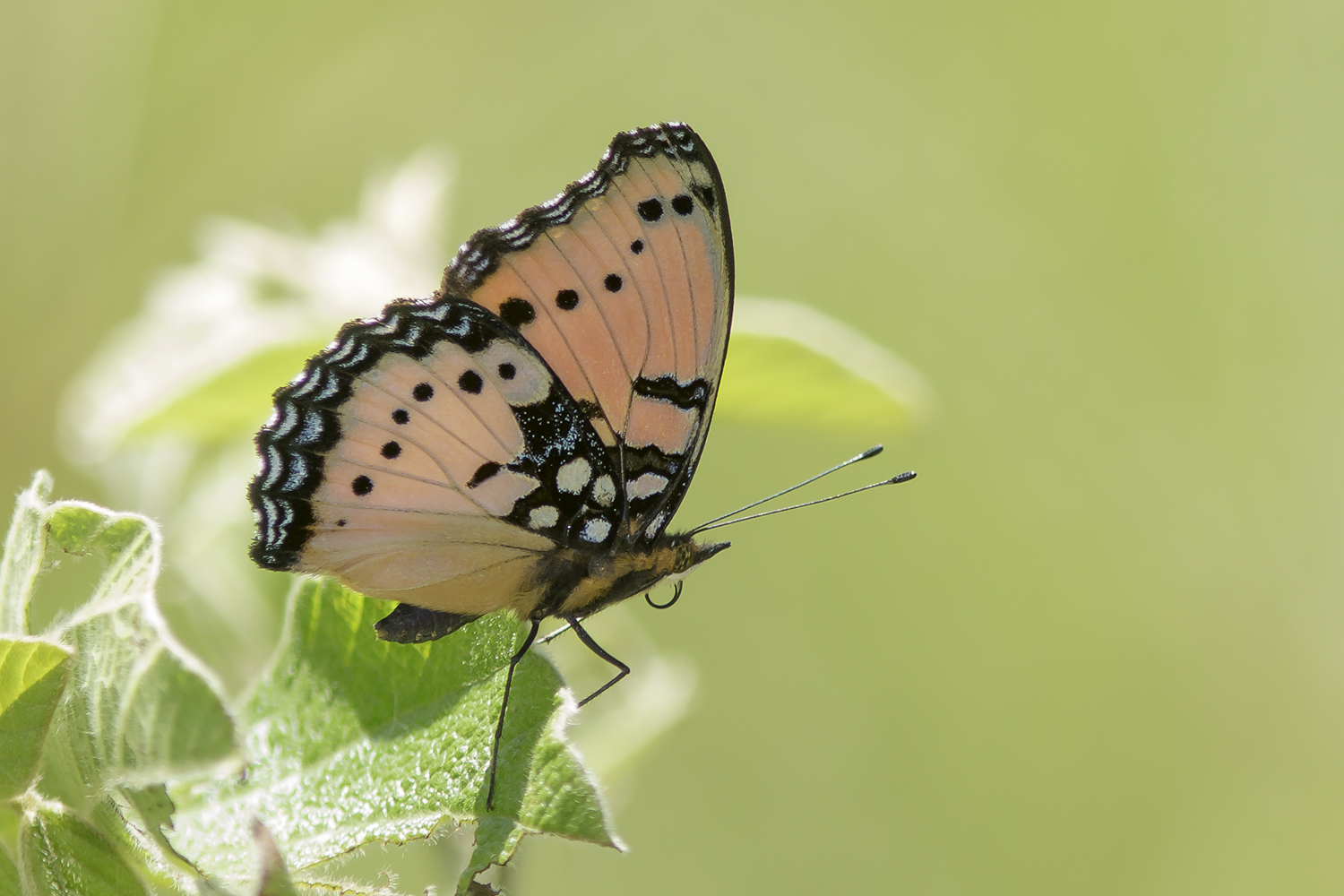
Southern Gaudy Commodore ♂ summer form
Precis octavia sesamus form natalensis
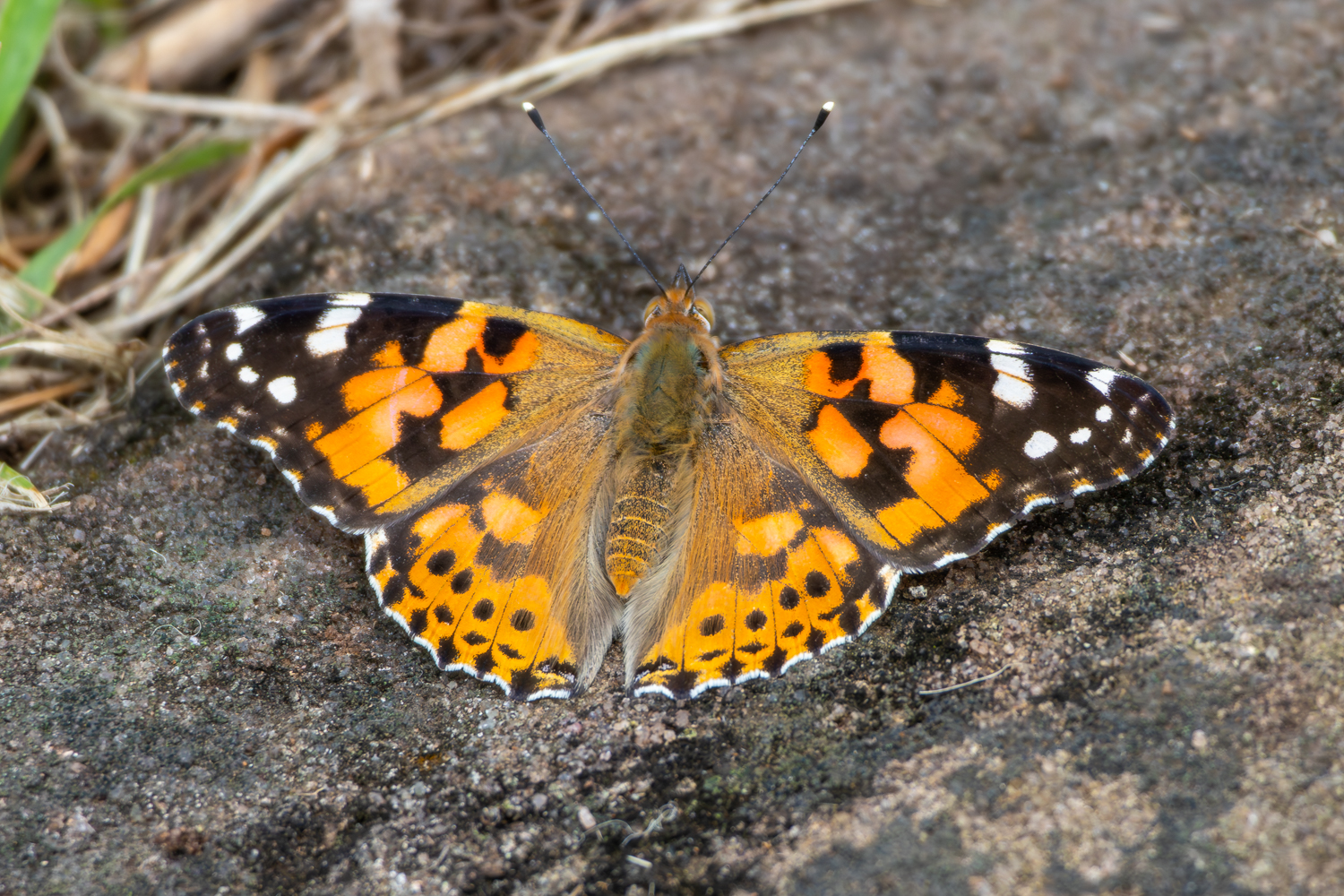
Painted Lady ♂
Vanessa cardui
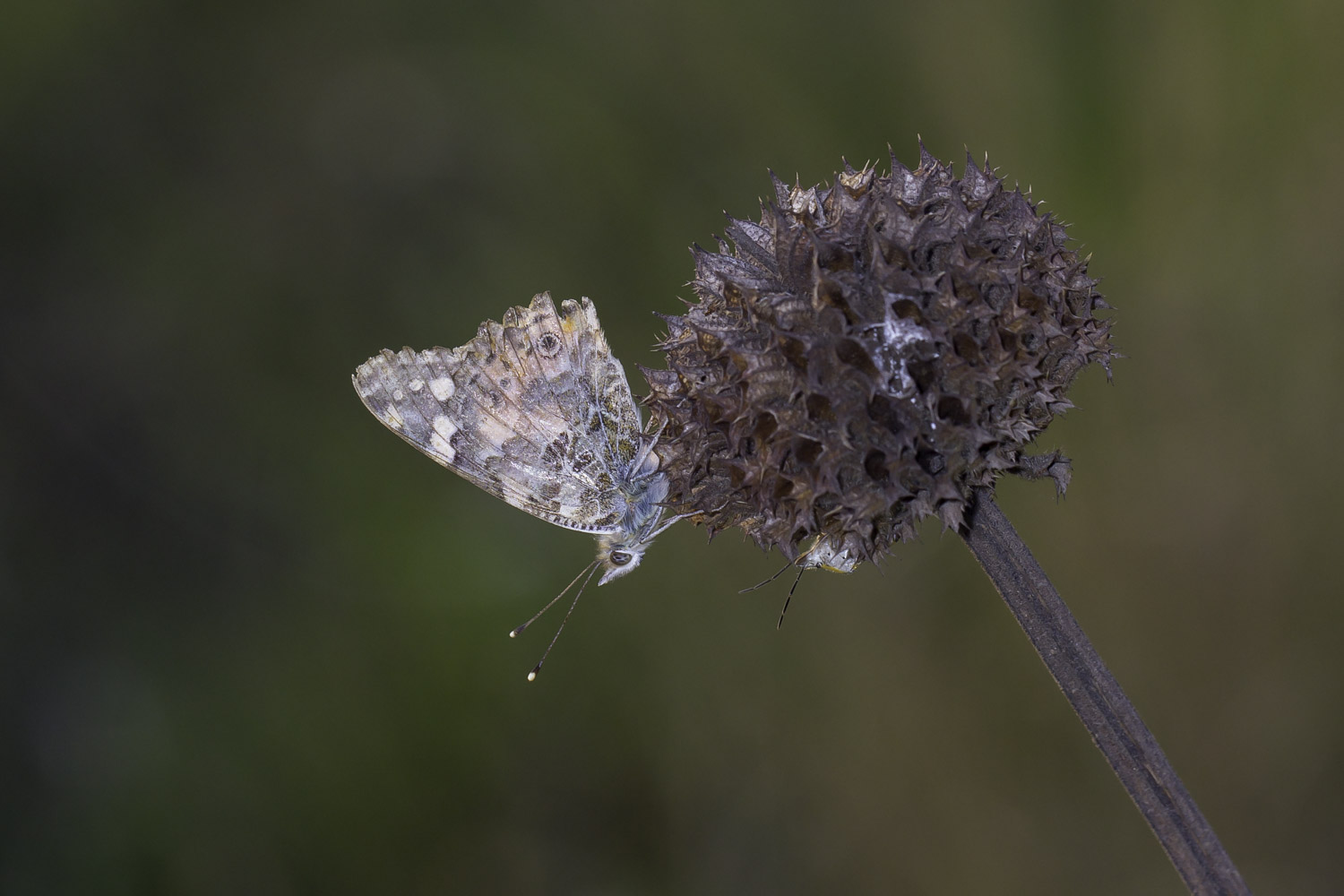
Painted Lady ♂ roosting in the open
Vanessa cardui
In the Autumn Specials blog, I mentioned the Gaudy Commodore, Precis octavia sesamus, and featured its dry-season form, sesamus. In spring, a few worn sesamus individuals that survived the winter may remain, but the gorgeous orange summer form, natalensis, soon appears on the hilltops. Unlike the Browns, these are approachable butterflies that often sit with their wings spread wide to bask and display their colours. Capturing an underside photograph, however, can be challenging.
These butterflies belong to the Nymphalinae subfamily of the Nymphalidae, commonly known as Brush-footed Butterflies. The widespread Painted Lady, Vanessa cardui, also belongs to this group. It can be seen at any time of year and is one of the most far-ranging butterfly migrants. Like the Commodores, Painted Ladies overwinter as adults and can survive extreme cold. In spring, however, we often see a sudden wave of freshly emerged individuals preparing to migrate north.

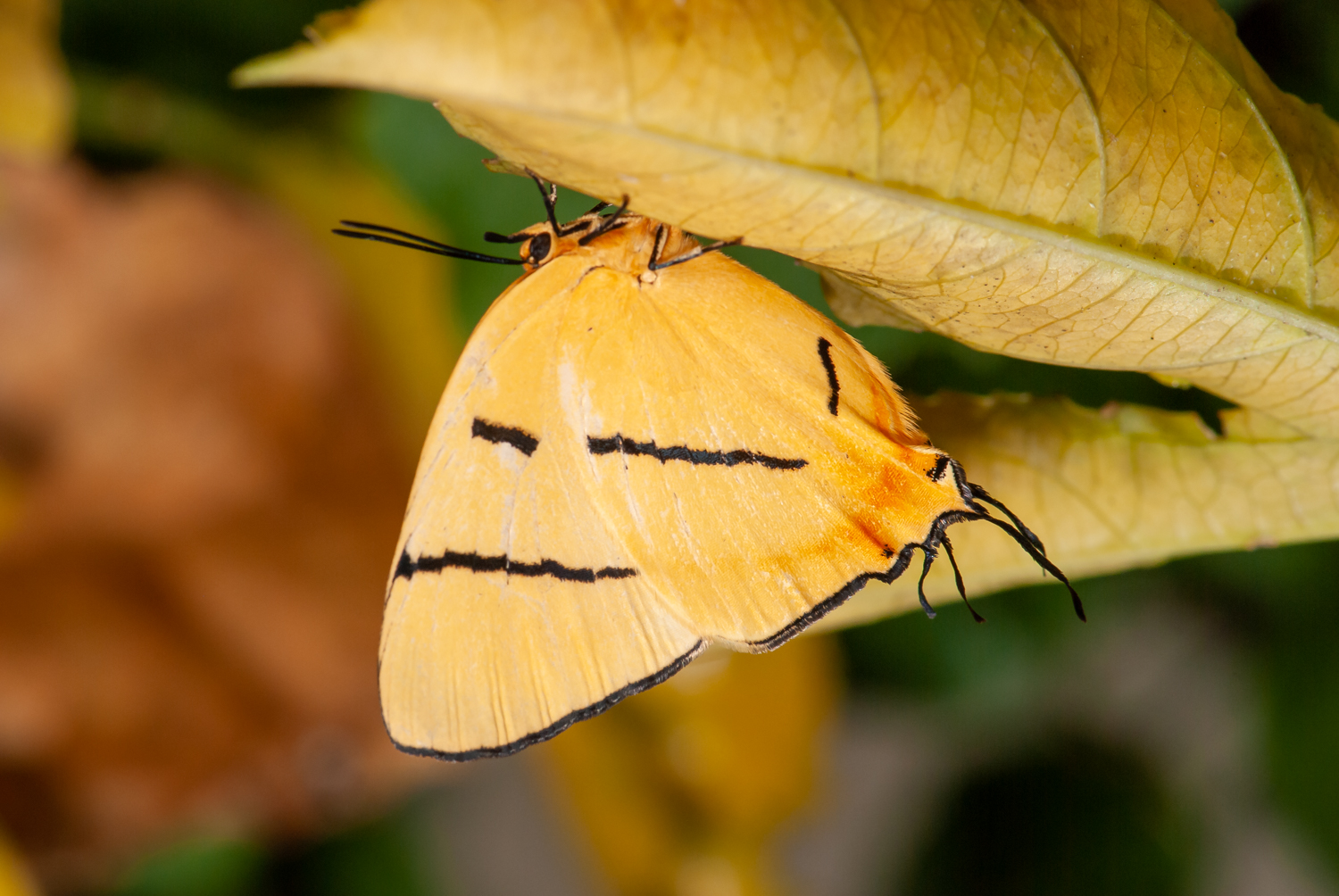
Saffron Sapphire ♂
Iolaus pallene hiding in yellow Combretum foliage
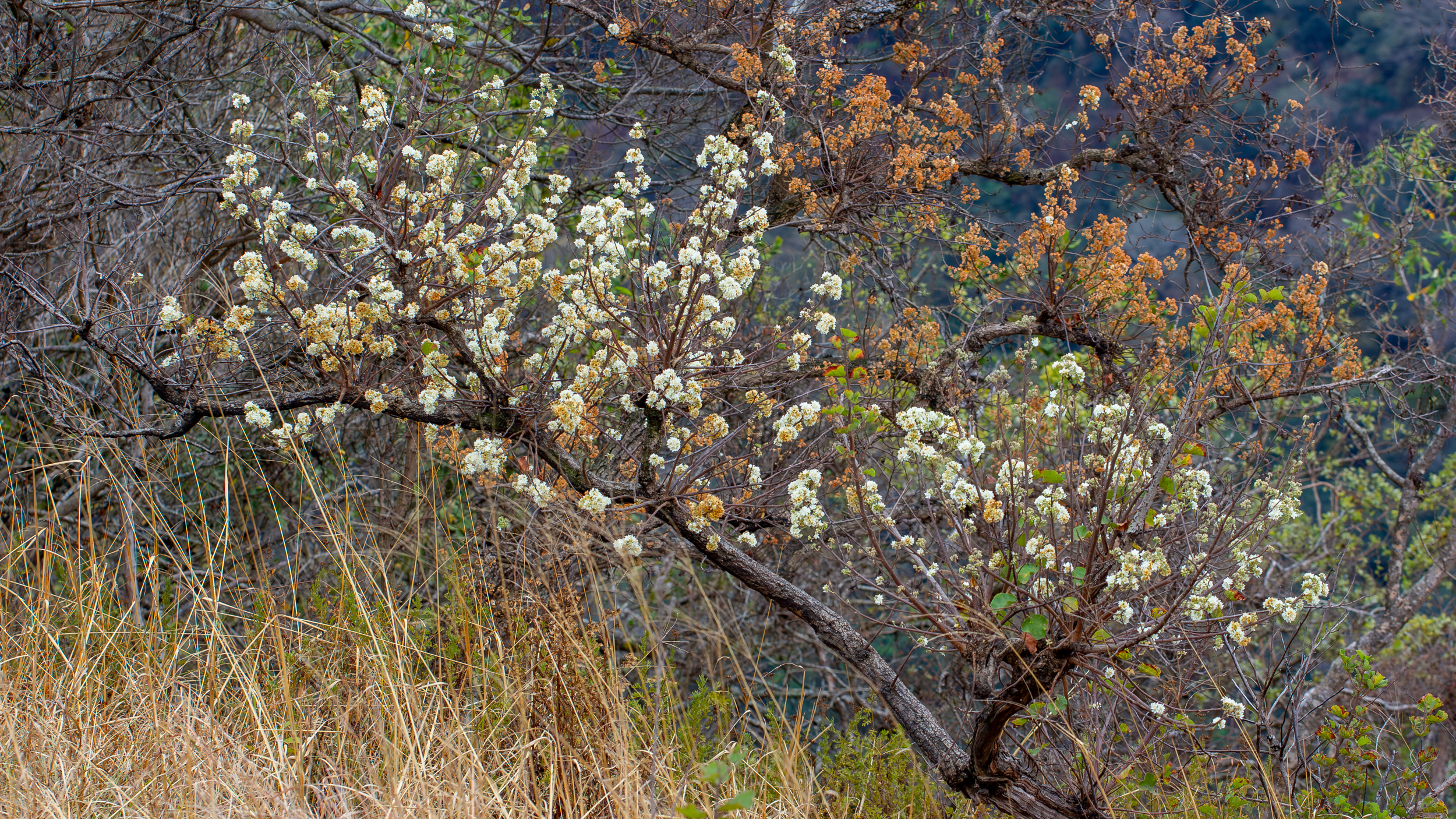
African Wild Pear in spring bloom
Dombeya rorundifolia

Brown-line Sapphire ♀
Iolaus alienus alienus
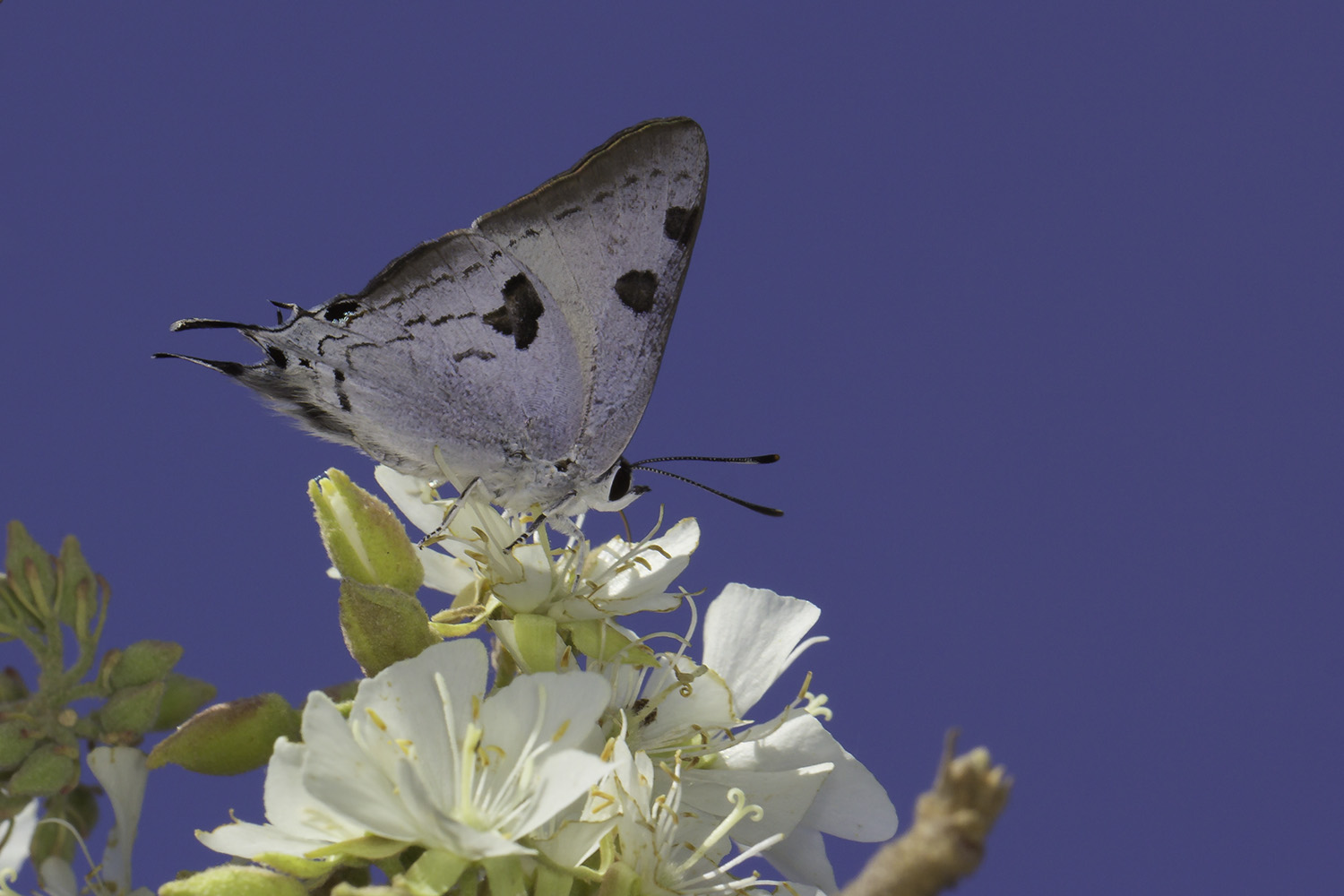
Brown-line Sapphire ♂ on Wild Pear blossom
Iolaus alienus alienus
The Gossamer-winged butterflies of the family Lycaenidae include several wonderful spring species. In dry bushveld and grassy savanna, the Saffron Sapphire, Iolaus pallene, is often among the first butterflies to emerge in spring. It may fly as early as August and can be seen sheltering among the yellowing foliage of trees such as the River Bushwillow, Combretum erythrophyllum, which sheds its leaves in spring before new buds appear.
This is also when the Brown-line Sapphire, Iolaus alienus, emerges to feed on the nectar of spring-flowering trees such as the African Wild Pear, Dombeya rotundifolia. Its relative, the Bushveld Bright Marbled Sapphire, Stugeta bowkeri tearei, may also be found on spring blossoms, including those of the African Medlar, Vangueria infausta.

Bushveld Bright Marbled Sapphire ♂ on Wild Medlar blossom
Stugeta bowkeri tearei
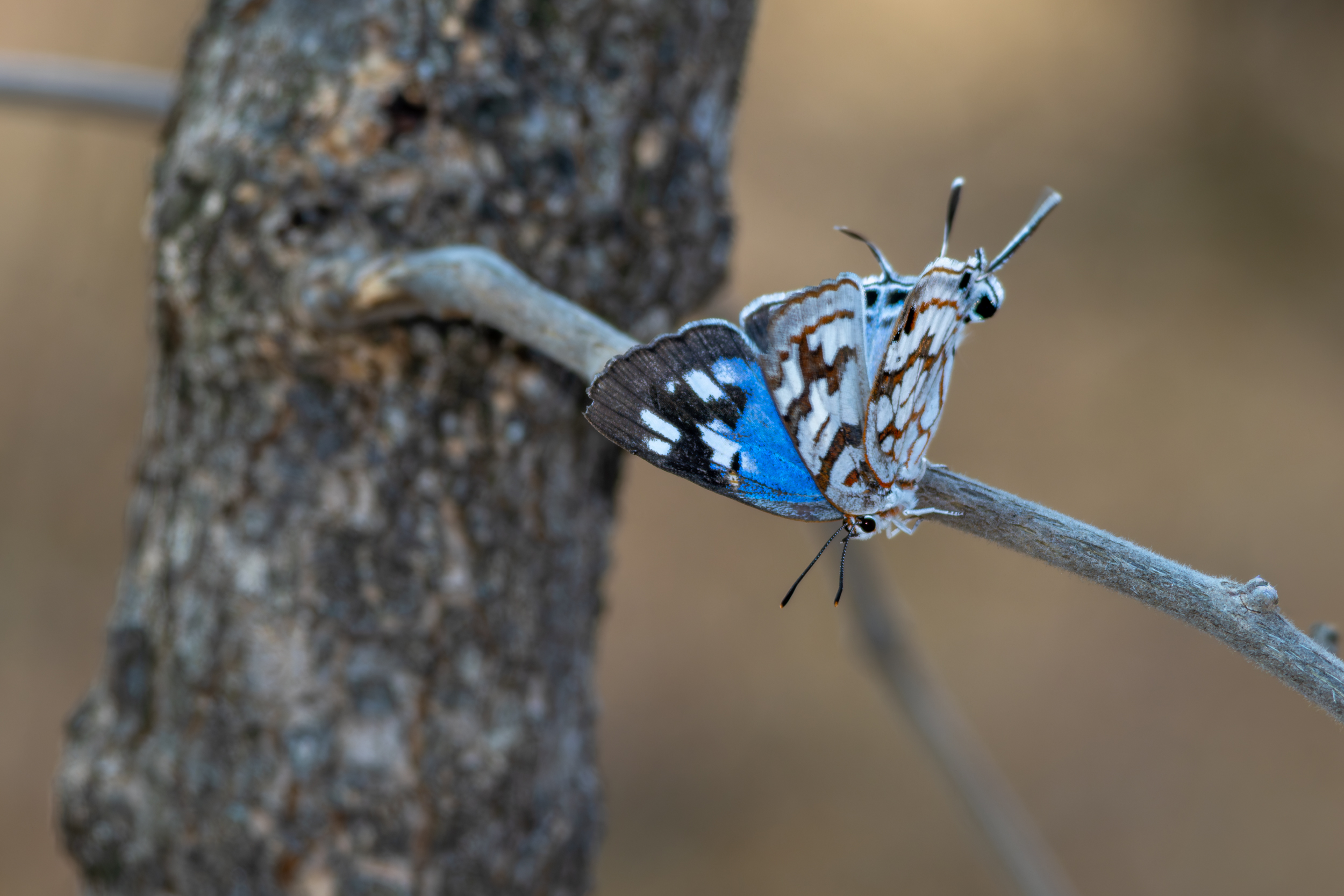
Bushveld Bright Marbled Sapphire ♂
Stugeta bowkeri tearei
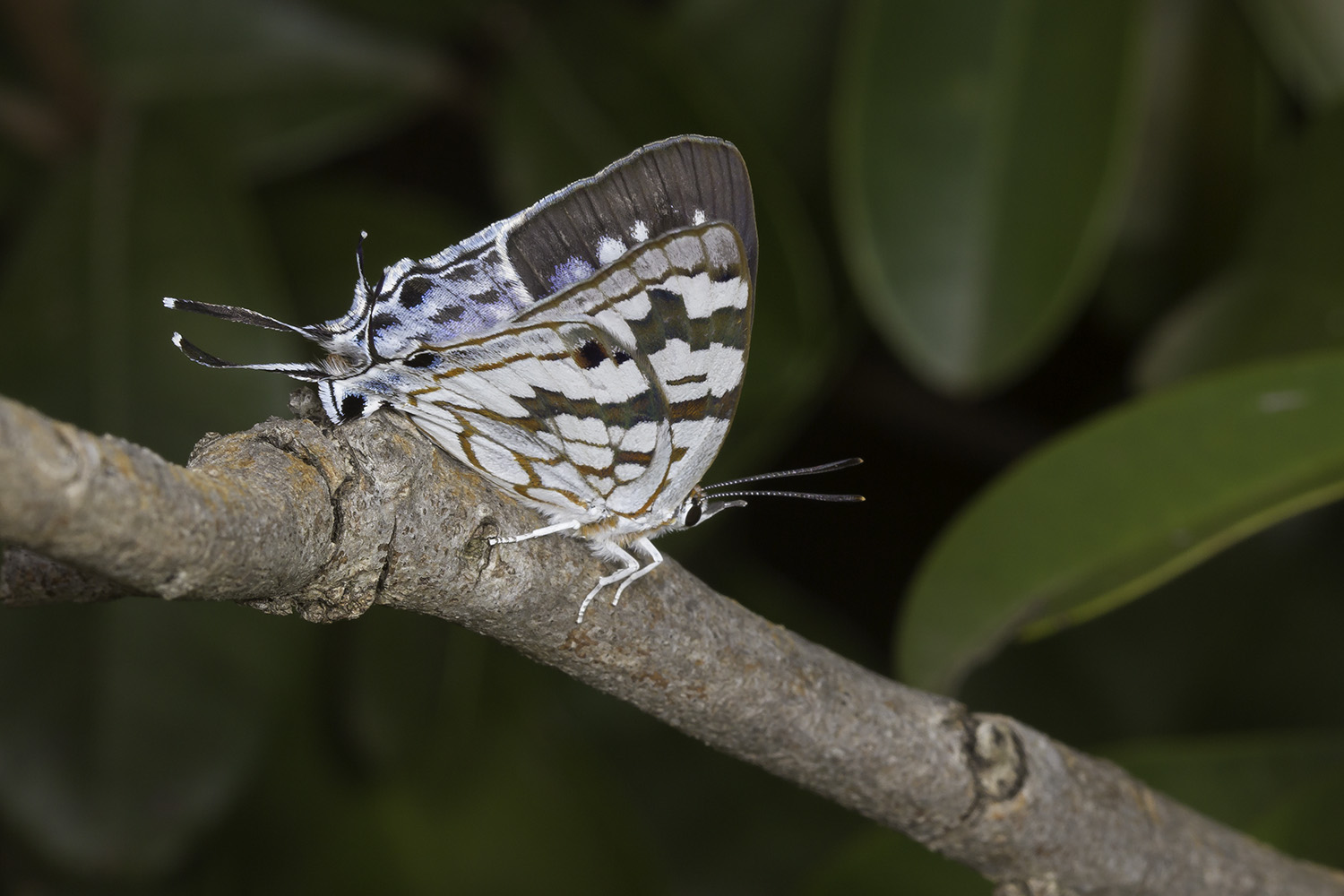
Bushveld Bright Marbled Sapphire ♀
Stugeta bowkeri tearei
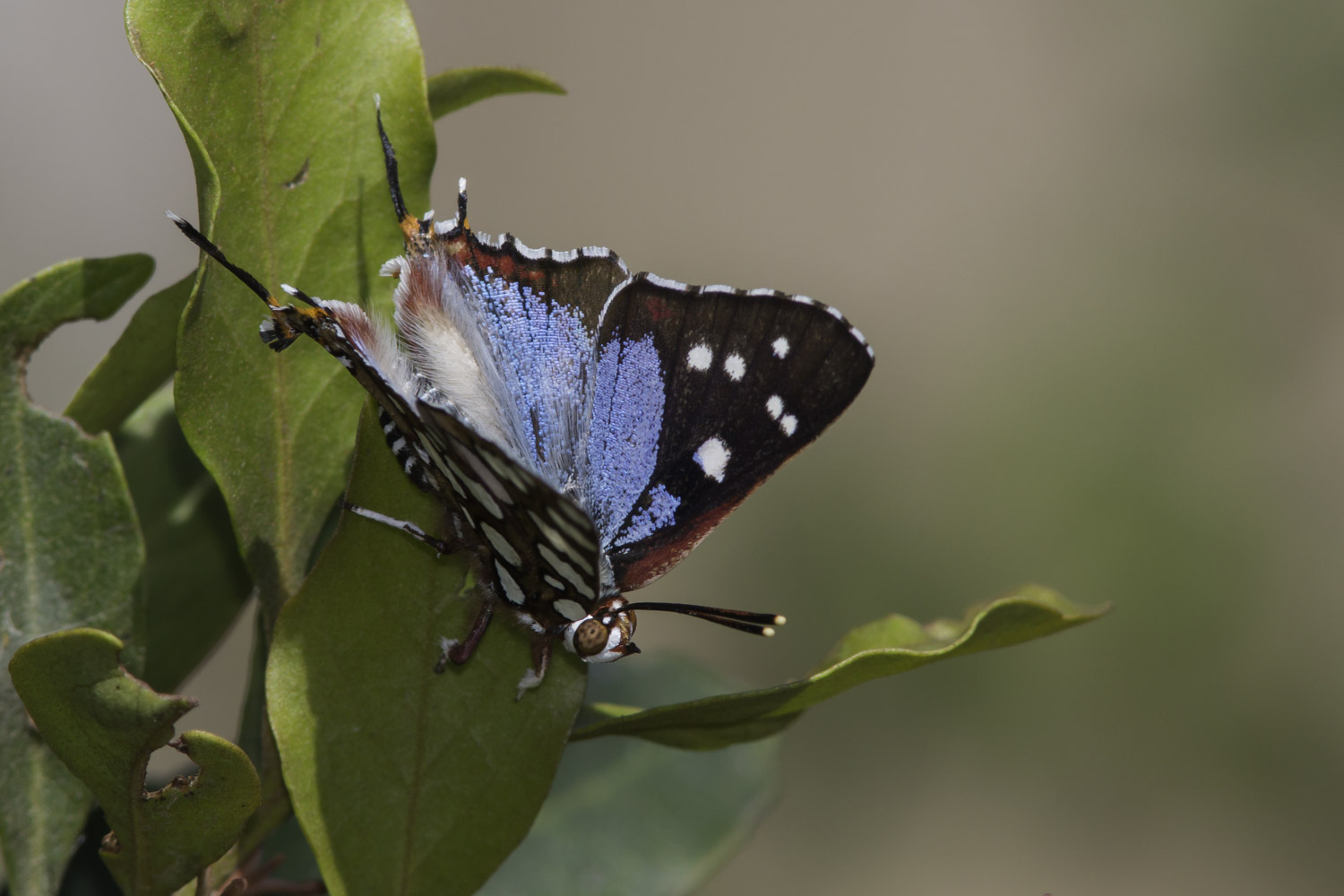
Silver-spotted Highflier ♂
Aphnaeus hutchinsonii
Spring is also the time to visit hilltops in savanna and grassland in search of the Silver-spotted Highflier, Aphnaeus hutchinsonii. One of our largest and most spectacular lycaenids, it occurs at low densities in open savanna. Males gather around prominent trees and shrubs on hilltops to lek and encounter females. If another male appears, the two take off and chase each other into the sky like tiny fighter jets. They are among the largest lycaenids. When perching on a bare twig their silver spots shine out like a beacon that can be seen flashing like a heliograph from hundreds of meters away.

Silver-spotted Highflier ♂
Aphnaeus hutchinsonii

Silver-spotted Highflier ♂
Aphnaeus hutchinsonii
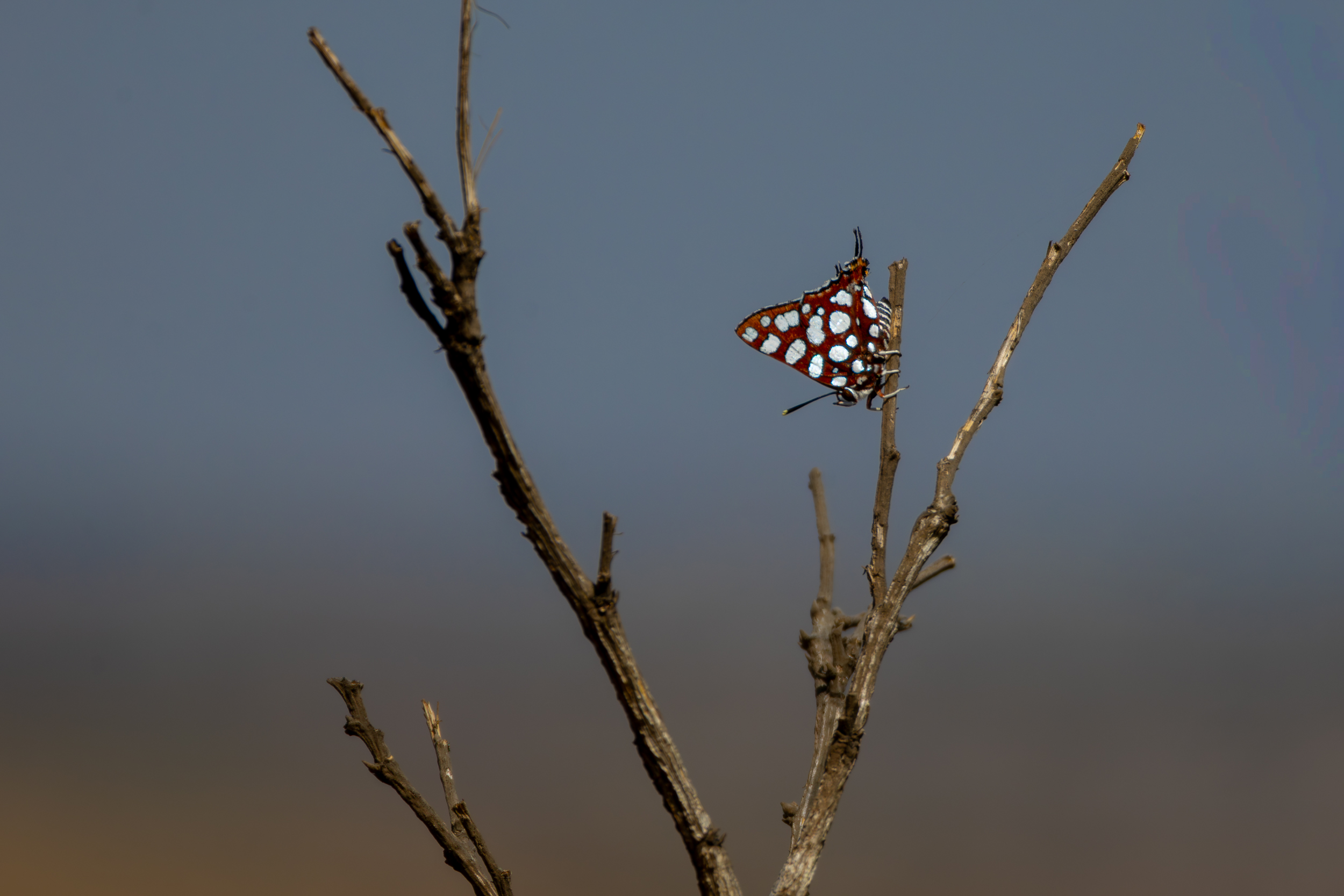
Silverlines of the genus Cigaritis belong to the same subfamily, Aphnaeinae, and they also gather on hilltops. Two prominent hilltoppers are the Hilltop Silverline, Cigaritis ella, and the Glitter Silverline, Cigaritis natalensis. The latter isn’t necessaarily restricted to spring and may be found at other times of year, but the Hilltop Silverline form junodi, with its buff underside, is a spring special. Males choose exposed perches on twigs or leaves and remain constantly alert for females and rival males. The difference in underside colour seen here isn’t sexual dimorphism; it’s seasonal variation. Like other Aphnaeinae the females are more often found nectaring, as this one was on Lebombo cluster leaf Terminalia phanerophlebia.
The bushes and shrubs on which they perch are often quite low, around chest height. Because the butterflies are usually focused on one another rather than on humans stealthily carrying cameras, they can sometimes be approached closely.

Glitter Silverline ♂
Cigaritis natalensis
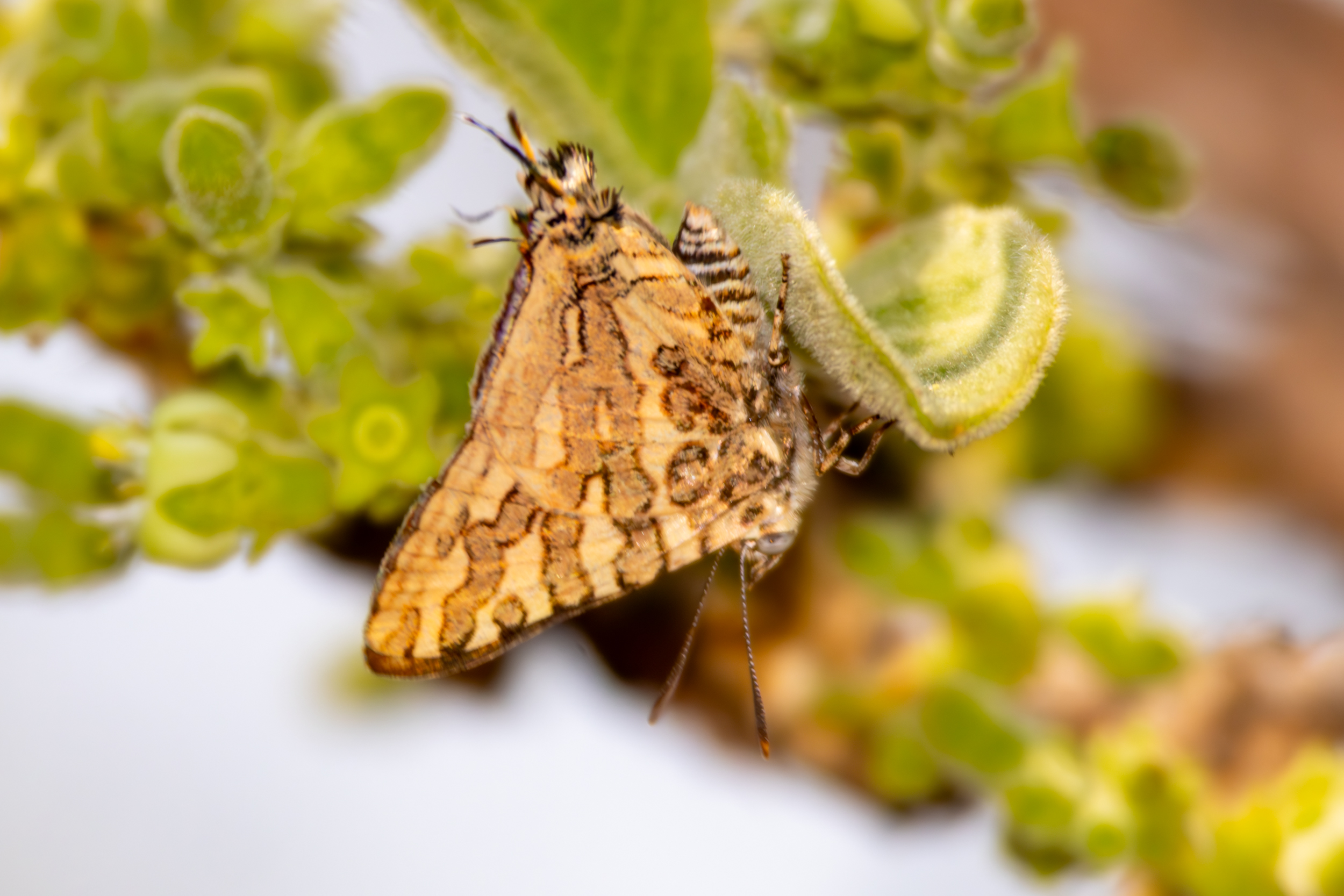
Hilltop Silverline form junodi ♂
Cigaritis ella
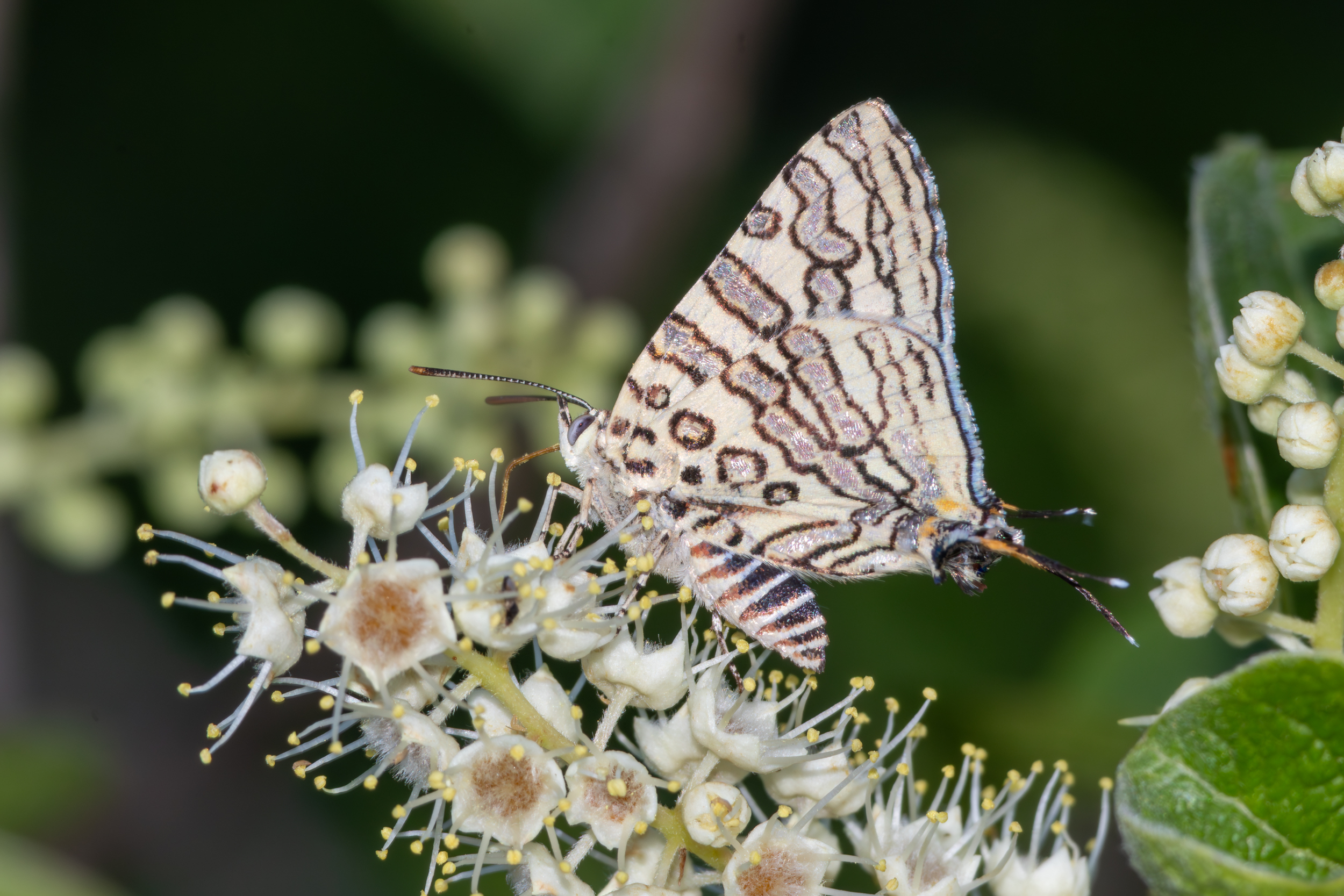
Hilltop Silverline summer form ♀
Cigaritis ella on Terminalia phanerophlebia
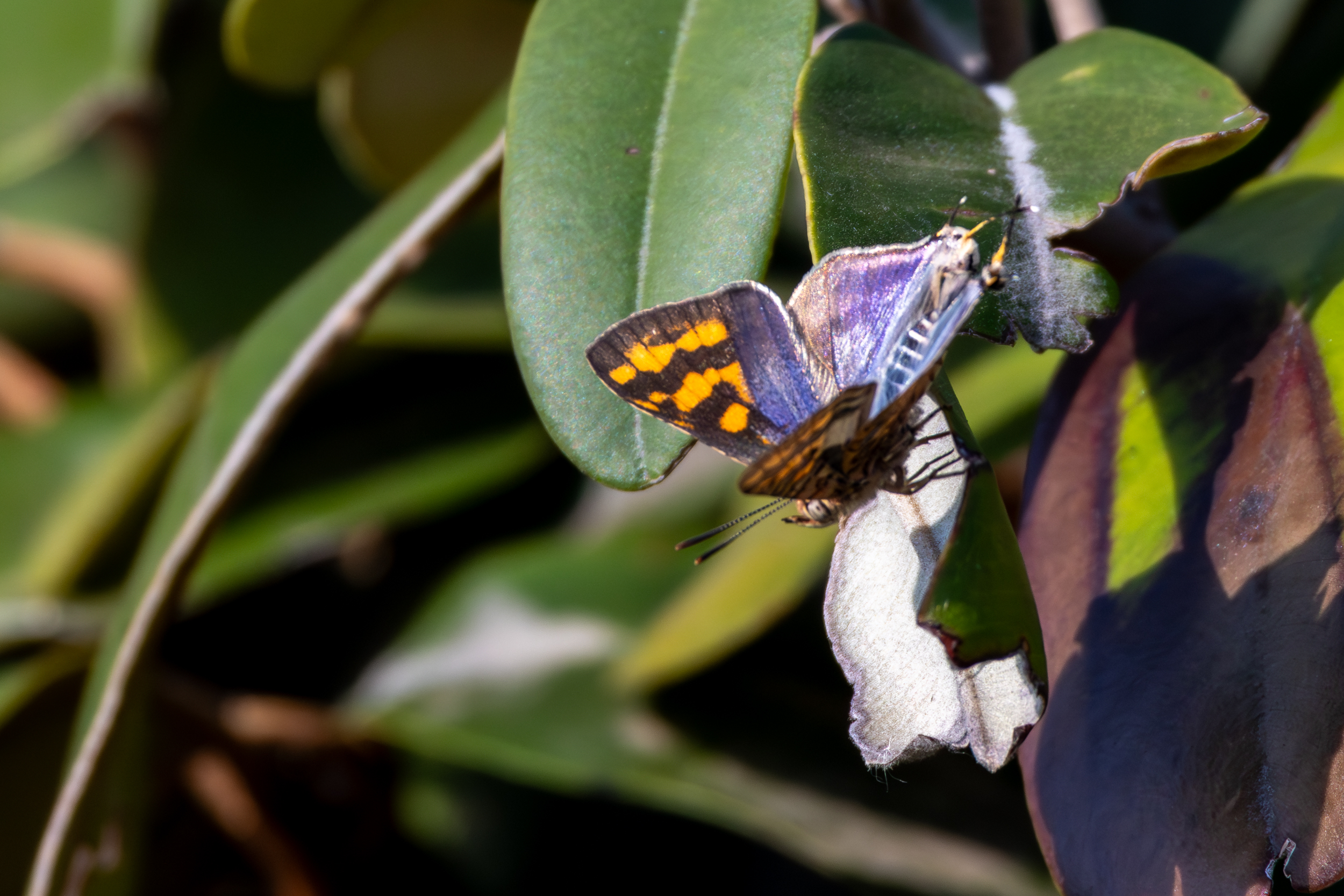
Hilltop Silverline form junodi ♂
Cigaritis ella
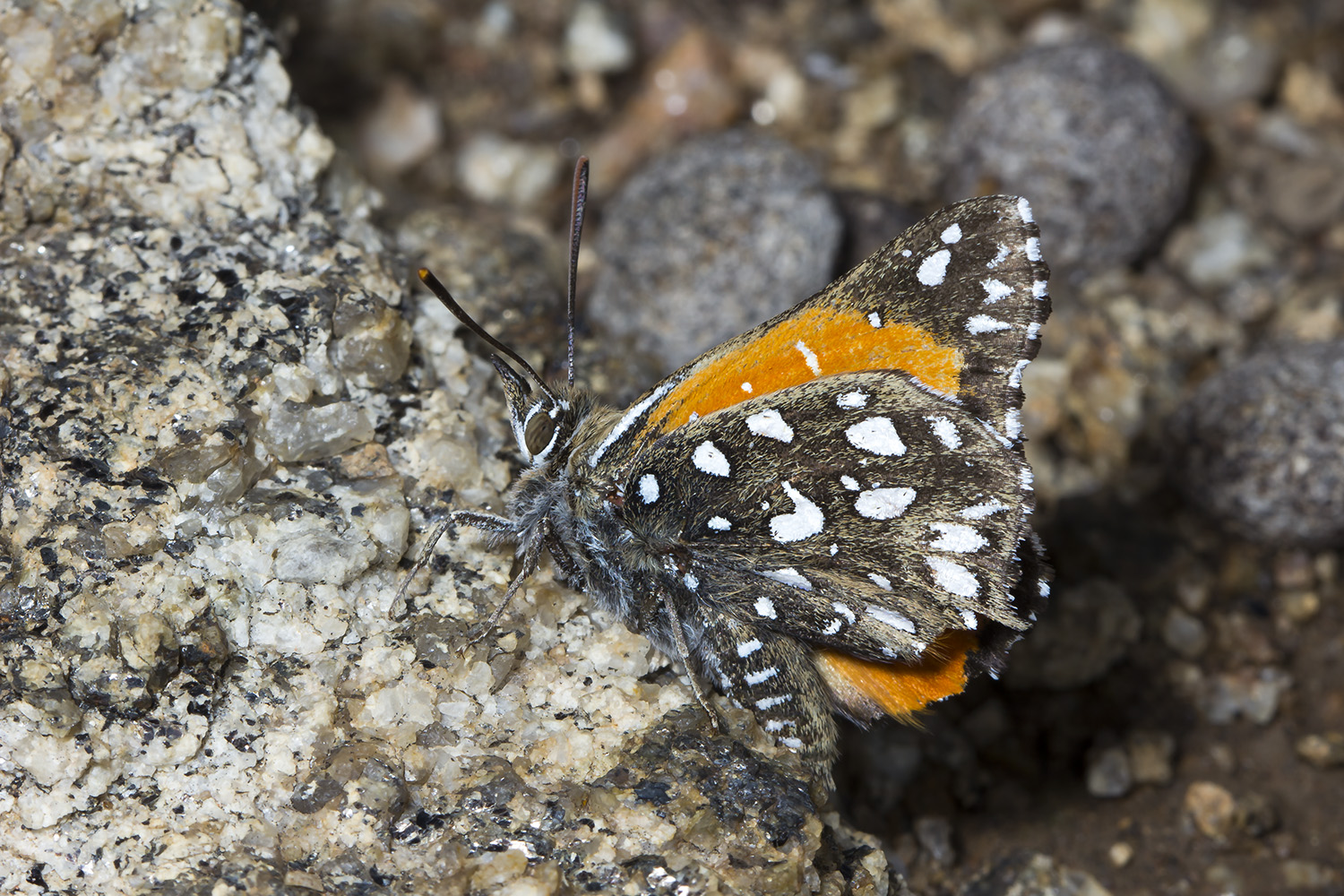
Aphnaeinae also occur in the Karoo and Fynbos biomes, where their activity may peak in spring. The Warrior Silver-spotted Copper, Argyraspodes argyraspis, has a similarly silver-spotted underside and an aggressive mate-seeking strategy. It, too, may be found on hilltops.
Aphnaeinae also occur in the Karoo and Fynbos biomes, where their activity may peak in spring. The Warrior Silver-spotted Copper, Argyraspodes argyraspis, has a similarly silver-spotted underside and an aggressive mate-seeking strategy. It, too, may be found on hilltops where they often sit on rocks or the ground. They are incredibly reluctant to open their wings for a photo. Sometimes the only option is to catch one in flight using ‘raw burst’ on one of the new mirrorless cameras. The one shown below was a lucky flash shot with a DSLR on one that was nectaring.

Warrior Silver-spotted Copper ♂
Argyraspodes argyraspis
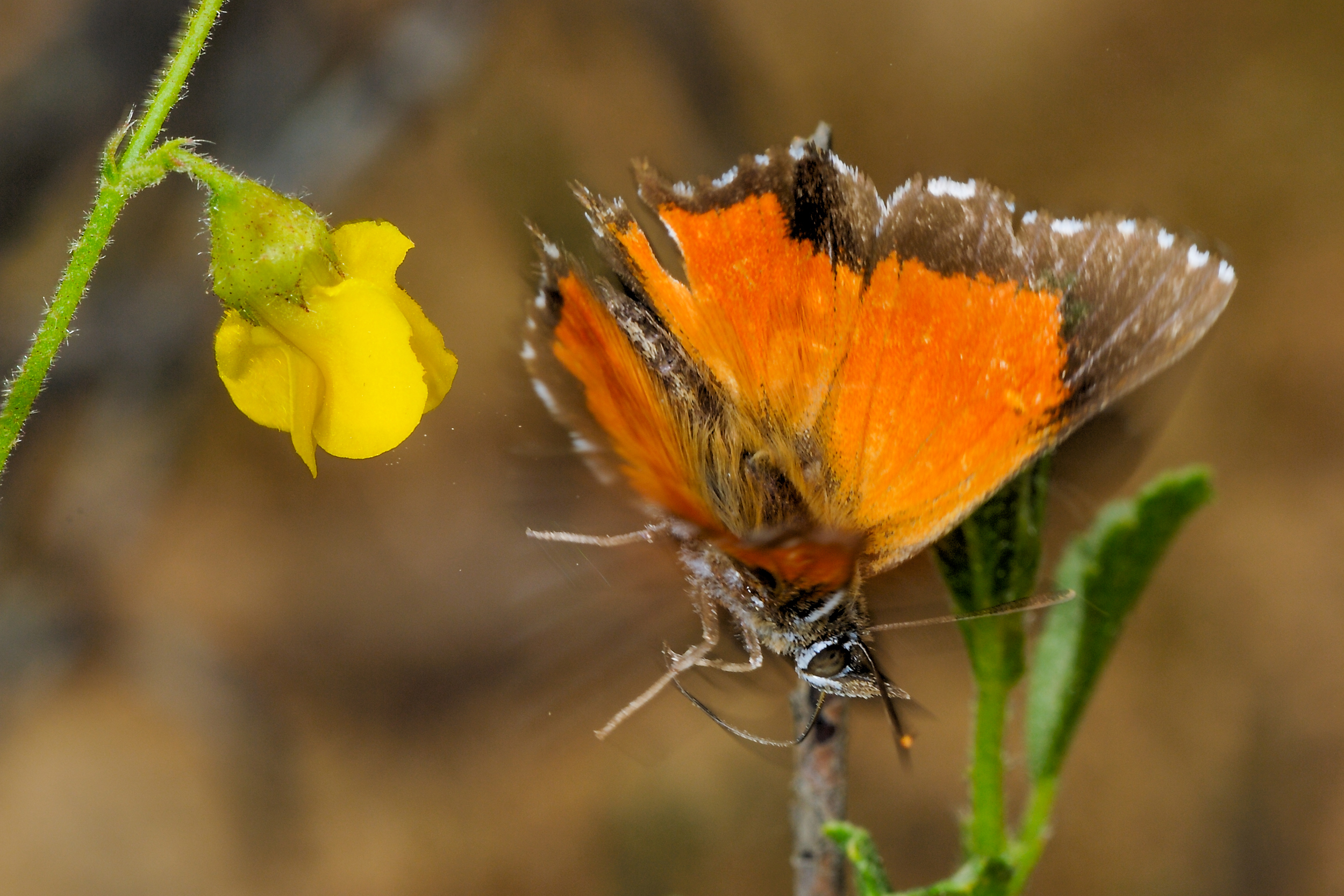
Warrior Silver-spotted Copper ♂
Argyraspodes argyraspis
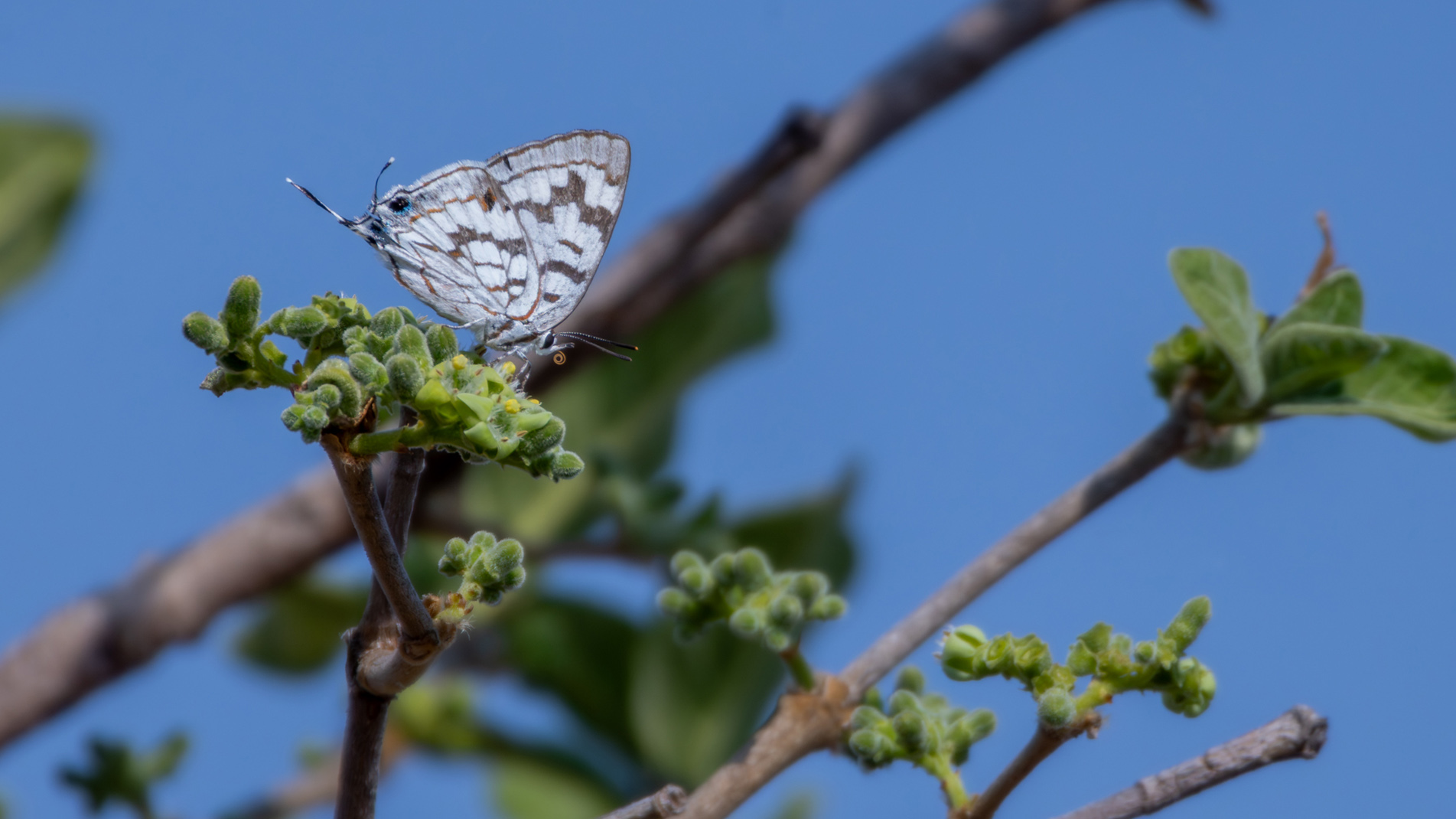
Other lycaenids active in spring include the Blues of the subfamily Polyommatinae. Many emerge when the forbs eaten by their caterpillars begin flowering after the early rains. One example is the Meadow Blue, Cupidopsis cissus cissus, whose females seek out the host plant, usually an Eriosema species. These plants belong to the Fabaceae, or pea family, which lycaenids often use as caterpillar host plants.
In the Fynbos biome, one of the first Blues to appear in spring is the beautiful Vivid Pierrot, Tarucus thespis. Males are bright blue above and females have a chequered pattern of black, blue, and white. They fly low and often settle on ‘bossies’, making them quite easy to photograph. Its caterpillar uses Hairy Hardleaf Phylica imberbis as a host plant. This is a member of the family Rhamnaceae.

Meadow Blue ♂
Cupidopsis cissus

Meadow Blue ♂
Cupidopsis cissus
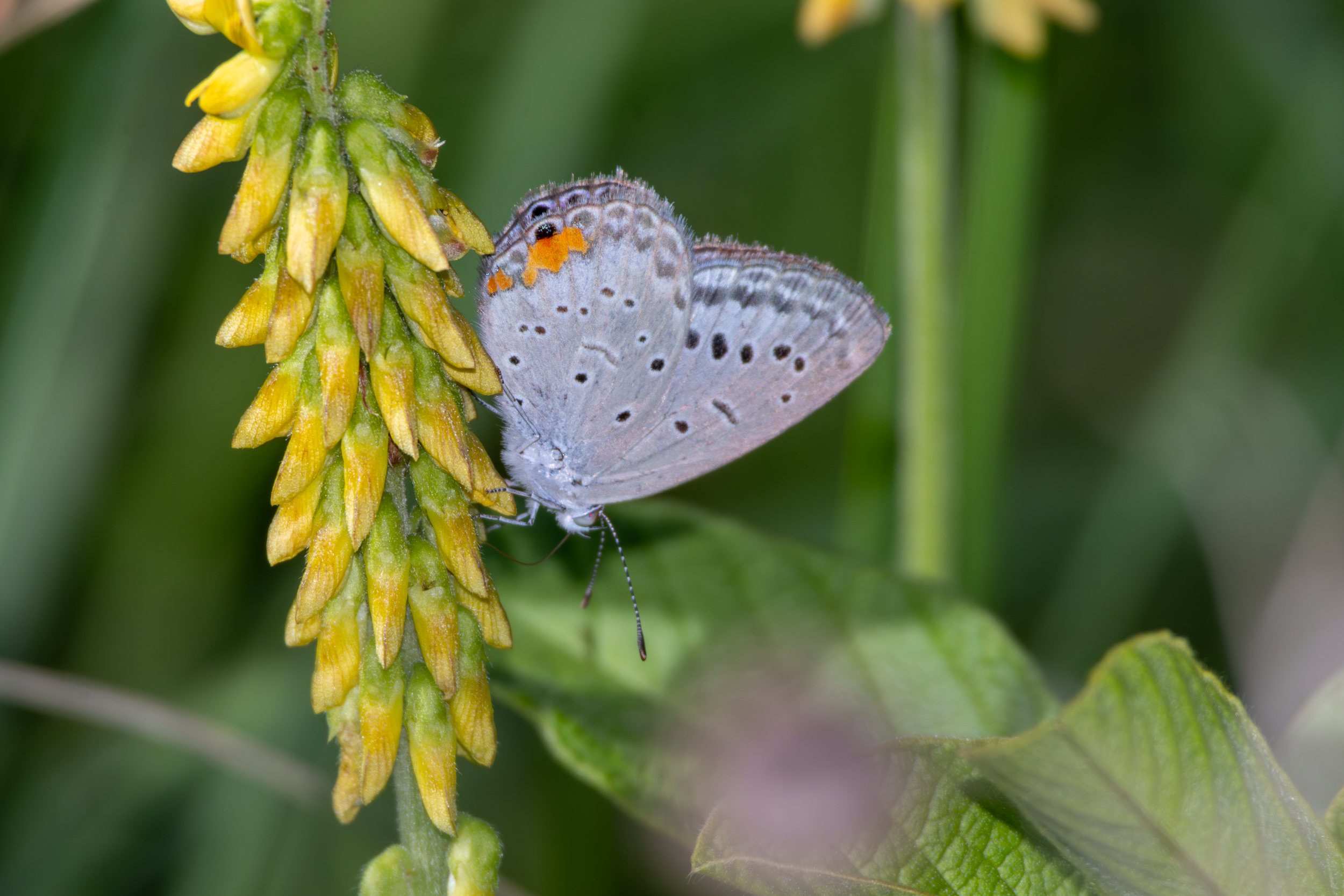
Meadow Blue ♀
Cupidopsis cissus on Eriosema parviflorum
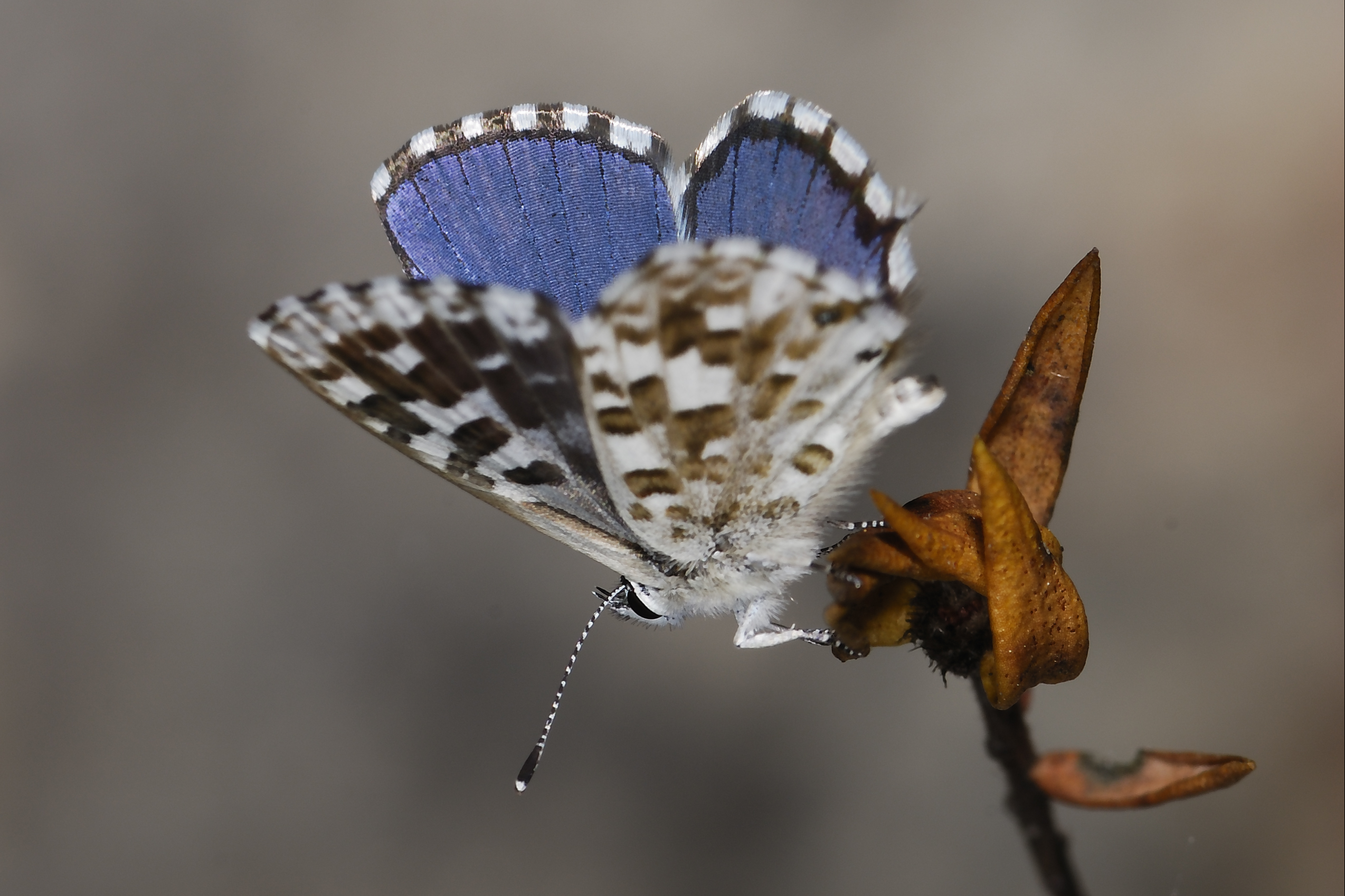
Vivid Pierrot ♂
Tarucus thespis
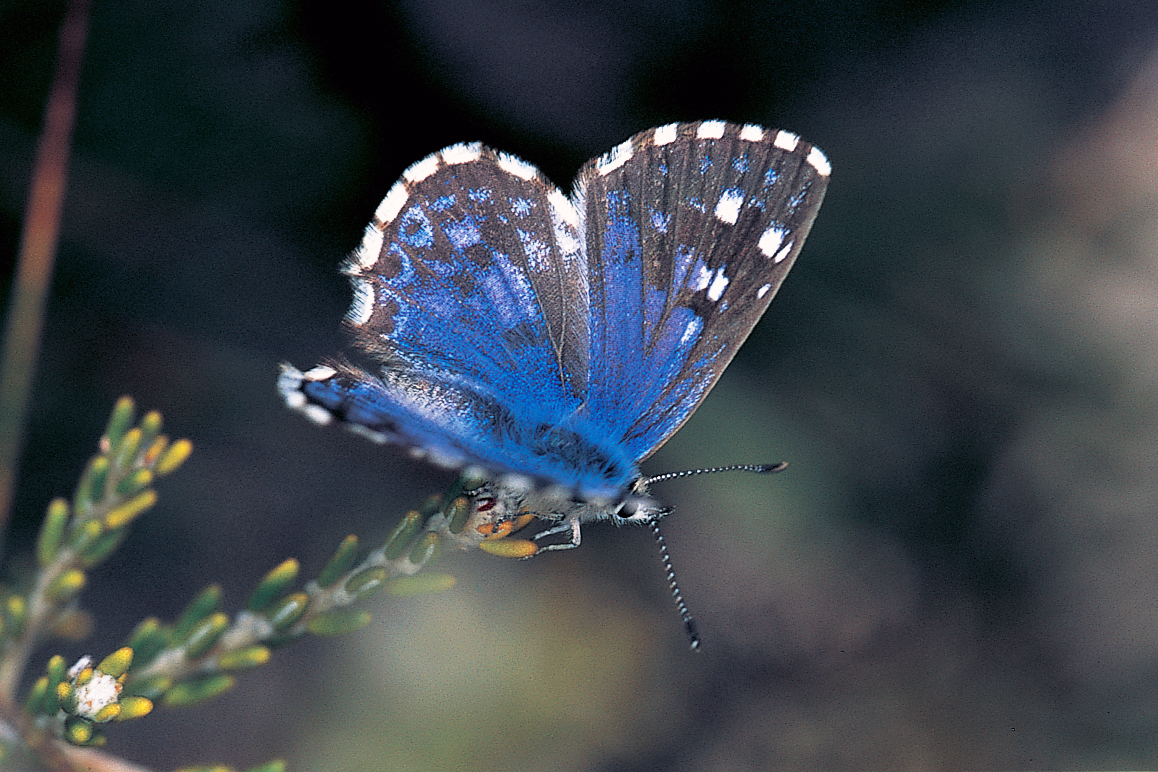
Vivid Pierrot ♀
Tarucus thespis
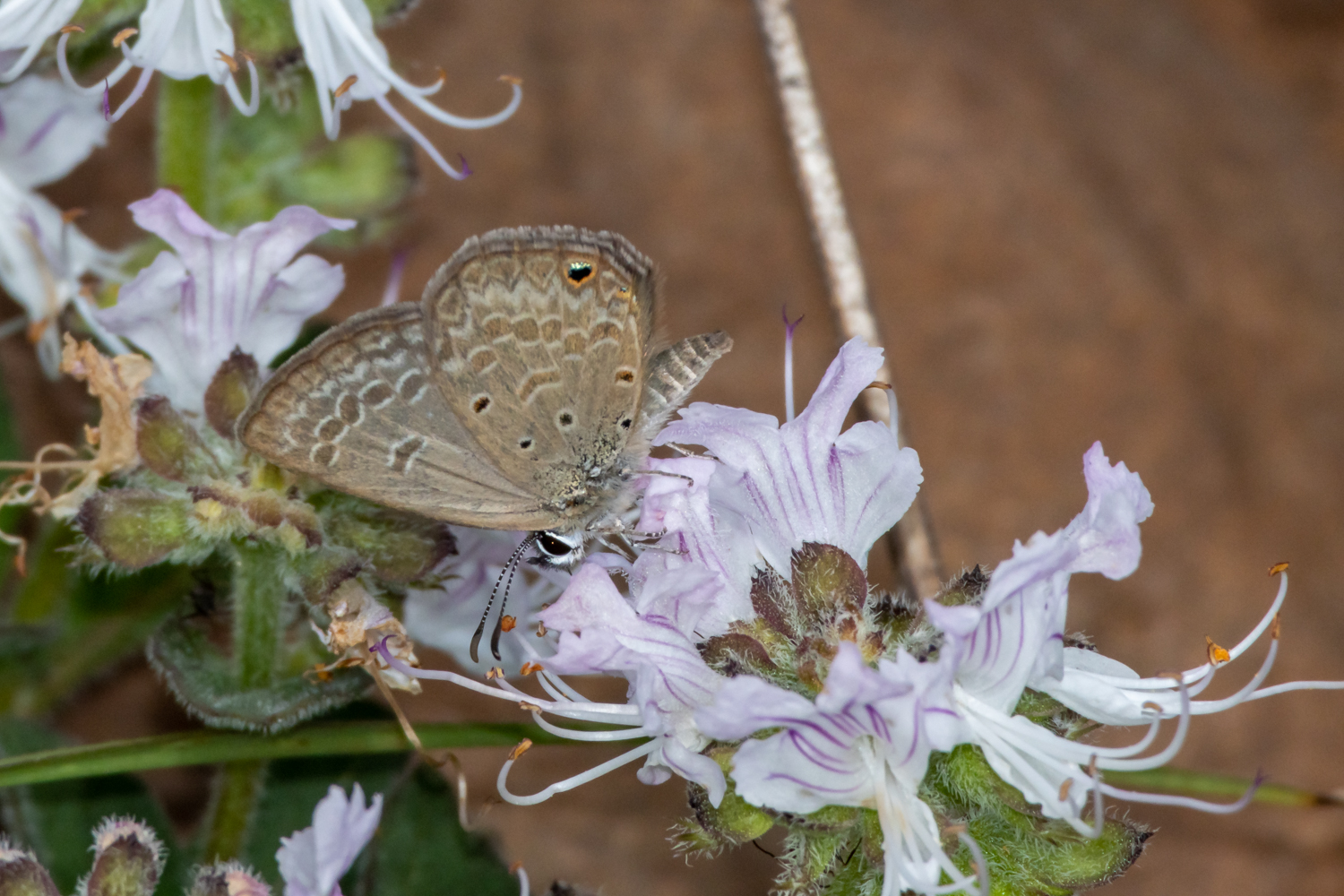
Another plant family favoured by the Lycaenidae is the Lamiaceae, which includes mints, sages, and basils. Common Cat’s Whiskers, Ocimum obovatum, is a widespread member of the same genus as basil. It was formerly known as Becium obovatum and has the aromatic foliage typical of this plant family. It occurs in grasslands across much of eastern South Africa and is easiest to find in spring. As well as a caterpillar host plant it’s a good nectar plant, and makes a fine show on a grassy spring hillside.
An example of a butterfly that uses it as a host plant is the Dark, or Sabi, Smoky Blue, Euchrysops dolorosa, a widespread butterfly often seen around patches of Cat’s Whiskers. The males shown here are nectaring on it.

Dark Smoky Blue ♂
Euchrysops dolorosa
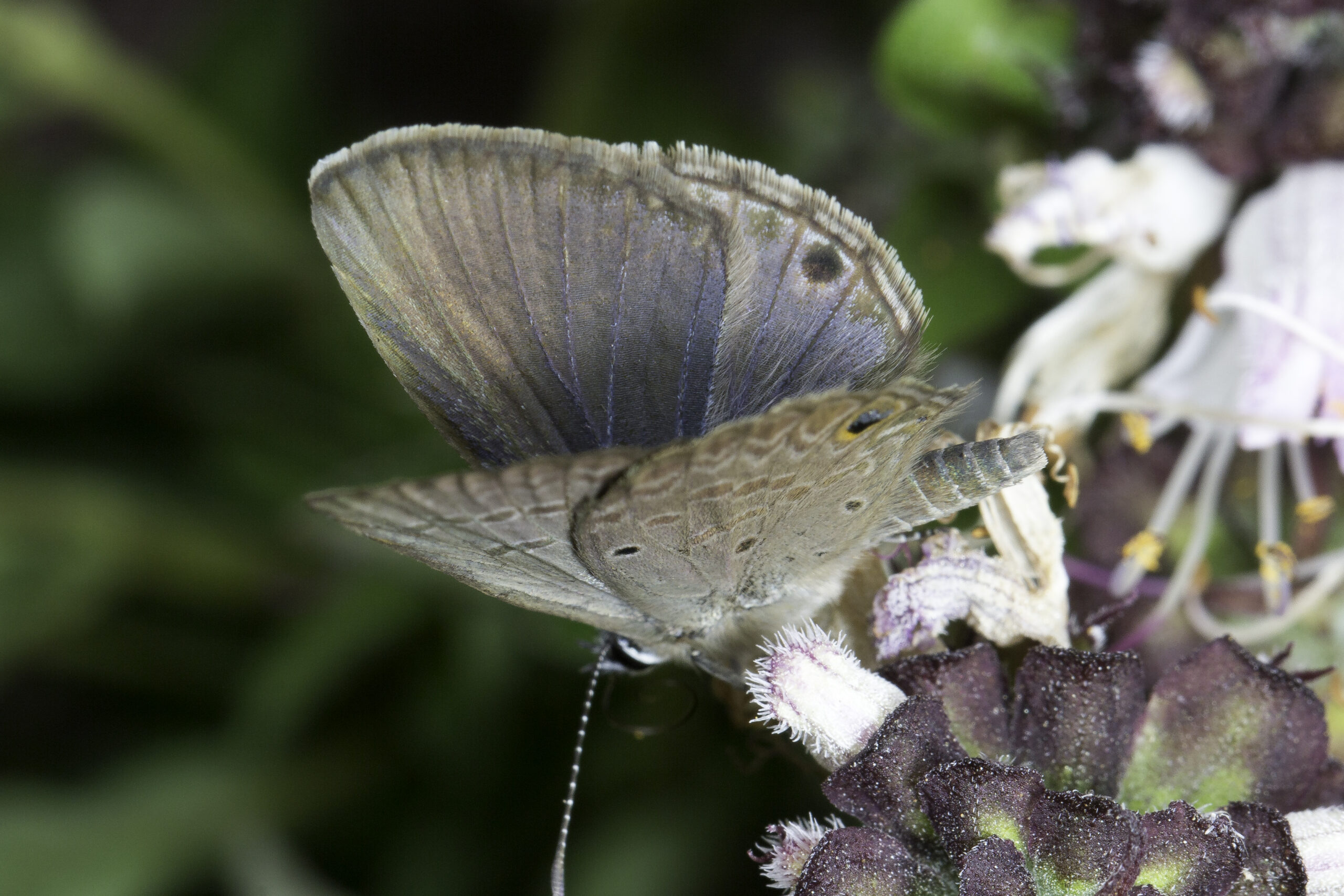
Dark Smoky Blue ♂
Euchrysops dolorosa

Flower-strewn spring grasslands near Kokstad, southern KwaZulu-Natal
Many clumps of Ocimum obovatum
Although Common Cat’s Whiskers is widespread, it also hosts some of our rarest and most specialised butterflies: the Giant Cupids of the genus Lepidochrysops. Females lay eggs only on plants marked by the scent trails of sugar ants in the genus Camponotus. After hatching, the young caterpillars feed on immature seeds in the flower ovaries. When they are half-grown and the food supply begins to run out, they release a chemical that tricks the ants into treating them as their own young. The ants then carry the caterpillars into their nests, where the caterpillars become predators and eat the ants’ young until fully grown. They then pupate inside the nest. When an adult is ready to emerge, it breaks free from the pupa, crawls out of the nest, and climbs a plant stem, where its wings expand and harden before it flies off to find a mate. This behaviour is known as phytopredation. It is rare among butterflies, but southern Africa has several species that use this strategy. Although they do not all rely on basils, a patch of Ocimum obovatum in montane grassland is well worth checking in spring. South Africa is home to fifty of the world’s 136 species of these butterflies. They are large for lycaenids and often display a beautiful blue upper side.
Shown above is a hillside at Nolangeni Mountain near Kokstad which is home to two Lepidochrysops species. This kind of vegetation is common along the eastern and southern rain catchments below the Great Escarpment of southern Africa, running from the Cape to eastern Zimbabwe.

Grassland Giant Cupid ♀
Lepidochrysops procera

Grassland Giant Cupid ♂
Lepidochrysops procera
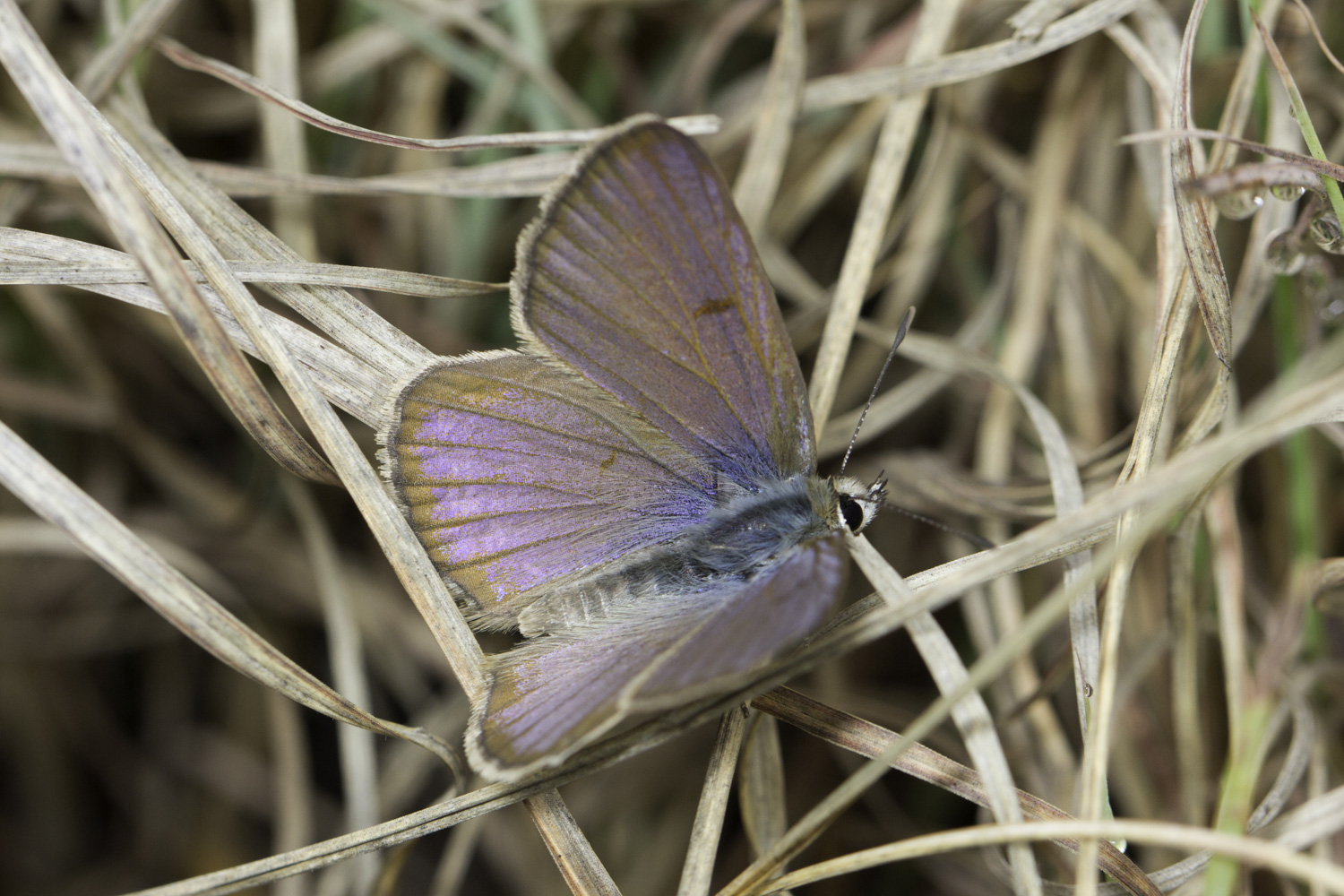
King Giant Cupid ♂
Lepidochrysops tantalus
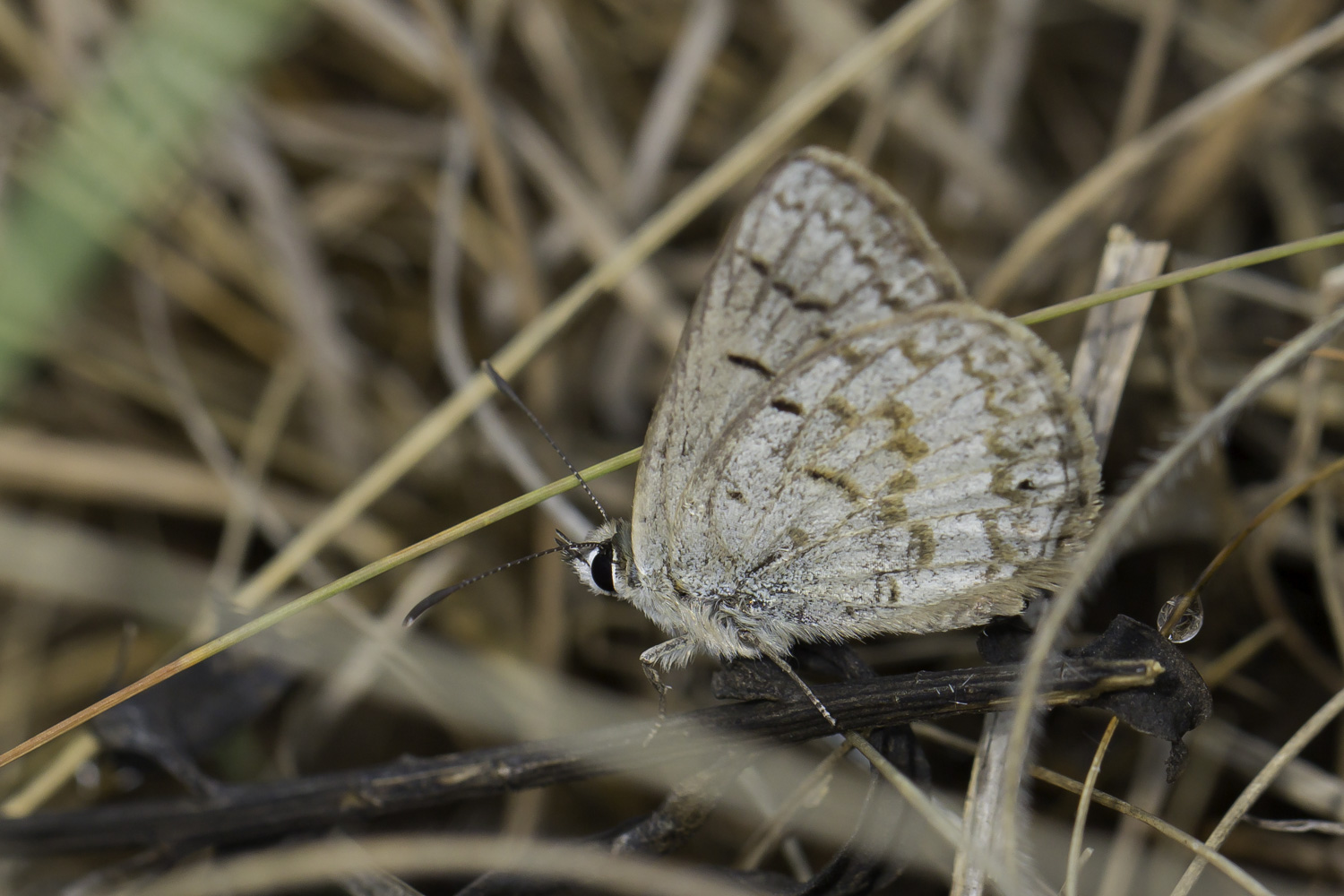
King Giant Cupid ♂
Lepidochrysops tantalus
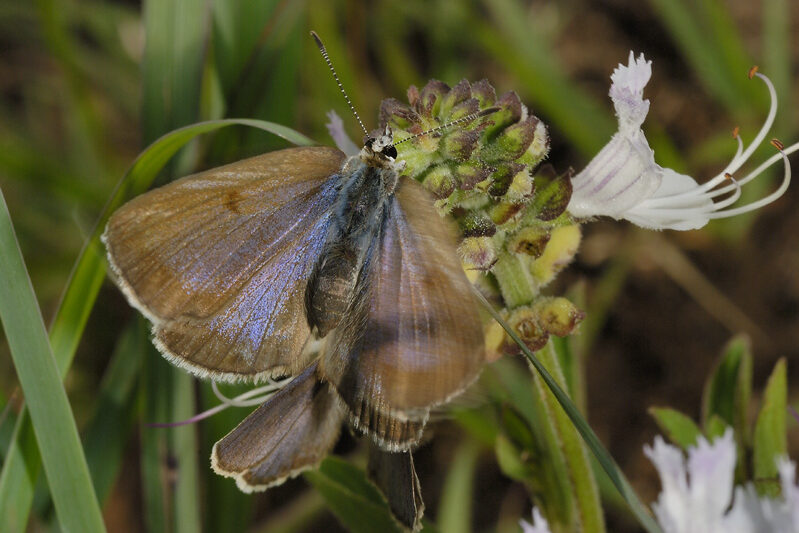
King Giant Cupid ♀ from Lekgalameetse
Lepidochrysops tantalus
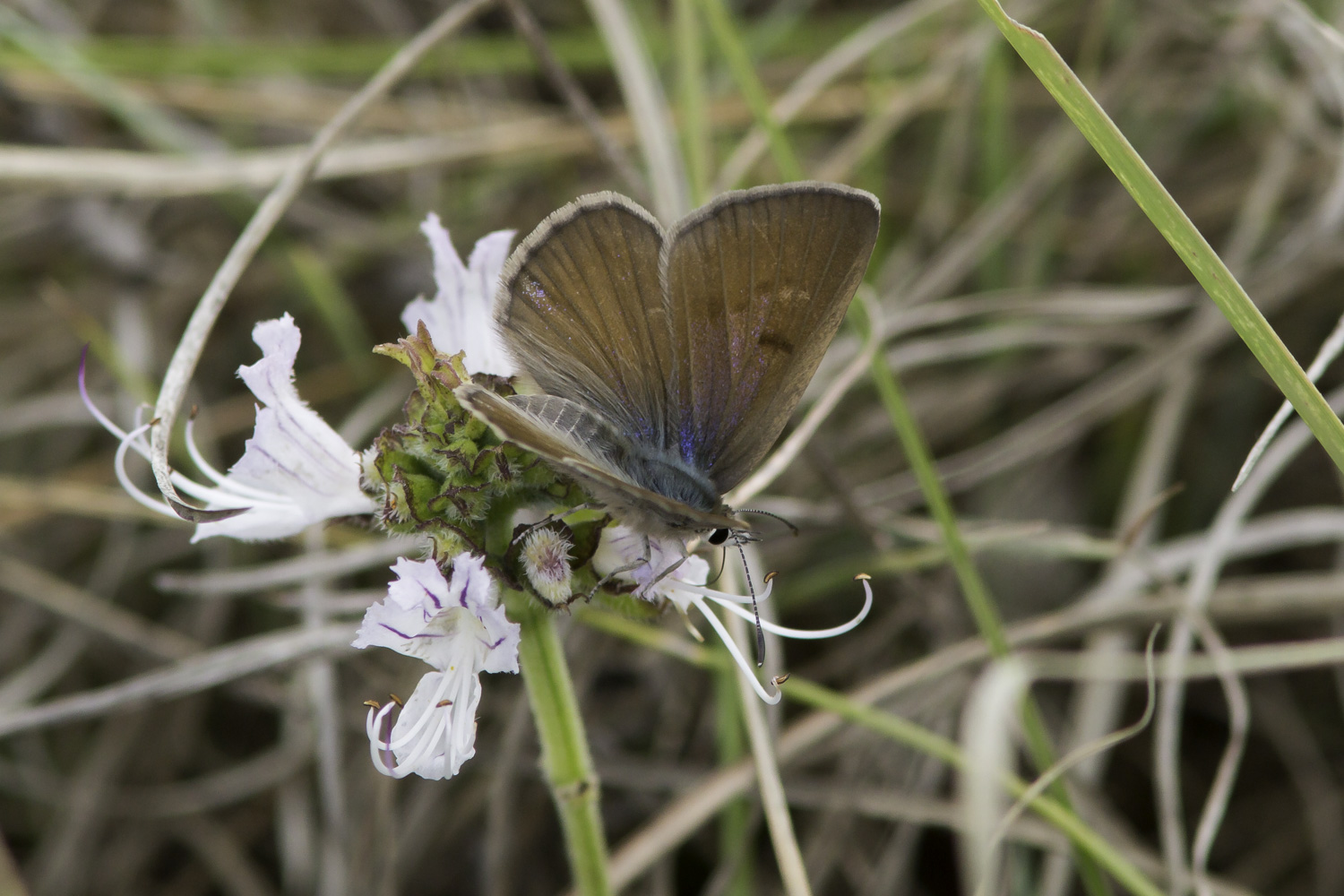
King Giant Cupid ♀ from Kokstad
Lepidochrysops tantalus
Two examples are the Grassland Giant Cupid, Lepidochrysops procera, and the King Giant Cupid, Lepidochrysops tantalus. Both occur in the sub-escarpment grasslands of KwaZulu-Natal, the Free State, Gauteng, Mpumalanga, and Limpopo. They are not always easy to find and may require a long walk, but they are special butterflies and well worth seeking out.
All Lepidochrysops are sexually dimorphic, with the males’ upper sides being largely blue and females being brown with a varying extent of blue. The King Giant Cupid is widely distributed along the Drakensberg and other ranges, being found from Kokstad in the south to Lekgalameetse in the north, and west to the Suikerbosrand near Johannesburg and Mountainlands near Barberton. They vary in wing shape and the extent of blue carried by the females. There could well prove to be more than one subspecies involved.

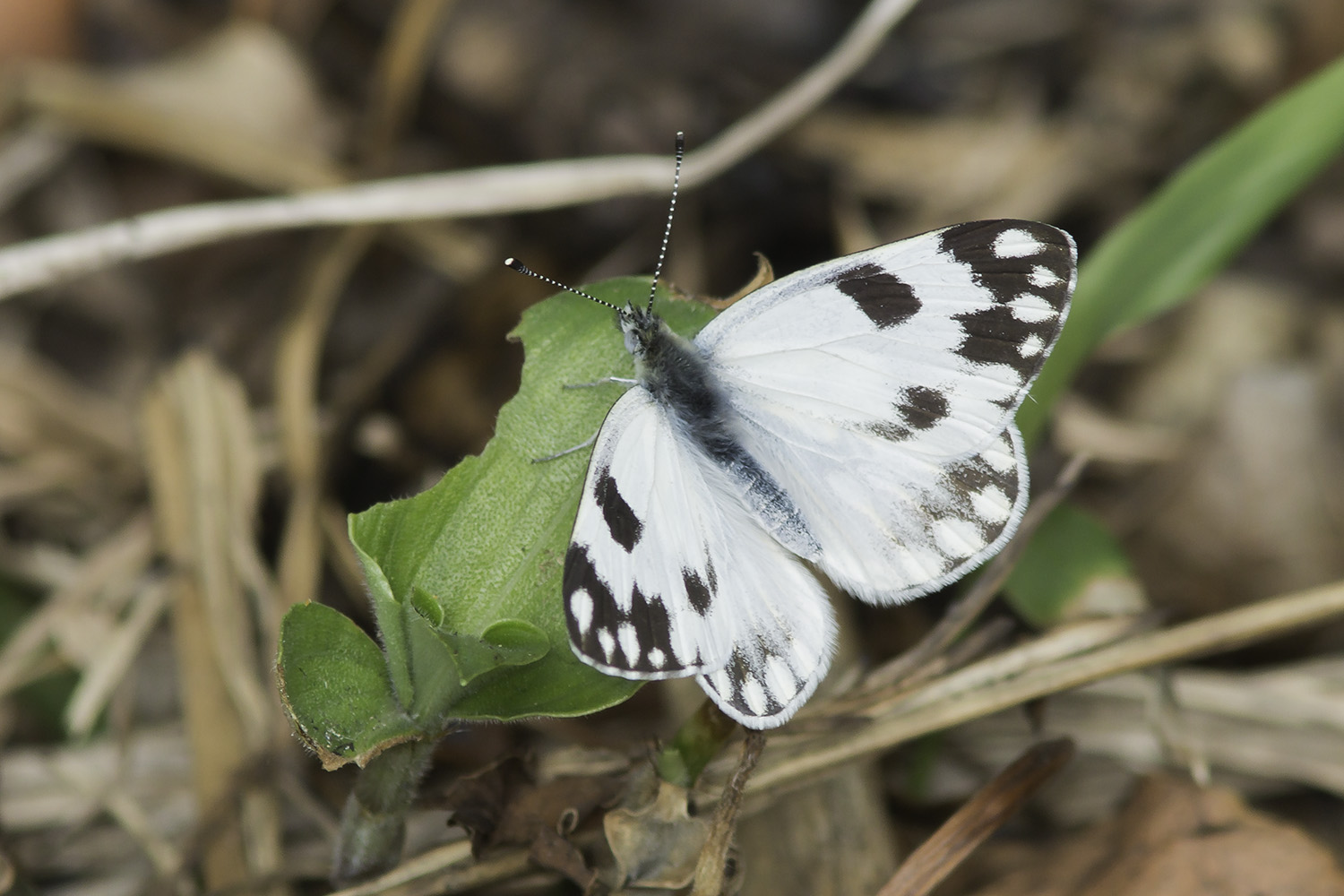
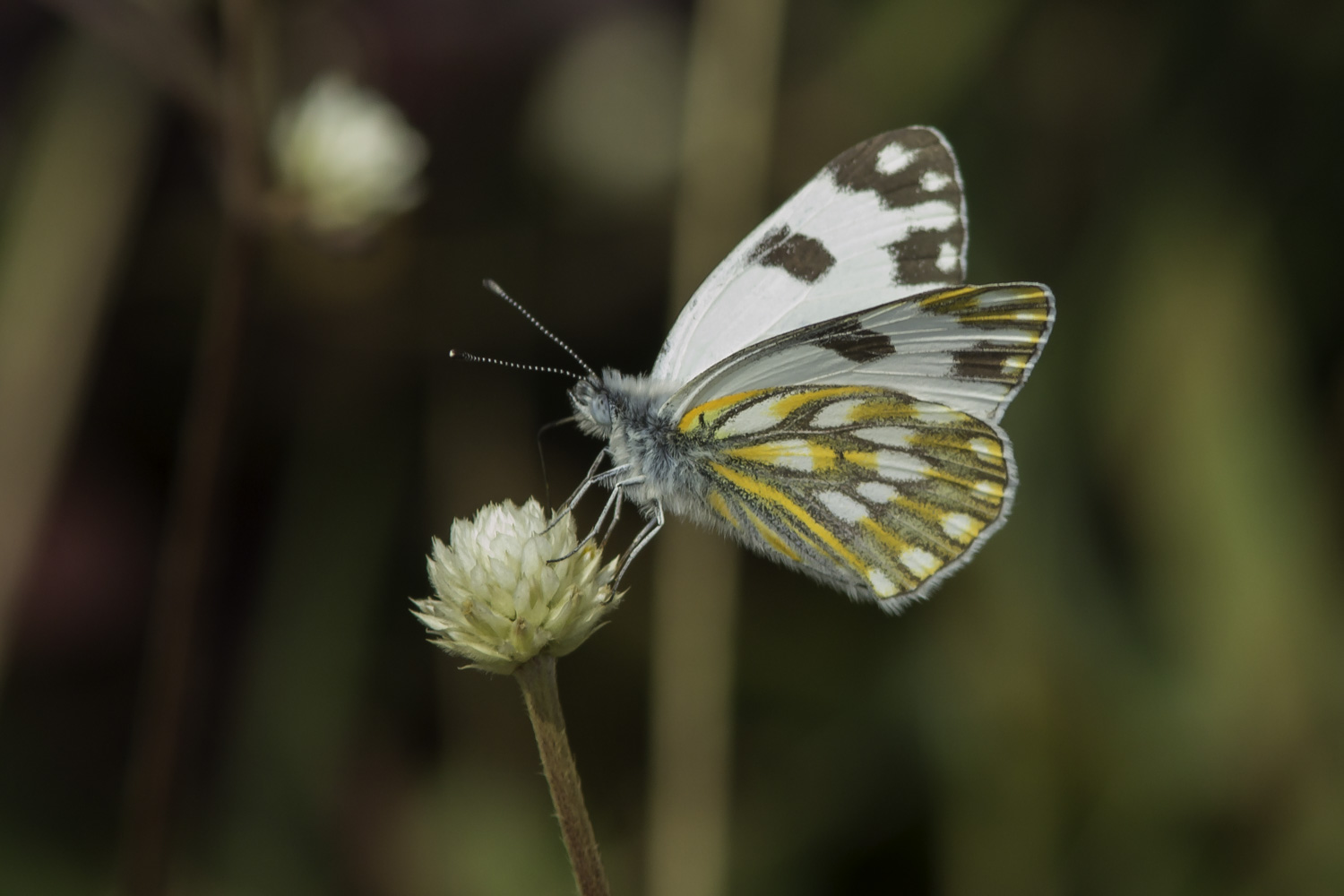
African Meadow White ♂
Pontia helice
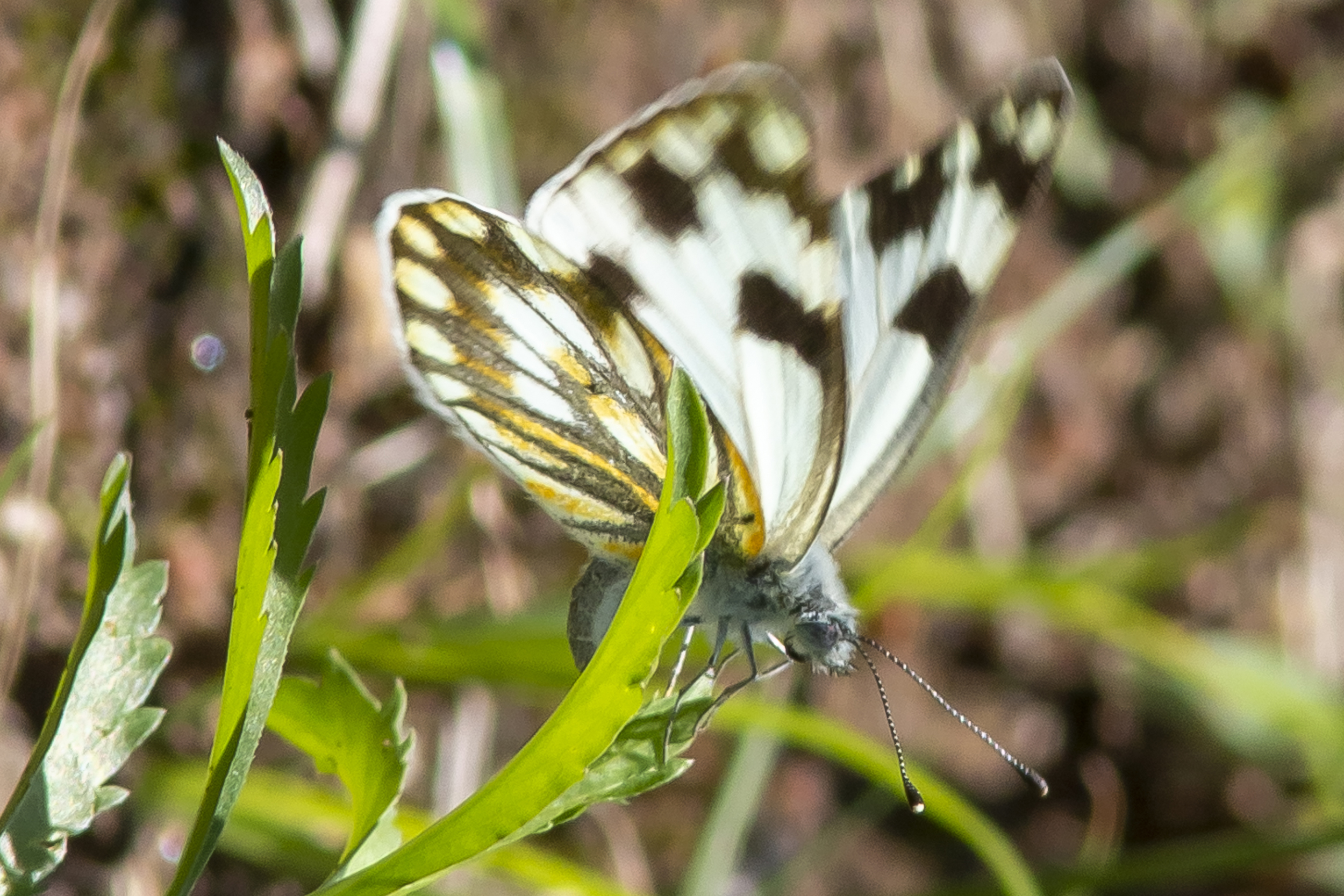
Africa has many white butterflies in the family Pieridae. The African Meadow White, Pontia helice, is one pierid especially associated with spring. From August to October, this small spotted beauty, with its green and white underside, can be seen fluttering across fresh spring fields and pausing to feed at flowers or lay eggs on host plants. The underside appears green but in fact it’s an optical illusion created by a mosaic of tiny black and yellow wing scales.
Its caterpillars feed on members of the brassica family. They do not usually use cabbages or broccoli, despite the butterfly often being mistakenly called a ‘Cabbage White’. Instead, they favour wild relatives such as pepper cresses in the genus Lepidium. They have also been known to use related plants such as rocket, alyssum, and Indian mustard, but they rarely become destructive.
Lorem ipsum dolor sit amet, consectetur adipiscing elit. Ut elit tellus, luctus nec ullamcorper mattis, pulvinar dapibus leo.

African Meadow White ♀
Pontia helice

African Meadow White ♀ laying eggs on Peppercress
Pontia helice on Lepidium
This overview has only scratched the surface of the dozens of butterfly species seen in southern Africa during spring. I have highlighted a few of the most typical examples. You may have noticed that some common names differ from those used in my books and app. I am gradually introducing the hundreds of new common names adopted for Africa’s butterflies by the Lepidopterists’ Society of Africa. I will share more about them in a future article.