The Lepidoptera Log - by Steve Woodhall
'Coppers'
Why do so many tiny red or orange butterflies look so similar?
Many small butterflies in the Lycaenidae family are orange or red above. For many years, they were simply known as ‘coppers,’ although some are grey or brown and not copper-coloured at all.
Some species had other names, but shared features reveal their relationships. Recently, lepidopterists have been working to clarify these relationships and make them easier to understand.

The 'Copper Panel'
Common to Lycaenidae in thesubfamilies Lycaeninae and Aphnaeinae
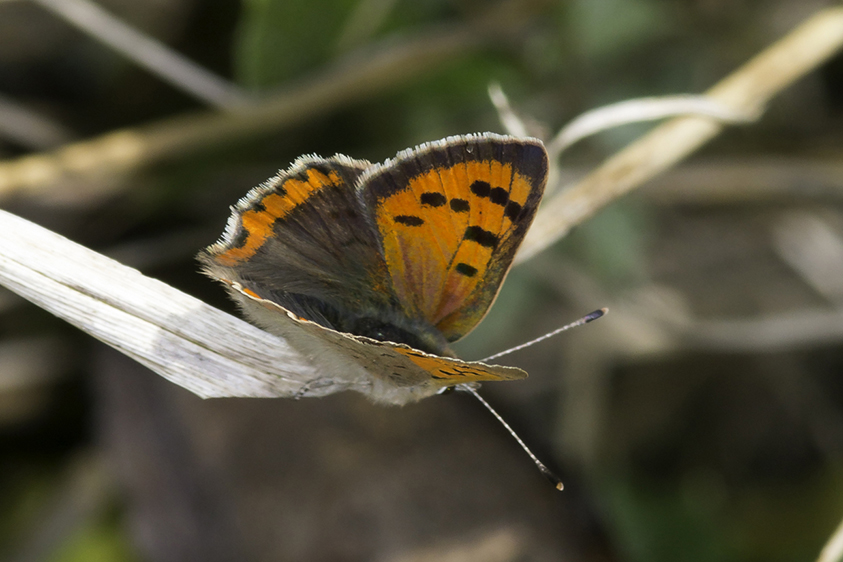
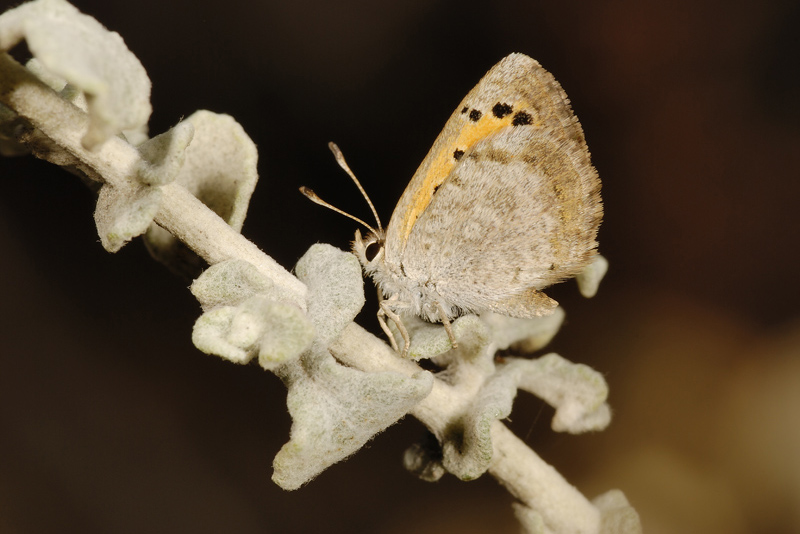
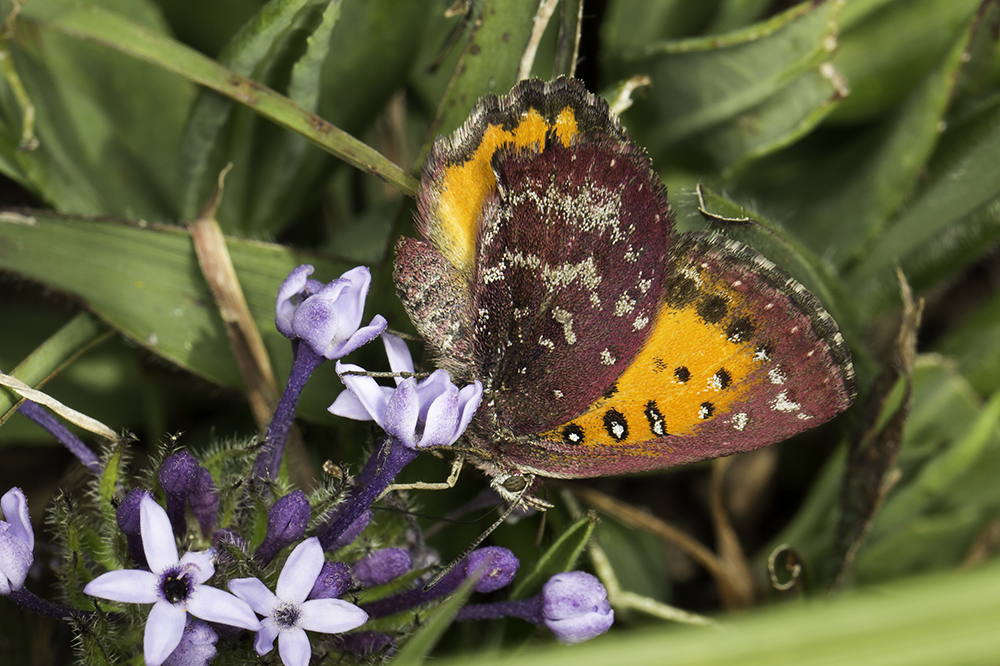
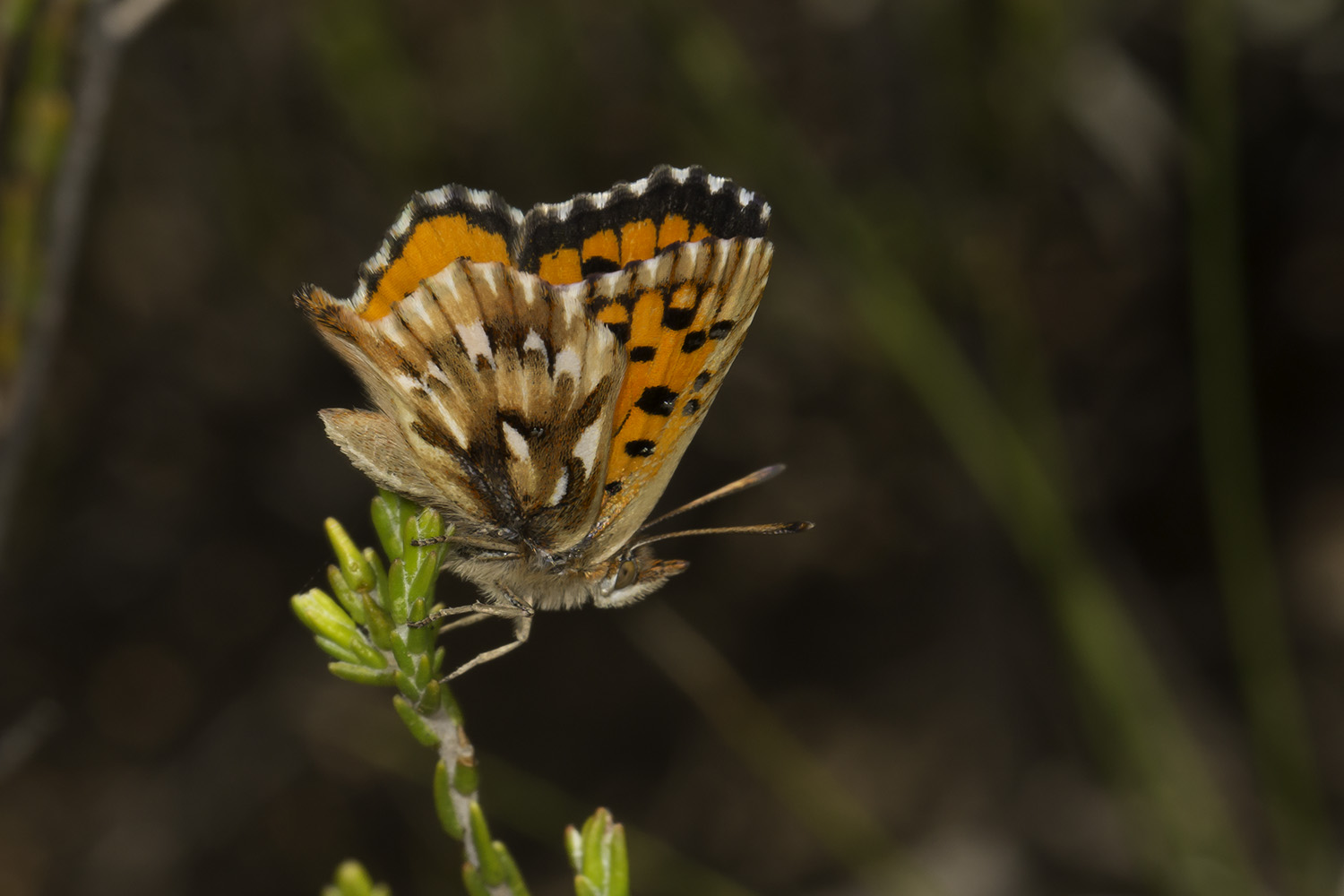
Most belong to the subfamily Aphnaeinae, while a few are in Lycaeninae, the nominate subfamily of Lycaenidae. They share a distinctive forewing underside pattern: a paler panel with black dots, often, though not always, with metallic centres. This is common to many ‘coppers’ and their relatives – a synapomorphy – which is a physical trait showing that these butterflies share a common evolutionary ancestor and are more closely related to one another than to the rest of Lycaenidae.
The original ‘coppers‘ are species related to the European Small Copper, Lycaena phlaeas. Lycaena is the type genus of Lycaenidae; the family is named after it because it was among the first groups to be scientifically described. However, it is not the oldest group evolutionarily. Modern DNA-based phylogenetics place it as a sister group to the older Aphnaeinae.

Small Copper ♂
Lycaena phlaeas phlaeas

Eastern Sorrel Copper ♂
Lafron clarki
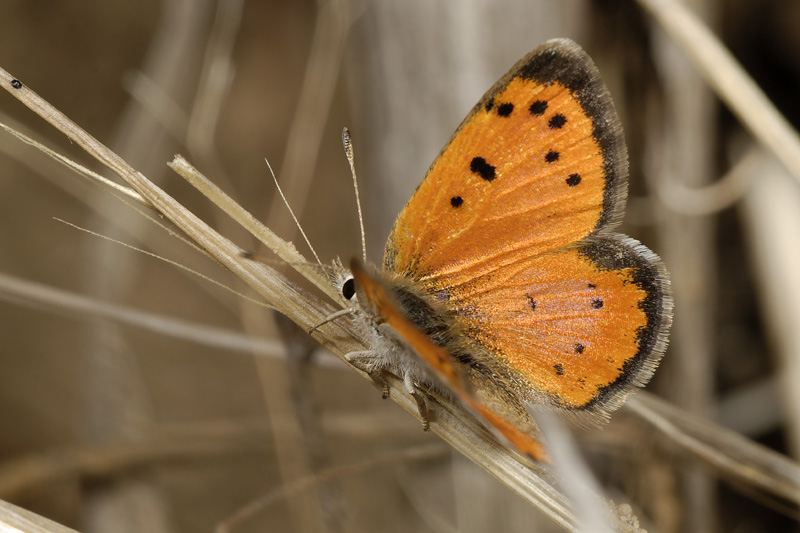
Local Lycaeninae species were once placed in Lycaena, but have recently been moved to Lafron, a South African endemic genus with only two species. The Eastern Sorrel Copper, Lafron clarki, is widespread, while the Cape Sorrel Copper, Lafron orus, is confined to coastal and montane areas of the Western and Eastern Cape.

Cape Sorrel Copper ♂
Lafron orus

Cape Sorrel Copper ♂
Lafron orus

Silver-spot Highflier ♂
Aphnaeus hutchinsonii
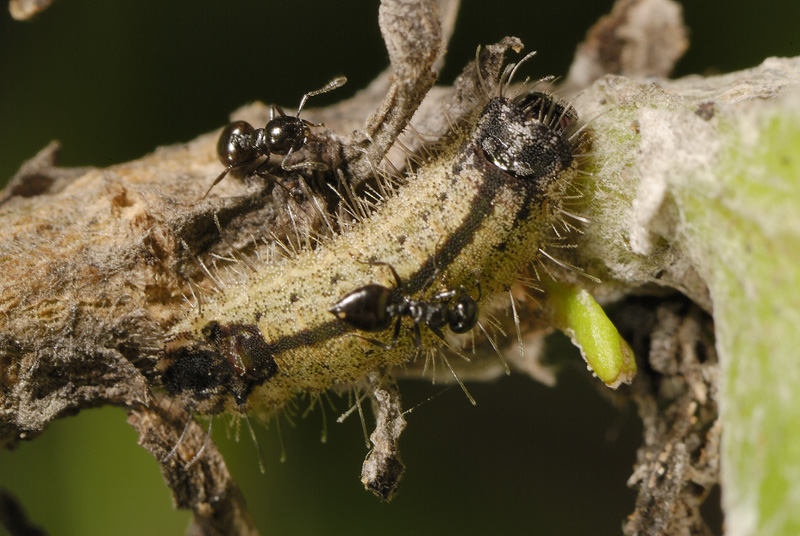
Aphnaeinae is a far larger and more diverse subfamily. In South Africa, it includes 12 genera and 125 species, plus several subspecies. Most – 119 species – show the typical ‘copper‘ pattern in some form. A few genera, such as Cigaritis with its stripes and Aphnaeus (the so-called ‘type’ genus) with its large spots, lack the pattern but retain metallic markings. Many have copper, red, or orange uppersides, while others are brown, grey, or partly blue.
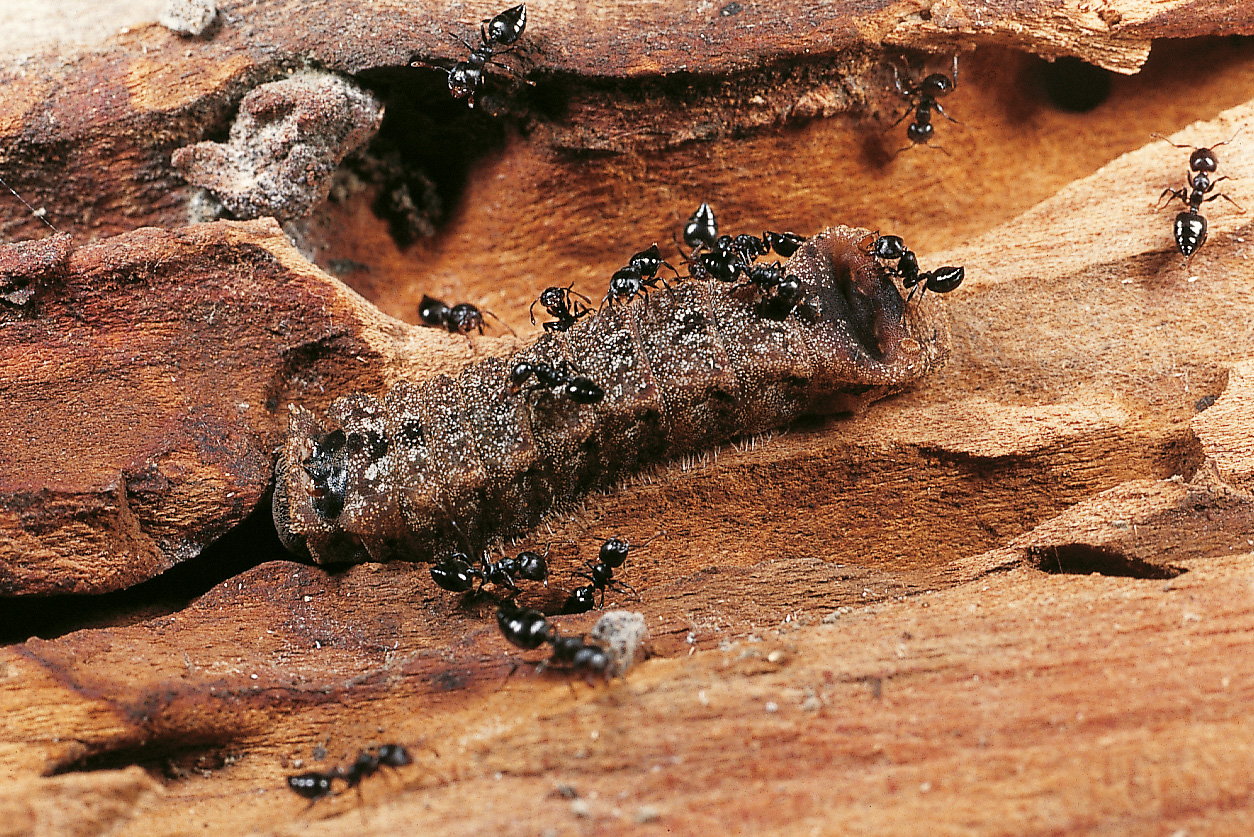
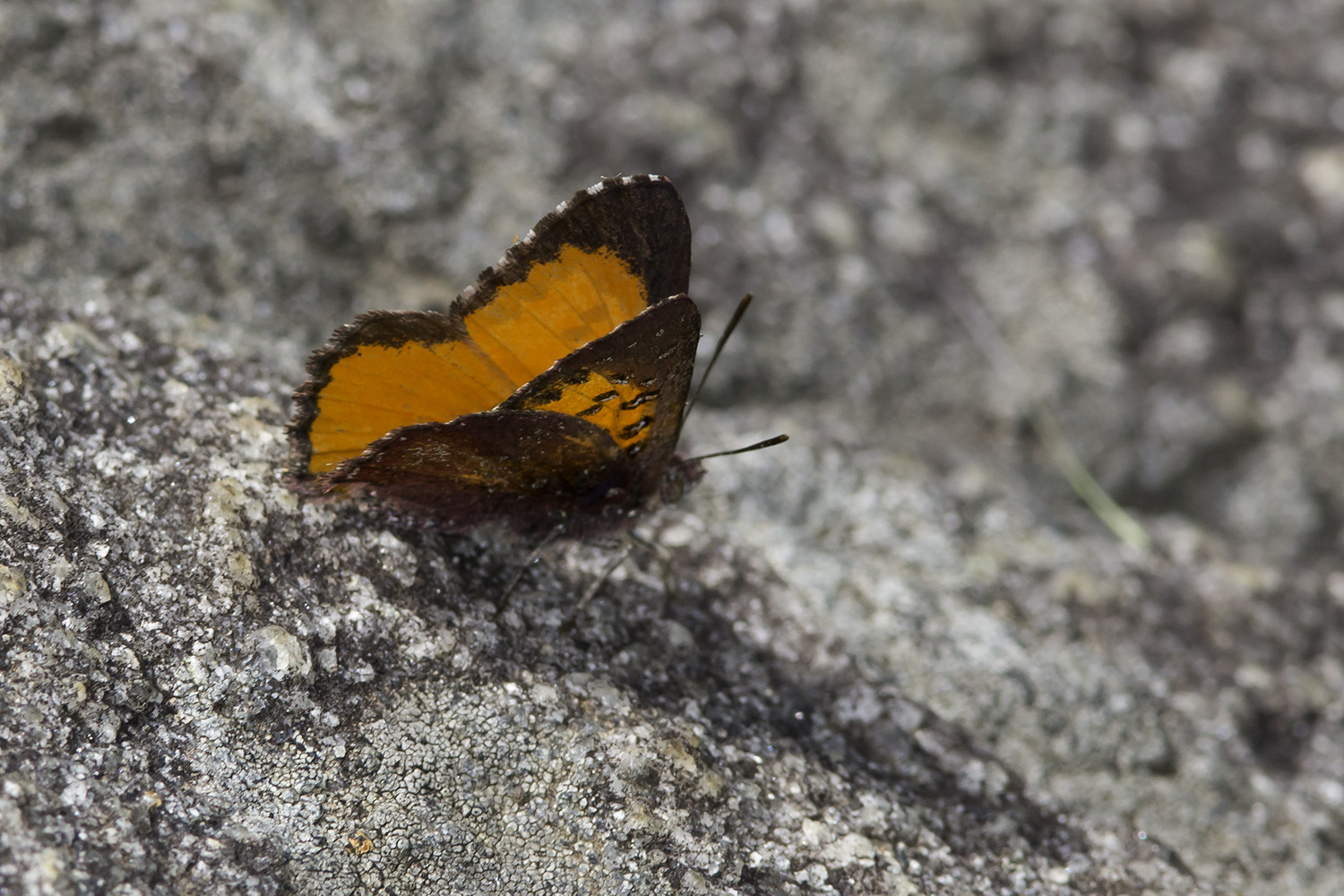
Aphnaeinae are notable for the close symbiosis between their larvae and ants, ranging from mutualism to parasitism and even predation.

Natal Opal caterpillar
Chrysoritis chrysaor natalensis larva
Silver-spot Highflier caterpillar
Aphnaeus hutchinsonii
To understand this subfamily, it helps to divide it into tribes and subtribes. We begin with the tribe Aphnaeini, which has three subtribes, including Aloeidina. Aloeidina contains four genera, the largest of which is Aloeides.
In South Africa, Aloeides is, at least, joint largest genus in Aphnaeinae, with 49 species. For years these butterflies were called ‘coppers,’ although they lack metallic uppersides and many are red or brown. They have recently been renamed ‘Russets,’ a more descriptive name. These small butterflies have wingspans of 21–45 mm. Aloeides species occur from the southern Cape to Angola, Zambia, and Kenya, with South Africa holding the greatest number of endemic species.
The Natal Russet, Aloeides penningtoni, is typical of the genus. Its upperside is non-metallic orange-red with dark borders, though it seldom opens its wings at rest like this one did. The forewing underside of the female shows the typical ‘copper‘ pattern, while the hindwing underside ground colour ranges from camouflaged brown to deep red. It flies rapidly and low around rocky grassland, from just above sea level to the Drakensberg foothills. Several similar species with jagged underside markings occur across the country, like the Toothed Russet, Aloeides dentatis.

Natal Russet ♂
Aloeides penningtoni

Natal Russet ♀
Aloeides penningtoni

Toothed Russet ♀
Aloeides dentatis dentatis
The Apricot Russet (also known as Yellow Russet), Aloeides aranda, is among the genus’s brightest species. Its upperside is apricot-orange, and the hindwing underside ranges from grey-brown to red-brown and an almost luminous magenta. It occurs in karoo, fynbos, and grassland, flying low in rocky areas.

Apricot Russet ♂
Aloeides aranda

Aloeides aranda ♀
Aloeides aranda

Veined Russet ♂
Aloeides pierus

Veined Russet ♂
Aloeides pierus
The male Veined Russet, Aloeides pierus, has a brown upperside with grey wing bases and russet-orange submarginal marks on the hindwing. This individual took off as it was being photographed, revealing the upperside. The hindwing underside is mottled buff to grey, with rows of silvery spots edged in darker colouring. Females show more russet-orange above. This butterfly occurs in fynbos and karoo areas.

Waterberg Sunset Copper ♂
Erikssonia edgei

Waterberg Sunset Copper ♂
Erikssonia edgei
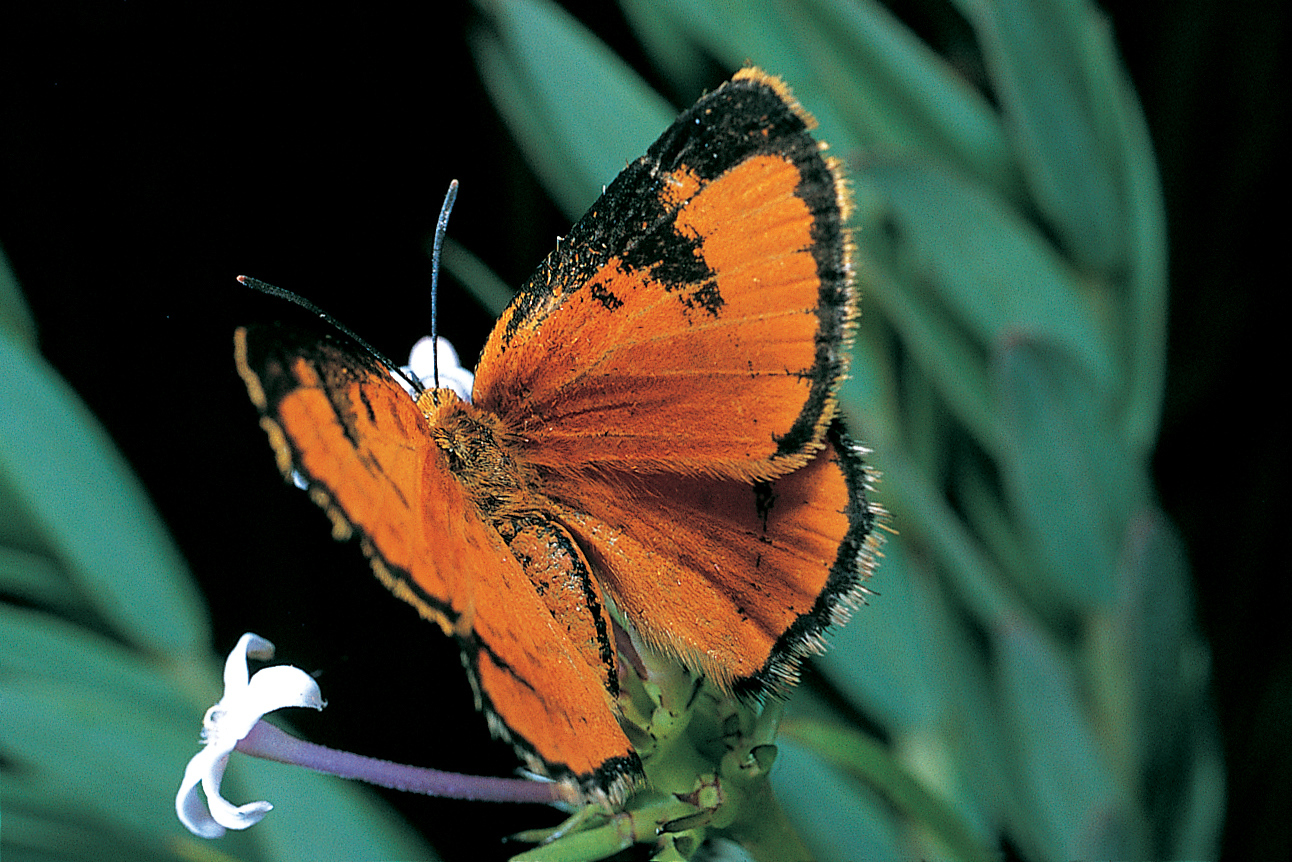
Aloeidina also includes the Sunset Coppers, genus Erikssonia. Similar in size and habits to Aloeides, they comprise only four species scattered across southern Africa. South Africa has the Critically Endangered Waterberg Sunset Copper, Erikssonia edgei. Always rare, it was thought extinct after disappearing in the 1990s from its original Waterberg locality at Perdekop. It was rediscovered near Bela-Bela in 2013 but has seldom been seen since. Its habitat is grassy savanna, and its larvae feed on toxic Lasiosiphon species (Curryflowers). The adults have aposematic colouring and may be distasteful to predators – possibly Müllerian mimics of the distasteful Dancing Telchinia, Telchinia serena.

Waterberg Sunset Copper ♂
Erikssonia edgei

Dancing Telchinia ♂
Telchinia serena
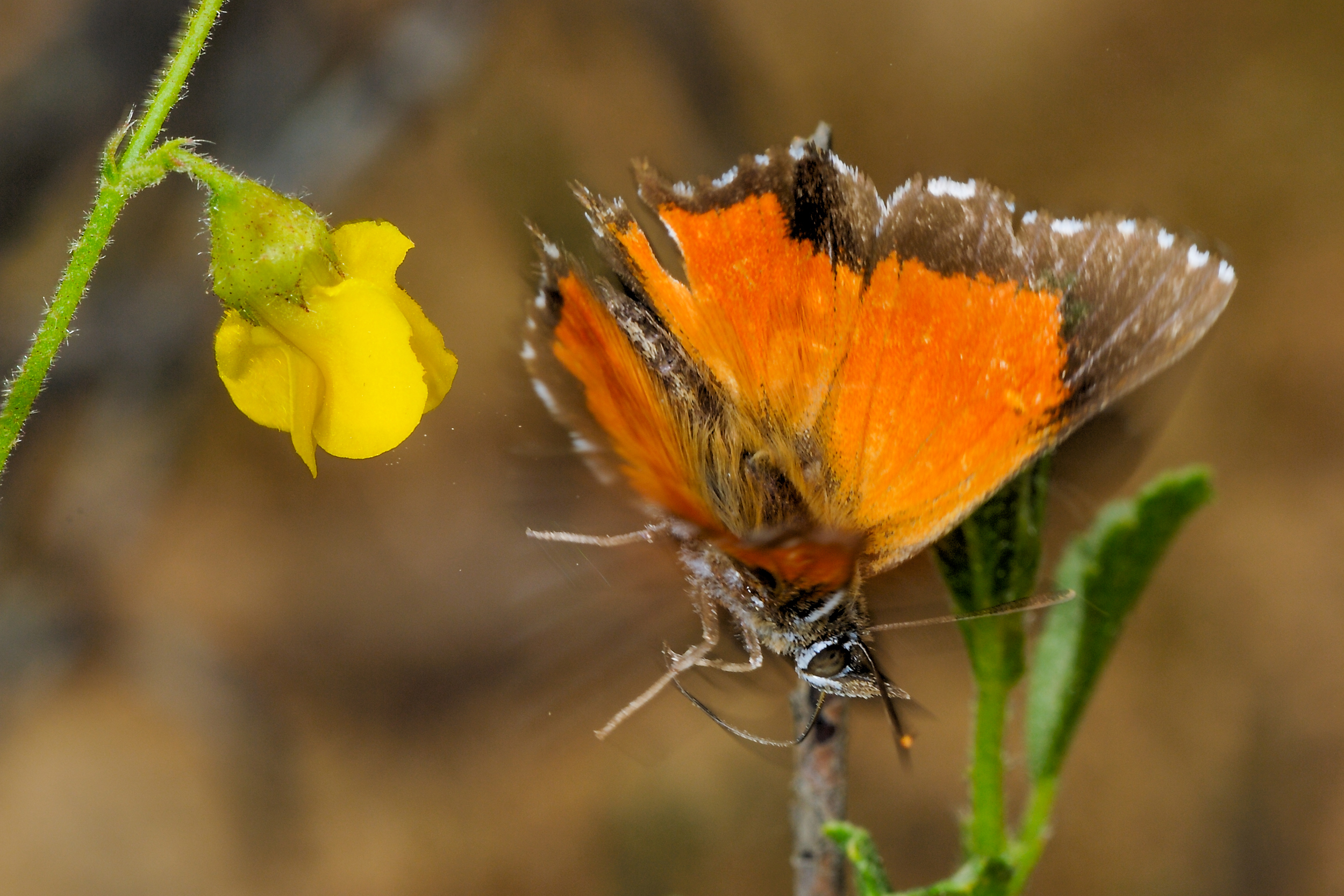
Warrior Silver-spotted Copper ♂
Argyraspodes argyraspis
Aloeidina also includes two similar genera, Argyraspodes and Trimenia. The Warrior Silver-spotted Copper, Argyraspodes argyraspis, is a distinctive species: large, heavy-bodied, and bright orange above, with black borders and black-and-white chequered cilia. Its wingspan is 32–45 mm, and the hindwing underside has large silver-white spots. The sexes are similar. It occurs in hilly Nama and Succulent Karoo, as well as Fynbos, and is often found around rocky outcrops and hilltops. No larval host plants are recorded; the larvae may parasitise the Brown Cocktail Ant, Crematogaster melanogaster.

Swartland Silver-spotted Copper ♂
Trimenia wallengrenii wallengrenii © Cliff Dorse
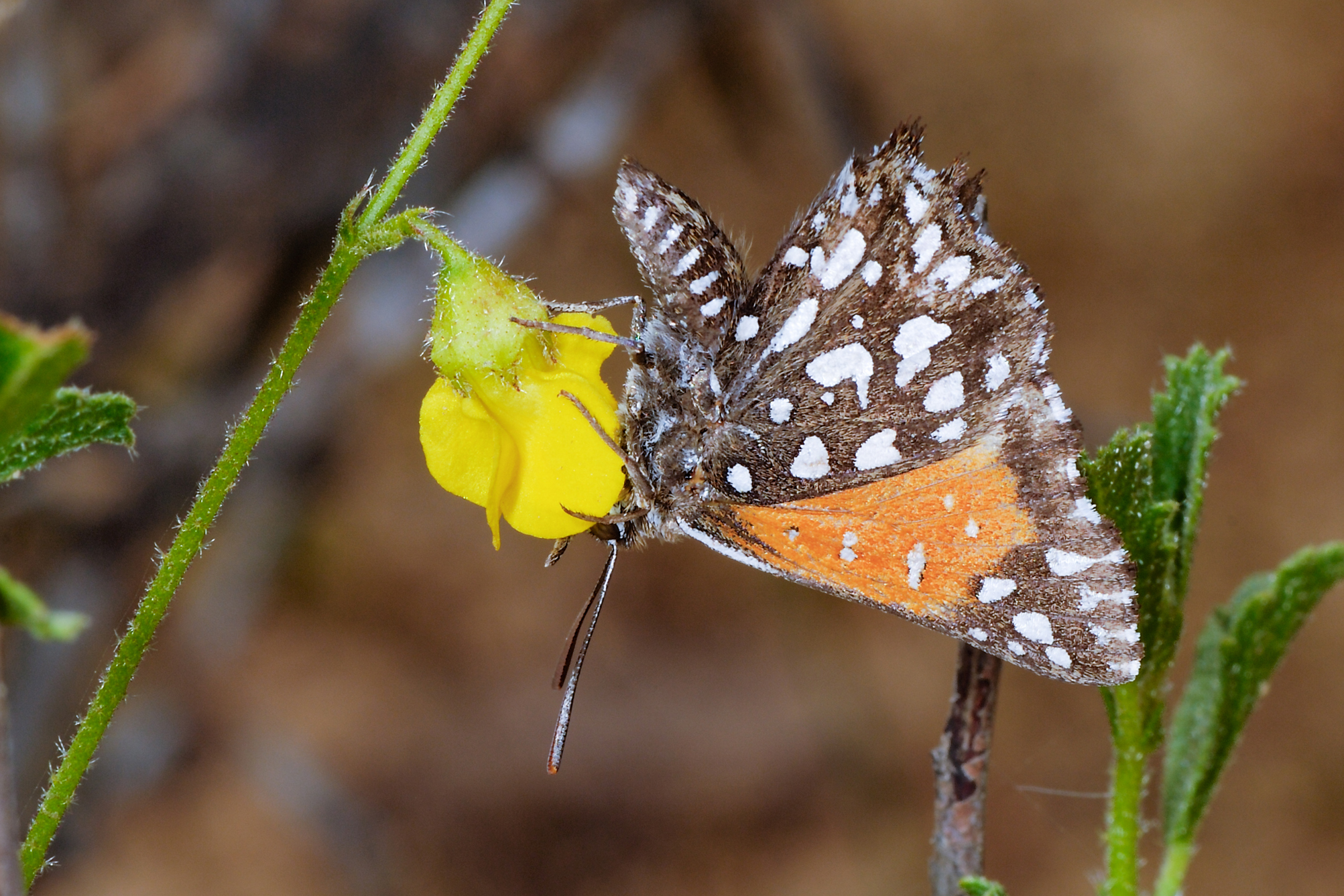
Warrior Silver-spotted Copper ♂
Argyraspodes argyraspis
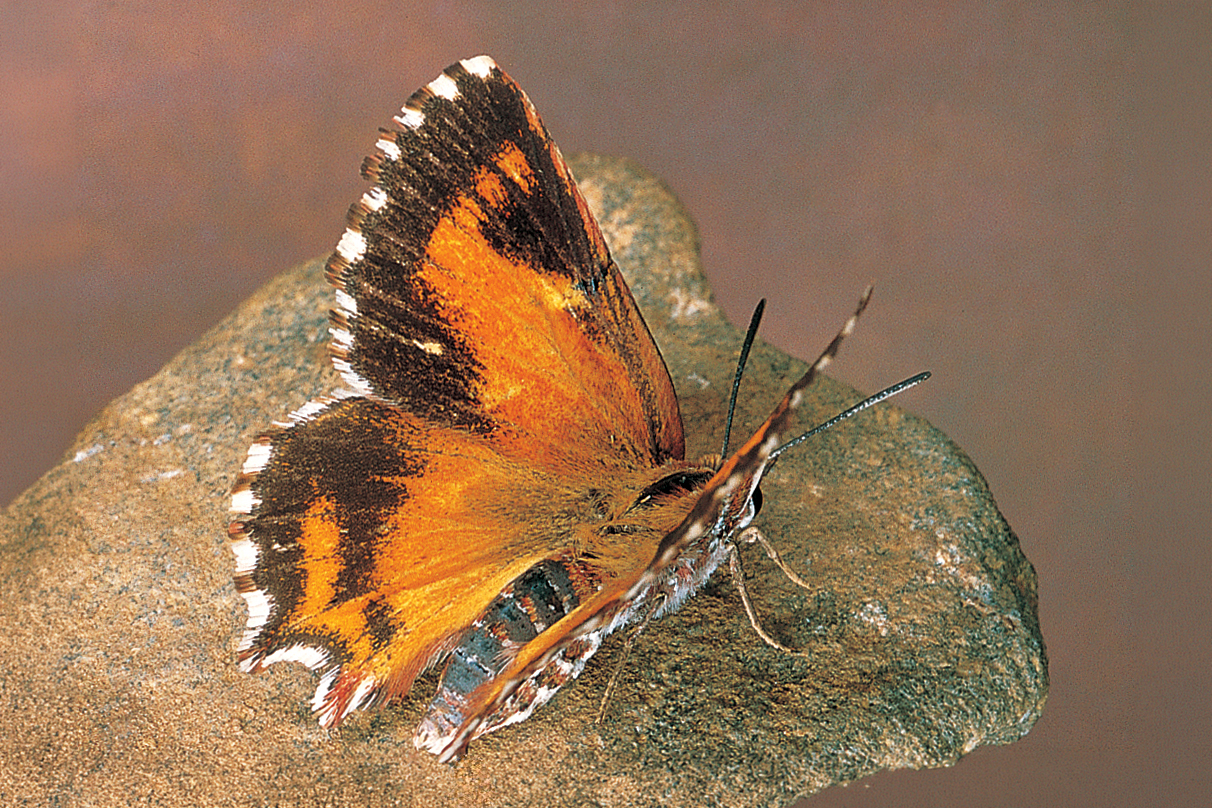
Piketberg Silver-spotted Copper ♀
Trimenia wallengrenii gonnemoi

De Hoop Scarce Silver-spotted Copper ♀
Trimenia malagrida maryae
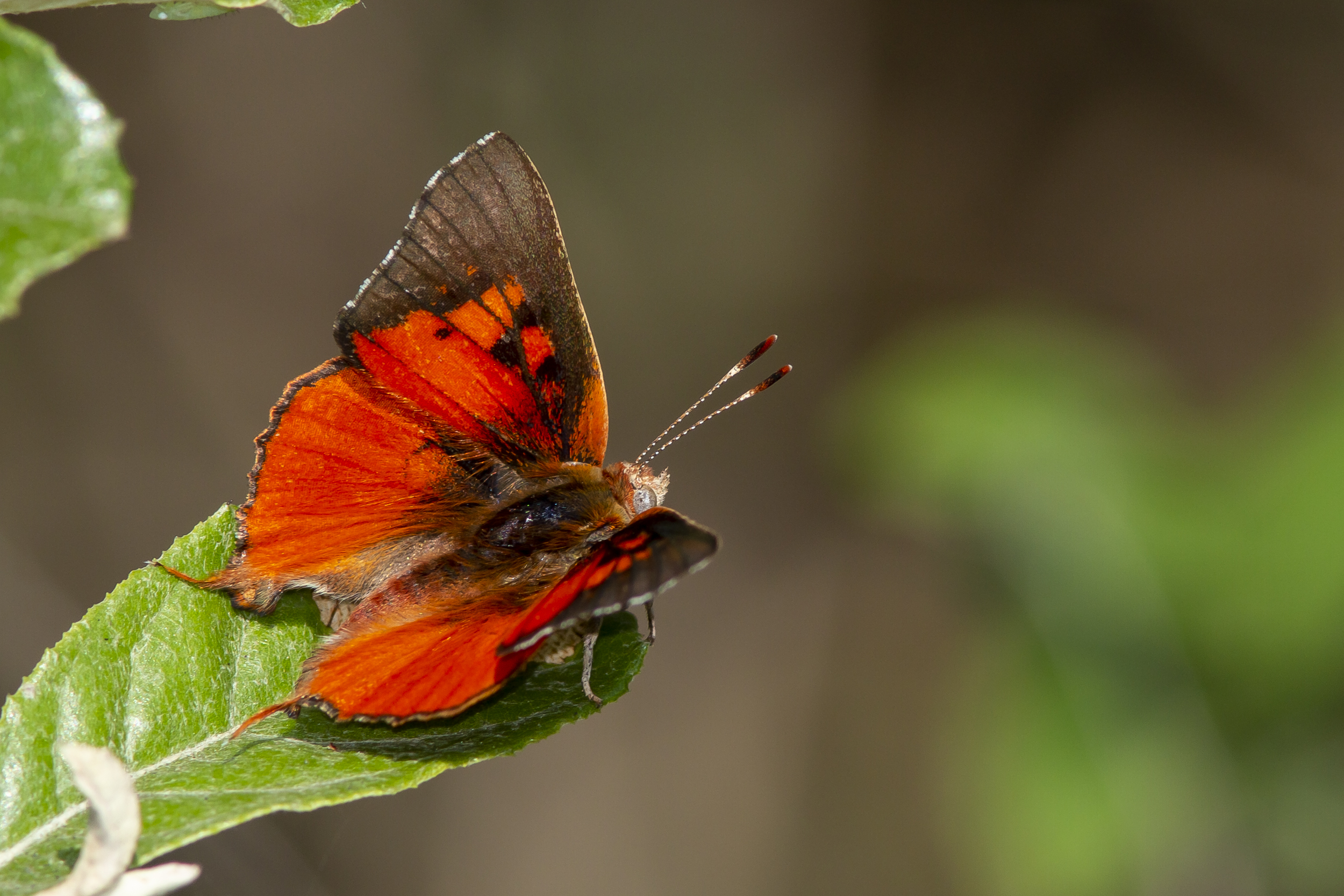
Genus Trimenia has five species, all but one – found in Namibia – endemic to South Africa, along with several subspecies. These medium to large, heavy-bodied butterflies have dull orange uppersides with broad black borders and black-and-white chequered cilia. They are smaller than Argyraspodes and have similar undersides, though the spots are slimmer and more silvery or golden, giving the impression of Arabix script. The Swartland Silver-spotted Copper, Trimenia wallengrenii gonnemoi, is among the larger species, while the Scarce Silver-spotted Copper, Trimenia malagrida, is smaller and has some populations under severe threat. Trimenia occurs in Fynbos and Succulent and Nama Karoo, flying on hillsides or in gullies where they defend territories around rocks and bushes. The sexes are usually similar, though females are paler and show more orange above. No host plants are known; the caterpillars may parasitise Pugnacious Ants, Anaplolepis custodiens.

Southern Scarlet ♂
Axiocerses tjoane tjoane
Bush Scarlet ♂
Axiocerses amanga
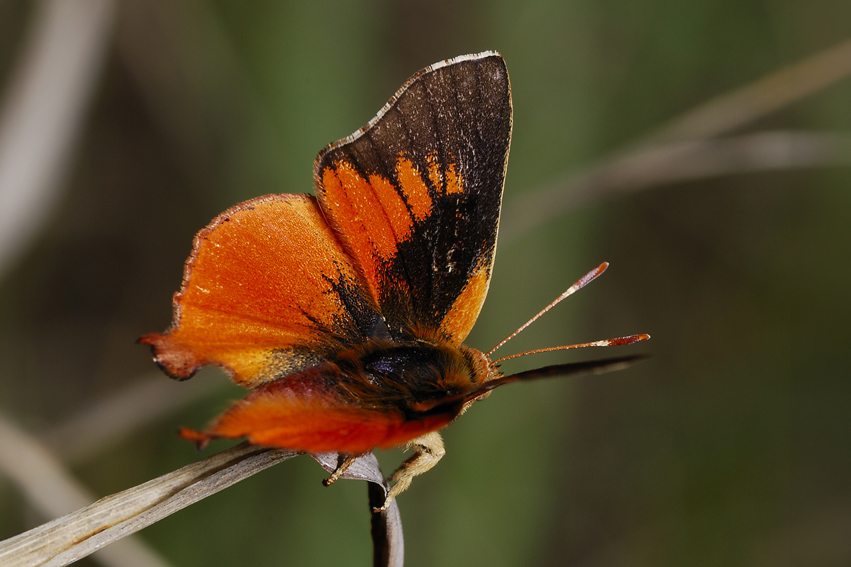
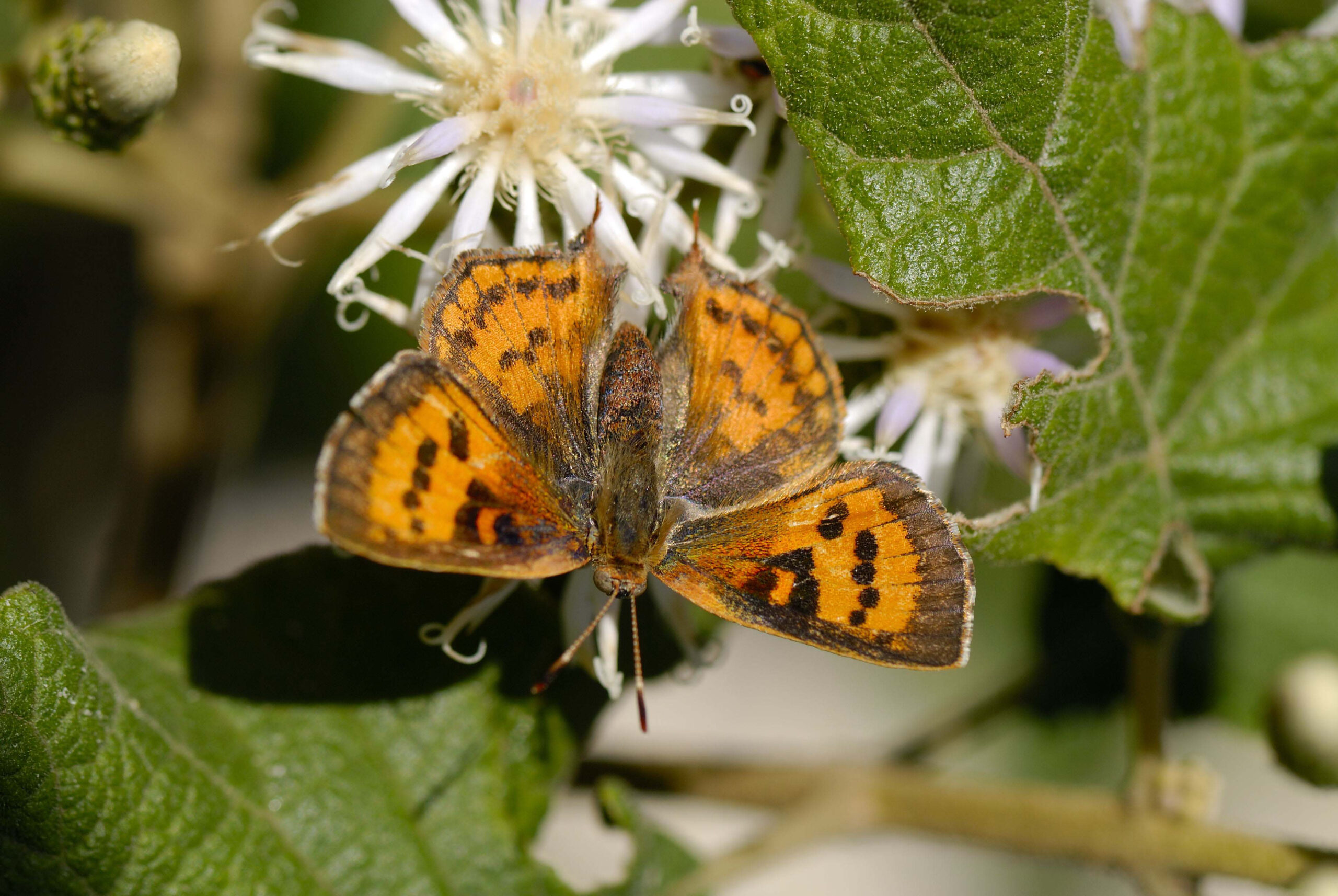
Another Aphnaeinae tribe, Axiocersini, contains a single genus, Axiocerses, with four South African species. Known as Scarlets for their red uppersides, they show their close relationship to Aloeides in their underside markings. These medium-small, fast-flying butterflies have wingspans of 24–32 mm. In South Africa, the Southern, or Eastern, Scarlet, Axiocerses tjoane tjoane, has males with bright red uppersides and black forewing tips; females are more orange-red, with rows of black dots.
Male Bush Scarlets, Axiocerses amanga, are bright scarlet with black wing tips and a black band across the forewing, while females are similar but paler orange-red with weaker dark markings.

Southern Scarlet ♂
Axiocerses tjoane tjoane
Southern Scarlet ♀
Axiocerses tjoane tjoane
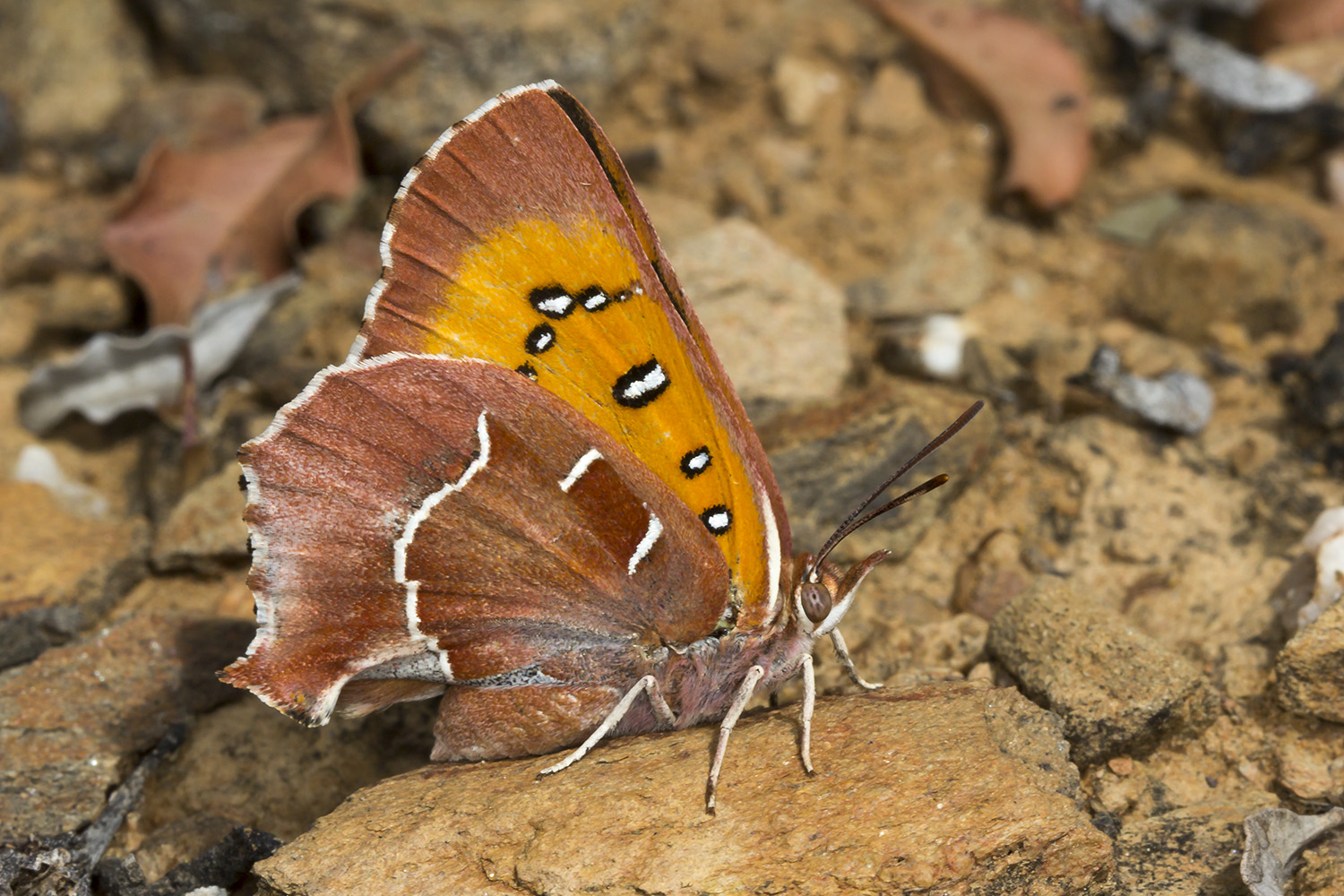
Female Scarlets remain close to the host plants. Southern Scarlet usually uses Sweet Thorn, Vachellia karroo, while Bush Scarlet uses Sour Plum, Ximenia caffra.
Scarlet males are territorial and conspicuous in flight. They are usually confiding and, once accustomed to a person’s presence, allow close approach and readily open their wings, making them appealing photographic subjects.
Phasisina is another small tribe within Aphnaeini. In South Africa, it includes two genera: Phasis, the Arrowheads, and Tylopaedia, the King Copper. These are among the largest Aphnaeinae. A female Tylopaedia sardonyx can be one of the largest lycaenids and may be mistaken for a nymphalid such as the Painted Lady, Vanessa cardui.

King Copper ♀
Tylopaedia sardonyx sardonyx
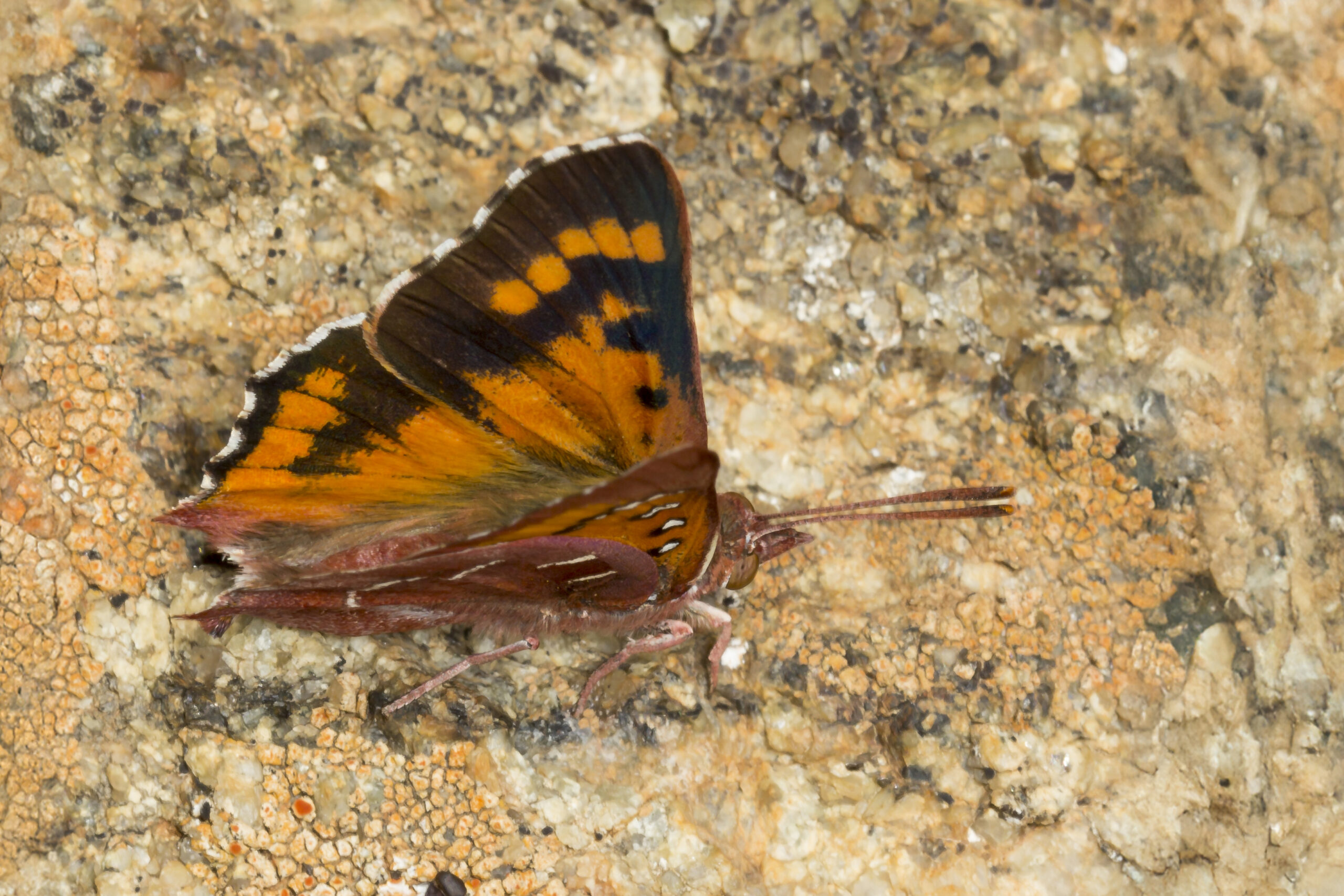
King Copper ♂
Tylopaedia sardonyx sardonyx

Western King Copper ♂
Tylopaedia sardonyx peringueyi
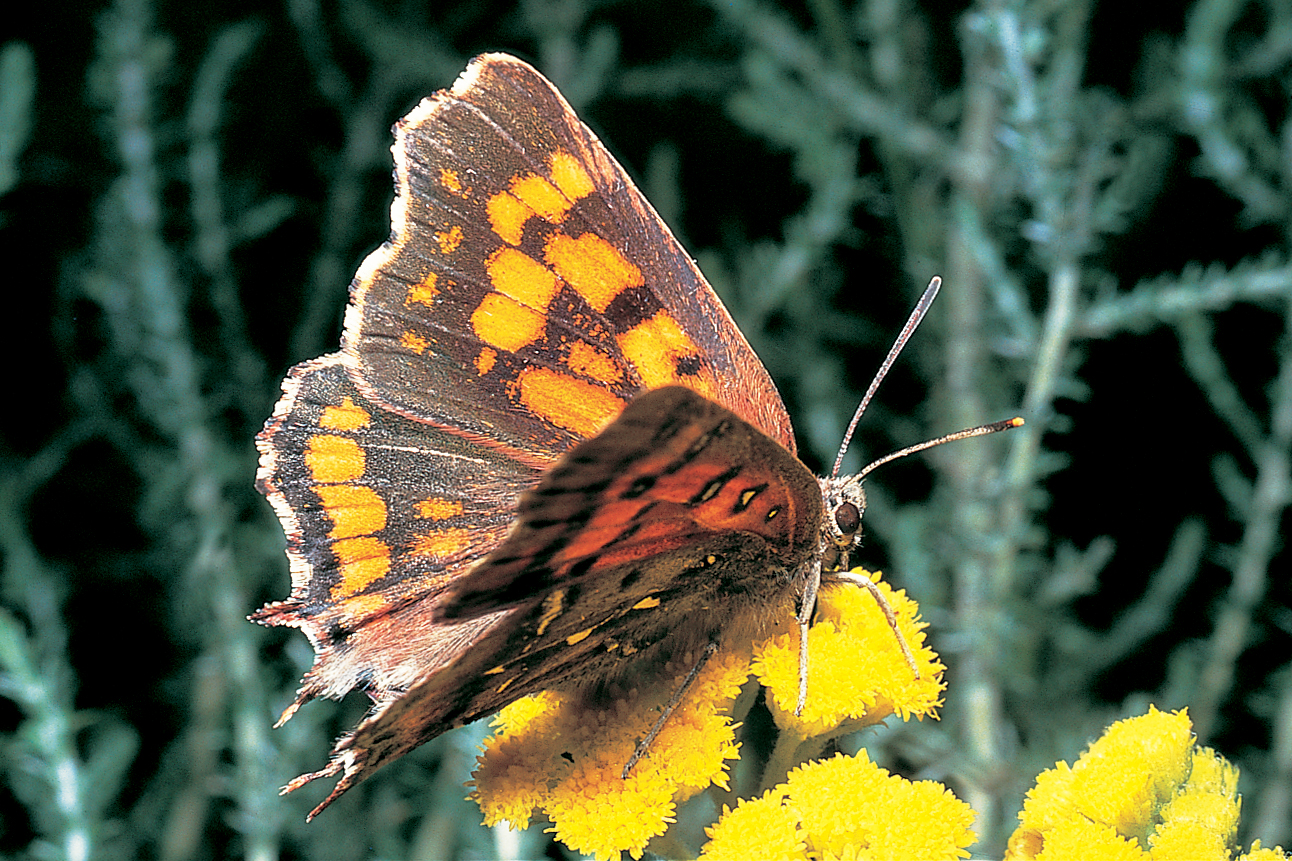
King Copper, Tylopaedia sardonyx, has two subspecies, one of which occurs in Namibia and Botswana. It is large for a lycaenid, with a wingspan of 32–50 mm, and is heavy-bodied and robust. The upperside is orange with black borders and bands. The forewing underside has the typical ‘copper‘ pattern, while the hindwing underside is earth-coloured, from buff to red, with a white postdiscal line and two short subcostal lines.
It inhabits hilly Nama and Succulent Karoo, as well as Arid Savanna. It flies rapidly in a whirling pattern around bushes and shrubs, often on hilltops, usually for short periods. The Western King Copper, Tylopaedia sardonyx peringueyi, which lacks the white underside lines, occurs in coastal Fynbos on the west coast.
The larval host plant of Tylopaedia sardonyx sardonyx is Small-leaved Guarri, Euclea undulata. The larvae associate with Cocktail Ants (Crematogaster sp.).
South Africa has four species of Phasis Arrowheads, two with two subspecies. All but one subspecies are endemic. Phasis thero thero, the Silver Arrowhead, is typical of the genus. As in all Arrowheads, the sexes are similar. Each has a distinctive ‘arrowhead‘ mark on the hindwing underside, ranging from a large hatchet shape in the Silver Arrowhead to a small comma-shaped mark in Phasis pringlei, the Roggeveld Arrowhead. Their uppersides are broadly similar: forewing markings generally follow the underside spotting, while the hindwing uppersides vary in discal marks and the width of the marginal borders. The caterpillars feed on Searsia (Karee) and Melianthus (Honey flower) species and associate with Cocktail Ants (Crematogaster sp.). These butterflies fly slowly and seldom move far from their larval host plants.

Silver Arrowhead ♀
Phasis thero thero

Silver Arrowhead ♂
Phasis thero thero
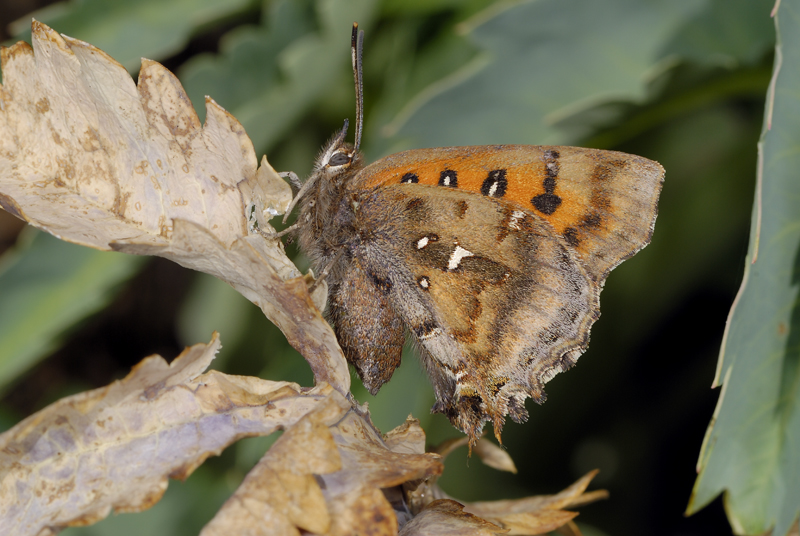
Roggeveld Arrowhead ♀ on host plant
Phasis pringlei on Melianthus
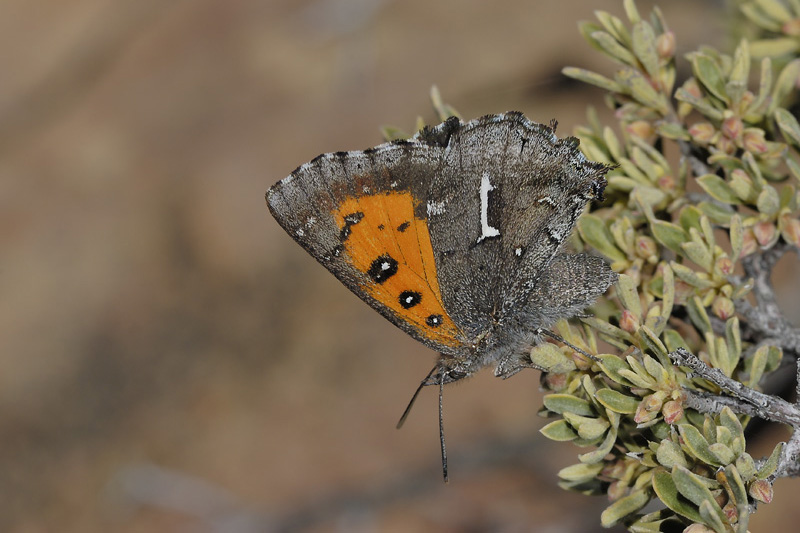
Highland Namaqua Arrowhead ♂
Phasis clavum erythema
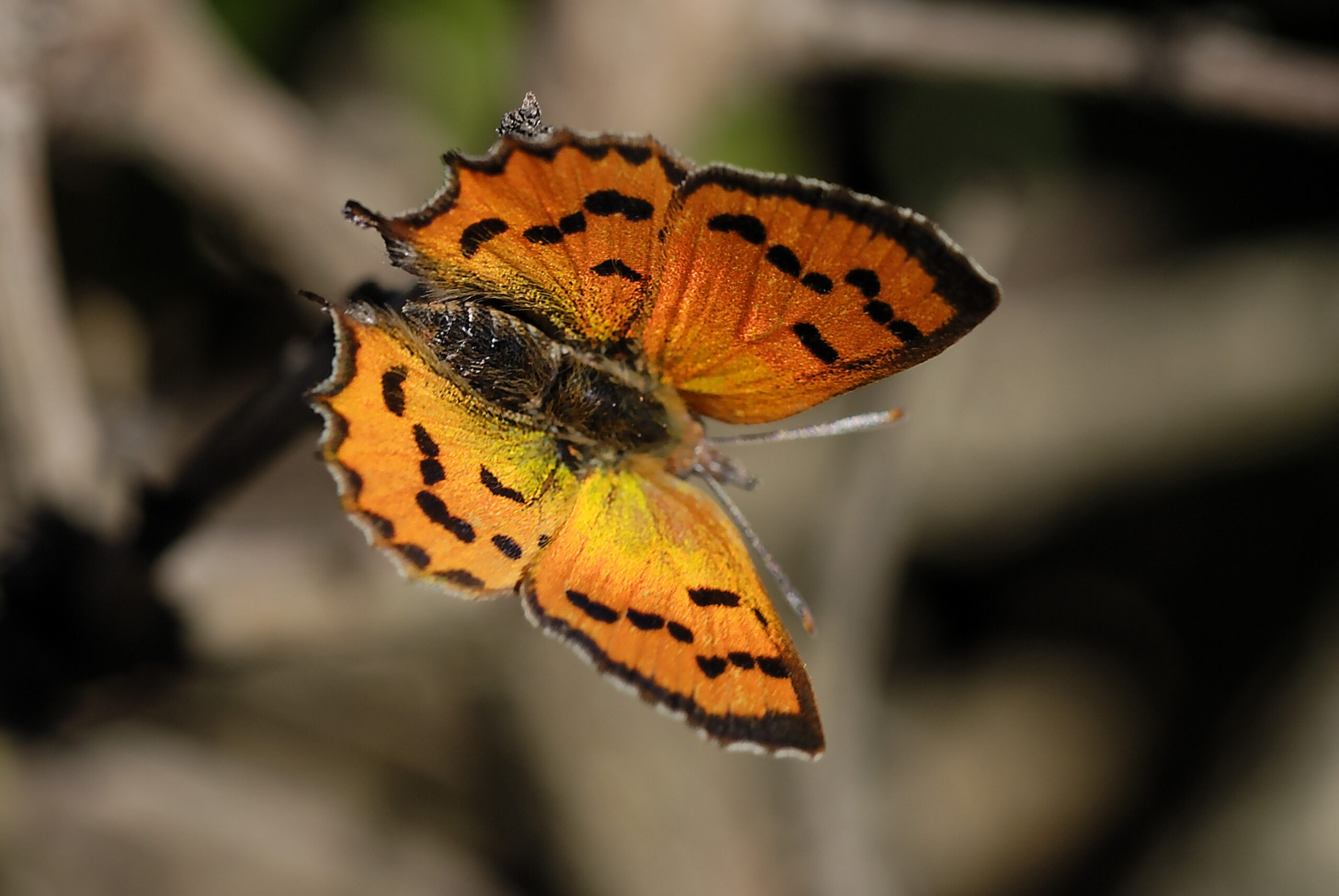
The other Aphnaeinae tribe is Cigaritini, which contains four genera, two of them showing ‘copper‘ patterning. Chrysoritis has 49 species – the same number as Aloeides – all endemic to southern Africa. It contains two subgenera. Most species in subgenus Chrysoritis are readily recognisable as ‘coppers‘ from their upper- and undersides. Species in subgenus Auricirrus have the ‘copper‘ forewing underside pattern, but many adults show shifting iridescence above. For this reason, the genus is commonly known as the Opals. These tiny to small lycaenids have wingspans of 21–38 mm, and some are among South Africa’s most spectacular butterflies. Their caterpillars associate with ants in several genera, most often Cocktail Ants (Crematogaster sp.). A few examples follow.

Natal Golden Opal ♂
Chrysoritis chrysaor natalensis
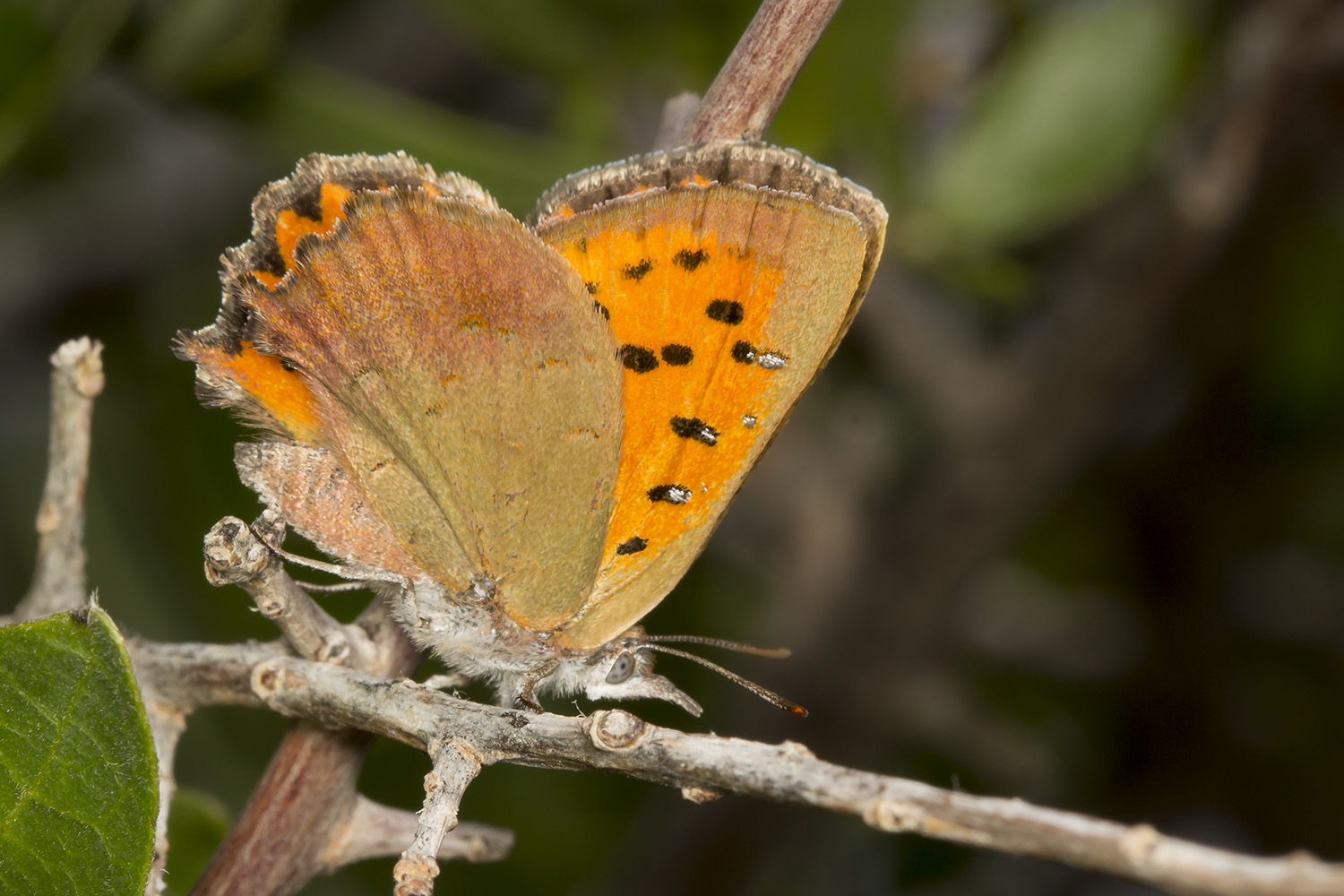
The widespread Burnished (now Golden) Opal, Chrysoritis chrysaor, is one of three subspecies in subgenus Chrysoritis. It occurs from subtropical northern KwaZulu-Natal across eastern South Africa to the Karoo and Cape Town. Its brilliant metallic copper upperside is striking. The caterpillars feed on Bush Tick-berry, Osteospermum moniliferum, and the adults fly rapidly around clumps of the host plant. The subspecies vary somewhat in colouring – Burnished Golden Opal has a greenish underside hind wing and reduced upper side spotting. Midas Golden Opal has a chocolate brown hind wing underside and further reduced spotting.

Burnished Golden Opal ♀
Chrysoritis chrysaor chrysaor
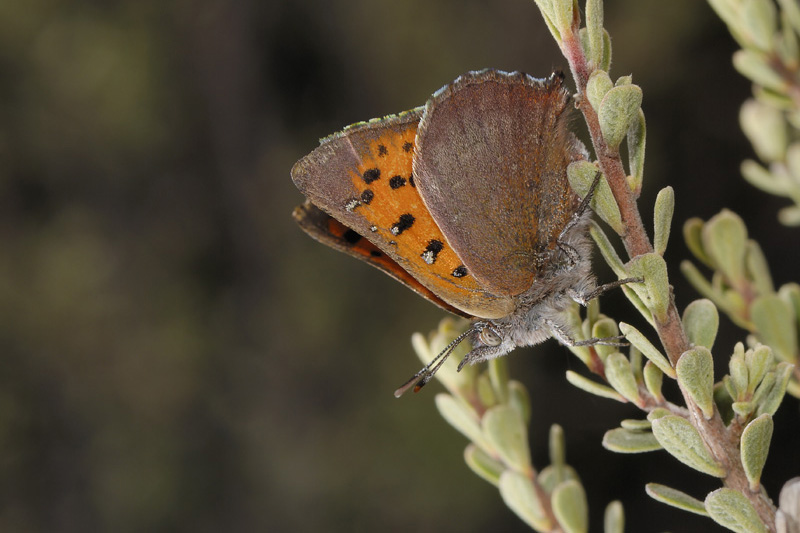
Midas Golden Opal ♂
Chrysoritis chrysaor midas
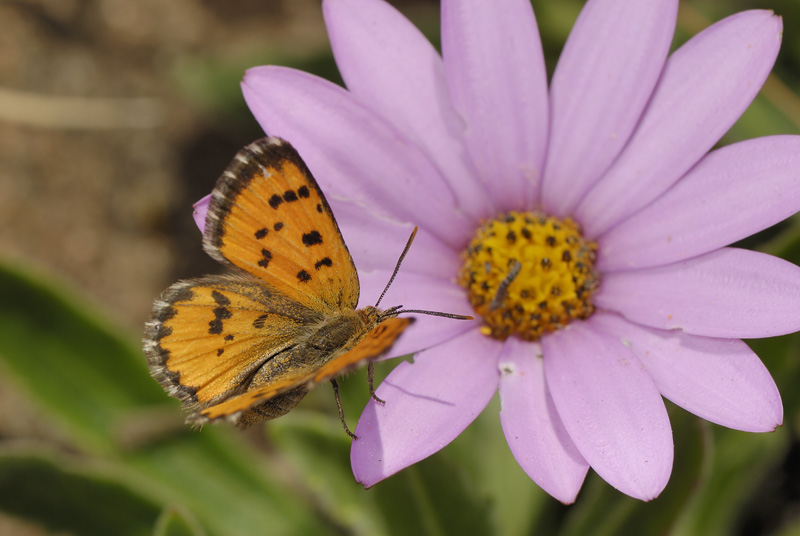
Drakensberg Opal ♂
Chrysoritis oreas
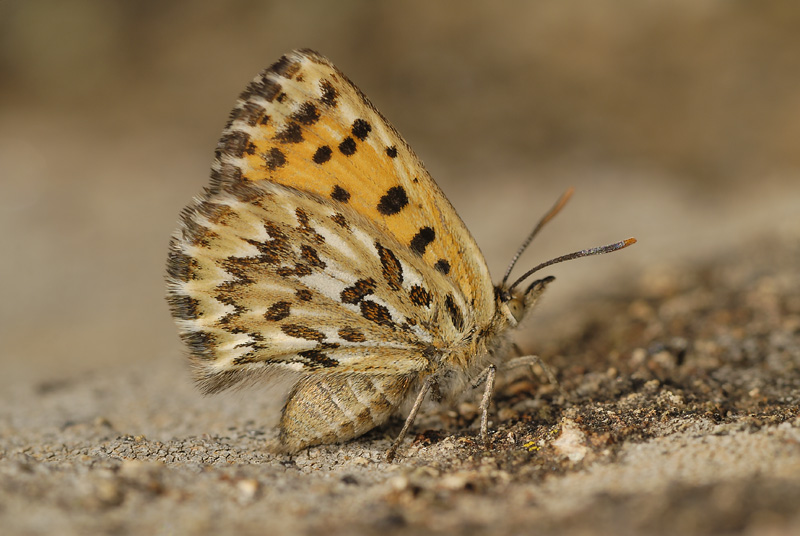
Drakensberg Opal ♀
Chrysoritis oreas
The Drakensberg Opal, Chrysoritis oreas, also belongs to subgenus Chrysoritis but is more subdued in colour. It is very rare, restricted to a few isolated peaks in the southern ‘Little’ Berg. Its upperside is dull yellowish orange with black borders and small spots. The underside has zigzag markings that camouflage it against the dry, wiry grasses of its habitat. It flies slowly and low, living in small colonies. The larval host is a Thesium species in the family Santalaceae. As with the Natal Burnished Opal, the sexes are similar.

Star Opal ♂
Chrysoritis thysbe thysbe

Star Opal ♂
Chrysoritis thysbe thysbe
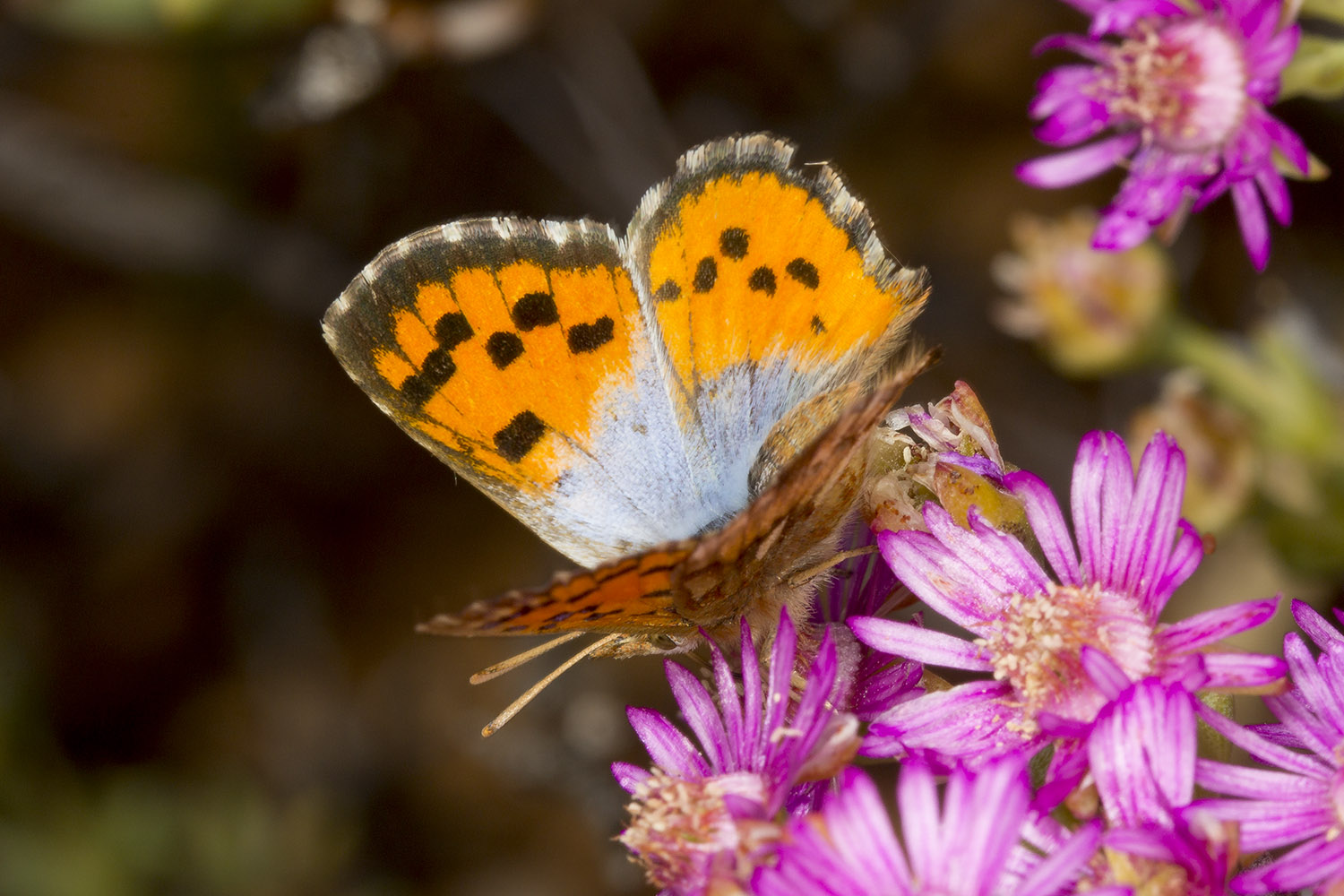
Western Star Opal ♀
Chrysoritis thysbe bamptoni
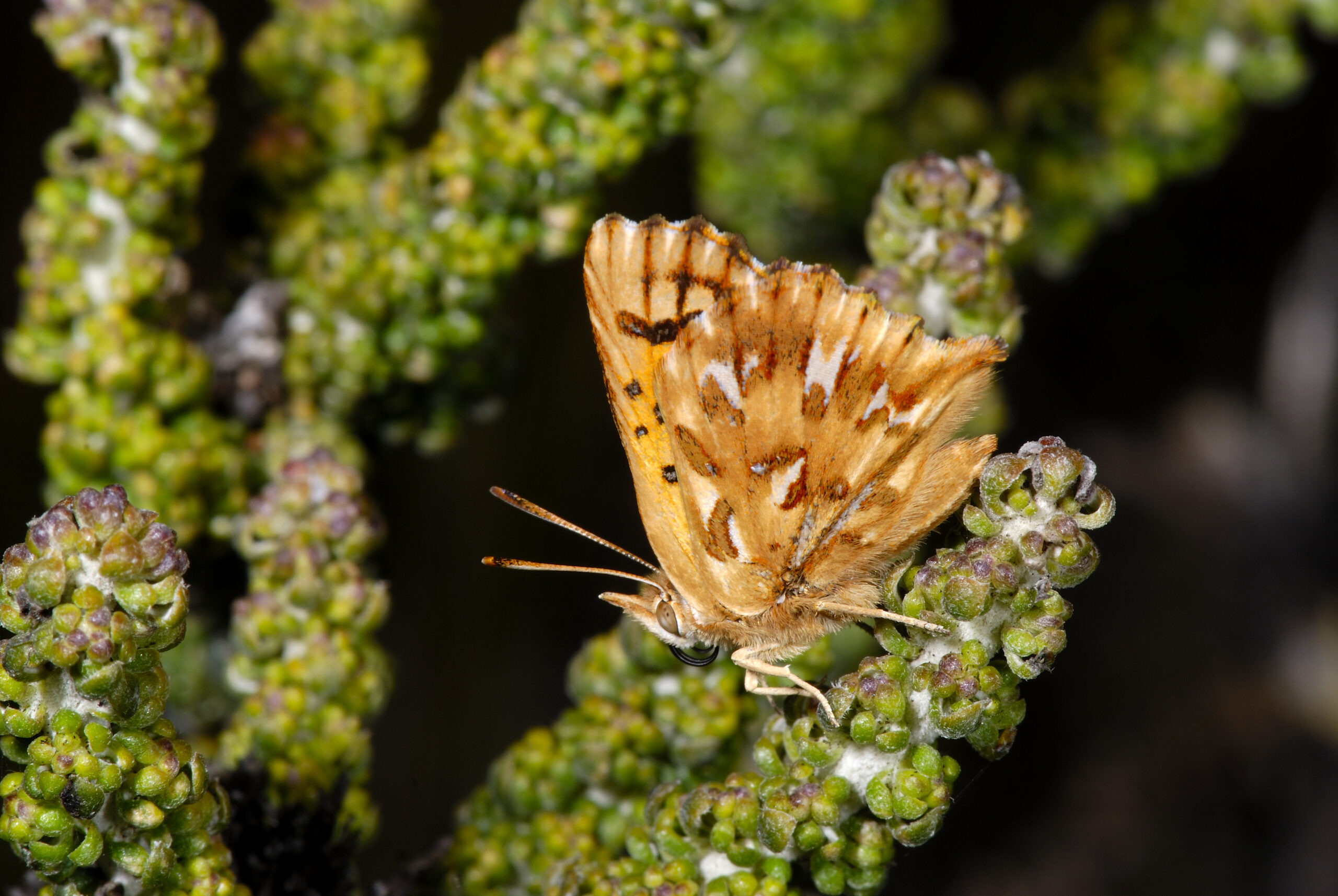
Star Opal ♂
Chrysoritis thysbe thysbe
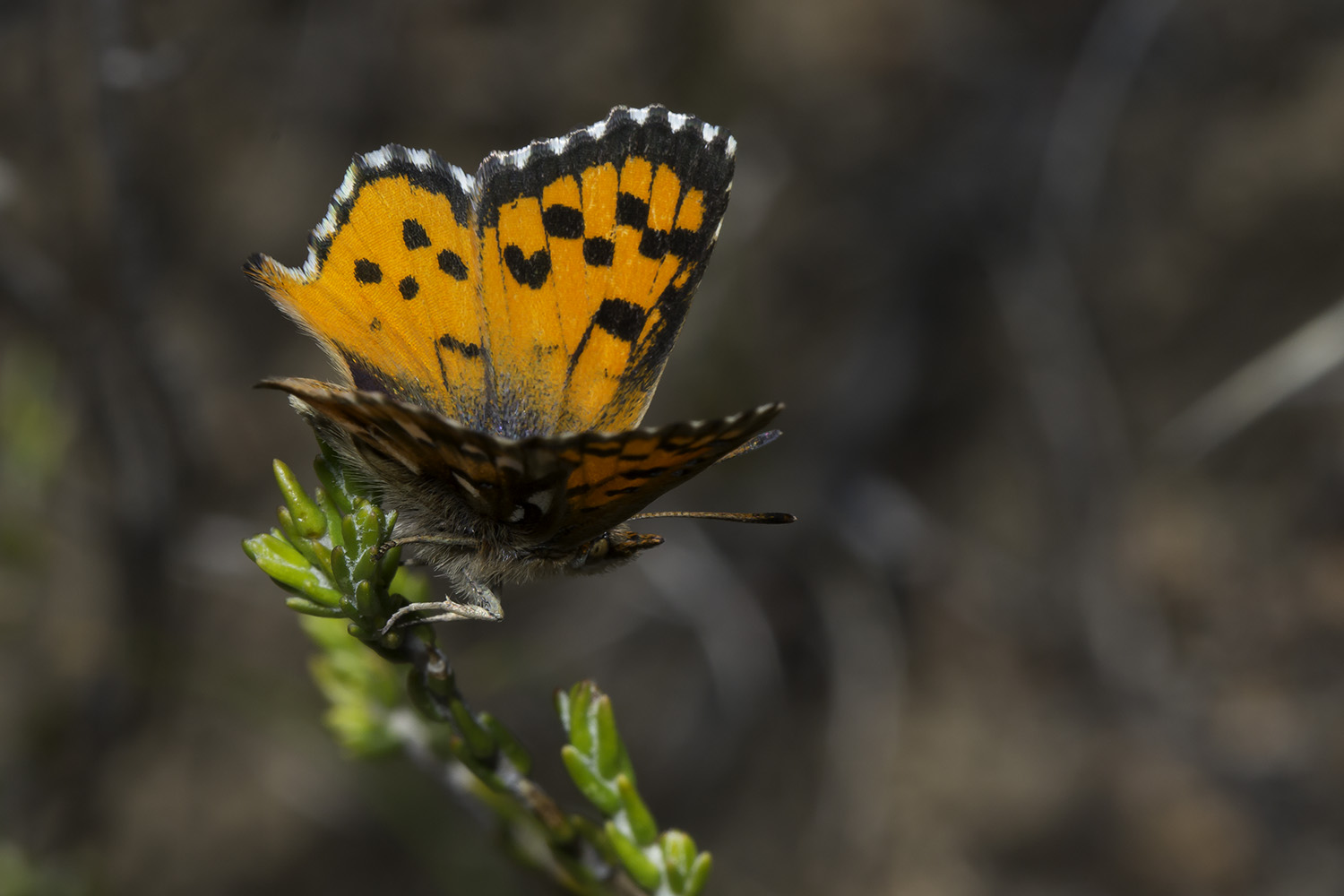
The Star Opal, Chrysoritis thysbe, belongs to subgenus Auricirrus and occurs in Western Cape Fynbos from the coast to mountain tops. Its coppery upperside is overlaid with opalescent blue and shifting iridescence, while the underside is typical of the ‘coppers.’ The hindwings are camouflaged but vary as to the amount of patterning. It has four subspecies. Its caterpillars also feed on a Thesium species. Females resemble males but have less blue. It flies rapidly but low, often settling with its wings open.

Amatola Opal ♂
Chrysoritis amatola

Amatola Opal ♂
Chrysoritis amatola
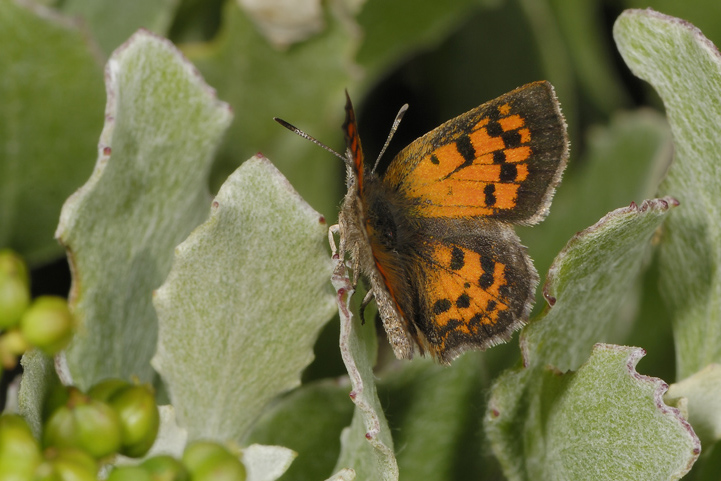
The Amatola Opal, Chrysoritis amatola, is similar in size, shape, and habits to Chrysoritis thysbe, and is in the same subgenus, but it lacks any upper side blue. Its caterpillars feed on a Tick-berry species, genus Osteospermum. It flies on rocky ridges in grassy Karoo country in the mountains of the Eastern Cape.

Donkey Rippled Opal ♂
Chrysoritis zonarius zonarius on the host plant
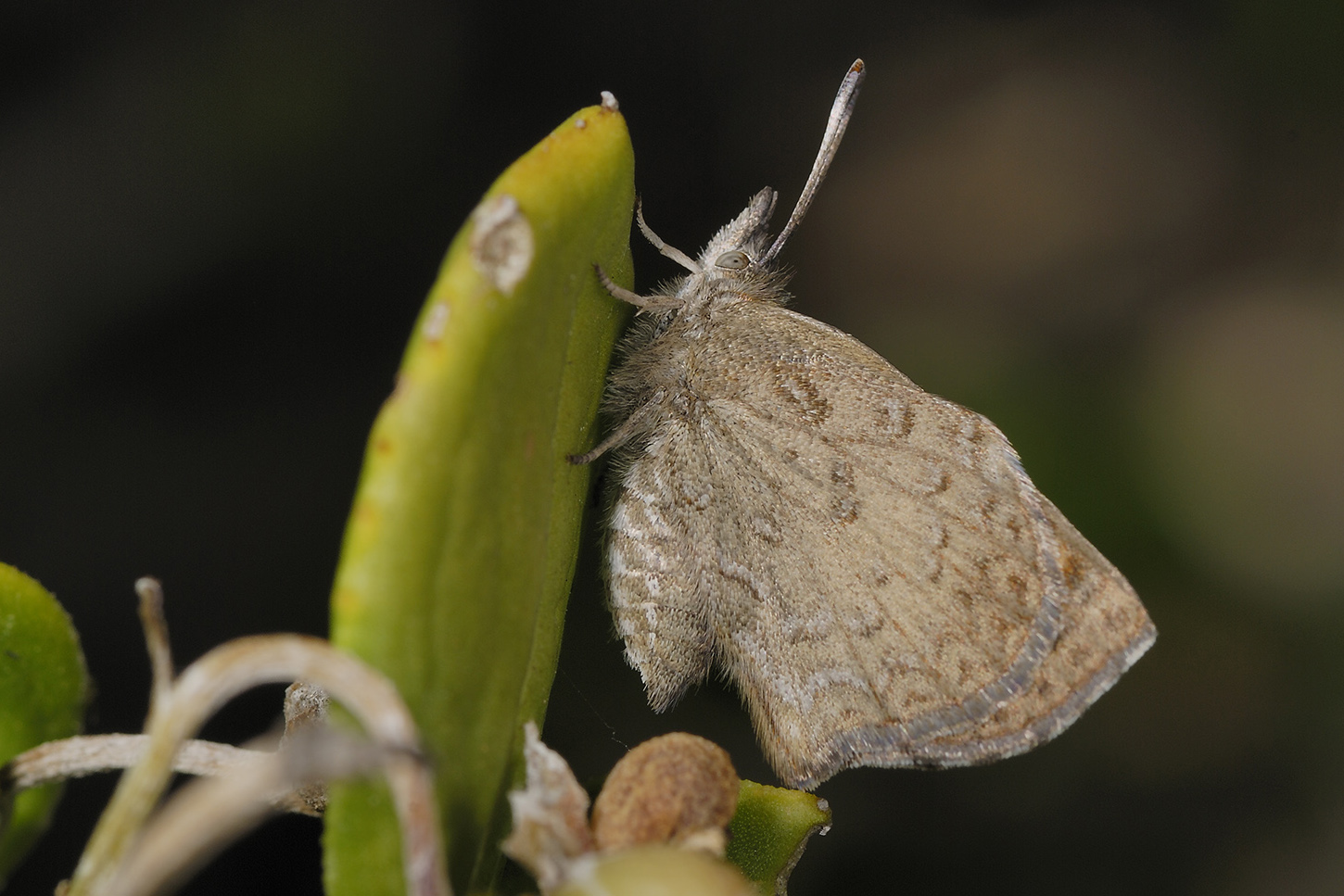
Donkey Rippled Opal ♀
Chrysoritis zonarius zonarius
Another member of subgenus Auricirrus is the Donkey Rippled Opal, Chrysoritis zonarius zonarius. It used to be known as the Donkey Daisy Copper. It’s one of the smaller species in the group, with a wingspan of only 18–24 mm. It flies in dense colonies close to clumps of its larval host, Grey Tick-berry, Osteospermum incanum, in west coast Fynbos and Succulent Karoo.
Finally, we come to the genus Crudaria, or Greys. Its three species are dull coloured above but share the ‘copper’ underside panel of the other Aphnaeinae. They are reminiscent of the genus Aloeides and are similarly small, low-flying butterflies. The Silver-spotted Grey Crudaria leroma is widespread across southern Africa. Its caterpillars feed on Thorn-trees Vachellia species and Elephant-root Elephantorrhiza burkei. They are associated with Pugnacious Ants Anaplolepis custodiens.

Donkey Rippled Opal ♂
Chrysoritis zonarius zonarius on the host plant

Silver-spotted Grey ♀
Crudaria leroma
This brief tour has introduced South Africa’s fascinating and varied ‘copper’ butterflies. I hope your appetite has been whetted! Small though they are, they more than make up for their size with beauty, intriguing habits, and remarkable biology. They inhabit some of South Africa’s most scenic habitats. So they are an excellent reason to visit and let Steve Woodhall show you some of them.