On-site training - with Steve Woodhall
Moorfield Farm weekend
Nature, Stewardship, and Getting Outdoors
Moorfield Mountain Farm covers 270 hectares on the Drakensberg escarpment above Normandien, between Newcastle in KwaZulu-Natal and Memel in the Free State. It’s a private nature reserve and part of the larger Ncandu Forest and Grassland Reserve, which follows the escarpment. The farm’s also included in the World Wide Fund for Nature (WWF)’s effort to protect five million hectares of important land through their Biodiversity Stewardship programmes.
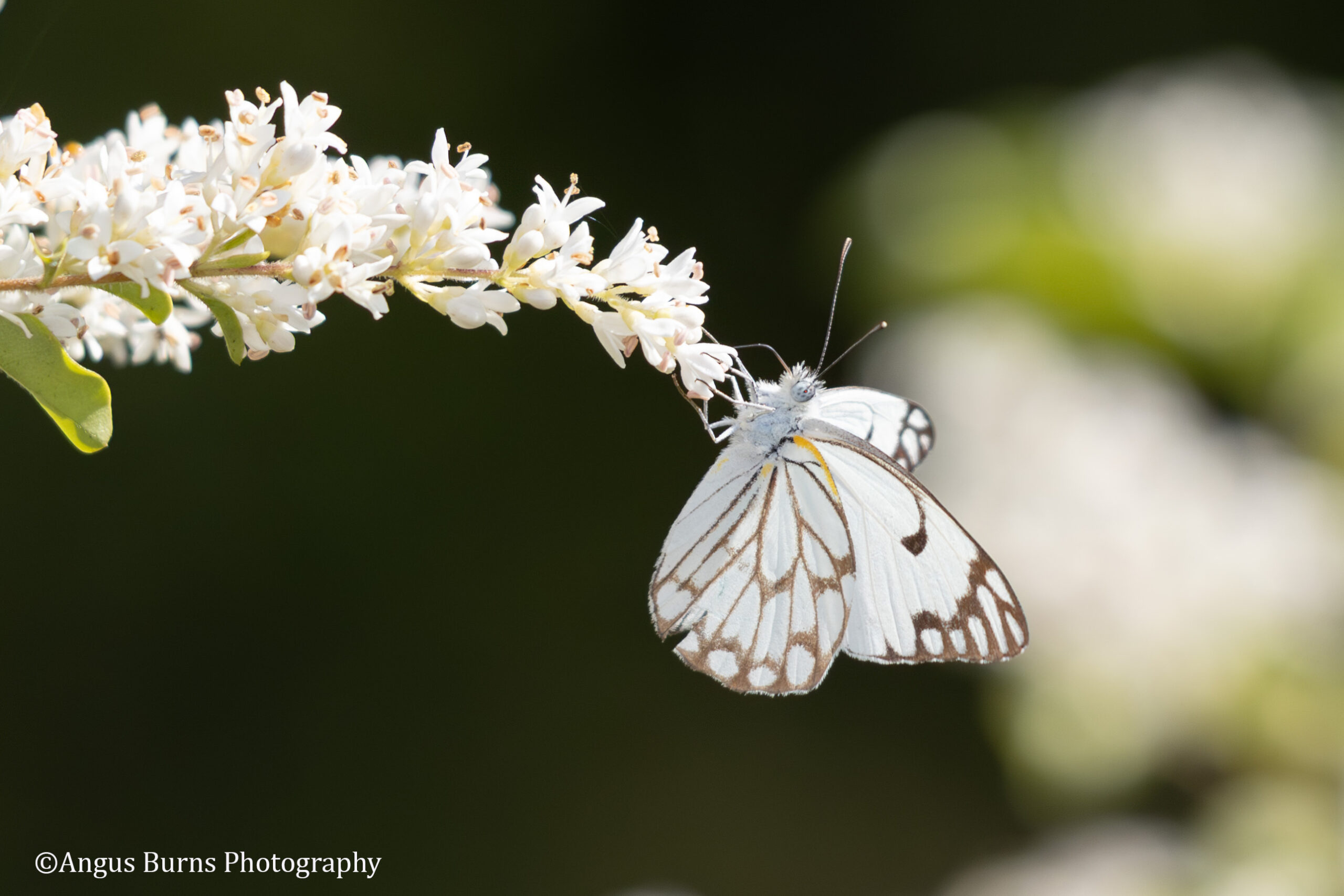
Angus Burns, who heads up the WWF’s Land & Biodiversity Stewardship Programme, reached out to me to see if I could visit Moorfield. His idea was for me to share some butterfly nature guide training with him and his family, the people who own the reserve and other interested people. After chatting, we settled on the weekend of 31 October to 2 November 2025 for the visit and training.
Besides the training itself, we wanted to check out the reserve’s trails and go for a guided walk through the grassland and forest. It turned out to be a perfect way to get to know the place better and really see some of the amazing biodiversity up close. Around a dozen people joined in, and we spent time walking, spotting plants, butterflies, moths, and birds, and going through my training sessions. Since the audience weren’t nature guide trainees, I modified the material slightly to make it relevant to the local vegetation and be useful for everyone.

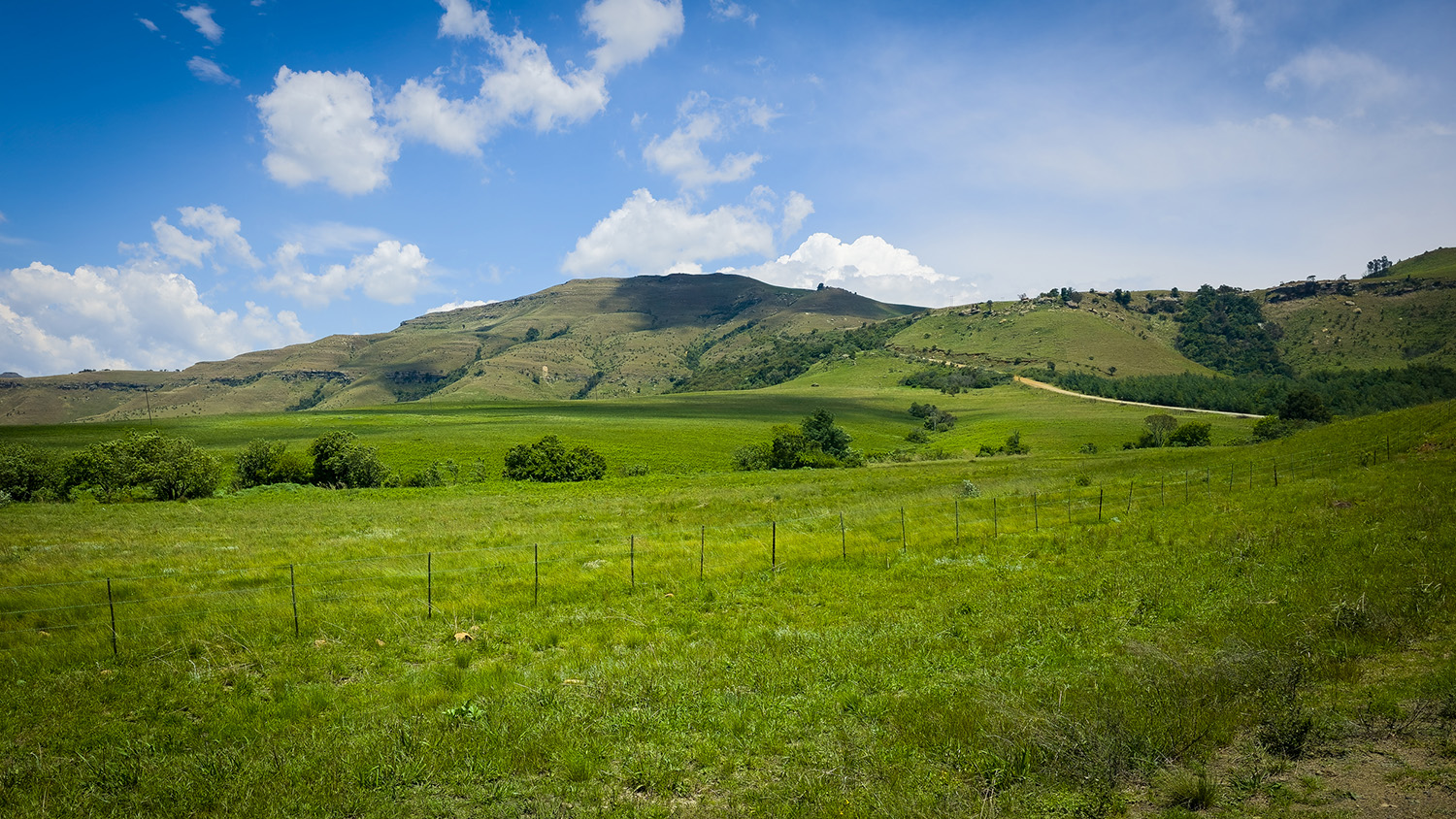
Approach to Moorfield along the road from Newcastle
Don't be fooled by that gentle slope up the hill!
I set out early in the morning, making my way from Gillitts on a lengthy drive that eventually brought me to Mullers Pass—the highest point along the stretch between Newcastle and Memel. It was wonderful to be back in the mountains of KwaZulu-Natal! The views climbing up were stunning and gave me a sense of what I could look forward to at Moorfield. Despite warnings about rough spots on the road, my dependable Subaru Forester navigated them with ease, almost like driving up my own driveway, especially thanks to the dry weather conditions. Before long, I found the turnoff to Ncandu and Moorfield, where Angus and his family, and the Moorfield community, greeted me warmly upon arrival. That road is another story when navigated downhill in the wet, as we discovered later…

The entrance to the farm

The vastness of Ncandu
From the Moorfield path
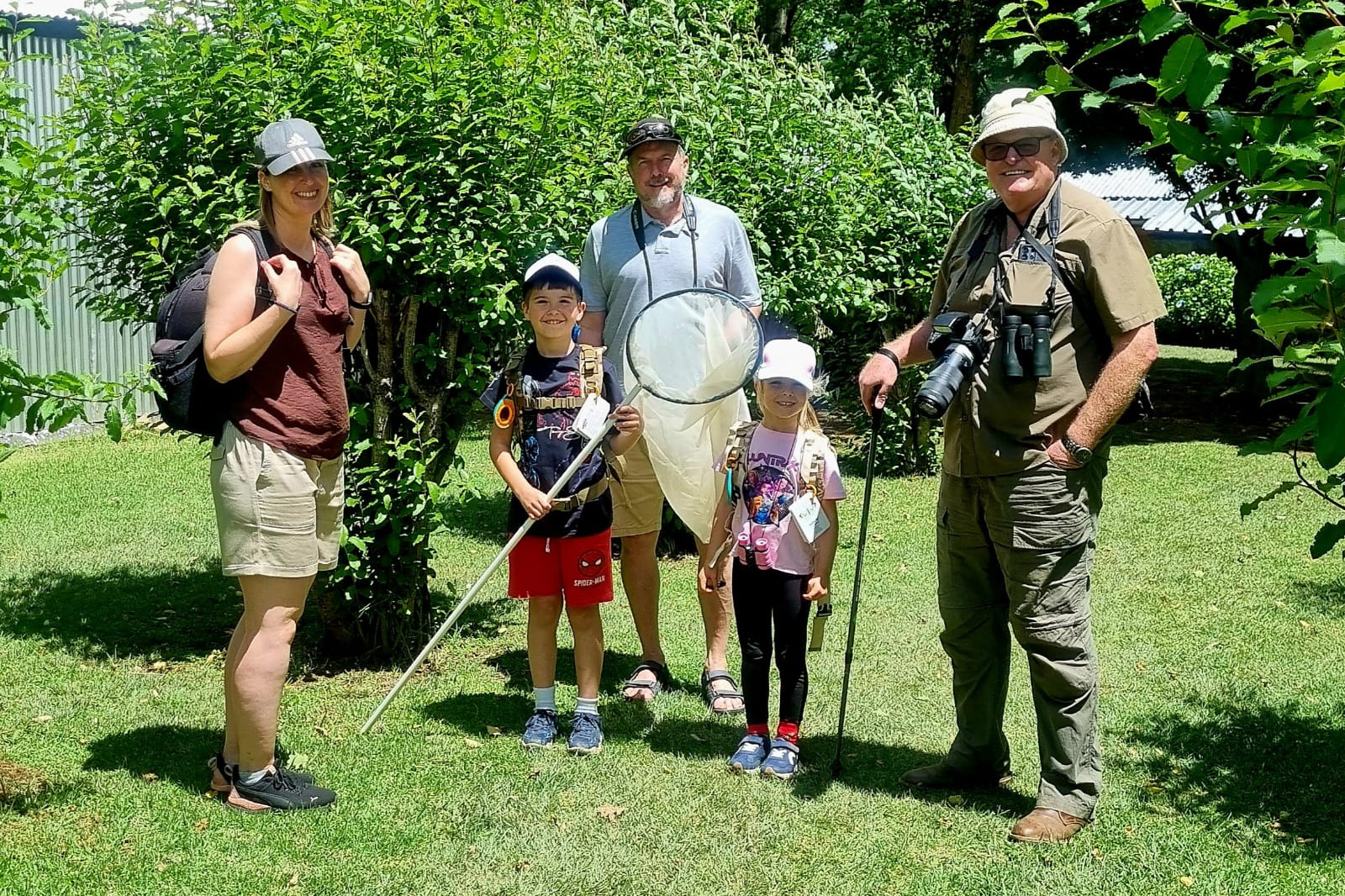
Setting out on a recce
Cara, Alex, Angus, and Alice Burns, and Steve W
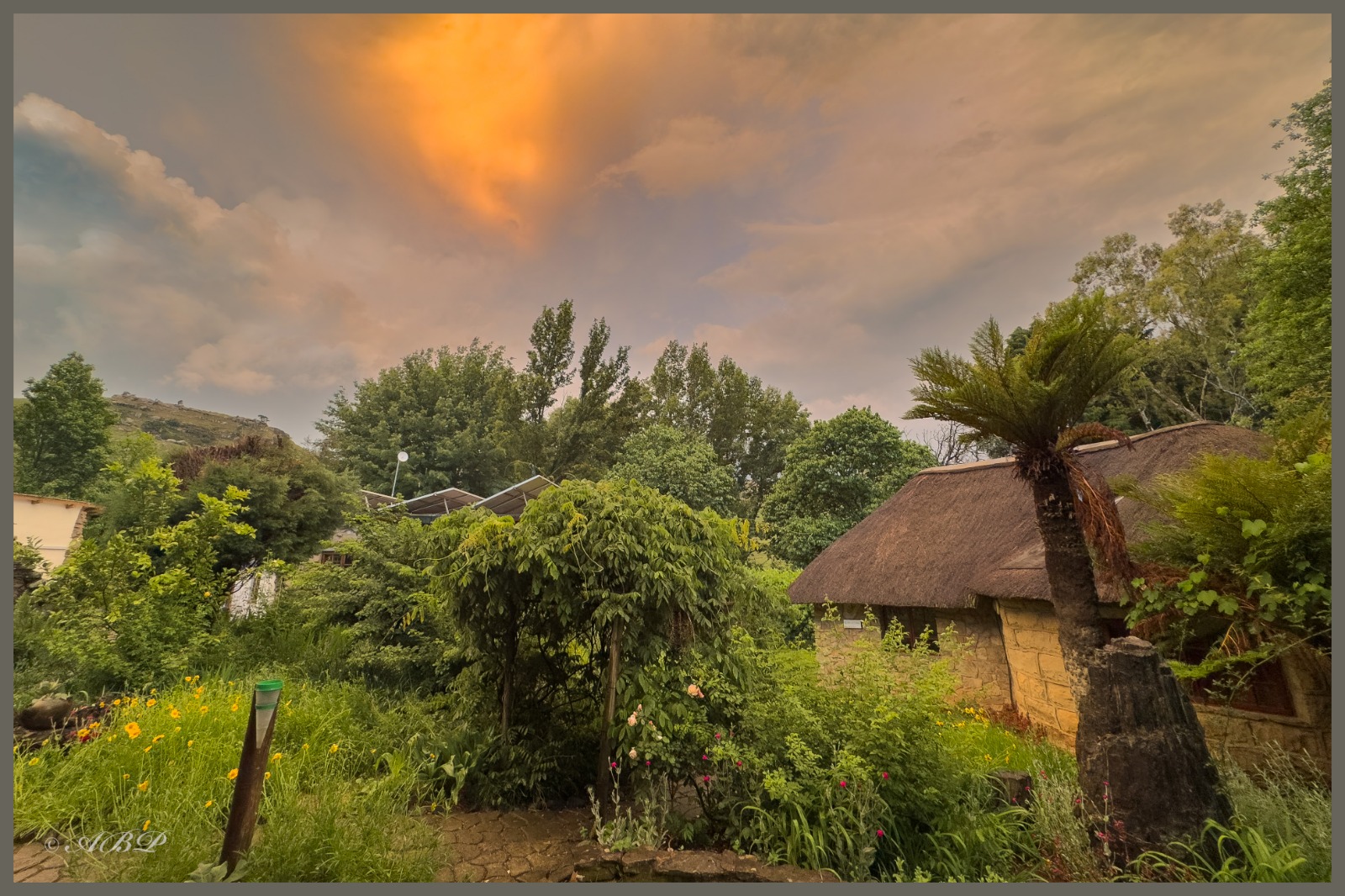
Acorn Cottage at sunset
© Angus Burns

Flat-face Bark moth
Hypomecis ectropodes

Brown Barred Silver
Conchylia ditissimaria
After we unpacked and put our gear into our rooms, we headed out for a reconnaissance walk to explore the area. Lindie van Rensburg led me to the charming Acorn Cottage, pointing out that some large blue butterflies had been sheltering under its eaves. I’ve long hoped to photograph Southern Gaudy Commodores in their overwintering phase – Precis octavia sesamus form sesamus – but, unfortunately, they had already moved on before my arrival.
We began our journey at the garden gate, marking the beginning of the trail. Right as we started, I spotted a Flat-face Bark moth Hypomecis ectropodes fluttering in the undergrowth—a small Geometrid moth from the Ennominae subfamily, and the first one I’ve ever encountered. Although the helpful guide Southern African Moths and their Caterpillars by Hermann Staude, Charles Griffiths, and Mike Picker doesn’t list this moth as rare, iNaturalist has only four records of it so far—this sighting being the fourth!
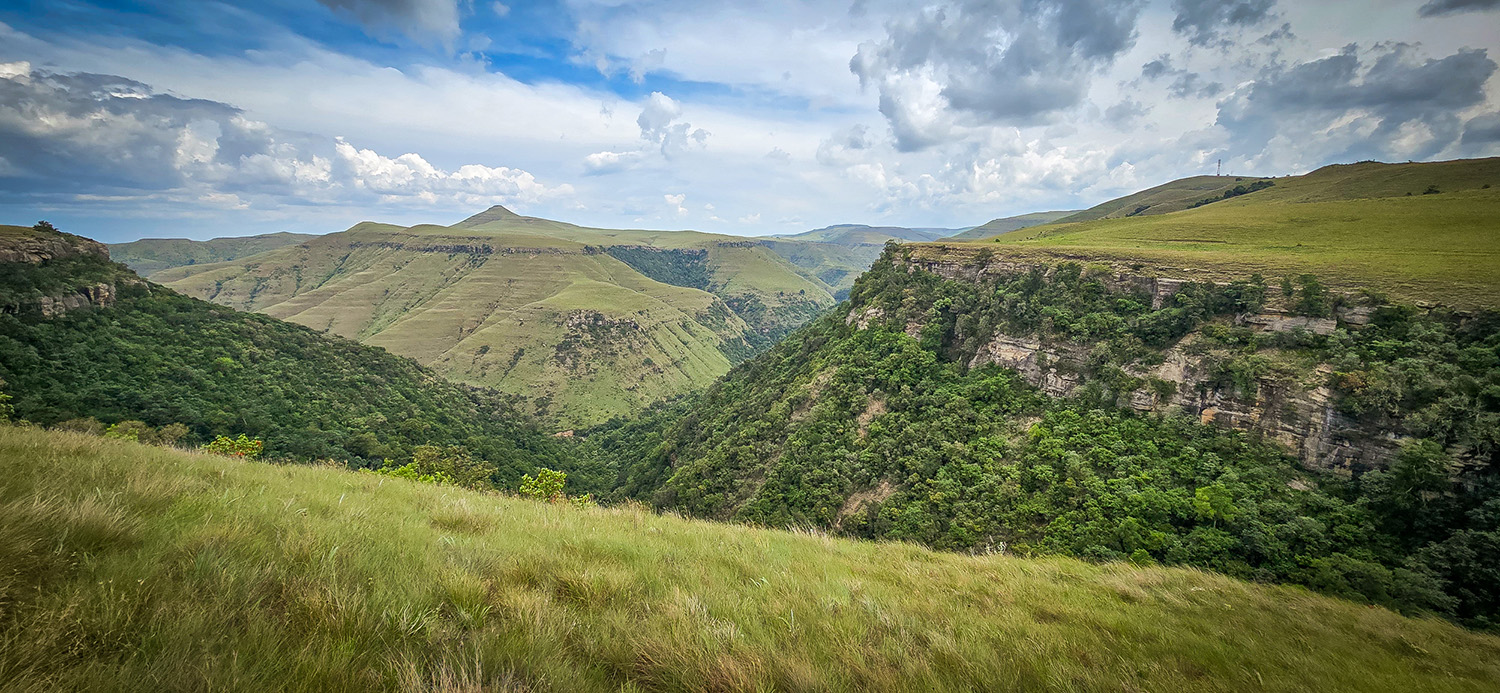
Soon, we emerged into open grasslands overlooking the Ncandu Valley. The sweeping views were truly invigorating. With the spring flowers just beginning to bloom, we felt hopeful about spotting some interesting butterflies.
Alice, the Burns’ daughter, demonstrated a sharp eye, finding many tiny creatures concealed in the grass. Among them was another Geometrid, the stunning Brown Barred Silver Conchylia ditissimaria. We took multiple photos; although I didn’t recognise it at the time, I later realised I had photographed this same species nearly twenty years ago up in the Wolkberg, hundreds of kilometres to the north. There are only 14 observations of this moth on iNaturalist, and I was surprised to discover that most come from my local area in Kloof! Alice also found this Banner Eublemma caffrorum, a really tiny moth that flew fast and low, but Angus managed a photo.

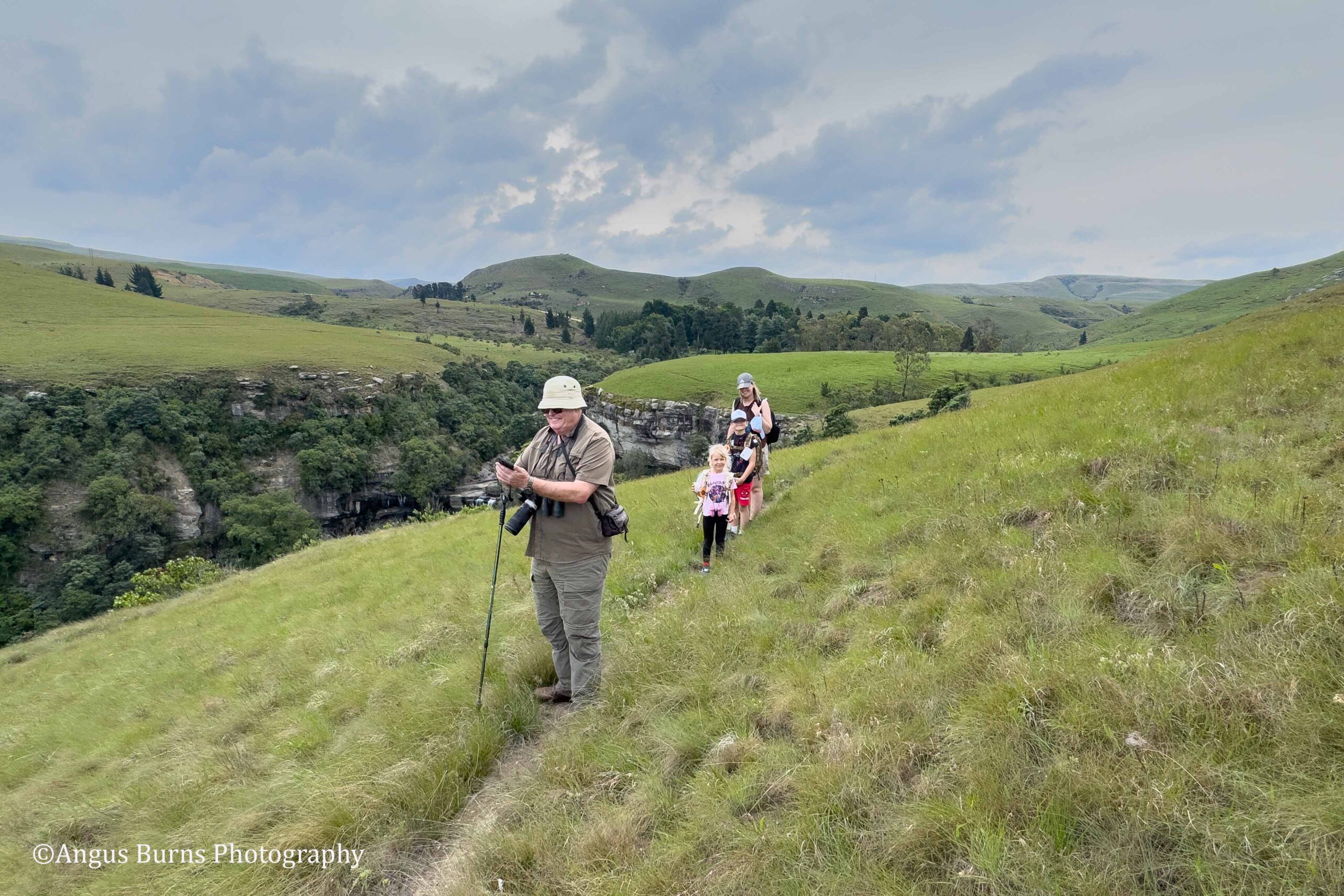
Steve, Alice, Alex and Cara on the Moorfield Trail
Cara, Alex, Angus, and Alice Burns, and Steve W
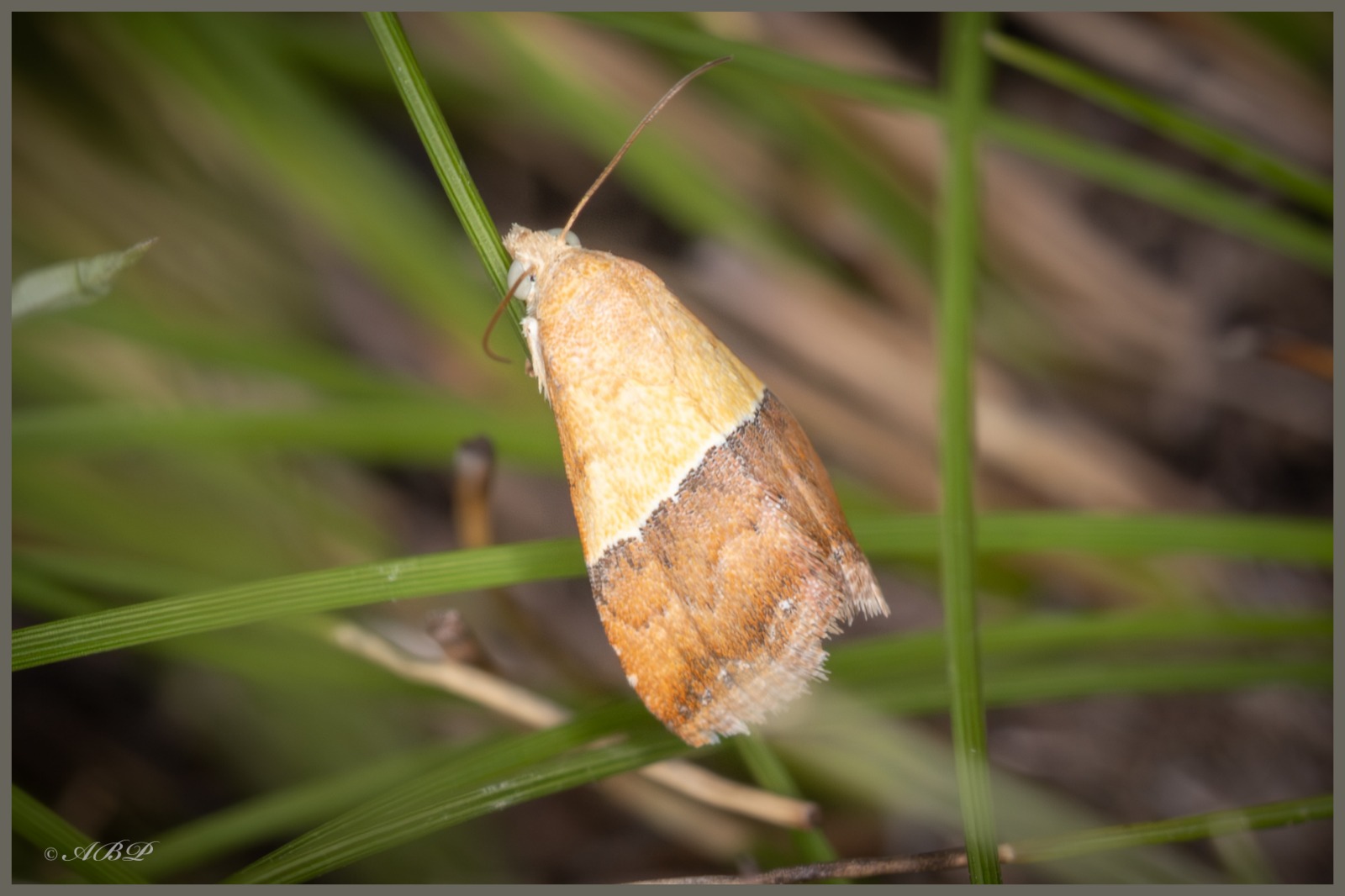
Banner
Eublemma caffrorum © Angus Burns
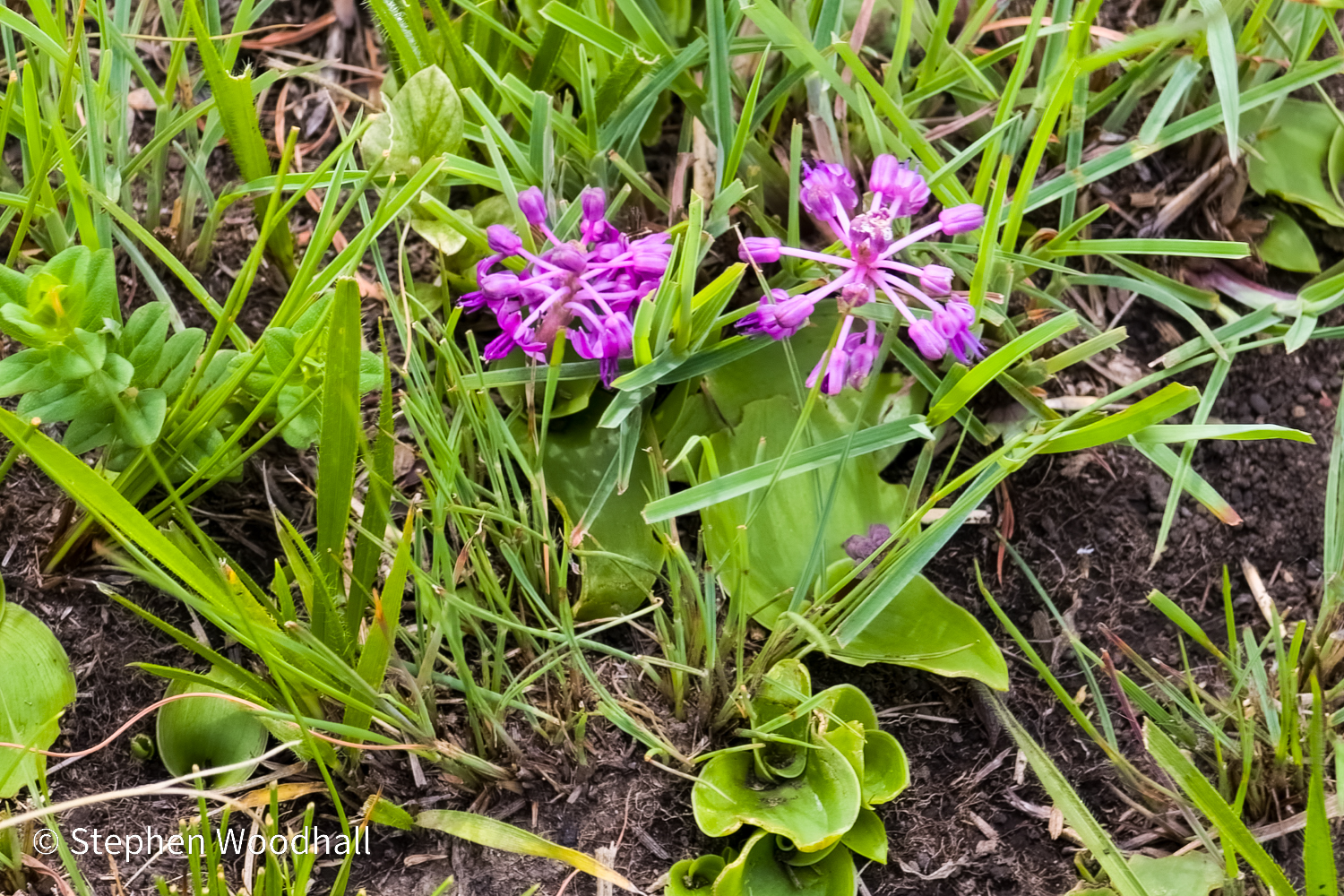
Fairy African Hyacinth
Ledebouria sandersonii
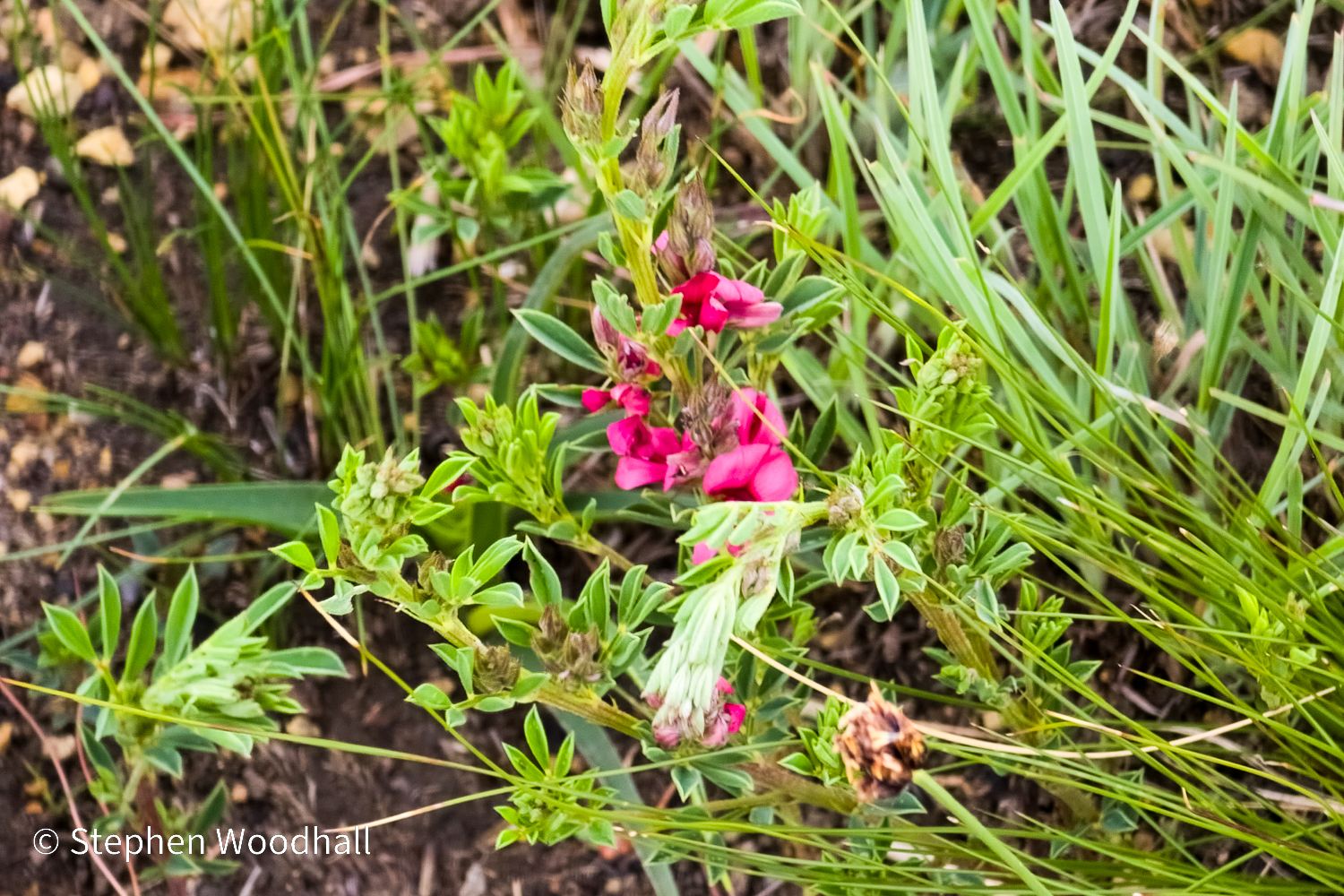
Cheery Indigo
Indigofera hilaris
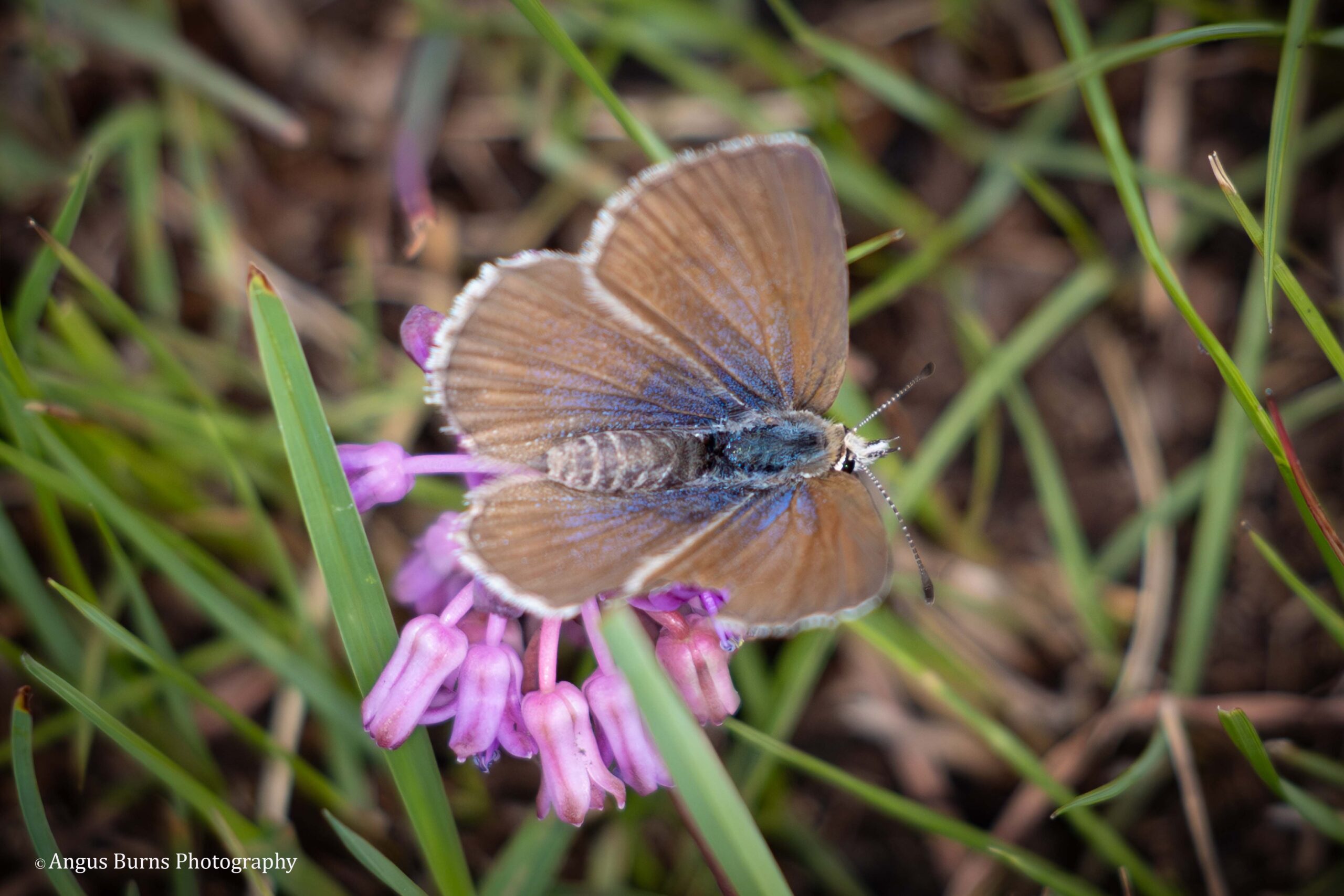
Restless Cupid ♀
Orachrysops lacrimosa

Restless Cupid ♀
Orachrysops lacrimosa
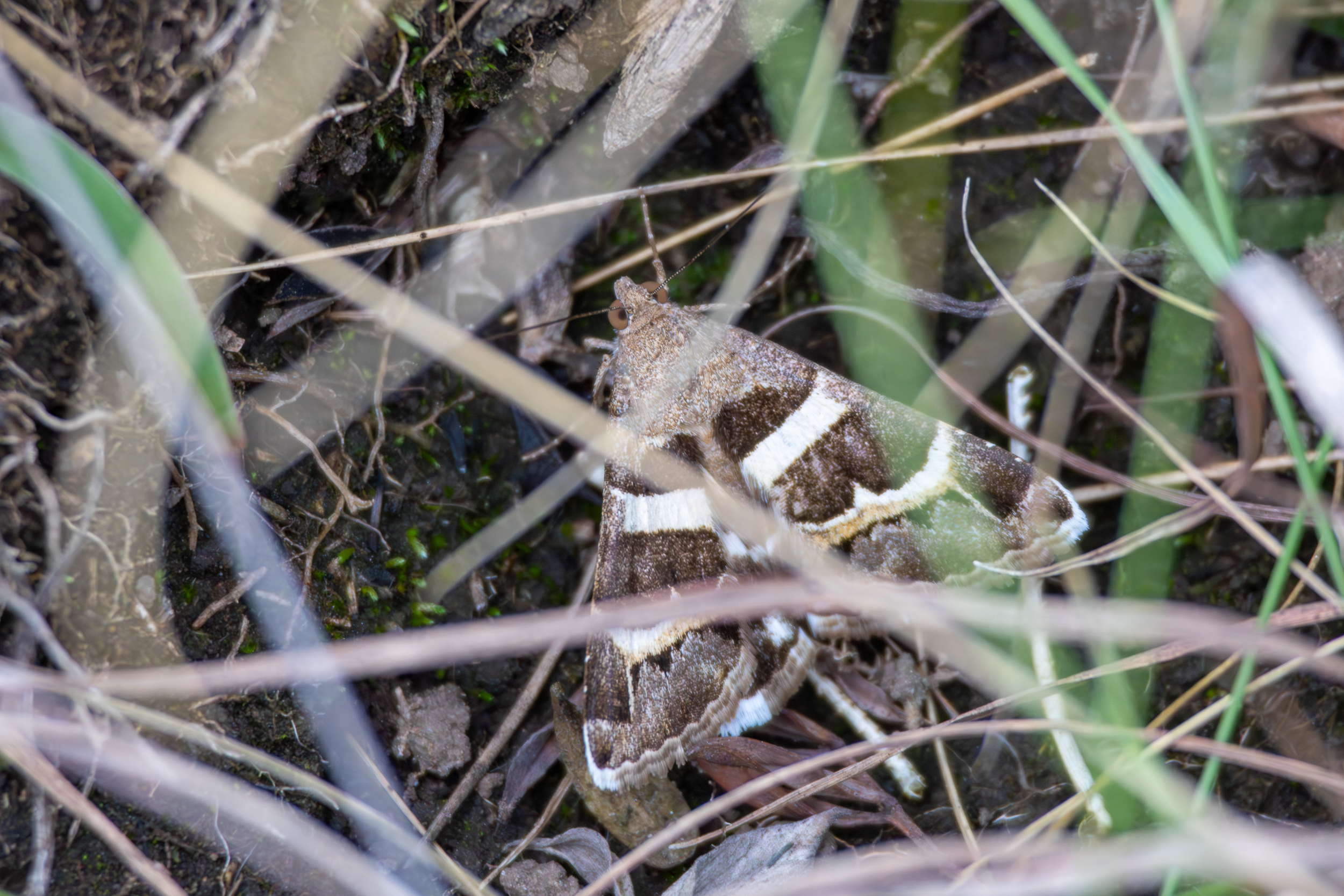
Stolid Lines
Grammodes stolida
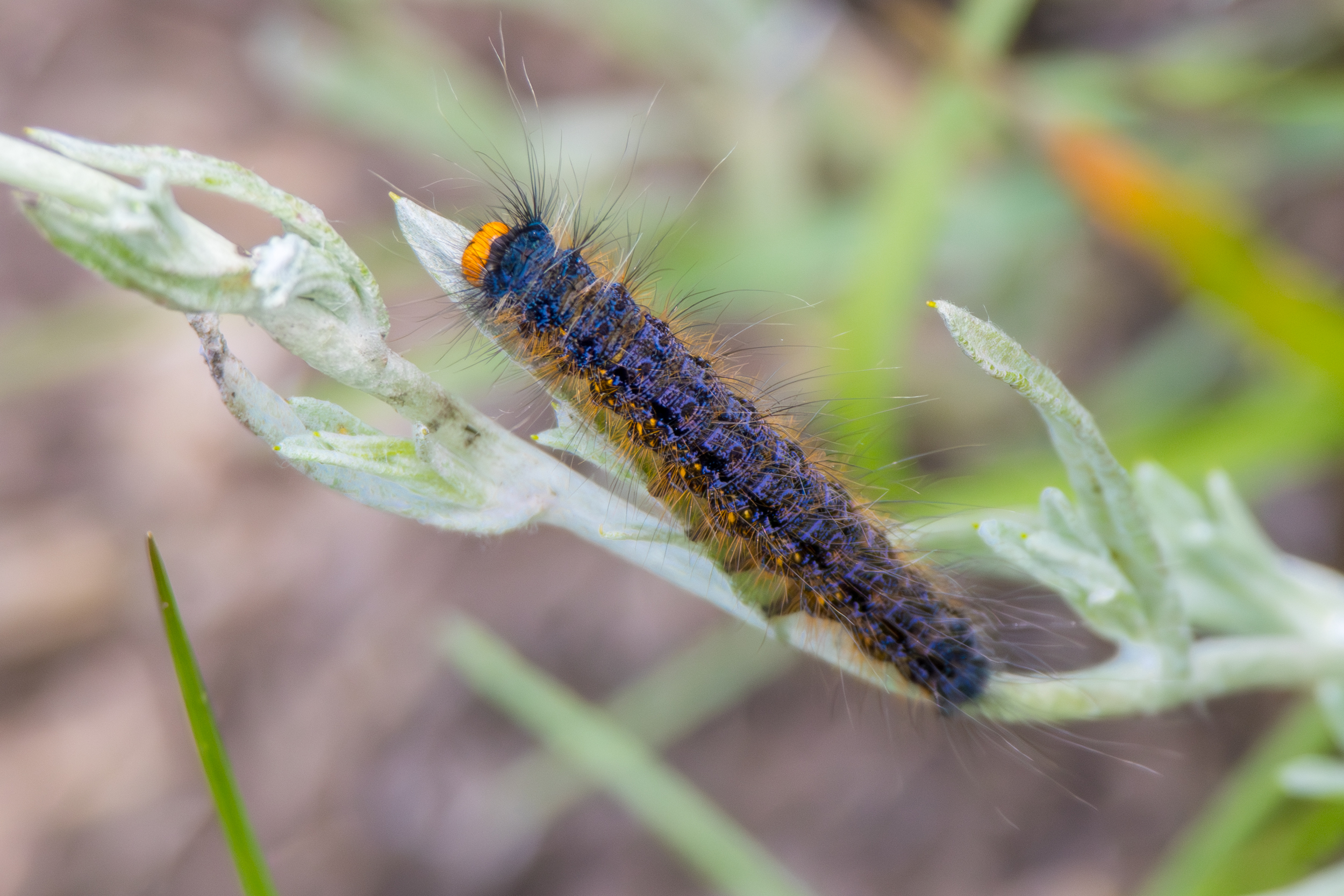
Mountain White-spot caterpillar
Mesocelis monticola
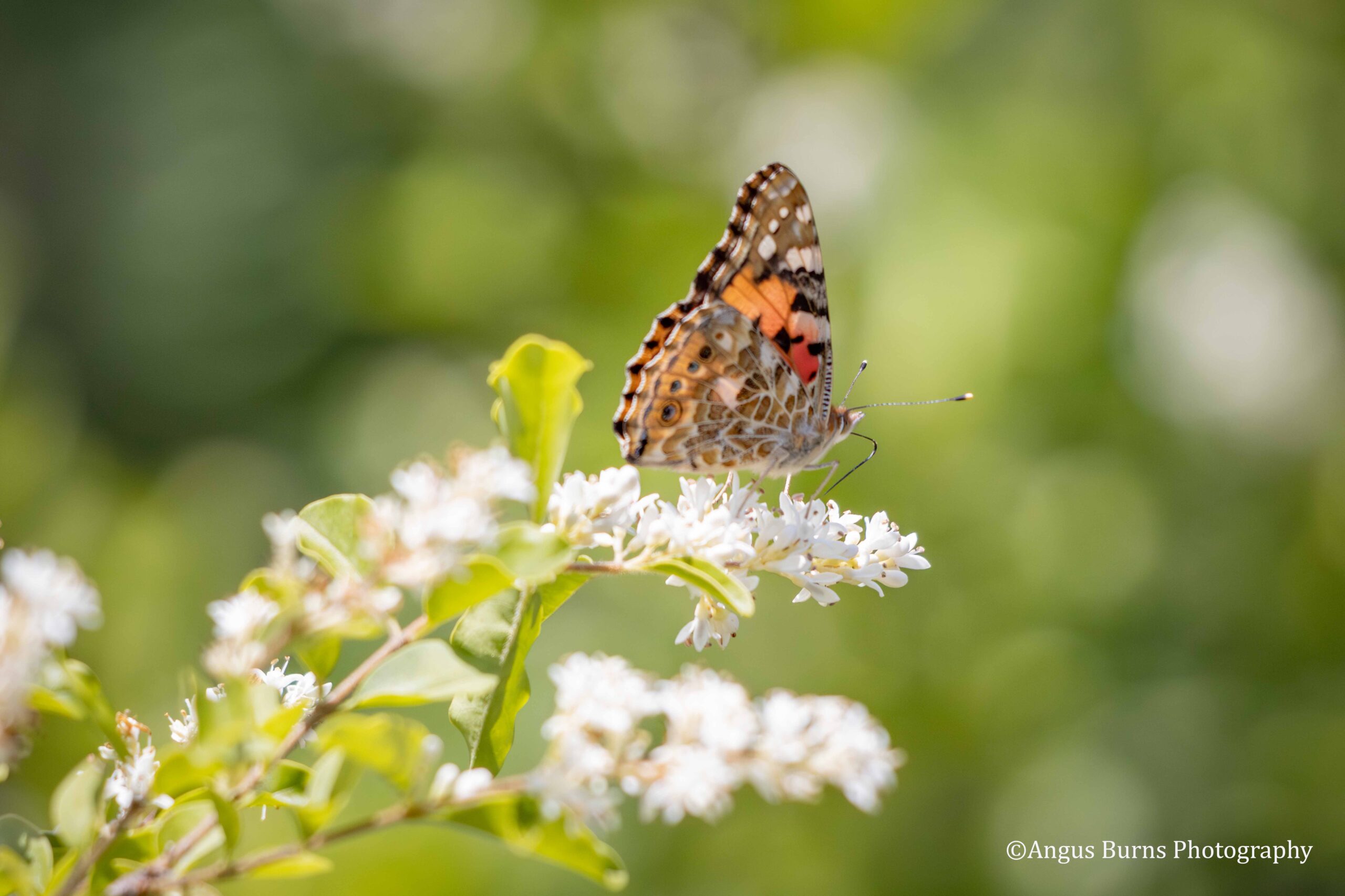
The grasslands included a wide range of broad-leafed forbs and geophytes, though few were flowering. Fairy African Hyacinth Ledebouria sandersonii was widespread and served as a nectar source for the many ‘blues’ that were on the wing. I knew they were Orachrysops Cupids but I was uncertain of their exact species, so I sent photos to Graham Henning, who reviewed this genus in 1994. He confirmed they were Restless Cupids Orachrysops lacrimosa, which was exciting as it was the first time I’d captured digital images of them. Their caterpillar host plant, Cheery Indigo Indigofera hilaris, was also blooming.
Other butterflies observed included Painted Ladies Vanessa cardui and Pioneer Caper Whites Belenois aurota. Increasing winds made it challenging to track many individuals. Day-flying moths such as Stolid Lines Grammodes stolida would quickly swoop down into the grass to hide, making them difficult to photograph. Fortunately the excellent autofocus mechanism on my Canon R7 is able to ignore grass leaves and concentrate on the subject!
Additionally, many half-grown caterpillars of the Mountain White-spot moth Mesocelis monticola could be seen feeding on different forb species.

Painted Lady ♂
Vanessa cardui

Pioneer Caper White ♂
Belenois aurota
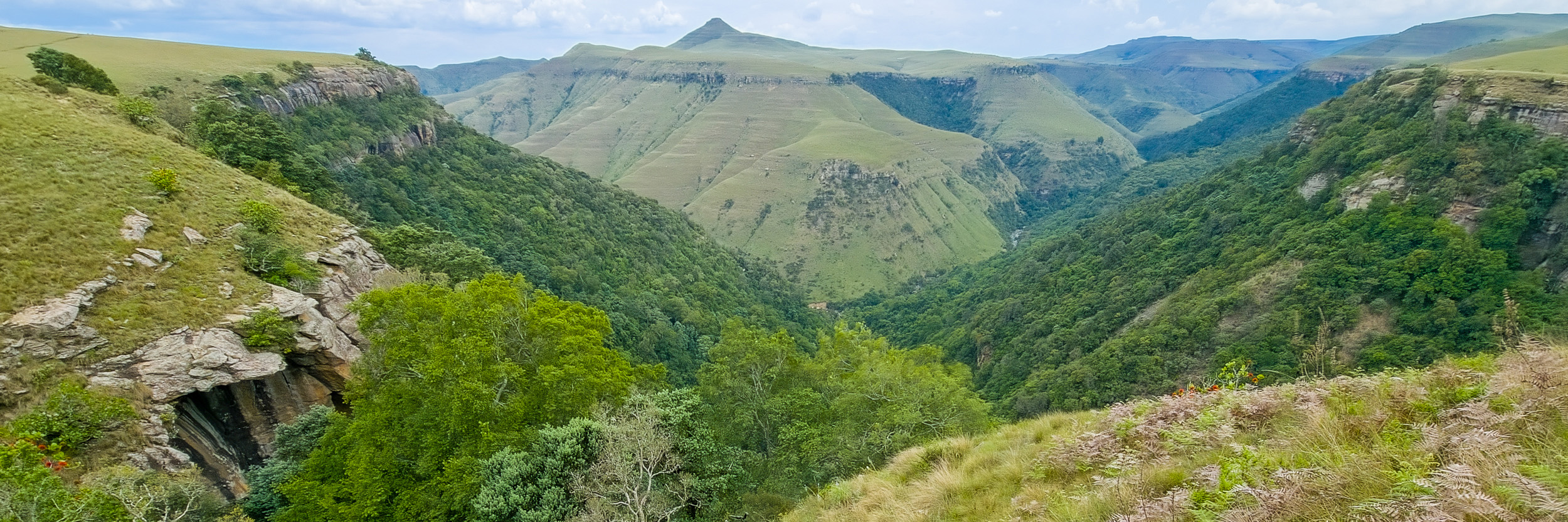
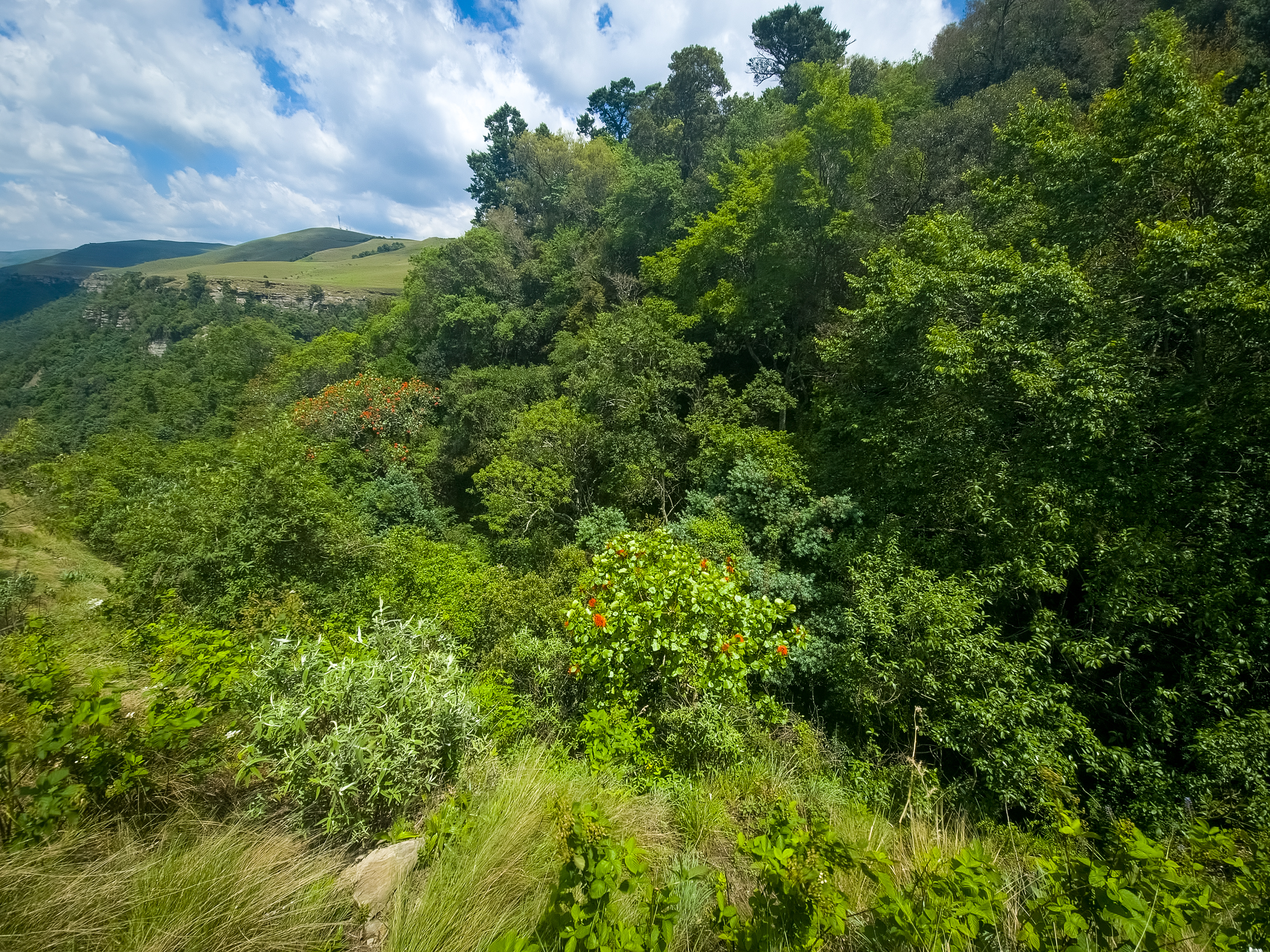
Forested gully at Moorfield
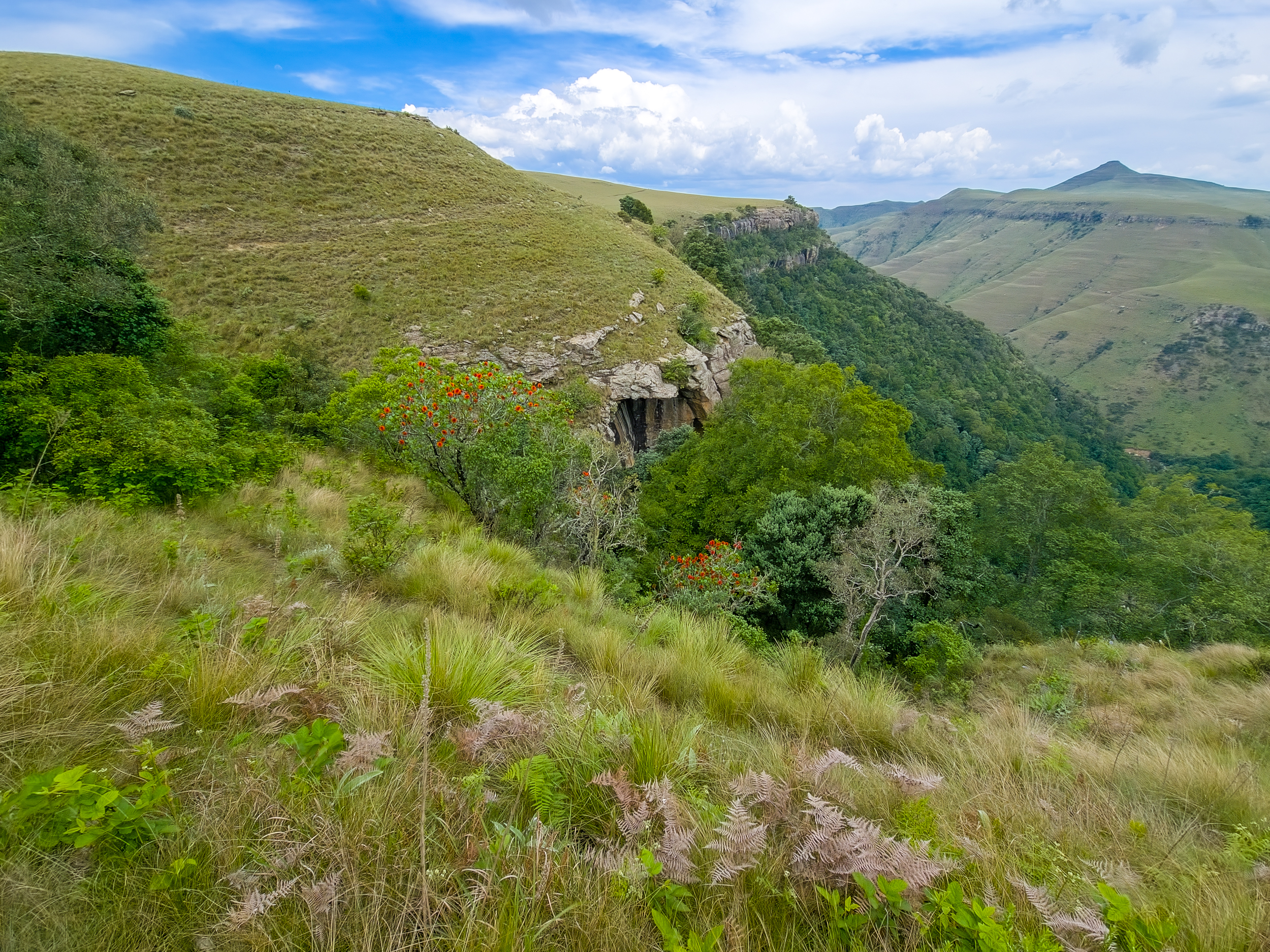
Glossy Bottlebrushes in gully at Moorfield
Greyia sutherlandii
Glossy Bottlebrushes in gully at Moorfield
Greyia sutherlandii
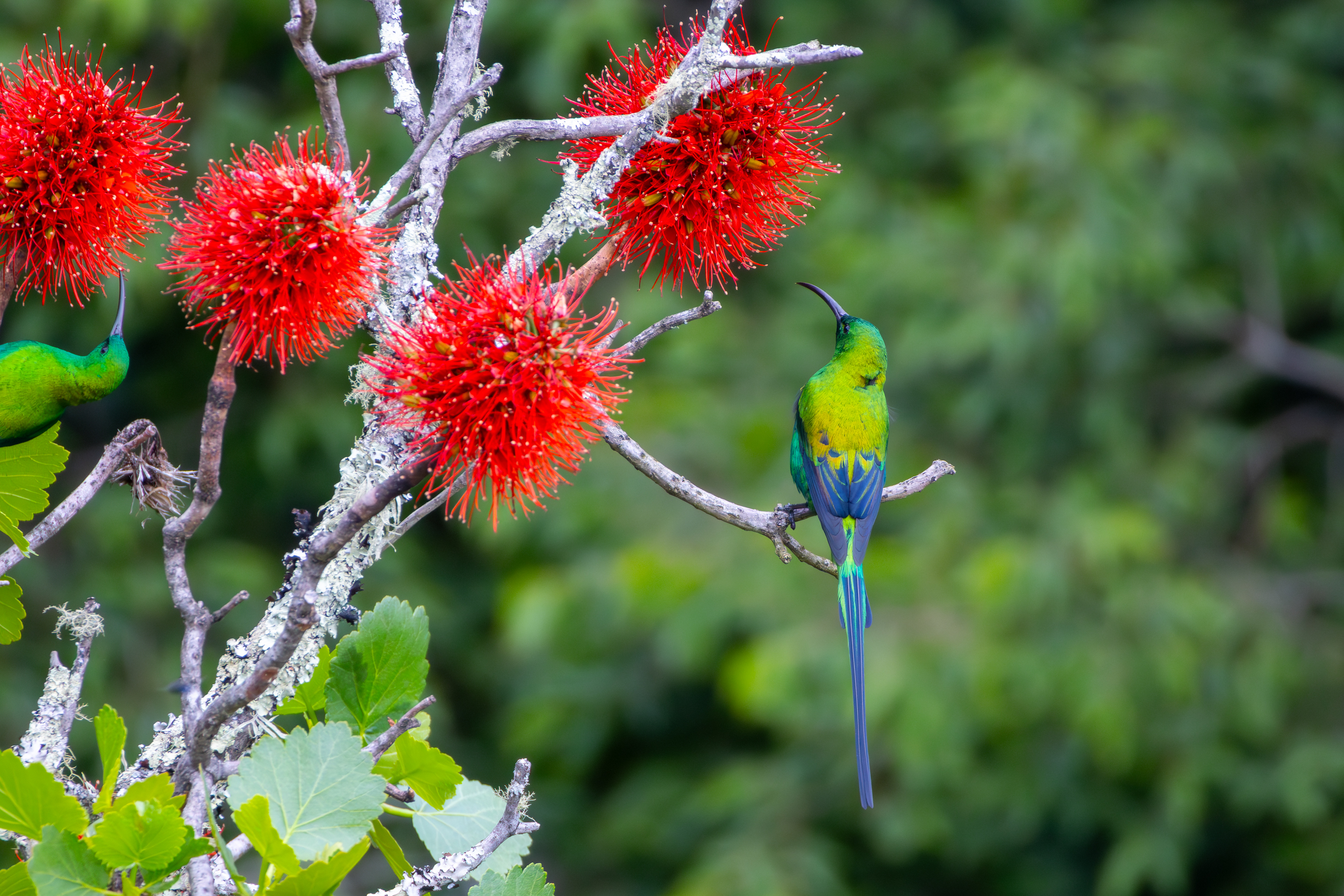
Malachite Sunbird ♂ on Glossy Bottlebrush flowers
Nectarinia famosa on Greyia sutherlandii
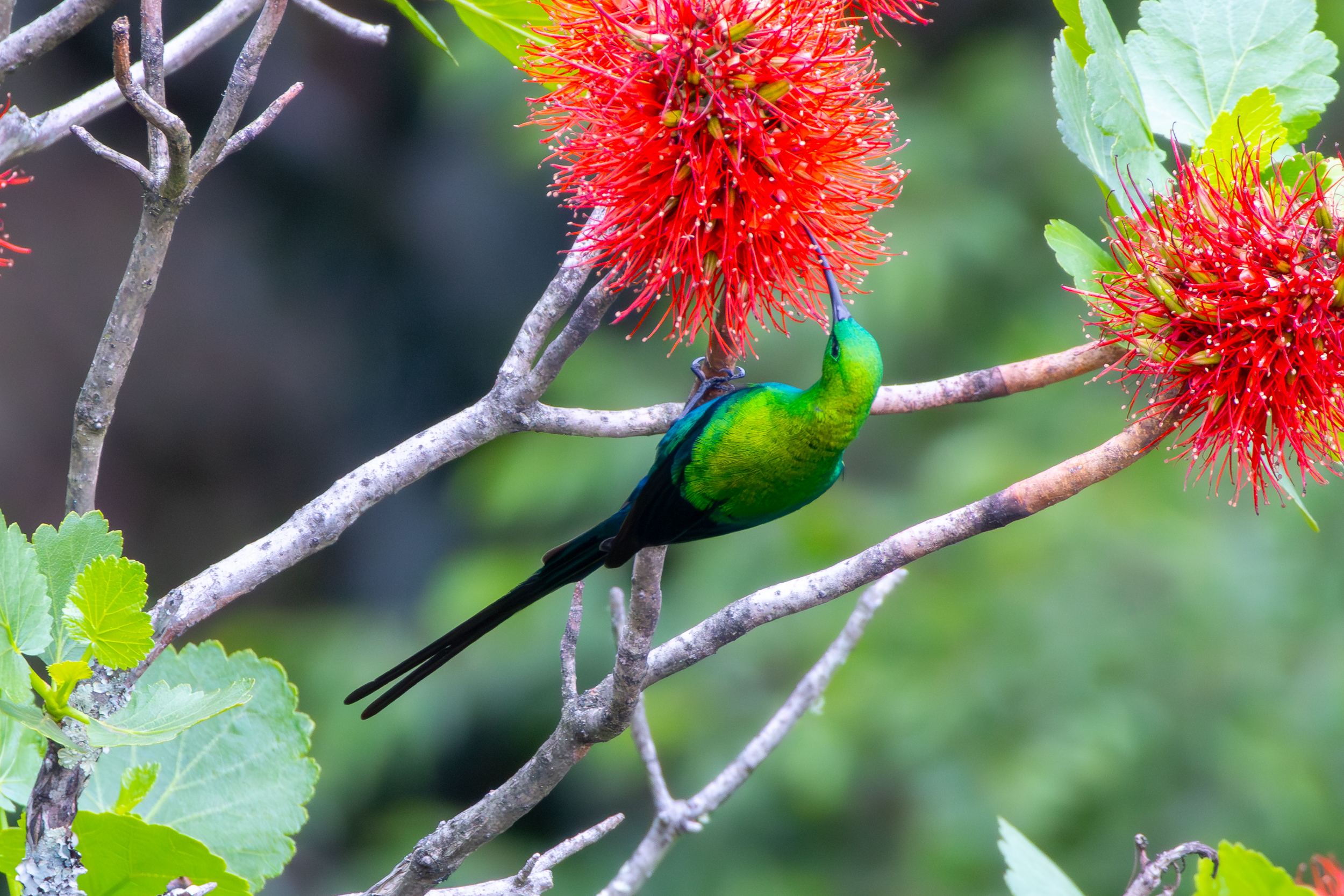
Malachite Sunbird ♂ on Glossy Bottlebrush flowers
Nectarinia famosa on Greyia sutherlandii
As we continued along the path, we reached a point where a large gully densely populated with forest vegetation appeared before us. The trail became increasingly precarious as it skirted the edge of the gully and descended into the wooded area. Along this route, we observed numerous Glossy Bottlebrushes Greyia sutherlandii in bloom. These striking red flowers are noted for attracting one of our target butterfly species for the weekend, the Bush Kite Papilio euphranor. Upon closer inspection, it became evident that another winged beauty was present on the blossoms—a group of Malachite Sunbirds Nectarinia famosa, with at least seven individuals observed. This represented the largest aggregation of these birds I had encountered at a reasonable distance while equipped with a high-quality mirrorless camera and telephoto lens. Both Angus and I dedicated considerable time to photographing the scene, resulting in a substantial number of images, some of which are featured above.
Crossing to the opposite side of the gully, we found additional flowering Bottlebrushes. However, deteriorating weather conditions, as is common in mountainous regions, prompted us to return to camp where the other guests for the weekend had already gathered. Fortunately, we managed to avoid a drenching despite the presence of large thunderstorms in the vicinity.

Sunset at Moorfield with aforementioned thunderstorm
© Angus Burns
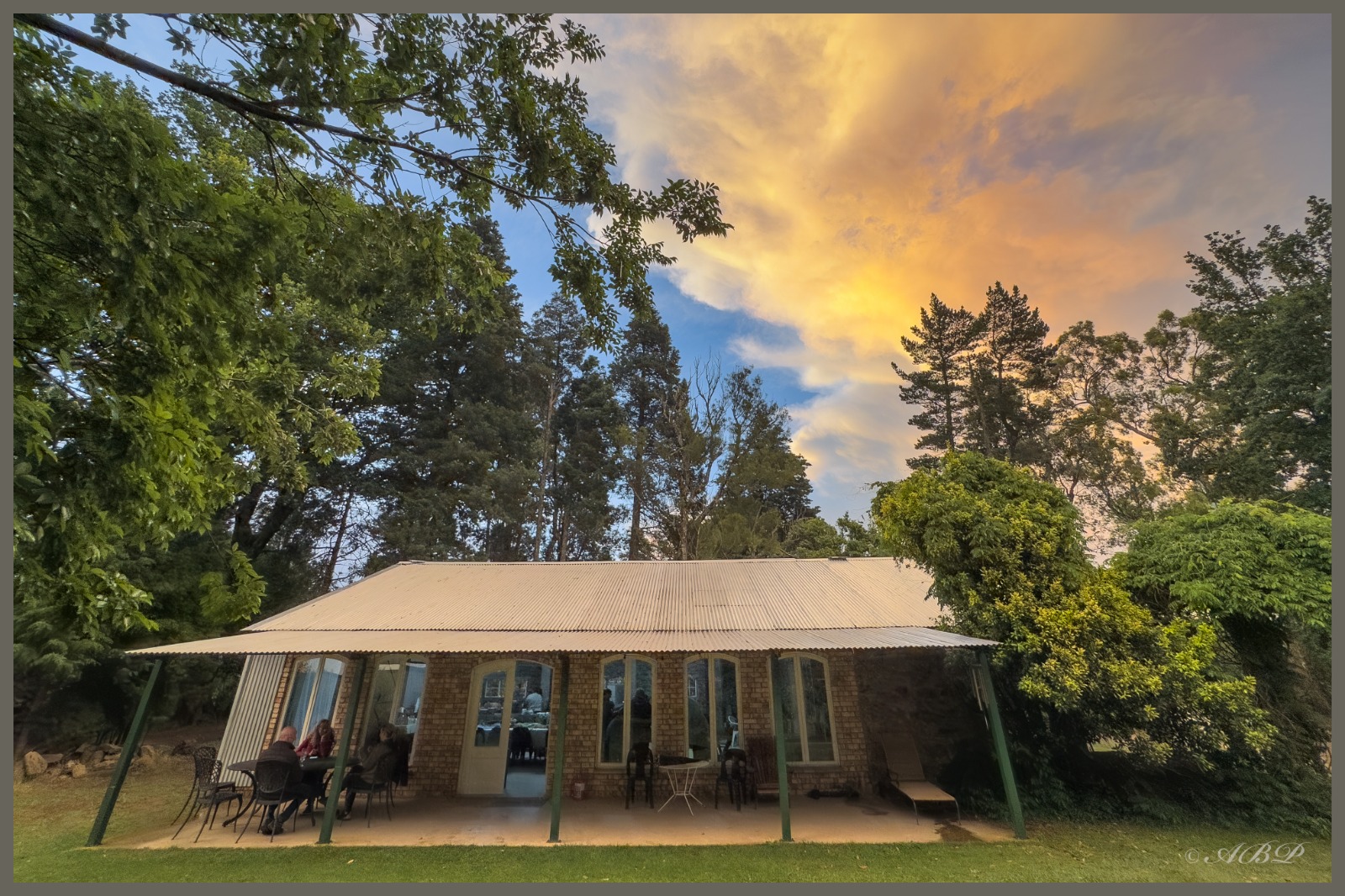
Dining room at Moorfield
© Angus Burns
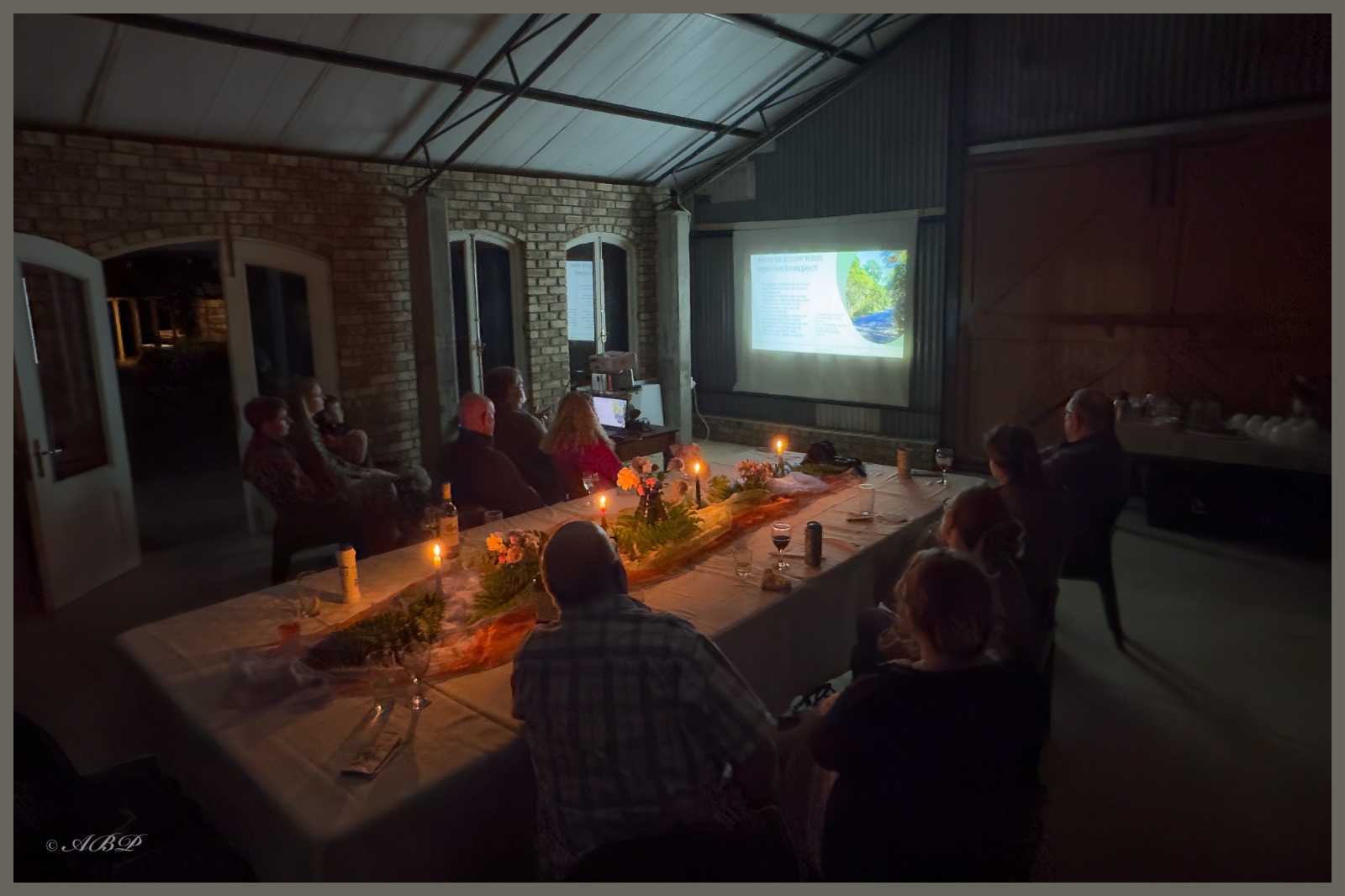
Evening lecture at Moorfield
© Angus Burns
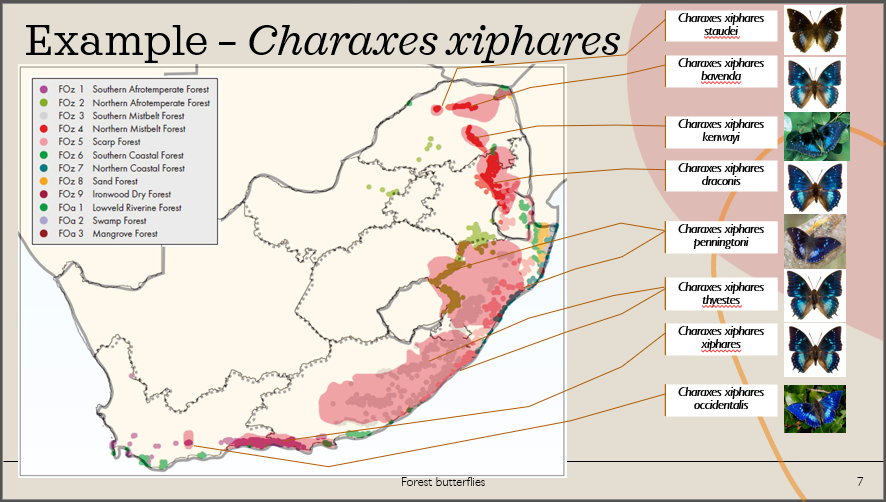
Charaxes xiphares, one of the target butterflies
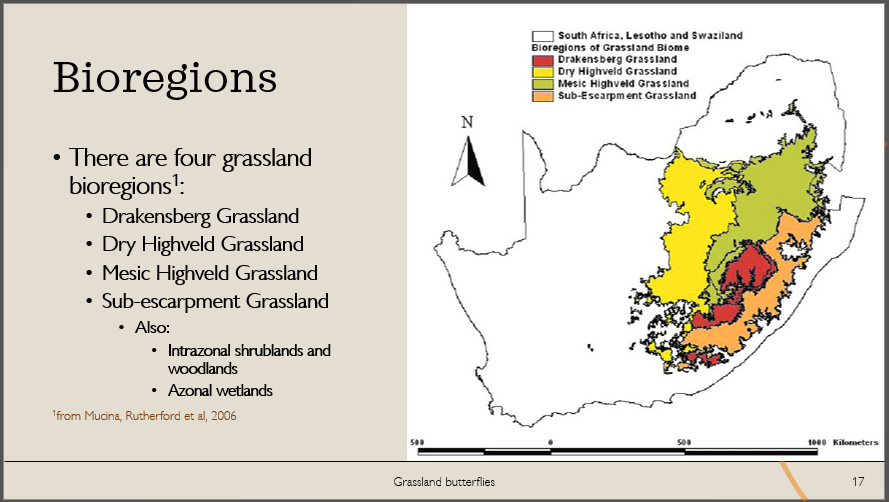
Moorfield is on the junction of three grassland bioregions
The guests were welcomed in the dining room, where owners Thomas and Sonnya Holtz, along with their team, were preparing dinner. Angus arranged the projector, and we enjoyed refreshments while watching the sunset. Later, I delivered an evening presentation on the forest and grassland biomes and their connection to the butterfly species present at Moorfield. One of these was the Forest-king Charaxes, Charaxes xiphares, whose subspecies penningtoni Angus had photographed here previously and was one of the targets for the weekend. Of its 24 subspecies across Africa’s eastern highlands, eight are found in South Africa, always in cool Afromontane forests. At nearly 1800m, the forests at Moorfield are among the highest places it flies in this country.
The meal was excellent, and during dinner, accompanied by red wine and after-dinner whiskies, we engaged in a discussion about the biogeography of the Moorfield area. Plans for the following day were discussed, supported by a favourable weather forecast. The group expressed strong anticipation for the activities ahead. Tired from a long day, I fell asleep quickly in Acorn Cottage’s comfortable bed.
Saturday morning dawned sunny and in the cool of the morning we gathered for one of Sonnya’s farm breakfasts – bacon, eggs, toast and my favourite, porcini mushrooms Boletus edulis from their oak forest. We set out for the field, carrying a trap for Charaxes butterflies, nets, cameras, and a cheerful outlook!

Eastern Gold-spotted Sylph ♂
Metisella metis paris
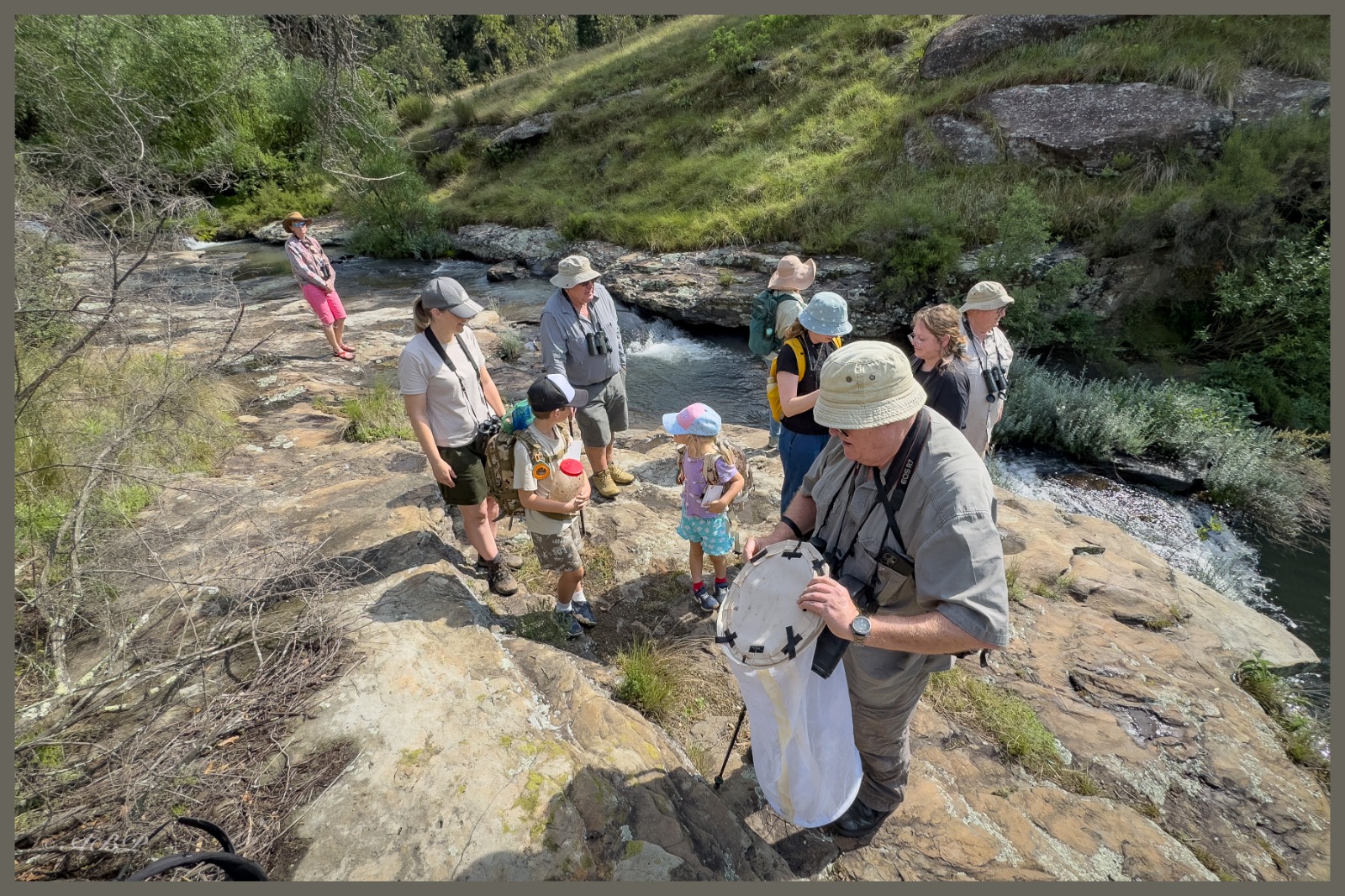
Preparing a butterfly trap above the waterfall
© Angus Burns
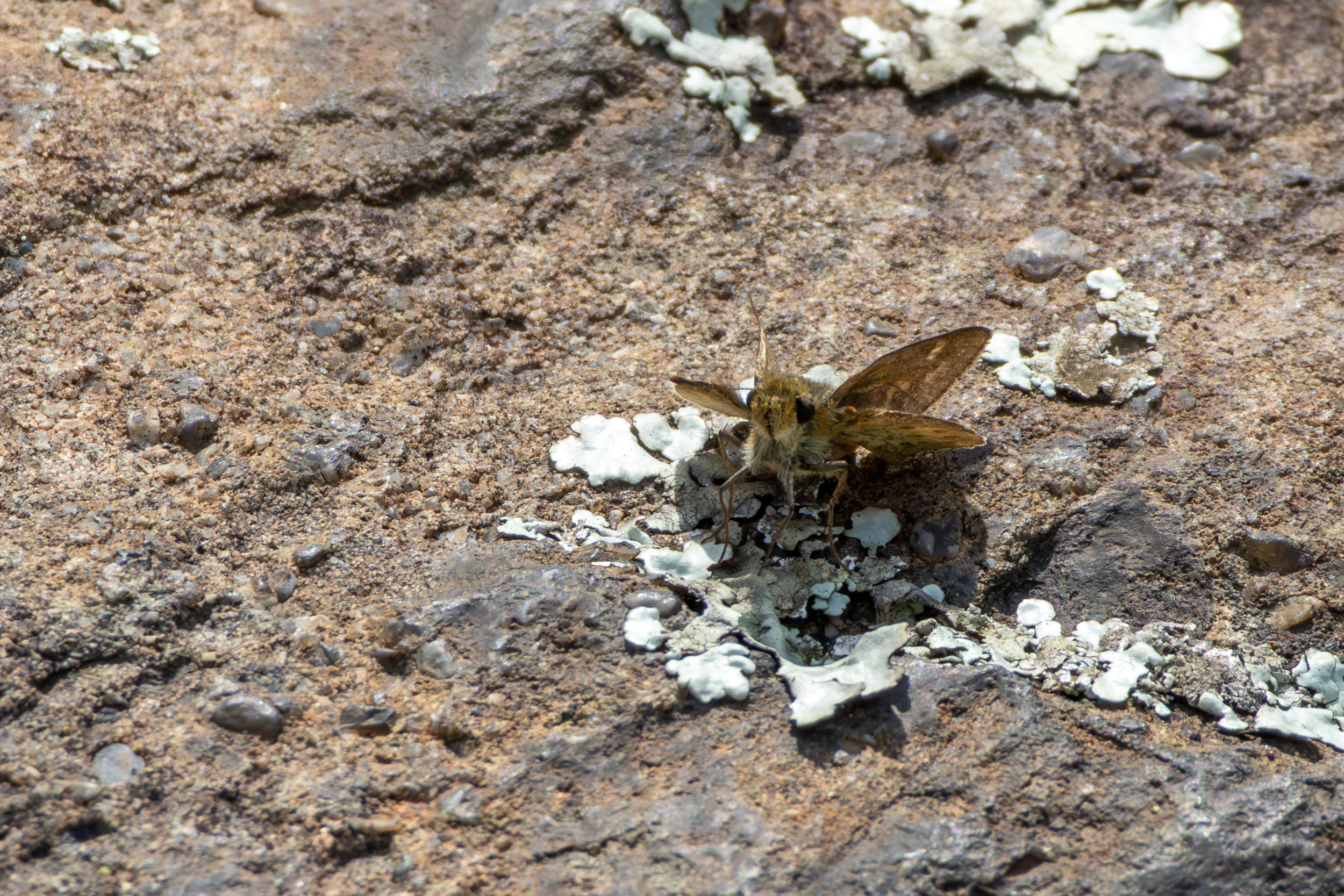
'Dodger' ♀
Afrogegenes sp.
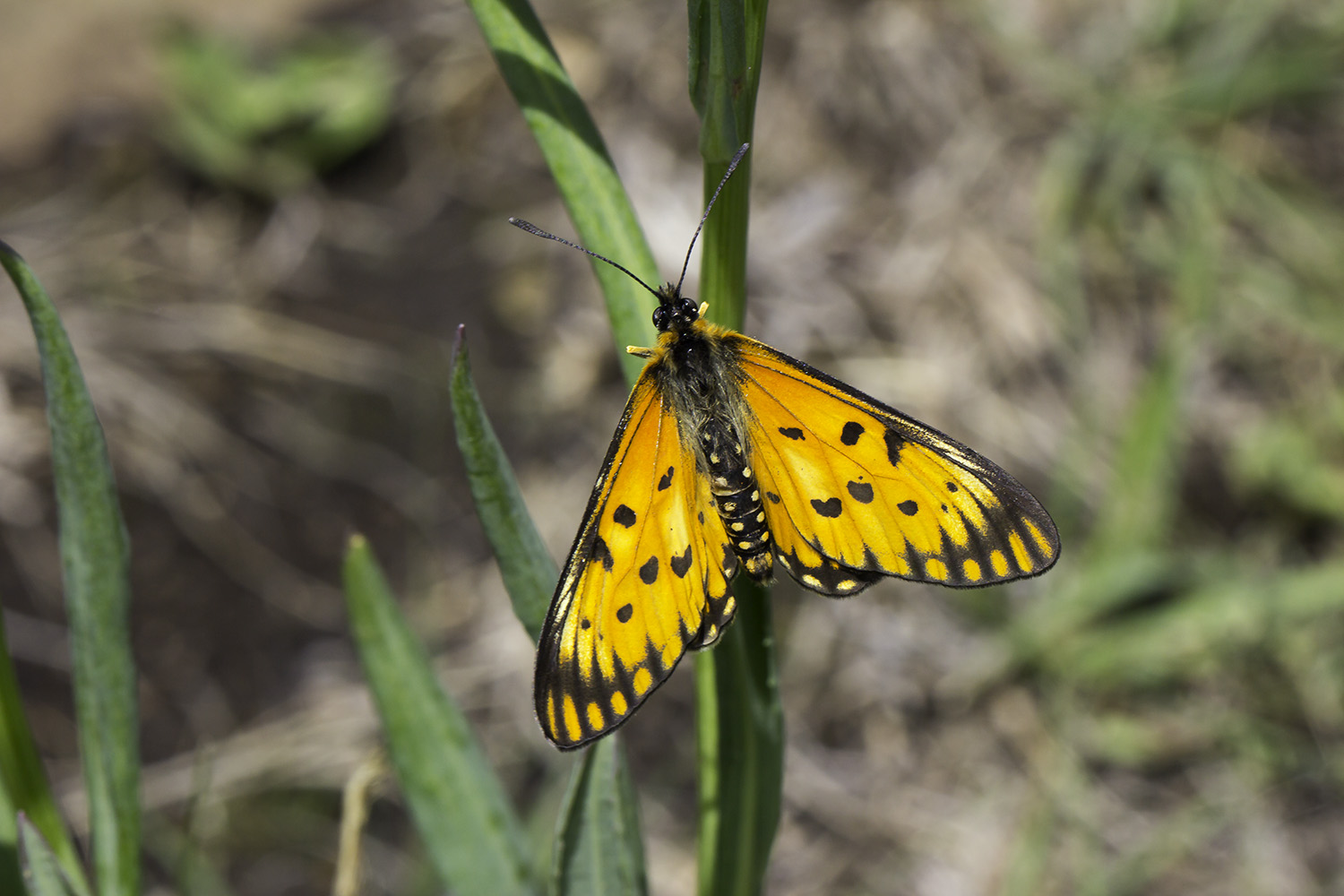
Orange Telchinia ♂ from Nolangeni near Kokstad
Telchinia anacreon
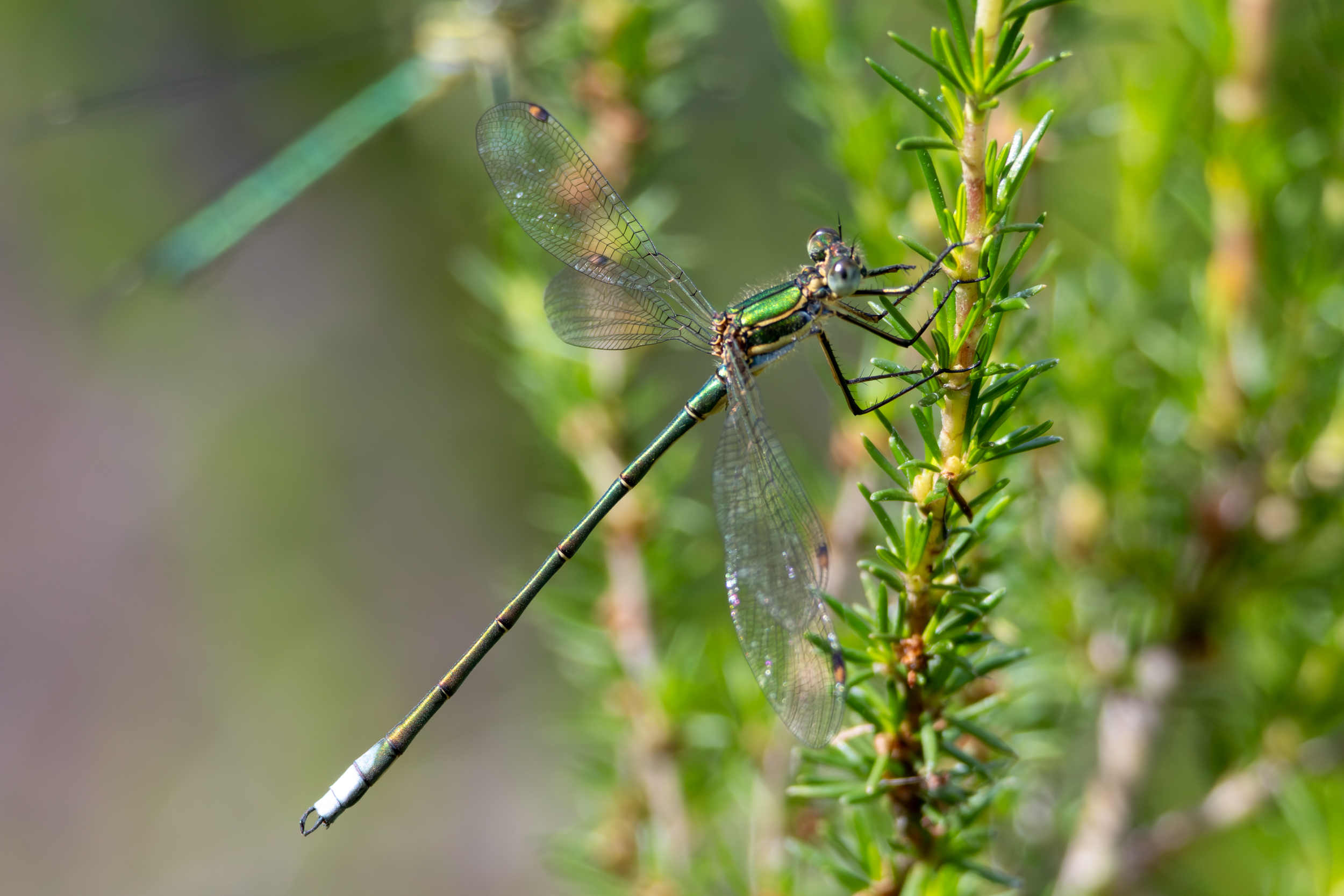
Mountain Malachite ♂
Chlorolestes fasciatus
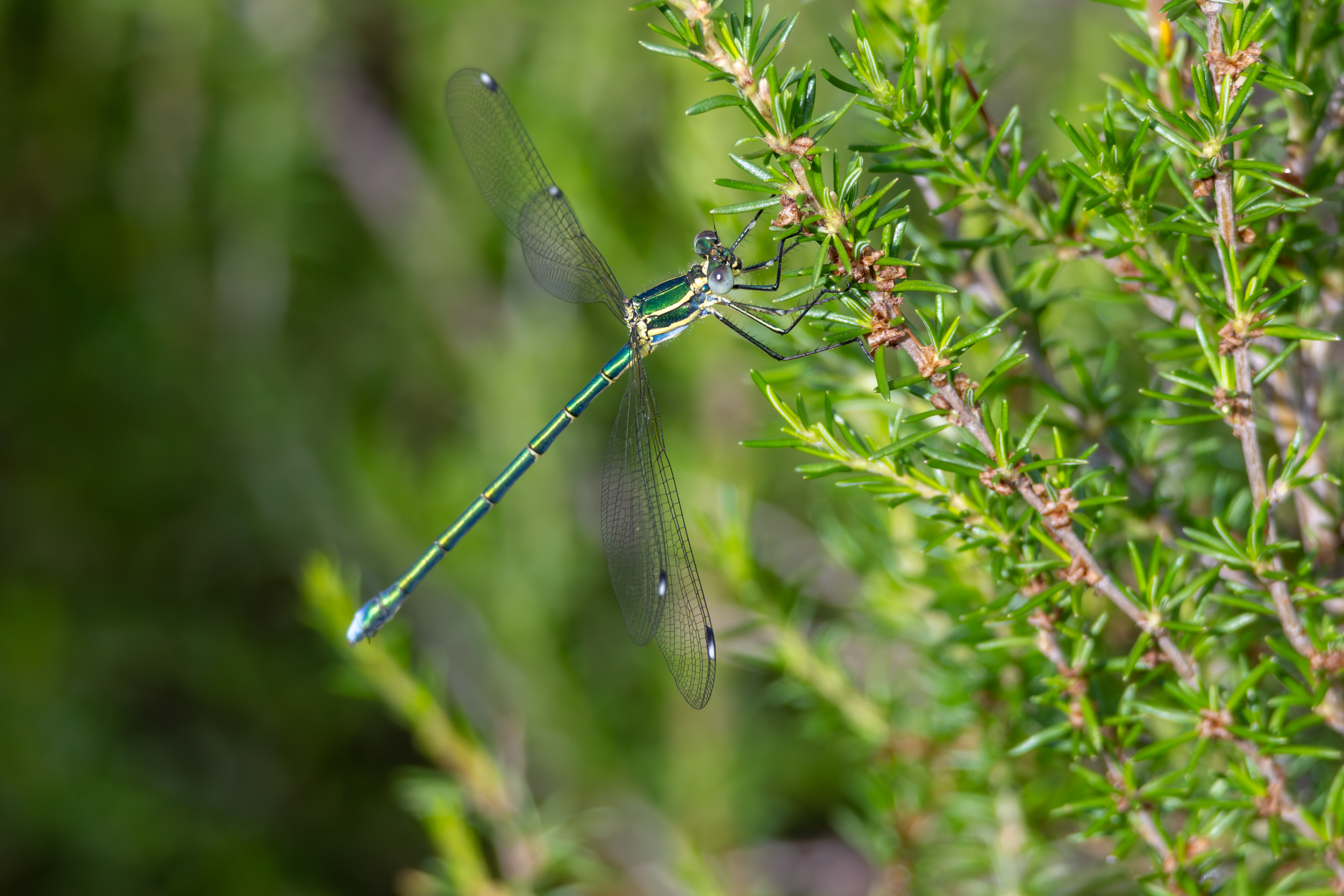
Mountain Malachite ♀
Chlorolestes fasciatus
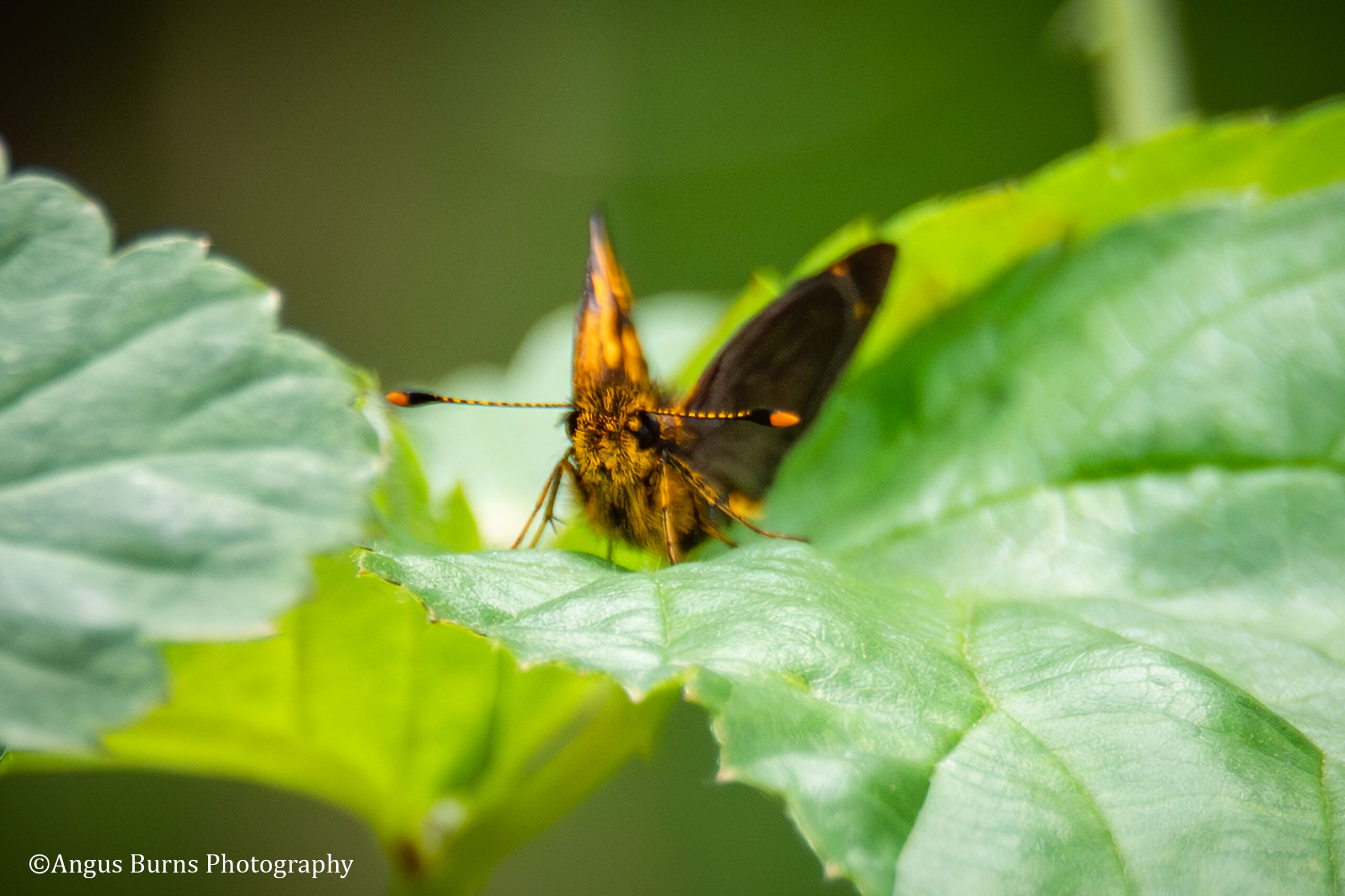
We entered the field through the garden gate, and almost immediately, Angus noticed a male Eastern Gold-spotted Sylph, Metisella metis paris, perched on a leaf, its antennae jutting out like the horns of a goth warrior’s helmet. We hung a banana-baited butterfly trap above the waterfall where the stream begins its descent into the gorge—a prime spot to possibly encounter a Forest-king Charaxes.
Butterflies were scarce. A single female ‘Dodger,’ an Afrogegenes species, identifying the exact species is difficult since the three locals have similar wing patterns, was resting on rocks above the falls. Odonata were more plentiful than lepidoptera. Several Mountain Malachites, Chlorolestes fasciatus, of both sexes darted around the Stream Caperose, Cliffortia linearifolia, shrubs lining the water. These plants are the host for the Orange Telchinia, Telchinia anacreon, one of the Heliconiinae I’d hoped to find, though it may have been too early in the season for them. The photo included was taken in similar vegetation further south near Kokstad in December. The Malachite males, distinguishable by their claspers at the tip of the abdomen, belonged to the ‘unbanded’ form, missing the striking pale blue and black wing bands—a shame, but it was still early in the day. Maybe we would find more later on?

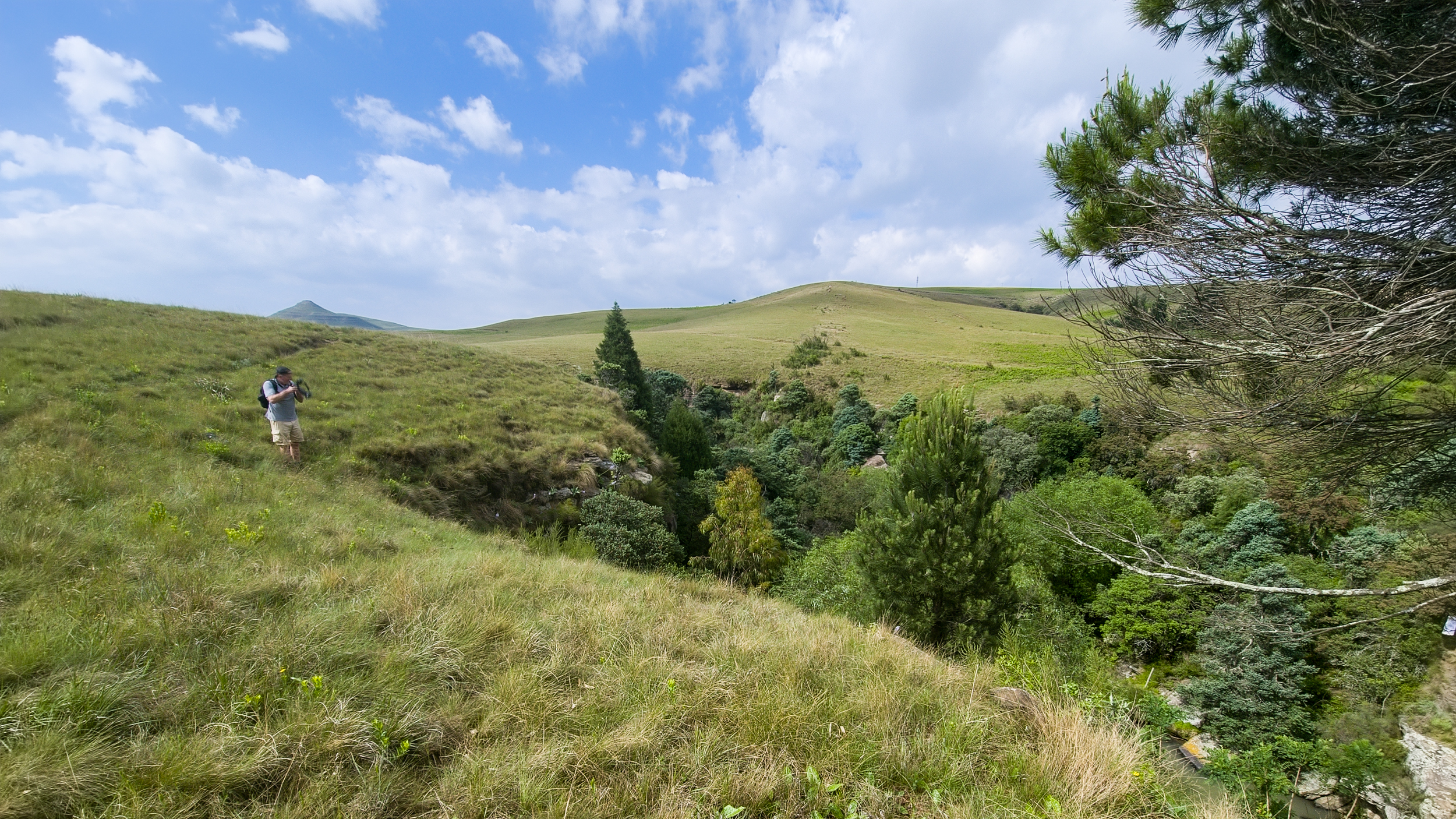
Moorfield scene
Angus photographing a butterfly in one of the gullies
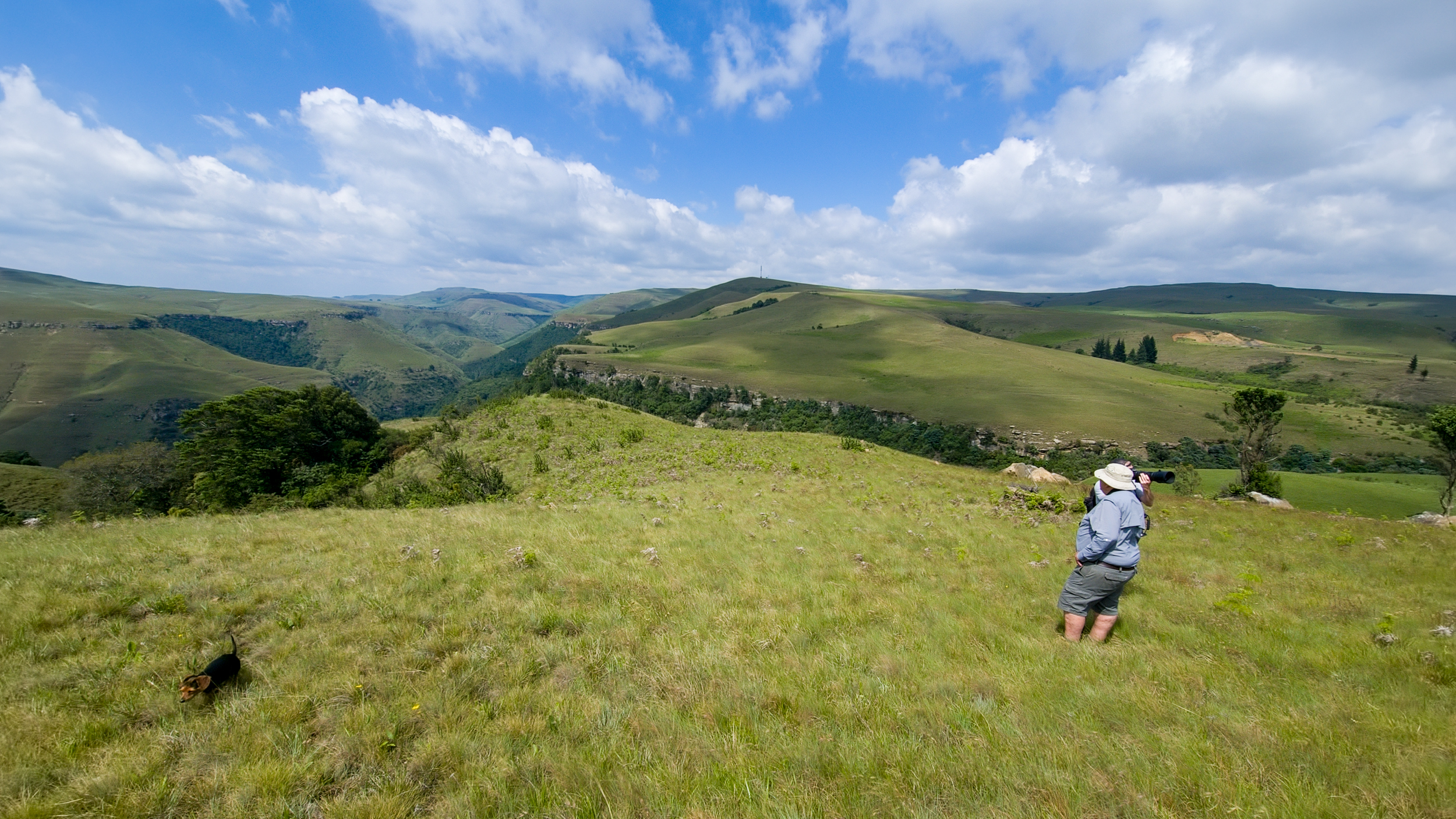
Moorfield scene
Ian Gracie looking down from the ridge above the valley
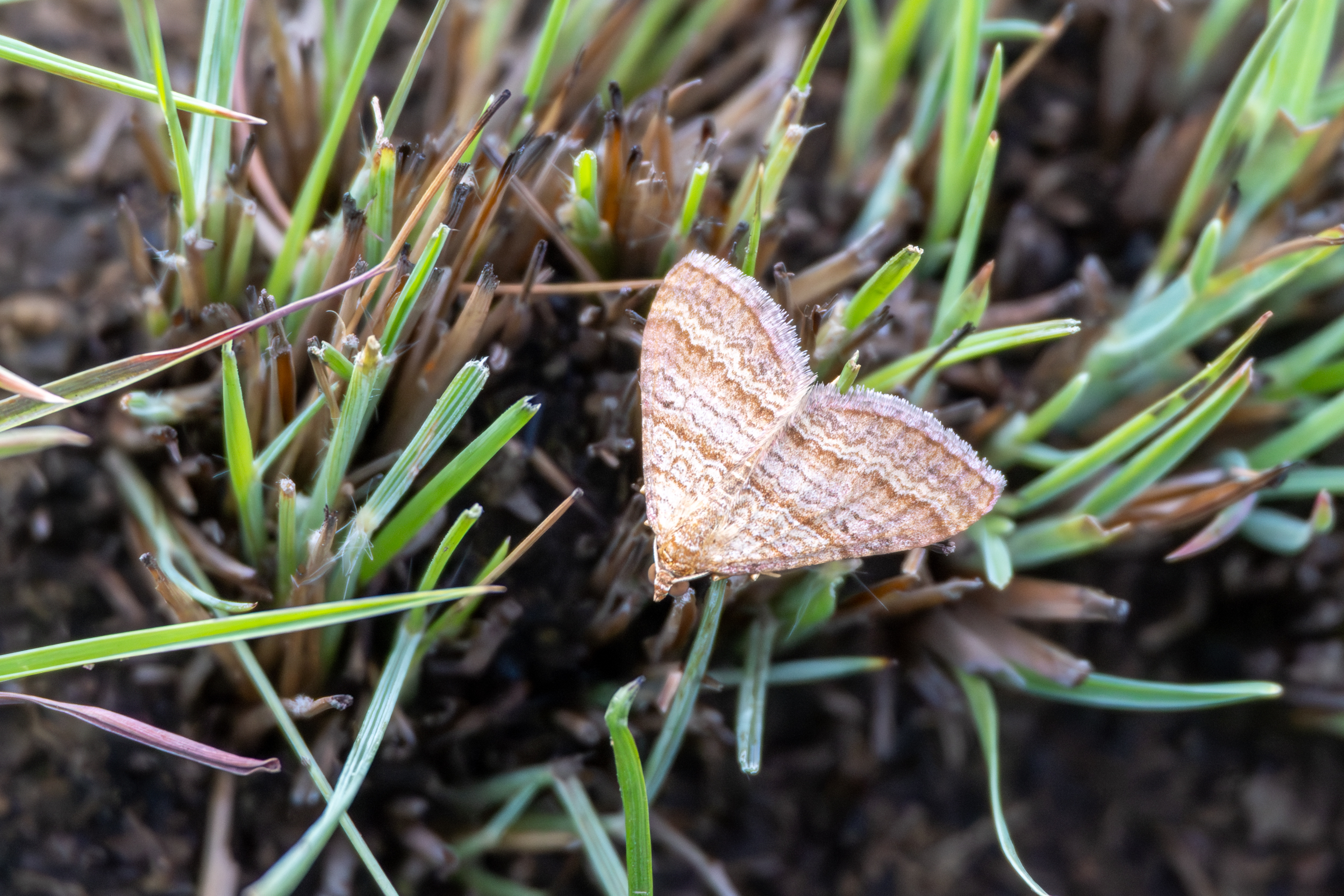
Diurnal Carpet
Mimoclystia pudicata
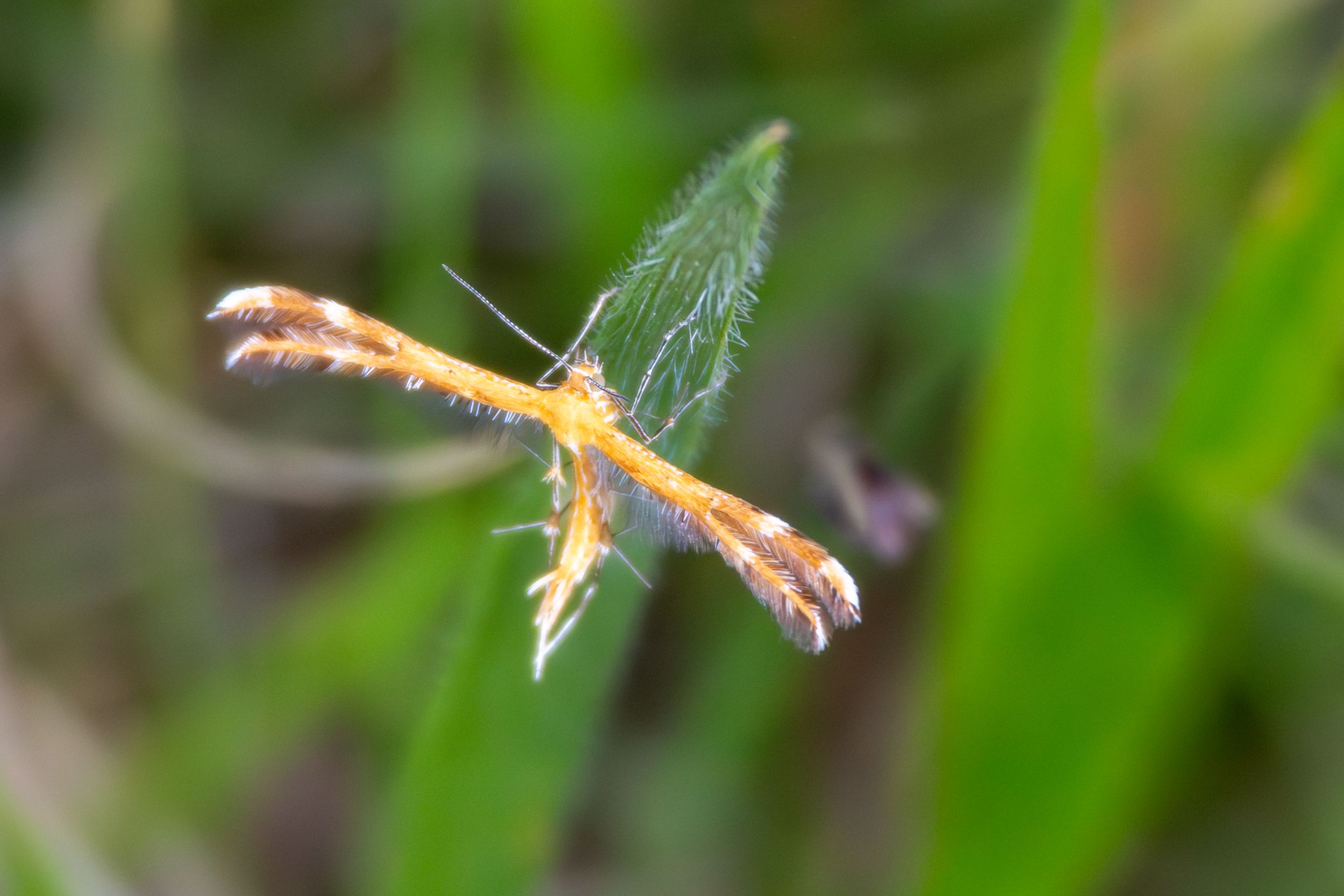
Orange T-plume Moth
Stenodacma wahlbergi
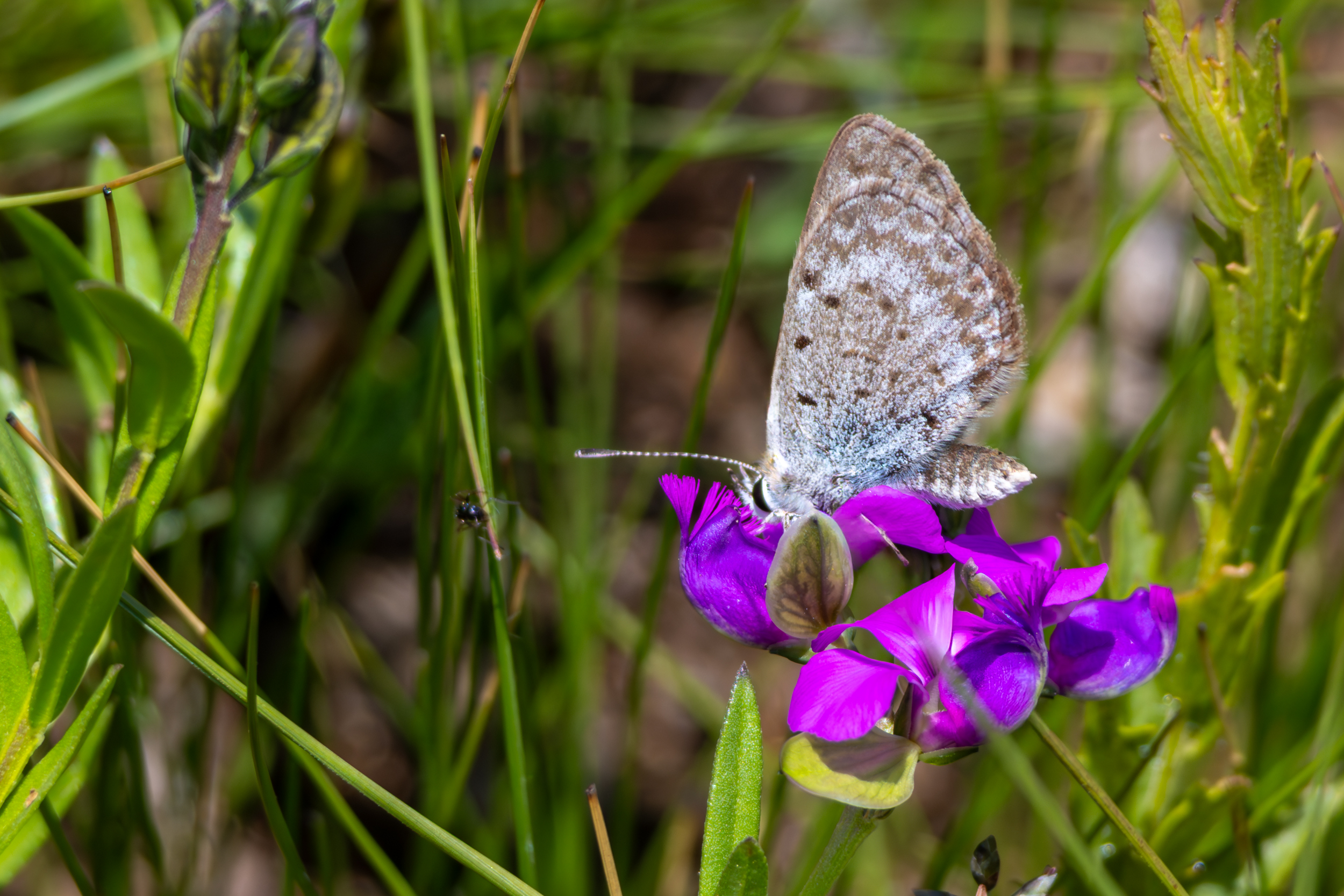
Restless Cupid ♀
Orachrysops lacrimosa
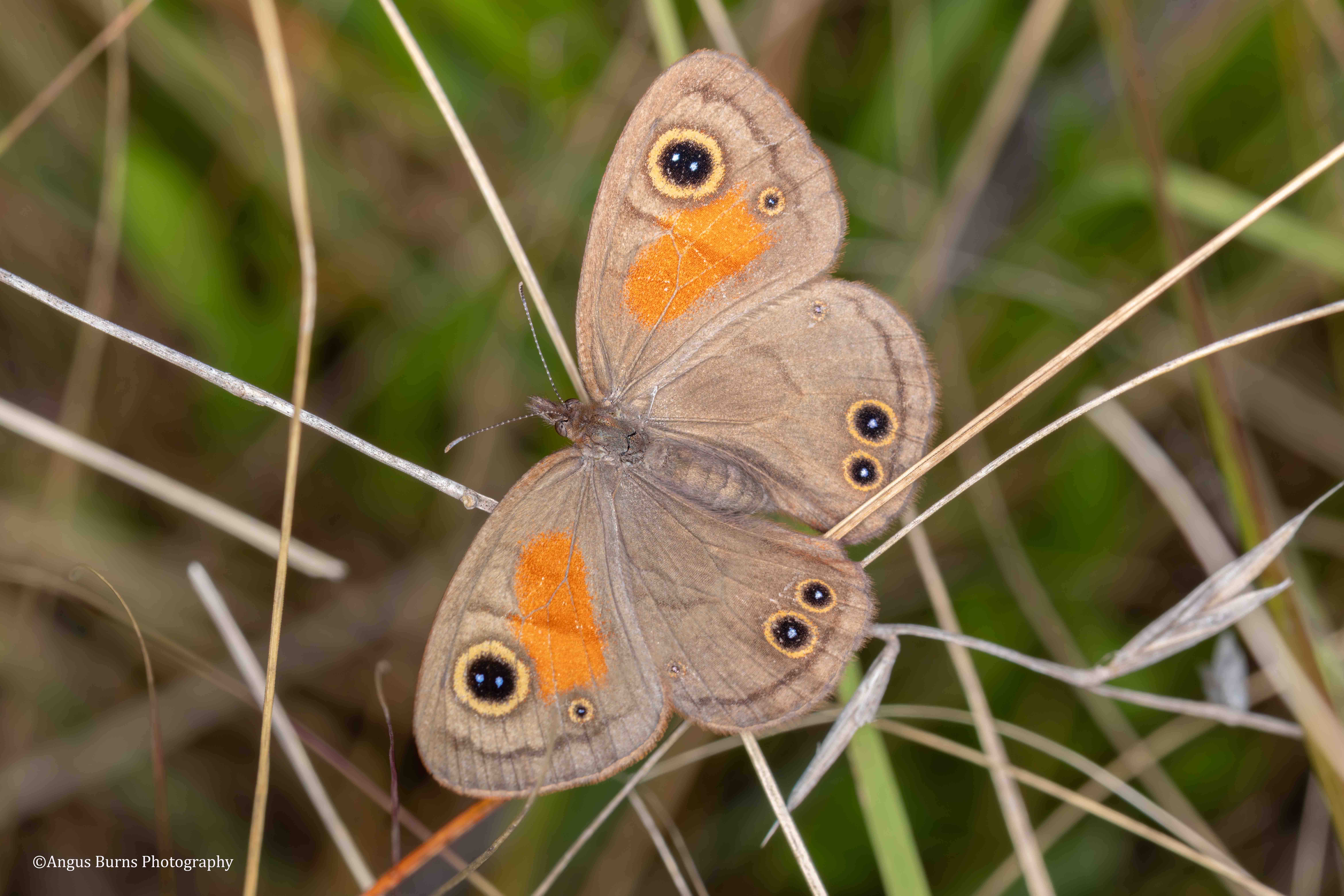
Rainforest Dull Brown ♀
Cassionympha cassius
We made our way up through the grassy slopes to a cluster of large rocks situated on a northern spur beside the gorge. Along the route, we spotted some intriguing day-flying moths, such as the Diurnal Carpet Mimoclystia pudicata, a member of the Geometridae family. While most geometrid moths are nocturnal, this species is active during the day but is still attracted to artificial lights. Its caterpillars feed on Tremble Tops Kohautia amatymbica, which is a grassland plant belonging to the Rubiaceae family.
Additionally, we encountered Orange T-plume Moths Stenodacma wahlbergi, common representatives of the Pterophoridae family whose larvae consume a variety of plants, though they aren’t confined to grasslands.
I was hoping to spot some Amakosa Rocksitters Durbania amakosa among the large, lichen-covered boulders, but they were absent. However, Restless Cupids Orachrysops lacrimosa were quite abundant, and one was seen feeding from clusters of low-growing purple flowers identified tentatively as Wild Violet Polygala uncinata. In one gully, while nectar-feeding on bramble blossoms, Angus managed to photograph a female Rainforest Dull Brown butterfly Cassionympha cassius.
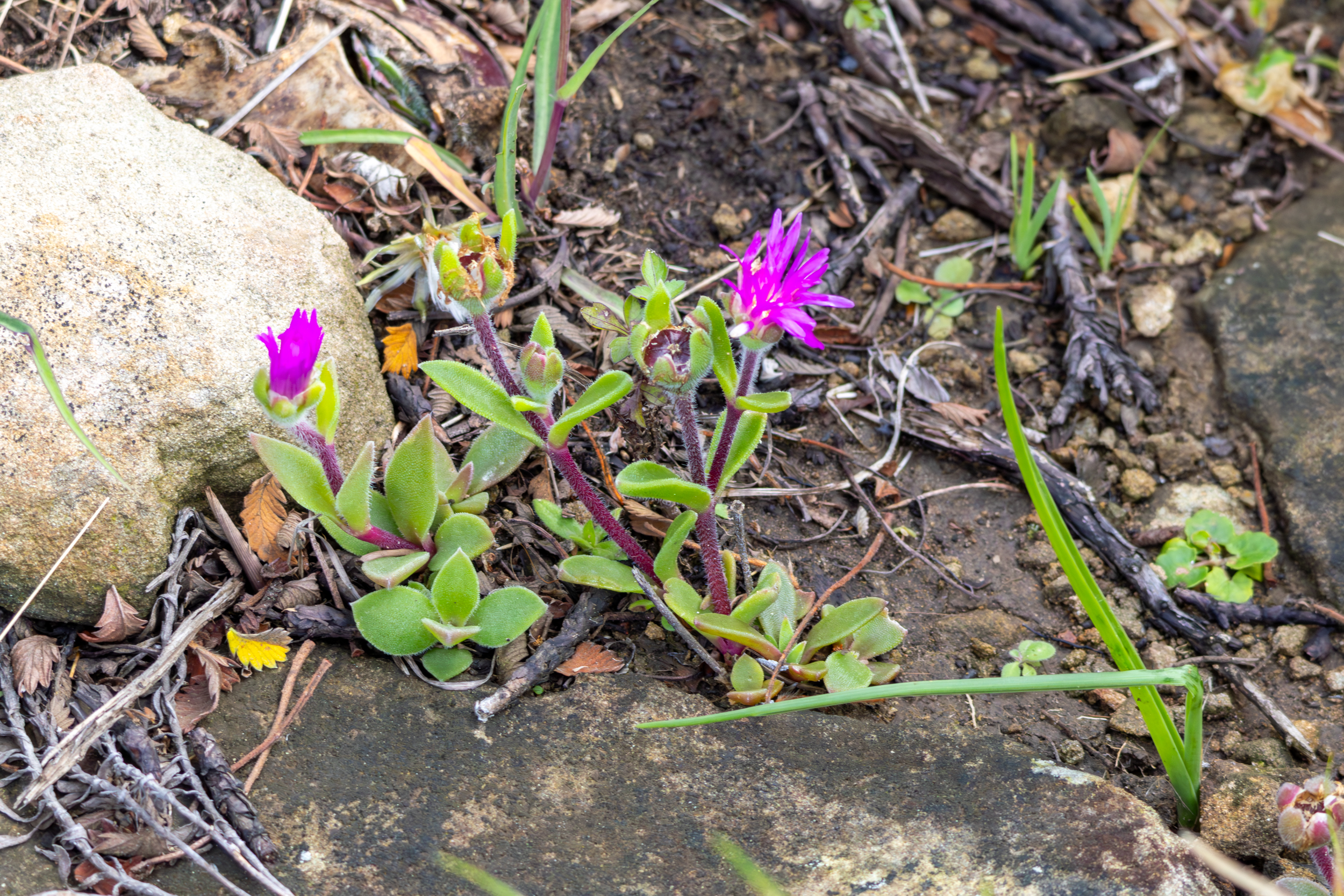
Amongst the rocks was a delicate vygie we tentatively identified as Drakensberg Sheepfig Delosperma lavisiae. In the nearby grassland was an Octopus Cartwheel Xysmalobium parviflorum, which is the preferred nectar plant of the endangered Midlands Widow Dingana dingana. None were present, perhaps because we were at a much higher elevation than its usual haunts, but there was a Tachinid fly enjoying the nectar…

Drakensberg Sheepfig
Delosperma lavisiae
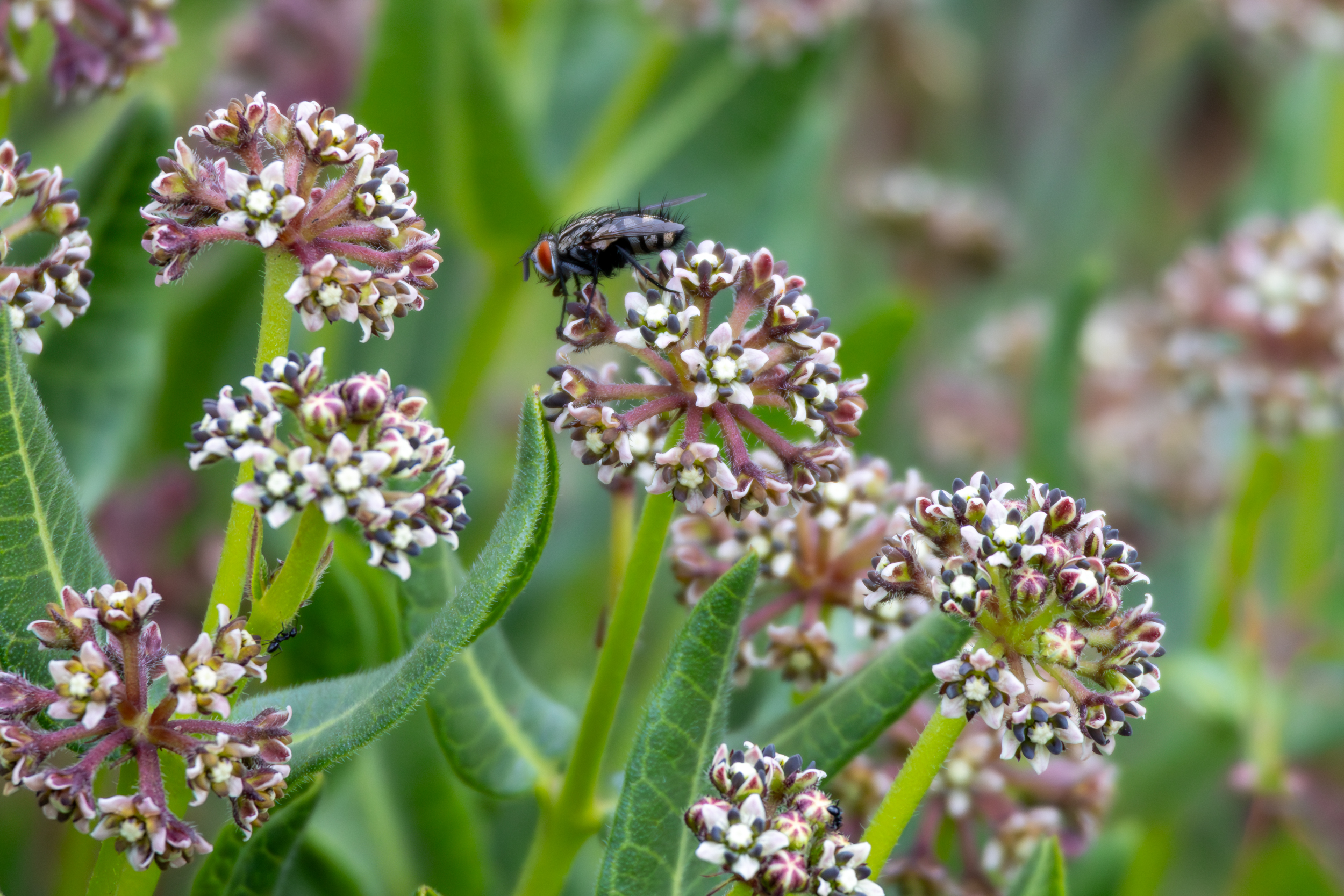
Octopus Cartwheel
Xysmalobium parviflorum
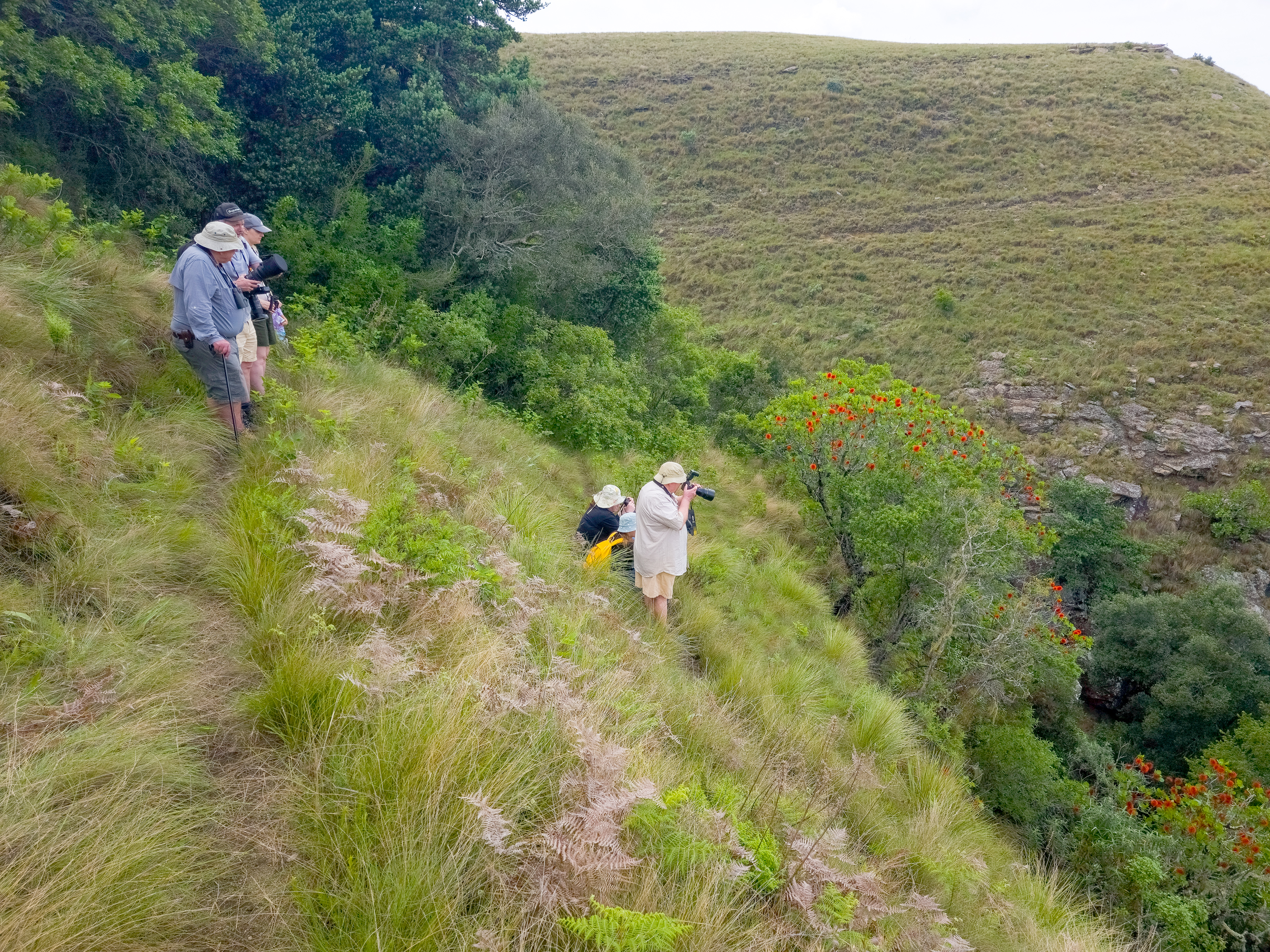
Teetering on the edge
That slope is really steep... and that gully is DEEP
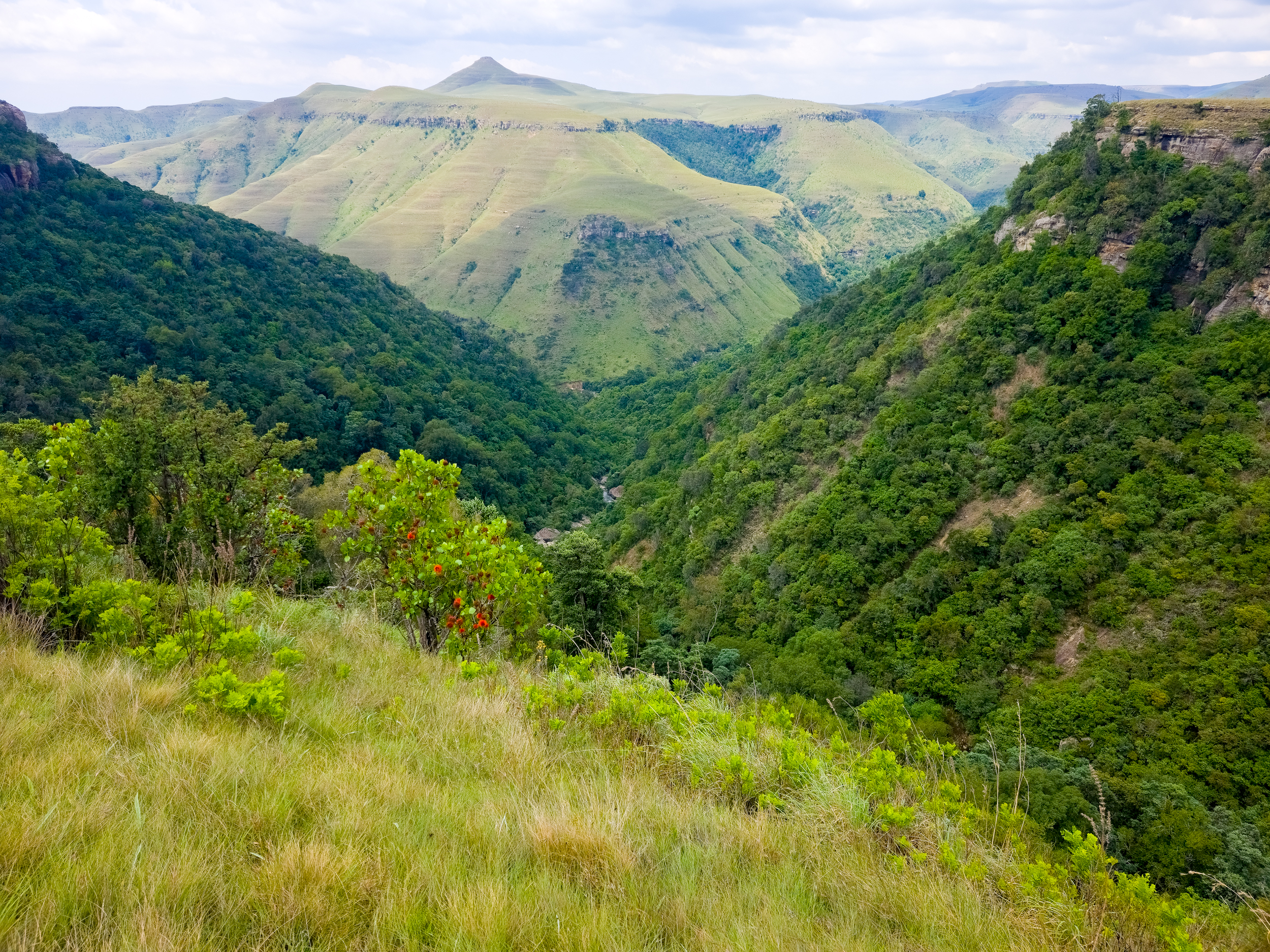
An edge to teeter on
Angus managed to get close to a Forest-king Charaxes here - brave guy!
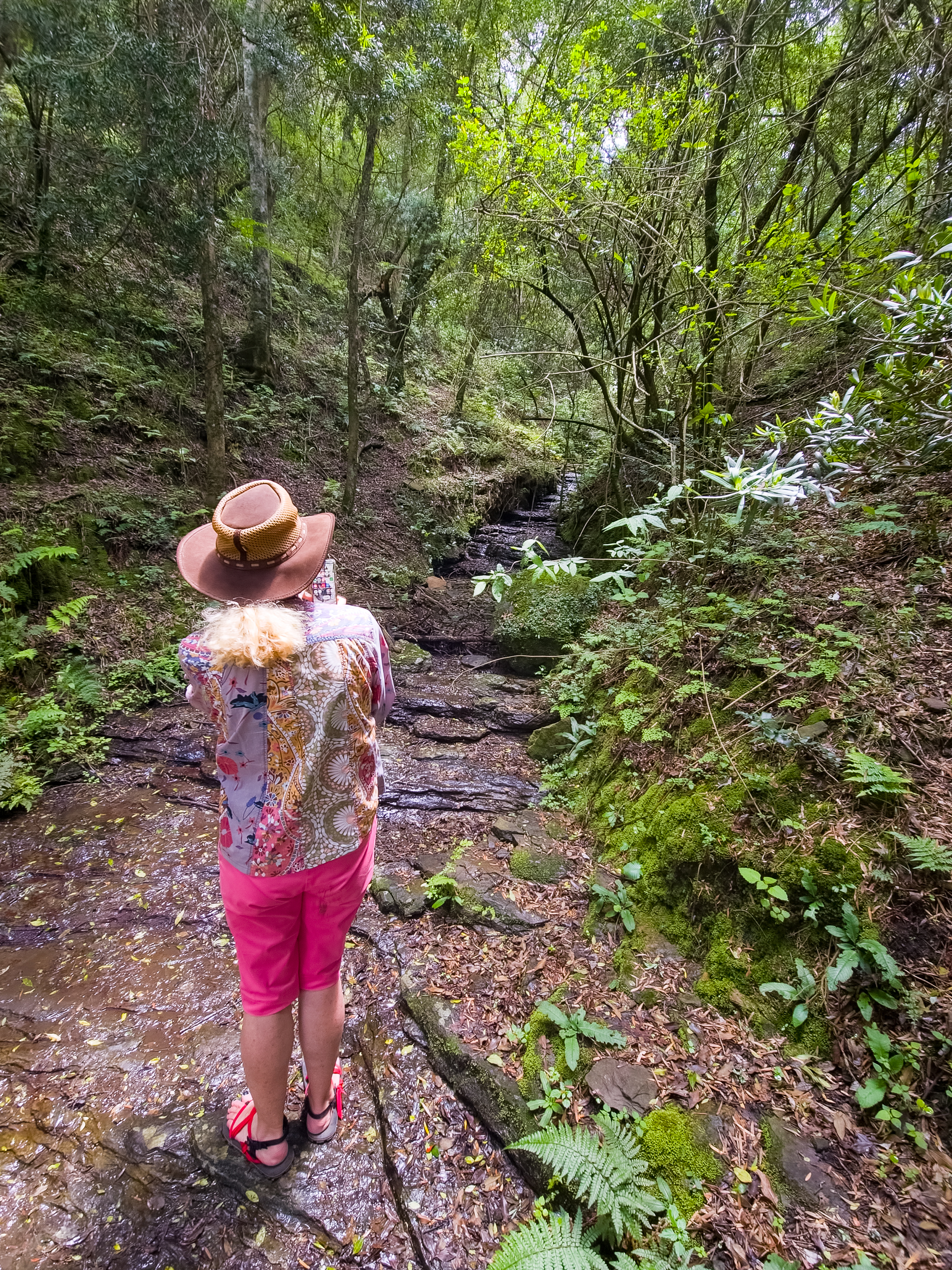
Inside the gully
Jane Troughton in the stream bed that ought to have had a Chrysoritis phosphor!

Cape Primrose
Streptocarpus pentherianus
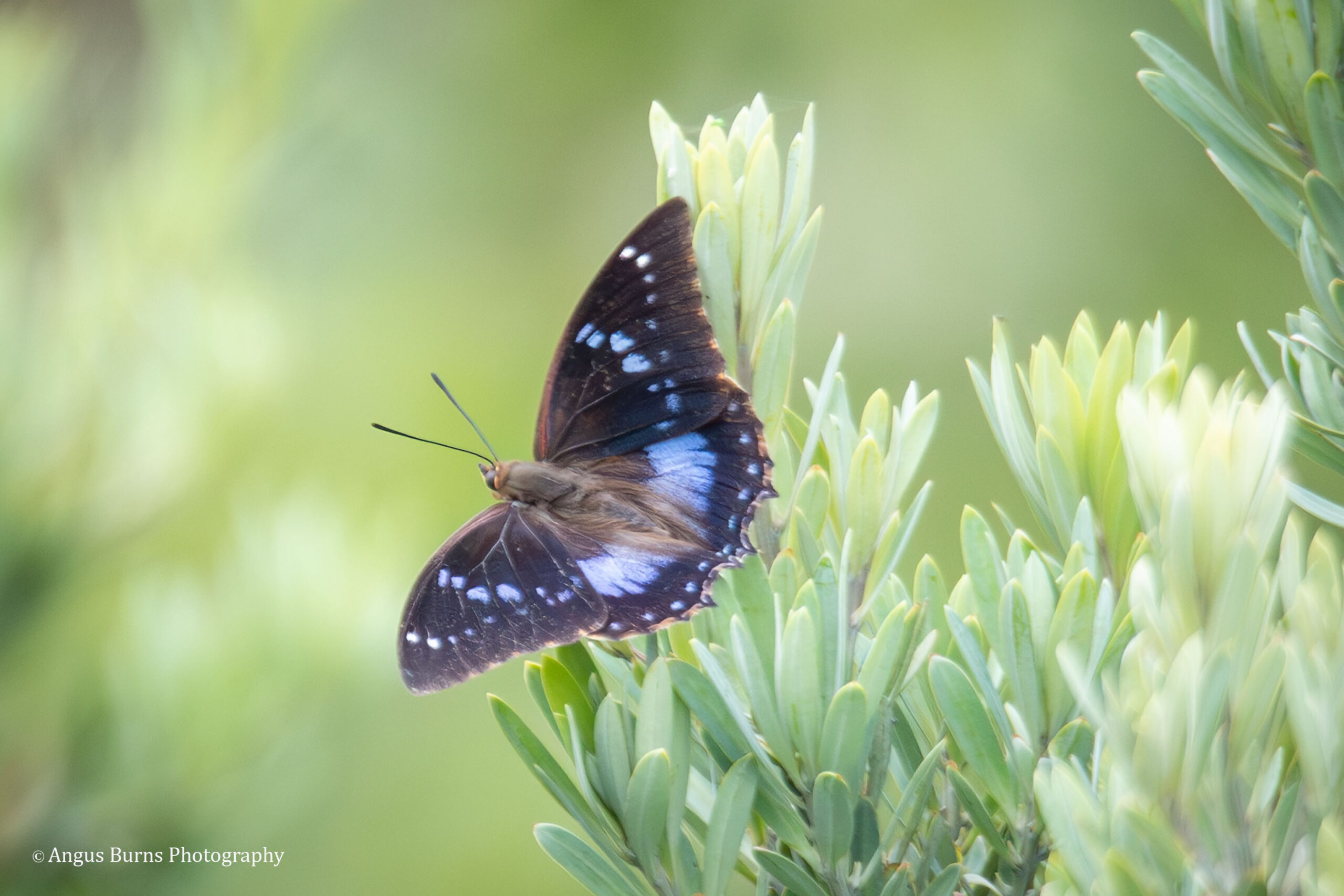
Drakensberg Forest-king Charaxes ♂
Charaxes xiphares penningtoni
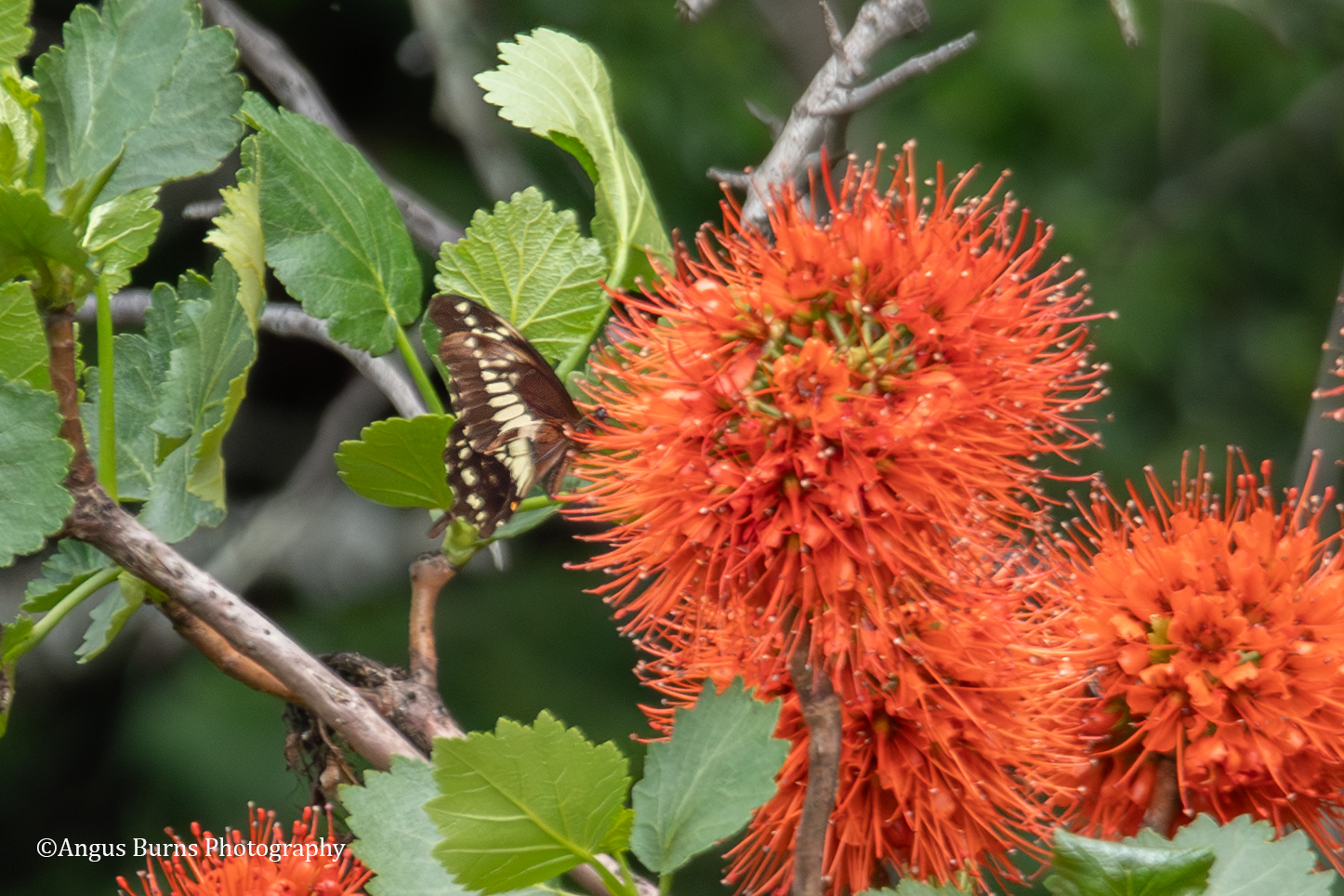
Bush Kite ♂
Papilio euphranor
By 10:30, we reached the gully lined with Bottlebrush trees and steep edges. Here, the trail splits, bringing us close to the edge. Malachite Sunbirds were active once again, and this time, Angus spotted one of our main targets – a male Drakensberg Forest-king Charaxes Charaxes xiphares penningtoni. The butterfly was perched high in the canopy of a nearby Yellowwood tree Podocarpus latifolius, occasionally darting out to chase or be chased by the Sunbirds. We all had good views, but Angus captured the best photo, which is featured here.
At this stage, we began searching for other target species, especially the elusive Golden Flash Chrysoritis phosphor. A decade earlier, Dr. Adrian Armstrong from Ezemvelo KZN Wildlife had found these butterflies in a similar spot at Ncandu Nature Reserve across the gorge. Jolett thought she caught a glimpse of something tiny and orange darting into the leaves of a bush perilously close to the cliff’s edge. It was too dangerous to approach, so we relied on binoculars and long lenses, but it never showed itself again.
Next, I spotted a Bush Kite Papilio euphranor flitting among the Bottlebrush flowers. It moved so quickly that only fleeting glimpses were possible, and no one managed a photo.
The trail eventually led down to a stream crossing at the head of the gully – a magical spot filled with streamside plants like Begonia sutherlandii and various Streptocarpus clinging to moist rocks. Only Streptocarpus pentherianus was in bloom, and we managed some photos. At one point, I thought I saw something tiny – possibly a Chrysoritis phosphor – circling a bush above the stream, but it didn’t settle, so its identity remains uncertain.
Crossing to the far side of the gully revealed even more Glossy Bottlebrushes. There, we found another Bush Kite moving from flower to flower. Angus took a distant photo, which accompanies this account.
While hoping for better images of the Bush Kite, we witnessed another forest specialist: a massive Southern Emperor Swallowtail Papilio ophidicephalus phalusco, likely a male given its energetic flight up and down the gully. Although none of us got a photograph, everyone enjoyed excellent views of South Africa’s largest butterfly.
After spending an hour or two by the gully we decided to head back to the farm for lunch, a siesta, then the second lecture of the weekend. Some of the party decided to return via the bottom of the waterfall. Others searched the tributary gullies looking out for more rarities.

Jaunty Dropwing ♂
Trithemis stictica

Mountain Malachite ♂
Chlorolestes fasciatus
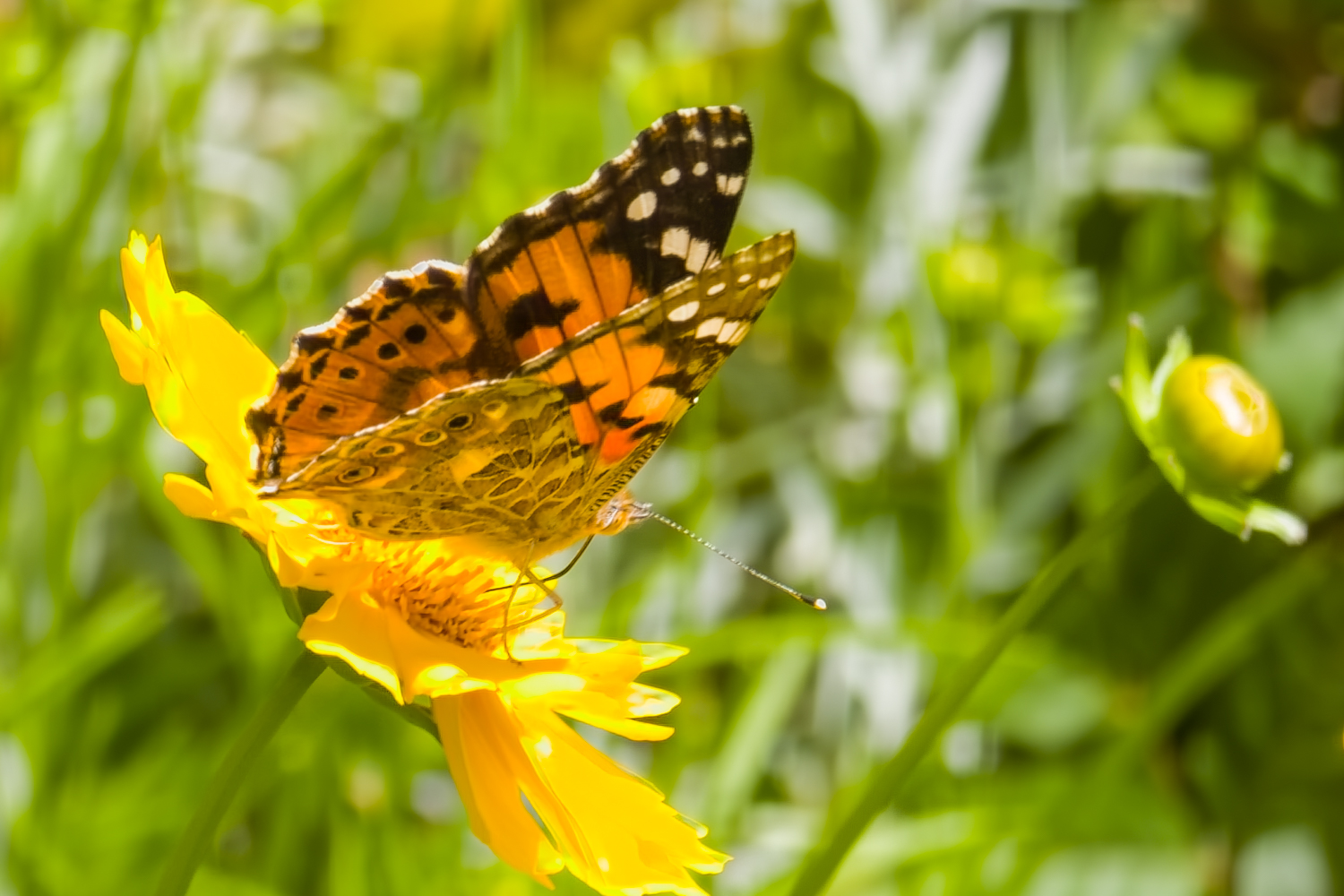
Painted Lady ♂
Vanessa cardui
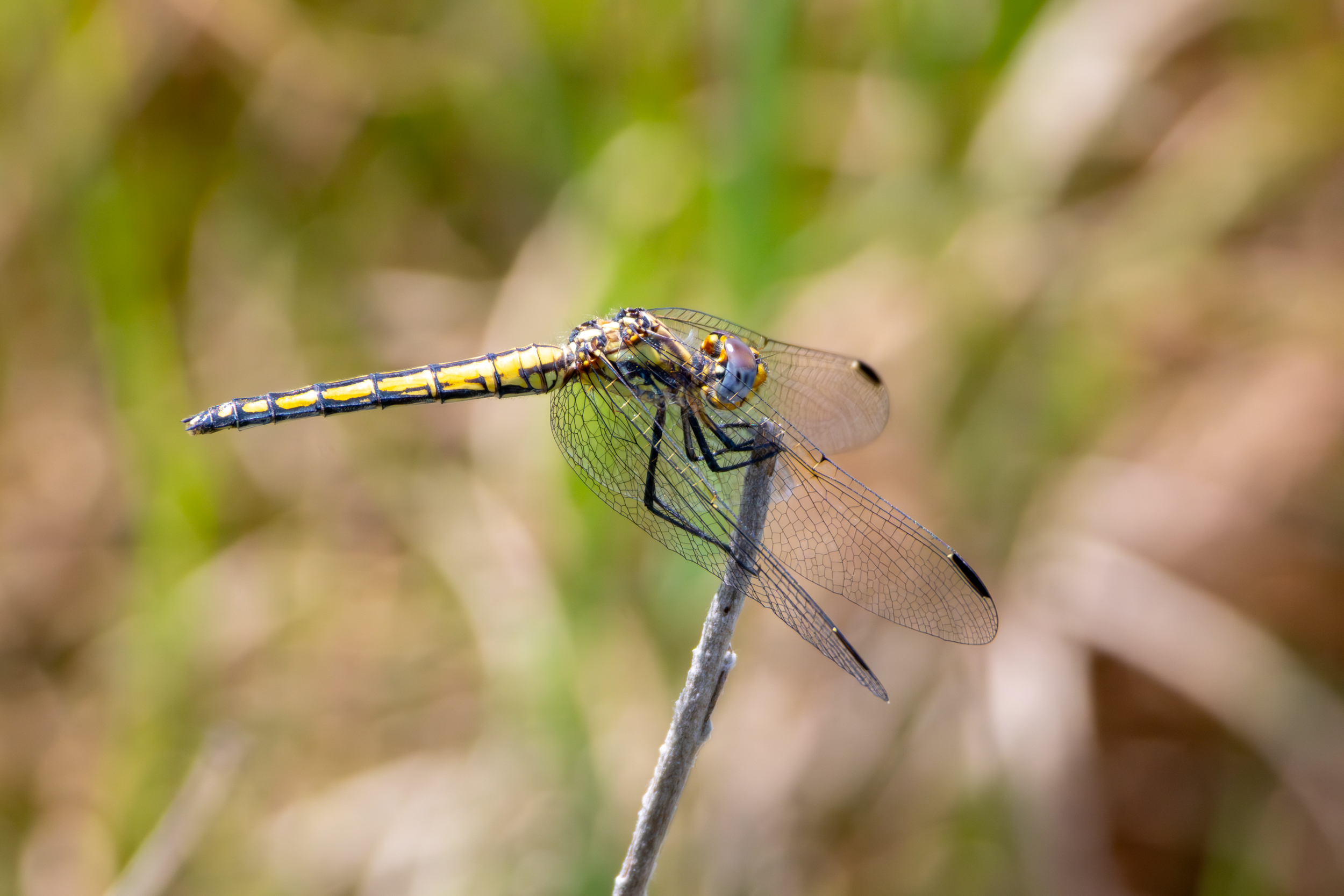
Navy Dropwing ♀
Trithemis furva
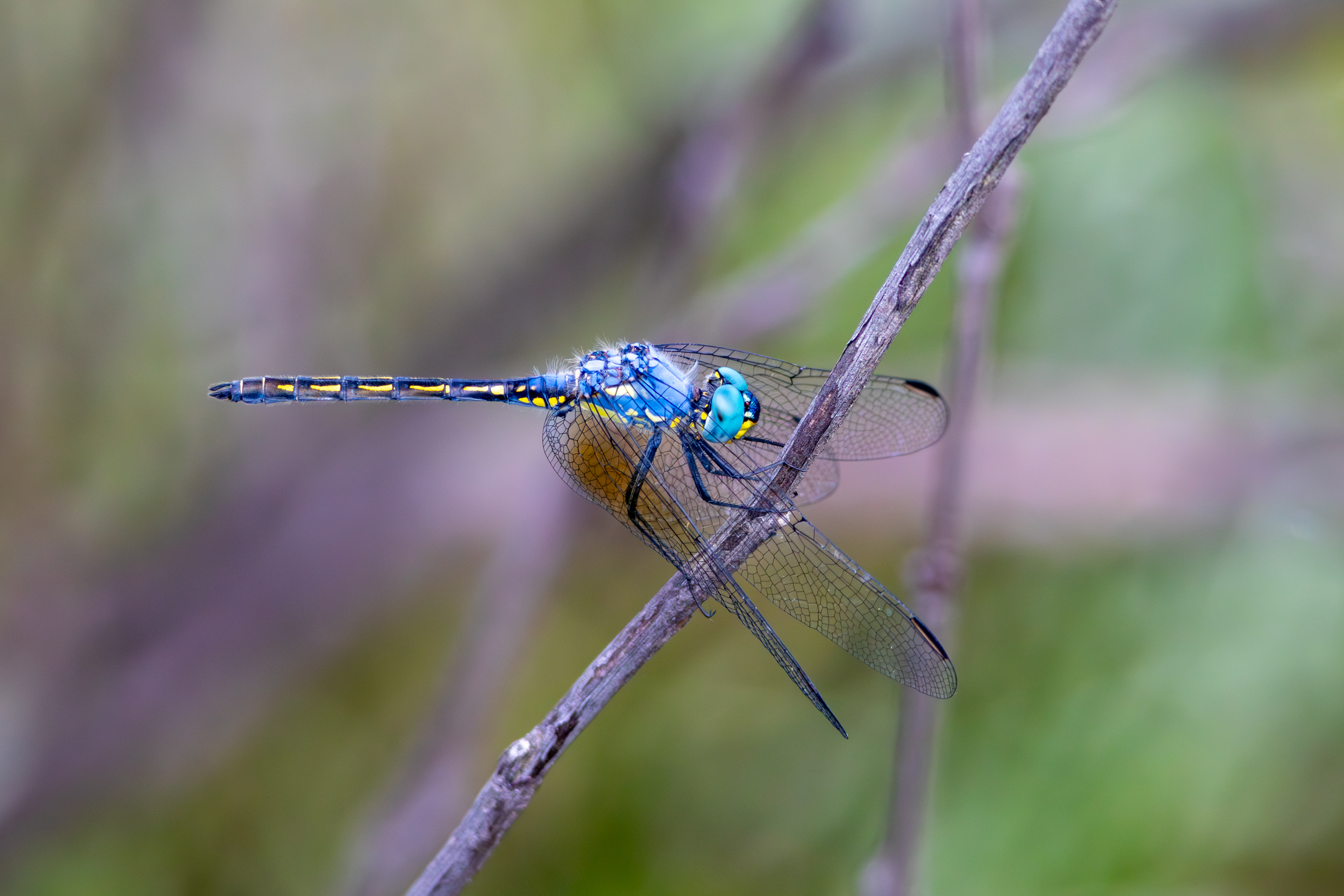
As we made our way back, we discovered a small stream rushing past some Ouhout Leucosidea sericea bushes. The area was lively with Odonata; several male Mountain Malachites Chlorolestes fasciatus were holding their territory among the low waterside plants. And these were the ones with the lovely pied wings!
Nearby, a male Jaunty Dropwing Trithemis stictica and a female Navy Dropwing Trithemis furva added to the scene. I was able to capture a photo of one of the Malachites framed by the flowing water – a perfect endnote to our walk.
But that wasn’t quite the finale. We still had to check the butterfly trap! Sadly, it was empty, with not a single Charaxes attracted. The weather had been somewhat cool, and in my experience, these traps work much better later in summer when it’s warmer and the butterflies are hungrier.
Back at Acorn Cottage the garden was still attracting butterflies. A male Painted Lady Vanessa cardui was nectaring on the yellow Cosmos sulphureus flowers. Butterflies don’t seem to care about alien plants – as long as they have nectar, they’re happy!

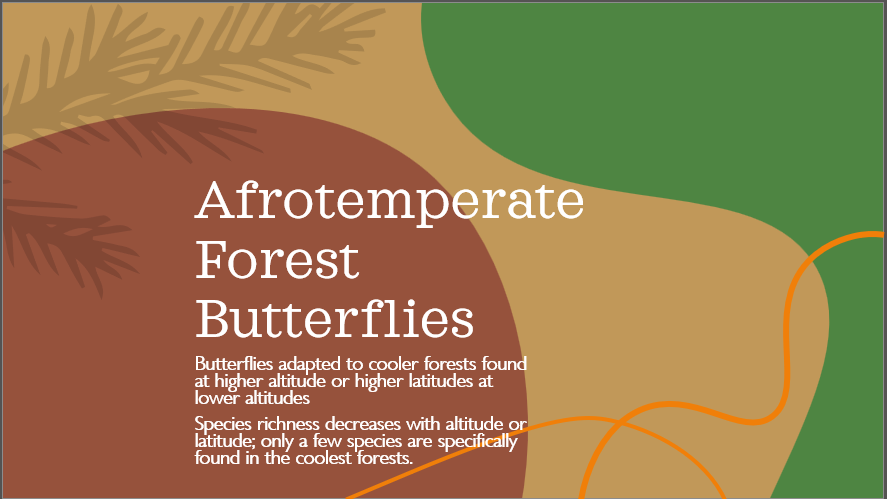
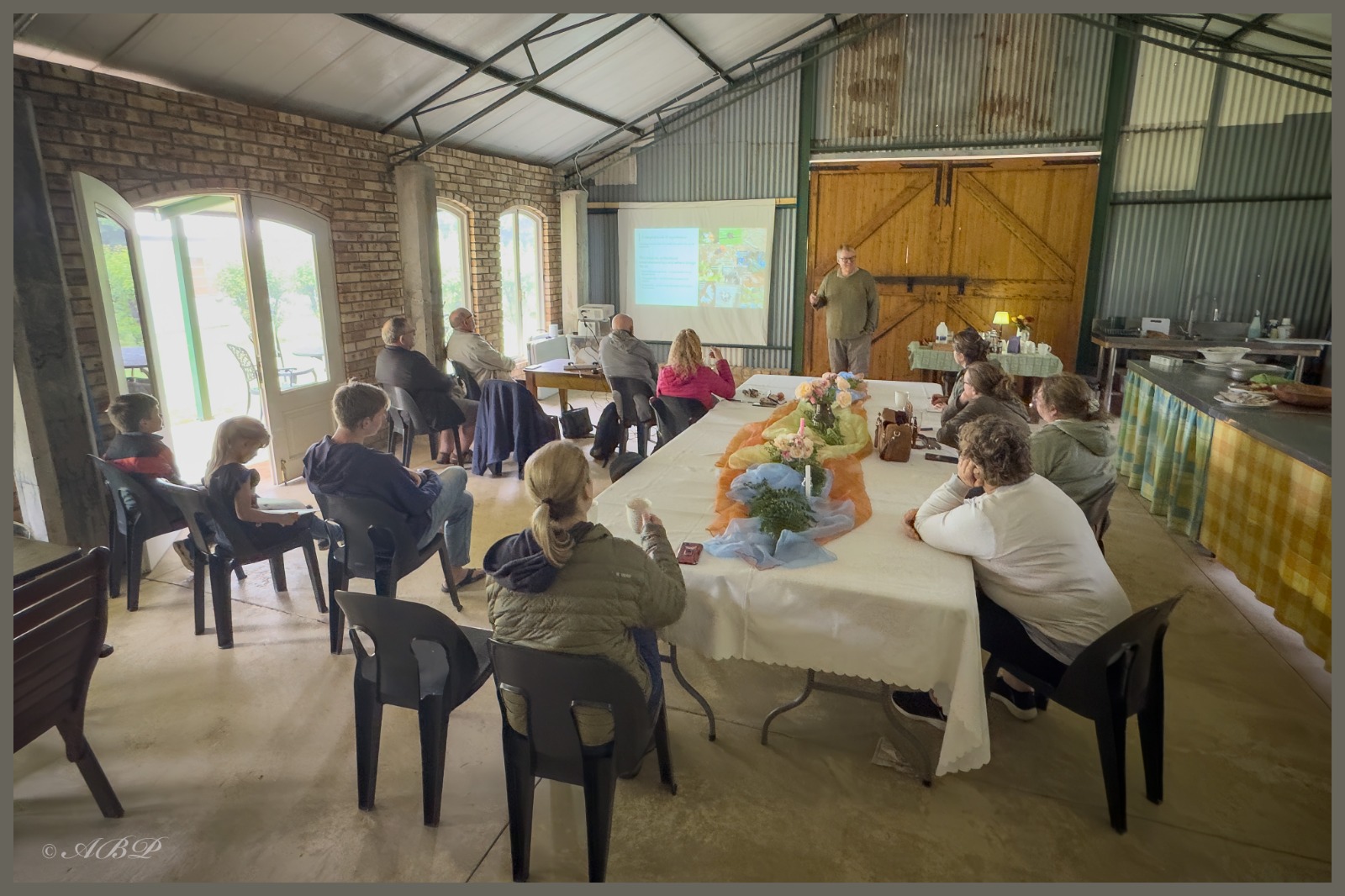
The afternoon lecture

A slide from the presentation
Afrotemperate Forest Butterflies
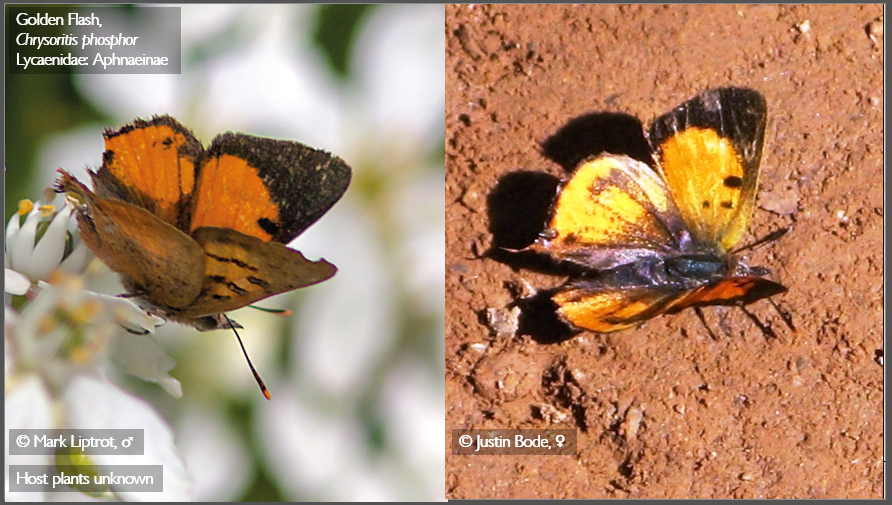
Golden Flash
Chrysoritis phosphor
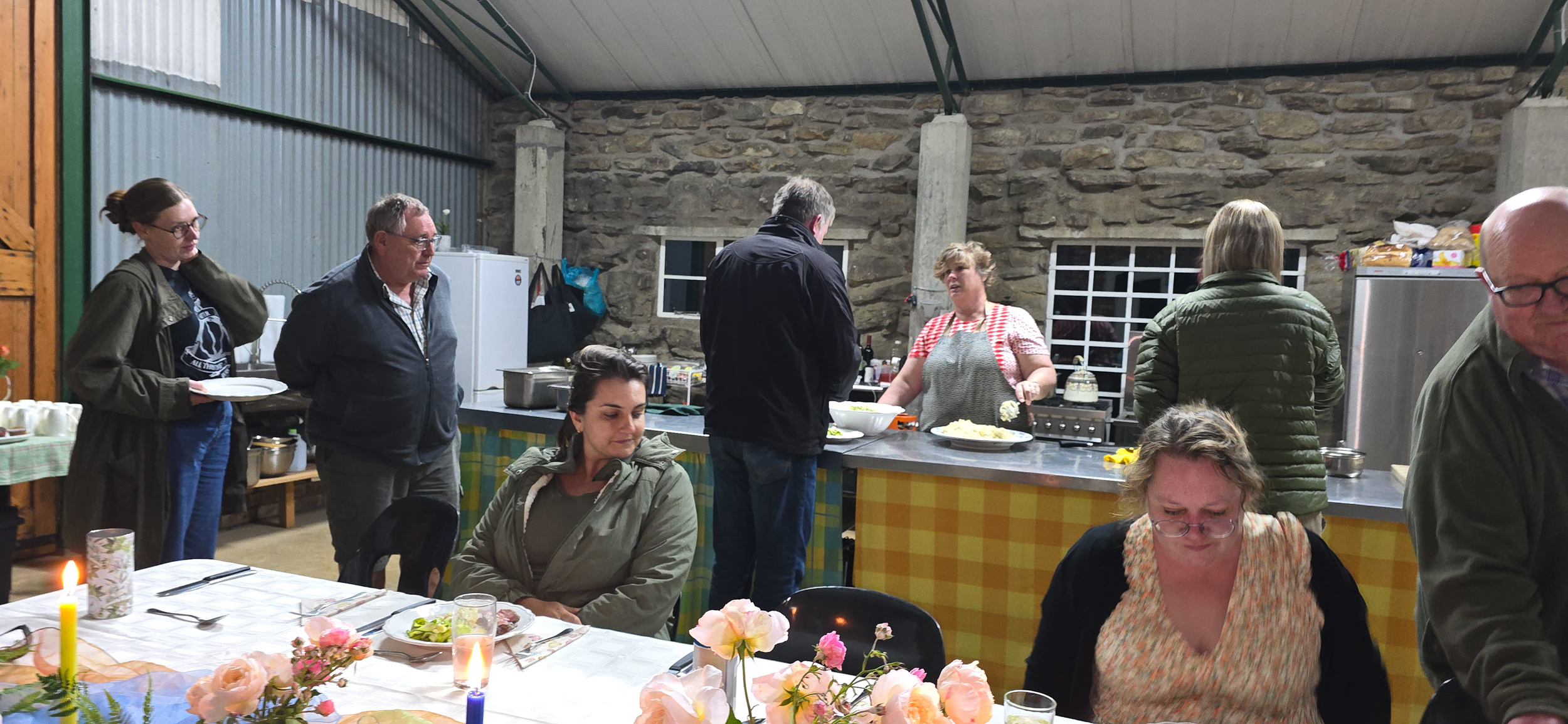
Sonnya dishing up a supper feast
The food at Moorfield is simply delicious and cooked with love!
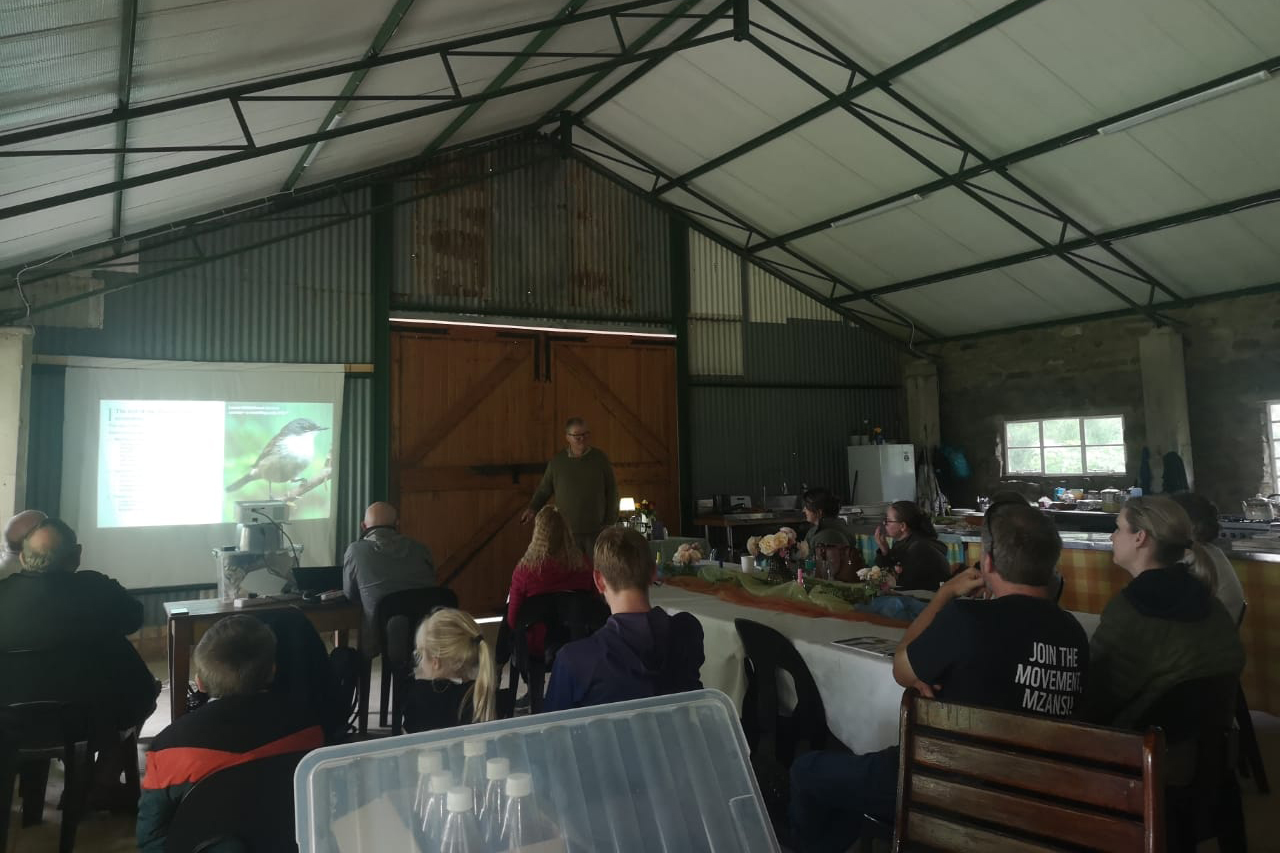
Following lunch and a brief rest period, the second Butterflies session focused on species that are best observed in forest and grassland environments. Attendees gained practical insights into the range of butterflies that may be encountered with dedicated observation. All species identified were discussed, as well ‘the one that got away’!
On Sunday morning, the third lecture took place, which was more theoretical in nature and included examples from my own garden under the topic of Butterfly Ecology. The presentation addressed the ecological roles of butterflies, encompassing topics such as levels of ecological organization, food chains, trophic pyramids, interrelationships, and their contributions to global ecology. The program concluded with an overview of a globally distributed species observed during the weekend, the Painted Lady, Vanessa cardui.
It was then time to ‘hit the road’. Some sections of the Mullers Pass road presented challenges due to significant rainfall over the weekend, resulting in slippery conditions on steeper segments. However, vehicles equipped with ‘X-Mode’ hill descent control, like my Subaru Forester with its CV drive, allowed for a controlled descent at minimal speed with additional braking as needed. All attendees returned home safely.

During the Butterfly Ecology lecture

Ecological levels of organisation
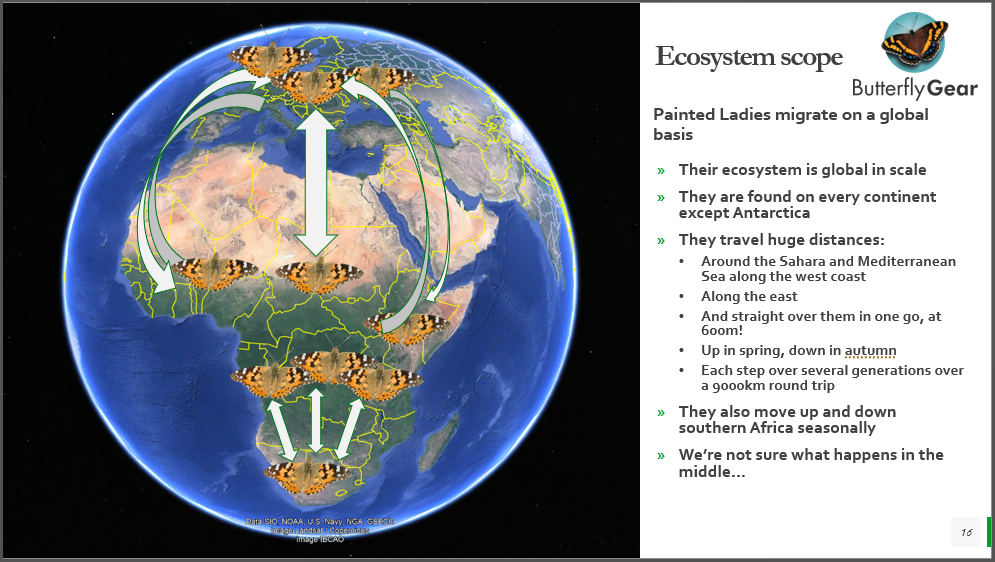
Ecosystem scope on a global scale

L to R: Ruby, Sonnya Holtz, Peter Nelson, Jolett Pieterse, Nicole Gracie, Janet Gracie, Ian Gracie, Jane Troughton, Greg Courtney, Steve W, Alex, Cara, and Alice Burns
The weekend event was enjoyable, and feedback indicates that participants had a positive experience. Unlike the standard ButterflyGear in-lodge training sessions, this program was attended by individuals who were not guides, although guide training materials were utilised. The format resembled a concise guided tour, during which guests received instruction on butterflies and moths observed during the session. For enquiries regarding hosting a similar event at your location, please contact me at steve@butterflygear.co.za