Skip to content

the defoliators

Every so often, I see a post from a gardener bemoaning the damage caterpillars have done to cherished plants. When someone has invested heavily in creating a garden, seeing plants stripped to bare stems can provoke a strong reaction – often a call to reach for powerful insecticides like ‘Doom’ or ‘Blue Death’.

That response can severely disrupt a garden’s ecological balance. Broad-spectrum chemicals may kill the caterpillars, but they can also kill or repel the insect predators and parasitoids that naturally keep them in check. If those natural controls are removed, the surviving pest population may rebound rapidly because fewer predators remain to limit its numbers.

A balanced garden ecosystem supports birds, butterflies and other wildlife while contributing to a healthier environment. Insecticides are not the only way gardeners disturb that balance: replacing naturally varied vegetation with large areas of lawn or mass plantings of a few species, such as clivias or cycads, reduces habitat and food diversity. A less diverse garden generally supports a narrower range of insects and the animals that feed on them.

Butterflies and moths are mainly herbivores, so they occupy a level near the base of the ecological pyramid, just above plants. Herbivory is a natural relationship that has evolved over immense spans of time: plants support animals that feed on leaves, fruit and other tissues. Elephants, antelope, fruit-eating birds – and humans – are all herbivores to some degree.

Butterflies and moths pass through four life stages. Gravid, or egg-bearing, females lay eggs that hatch into caterpillars; the caterpillars feed and grow before becoming pupae or chrysalides and eventually emerging as adults. Some caterpillars are easy to overlook because they hide from predators and avoid leaving conspicuous holes that might alert birds to nearby prey.

Other caterpillars feed openly and persistently until little or no foliage remains. These are the defoliators – the species whose dramatic impact is most likely to alarm gardeners and prompt calls for control.

Let’s look at a few examples…

Cycad Moths (tribe Diptychini)

‘Cycad moths’ are specialist loopers and day-flying moths belonging to the tribe Diptychini, in the subfamily Ennominae of the family Geometridae (Loopers). Species of Zerenopsis and Callioratis absorb glycoside toxins from the tender emerging leaves of cycads, using them as a chemical defence against insectivores. Their bright warning, or aposematic, colours advertise this protection.

Female moths locate host plants by scent—an essential adaptation because wild cycads usually occur at low densities, limiting encounters between moths and plants. In gardens where many cycads grow close together, the stronger combined scent attracts more females and results in greater numbers of eggs being laid.

Leopard Magpie adult

Zerenopsis lepida
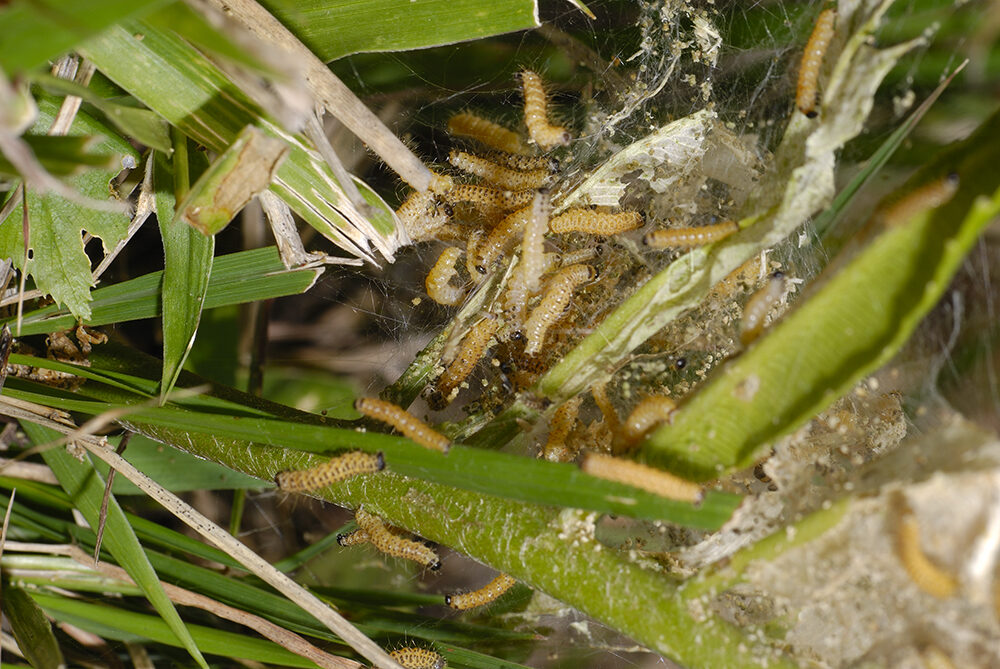
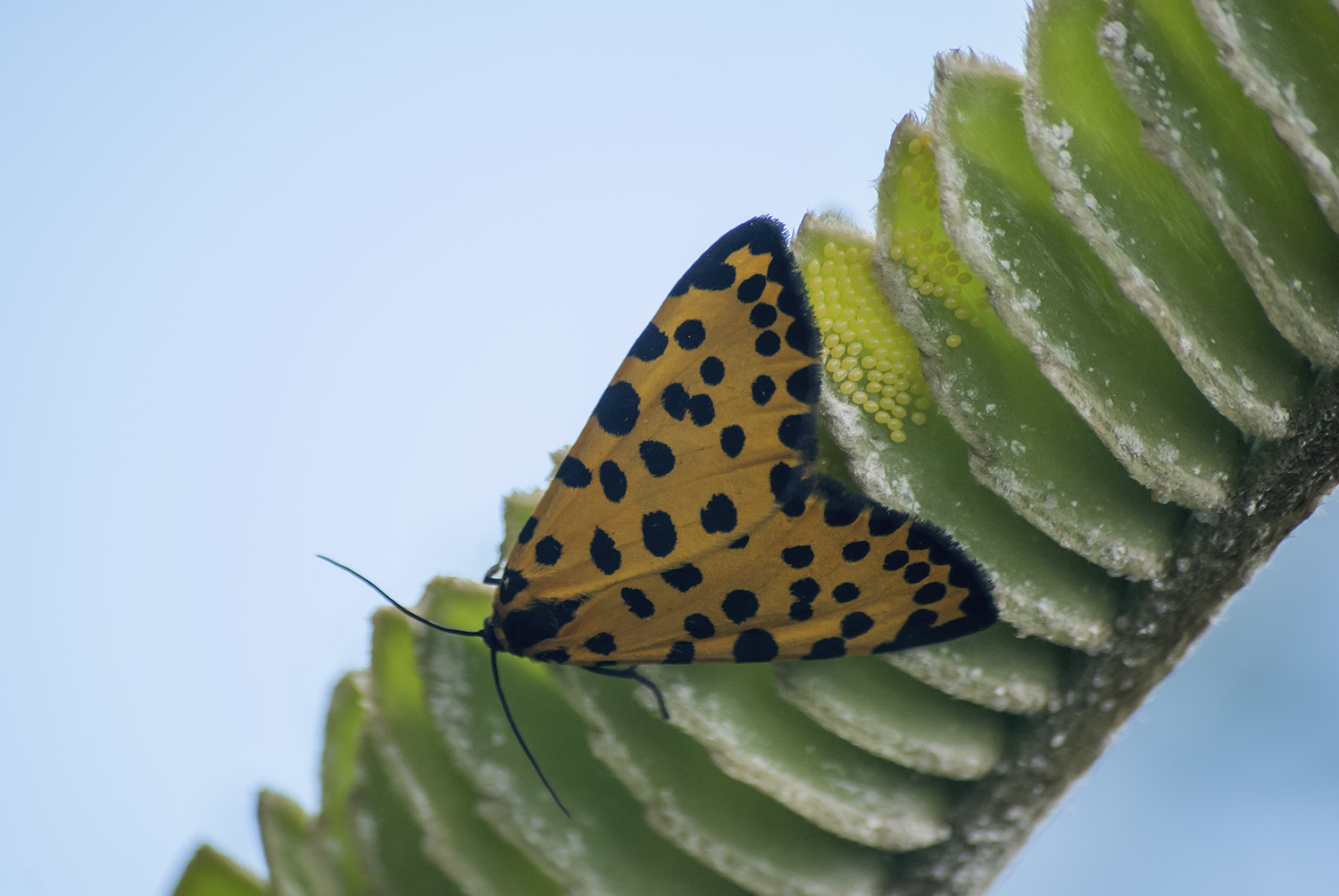
This female Leopard Magpie has just laid a batch of about a hundred eggs on the emergent frond of a cycad. Within a few days they will hatch into caterpillars that will consume the leaves. This can cause great distress to cycad owners who greatly value the fresh green foliage of the plants. Young Leopard Magpie caterpillars are gregarious and will gather on the fresh growing shoots of the cycads. They spit out an enzyme that softens the leaves and makes them easier to eat and digest.


Leopard Magpie first instar larvae

Zerenopsis lepida
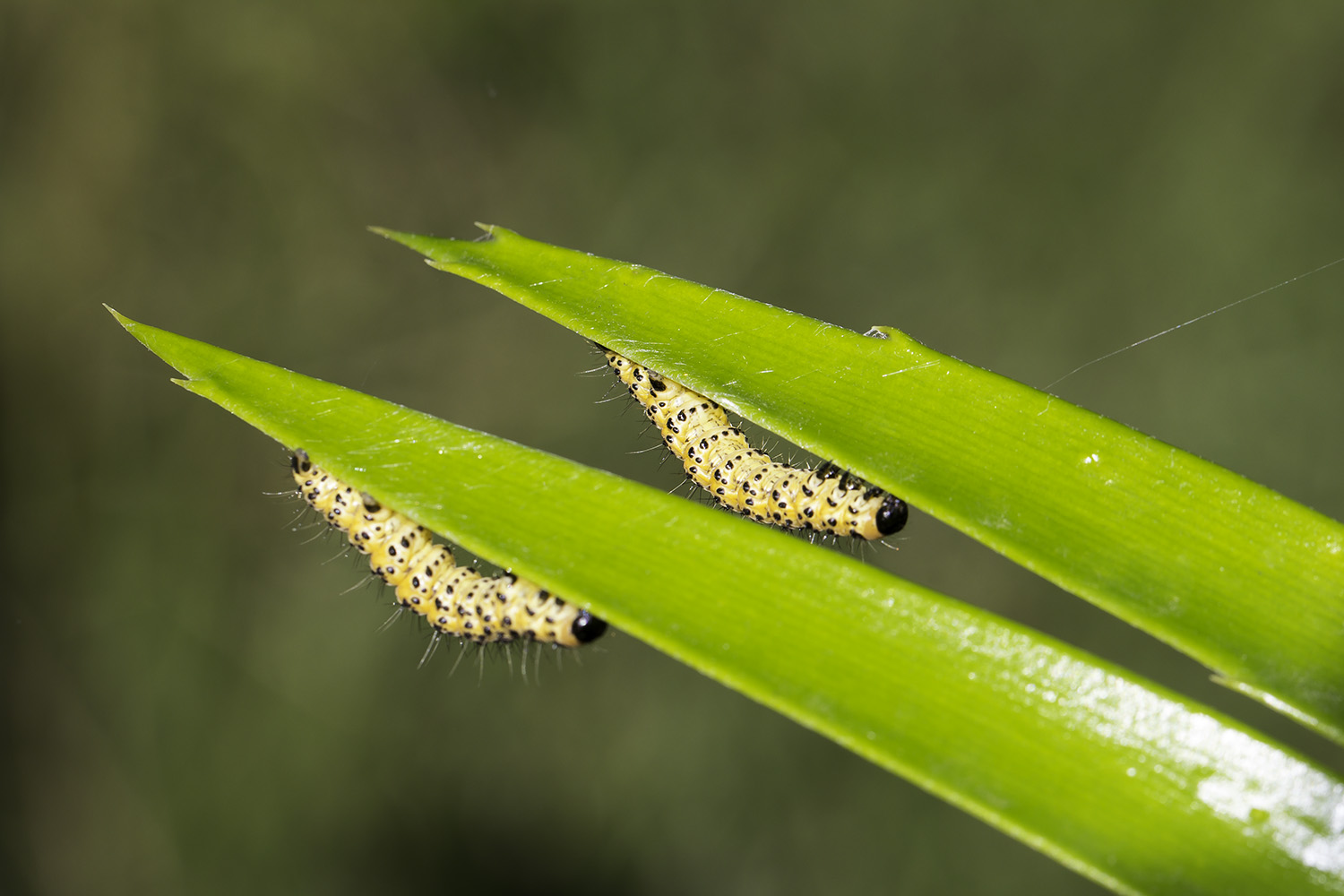
Leopard Magpie second instar larvae

Zerenopsis lepida

Leopard Magpie final instar larva on Ficus leaves

Zerenopsis lepida secondary host plant
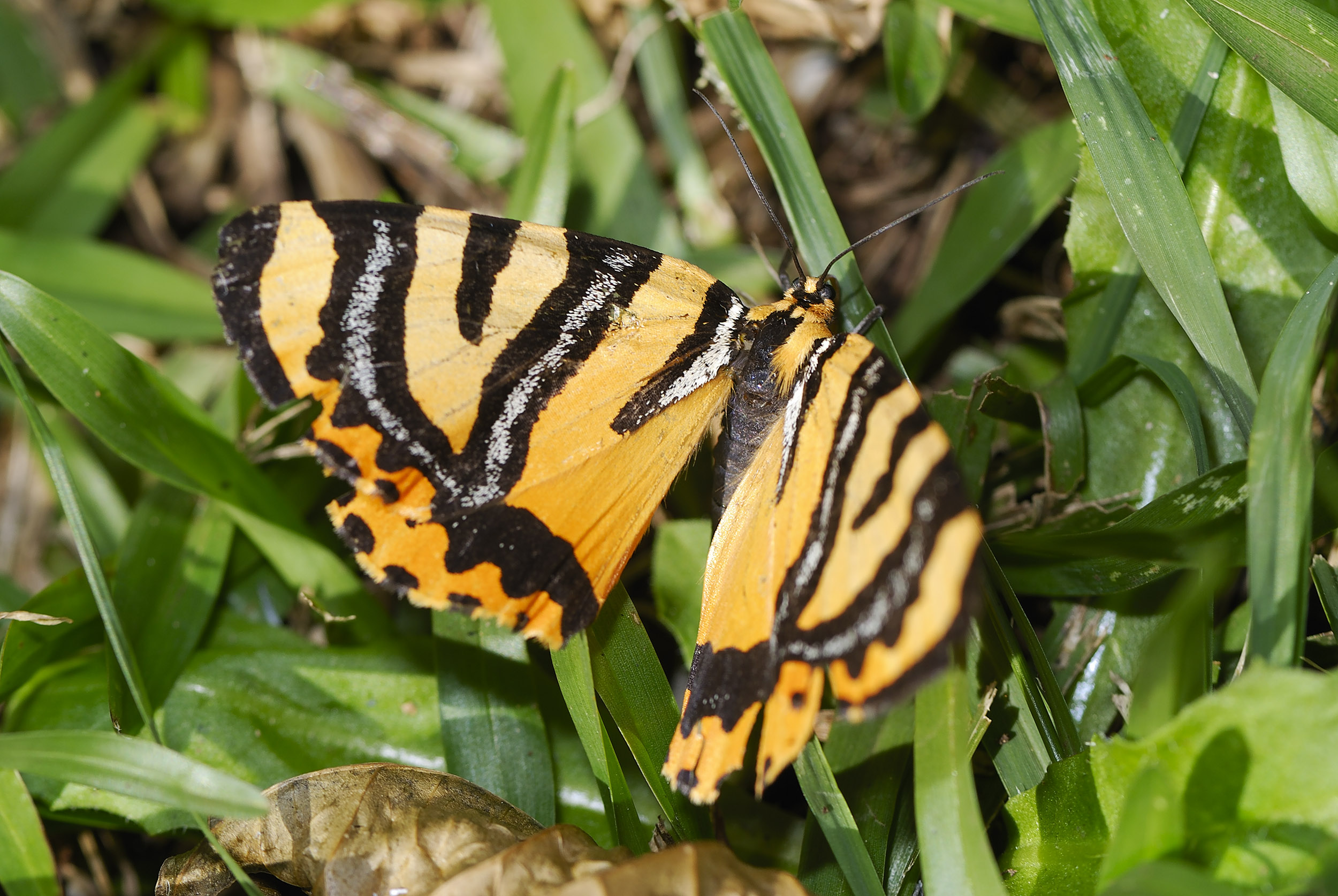
Leopard Magpie caterpillars readily feed on a wide range of secondary host plants. Ficus (Fig) leaves are often used, but other plants in the Asteraceae may be suitable.

There are several species of moths in the Diptychini. All have similar life histories although some of their larvae are very choosy about which cycad they use. They vary from big spectacular moths to tiny ones but the yellow or orange colour scheme is common to all.

Dimorphic Tiger Callioratis abraxas is the largest species in South Africa, being up to 60mm across, Males are pearly white with orange-centred black stripes, females are the opposite, orange with white-centred black stripes. Some members of this genus are extremely rare.

The genus Veniliodes (Tigerlings) has recently been split into six species, none of which yet has a common name. Veniliodes setinata lives in grassland and Veniliodes pantheraria in forests. The caterpillars feed on various cycads including the Grass Cycad Stangeria eriopus (Stangeriaceae) and Poor Man’s Cycad Encephalartos villosus (Zamiaceae). The secondary host plants are mostly Asteraceae (Daisies).

Cycad Moths are found from the Karoo to northern Kenya. The adults are nectar feeders and are important pollinators.

Dimorphic Tiger ♀

Callioratis abraxas
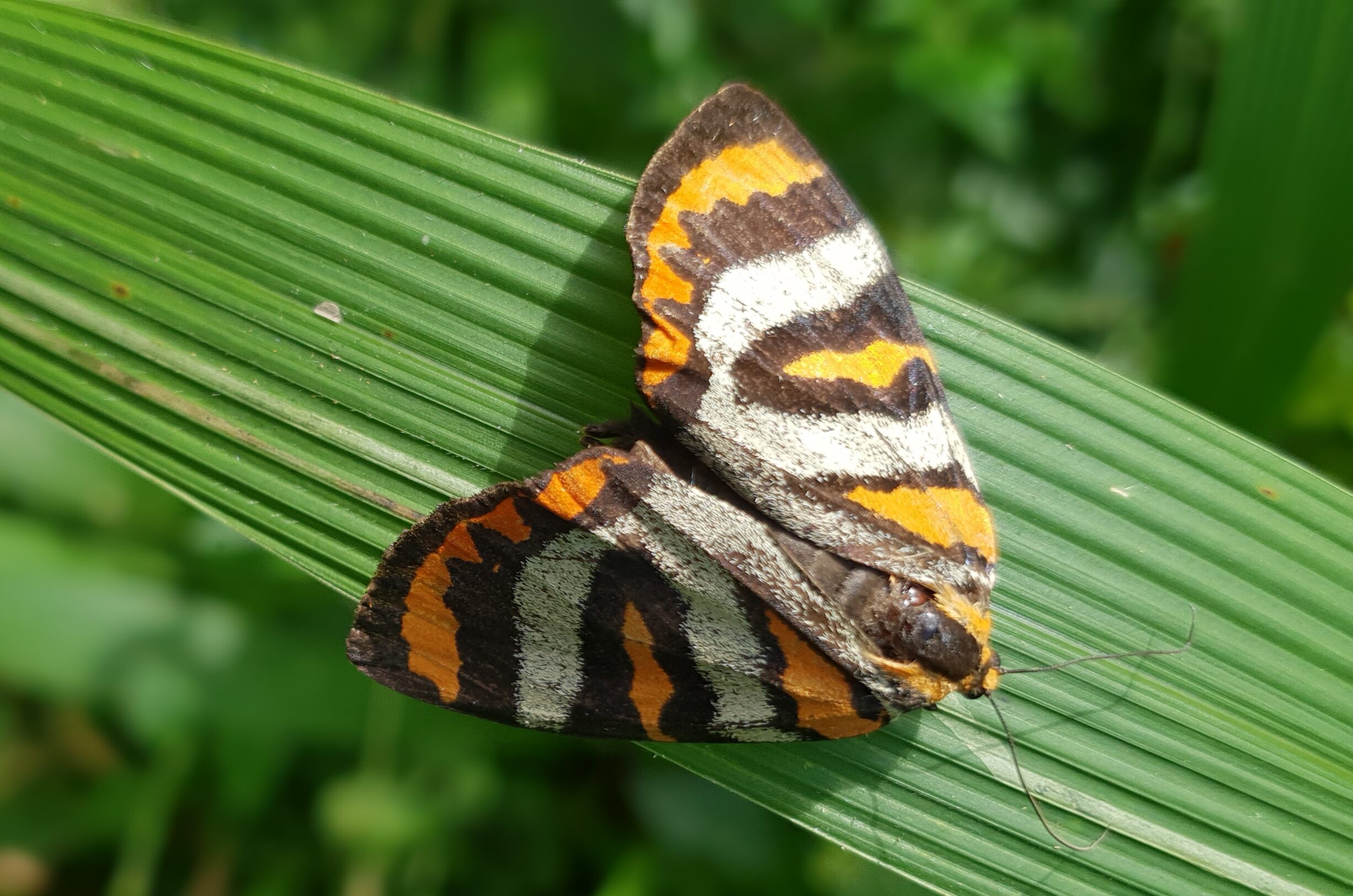
Dimorphic Tiger ♂

Callioratis abraxas

Tigerling

Veniliodes setinata
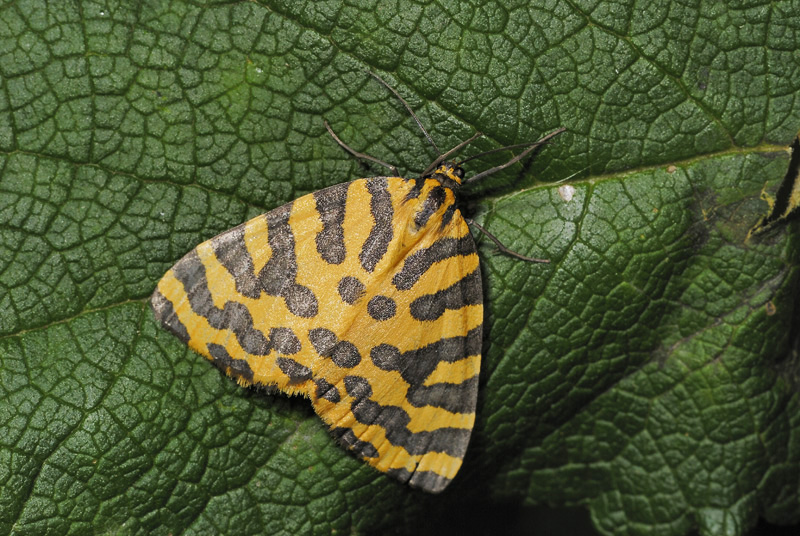
Tigerling

Veniliodes pantheraria
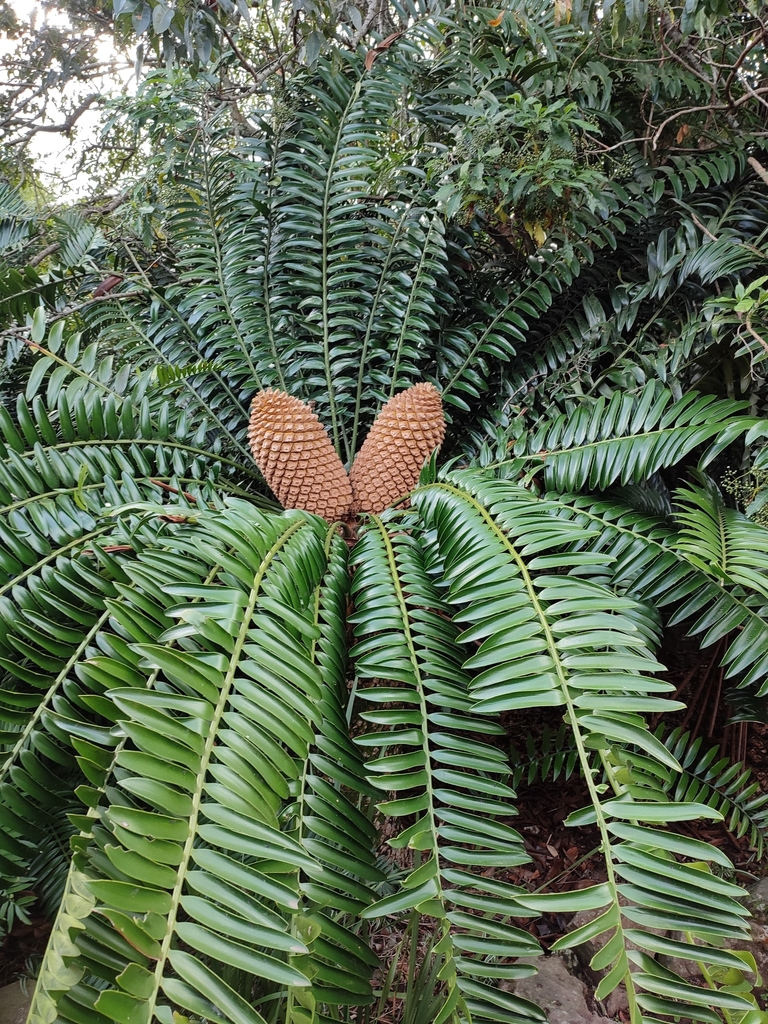
CycadsZamiaceae

Cycads are ancient, palm-like seed plants (gymnosperms) with thick, woody trunks crowned by stiff, leathery leaves. Popular as garden accents, some specimens sell for many thousands of rand. This demand has led to poaching from the wild, and indigenous cycads are legally protected in South Africa. Permits are required to possess or propagate them. Exotic species, such as the Sago Palm Cycas revoluta, are also popular but do not require permits.

All parts of cycads contain potent neurotoxins, carcinogens and irritants, with the highest concentrations in the seeds and immature leaves.

How to manage them

At the planning stage, avoid planting cycads at high density. Dense plantings are unnatural and can make a garden especially attractive to moths. Keep cycad numbers low and surround them with a variety of other plants. Figs and various Asteraceae also serve as secondary host plants for Leopard Magpie larvae.

Be alert when adults are flying nearby, and check young, sprouting leaves for egg masses. Remove affected leaves promptly and dispose of them; do the same with clusters of young larvae. Avoid insecticides: manual removal followed by drowning is a more targeted method of control.

Owlet Moths (family Noctuidae)

Noctuidae is one of the largest families of Lepidoptera, with about 1,000 species locally. Most adults are dull brown, although some are brightly coloured and aposematic, with caterpillars that feed on toxic plants. Like the Diptychini, they metabolise these toxins and use them to deter predators. The family includes many pest species, in the subfamily Noctuinae, such as cutworms and armyworms, but the Amaryllis Borer – and, to a lesser extent, the Lily Borer – draw the most ire from gardeners.

Noctuid caterpillars are usually naked, pale green to brown, hairless cylinders with a notable ‘hump’ on the tail segments. Some species lack a full set of prolegs and are referred to as ‘semi-loopers’ to differentiate them from the ‘true’ loopers in the Geometridae. The species that use toxic host plants often have aposematic caterpillars.

Amaryllis borer adult

Brithys crini

This male Amaryllis Borer moth has just emerged from its pupa and is resting on the stem of a host plant, Paintbrush lily Scadoxus puniceus (Amaryllidaceae). 

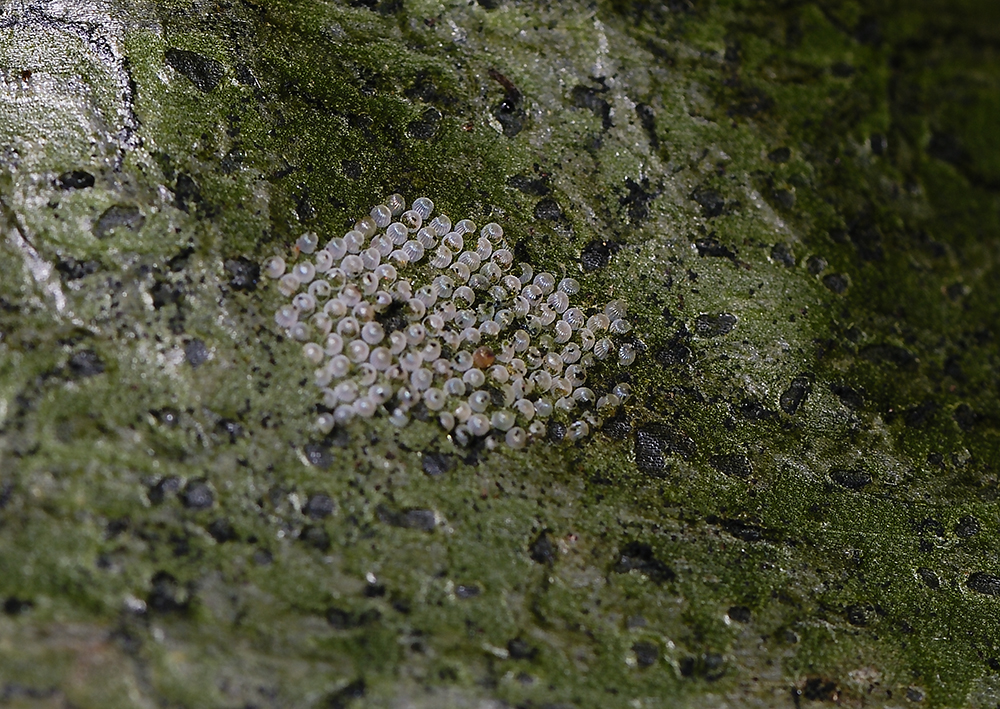
Female Amaryllis Borers lay batches of 50 to 100 tiny eggs on the surface of host-plant leaves. The eggs are normally yellow to green; those in the top-left image are white because they are empty shells. By the time the photograph was taken, they had hatched and the young caterpillars had begun boring into the leaf.

Young Amaryllis Borer caterpillars are leaf miners and may go unnoticed unless they surface, as shown in the top-right image. The bottom-left image shows a group of final instars. At this stage, they remain gregarious and cause considerable damage, feeding on leaves and stems and even boring into the host plant’s bulbs or rhizomes.

The plain brown pupae are formed naked in the soil and are no different in appearance to those of many other Noctuid moths.

The aboveground foliage and flowers of the plant can be totally destroyed, and the underground parts may be reduced to a mush of chewed up plant and caterpillar frass. This is unsightly and it’s no surprise that this is highly unpopular with gardeners!

Amaryllis borer egg mass

Brithys crini
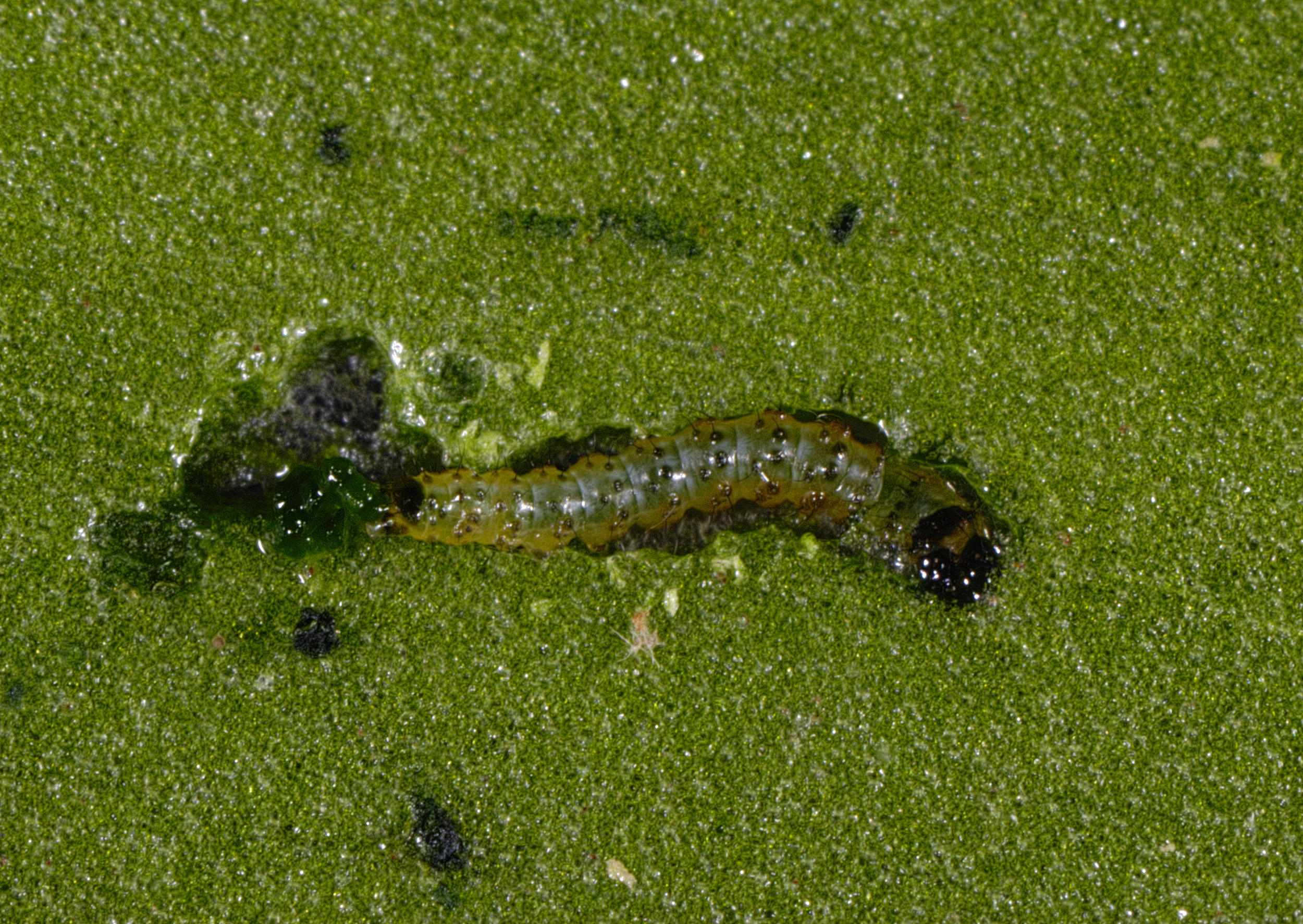
Amaryllis borer young caterpillar

Brithys crini
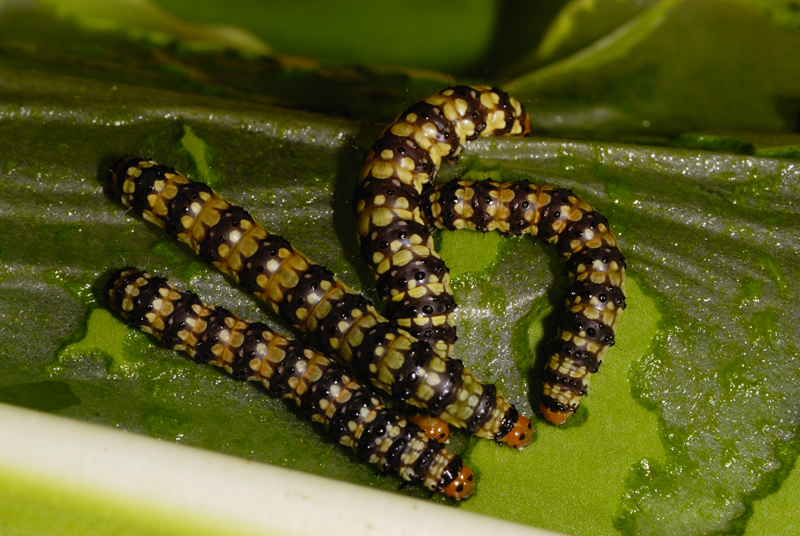
Amaryllis borer fully grown caterpillars

Brithys crini
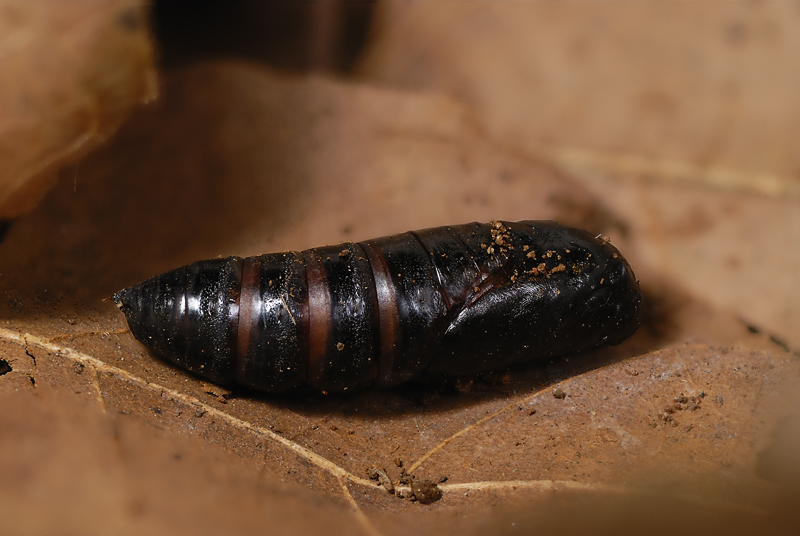
Amaryllis borer pupa

Brithys crini
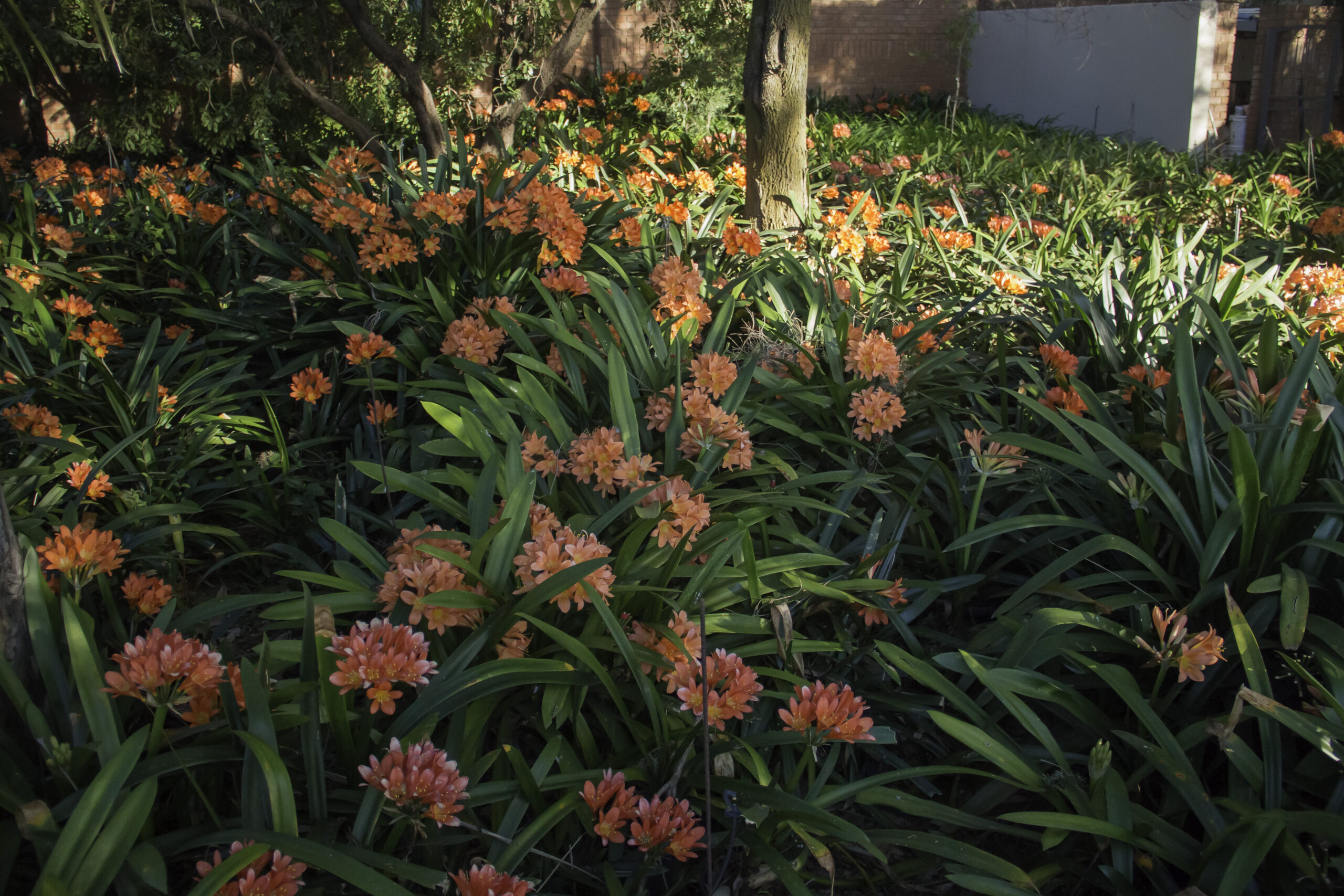
Clivias, Crinums etcAmaryllidaceae

Clivia miniata in a woodland garden setting

A mass planting, a magnet for Brithys crini
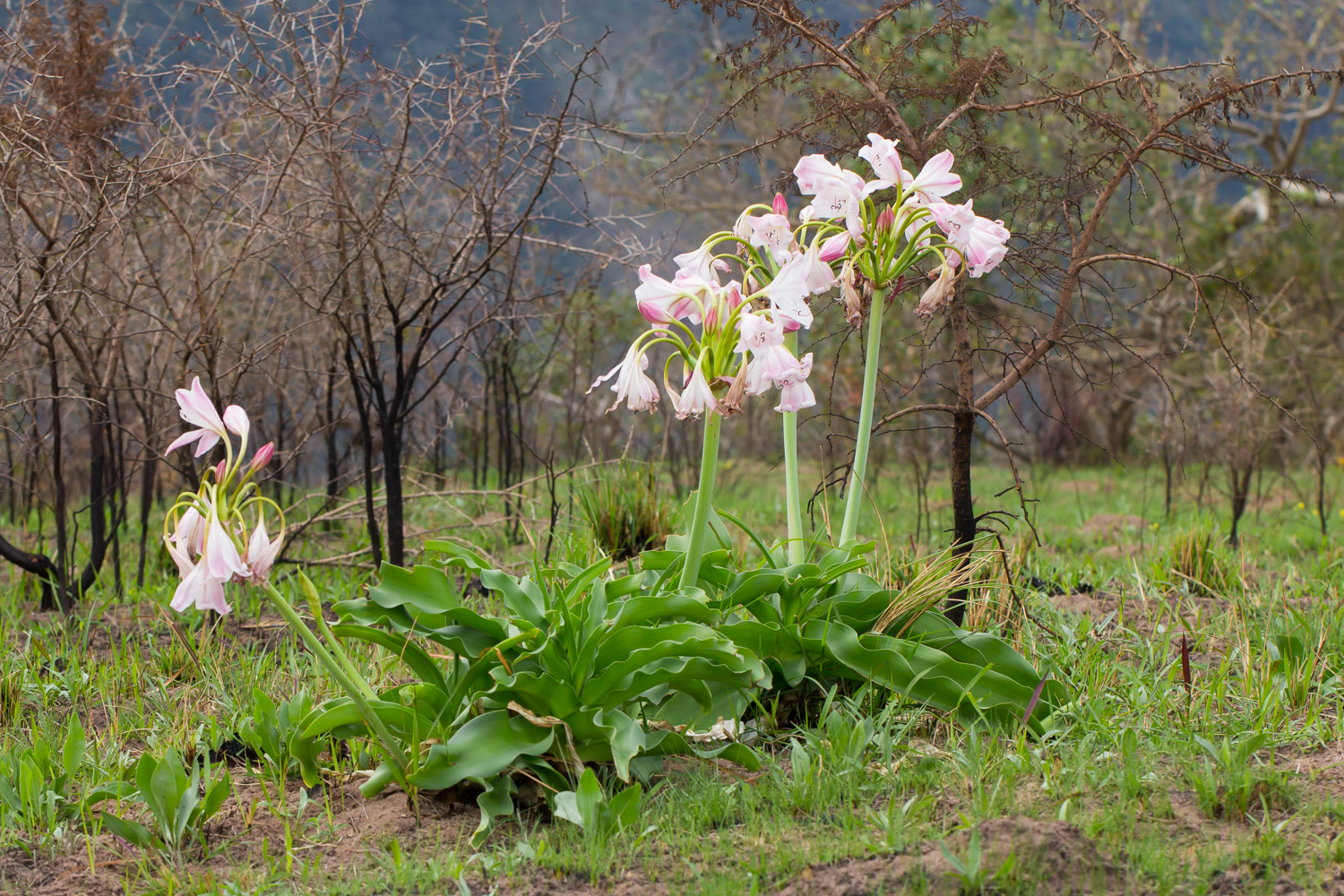
An example of a 'bait plant'

Crinum moorei
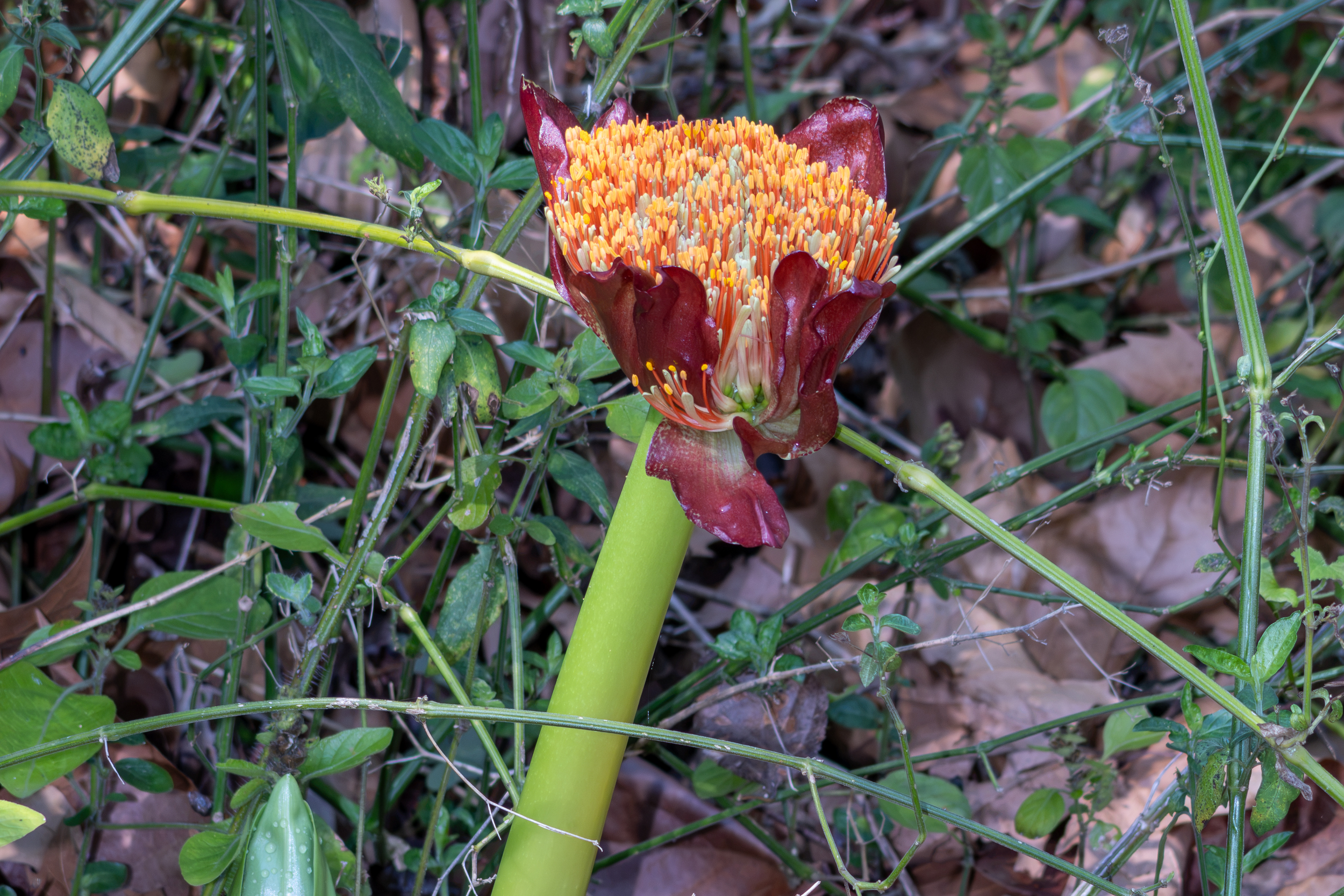
Paintbrush Lily

Scadoxus puniceus

Amaryllidaceae is a family of herbaceous perennial geophytes with underground bulbs or rhizomes and simple, strap-like leaves. It includes ornamental plants such as Amaryllis, Crinum, Scadoxus, Agapanthus and Narcissus (daffodils), along with onions and garlic. Some species contain toxins that lepidopteran caterpillars can process and use for defence against herbivores. Even after caterpillars strip away all leaves and flowering stems, the plants often recover from bulblets, rhizome shoots or bulbils. Just one surviving growing point can restore growth, and caterpillars are unlikely to destroy them all, especially when underground. The plant may come back stronger because the frass left by the feeding caterpillars rots down to form nutrient-rich compost. It’s a way of recycling nutrients.

Pale Cherry Spot adult

Diaphone mossambicensis
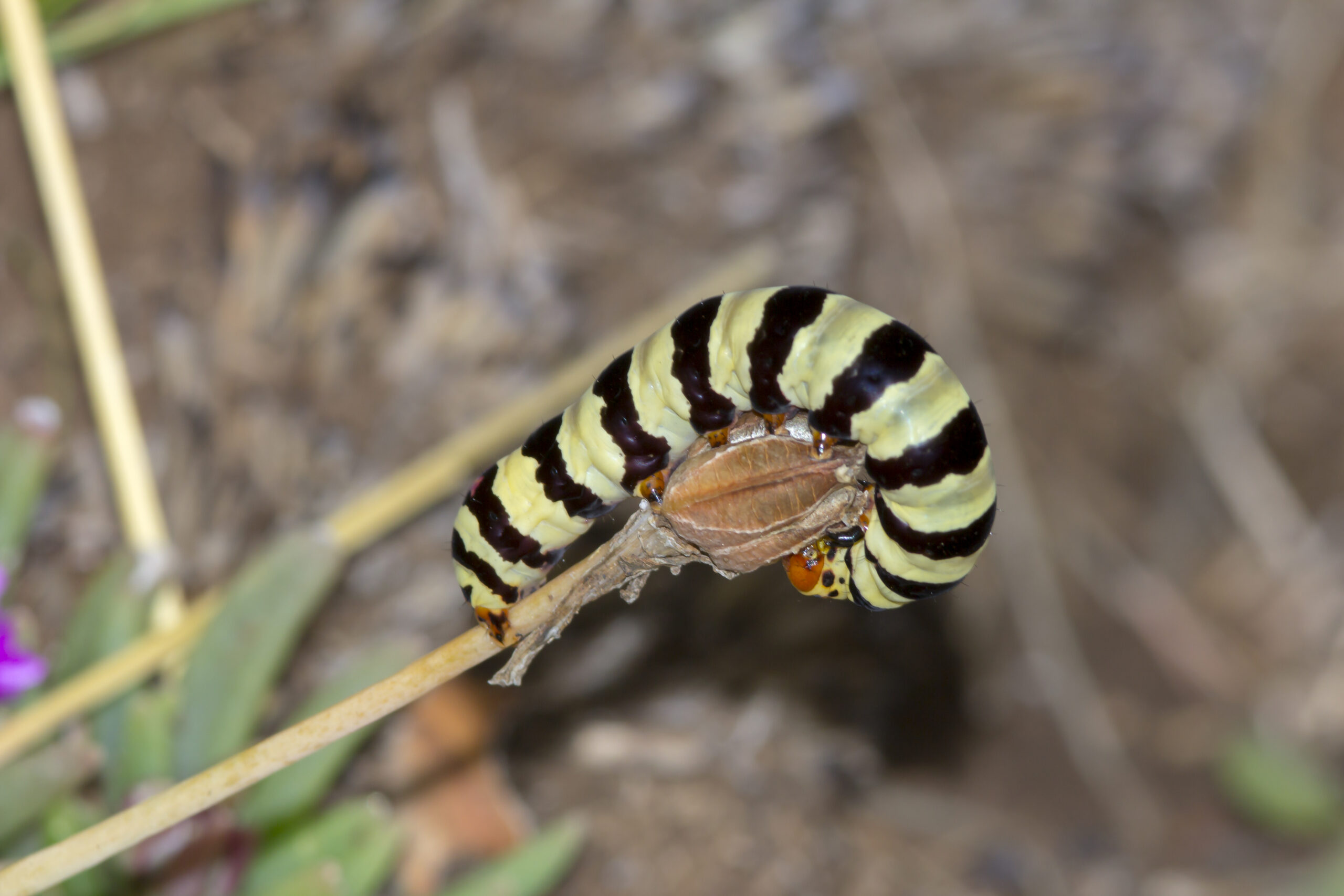
The genus Diaphone includes another group of noctuid moths whose caterpillars may feed on prized garden plants. Known as ‘Cherry Spots’, they belong to a different subfamily, Hadeninae. Two common South African species are the Cherry Spot (Diaphone eumela), found in the Cape provinces, and the Pale Cherry Spot (Diaphone mossambicensis), found in the east and north. These attractive little moths are easily confused. The Pale Cherry Spot is lighter grey, with its pink ‘cherry’ spot aligned with the distal black line on the upper surface of the forewing. ‘Distal’ refers to the line farther from the body, rather than the inner line.

Like the Amaryllis Borer, these moths favour toxic geophytes as host plants for their caterpillars but use Hyacinthaceae rather than Amaryllidaceae. The caterpillars are not gregarious although they are aposematic, being conspicuous as a warning to potential predators. Several may be found on a patch of Albuca or Ornithogalum plants. The Pale Cherry Spot caterpillar shown here is feeding on the seed pod of an Albuca. Like all noctuid moths the pupae are naked, brown, and formed in the soil.

They have to date been referred to as ‘Lily Borers‘ to differentiate them from ‘Amaryllis Borers‘ but that is a misnomer since lilies are in a different plant order, the Liliales. Amaryllidaceae and Hyacinthaceae are in the order Asparagales.

Pale Cherry Spot fully grown caterpillar

Diaphone mossambicensis
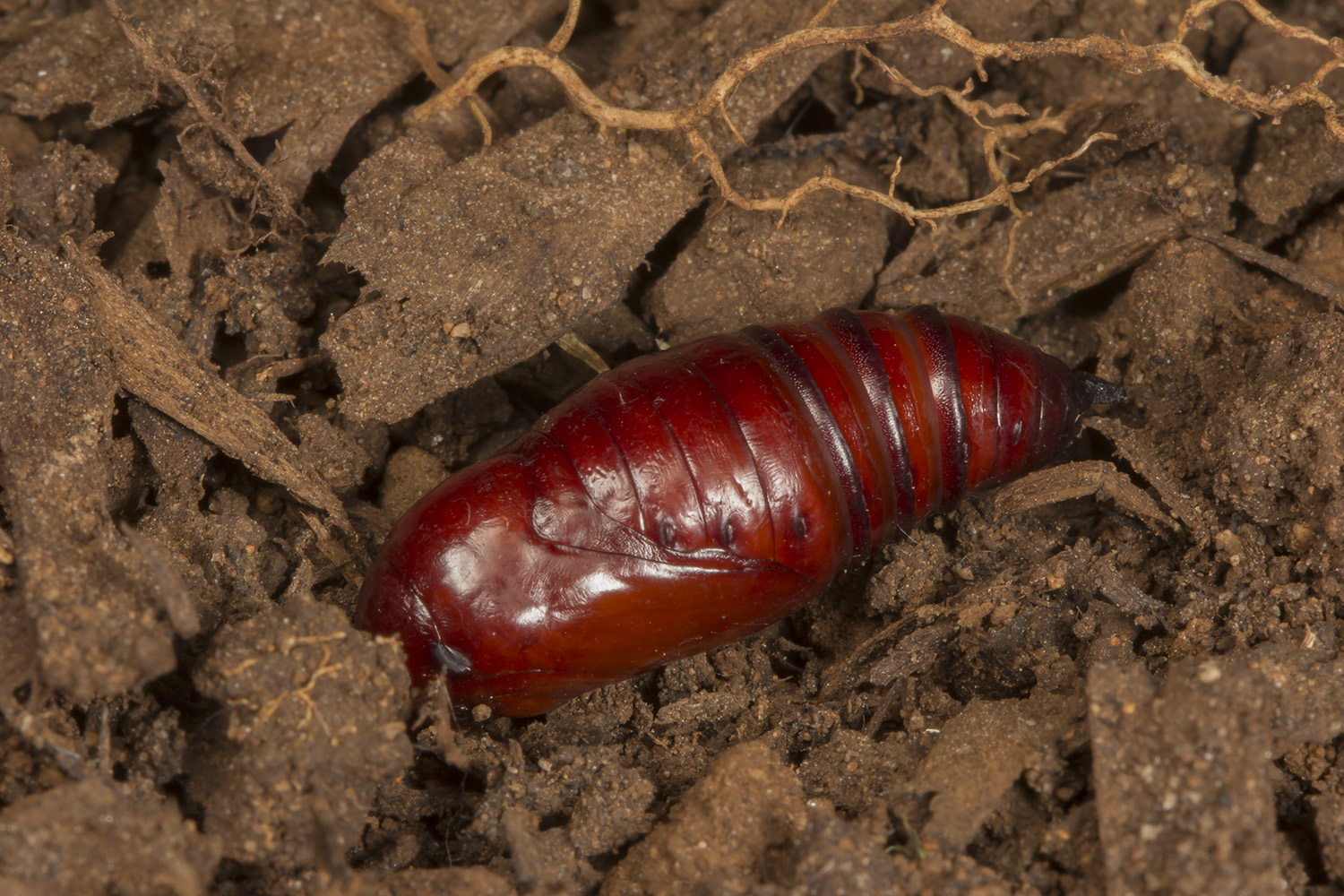
Pale Cherry Spot pupa

Diaphone mossambicensis
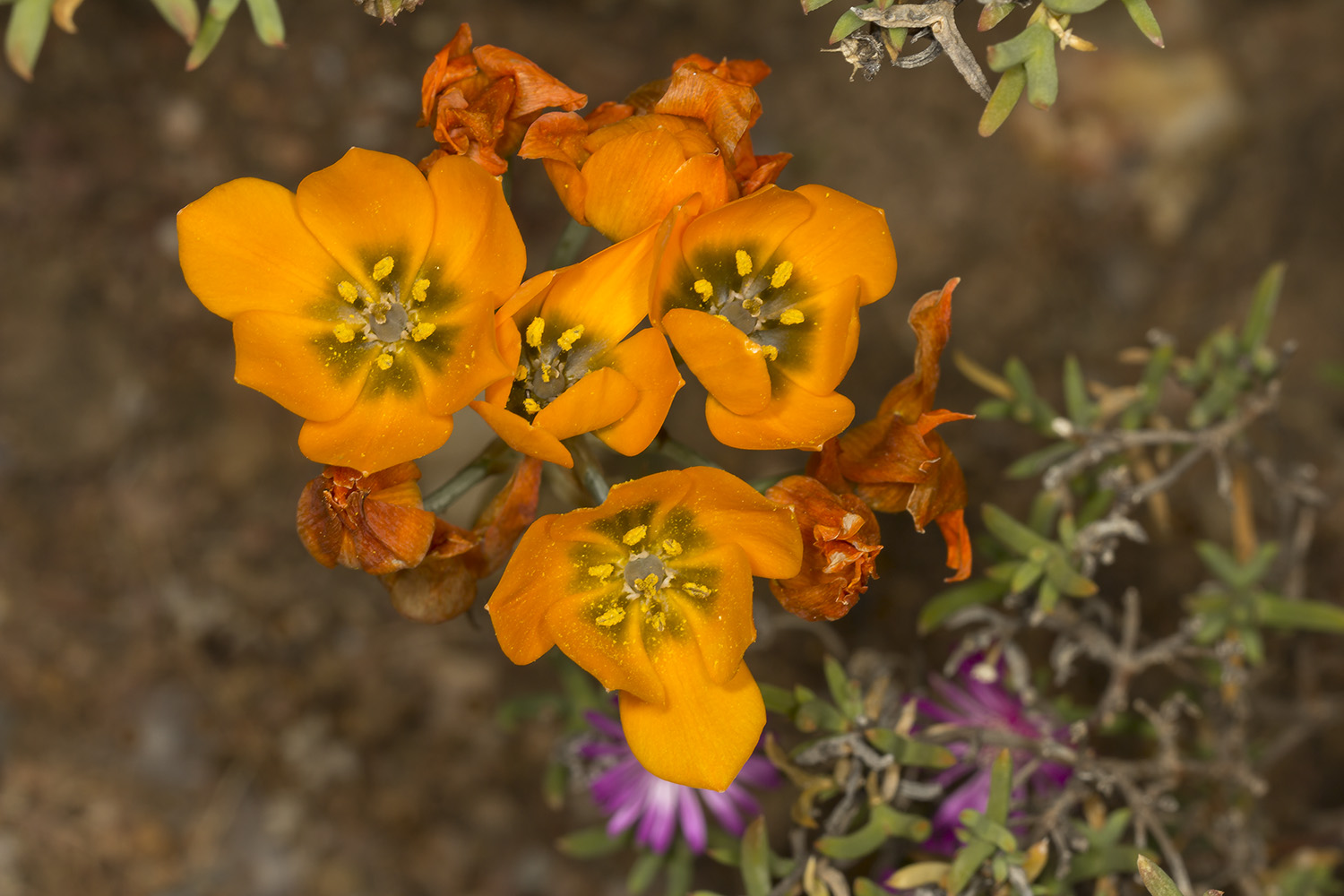
Slime Lilies, Squills, Chincherinchees etcHyacinthaceae

Orange Chincherinchee

Ornithogalum dubium
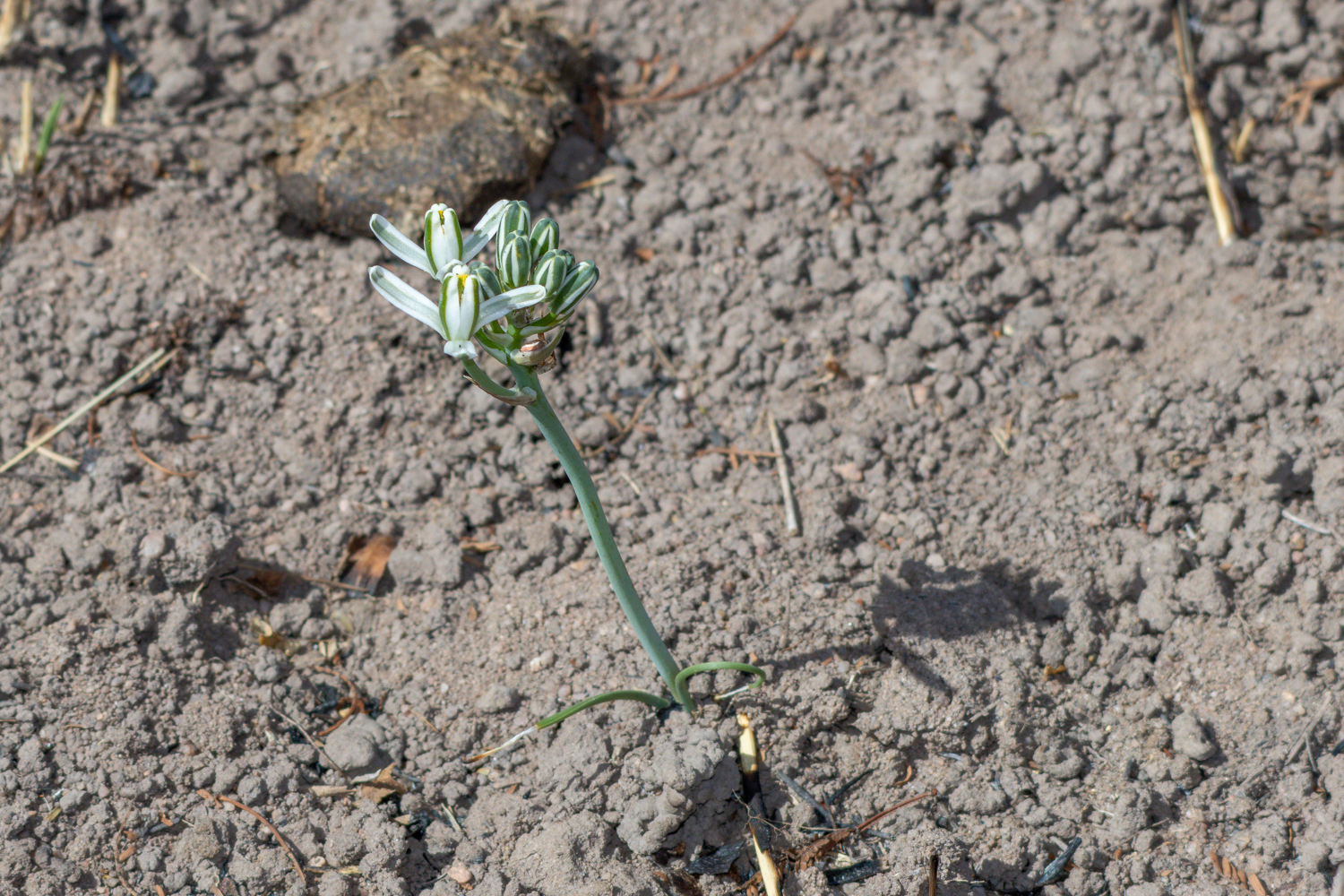
Thick Slime-Lily

Albuca setosa
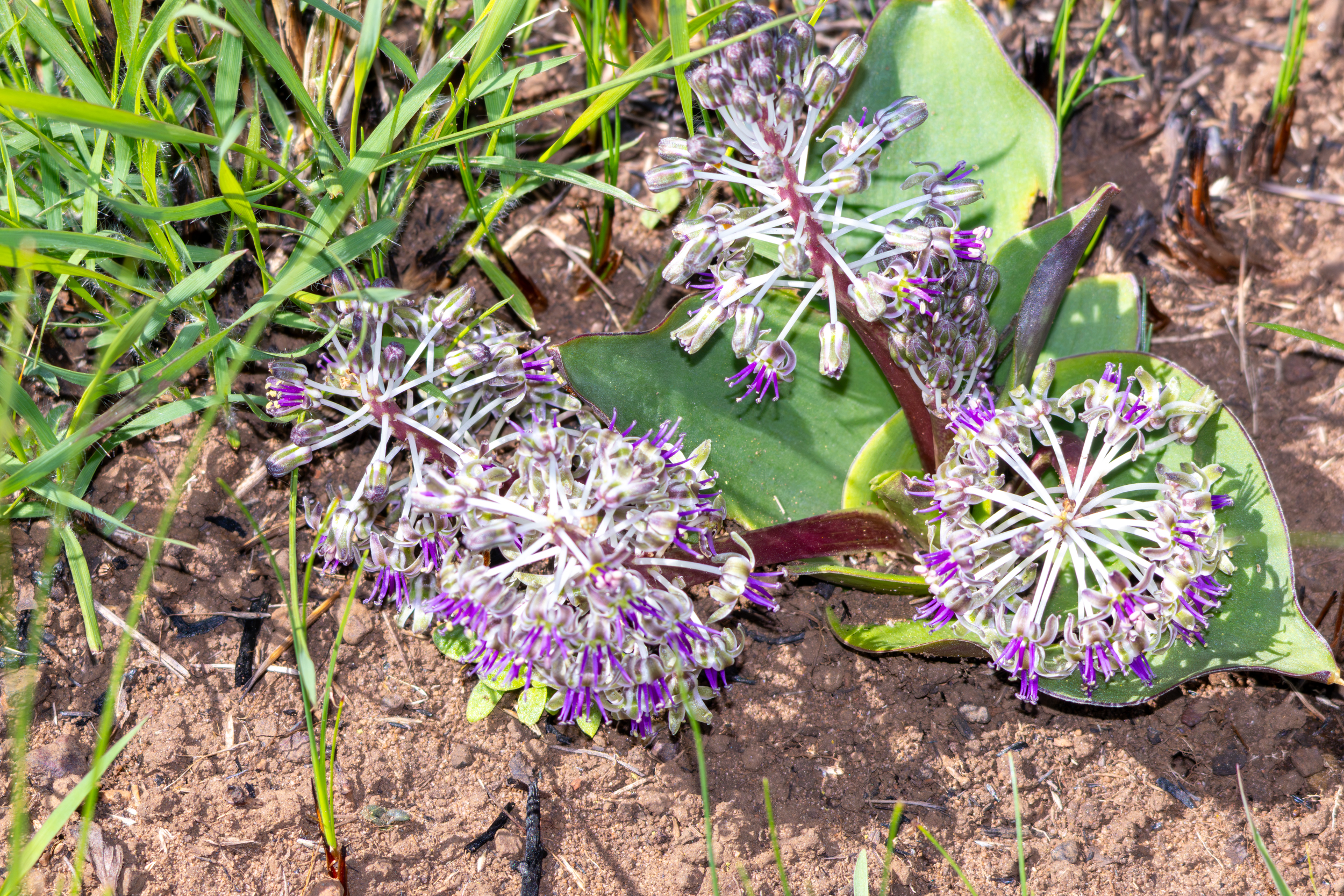
Flat-leaved African Hyacinth

Ledebouria ovatifolia
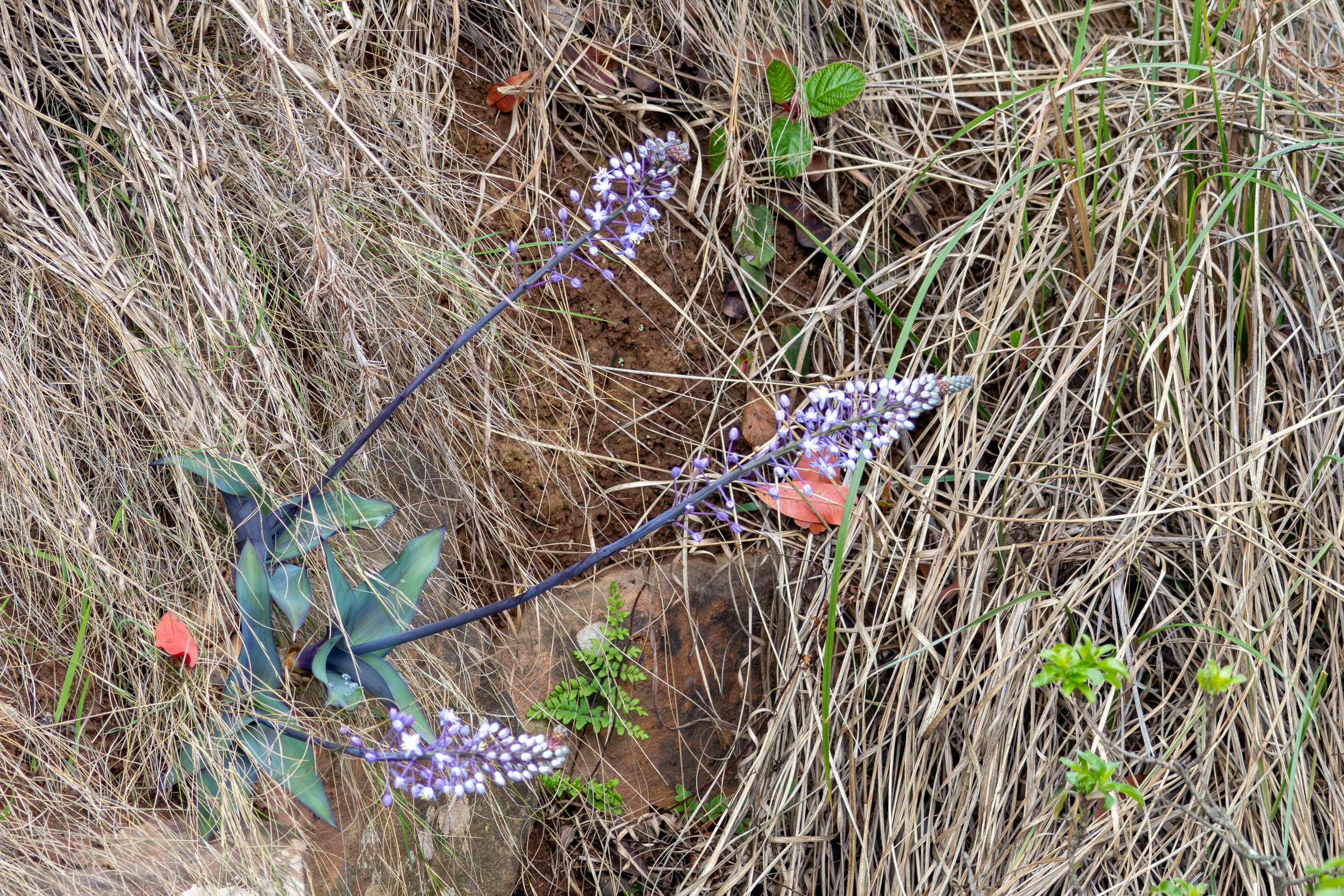
Blue Squill

Merwilla plumbea
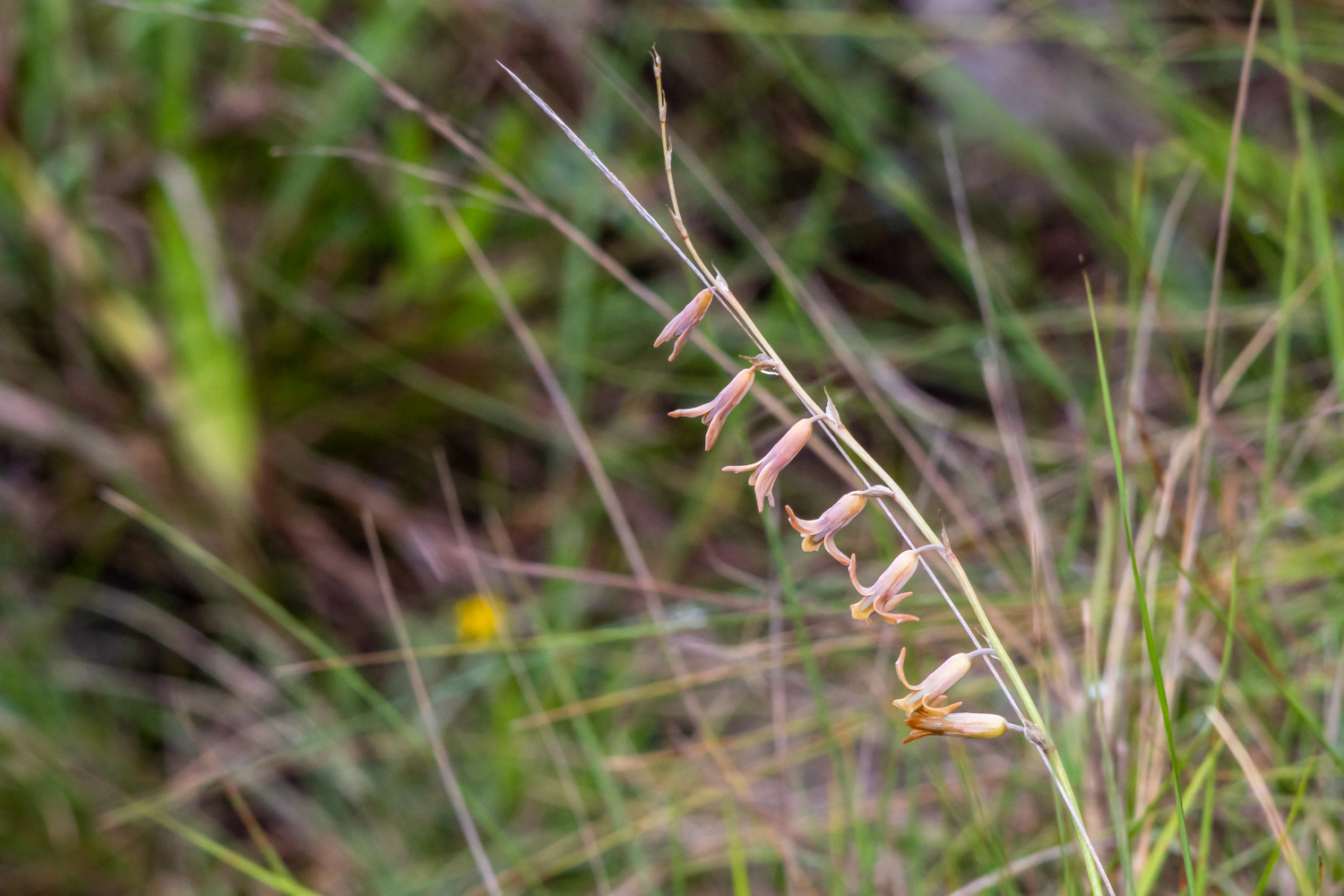
Drunk Daintybells

Dipcadi marlothii
Hyacinthaceae is a family of bulbous perennial monocotyledenous flowering plants (geophytes) in the order Asparagales. Hyacinthaceae includes many attractive garden plants like Squills, Hyacinths, and Chincherinchees as well as less conspicuous ones like Slime Lilies and Daintybells. They are distributed mostly in Mediterranean climates, including South Africa. They are similar to  Amaryllidaceae but differ in their flower structure and the nature of their toxic chemicals. Amaryllidaceae have isoquinoline alkaloids and allyl sulphides (the odorous compounds in onions and garlic) whereas Hyacinthaceae carry cardiac glycosides (bufadienolides or cardenolides). Both families’ toxins are metabolised by larval lepidoptera that adapt them as predator deterrents.

How to manage them

As with cycads, avoiding mass plantings may help reduce moth attacks by limiting the strong scent signals that attract females searching for host plants. To protect prized Clivia plants, try placing potted ‘bait plants’, such as Crinum species, nearby. Some gardeners report that moths prefer these plants and lay their eggs on them rather than on the Clivia plants.

Being nocturnal, the moths are not as easy to spot as the Leopard Magpie and its relatives. Amaryllis Borers are gregarious so alert gardeners will spot their egg masses and deal with them accordingly. Cherry Spots are not gregarious so the best strategy to control those is to pick the caterpillars off your plants and drown them. They are nowhere near as destructive as Amaryllis Borers and you may decide that losing a few leaves or small plants to such an attractive insect is worth it!

Superfamily Bombycoidea

Sphingidae - Hawkmoths

The superfamily Bombycoidea is home to some of our largest moth species. Their caterpillars are sometimes huge and a large group of them can be a disturbing sight. Fortunately, only a few are gregarious and the caterpillars tend to feed on large trees so the damage they may do is not immediately obvious.

The two groups in the Bombycoidea most likely to be noticed by gardeners are the Emperor Moths of the Saturniidae and the Hawkmoths of the Sphingidae. The latter are never gregarious so although they can get alarmingly large, they don’t as a rule defoliate plants but at least one species can reach pest numbers on crops. We will cover a couple of common species here – starting with the Silver-striped Hawkmoth, Hippotion celerio.

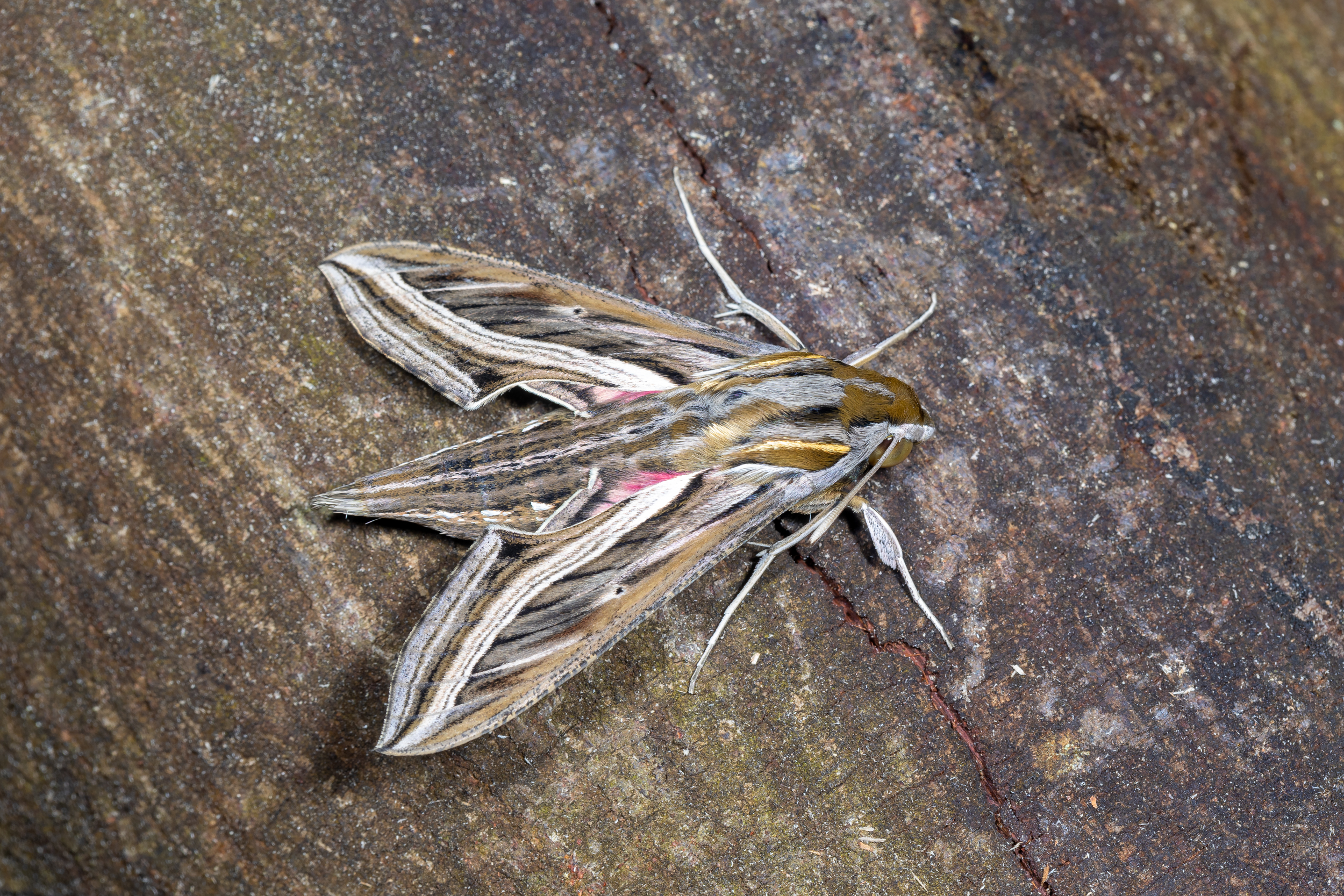
Silver-striped Hawkmoth

Hippotion celerio
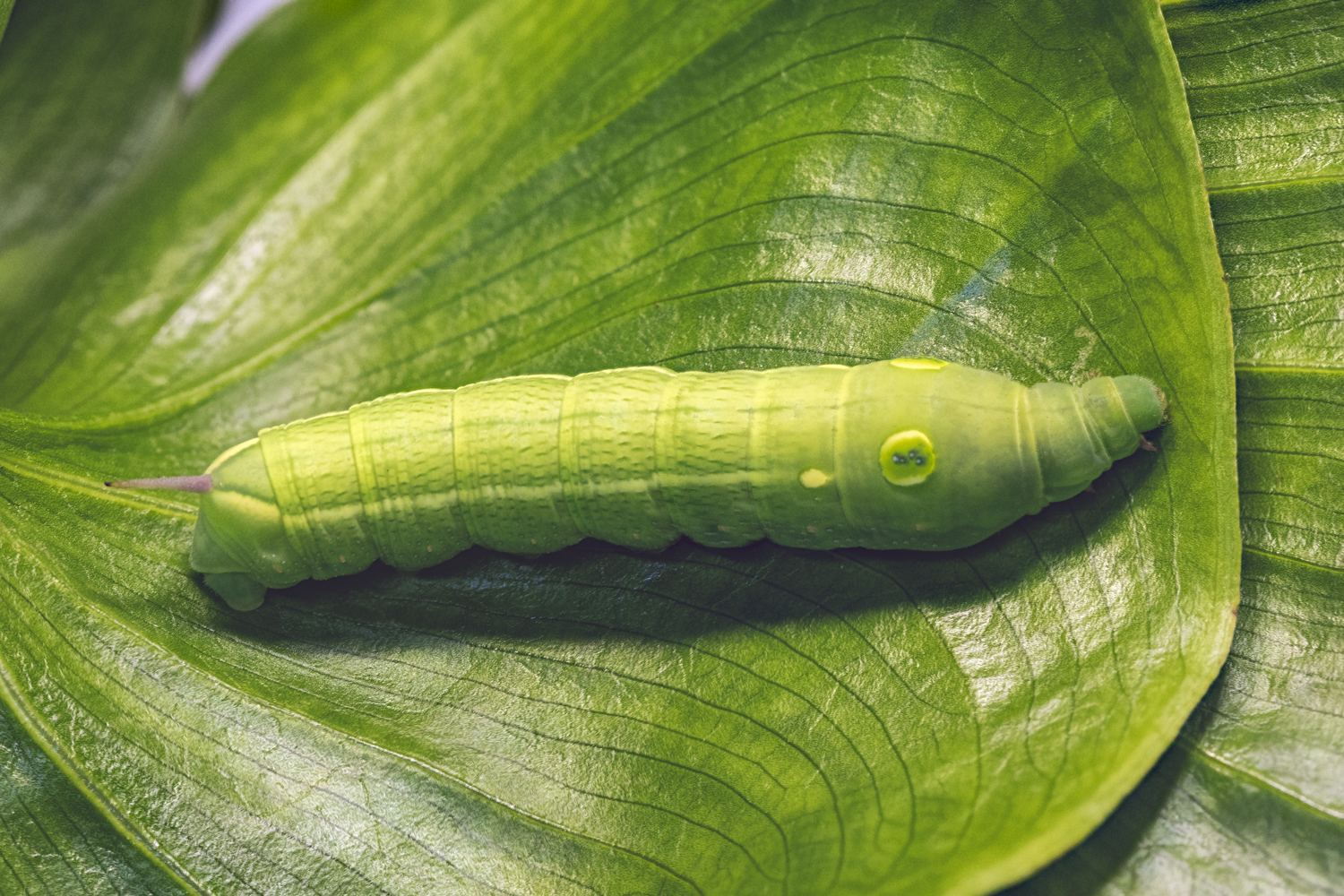
Silver-striped Hawkmoth fully grown caterpillar

Hippotion celerio
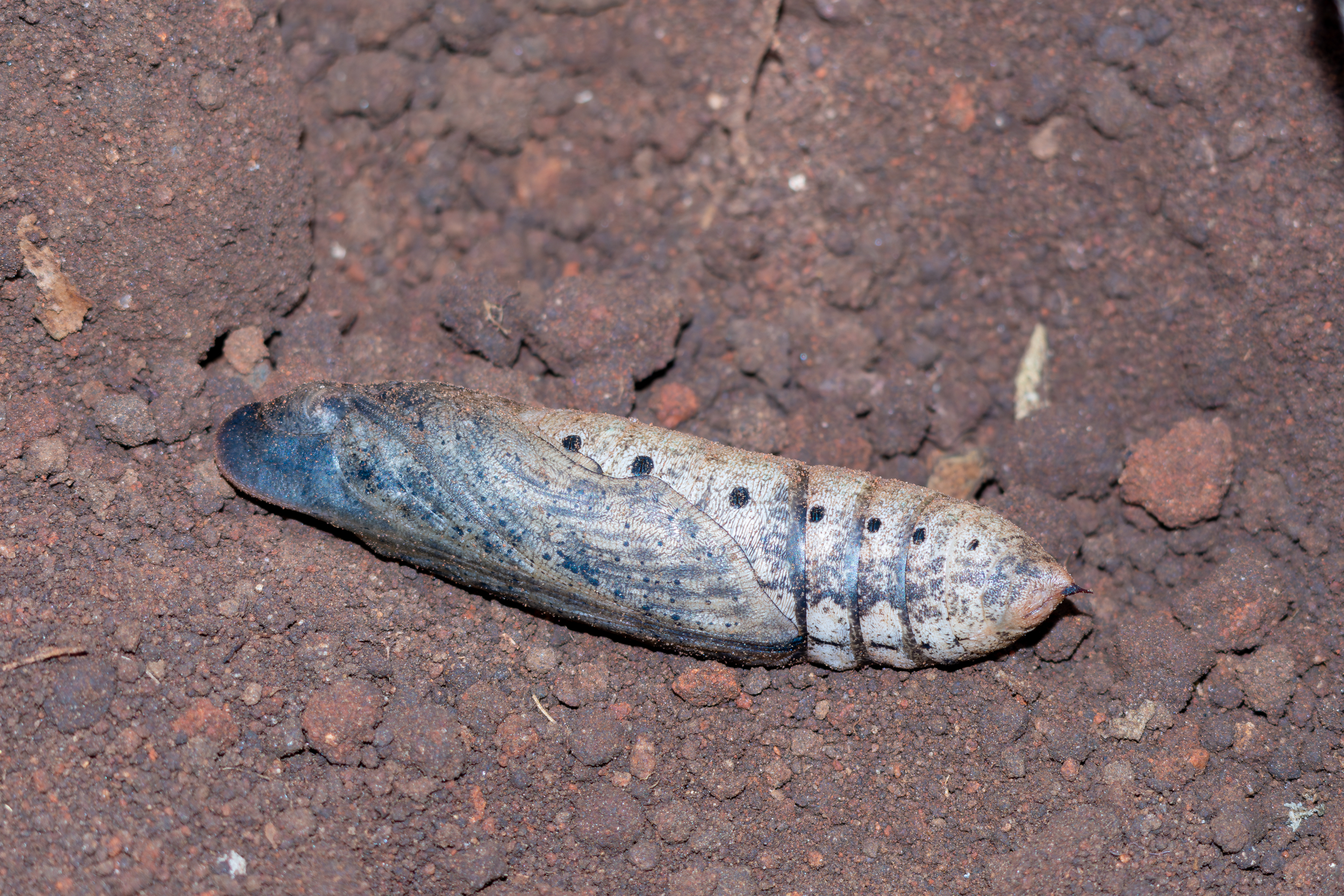
Silver-striped Hawkmoth pupa

Hippotion celerio
Hippotion celerio is a widespread migratory moth native to a region extending from South Africa through sub-Saharan Africa to India, China and northern Australia. Migrants reach Europe, where they are rare in the UK, and southern Australia. Its caterpillars feed on many plants, especially Vitis (grapevines), Rhoicissus, Impatiens and Zantedeschia (arum lilies). They may be green, as shown here, yellow or brown and, like all Sphingidae, have a long tail horn on the anal segment. Growing up to 75 mm long, they feed voraciously and can consume small Impatiens plants or strip several leaves from an arum lily. Despite this conspicuous damage, there is little cause for alarm: the plants recover, the moths occur at low densities and are not prone to sudden population explosions. The pupae lie buried beneath their host plants and move to the soil surface before the adults emerge.

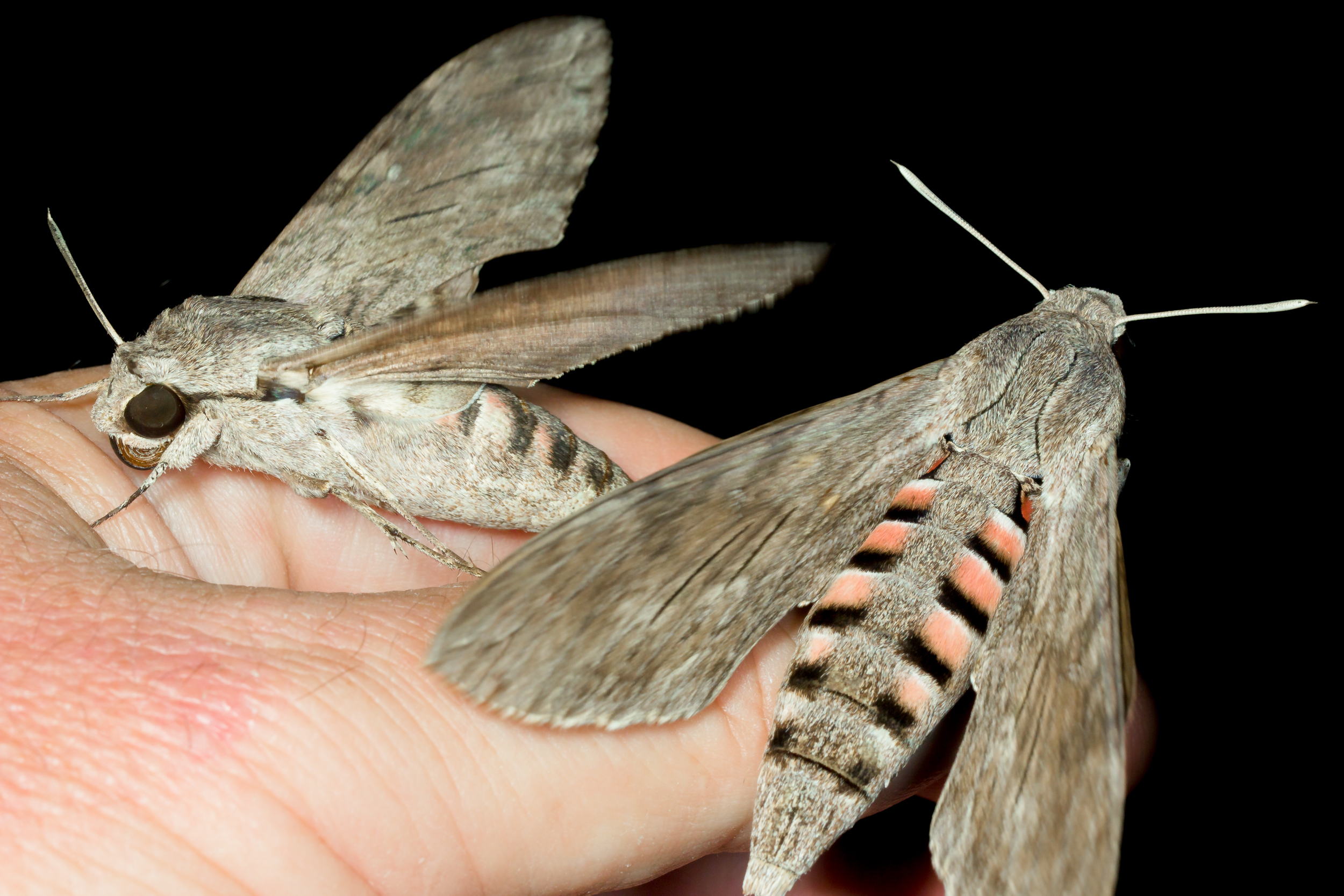
Convolvulus Hawkmoth

Agrius convolvuli
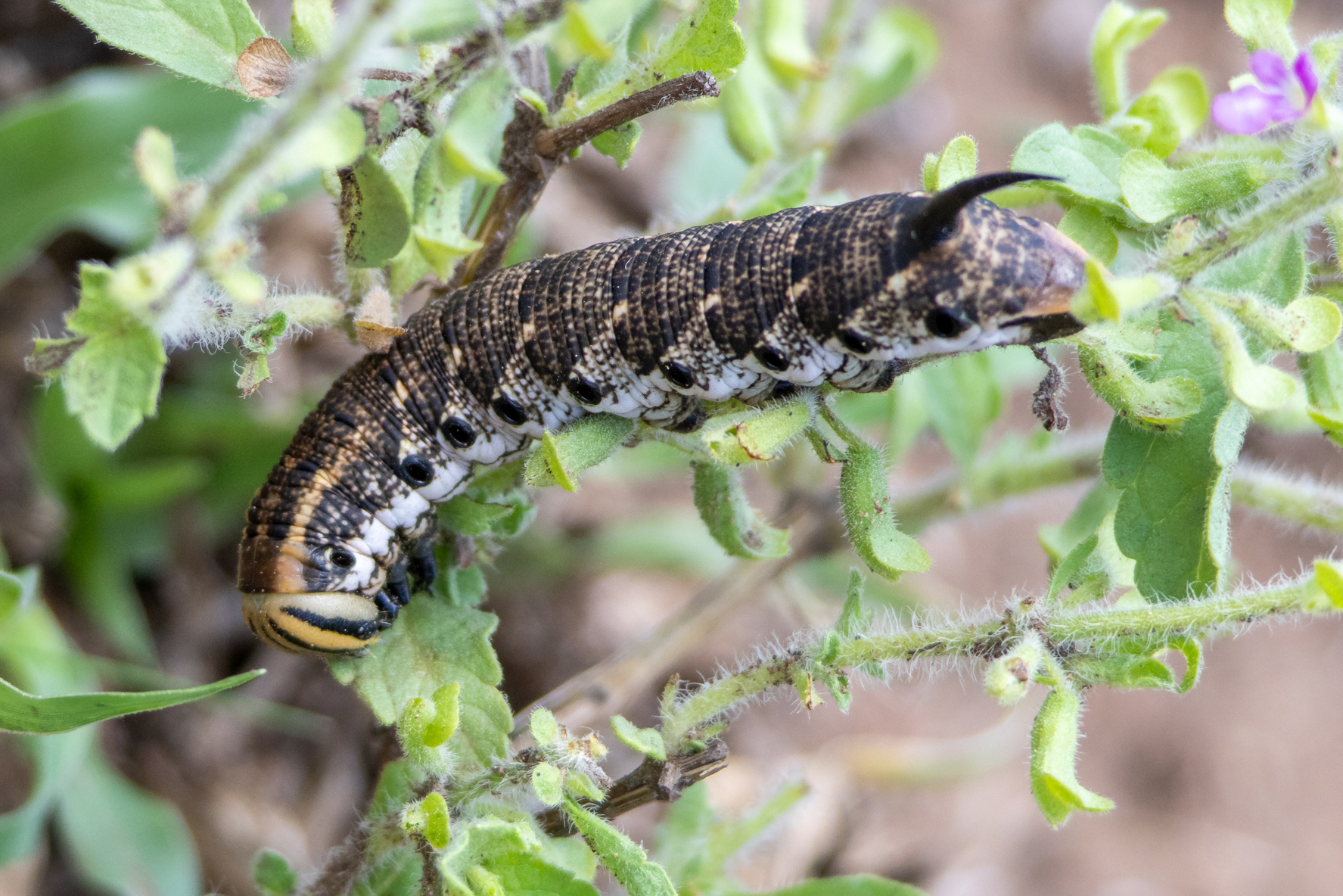
Convolvulus Hawkmoth half grown caterpillar

Agrius convolvuli
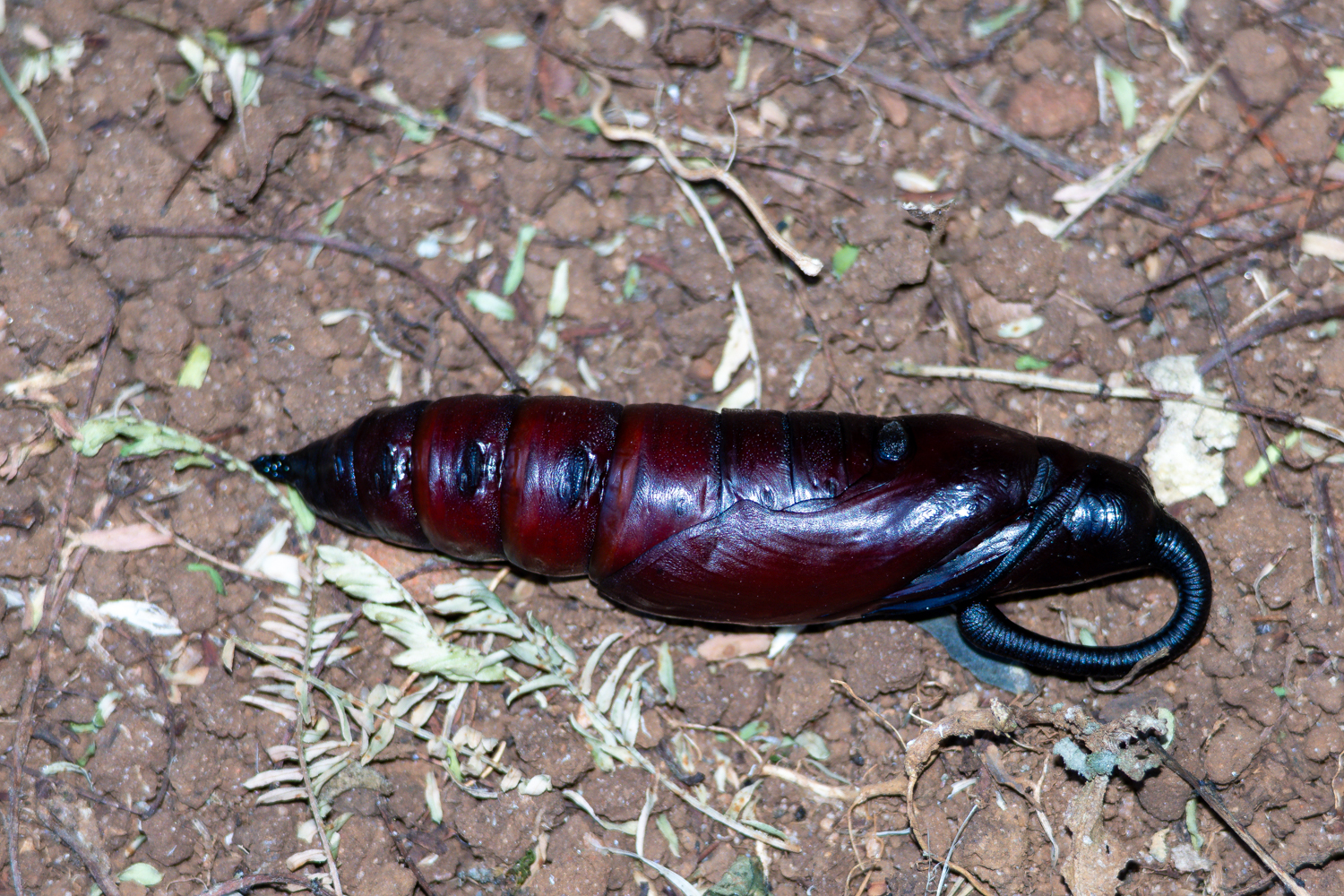
Convolvulus Hawkmoth pupa

Agrius convolvuli
Agrius convolvuli, the Convolvulus Hawkmoth, migrates over an even wider range than Hippotion celerio, reaching as far as New Zealand. Migrating swarms drawn to lights at night can be spectacular; the two moths shown here were attracted to lights in the KwaZulu-Natal Midlands. They are effective pollinators: their proboscis (or tongue) can be longer than their body allowing it to reach the deeply sited nectaries of large flowers. The proboscis is so large that the pupa has a special ‘jug handle’ on the head to contain it. Its caterpillars feed mainly on Convolvulaceae (morning glories and their relatives), but also on Araceae (arum lilies and their relatives), Fabaceae (peas and beans) and Malvaceae (mallows). Brown, as pictured, or green, they have a tail horn on the anal segment and grow up to 100 mm long. They can reach pest numbers on sweet potato, Ipomoea batatas, a member of the Convolvulaceae. In Africa, however, the caterpillars are widely eaten, making them a welcome bonus for sweet potato farmers. Like other hawkmoths, they pupate underground.

Saturniidae - Emperor Moths

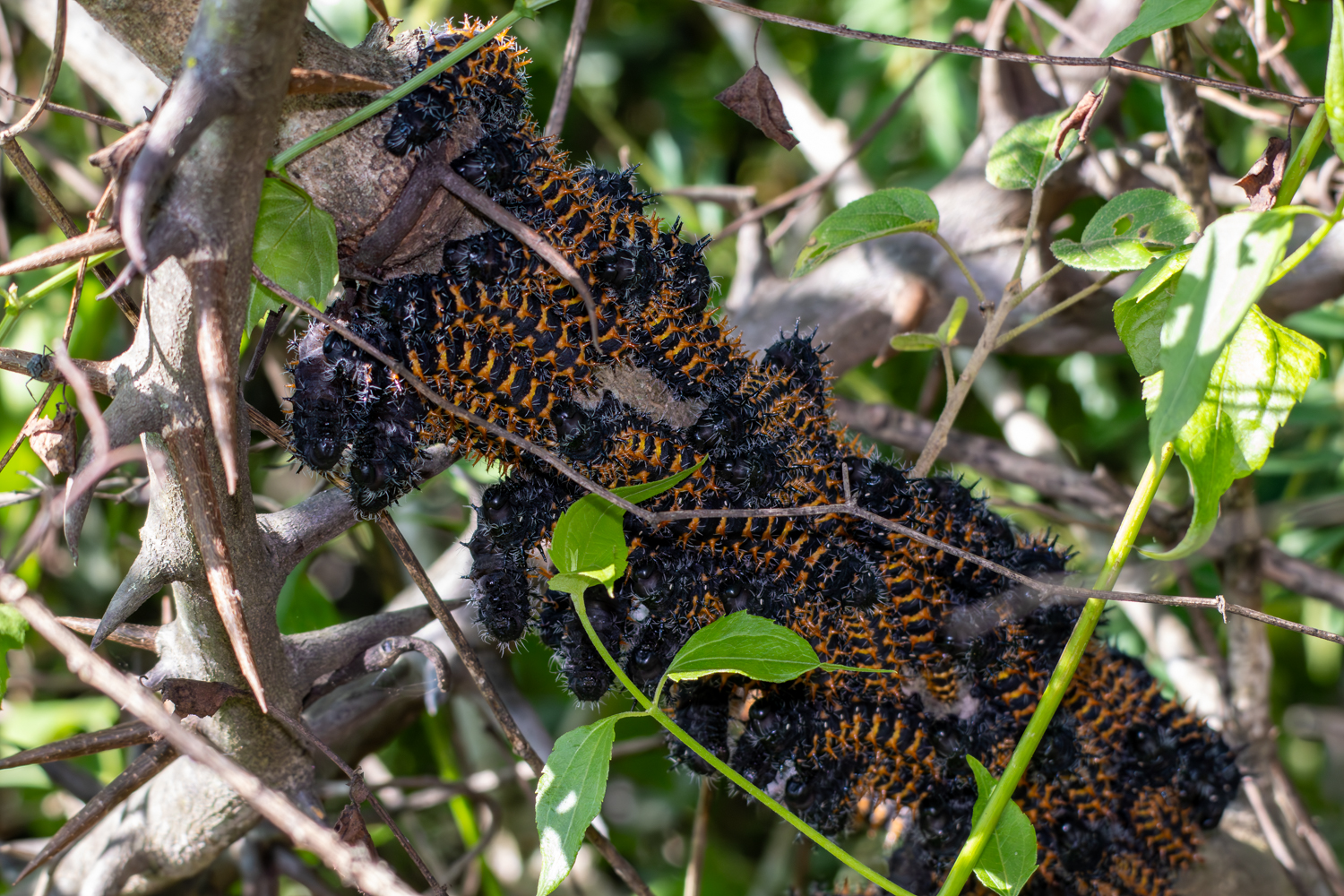
Wahlberg's Emperor Moth caterpillars

Nudaurelia wahlbergi
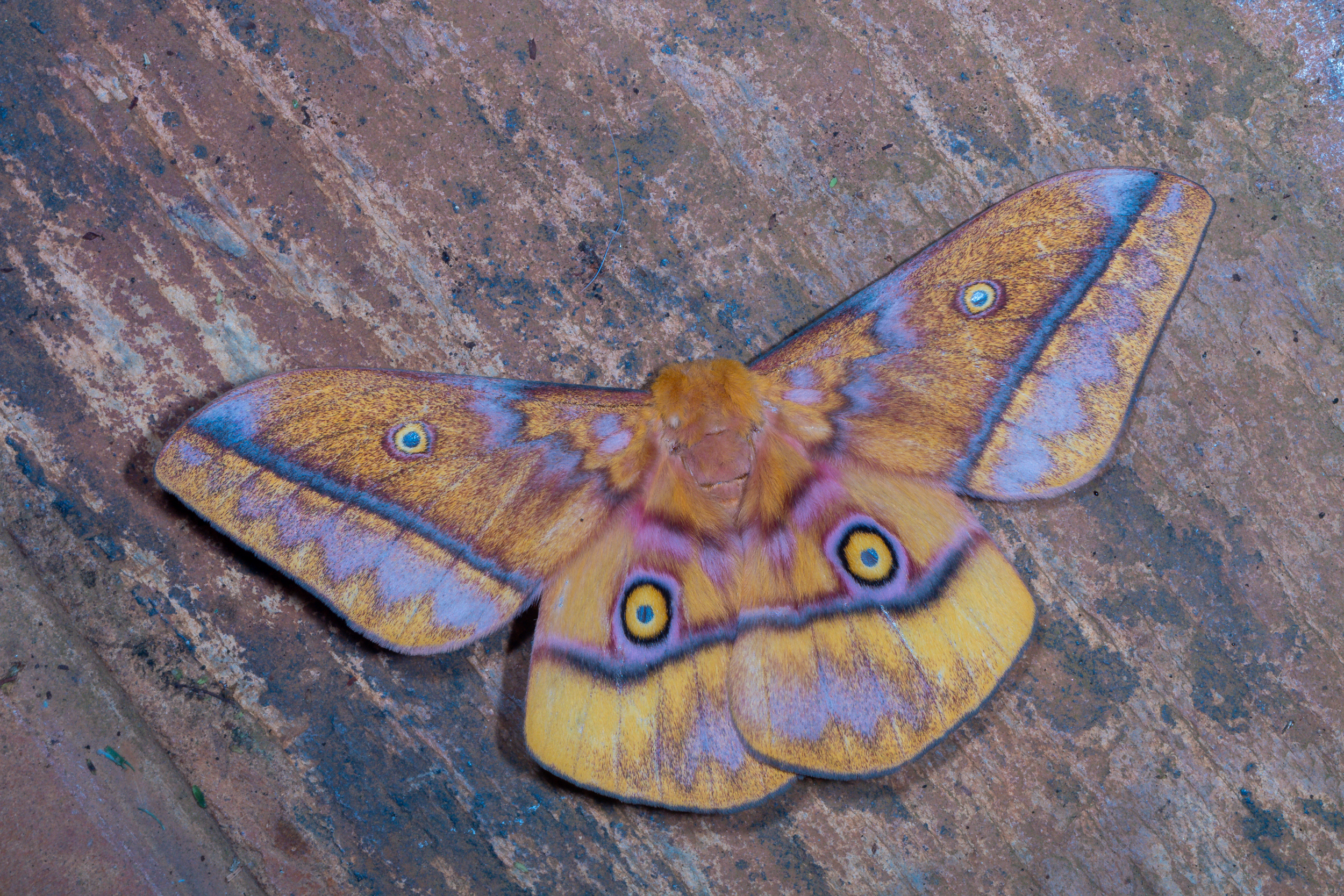
Wahlberg's Emperor Moth ♂

Nudaurelia wahlbergi
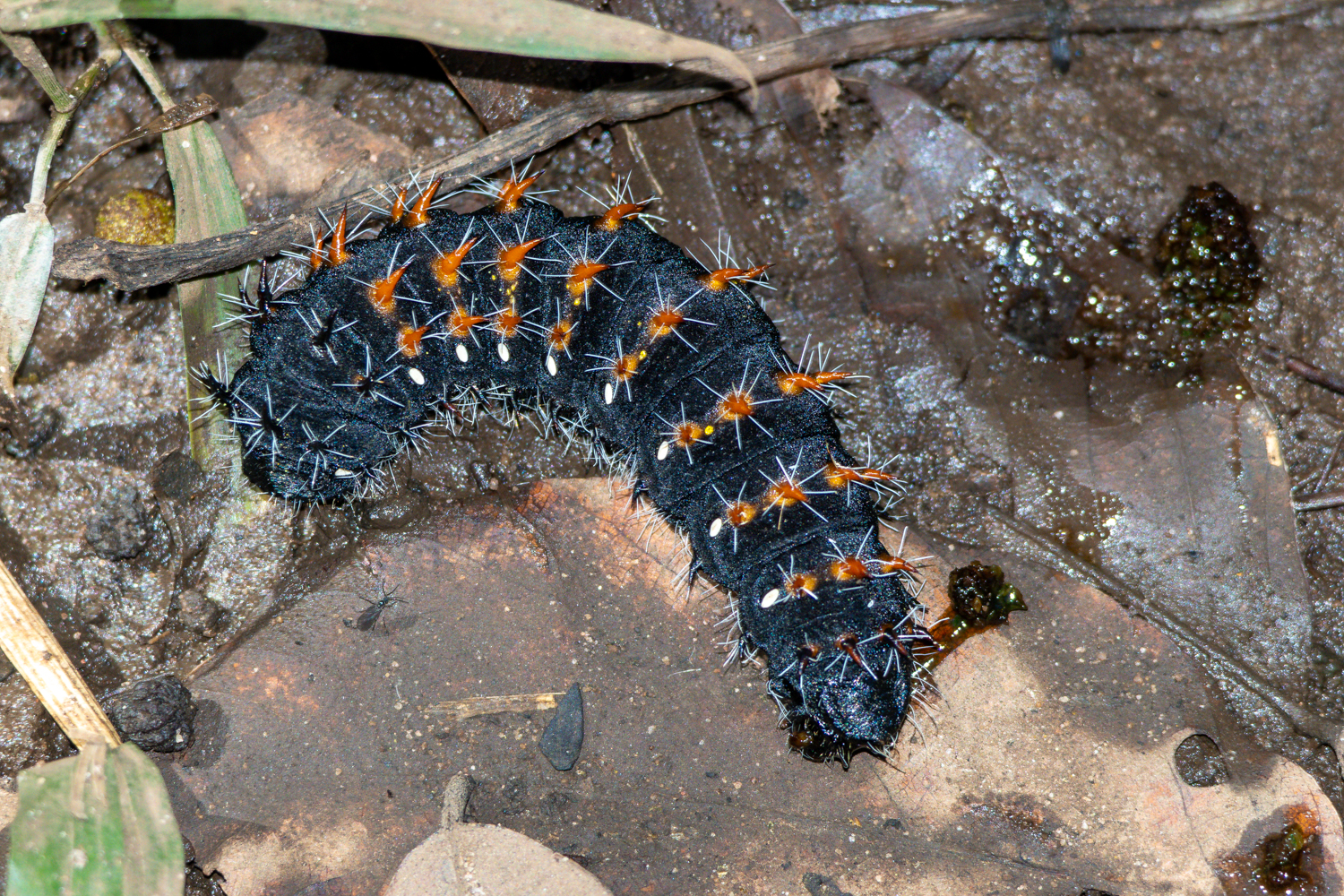
Wahlberg's Emperor prepupal caterpillar

Nudaurelia wahlbergi
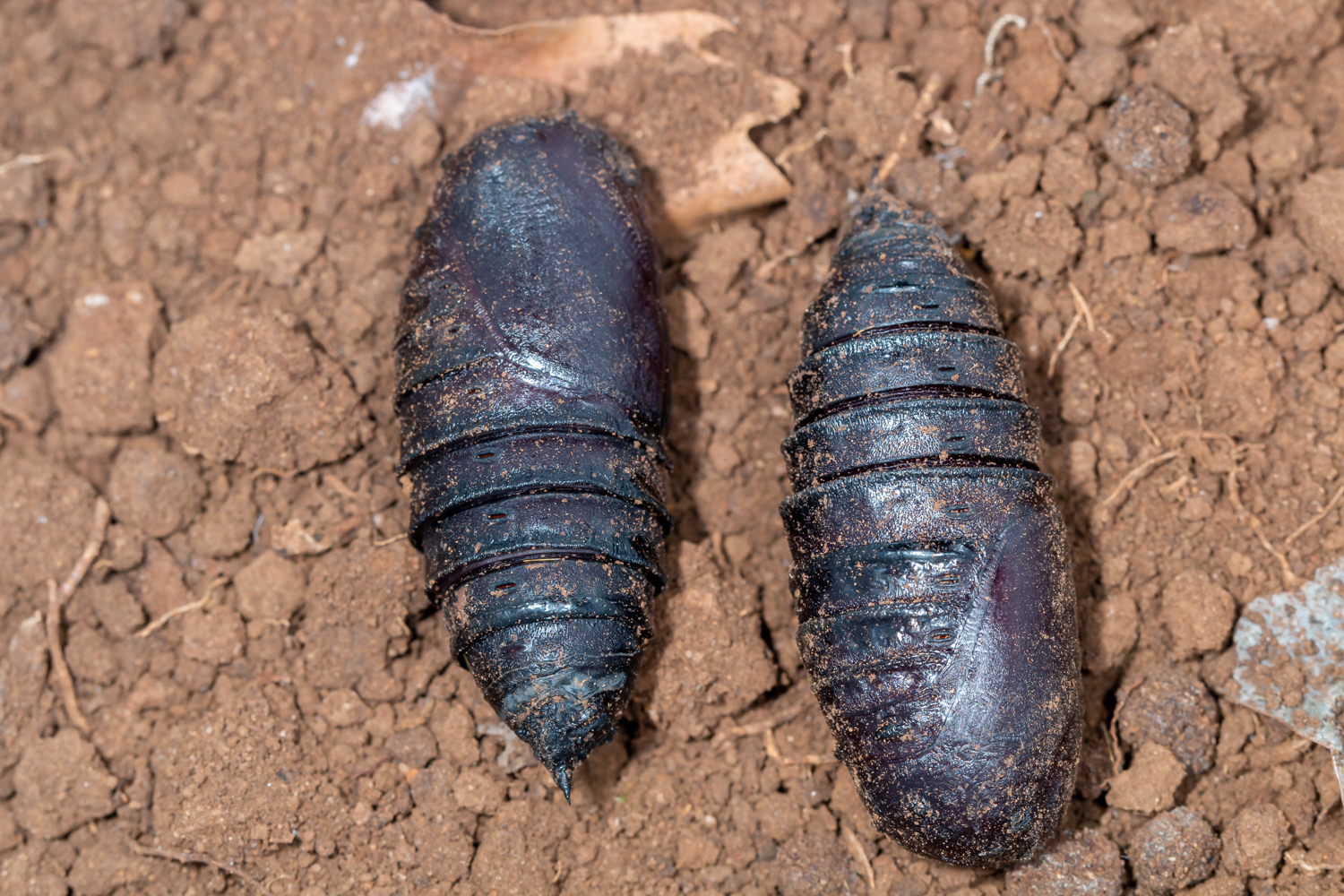
Wahlberg's Emperor pupae

Nudaurelia wahlbergi
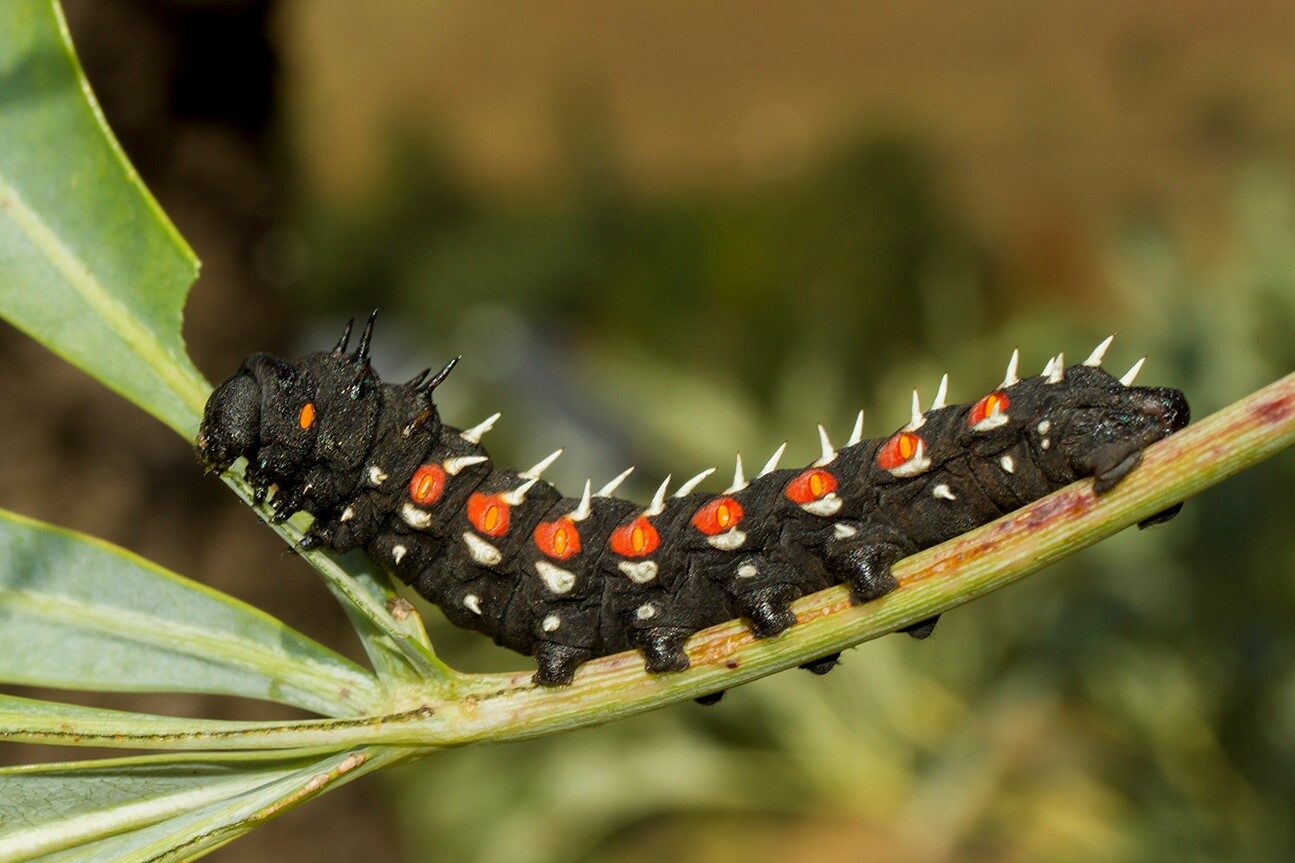
Wahlberg’s Emperor moth, Nudaurelia wahlbergi, is a well-known coastal species. Its conspicuous caterpillars remain in groups until their final moult, then disperse. They reach 100 mm in length and are easily located by the large black droppings (frass) beneath their host tree. Once fully grown, they leave the tree, shrink to about 70 mm and burrow into the soil, where they form brownish-black pupae.

The caterpillars eat the leaves of many trees, including wild plum (Harpephyllum caffrum), Cape ash (Ekebergia capensis) and pigeon wood (Trema orientale). These trees generally grow large enough to sustain many hungry caterpillars. Exotic hosts include oak, peach, mango, pear and apple. Large trees seldom lose all their leaves: the caterpillars’ feeding acts as pruning that promotes growth, while their frass returns nutrients to the soil as fertiliser.

There are several Emperor Moth species that have large caterpillars that are well camouflaged and often escape notice. Another conspicuous one is the Common (or Cabbage-tree) Emperor Bunaea caffra, whose caterpillars’  habits resemble those of Wahlberg’s Emperor and also have a wide host tree range, not only Cabbage-trees (Cussonia).

Common Emperor fully grown caterpillar

Bunaea caffra © Hermann Staude
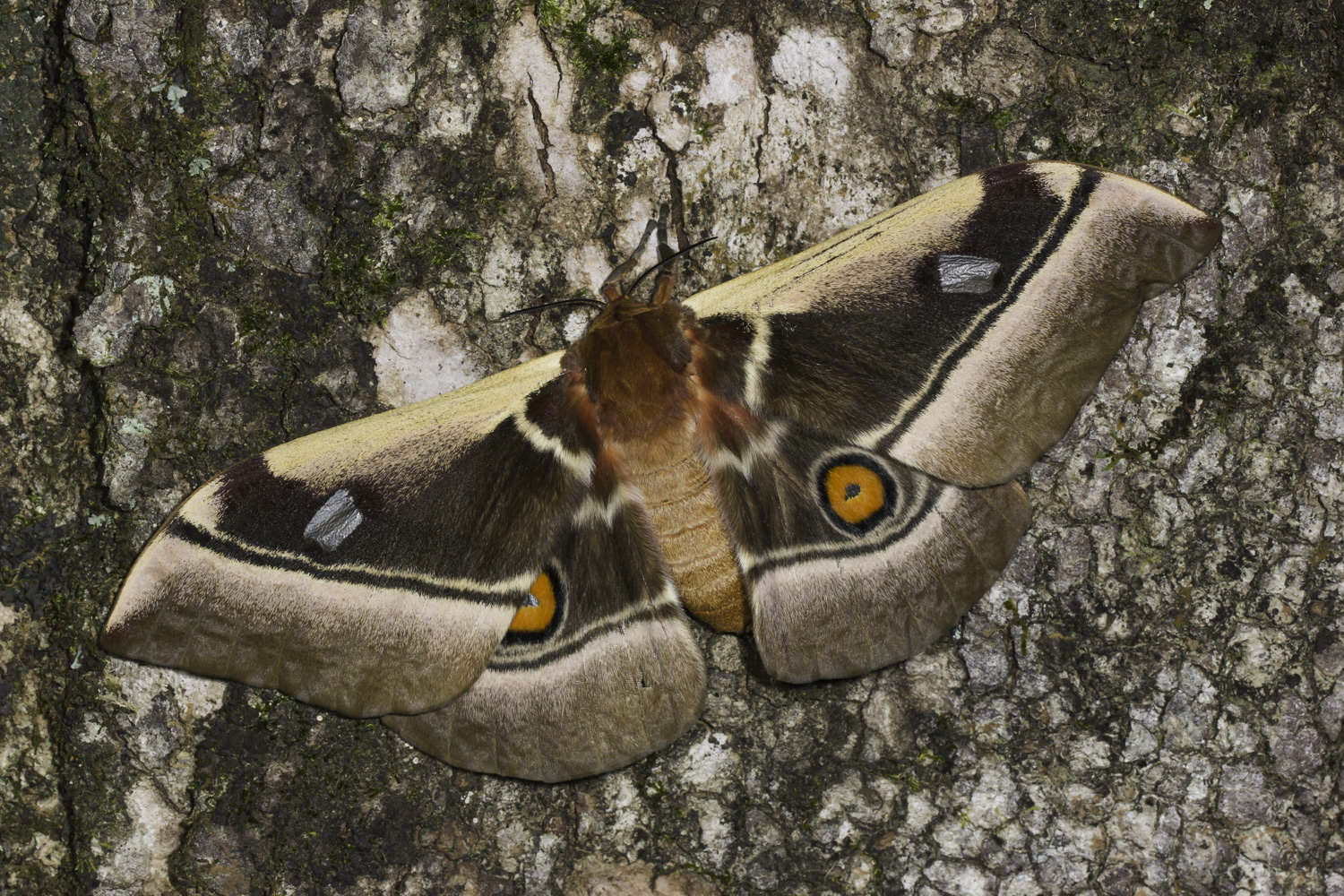
Common Emperor

Bunaea caffra
How to manage them

Options for managing these large species are limited. Pesticides are best avoided because of their knock-on effects. Hawkmoth caterpillars do not live in groups, making it impractical to remove large numbers before damage occurs. If one or two large caterpillars threaten to destroy a young Impatiens or arum, you could remove and drown them to save the plant.

Young Emperor caterpillars gather in groups, and the females lay eggs in large clusters, so you could remove and drown them all. On a large tree, however, they pose no threat to its survival. Rather leave them undisturbed and enjoy the adult moths when they emerge.

Young Garden Acraea caterpillars

Acraea horta
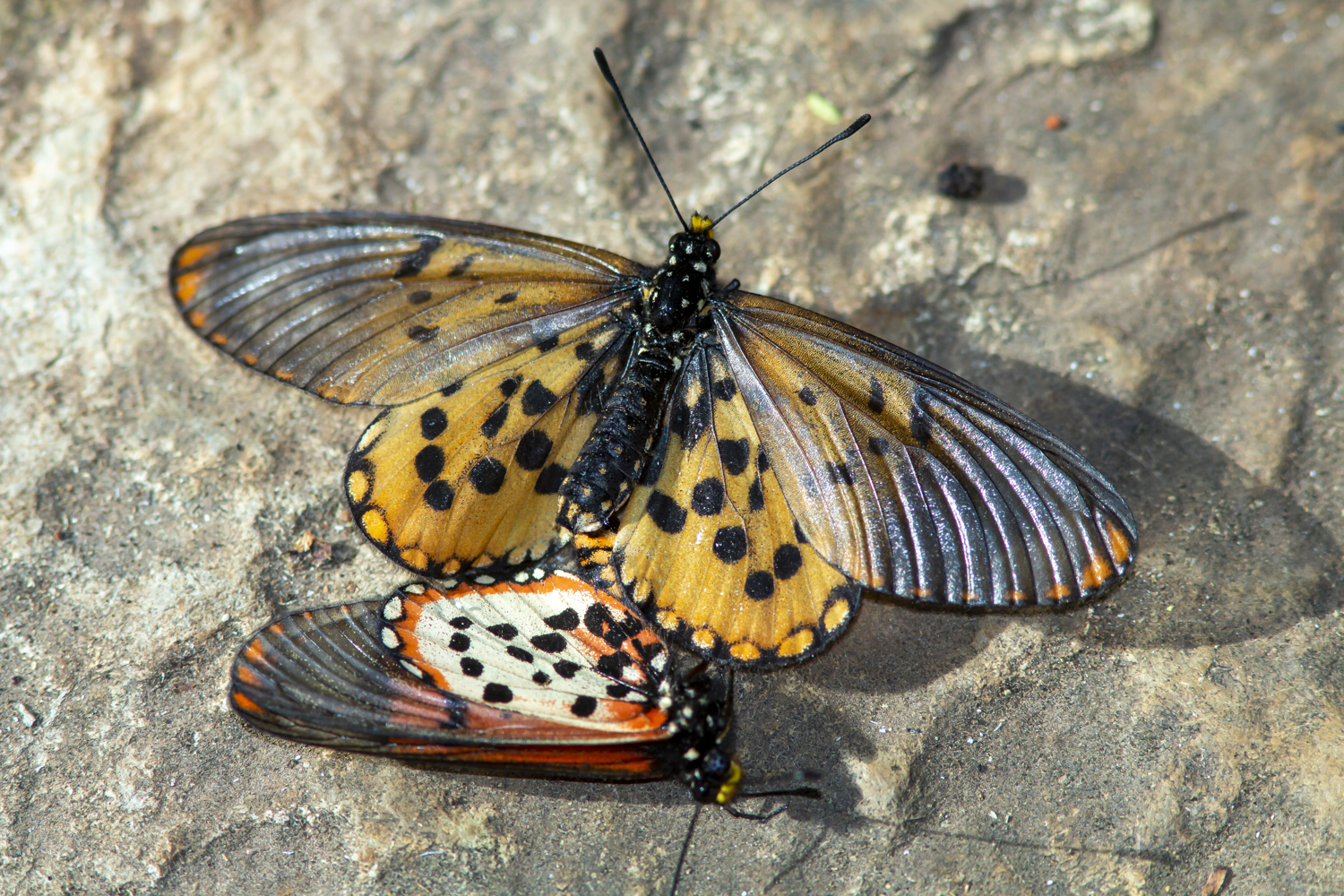
Garden Acraea mating pair, ♀ above

Acraea horta
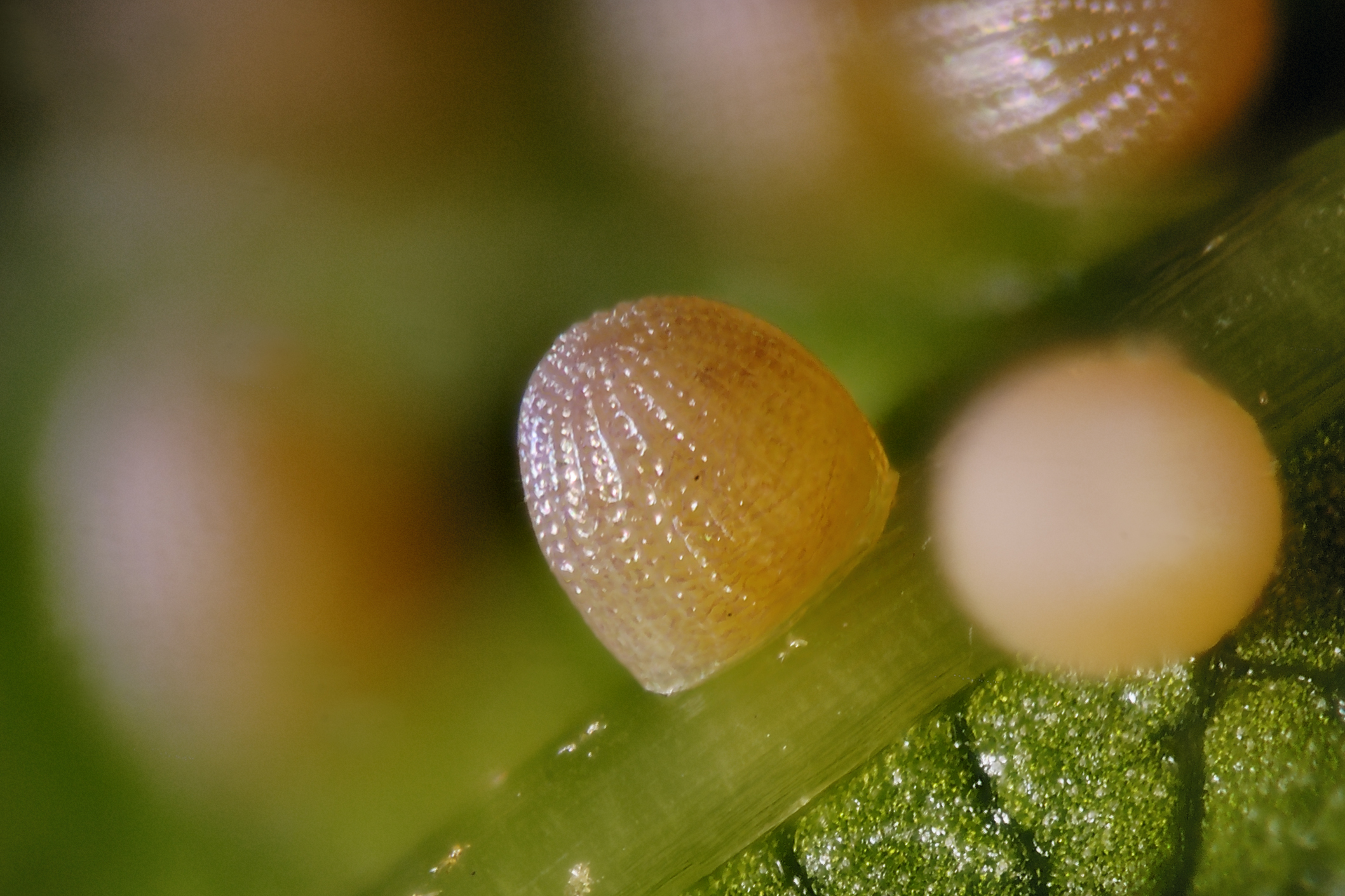
Garden Acraea eggs

Acraea horta
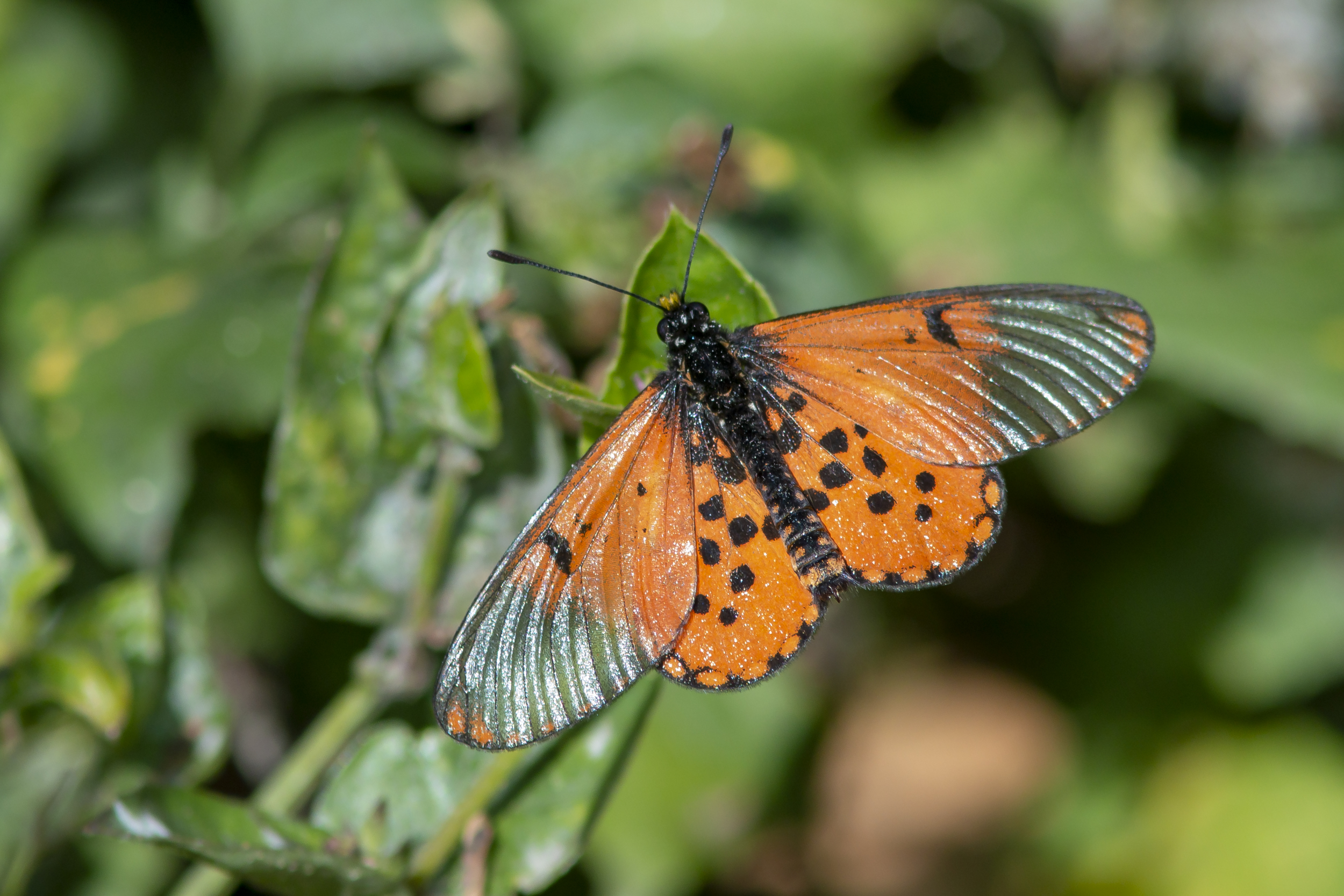
Garden Acraea ♂ adult

Acraea horta
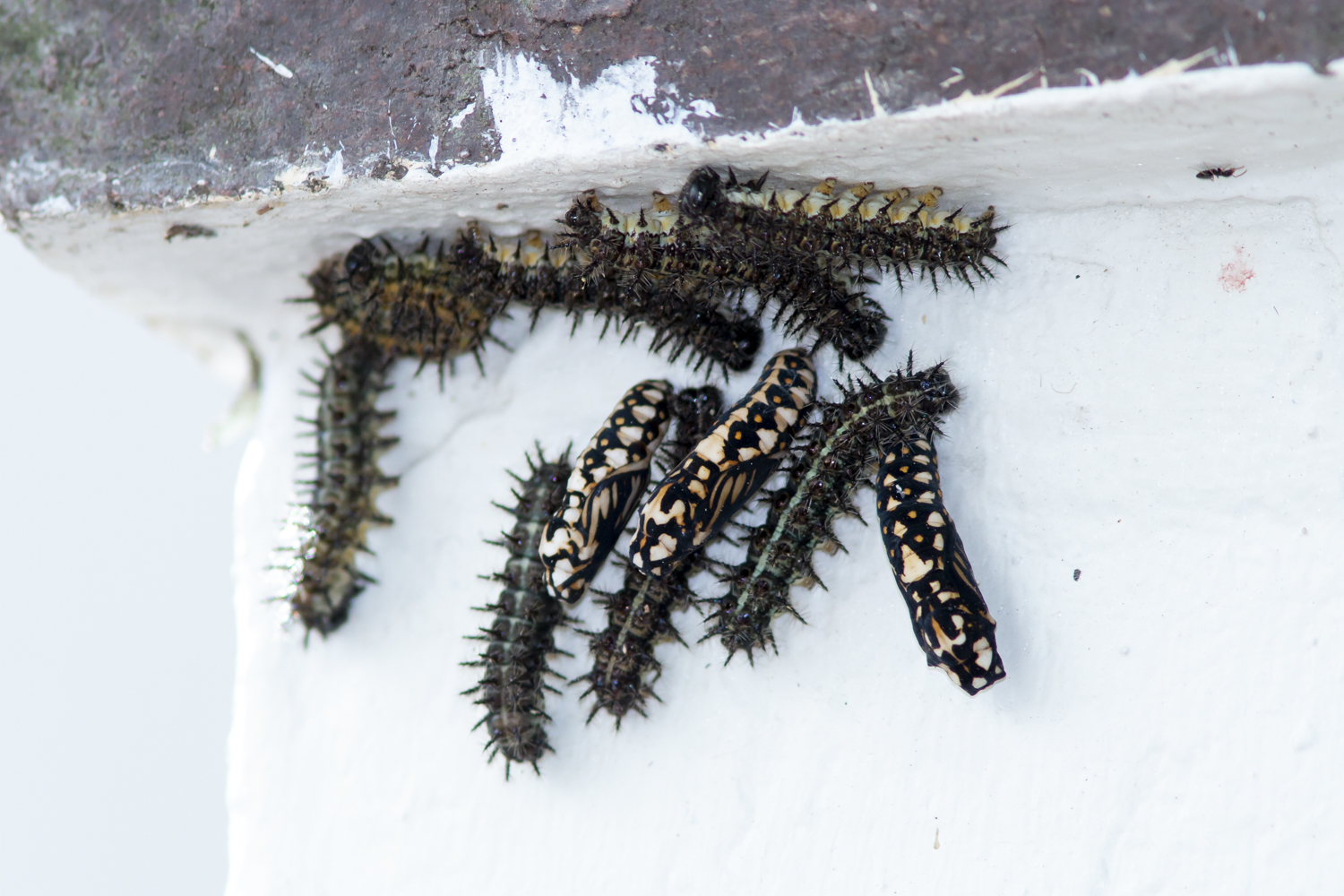
Garden Acraea caterpillars and pupae

Acraea horta
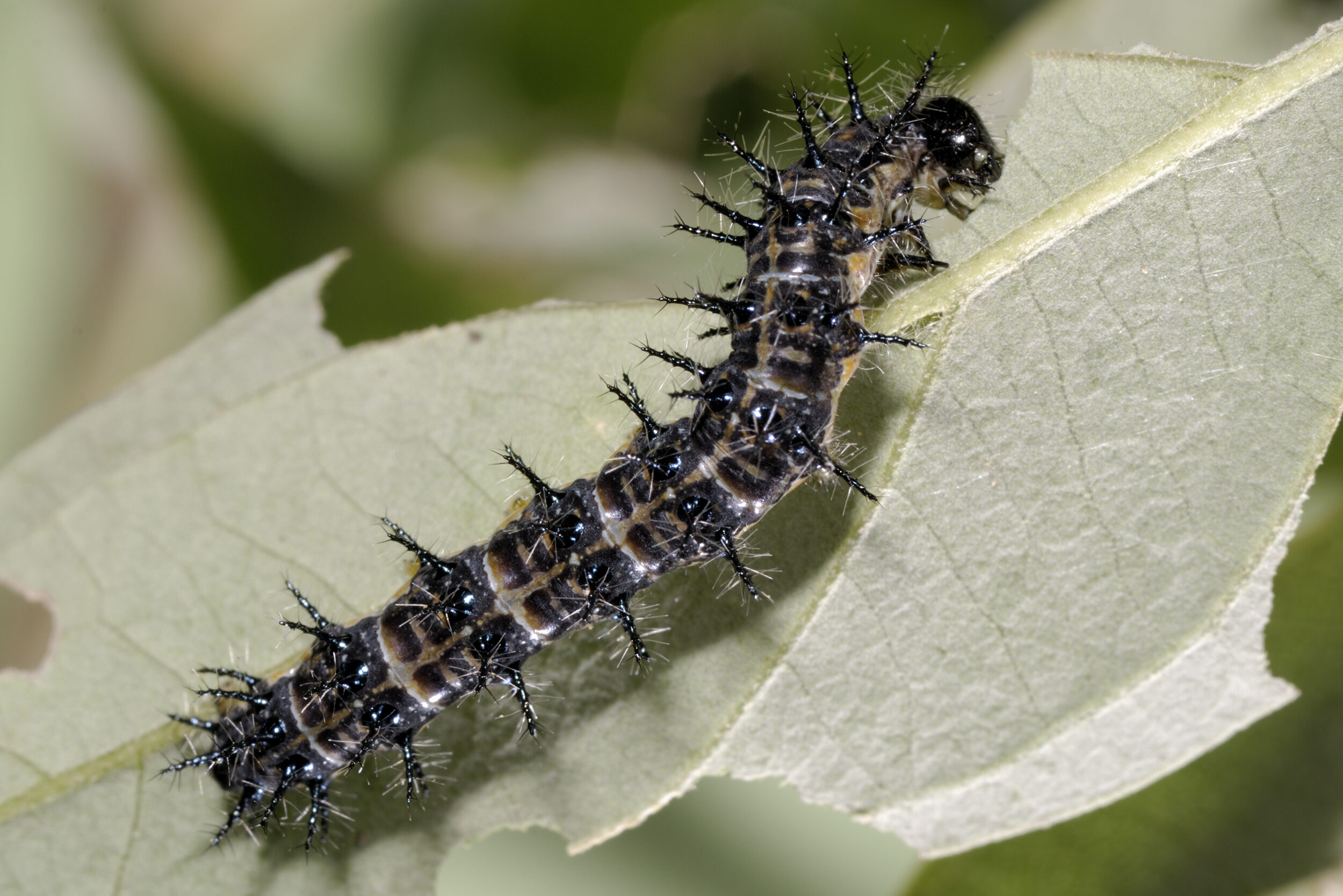
Garden Acraea caterpillar

Acraea horta
A few butterfly species have caterpillars that live in groups and can strip plants of their leaves, but most butterflies rely on camouflage for protection. One well-known defoliator is the Garden Acraea, Acraea horta. Its host, wild peach Kiggelaria africana, is a popular garden tree throughout South Africa, and the butterfly follows its distribution. Males are bright brick-red with transparent patches; females range from yellowish buff to brick-red.

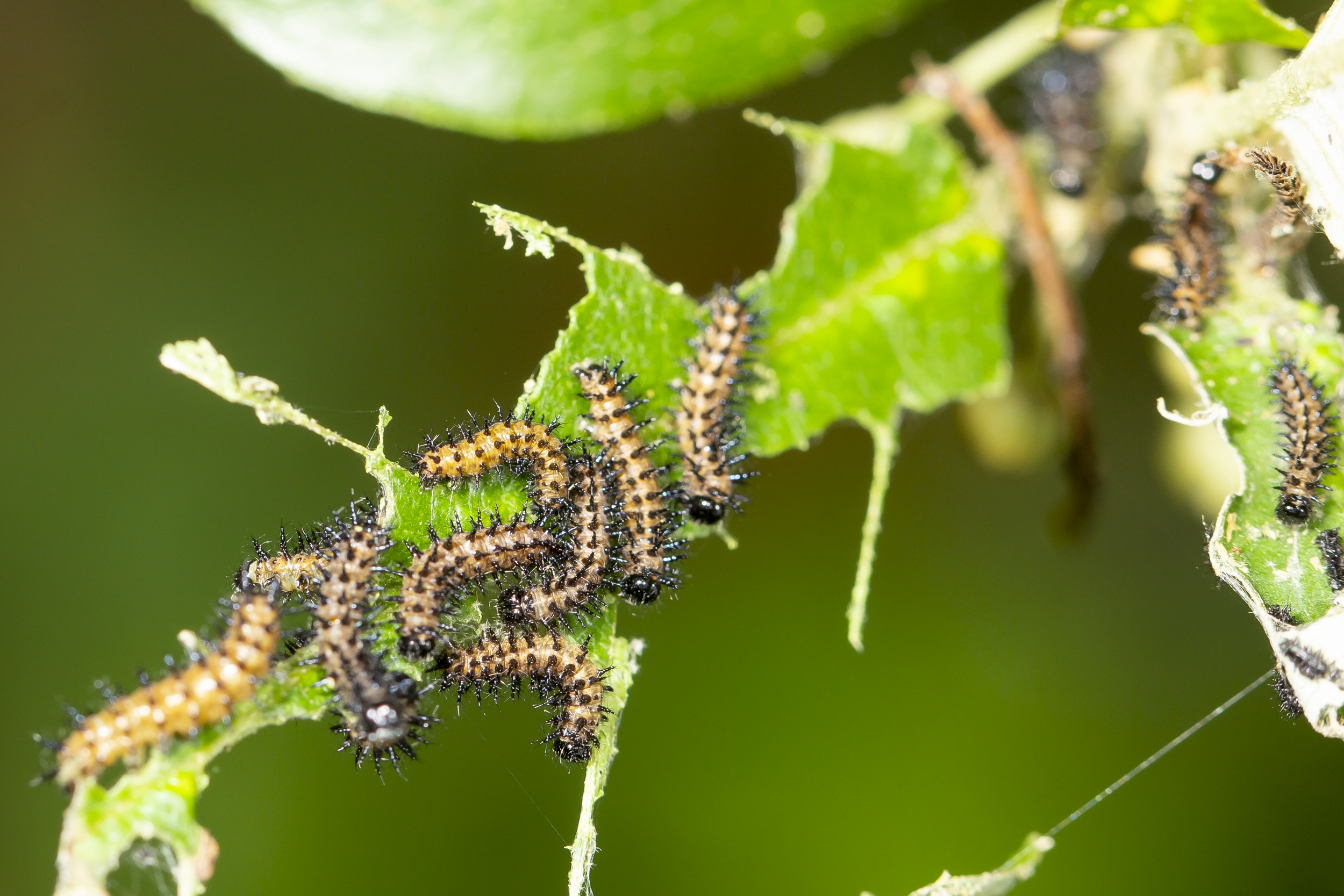
Fertile females lay clusters of up to a hundred eggs on the host plant’s leaves. The eggs hatch into yellow, spiny caterpillars that remain together until fully grown, at which stage they are black with metallic blue spines. Despite their prickly appearance, they neither sting nor cause itching, but are toxic if eaten. Wild peach leaves contain gynocardin, a potent cyanogenic glycoside. The caterpillars feed on them unharmed, storing the compound safely in their bodies. This makes both the caterpillars and the adult butterflies highly toxic and distasteful to most birds and other predators.

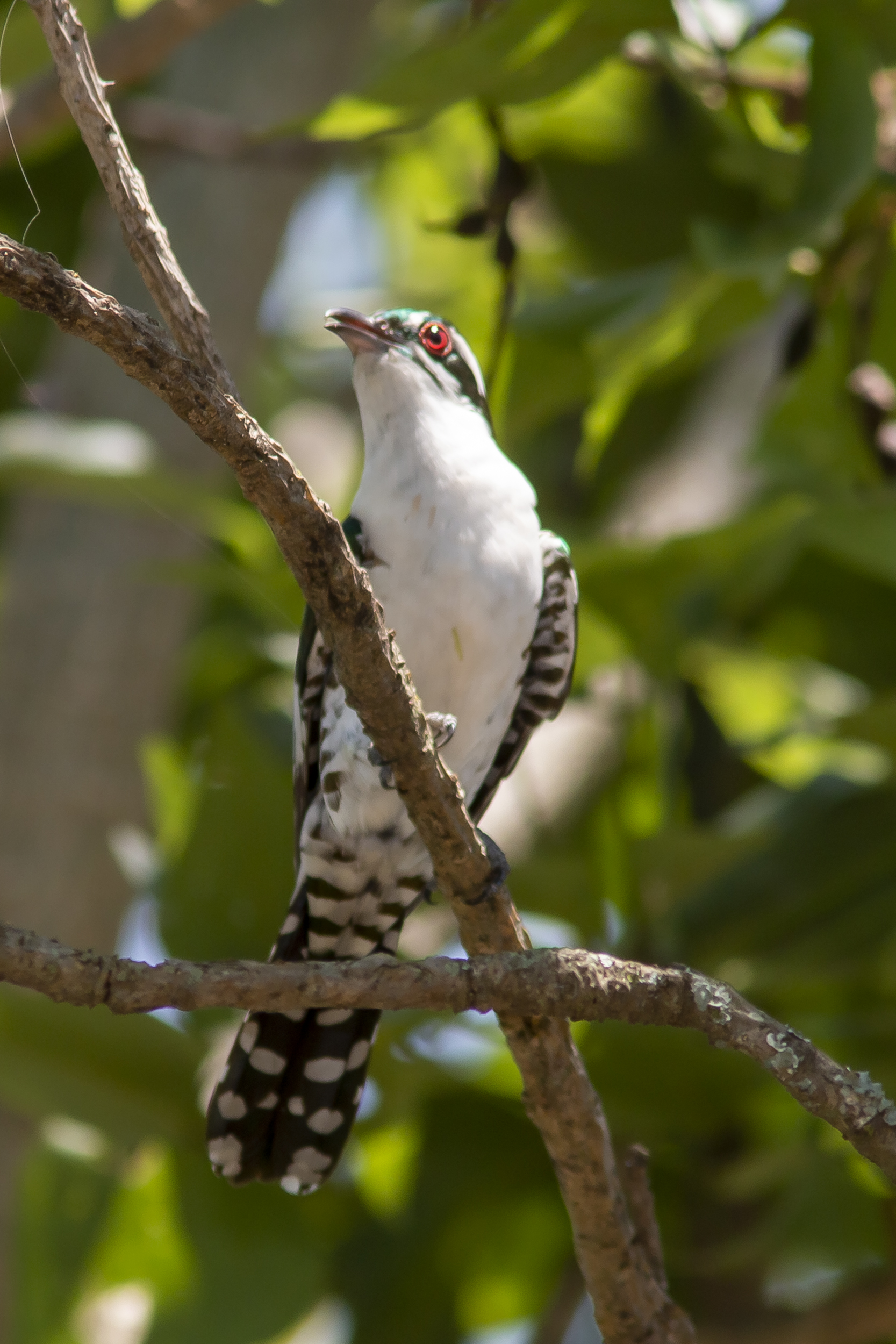
Before pupating, the caterpillars leave the host tree and shelter on nearby rocks, walls, or tree bark. There they form chrysalides (the name for naked butterfly pupae formed in the open). Like the adults, the pupae display warning colours or patterns – a defence known as aposematism. Some birds, particularly cuckoos, can nevertheless tolerate the cyanide through metabolic adaptations. A wild peach tree covered in Garden Acraea caterpillars can therefore reward birders with close views of Diederick or red-chested cuckoos.

How to manage them

One way to manage Garden Acraeas and their group-living relatives in the Acraeinae is to let cuckoos control them naturally. If a mass hatch threatens serious damage to a small tree or sapling, the best option is to look for egg masses or clusters of young caterpillars, then remove and drown them. However, heavy feeding by Acraea caterpillars often acts as beneficial pruning: it stimulates growth and may help a sapling develop into a tree more quickly.

Diederik Cuckoo

Chrysococcus caprius

In summary

Manage gardens as ecosystems

  • Protecting biodiversity is a worthwhile goal in a world affected by pollution and over-development. Treating a garden as a natural ecosystem helps support that goal.
  • Full rewilding is not essential, but monocultures can disrupt ecological balance and encourage outbreaks of herbivores that specialise in those plants.
  • Unless you are farming for food, aim for a diverse mix of plants.

Support the food chain

  • Plants are primary producers: feeding herbivores is a fundamental part of their ecological role. Most butterflies and moths sit one step above plants in the food chain.
  • Herbivores and their invertebrate predators, in turn, feed birds, reptiles and small mammals.

Keep plant damage in perspective

  • Most butterfly and moth larvae avoid predators by limiting visible leaf damage and relying on camouflage.
  • The few species that strip plants of their leaves seldom cause lasting harm. Their feeding can act as pruning, stimulating growth in herbaceous plants and trees.
  • Geophytes have underground bulbs or tubers that herbivores rarely destroy completely.

Consider the wider effects of pesticides

  • Using pesticides to eliminate problem herbivores, such as the Amaryllis Borer, can have knock-on effects throughout the ecosystem.
  • Harming beneficial insect predators can trigger pest population explosions. Reducing herbivore numbers can also reduce the birds that depend on them for food.
  • All insects have natural predators. Even Garden Acraeas, whose bodies contain toxic glycosides, are eaten by some much-loved birds.