

On-site training - with Steve Woodhall
Nature Guide training: ‘Savanna butterflies’
At Singita Lebombo and Sabi Sand lodges 29 Nov 2025 to 8 Dec 2025
I was contacted by Singita to provide a four-day butterfly training course, and this was extended to cover two sets of trainees. One was for Singita KNP at the boardroom near Lebombo Lodge and one for Singita Sabi Sand at the boardroom near Singita Ebony Lodge.
My series of MS PowerPoint training presentations mainly covers butterflies but has been extended to moths as far as describing how they differ from butterflies (and the inevitable client question – ‘what’s the difference?’). They approach the subject from the point of view of a nature guide interpreting aspects of lepidoptera for clients with emphasis on describing their appearance, behaviour, habits, and how they fit into the broader South African ecosystem. The original intention was to present them to FGASA NQF2 qualified nature guides in various disciplines. This led to the publication through FGASA of the ‘Guiding Butterflies and Moths’ manual and workbook with my friend and colleague Vaughan Jessnitz of Goliath Training. They follow similar lines to these lectures, which will continue to support the learning material for the certification. The manual and workbook go into the subject in greater depth, and over time more lectures (and videos) will be developed to support this.
Course material
The presentations given on this course were:
‘Butterfly-bird Parallels’
This demystifies butterflies by showing how similar ‘birding’ is to ‘butterflying’ when we look at colours, behaviour and points of attraction for clients.
‘Butterfly ecology’
This presentation takes the ‘FGASA’ approach of teaching the guides the ecological underpinnings of their subject, which are fundamental to the understanding needed to interpret nature.
- It is meant to empower guides to answer some commonly encountered client questions: ‘What are butterflies for? Why do they exist?’
- It starts by considering the ecological levels of organisation from individuals to ecosystems, biomes and eventually the biosphere.
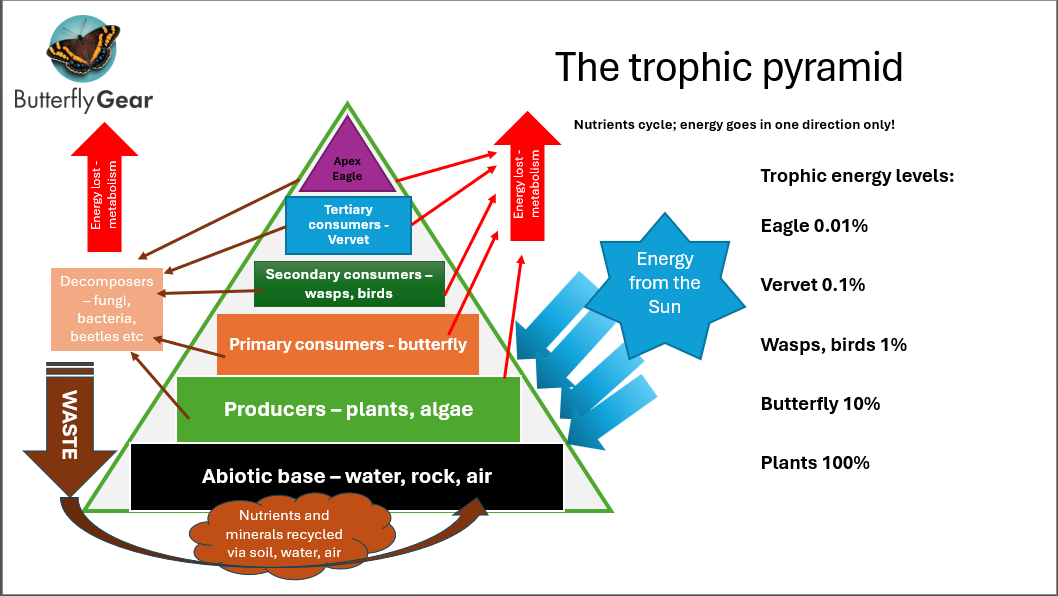
- Food chains and webs are described showing where butterflies and their many predators – including birds – interact within the ecosystem.
- The trophic pyramid is described and leads into concepts like symbiosis and competition. It necessarily covers a lot of behavioural material.
- It culminates by describing migratory species and how butterflies form fundamental components of a global food web.
‘Lepidoptera recognition cues’
This presentation starts by explaining where butterflies and moths fit into the animal kingdom (arthropods in particular)
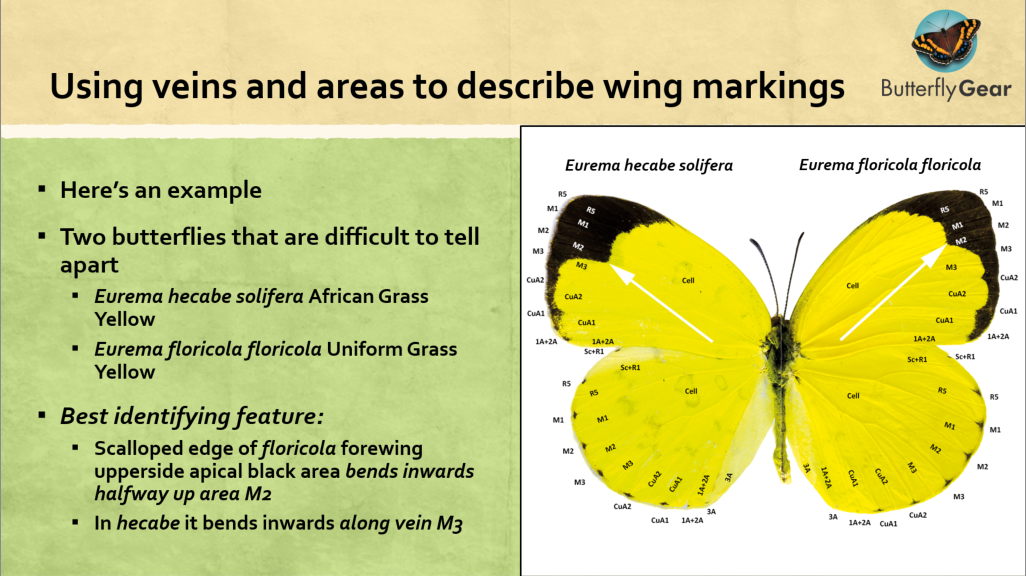
- Anatomy and the names of the various body parts and wing markings, and their functions
- How to use these in identification and to differentiate between similar species
- This works rather like the naming and numbering of birds’ feathers and plumage to allow standardised communication
- Some basics of behaviour
- The importance of wings, their structure, and how they are used in advertising, signalling, and sensory perception
- Examples of all these used in practice
- Sexual and seasonal differences, and how they relate to birds
‘Butterfly recognition adults’
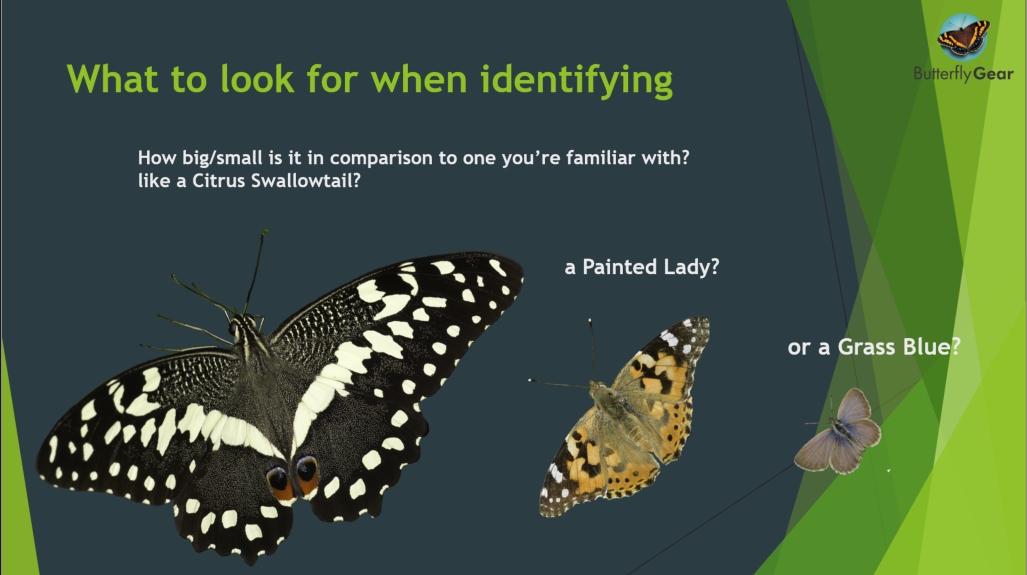
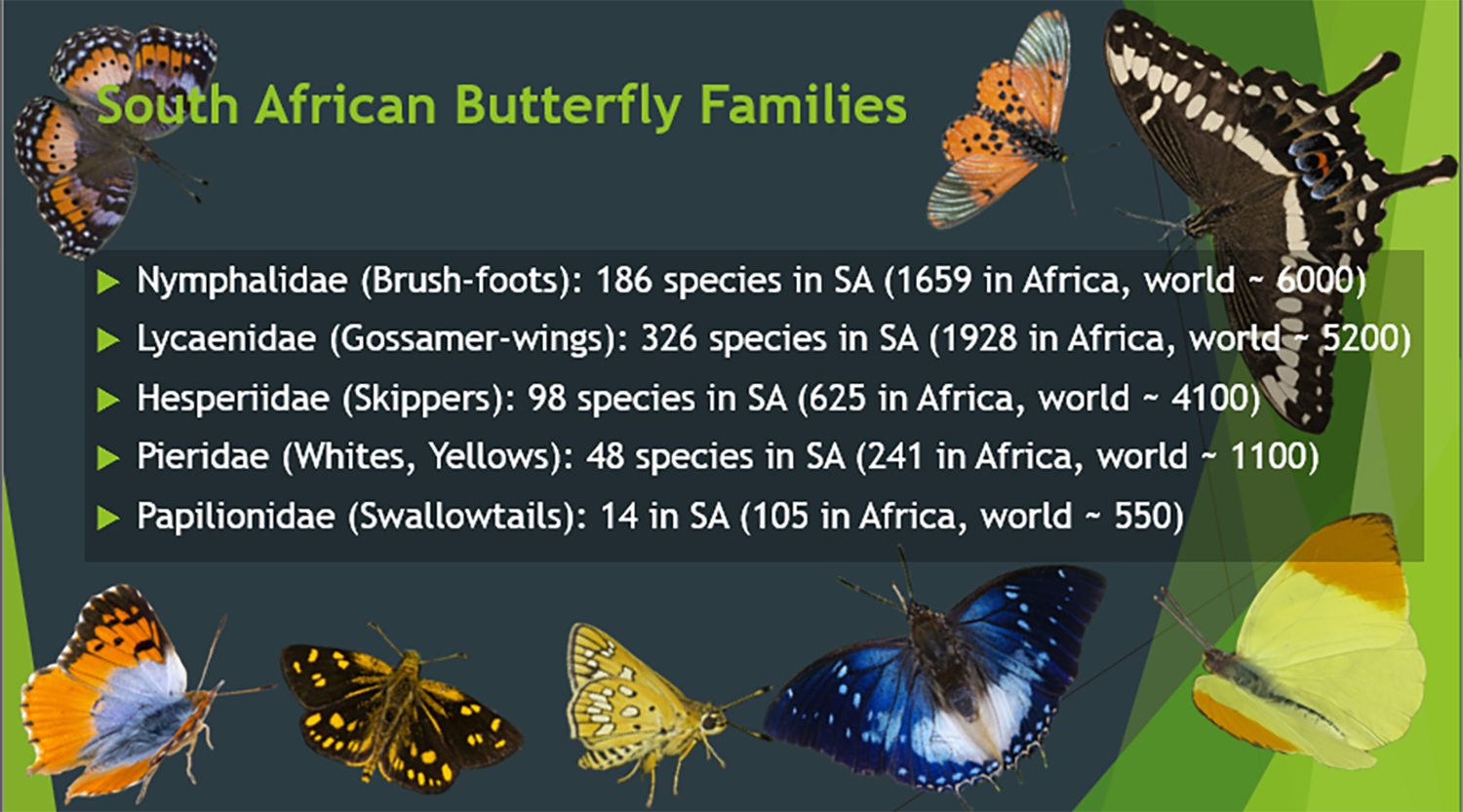
This uses the concepts developed in ‘Lepidoptera recognition cues’ to show trainees examples from the main families (and subfamilies) and how to recognise them.
Within that it gives examples of typical behavioural traits of the various groupings. It also encourages participants to relate what they are looking at with a species they’re familiar with, in terms of size, markings, shape, colour etc.
It does not extend to early stages. Those are covered in a general way in ‘Butterfly Ecology’ but to go beyond that would require a much longer course.
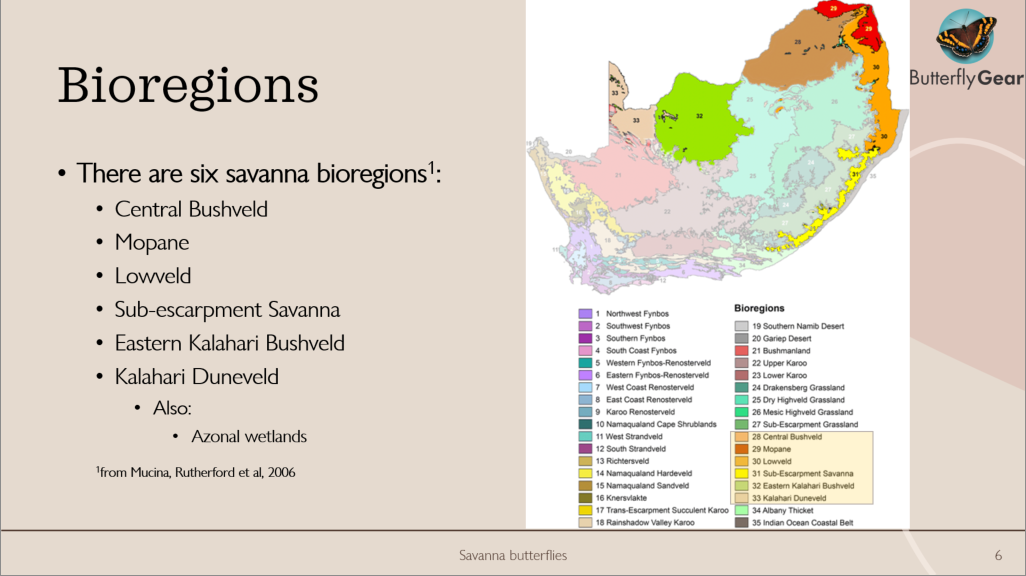
‘Biomes: Savanna butterflies’
This goes into some detail on the savanna biome and how it is divided into bioregions and vegetation types It explains the ecological niches butterflies and moths occupy within the biome
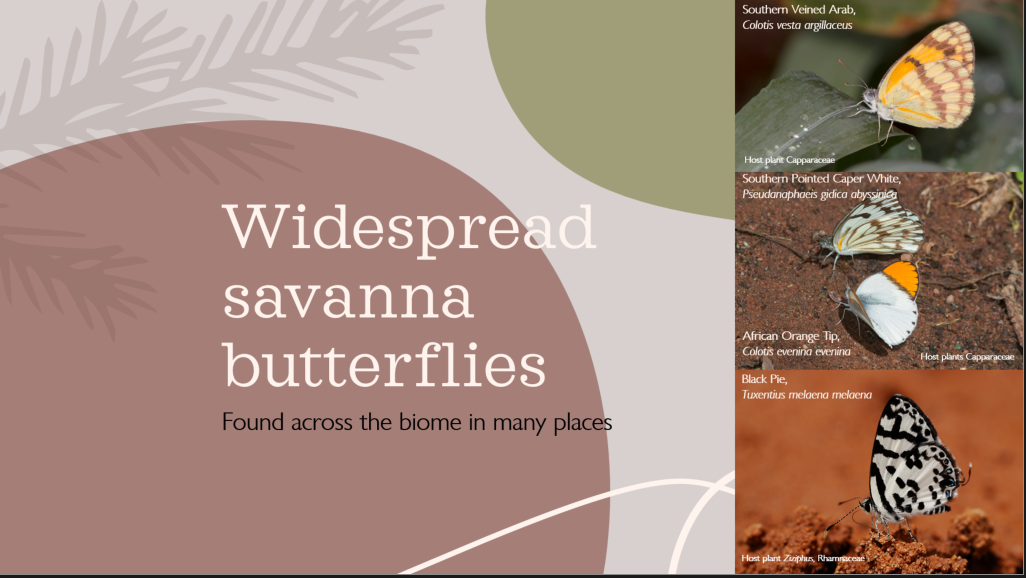
It shows examples of typical savanna species including the ‘flagships’
‘Understanding butterflies’
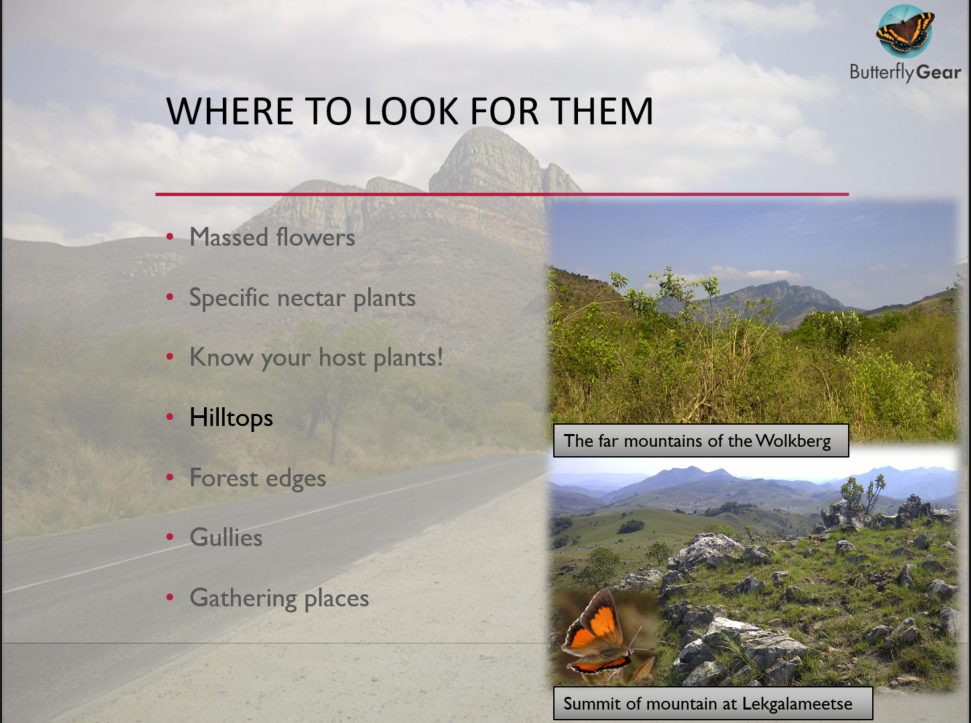
This covers butterfly behaviour in terms of the following concepts:
- Where to look for them – feeding as adults and larvae, favoured landforms and gathering places
- Territorial behaviour
- Sexual behaviour including courtship and use of pheromones
- Feeding strategies
- Appearance and how it can change via factors like seasonal and sexual polymorphism, and the effect of wear and tear
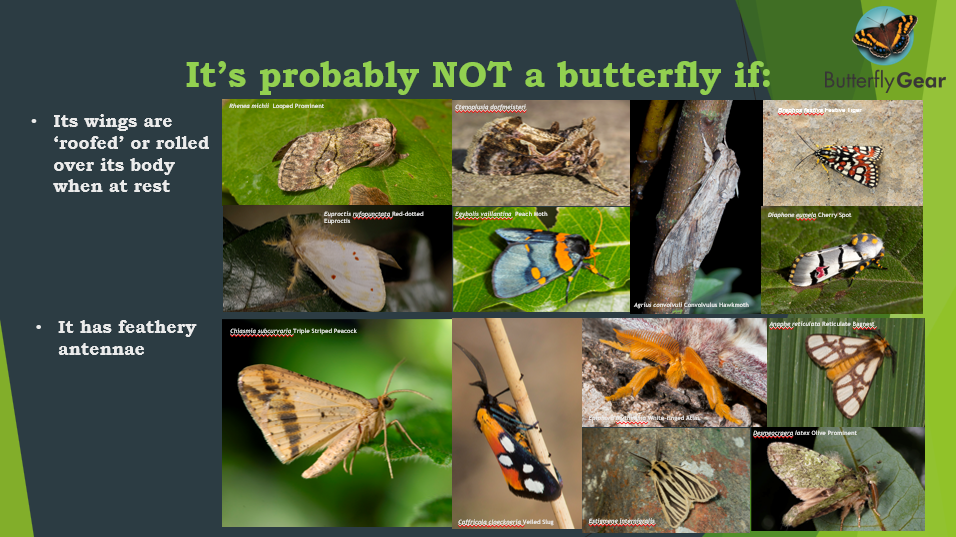
‘Difference between butterflies and moths’
Course structure and goals
The presentations were interspersed with field walks and drives with the trainees, where I looked for coaching opportunities to support the lectures. This was the first time I’d presented such a course to experienced guides as opposed to trainee Birdlife community guides. It was also the first course I’ve presented in a savanna context.
Course goals
- Give all seven presentations and carry out field walks within the four-day time period allowed
- Assess the level of understanding and ‘buy-in’ to the concepts by the trainees
- Observe their reactions to form a view as to the suitability of the course work
Description of the course (and some observations)
Day ‘minus’ one (Friday 29 November):
Bernard Stiglingh collected me from the airport and drove me to Lebombo Lodge. It was a pleasant drive along the Skukuza to Tshokwane Road through a part of Kruger I had visited many times in the past, then we took Trichardt’s Road across the basalt plains to the north-east, which I had only seen in the distance from places like Nkumbe Lookout. We saw many elephants (at one point I began to think they outnumbered the butterflies) and the beginnings of what turned out to be a substantial migration of Catopsilia florella (African Migrant).
As we approached the rhyolite foothills of the Lebombo range we came to a drainage line that formed a tributary of the Sweni River. There we made what turned out to be one of the sightings of the trip.
In a small clearing below some large trees there were several large male Lepidochrysops glauca (Silvery Giant Cupid) engaging in territorial battles around a grassy area. We found there many flowering specimens of Ocimum canum (Wild Basil), one of the larval host plants. The males were perching on low Abutilon plants, chasing rivals and females.
We got some good underside photos as well as some uppersides in flight using the Raw Burst feature on my mirrorless camera.
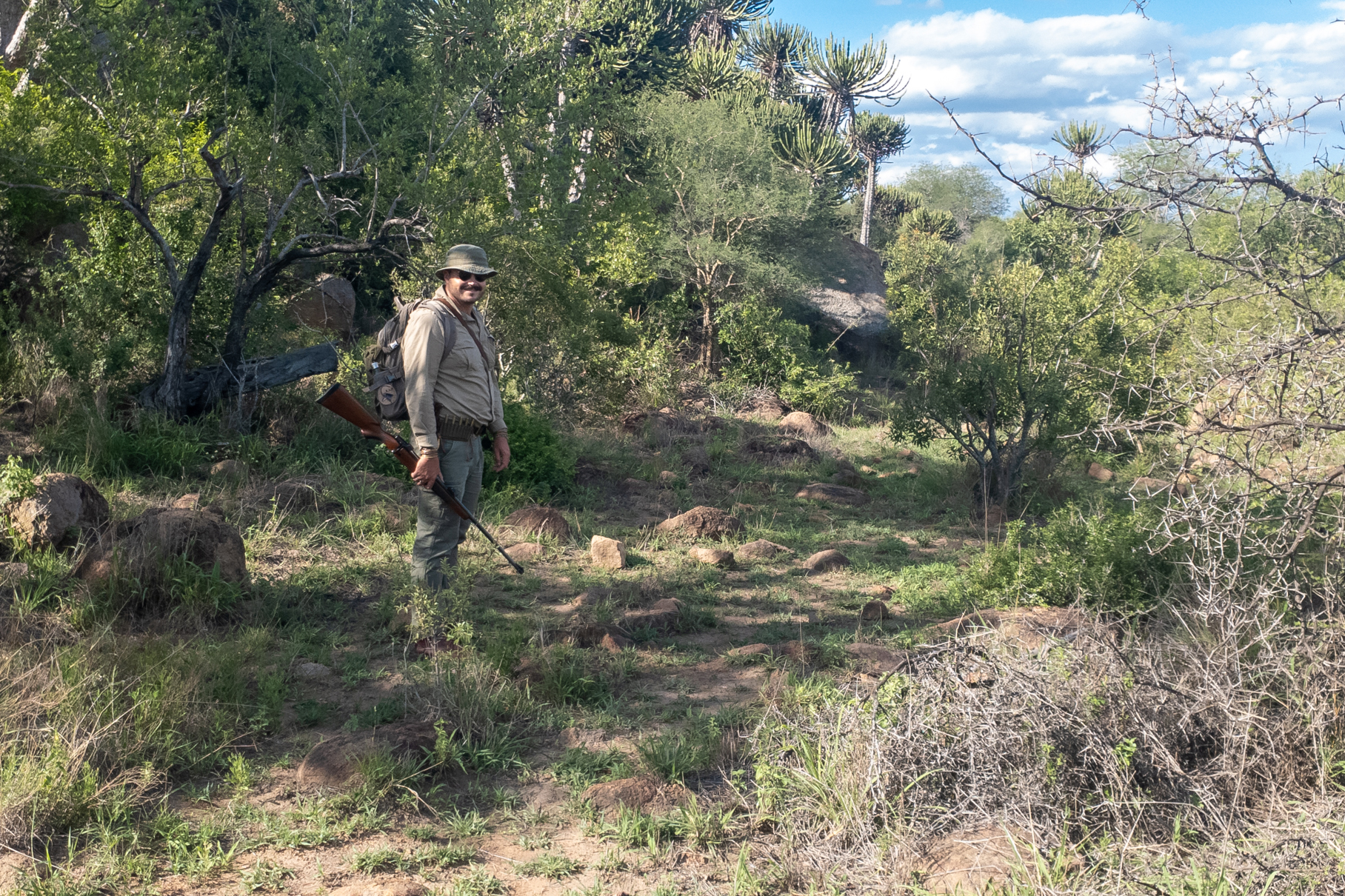
Bernard at home
In the Granophyres
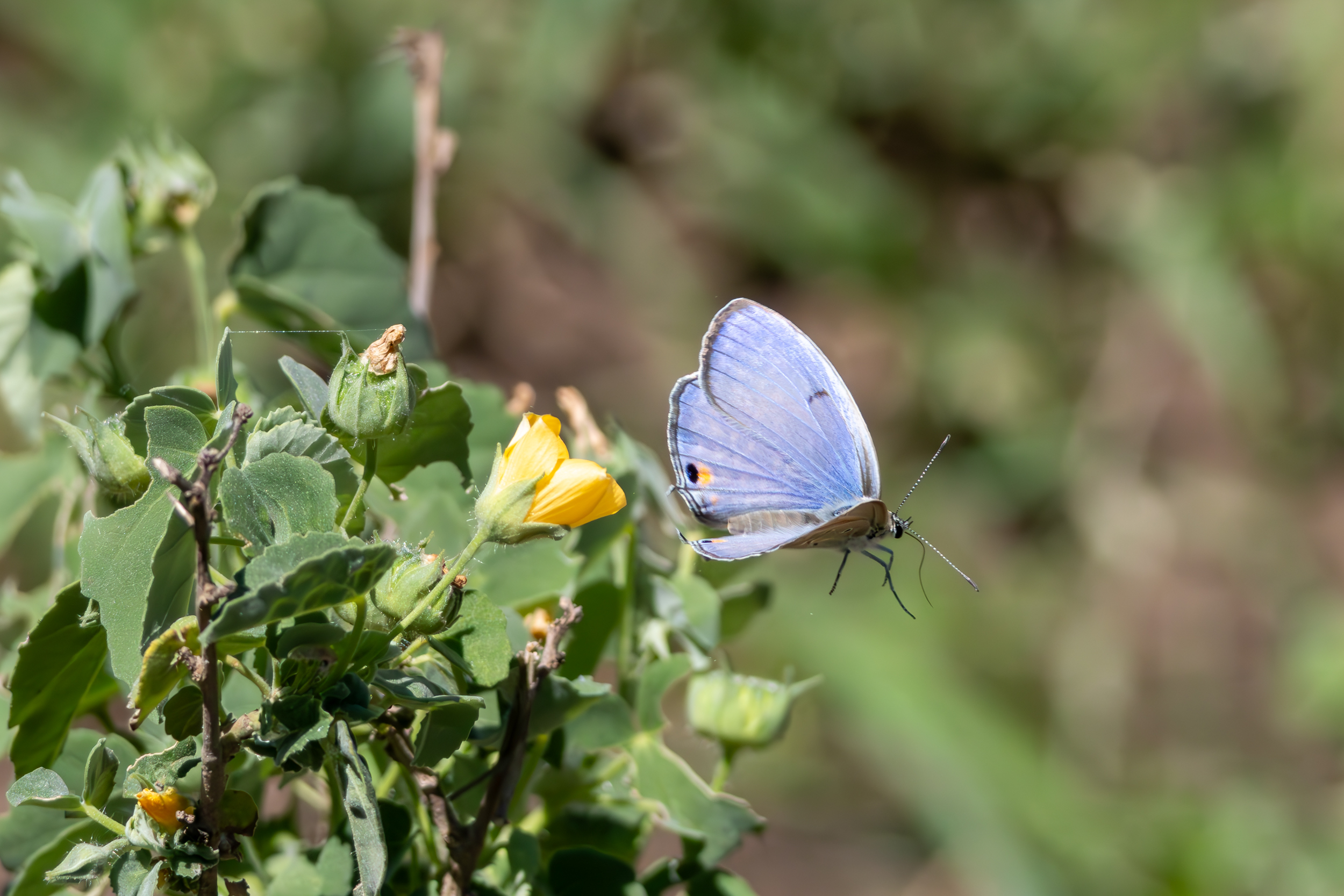
Silvery Giant Cupid ♂ in flight
Lepidochrysops glauca
This was a great start to the course. This a butterfly whose upper side I had never managed to photograph naturally. It’s also one of the most striking members of a Lycaenid genus whose larvae are phytopredaceous (they eat plants and ant larvae), an interesting and rare ecological niche among butterflies and something I cover in one of the lectures.
When we arrived, we dropped off my luggage and Bernard took me off in an open vehicle to a granophyre ridge northeast of the lodge, deep in the eroded body of the Lebombos, surrounded by sourveld plants. Here we found large numbers of Graphium porthaon (Cream-striped Swordtail) around their host plant Monodora junodii (Green-apple) and nectaring on flowers of Terminalia prunioides (Purple-pod Cluster-leaf) alongside several other butterfly species.
We also found two ‘target’ butterflies: Coenyropsis natalii (Orange-lined Ringlet) and Physcaeneura panda (Dark-webbed Ringlet) as well as a species we failed to find on subsequent days, Abantis levubu (White-cloaked Paradise Skipper). She was a freshly emerged female and not one of the aggressively territorial males I cover in one of the lectures.
This was a good omen for the rest of the course, and we made sure to get the first lecture (Butterfly-bird Parallels) done that evening.
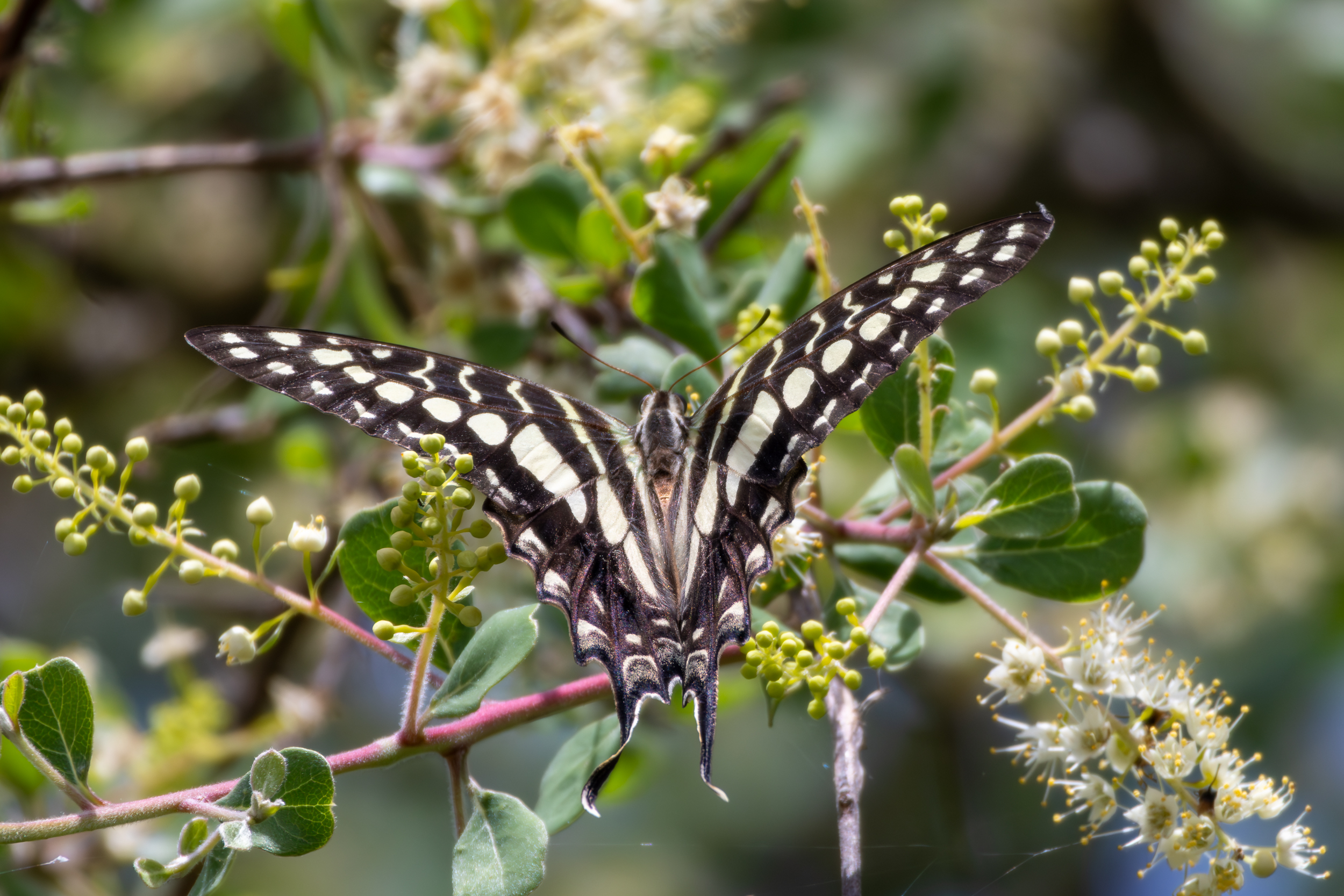
Cream-striped Swordtail ♀
Graphium porthaon

Orange-lined Ringlet ♀
Coenyropsis natalii natalii
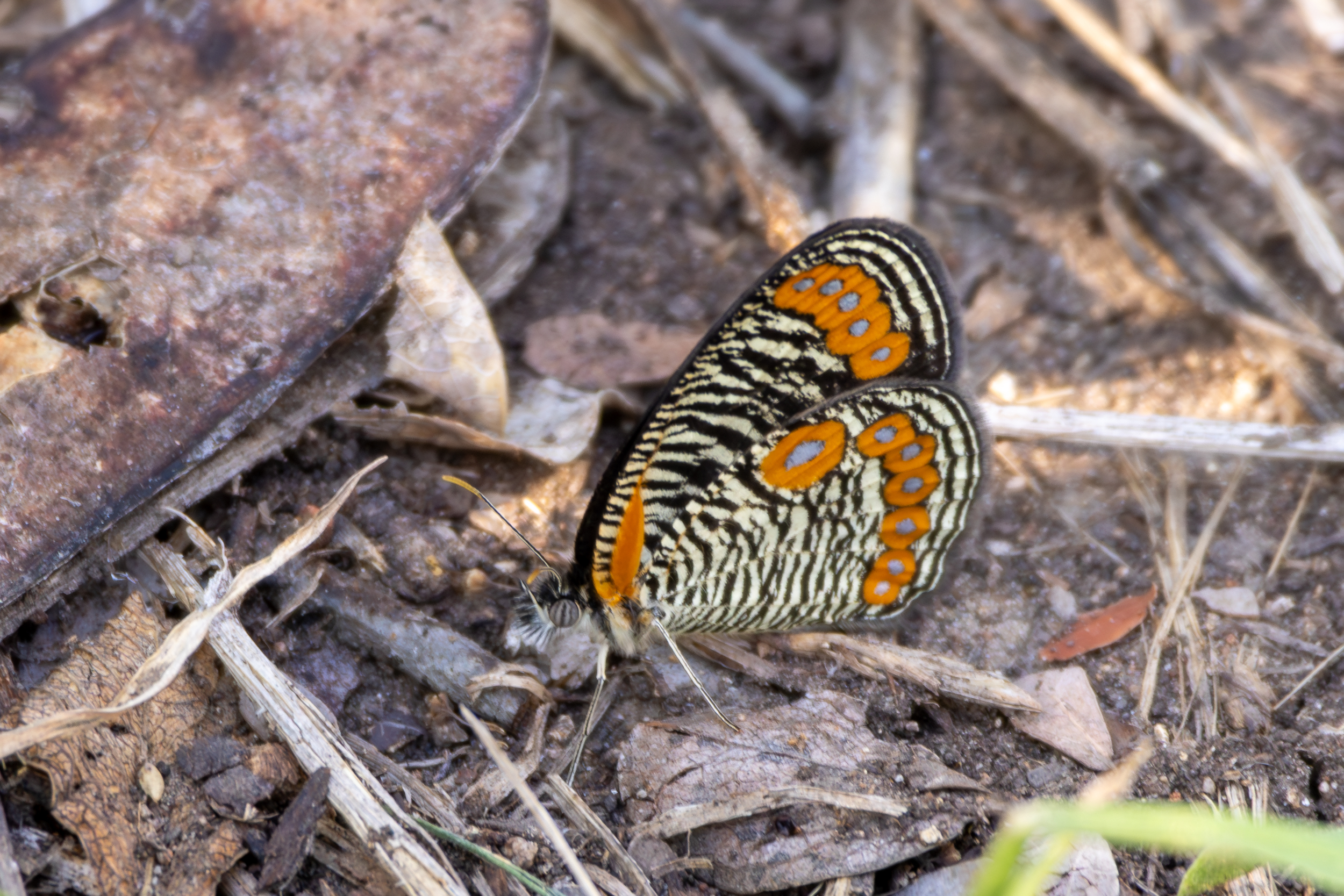
Dark-webbed Ringlet
Physcaeneura panda
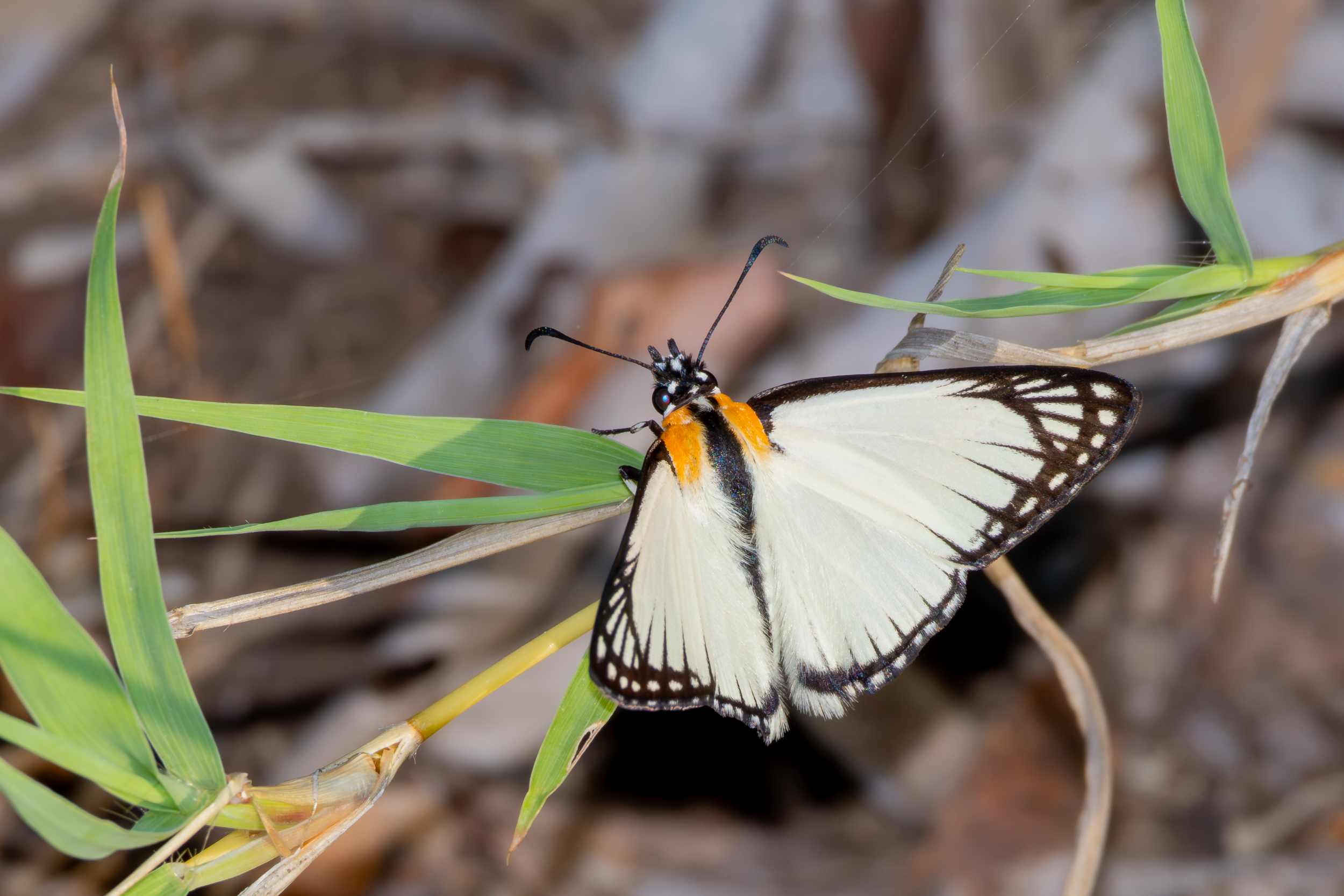
White-cloaked Paradise Skipper ♀
Abantis levubu
Day one (Saturday 30 November):
The temptation to rush straight back to that granophyre ridge was resisted and we had the Butterfly Ecology talk before breakfast, then headed off into the bush again.
We erected some banana-baited traps to attract Charaxes species.
We headed north again, this time a little further into the Lebombos to a steep gully with a waterfall. As well as more Ringlets we found some Colotis evagore antigone (African Small Orange Tips) as well as some Ernsta colotes transvaaliae (Bushveld Sandman), Spialia spio (Mountain Sandman) and another ant associated Lycaenid, Aloeides taikosama (Dusky Russet). As we got back to the car Bernard (who was driving) said he thought he saw a Purple-tip in the road; I tried to sneak around and noted that it had very pointed wings, and as it took off, I thought I saw a glimpse of lilac. It could have been a Colotis celimene amina (Lilac Tip) but we couldn’t be sure.
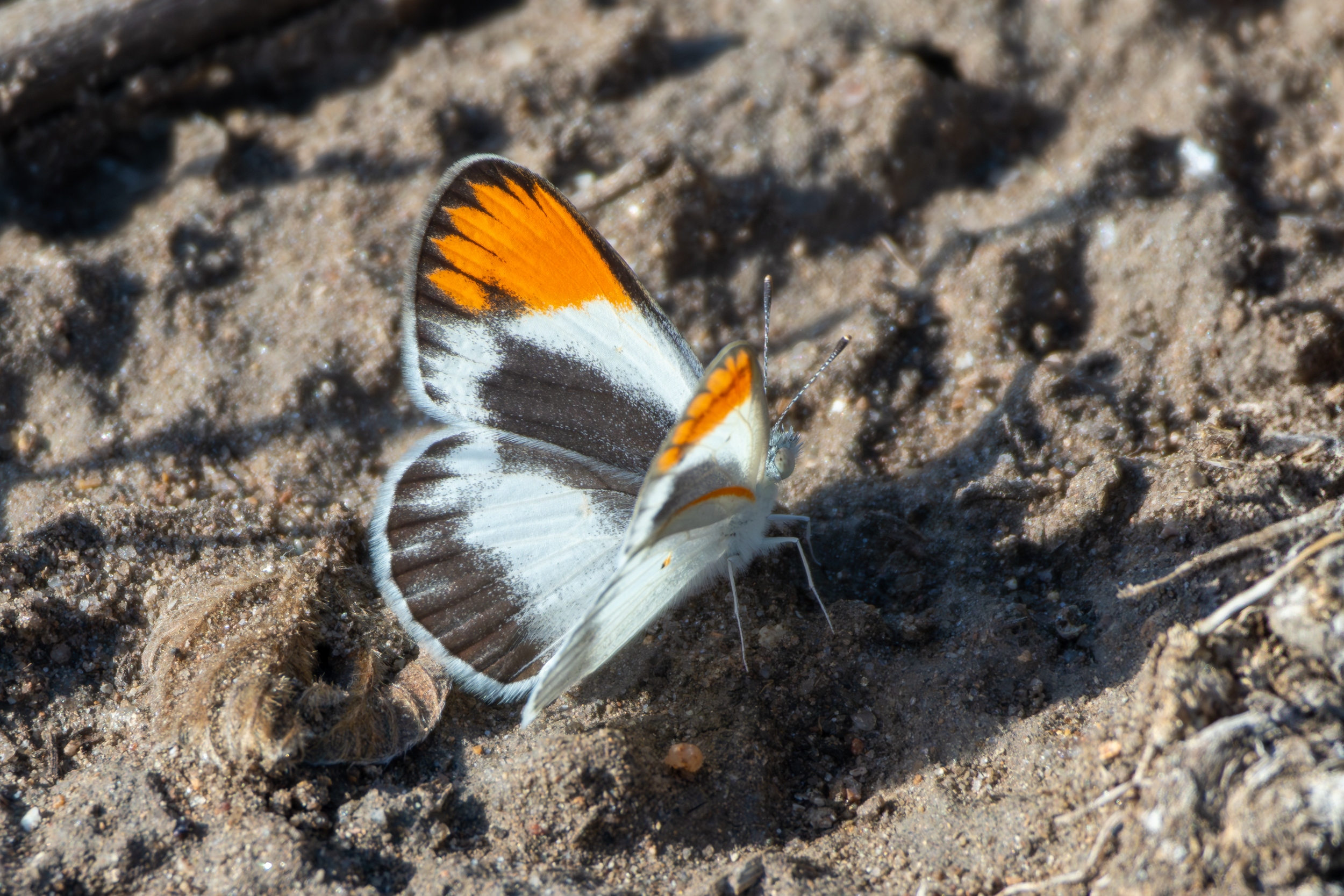
African Small Orange Tip ♂
Colotis evagore antigone
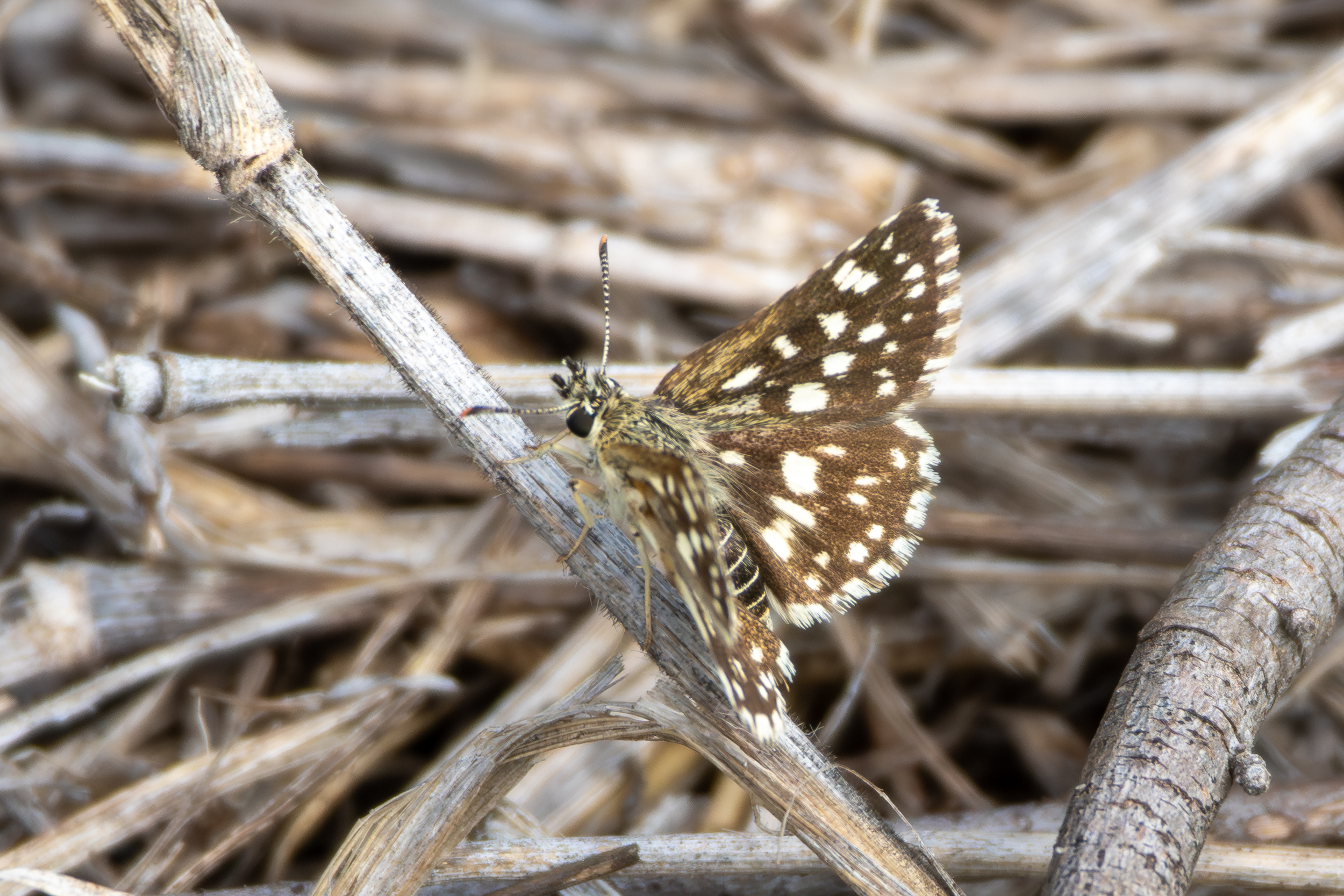
Bushveld Sandman ♀
Ernsta colotes transvaaliae
We then went down into a gorge where the Nwanedzi River crosses into Mozambique. We hoped there would be a lot of butterflies on the mud puddles and there weren’t, but there were some good Dragonflies. We saw some Pieridae – Pinacopteryx eriphia (Zebra White) which sat still for a photo and Afrodryas leda (Autumn-leaf Vagrant) which flew past at high speed.
We returned to camp via the granophyric rocks where we saw many Cream-striped Swordtails and managed to get some photos, as well as a video of a Dark-webbed Ringlet.
After lunch we had the ‘Lepidoptera recognition cues’ talk, then it was off back to the granophyric rocks and a longer walk. We got quite high up into the ridges and found some Lycaenidae perching and exhibiting territorial hilltopping behaviour. The first one we found was a magnificent male Cigaritis phanes (Silvery Silverline) which surprised me at first as I thought it was mainly a Karoo/Kalahari Bushveld butterfly. However, on later re-reading Herbert Otto’s ‘Butterflies of the Kruger National Park and Surrounds’ I saw that he had recorded it often in the park. The larval host plant is Ximenia caffra (Large Sourplum) and there was lots of this growing in the area so that made sense. This is one of the most attractive small butterflies with its flame-like blue iridescent markings and silvery white marks on the underside.
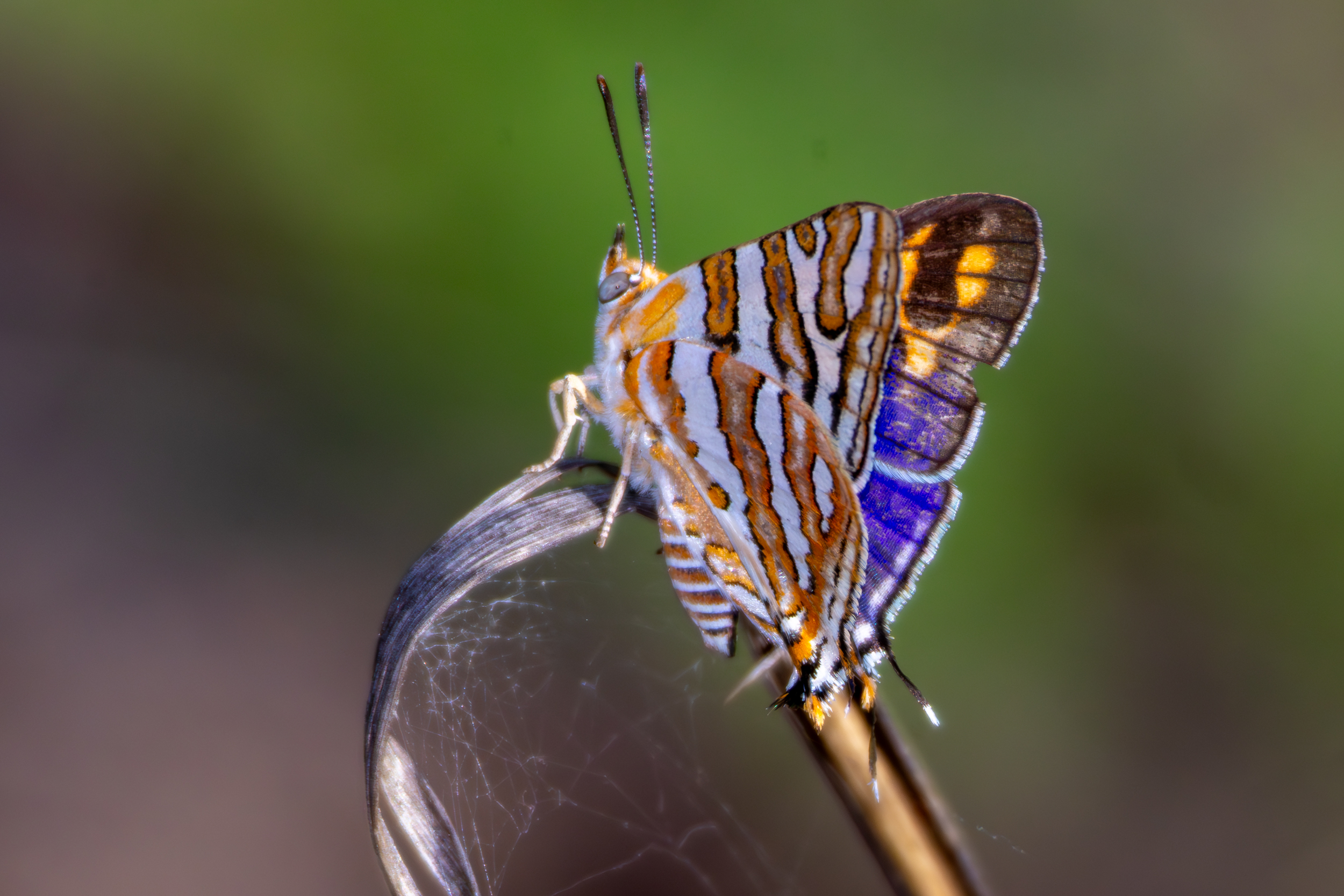
Silvery Silverline ♂
Cigaritis phanes
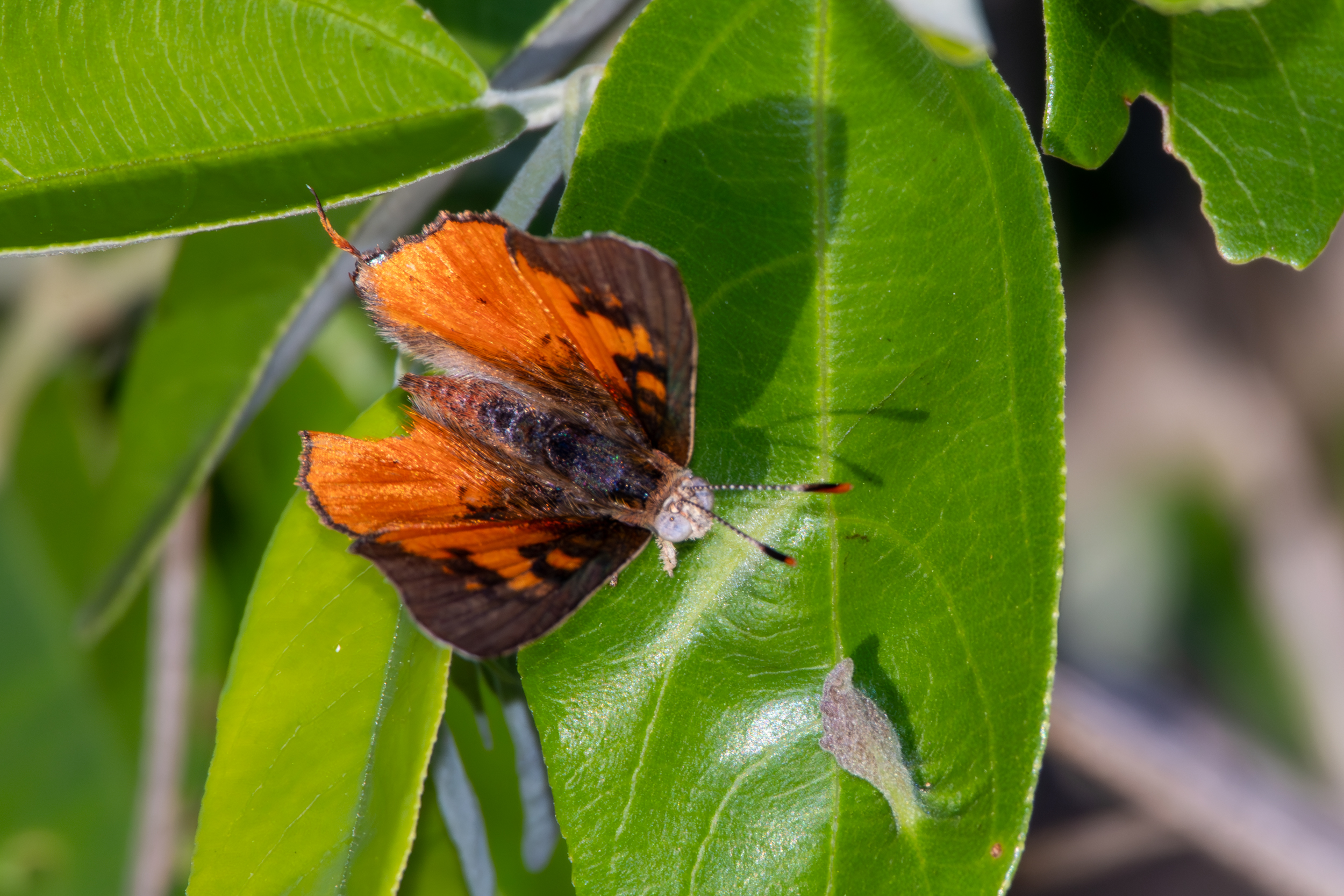
Eastern Scarlet ♂
Axiocerses tjoane tjoane
We found another Ximenia feeder, Stugeta bowkeri tearei (Bowker’s Marbled Sapphire) perching on a bare twig, then a few specimens of the startlingly red Axiocerses tjoane tjoane (Eastern Scarlet) chasing each other around some low bushes on a prominent ridge.
These butterflies attracted a lot of interest among the guides, who surrounded them like paparazzi and took lots of photos. It was a good way to demonstrate how butterflies that start off super wary and fly away easily soon become habituated and allow one to approach closely with a little patience and avoiding jerky movements.
We found that the Charaxes traps had been unsuccessful, only attracting a single Charaxes saturnus (Foxy Charaxes) and a battered Eurytela dryope angulata (Golden Piper).

Butterfly paparazzi
On granophyre ridge near Singita Lebombo
Day two (Sunday 1 December):
After an early start we headed north to a high bluff on the east bank of the Nwanedzi River in search of hilltopping butterflies. On the way there were many flowering Terminalia attracting several Junonia hierta cebrene (African Yellow Pansy) and some Acraeas – mainly Stephenia oncaea oncaea (Window Acraea) with the occasional Stephenia axina (Little Acraea) and Stephenia natalica (Black-based Acraea).
One of the Acraeas turned out to be an aberrant specimen of (probably) Window Acraea with its black spots replaced by long black streaks. This is ab. radiata, something I cover in one of the lectures, and they are very rare.
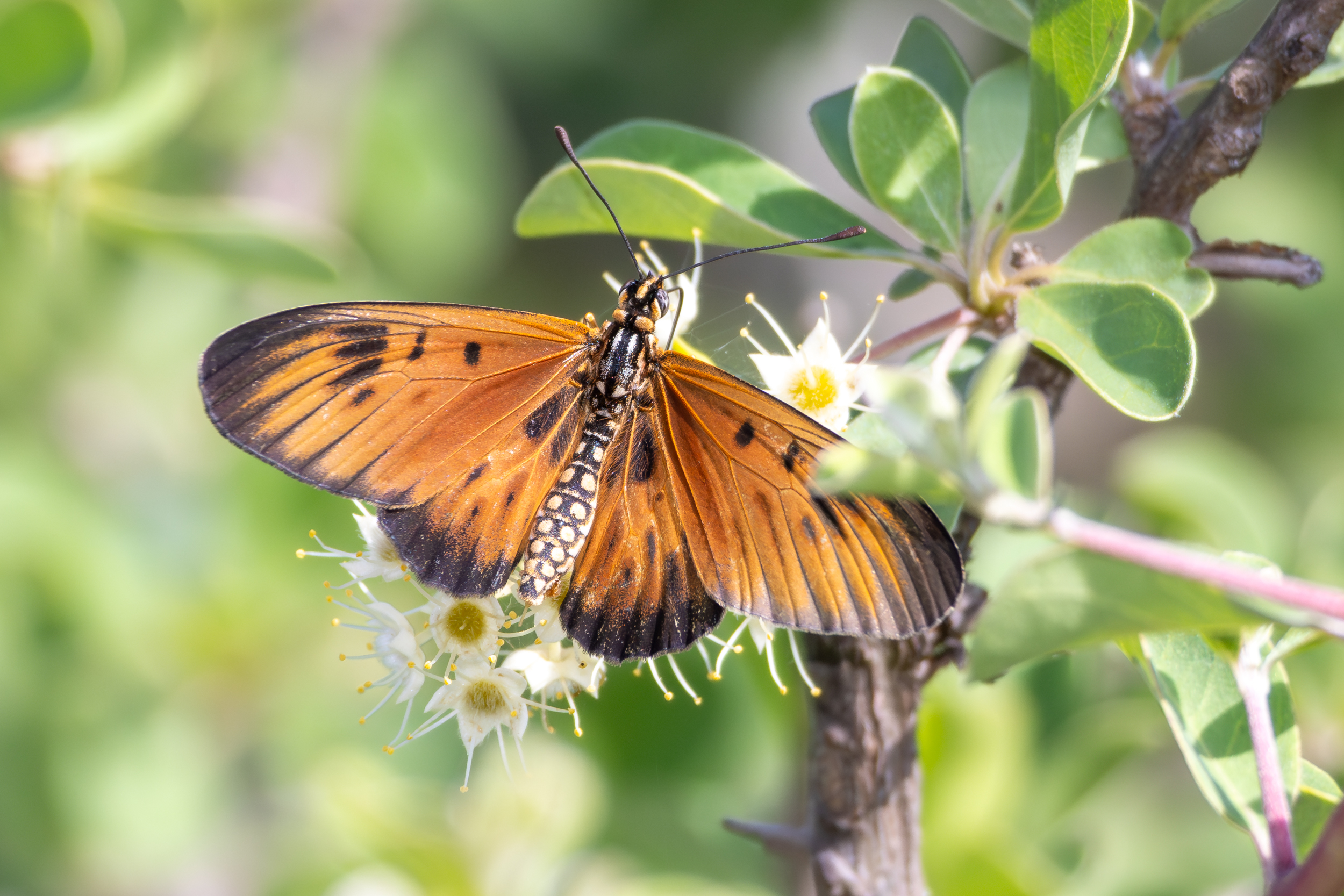
Window Acraea ♀ aberration
Stephenia oncaea f. radiata
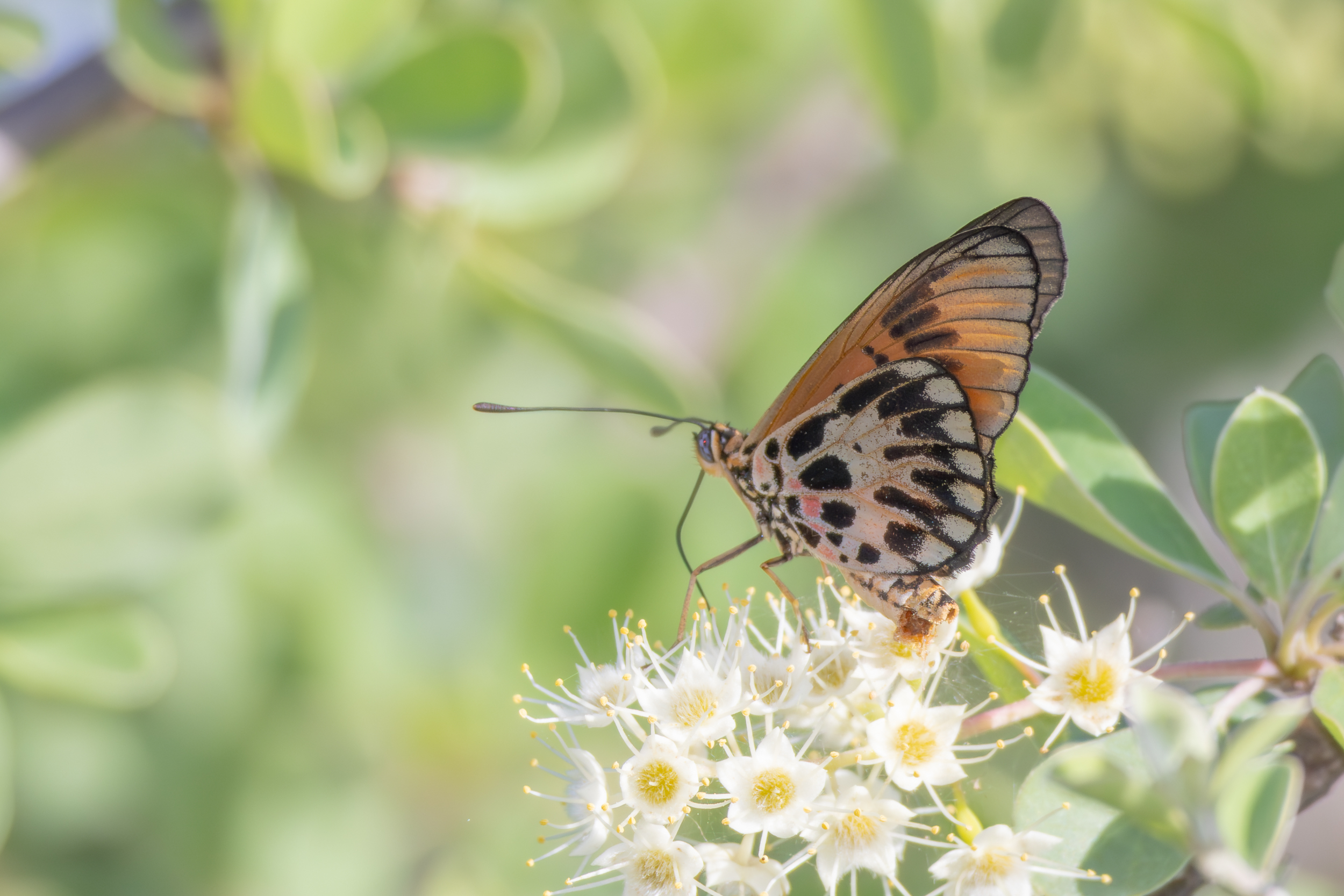
Window Acraea ♀ aberration
Stephenia oncaea f. radiata
Butterflies were fairly scarce and flying very fast. The weather was very hot even at 08:30 hrs, making them hyperactive. On the ridge there were some flowering Dyschoriste rogersii (Bushveld ribbon flower) attracting whites and tips, including Colotis regina (Queen Purple Tip) and Teracolus agoye agoye (Speckled Sulphur Tip) which were far too fast for our cameras. We managed to photograph some females of the latter.
One of the best sightings was a freshly hatched male Dotta callicles callicles (Pale Spangled Ranger) that was flying around a clearing displaying his wings.
Acraea neobule (Wandering Donkey Acraea) and Junonia oenone oenone (Dark Blue Pansy) were flying on the high points but there were no Charaxes, Paradise Skippers, or Sapphires.
We went back to the lodge for lunch with the ‘Butterfly Recognition’ lectures on either side of it.
After these we had a late visit to the granophyric rocks where we found several Silvery Giant Cupids getting ready to roost as well as some more Bushveld Sandmen. We watched an awesome sunset before heading back for dinner.
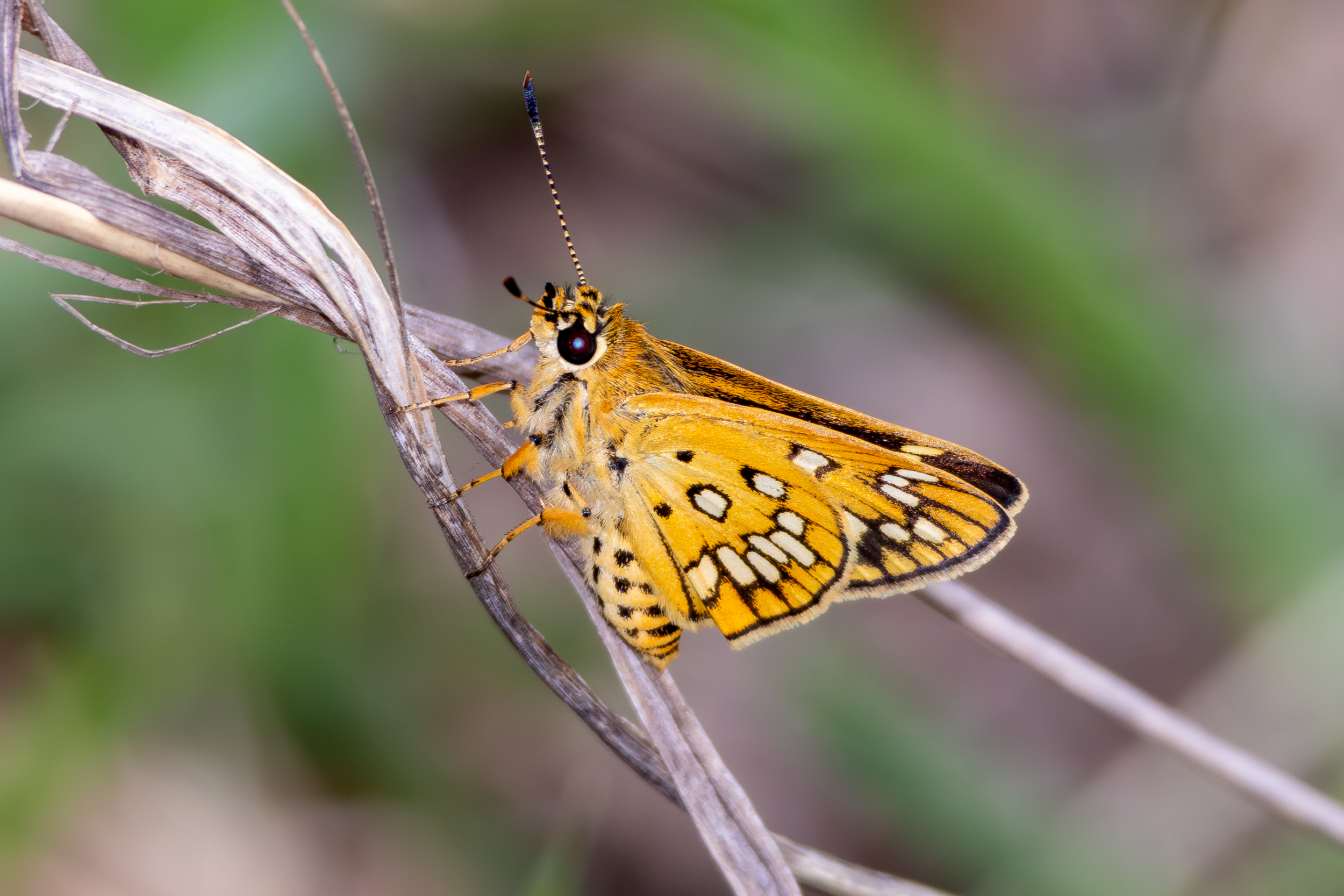
Pale Spangled Ranger ♂
Dotta callicles callicles
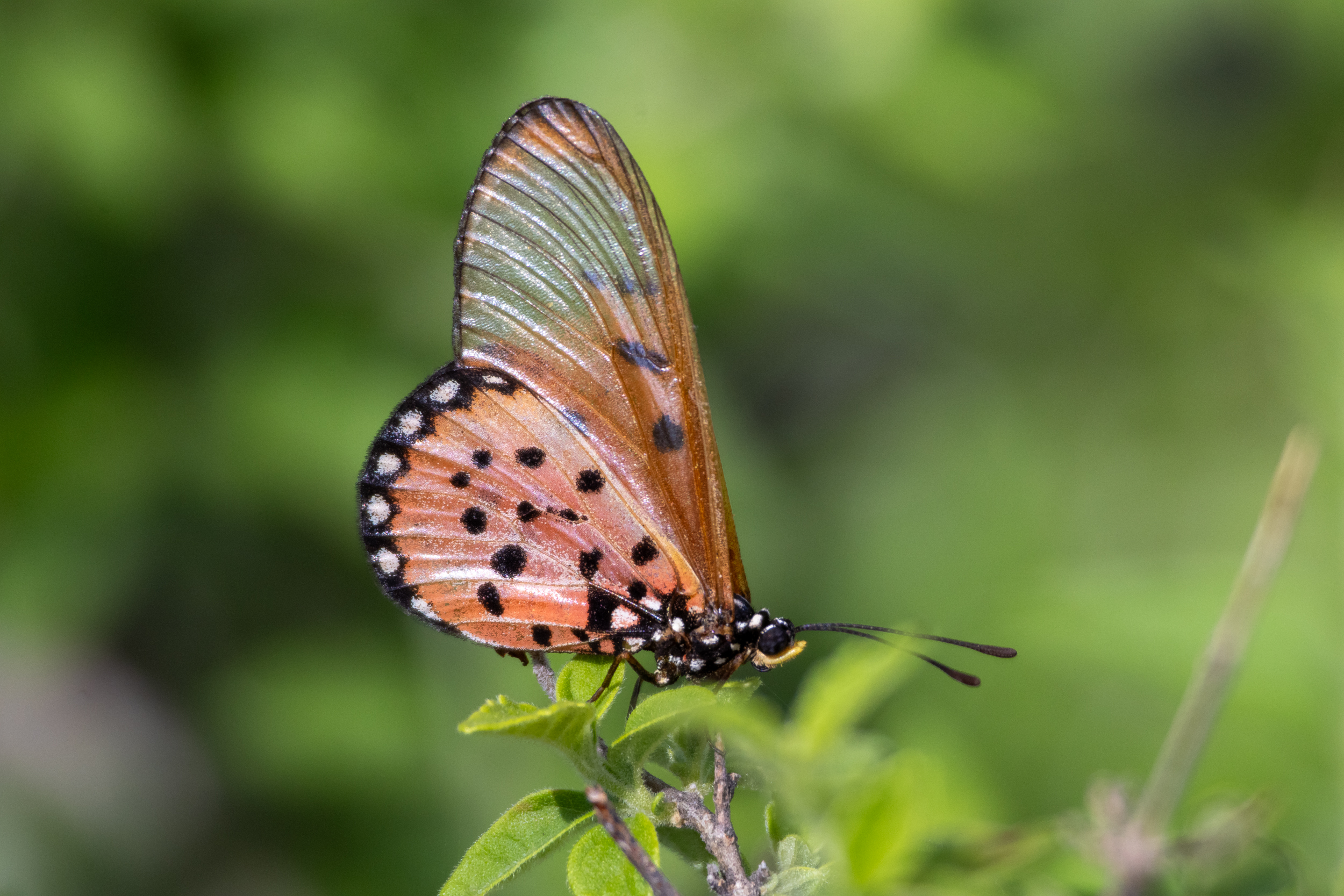
Wandering Donkey Acraea ♂
Acraea neobule
Day three (Monday 2 December):
An early start saw us setting off north to the Pumbe – a large plateau of sandveld along the Mozambique border.
We soon found a Cheetah mother with a single cub – a good omen for the day.
Butterflies were quite scarce, but we did find some interesting ones like Freyeria trochylus (Grass Jewel) and a single Crudaria leroma (Silver-spotted Grey) – another Lycaenid butterfly associated with ants. Another Pale Spangled Ranger put in an appearance.
For me the find of the day was a larva of Amyops ingens (Giant Prominent), a moth I’ve seen often at lights but had only seen photos of its weirdly shaped caterpillar. Until this day when Bernard found one on its host plant Terminalia sericea (Silver Cluster-leaf). In fact, there were lots of caterpillars around and thanks to iNaturalist and ‘Southern African Moths and their Caterpillars’ I was able to identify many of them later at home.
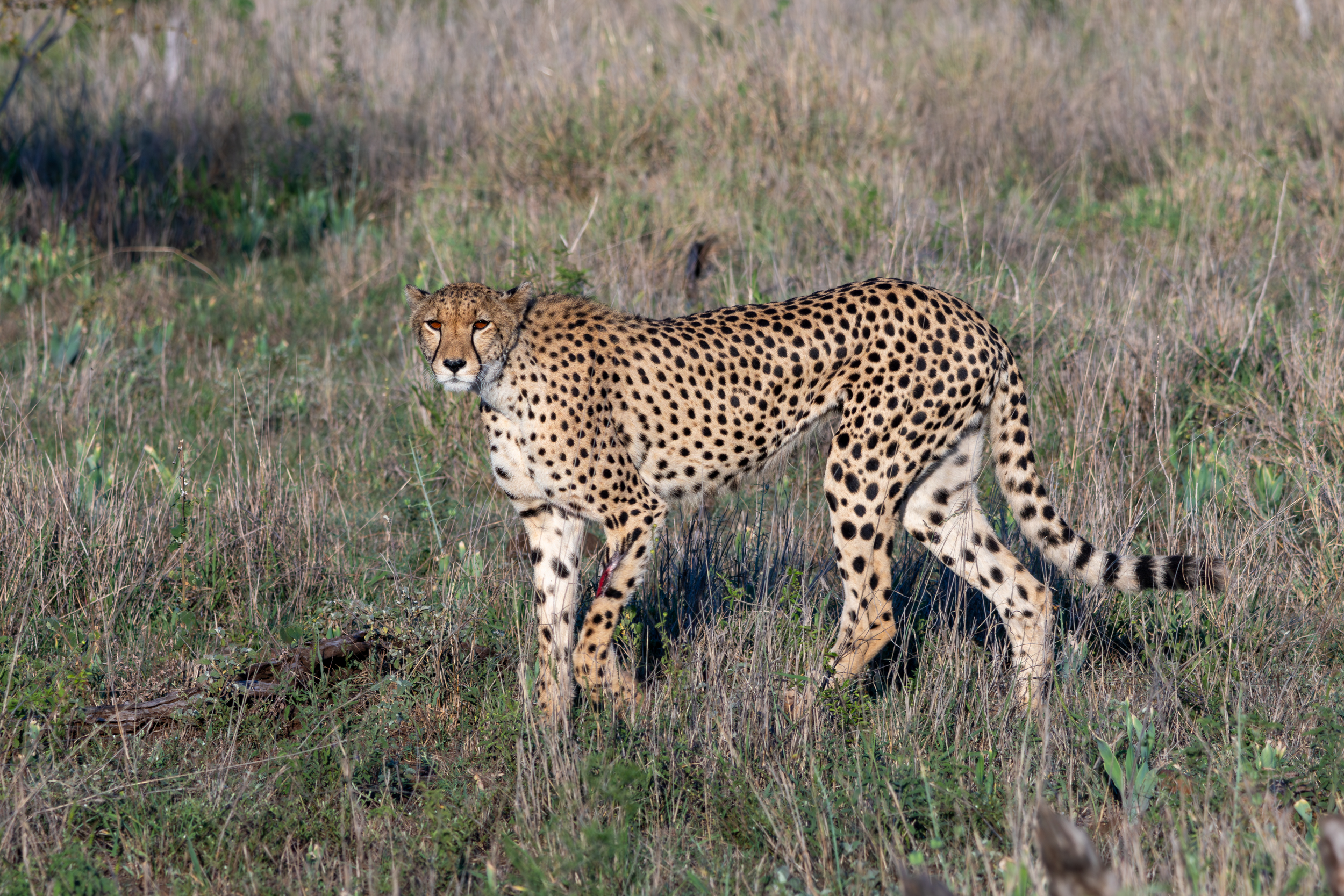
Cheetah ♀
Acinonyx jubatus

Giant Prominent larva
Amyops ingens
There was a huge herd of buffalo and elephants at the Pumbe waterhole, and we watched them for a while as the elephants chased the buffalo away. There was a lot of a Chamaecrista plant (Dwarf Cassia) growing in the area. This is the host plant for butterflies like Eurema brigitta brigitta (Broad-bordered Grass Yellow) and a few were on the wing.
As we drove to the Pumbe rest camp we found a single Colotis annae annae male (Scarlet Tip). We stopped for a break here. Then we set off back down the border road stopping every so often for a butterfly. There were a few old buffalo ‘dagga boys’ around – it pays to have your wits about you (and dangerous game-trained companions!) when butterflying in this area.
Eventually we got to a place where the road starts to drop down to the Nwanedzi valley and the Lodge. We started crossing drainage lines with marshy vegetation along streams, and in these we found butterflies. We found some more colonies of Dusky Russet as well as a couple of Sandmen that were so fast and tiny that none of us could see what they were.
We started driving down the road as it followed an (almost) dry riverbed and someone spotted a Lepidochrysops (it turned out to be L. plebeia, the Twin-spot Giant Cupid) flying in the shade of a big tree. We noticed a lot of small butterfly activity around, so I gave the tree’s lower branches a sharp tap with my net handle.
Suddenly a cloud of tiny fast-flying Lycaenids flew out and whirled around before heading straight back into the foliage. This is always a good sign. On closer inspection we found that the tree was a Diospyros mespiliformis (Jackal-berry) flowering out-of-season. This is a well-known butterfly magnet, so we spent some time around it, mindful of the fact that we still had three more talks and a quiz to get through and only one full day left. As well as more of the Silvery Silverlines there were a few Cigaritis ella (Ella’s Silverline) and a single Cigaritis natalensis (Natal Silverline). There were several Eastern Scarlets (both sexes) as well as a very small Deudorix (Playboy) that would NOT open his wings.
We then went back to the boardroom where we had the ‘Savanna butterflies’ and ‘Difference between butterflies and moths’ talks.
Although it was quite late (17:30 hrs) we decided to go back to the granophyric ridge and found more Ella’s Silverlines (females this time) on the Terminalia flowers.

Ella's Silverline ♀
Cigaritis ella
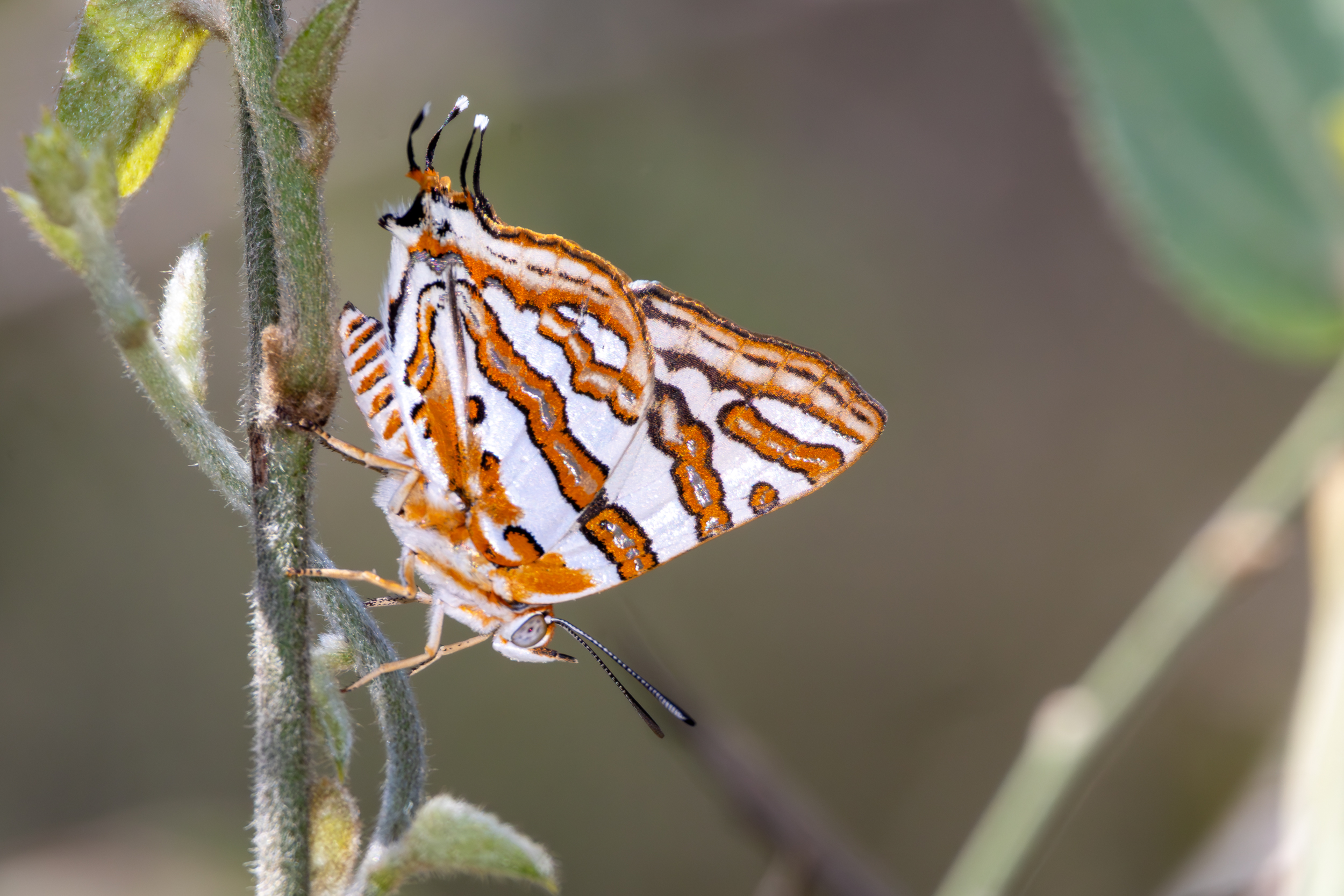
Silvery Silverline ♂
Cigaritis phanes
Day four (Tuesday 3 December):
We started by going back to the same Jackal-berry to see if we could find more species of butterfly on the flowers earlier in the day. I had been hoping for Chloroselas species (Gems) because there were some extremely small and rapid flying Lycaenids there, but they turned out to be very small male specimens of Ella’s Silverline.
We also found the Playboy again, caught him, and put him into a bottle to be chilled in the fridge overnight for a staged photo outside the boardroom.
On the way in we found a very obliging Colotis vesta argillaceus (Topaz Arab) that allowed us some nice underside shots.
On the way back we called in at the lookout point above the Nwanedzi in an attempt to find Queen Purple Tips nectaring. In this we were unsuccessful.
Returning before noon we had the ‘Understanding butterflies’ talk before lunch, then afterwards the quiz and the self-marking session.
To round off the day the team kindly took me to the lookout point above the Nwanedzi Gorge for one of the finest African sunsets I’ve ever seen, with a couple of sundowners and some snacks.

Topaz Arab ♂
Colotis vesta argillaceus

Twin-spot Giant Cupid ♀
Lepidochrysops plebeia

Sunset over the Kruger National Park
Day five (Wednesday 4 December):
This was the transfer day from Lebombo Lodge to Sabi Sand. First of all, we tried to get the Playboy from the Jackal-berry to open his wings by removing him from the fridge and placing him on a strategic perch in the garden outside the guides’ office. Despite all of us willing him to do so he failed to open his wings. Eventually he flew away. No blue was visible on the upper side as he did so, it appeared to be grey-brown, so we marked him down as the common Deudorix antalus (Brown Playboy) and not the rarer Deudorix vansoni (Little Playboy). That species remains a possibility in the area, however.
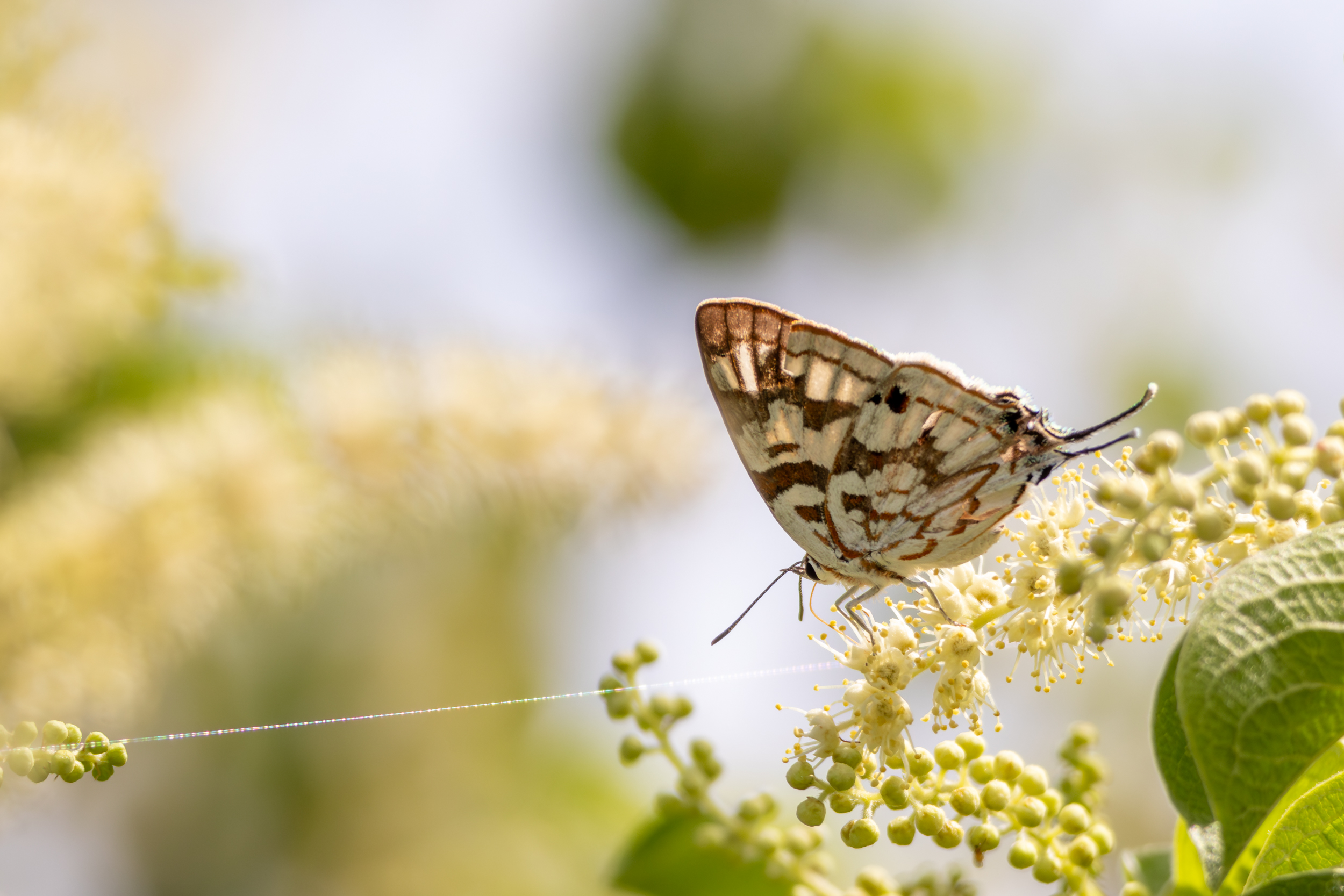
Bowker’s Marbled Sapphire ♂
Stugeta bowkeri tearei

That frustrating ♂ Brown Playboy
Deudorix antalus
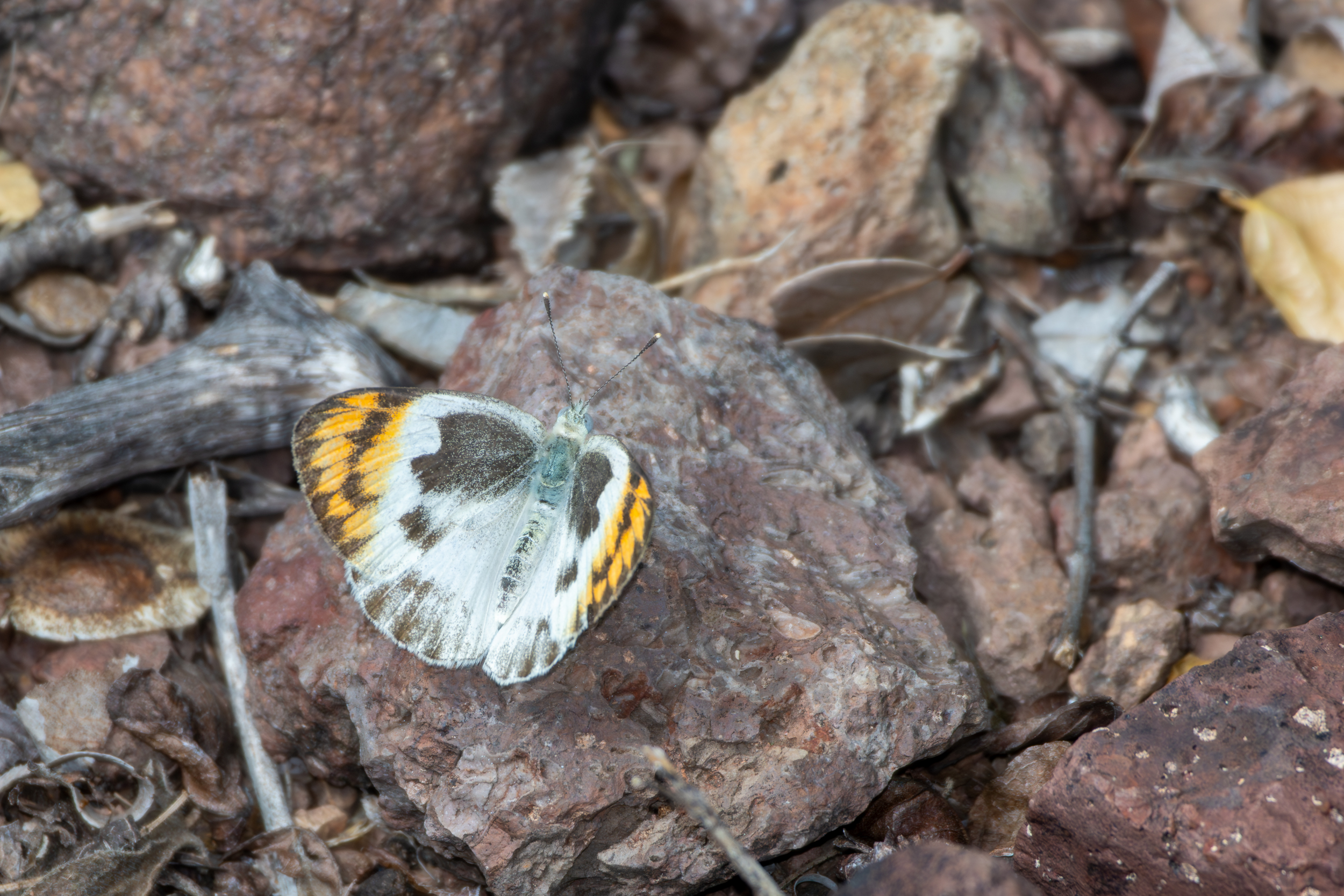
African Orange Tip ♀
Colotis evenina evenina
That frustrating ♂ Brown Playboy
Deudorix antalus
Brian Rode and I spent the morning walking the hilltop above Room 1, which had a lot of Odonata (dragonflies and damselflies) as well as some butterflies on flowering Terminalia. We found a Pseudonacaduba sichela (Dusky Lineblue) as well as another Bowker’s Marbled Sapphire. This was being stalked by a Jumping Spider (Salticidae) as it nectared on Terminalia blossom. I was getting ready to try and focus my camera on the spider when it pounced… and missed. Later on, we realised that the butterfly was missing a forewing tip, so it looks like the spider wasn’t fooled by the butterfly’s ‘false head’ markings on its hindwing!
We also found a cooperative female Colotis evenina evenina (African Orange Tip) showing her distinctive forewing upper side.
The ablutions opposite the boardroom, next to the canteen, are a very effective light trap for moths. Morning visits there always produce something. Brian has been posting its captives on iNaturalist for a long time. We found some impressive Droplet (Acontiinae) moths there, mimicking bird droppings. One of them was the strange Thyatirina achatina (Tunnel Droplet), whose wings resemble an empty seed pod when at rest. I had long been wanting to see one of these, so it was a fitting climax to my time at Lebombo Lodge.

Dusky Lineblue ♀
Pseudonacaduba sichela sichela
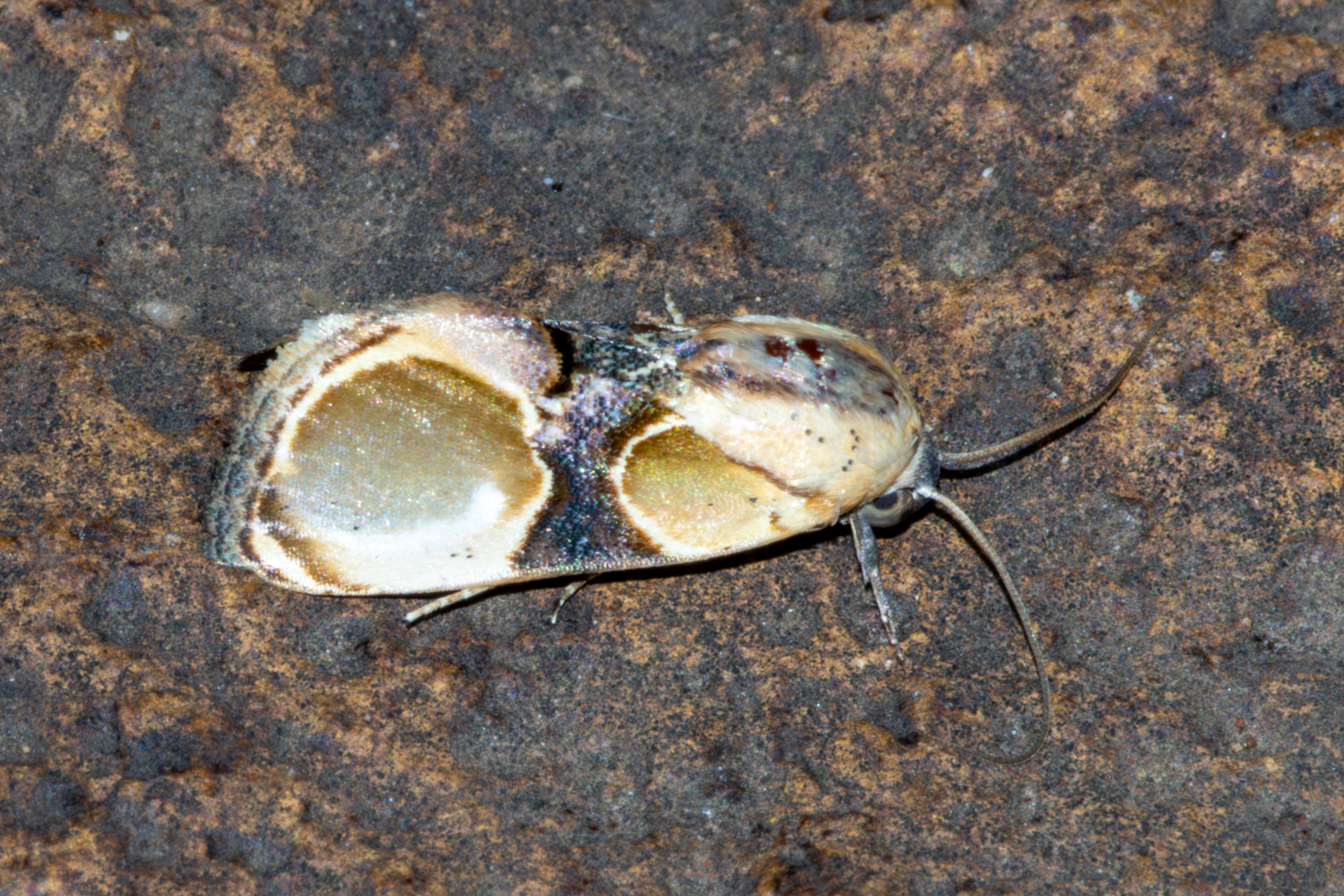
Tunnel Droplet
Thyatirina achatina
In the afternoon I transferred to the Sabi Sand Pilot Guide cottage near Ebony Lodge, and en route we had a good Leopard sighting including a photograph. Despite having seen Leopards on many butterfly safaris I never got a halfway decent photo until this day. This seems like a good time to quote Ogden Nash…
The lepidopterist, with happy cries,
Devotes his days to hunting butterflies.
The leopard, through some feline mental twist,
Would rather hunt a lepidopterist.
That’s why I never adopted lepidoptery;
I do not wish to live in jeopardoptery.
I don’t mind the jeopardoptery!
When I had settled in at Sabi Sand I went for a drive with Marc Eschenlohr and the team. We saw few butterflies – it was 1700 hrs and still very hot – but we found some good Odonata.
We had the ‘Butterfly-bird Parallels’ lecture in the cool of the boardroom.
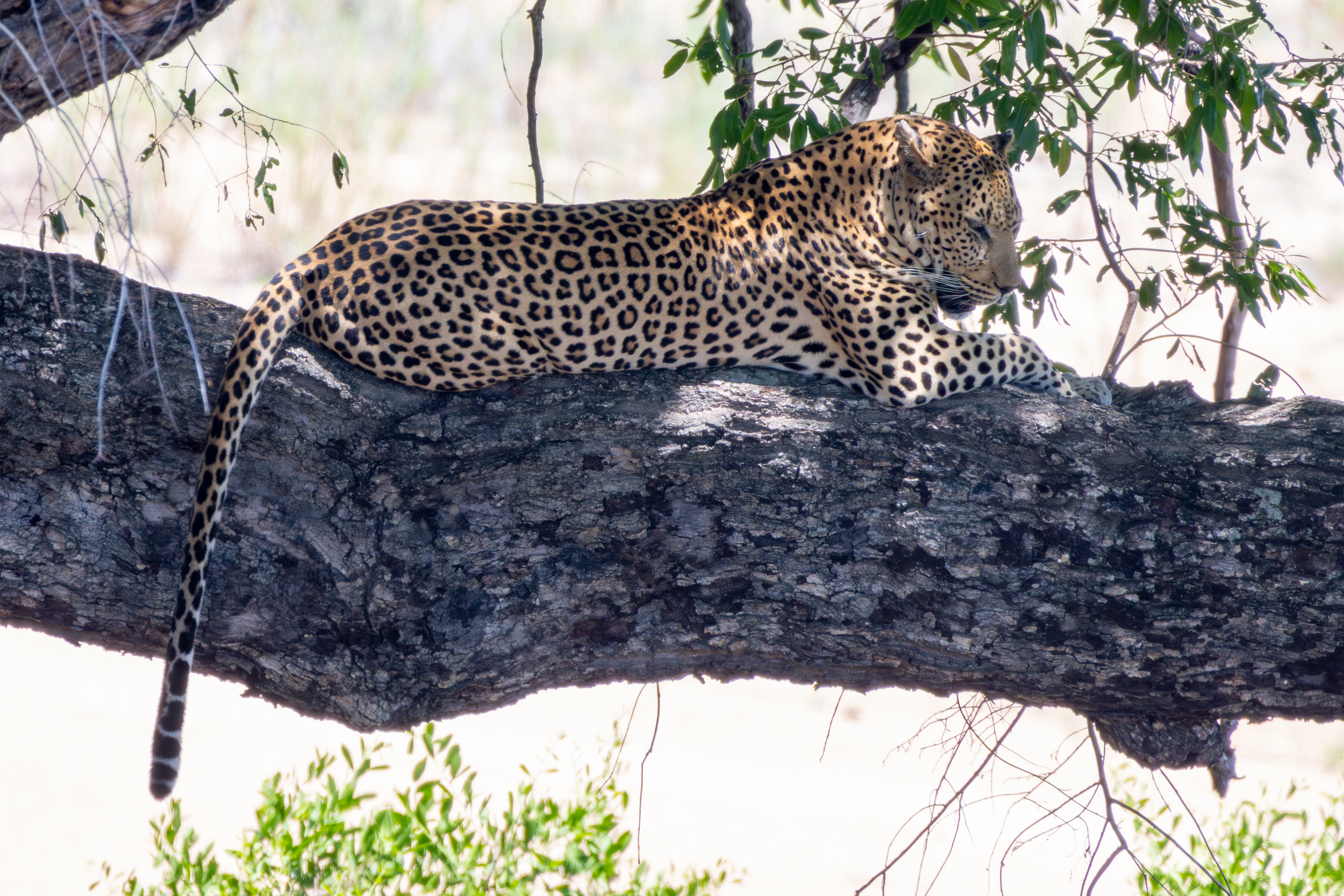
Leopard
Panthera pardus
Day six (Thursday 5 December):
We began with an early morning drive to look for suitable habitat (hilltops and flowering plants) and keep a watch for butterflies.
Banana baited traps were hung close to the offices (as well as on trees and rocks) and at a granite koppie a short distance east of the Lodge.
There were many flowering specimens of Terminalia phanerophlebia (Lebombo cluster-leaf) on this koppie and in the general area. This gave us hope of seeing butterflies nectaring on them. There were a lot of Catopsilia florella (African Migrants) on the wing, an indication that a migration was underway. Another numerous species we saw was Pseudanaphaeis gidica abyssinica (Eastern Pointed Caper White).
A single Coeliades anchises (One-Pip Policeman) and a Tildia anemosa (Broad-bordered Acraea) were sighted but offered no photo opportunities. These are both uncommon species. By 09:00 hrs the conditions were becoming extremely hot, and butterfly sightings were decreasing. There was no activity on the hilltop.
Returning to the cool of the boardroom we had the ‘Butterfly ecology’ lecture before returning to the field hoping for cooler conditions but it was even hotter at 15:00 hrs. Dragonflies were clustering in the shade of trees, and the African Migrants were seeking shady leaves to hide between.
The wall of the boardroom proved to be an effective ‘moth trap’ as it is lit by a large light. Several interesting species were attracted to it.
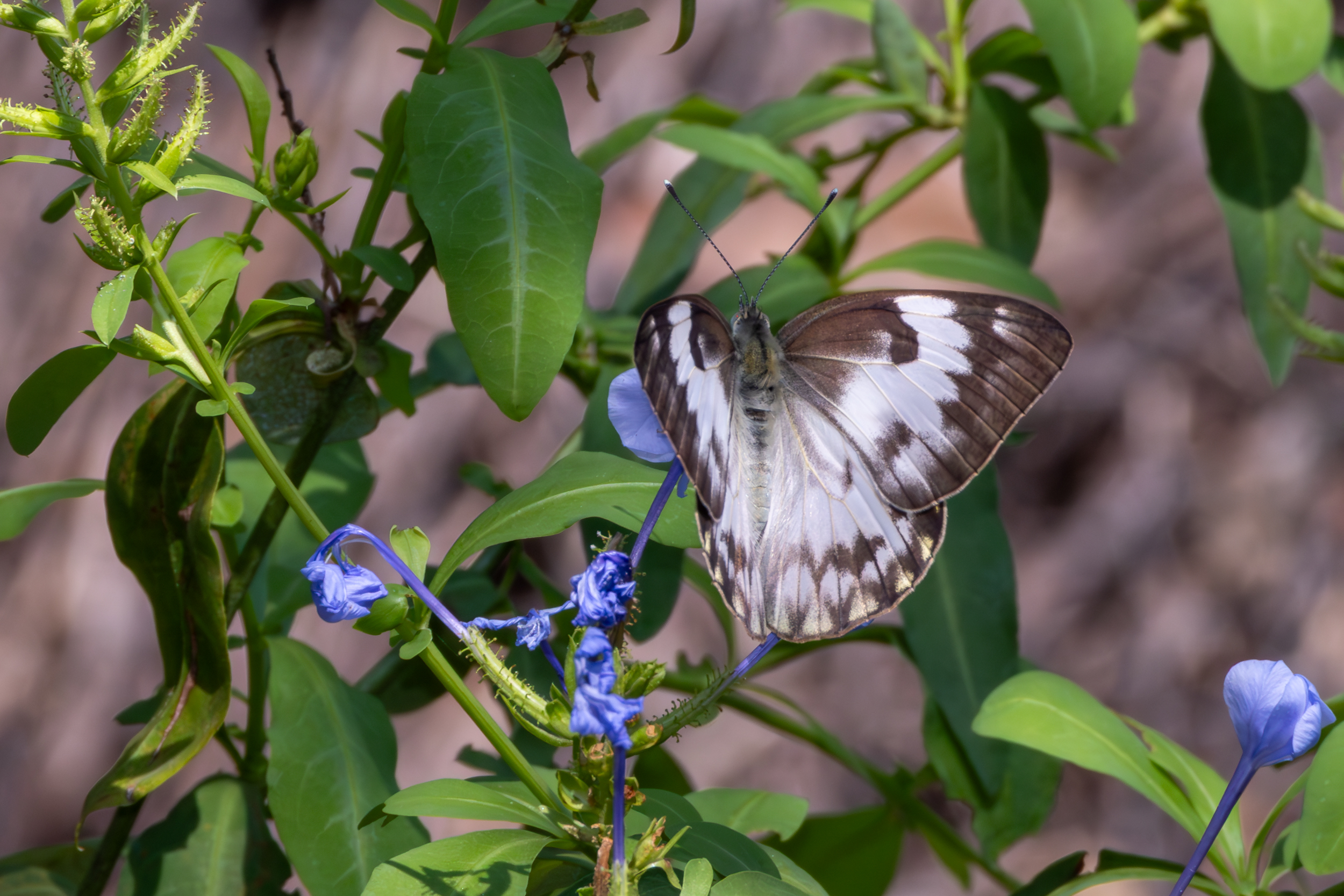
Pointed Caper White ♀ form westwoodi
Pseudanaphaeis gidica abyssinica
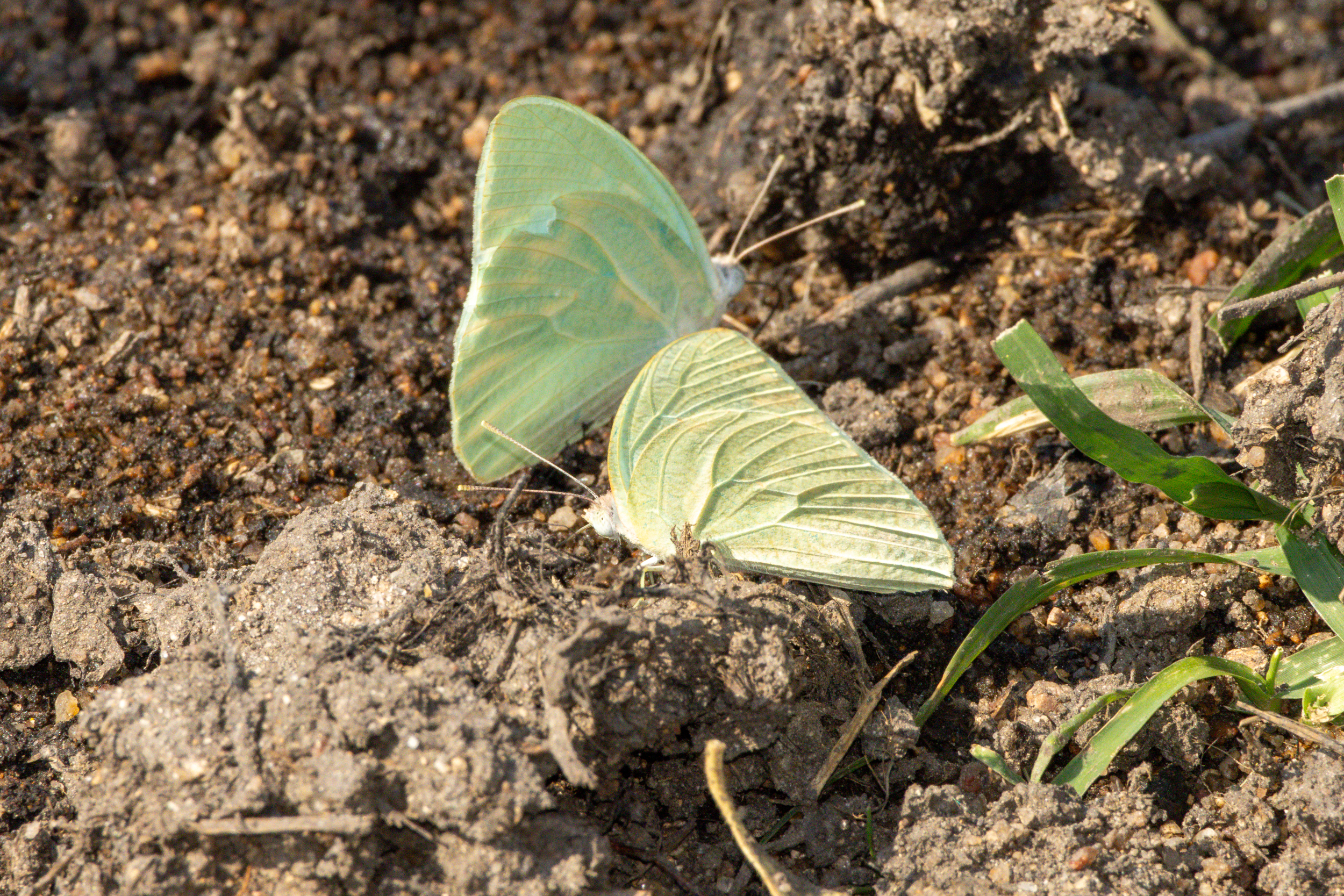
African Migrant ♂
Catopsilia florella
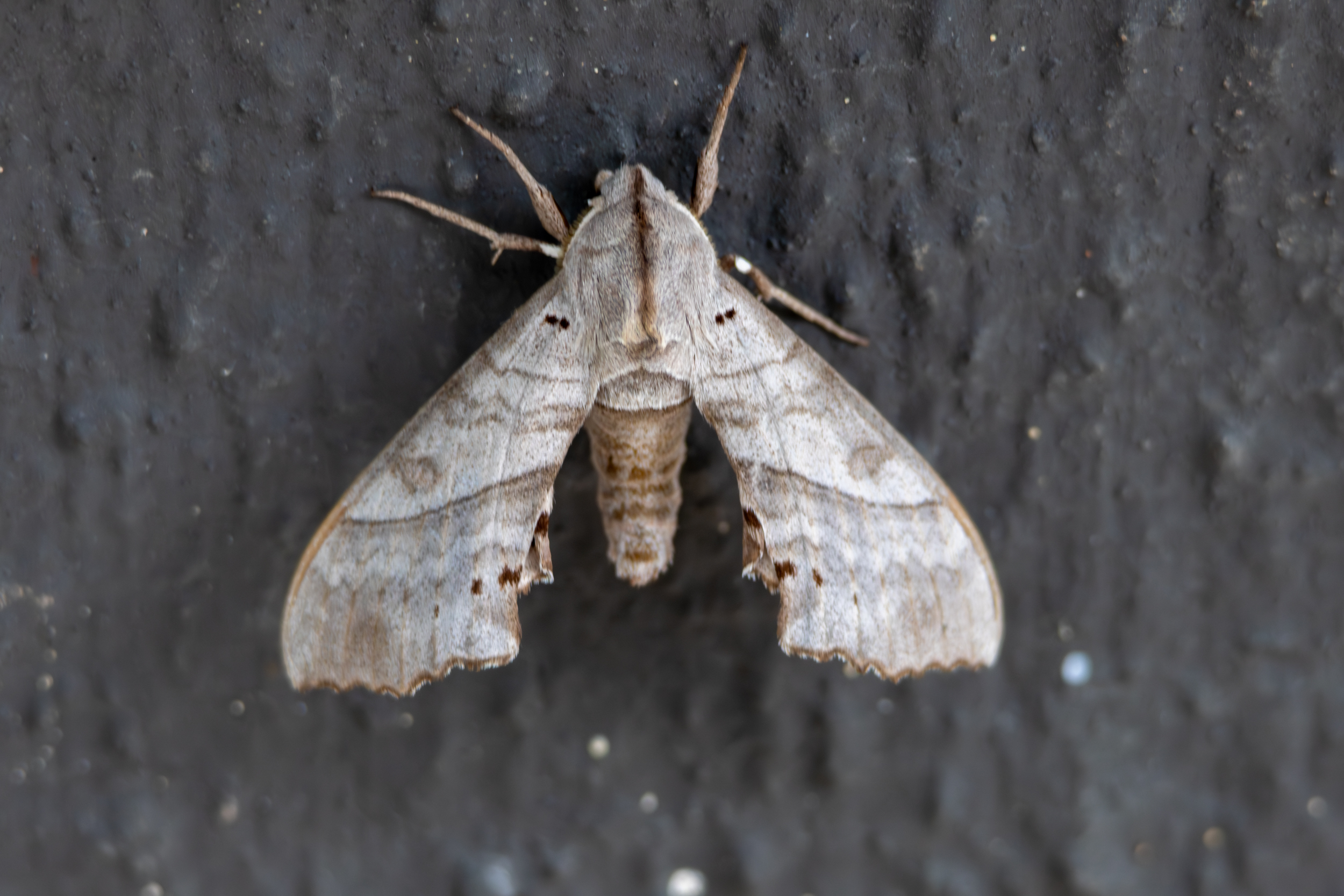
Wavy Polyptychus
Rufoclanis numosae

Raised Cabera
Cabera elatina
Day seven (Friday 6 December):
The forecast being for cooler weather, we decided to spend the whole day in lectures and spend a full day in the field on the morrow. This was the day after the Lion Sands fire to which most of the participants had been called out on firefighting duty, so they had had very little sleep.
We had the ‘Lepidoptera recognition cues’, ‘Butterfly recognition adults’, and ‘Savanna butterflies’ lectures, with several breaks for rest and recuperation.
The traps were moved, and one was set up near the guides’ accommodation but very few butterflies were attracted (but plenty of fruit chafers were).
There was a flowering Ziziphus mucronata (Buffalo Thorn) opposite the boardroom that was attracting many African Migrants. It also had a single male Tildia acara (Acara Acraea) come to nectar, unfortunately when all the participants had gone to rest.
The bait we placed on a tree trunk outside the boardroom attracted a mother Vervet and her baby but very few butterflies.

Acara Acraea ♂
Tildia acara f sufferti

Pointed Caper White ♂
Pseudanaphaeis gidica abyssinica
Day eight (Saturday 7 December):
Marc Eschenlohr had arranged with Skukuza Camp in the Kruger National Park for us to visit their nursery and staff accommodation area. This is surrounded by tall riverine bush and was expected to offer a greater variety of sightings.
This proved to be the case since in addition to the ubiquitous African Migrants and Pointed Caper Whites we saw several forest species like Melanitis leda leda (African Evening Brown), Leptosia alcesta inalcesta (African Spirit/Wood White/Fladderpapiertjie) and a beautiful specimen of Protogoniomorpha nebulosa (Clouded Mother-of-Pearl).
There were also some excellent dragonflies as well as a very obliging Papilio demodocus demodocus (Citrus Swallowtail).
Returning to Singita the team had arranged dinner at ‘The Zoo’ and Marc Bowes-Taylor brought along a caterpillar he had found. It later turned out to be a female Tildia acara (Acara Acraea). She pupated that night and the adult emerged on 18 December – only ten days in the pupal stage.

African Wood White ♂
Leptosia alcesta inalcesta

Clouded Mother-of-Pearl ♂
Protogoniomorpha nebulosa f nebulosa

Final instar Acara Acraea larva
Tildia acara
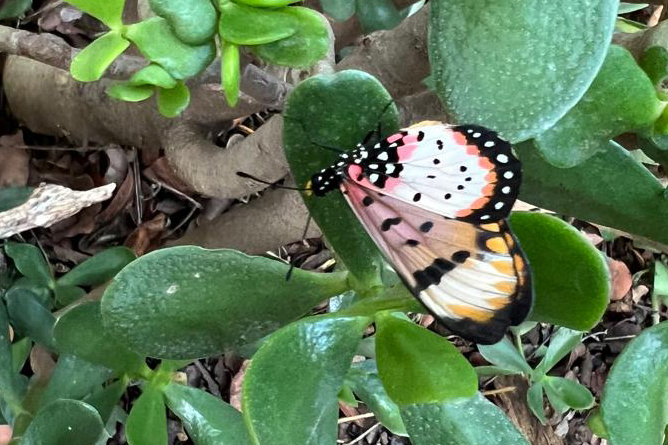
Acara Acraea
Tildia acara © Marc Eschenlohr
Day nine (Sunday 8 December):
In the morning, we had the ‘Understanding butterflies’ and ‘Difference between butterflies and moths’ lectures. We held the quiz early in the afternoon and then went out on a drive.
We reached a sandy area on the northern bank of the Sand River that had been cleared and had White Rhino grazing on it. There were some large Fig trees in fruit and below one of these we found a Hamanumida daedalus (Guinea Fowl) feeding on fallen figs. These butterflies are noted for their habit of sitting wings-open on the ground, frustrating the photographer by taking off just when one approaches shooting range! This one was engrossed in feeding so he was a good example of the power of fallen fruit to assist the camera.
There was also a colony of Dusky Russets close by. A female was exhibiting oviposition behaviour, but she appeared to be ovipositing in the sand (a common habit with Russets) and not on a particular plant.
We walked along a dry sandy riverbed – a tributary of the Sand River with large trees growing along its banks. We saw some butterflies including a male Scarlet Tip that was looking for a roosting spot. It was getting rather late by this stage – 17:30 hrs – so we decided to return to base.
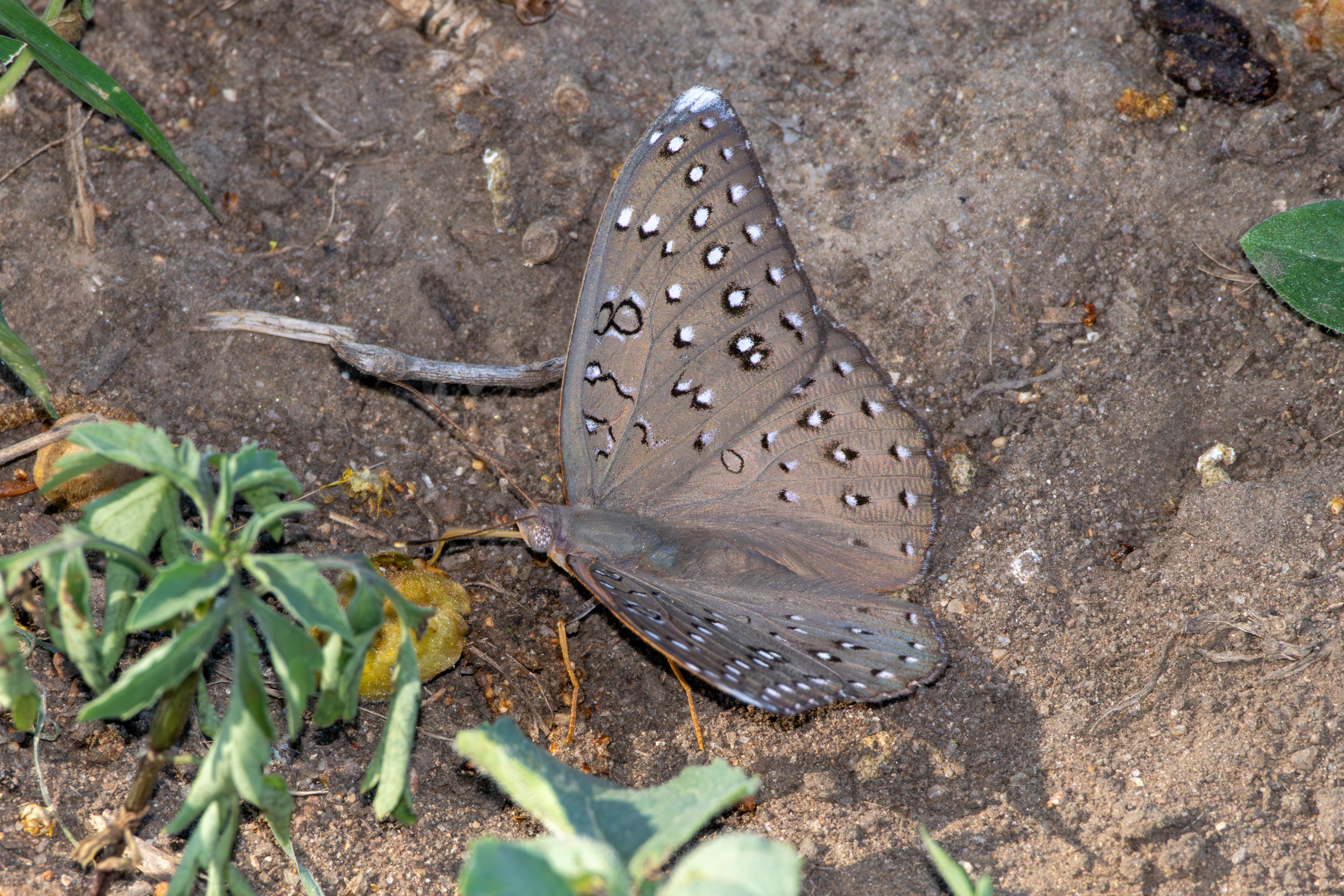
Guinea Fowl ♂
Hamanumida daedalus
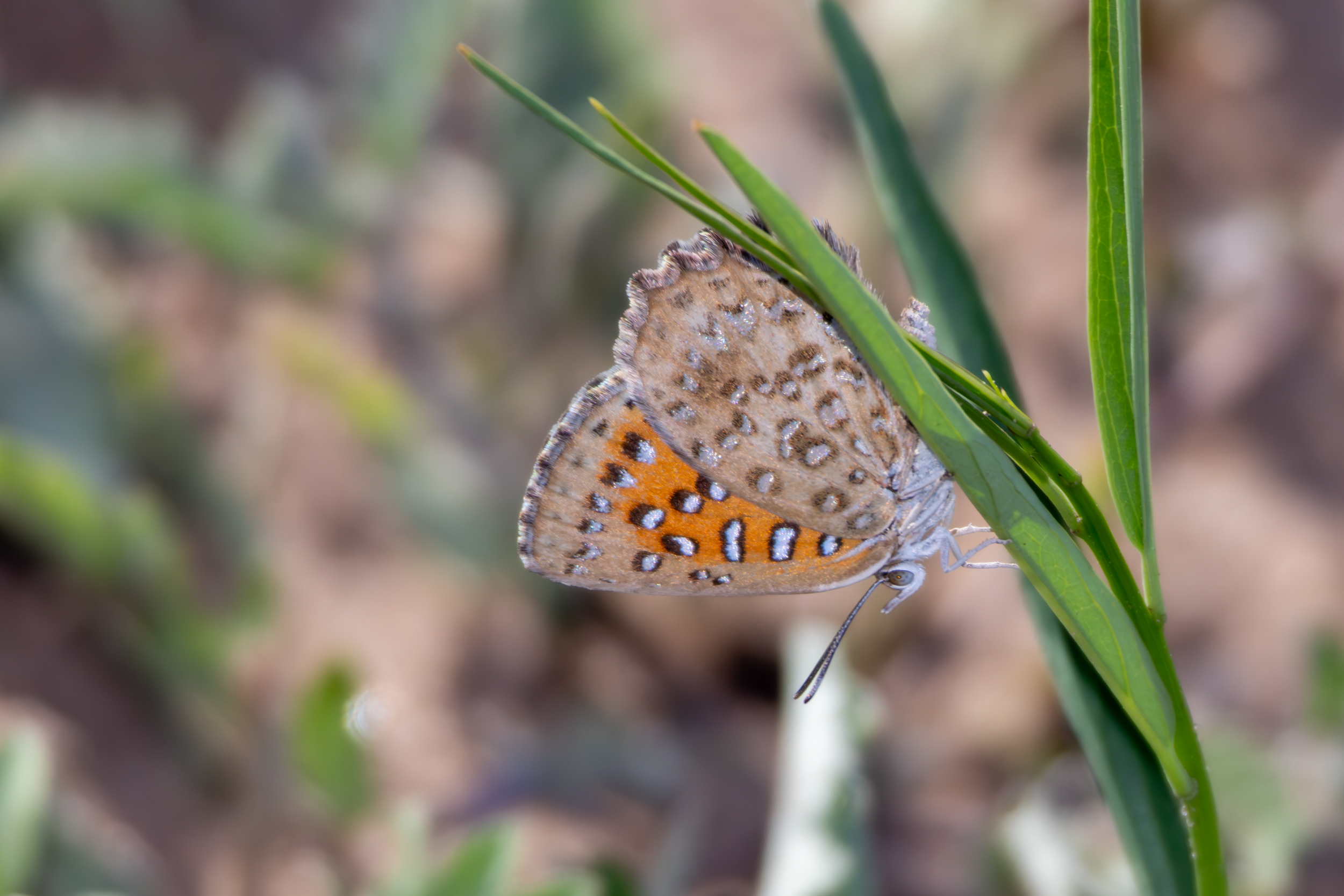
Dusky Russet ♀
Aloeides taikosama
Comments
This was the first course I had presented to highly experienced guides operating in a savanna national park area. Previous courses had been given to BirdLife’s community guides at small nature reserves in grassland or coastal forest.
The level of engagement and interest was very high, and I suspect I learned as much from the participants as they did from me. Their understanding of the geology of the area and how it affects the vegetation and landforms added richness to my content.
Butterfly watching is at the mercy of the weather and we had some extreme weather during the course, especially at Sabi Sand. This made butterflies either super active or seek shade.
The large, charismatic Charaxes species that savanna is home to were notable by their absence. This was probably a result of the recent dry season drought which had only just been broken by recent rains. Their numbers would probably build to a peak later in the wet season in February to May.
That said, we were able to see several iconic savanna species including some of the most attractive small Satyrinae like the Dark-webbed and Orange-lined Ringlets. We also saw several species of ‘Tips’ (Pierinae) and a big emergence of Graphium porthaon (Cream-striped Swordtail).
There were strong colonies of some of the ant-associated Lycaenidae South Africa is noted for (Silvery and Twin-spot Giant Cupids and the Dusky Russet). These butterflies’ habit of living in small colonies that form part of larger shifting metapopulations makes them interesting subjects for study. We understand very little of their ecology other than that they are stenotopes whose range is constrained by host plant and host ant availability. In an ever-changing environment like savanna their place near the base of the trophic pyramid would make them potential indicators of the medium- to long-term effects of veld management measures on the health of the ecosystem. I had a long conversation with ecologist Jacques Rossouw on this subject.
The contrast between the basalt-granophyre geology of the Lebombo area, and the granite-schist geology of the Sabi Sand was interesting. The butterfly mix was different, and this cannot solely have been caused by the weather. More species were seen on high ridges than on the flatlands. If nothing else this showed the value of lookout points as butterfly watching sites.
Although a few species were seen drinking at waterside mud puddles this was not common. Wet cement was attracting some African Migrants at Sabi Sand, which is a behaviour familiar to South American lepidopterists, but this was the first time I’d recorded it in Africa. Animal dung was not attracting any butterflies at all, which is unusual for the Kruger National Park.
There was a bonus in that we found several uncommon savanna Dragonfly (Odonata) species like Flapper Hooktail Paragomphus sabicus, Corkscrew Hooktail Paragomphus elpidius, and Southern Fingertail Gomphidia quarreiin the Sabi Sand area. These insects are as charismatic as the big Charaxes butterflies and are attracting a lot of client interest following the availability of fast mirrorless cameras and long lenses.
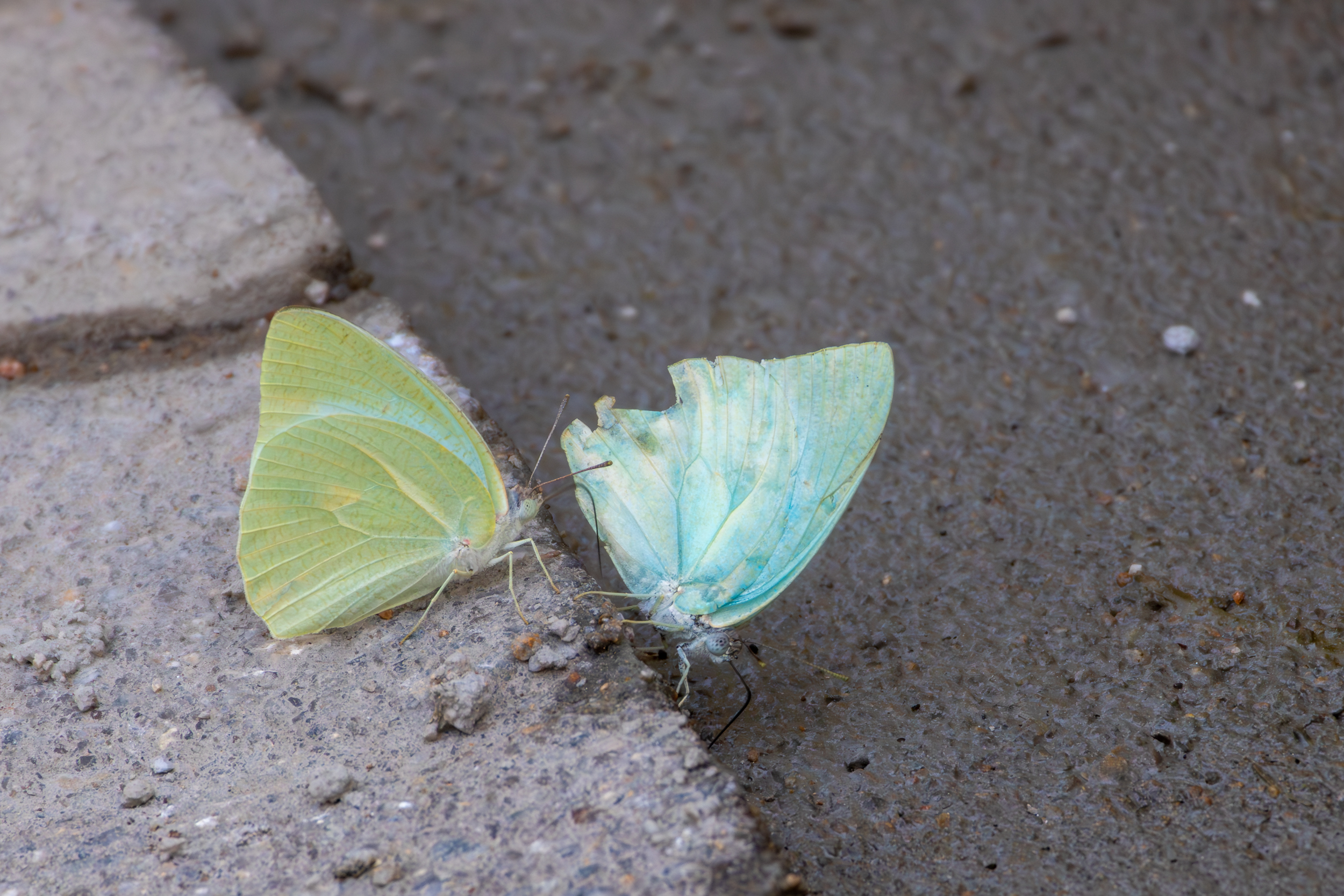
African Migrant ♂
Catopsilia florella
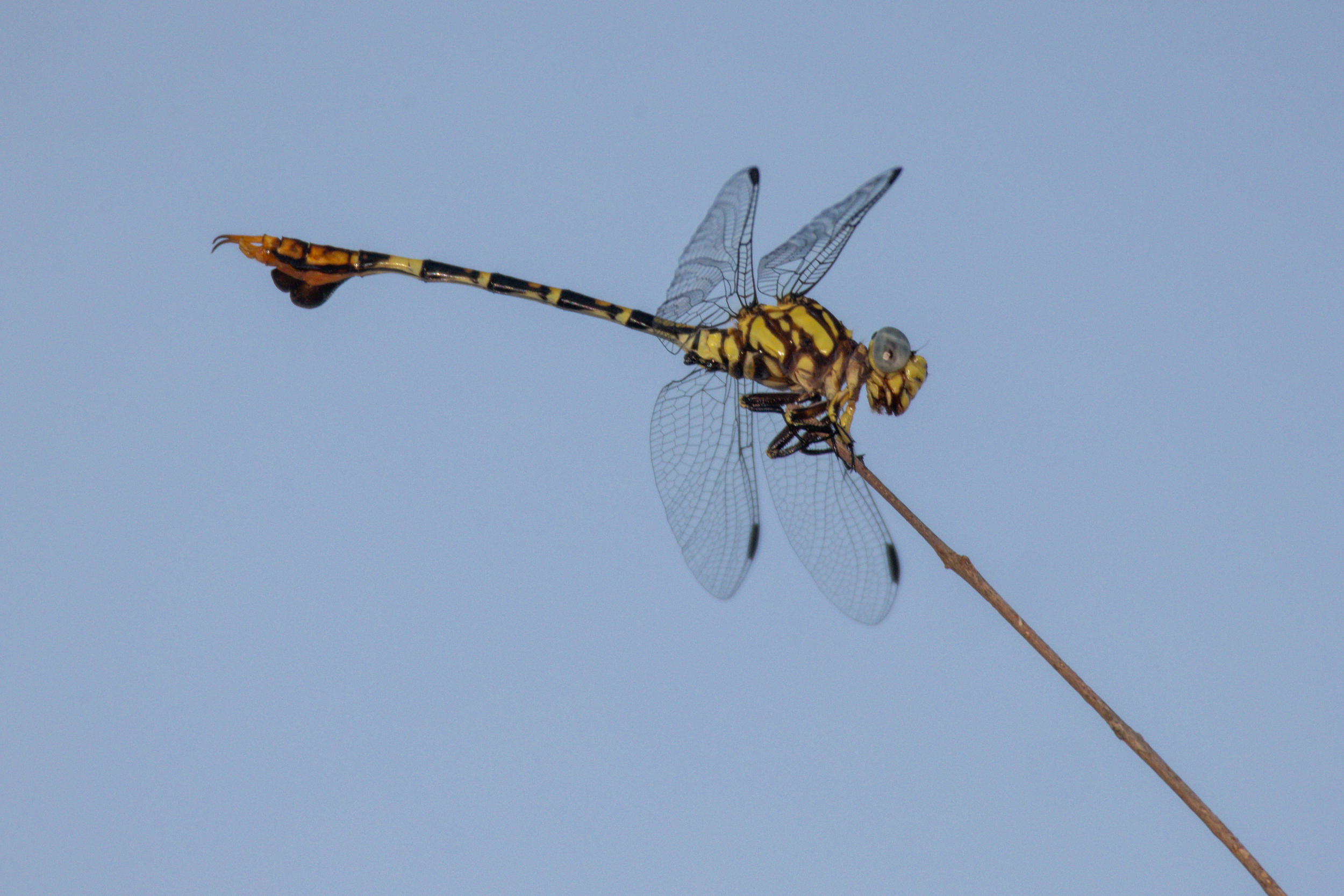
Flapper Hooktail ♂
Paragomphus sabicus
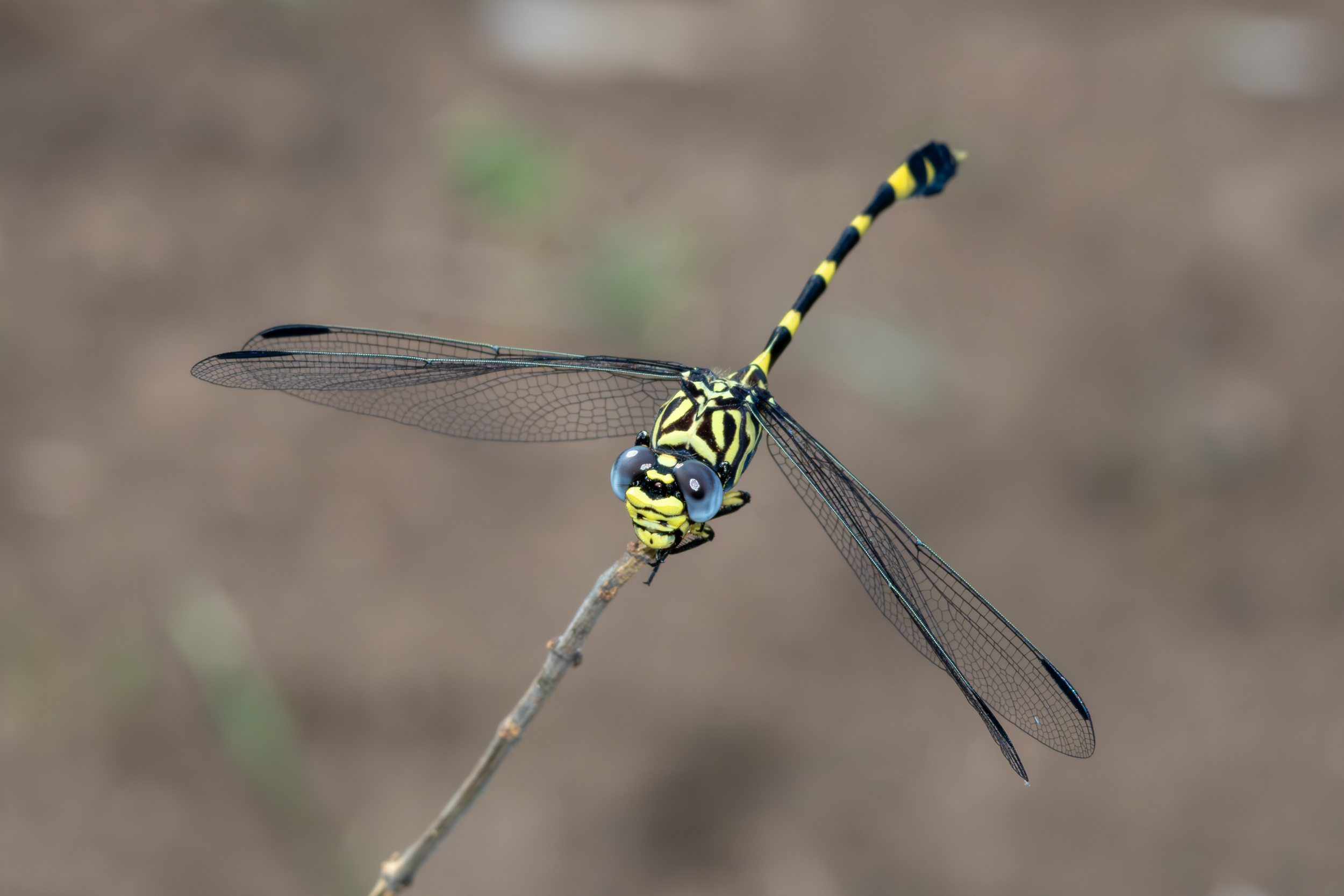
Southern Fingertail ♂
Gomphidia quarrei

Corkscrew Hooktail ♂
Paragomphus elpidius
Finding a final instar Tildia acara larva, which eventually pupated and emerged as an adult, provided a great teaching opportunity.
The venues were very suitable for a course of this nature. Seating was appropriate and note taking was easy. The air conditioning was vital! The TV screens were large enough to allow all to read the slides and see the details. Having the subjects available for demonstration by going out for a drive and a walk was of great value.
A total of 75 butterfly species out of an estimated possible 213 were recorded during the course. In addition, 43 ‘non-butterfly’ Lepidoptera species (i.e., moths) were recorded, and 24 Odonata (dragonflies and damselflies). The latter are growing in importance as insects of interest. They are easily seen and identified, and as predators they are a step higher on the trophic pyramid.
The butterfly list is given below. I used ‘Butterflies of the Kruger National Park and Surrounds’ by Herbert Otto (ePub by Struik) to generate it. I included a field based on my experience (and iNaturalist records from the KNP) to provide a list of species likely to be seen at the Singita sites.
Some of the attendees (notably Brian Rode) have already uploaded many observations to iNaturalist. This is a very good citizen science platform allowing easy uploading of records. These can be grouped geographically into ‘places’ created using Google Earth’s polygon drafting tool. These can be used to develop ‘projects’ that allow filtering of the data from that place. All my photographs have been uploaded to ‘iNat’. It has a powerful report and query writing tool that allows export of the occurrence data to any analysis software package that can read from comma separated values (.csv) files.
I gave a quick presentation on the European Butterfly Monitoring Scheme that has recently become available in Africa. This allows users to draft transects that are then walked on a regular basis to monitor butterfly abundance data over time (unlike iNat that only generates occurrence data). It can also be used to run counts on migratory species. There are other data gathering tools on the platform like ‘15-minute counts’ and new ones are in development that are designed for African conditions. The Kruger National Park Honorary Officers are currently working with the Lepidopterists’ Society of Africa on a counting project that uses this platform.
Conclusion
I would like to thank the participants and the management and staff of Singita for the great support and hospitality that was shown to me during this course. I hope to be able to collaborate further in future on butterfly and moth (Lepidoptera) training and study operations.
Steve Woodhall