

The Lepidoptera Log - by Steve Woodhall
Genetic work has revealed new insights!
We now have a better idea of what Painted Ladies and Pioneer Caper Whites do when they migrate
The Painted Lady (Vanessa cardui) is a familiar and widespread butterfly in southern Africa. While it was once considered nearly cosmopolitan, its distribution is now understood in more detail. Painted Ladies feed on many kinds of host plants, as outlined here. In the northern hemisphere – covering areas like Canada, the United States, Eurasia, and Asia – they are found almost everywhere. Their southern hemisphere range is more intriguing: the Australian Painted Lady (Vanessa kershawi) was formerly classified as a subspecies but is now recognized as a separate species. True Painted Ladies are generally absent from South America, or so we thought…
Recent advances such as vertical-looking weather radar and stable isotope analysis have shed light on the remarkable migrations of Painted Ladies to and from Africa. These butterflies cross deserts and seas by following rivers like the Nile and lush coastal regions such as the Maghreb. Notably long-lived, female Painted Ladies can mate repeatedly, extending their reproductive periods. Their migration involves multiple generations journeying from Africa’s Sahel region into Europe, Asia, and Scandinavia. Most impressively, they traverse the Sahara Desert and Mediterranean Sea in a single flight, soaring at altitudes between 300 and 1,000 meters. To cross mountain ranges, they can climb even higher – up to 3,000 or 6,000 meters – and often migrate in immense swarms, sometimes forming butterfly clouds up to 100 kilometers wide, with numbers reaching into the billions. Read more here and here.
Another fascinating finding is that these butterflies occasionally cross the Atlantic Ocean, using trade winds to cover distances of around 4,200 kilometers.
After arriving in northern regions in spring, they spend the summer there before their descendants head south again in autumn. Their navigation possibly relies on magnetoreceptor organs similar to those of other migratory butterflies, such as the American Monarch (Danaus plexippus).
Additional insights have emerged about another migrant, the Pioneer Caper White, or Brown-veined White (Belenois aurota). This butterfly was once thought to be a single species spanning a vast area from South Africa’s dry savanna all the way to the Indian Subcontinent, but recent research suggests that this is not the case.
Painted Ladies
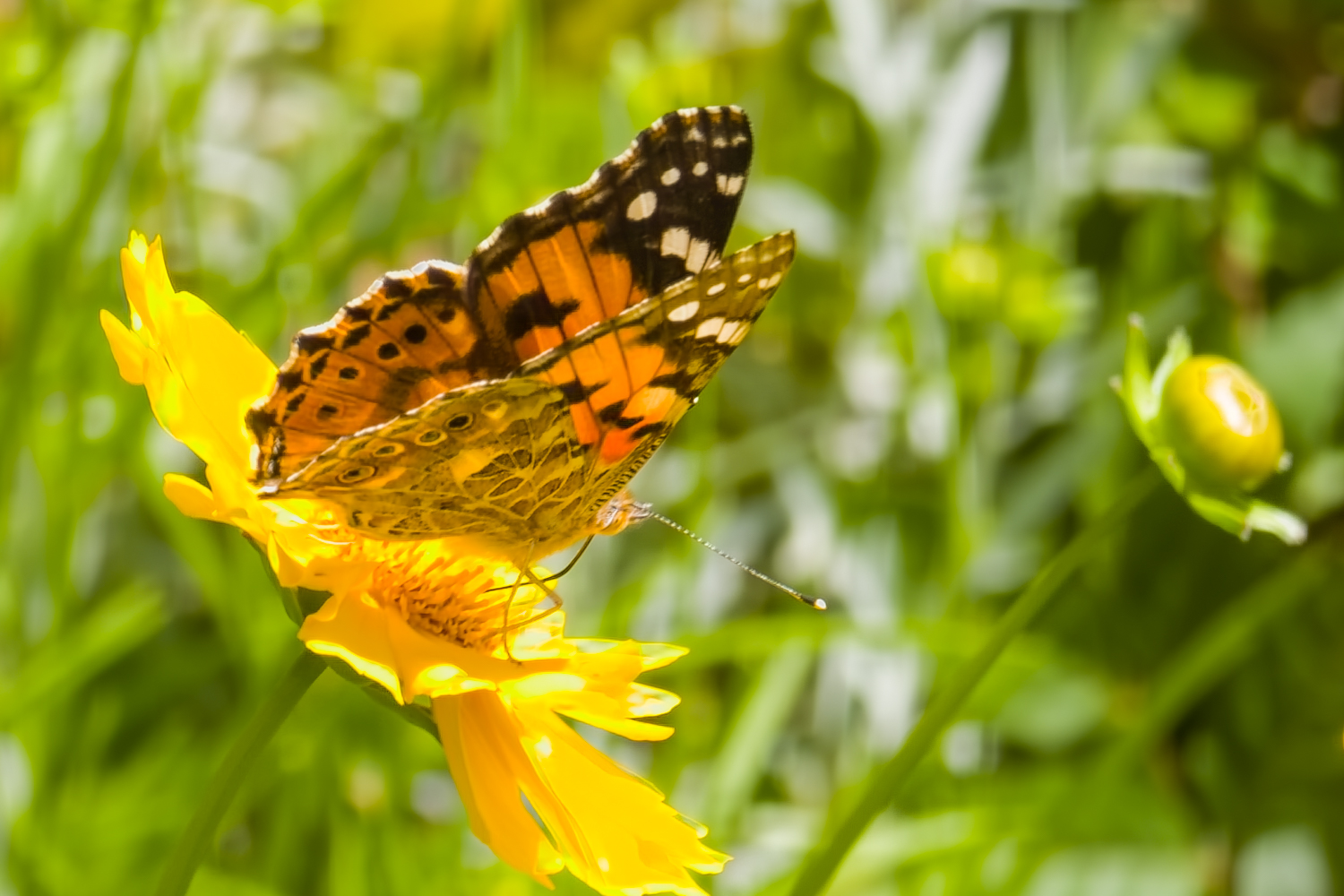
Freshly emerged November Painted Lady
Vanessa carduo
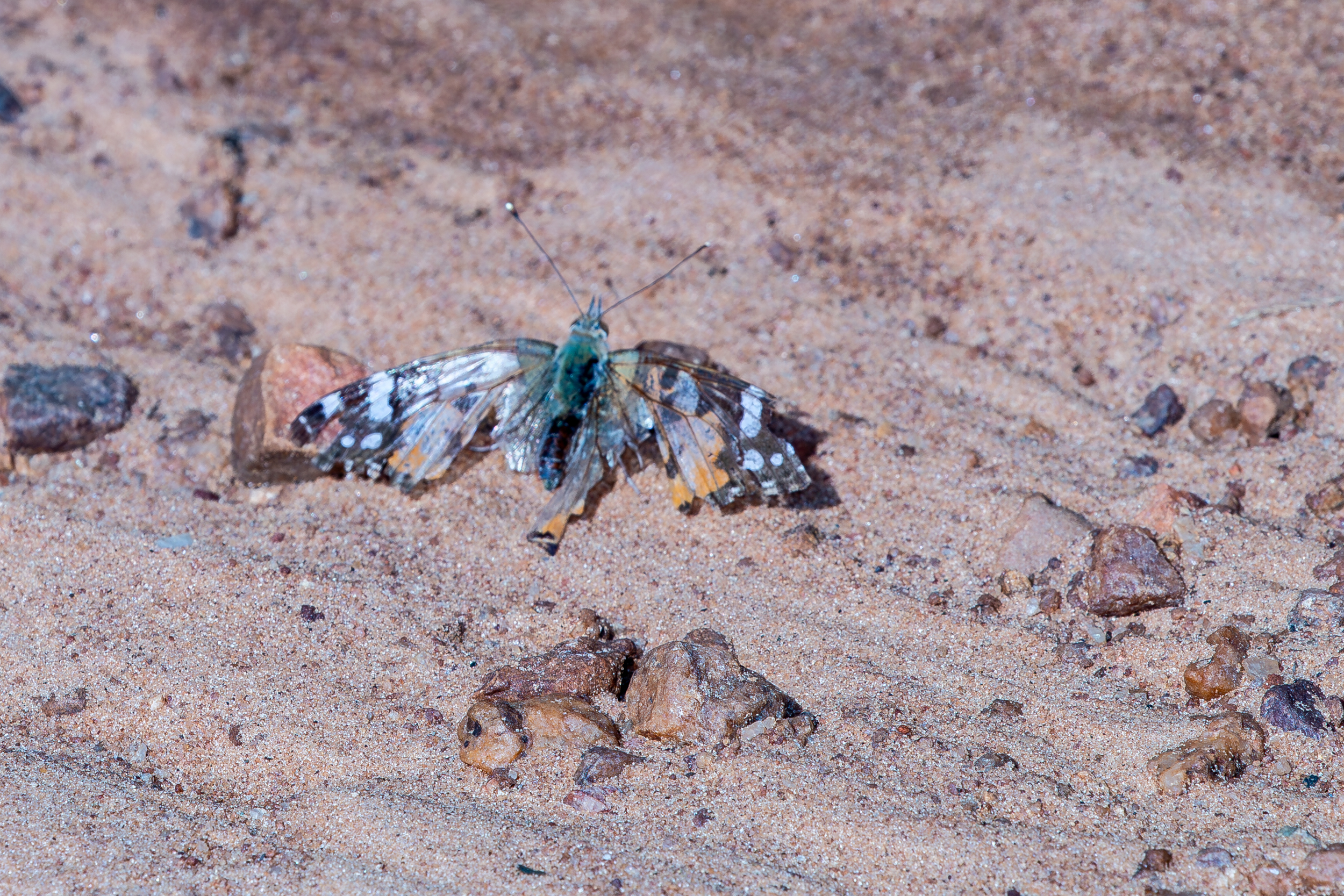
Old worn April Painted Lady
Vanessa cardui
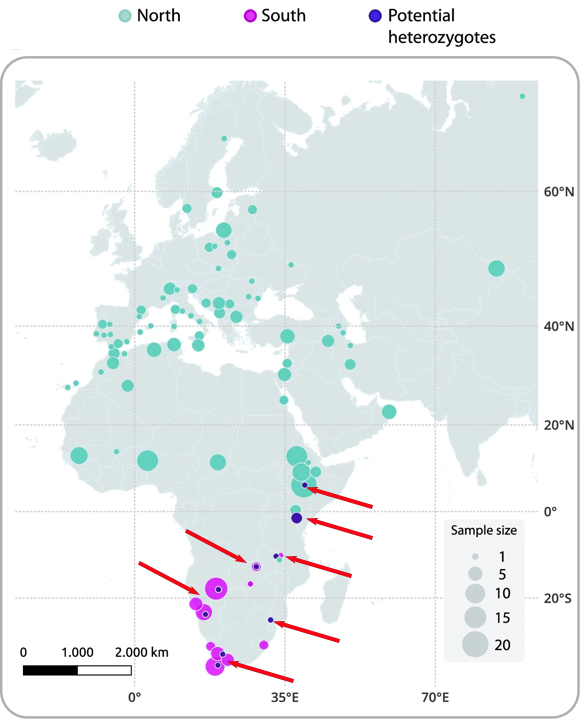
The figures below were published in García-Berro, A., Shipilina, D., Backström, N. et al. A north-south hemispheric migratory divide in the butterfly Vanessa cardui. Nat Commun 16, 11341 (2025).
The research, including citizen science data, scientists’ field studies, and radar tracking—show that Painted Ladies migrate in cycles. During the northern hemisphere’s winter, these butterflies fly south from Europe to the Afrotropics, reaching their highest numbers there in January and February. As summer returns in the northern hemisphere, they move north again, with a population peak in Eurasia in June and July.
Stable hydrogen isotope analysis of their wing tissue indicates that many Painted Ladies arriving in Europe each spring began life as caterpillars in the Sahel region.
Migration for this species resembles a relay race: new generations hatch along the route rather than the entire population migrating together. These butterflies have long adult lifespans and can mate multiple times, laying eggs at different points along their journey. Their caterpillars can feed on many kinds of host plants.
Winter in Europe means it’s summer in Southern Africa. In the austral spring and summer, from September to February, southern Painted Lady populations increase locally, with fewer found in the Afrotropics. The fresh specimen pictured above was spotted in the Drakensberg in November, likely after moving north from the Cape. By late summer and autumn, the butterflies head north toward the Afrotropics, where their numbers peak during the southern winter—June and July. The worn individual photographed near Polokwane in April had probably already travelled a considerable distance.
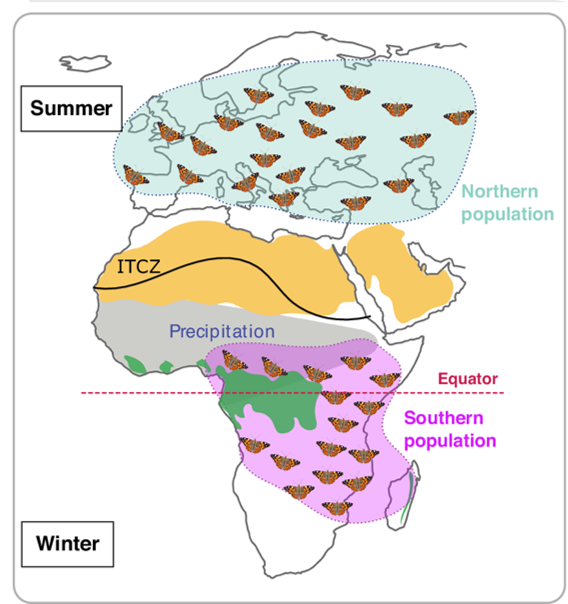
Painted Lady range in March to August
Vanessa carduo

Painted Lady range in September to February
Vanessa cardui
Migrating Painted Ladies face barriers such as the Sahara Desert (in orange above) and the Congo Basin (in green). While they may cross these areas, they do not breed there due to a lack of suitable host plants and a hostile habitat. Painted Ladies are essentially butterflies of open grassy country with limited tree cover. There is an area of East Africa, in Tanzania and Kenya, where part of the northern population resides during February and March. In June and July, part of the southern population occupies the same area.
It seems logical that these two populations are separated by time and unlikely to encounter one another. Without meeting, chances of mating are slim, and being exposed to different environments may cause them to gradually evolve into distinct species – a process known as speciation.
Genetic studies of the northern and southern groups confirm this trend. Their genomes are becoming increasingly separated, even though there aren’t any visible differences in how they look or function, which often happens when new species emerge. The implications for behaviour – heritable by nature – are still unclear. However, there are hints that the populations might respond differently to changes in day length or the polarity of the earth’s magnetic field, depending on their hemisphere. Such factors could influence migration patterns, but further research is needed to draw any firm conclusions.
In eastern Africa’s ‘contact zone,’ some individuals displayed genetic signs of hybridization, suggesting the split isn’t yet complete. Researchers used mitochondrial DNA mutation rates to estimate when the two genomes started diverging, arriving at roughly 620,000 years ago, give or take 70,000 years. This timing is notable because it aligns with a period of extreme dryness in southern Africa during the Pleistocene epoch.
‘Heterozygote’ is a term for a genetic sign that an organism is a hybrid for a particular character. The blue dots in the map below denote specimens in the study that showed signs of being hybrids of the northern and southern populations. Note that they only appear around the Equator or in Southern Africa. This could indicate that the hybrids are mixing with the southern population but not the northern one, and that over time the divergence may become permanent.
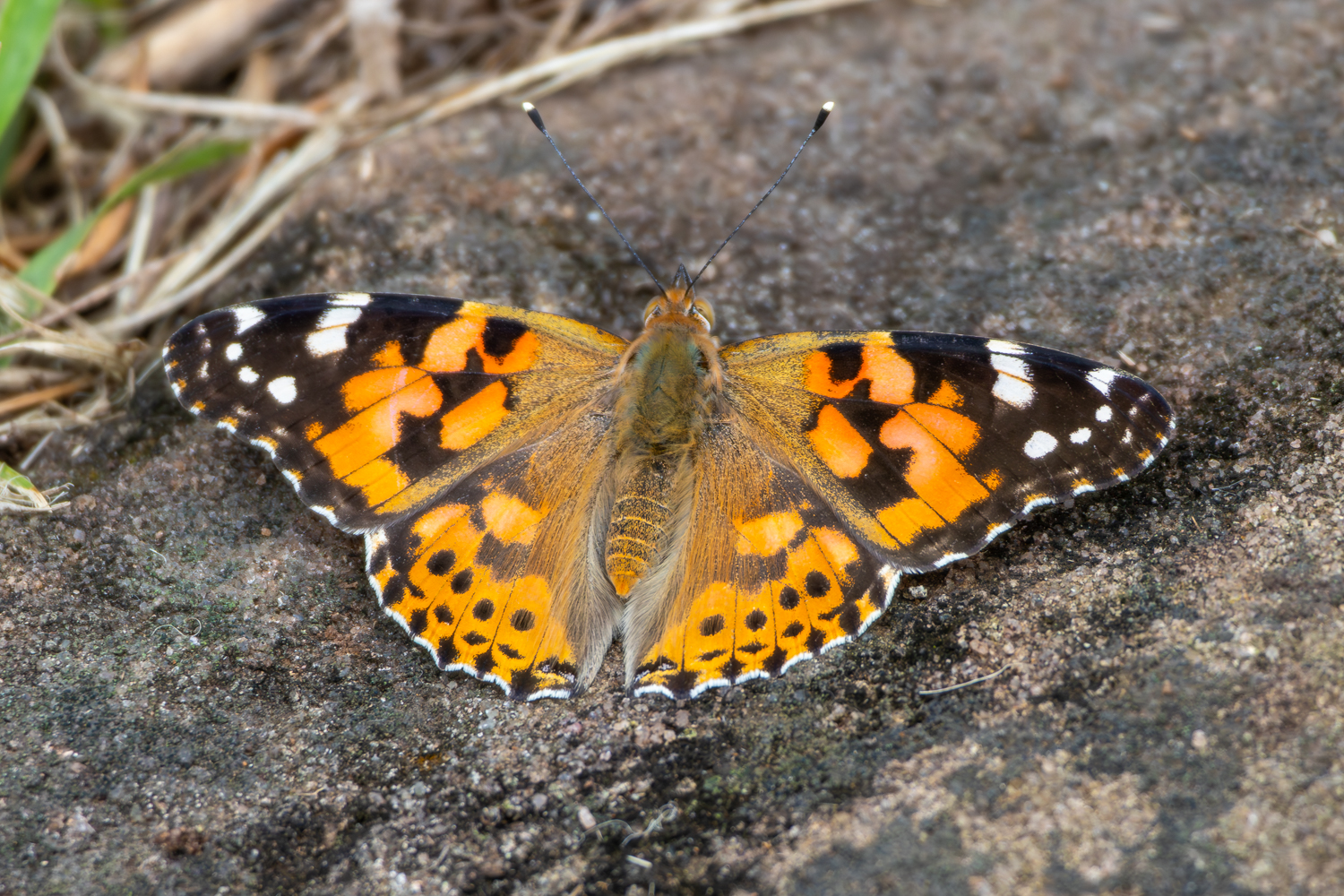
Painted Lady
Vanessa cardui
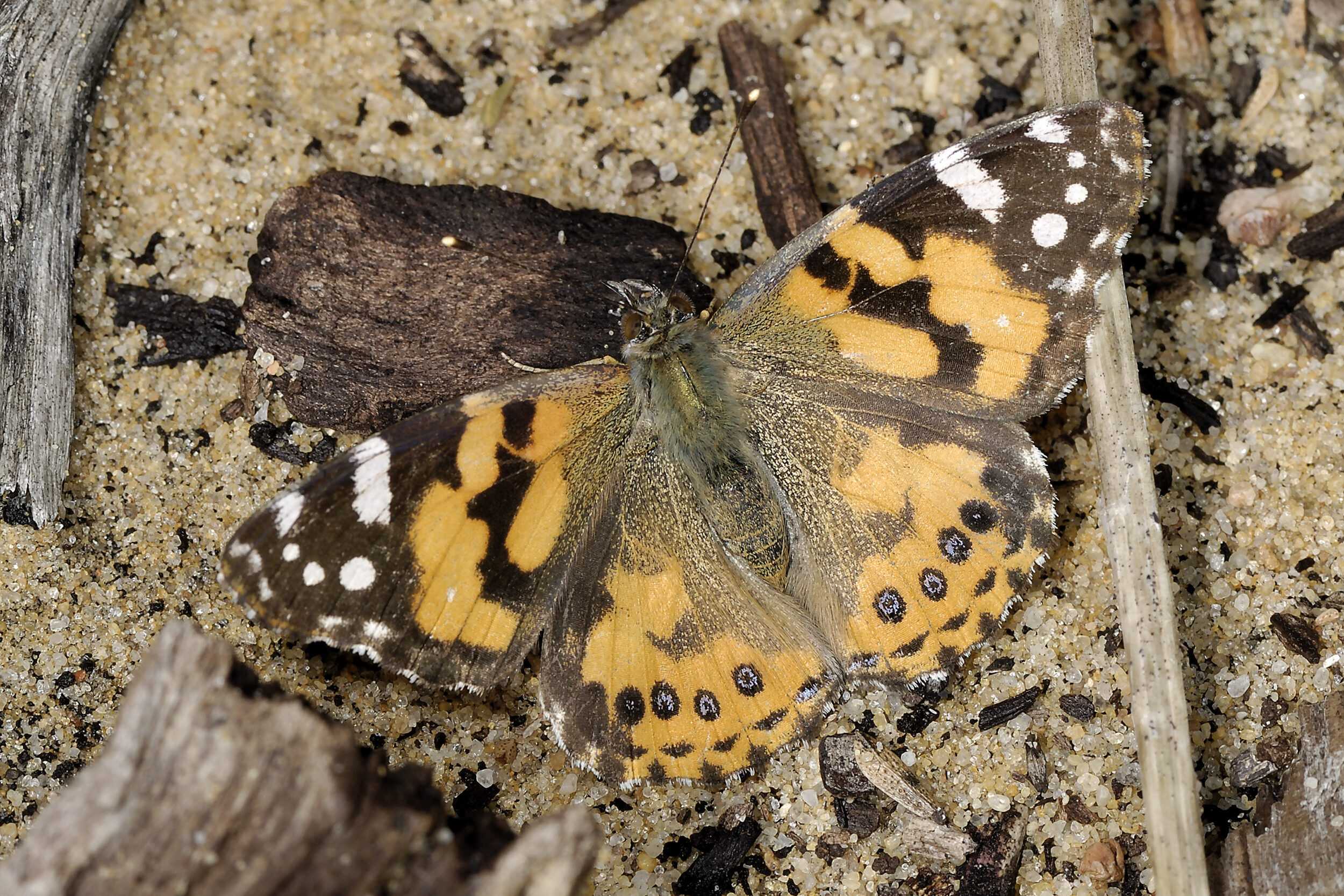
Austalian Painted Lady
Vanessa kershawi
The Australian Painted Lady, Vanessa kershawi, was until recently thought to be a subspecies of Vanessa cardui. However, it’s now known to be genetically as well as morphologically distinct.
Its upperside is a more brownish hue and the body is darker. The most obvious difference is the postdiscal row of black hindwing spots on the upper side. Each carries a blue ring in its centre, as shown by the specimen above. That was photographed near Perth in Western Australia.
Like our butterfly it’s a migrant, moving south in the southern hemisphere spring and north in the winter. In this it’s like the southern African population of Vanessa cardui. The genomic divergence between Vanessa kershawi and the northern population of Vanessa cardui is estimated to have occurred seven million years ago. This would correspond to the late Miocene epoch when the Australian wet forests were replaced by drier vegetation. Contact with the northern population would have been prevented by the belt of tropical rainforest to the north of Australia.
Pioneer Caper Whites

Southern Pioneer Caper White ♂
Belenois syrinx
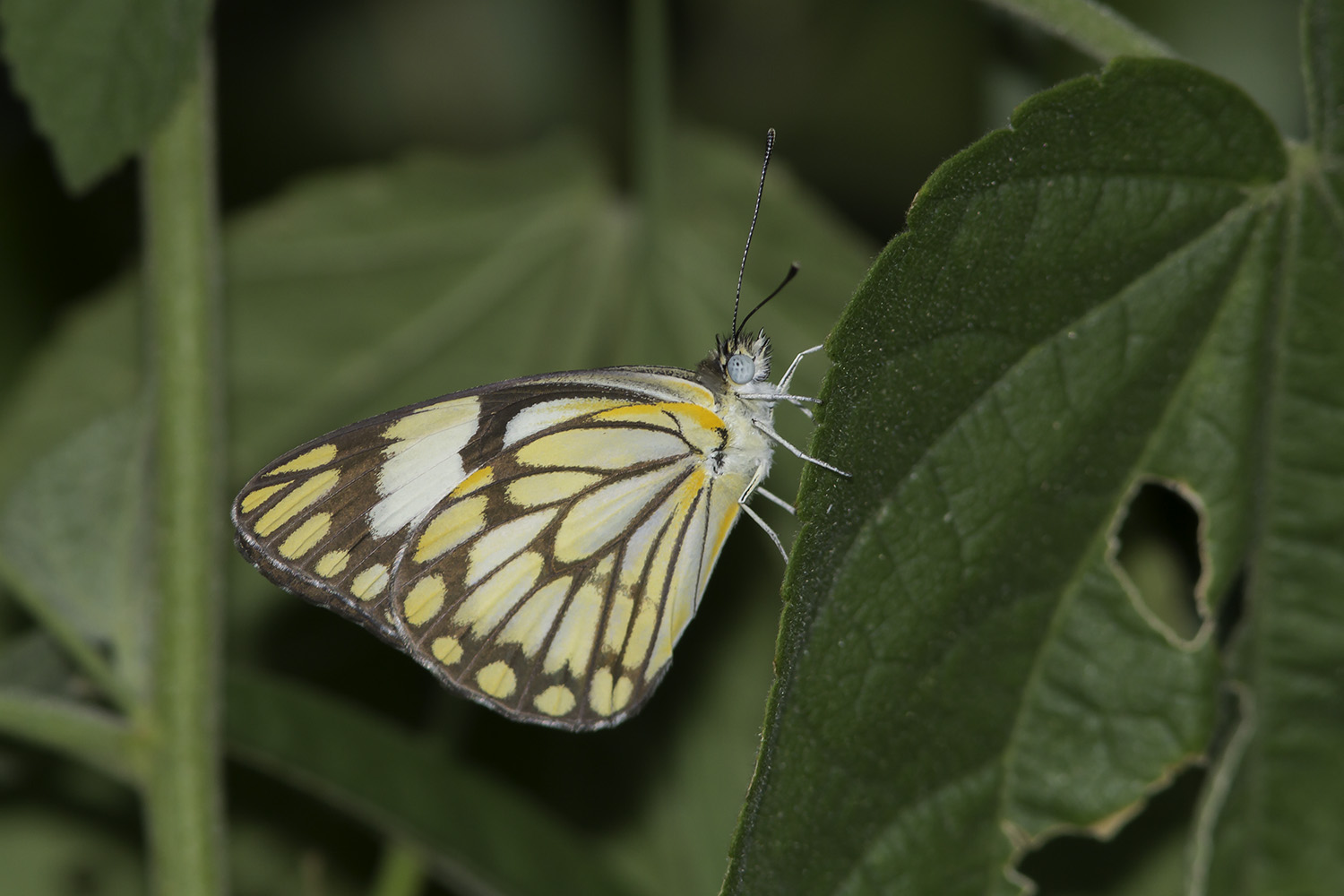
Southern Pioneer Caper White ♀
Belenois syrinx
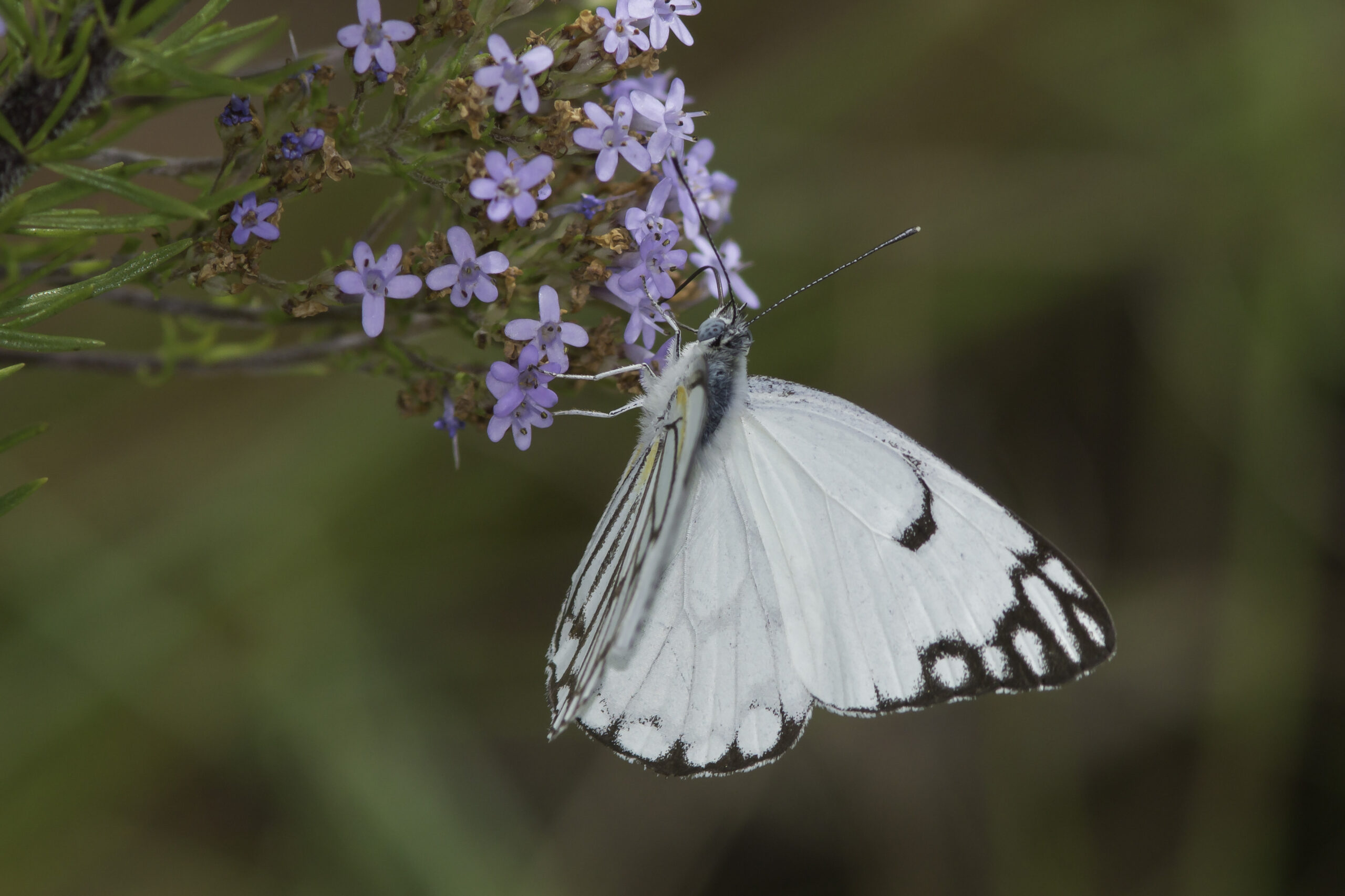
Southern Pioneer Caper White ♂
Belenois syrinx
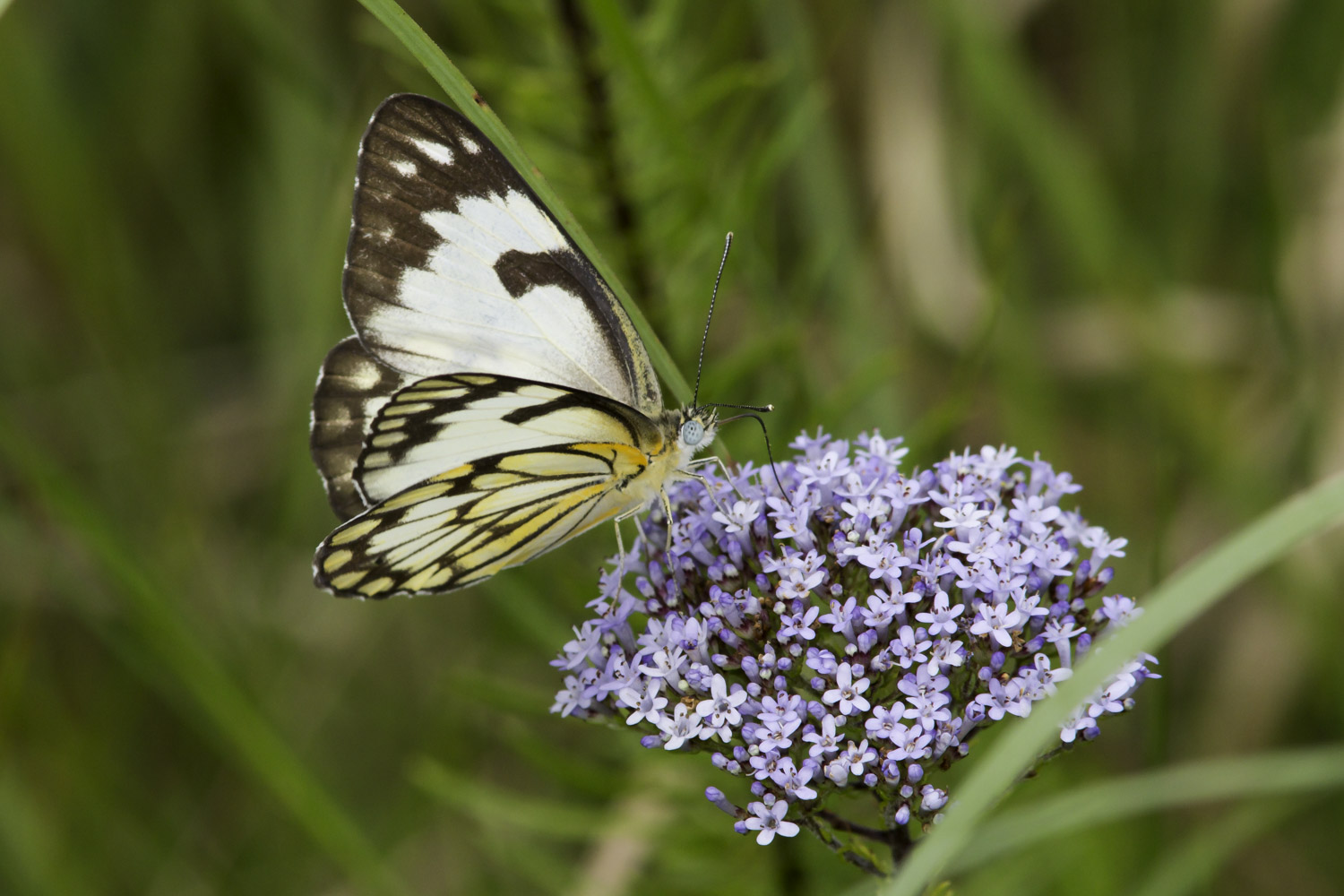
Southern Pioneer Caper White ♀
Belenois syrinx
What’s this? Surely the Pioneer Caper White is Belenois aurota? And why ‘Southern Pioneer Caper White’?
A recent paper, An Equatorial Hemispheric Barrier Shapes the Diversification of Migratory Belenois Butterflies by Anna Janiczek, Aleix Palahí and co-authors shows that the Pioneer Caper White has undergone a similar split to the one the Painted Lady Vanessa cardui is undergoing.
The paper explains that migratory dynamics may promote temporal allopatry, which occurs when two distinct migratory populations exploit the same geographical region at different times of the year, effectively reducing gene flow. This process, known as allochrony, has been increasingly recognised as a powerful mechanism of reproductive isolation and potentially speciation.
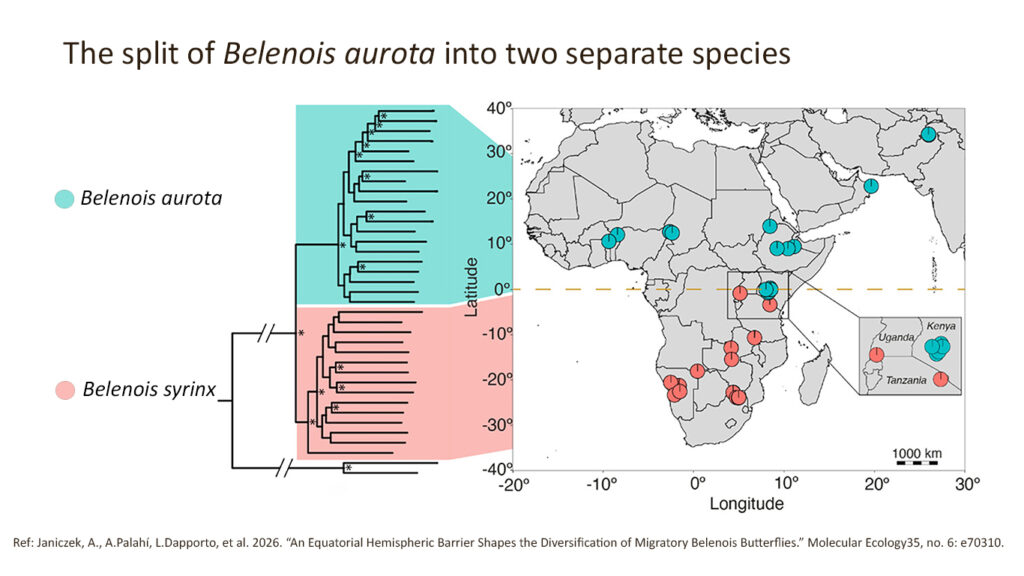
The research showed that there is a definite sharp genetic division between the northern and southern populations of Belenois aurota near the equator in Eastern Africa with no apparent current geographical or ecological barrier (see above). Both genetic lineages come in contact across a relatively narrow latitudinal belt between Kenya, Tanzania and Uganda. The paper suggests that this split occurred approximately 570,000 generations before present (BP). Assuming 6–8 generations per year (about 95000–71000 years), this probably happened before the Last Glacial Maximum (LGM), during a period of increasing aridity across Africa following the end of the last interglacial about 115000 years ago.
Individuals recorded north of the equator remain Belenois aurota as described from India as Papilio aurota by Johan Christian Fabricius in 1793. Individuals from the southern population are assigned to the butterfly described as Pinacopteryx syrinx by Wallengren in 1860 from ‘Ad Swakop Africae’ [Namibia]. It was moved to Belenois syrinx by Butler in 1872. They were originally described as separate species but it has taken this long, and some complicated and groundbreaking genetic and statistical analysis, to confirm that they really are different. The paper concludes that ‘genomic and ecological data demonstrate that populations historically assigned to Belenois aurota in the Southern Hemisphere represent a distinct evolutionary lineage, potentially with complete reproductive isolation and unique migratory behaviour. We therefore reinstate Belenois syrinx (Wallengren, 1860) as a valid species.’
Having said that, it makes life difficult for the layman and the citizen scientist armed only with a camera. This is because ‘Belenois syrinx is morphologically indistinguishable from its sister species Belenois aurota, with which it occurs in sympatry in equatorial Africa’. The two taxa can be diagnosed on the basis of mitochondrial gene cytochrome c oxidase subunit I (COI) sequences: B. syrinx corresponds to Barcode Index Number BOLD:ABA8575, whereas B.aurota corresponds to BOLD:AAW2928.’
That is a bit of a mouthful! It sounds rather daunting, but practically it means that what we are used to calling Belenois aurota in southern Africa will be moved to Belenois syrinx. At present its common name will change to Southern Pioneer Caper White. Books and apps will have to change their wording. There is a question on how platforms like iNaturalist will handle the impossibility of visually separating two species that are identical in appearance. That is a question for a future blog post!