The Lepidoptera Log - by Steve Woodhall
Making sense of the 'Tips' - part one
These white butterflies with variously coloured wing tips can be confusing!
Many butterflies in the Pieridae family (specifically, subfamily Pierinae) are white or cream above with coloured or patterned forewing tips. Most have orange or red wingtips although some are purple or pied black-and-white.
To the casual observer they may seem to be ‘much of a muchness’. Some may be tempted to say: ‘oh it’s just another ‘Tip’.’ They are relatively small and their flight is fast and sustained, so they can be difficult to separate. Having said that, they are fond of settling on flowers for nectar, or on mud and wet sand to drink; armed with binoculars or a camera with some ‘reach’ you can get close enough to observe them more in detail.
‘Tips’ belong to the tribe Teracolini in the Pierinae subfamily of Pieridae (Whites and Yellows). They are not related to the UK ‘Orange Tip’ in the genus Anthocharis. Although they can look similar, important differences separate them. Their larvae usually feed on plants in the caper family, Capparaceae, rather than Brassicaceae.
In general, they are pale butterflies with coloured or patterned forewing tips. These tips are often dark or contain contrasting cells. Other markings in the paler areas beyond the tips usually provide the clues for identifying the species. Most of them have at least one clue, which we’ll share with you here.
Most African ‘Tips’ are primarily savanna butterflies, though they may extend into nearby biomes such as desert, karoo, or grassland.
African Pieridae often undergo ‘burst’ migrations, when millions of small white butterflies may move across an area. ‘Tips’ may be scattered among them in small numbers, making them harder to spot.
These butterflies exhibit marked sexual dimorphism and considerable seasonal polymorphism. Other butterflies like the Gaudy Commodore Precis octavia have distinct seasonal forms and intermediates are rare. In Colotis however there are extremes that have been given names but there is much gradual variation between those extremes. Several have been named in the past by taxonomists but in truth these are rather meaningless and often only serve to confuse the observer! We’ve only covered a few extremes here.
Africa has more than 70 species of ‘Tips’, sixteen of which occur in South Africa. Some species are called ‘Tips’ even though they lack the typical forewing-tip pattern, so they are excluded here. We’ll begin with the nine South African species in which both sexes have orange or orange-red forewing tips.

Southern Round-winged Orange Tip ♂ above ♀
Colotis euippe omphale form omphalioides
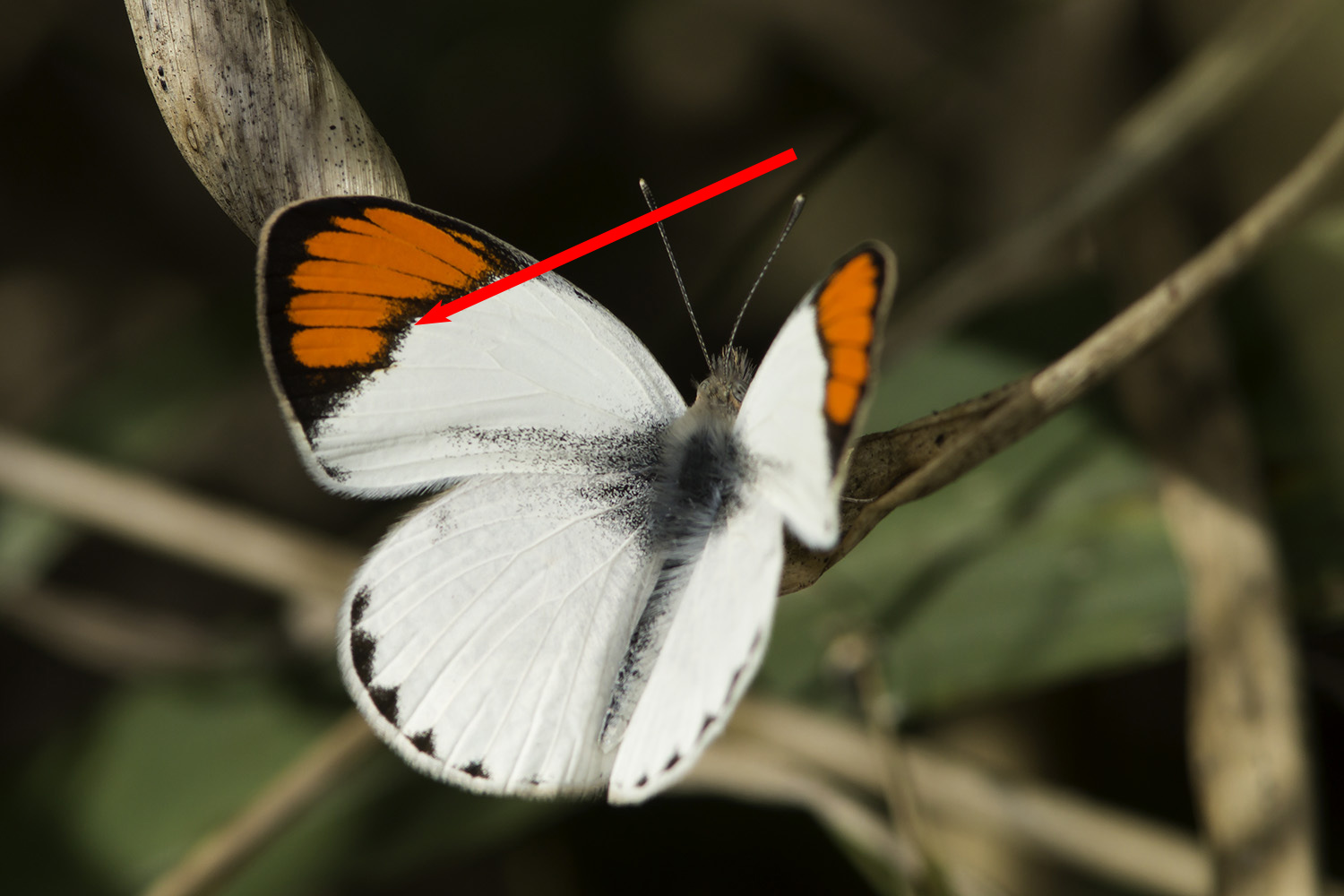
Southern Round-winged Orange Tip ♀
Colotis euippe omphale form theogone
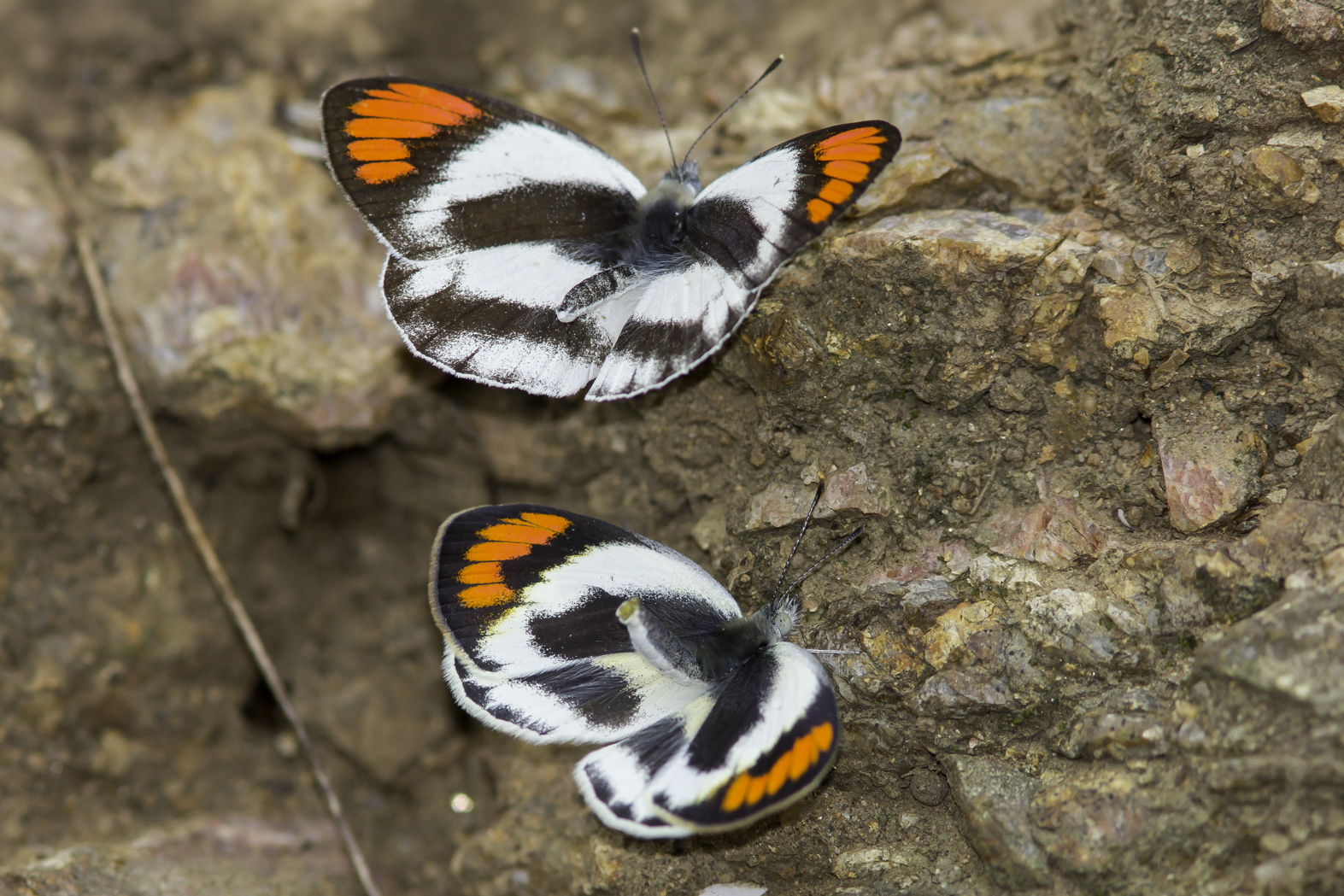
Southern Round-winged Orange Tip ♂ above ♀
Colotis euippe omphale form omphale
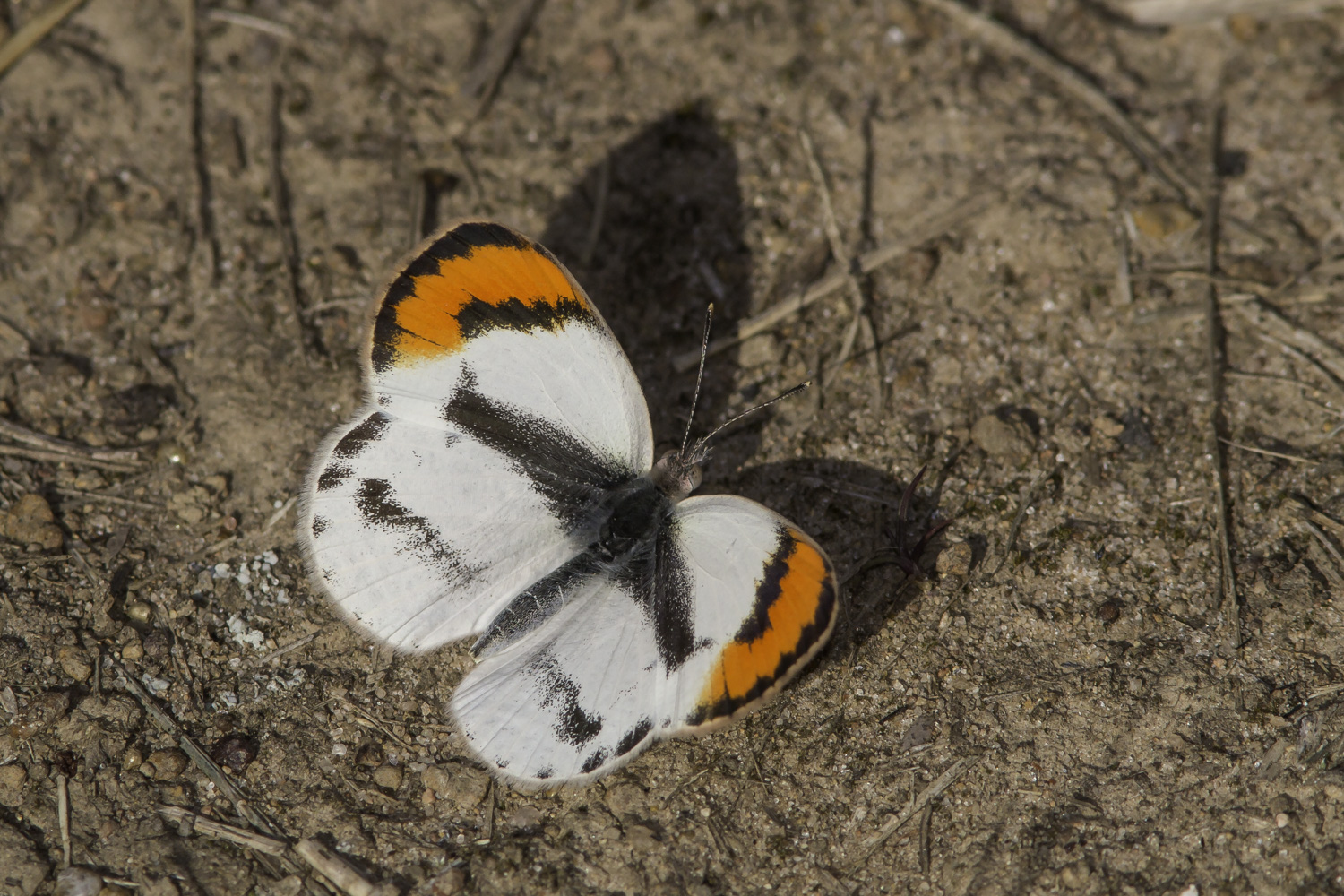
Southern Round-winged Orange Tip ♀
Colotis euippe omphale form theogone
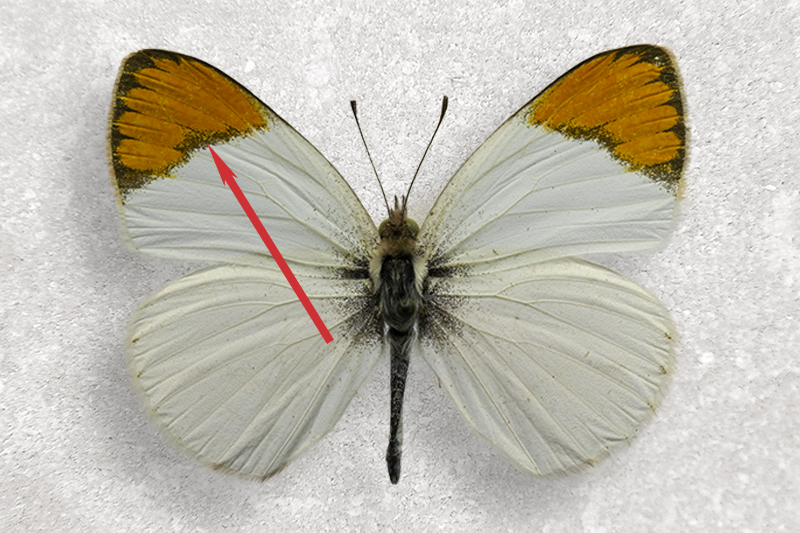
Southern Round-winged Orange Tip Colotis euippe omphale is a small to medium sized butterfly with a wingspan of 35–45mm. It has dark orange forewing tips (arrowed) with a black basal edge that in males bulges towards the apex in the middle and in females ends (or becomes thinner) in the middle of the wing. That is the critical clue for this species. The shade of orange is variable and is not a reliable indicator of a wet-or dry season form. The extent of the dark markings outside the tips is a better indicator.
In the wet season nominate form omphale the dark markings are equally extensive in both sexes. As can be seen above the difference is rather subtle – the shape of the black basal edge to the tip is the clue. The female has a ‘pinch’ in that dark edge. Here she is rejecting the advances of the male hovering over her. A raised abdomen is a sign that she is NOT ready to mate.
Form omphale is the normal wet season form along the KZN coast. Form omphalioides is the normal dry season form in that area. Form theogone has even further reduced dark markings and although it is found along the coast it spreads further into the savanna areas to the west and south.

Southern Round-winged Orange Tip ♂
Colotis euippe omphale form namaqua
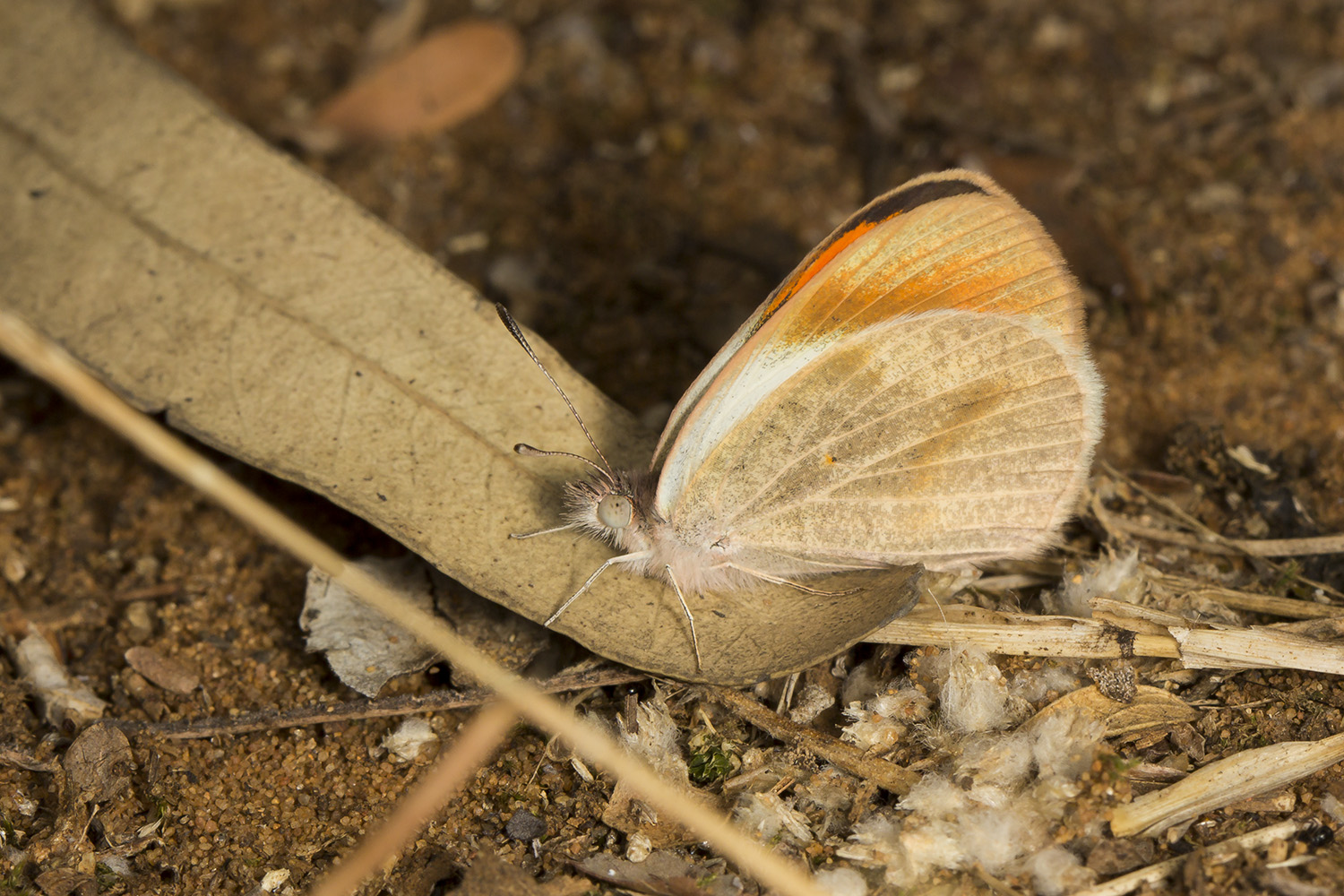
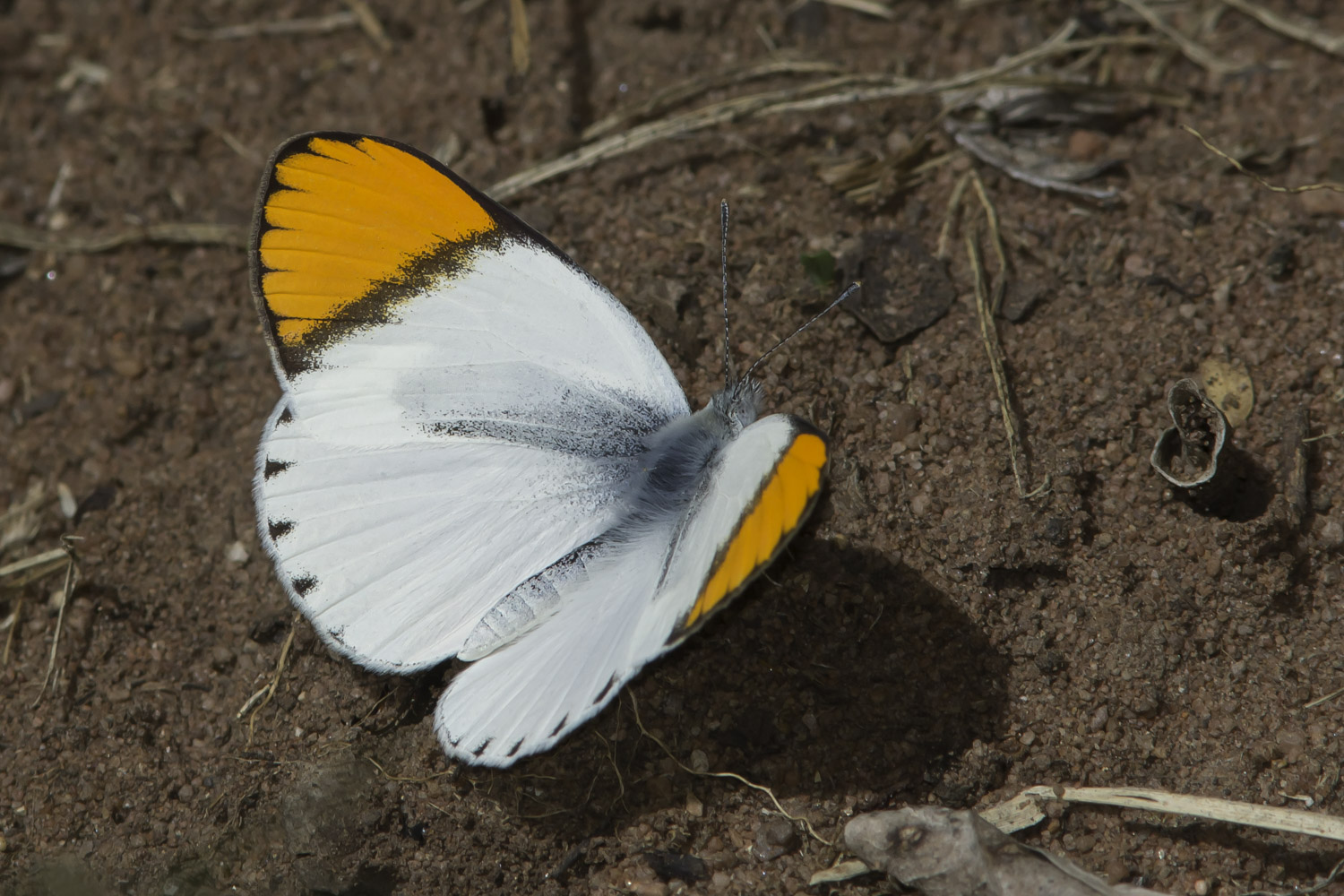
Southern Round-winged Orange Tip ♀
Colotis euippe omphale form theogone
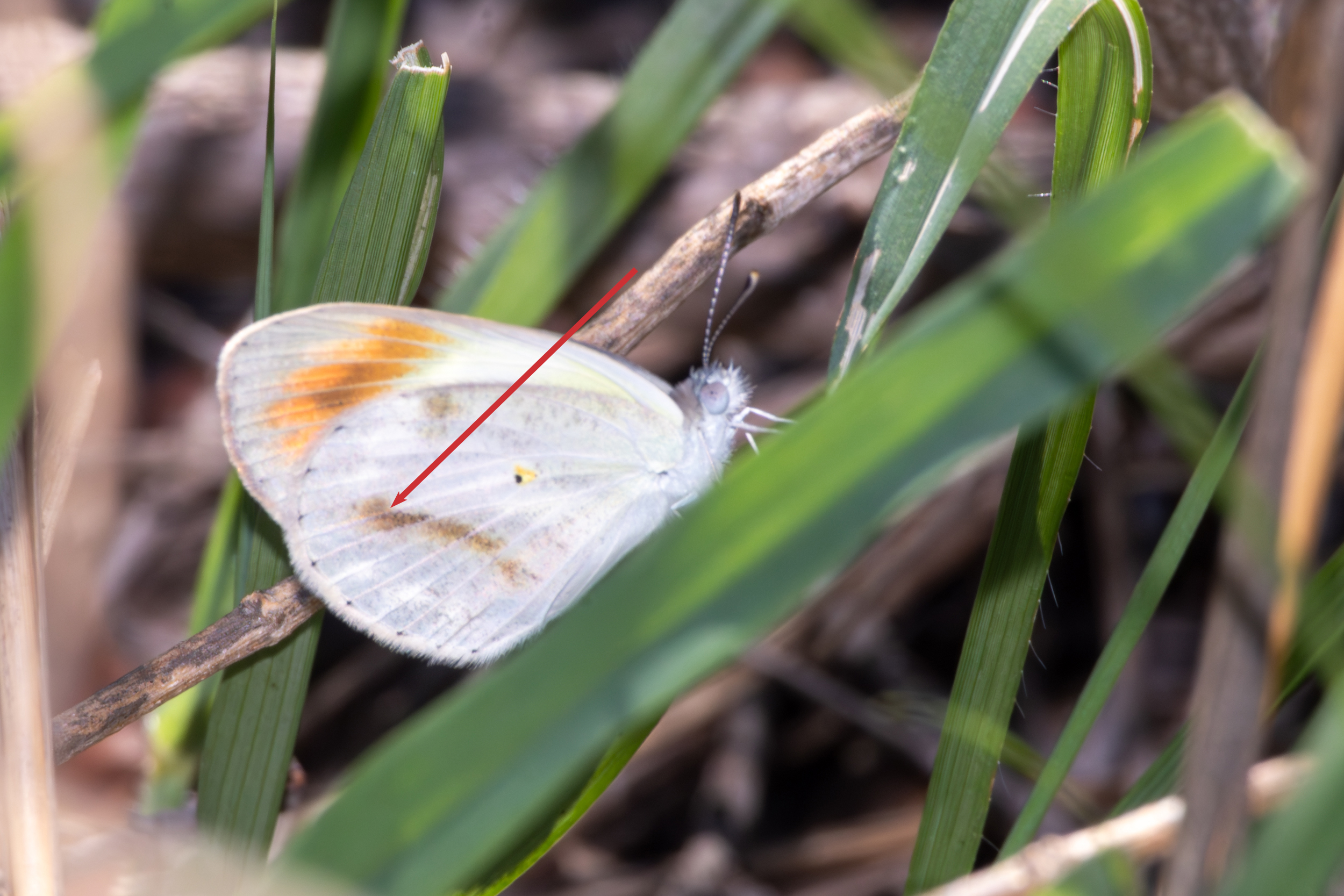
Southern Round-winged Orange Tip ♀
Colotis euippe omphale form omphale
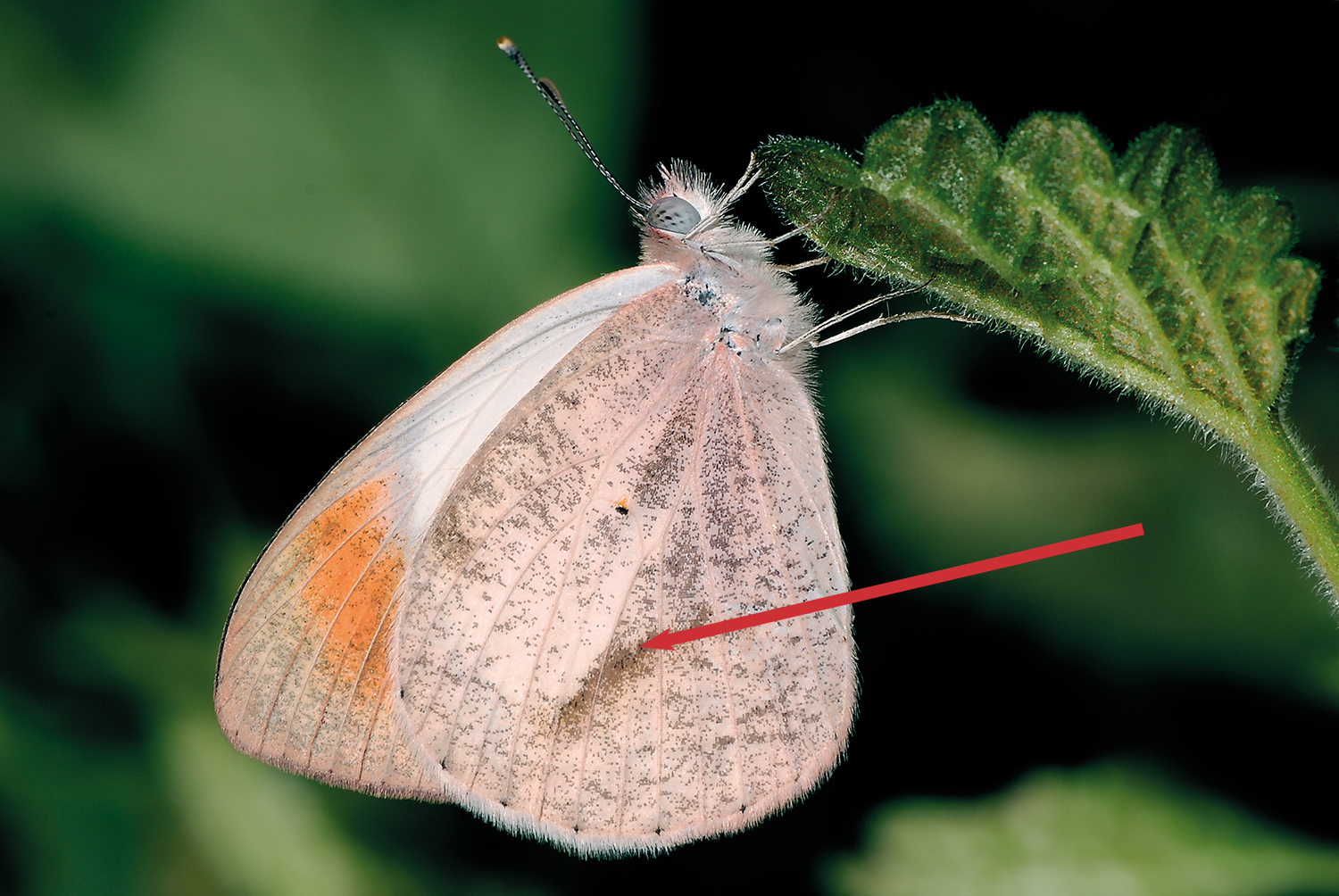
Southern Round-winged Orange Tip ♂
Colotis euippe omphale form omphalioides
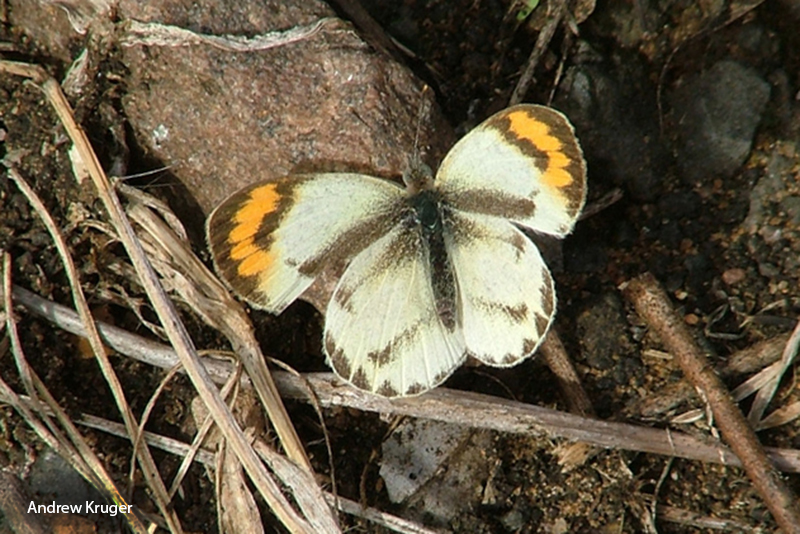
The males’ forewing tips’ basal edge bulges towards the apex even in extreme the DSF namaqua where the dark line is greatly reduced or even absent the bulge can still be seen. This is the main diagnostic feature for males of this species.
The hindwing underside in form omphale is usually plain white or carries a diagonal postdiscal band running from vein M1 to CuA2 as shown by the arrows. Such marks are not confined to Colotis euippe and are often seen in related species. As with other Colotis species the hundwing undersides of dry season forms may be pink or buff, helping camouflage them in dry grass or among dead leaves.

Southern Round-winged Orange Tip ♀
Colotis euippe omphale form ochreoleucus
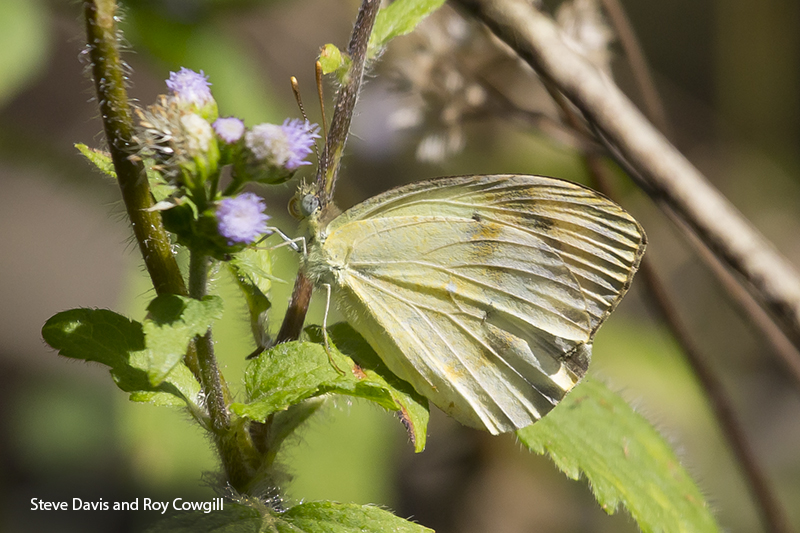
Southern Round-winged Orange Tip ♀
Colotis euippe omphale form ochreoleucus
Dry seasonal forms exhibit much reduced dark upperside markings in both sexes; in the rare DSF ochreoleucus the ground colour is pale yellow.

African Orange Tip ♂
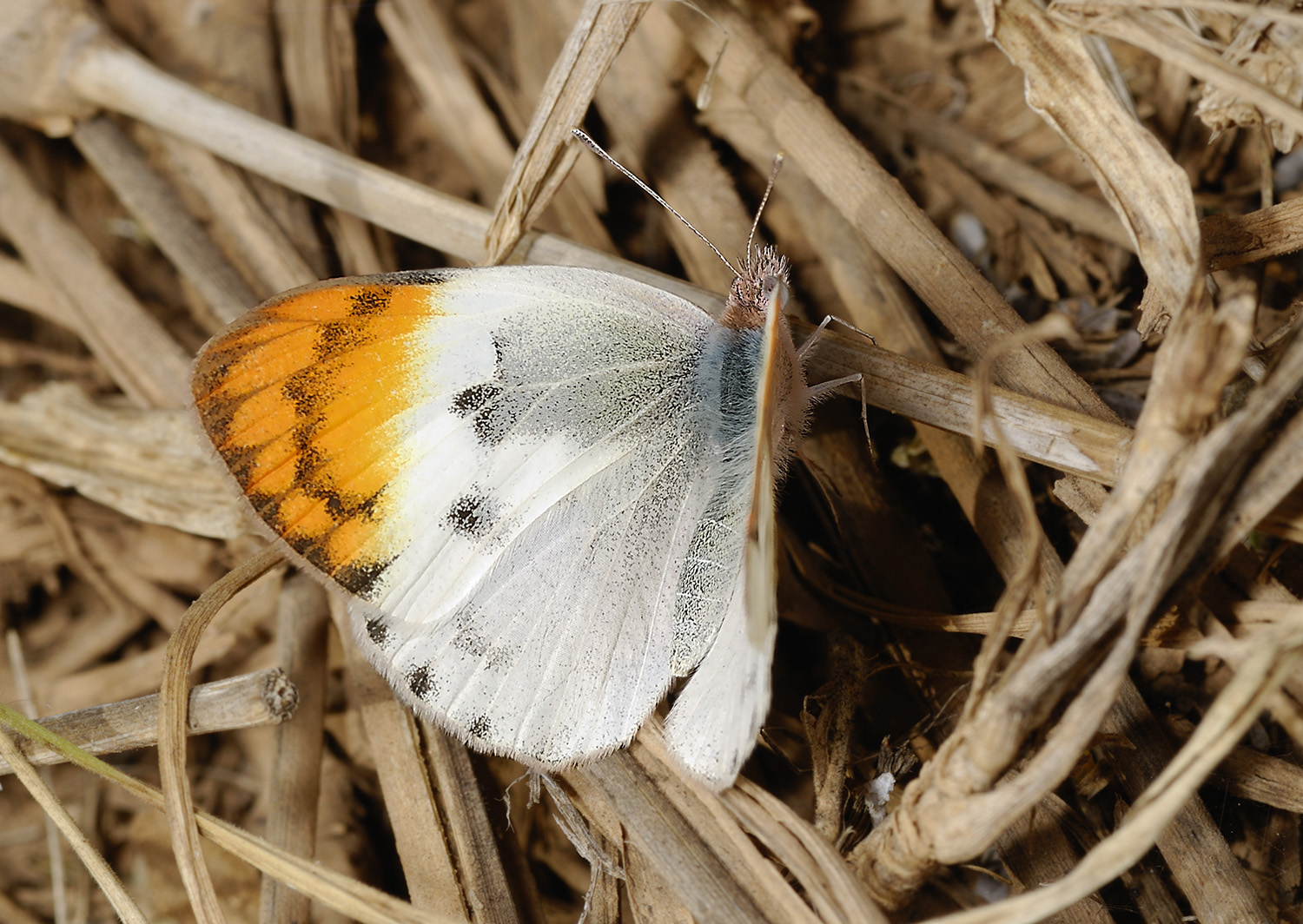
Colotis evenina evenina form evenina
African Orange Tip Colotis evenina evenina has a similar wingspan to the Southern Round-winged Orange Tip. Males are 38–45mm whereas females are slightly smaller at 35–42mm. Males have noticeably pure orange forewing tips, with no black cell spot on forewing upper side. All female forms have a noticeably orange forewing tip crossed by a dark band of spots running parallel to the margin. The distal edge of the forewing basal patch on both surfaces forms three square blocks as shown by the arrow. This is the main diagnostic feature for the species; as significant as the bulge in the basal edge of the orange tip in Colotis euippe omphale.

African Orange Tip ♀
Colotis evenina evenina form evenina
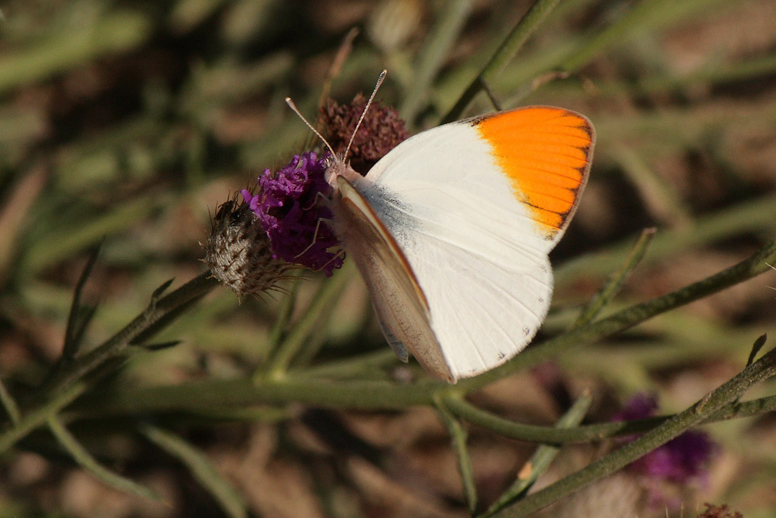
African Orange Tip ♀
Colotis evenina evenina form deidamioides
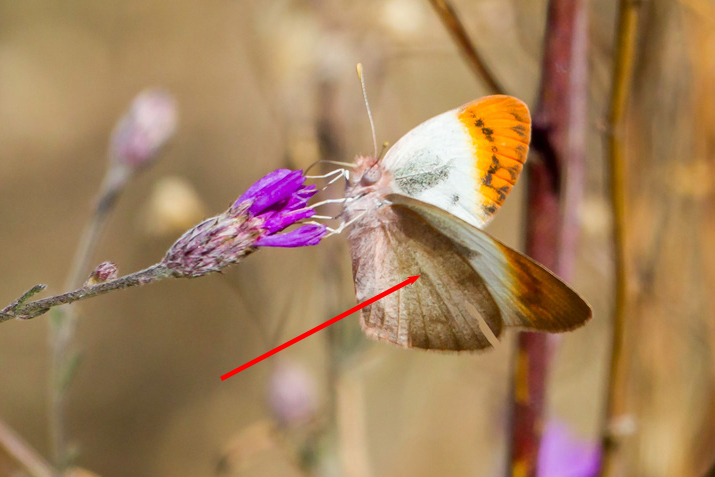
African Orange Tip ♂
Colotis evenina evenina form deidamioides
African Orange Tip ♀
Colotis evenina evenina form deidamioides
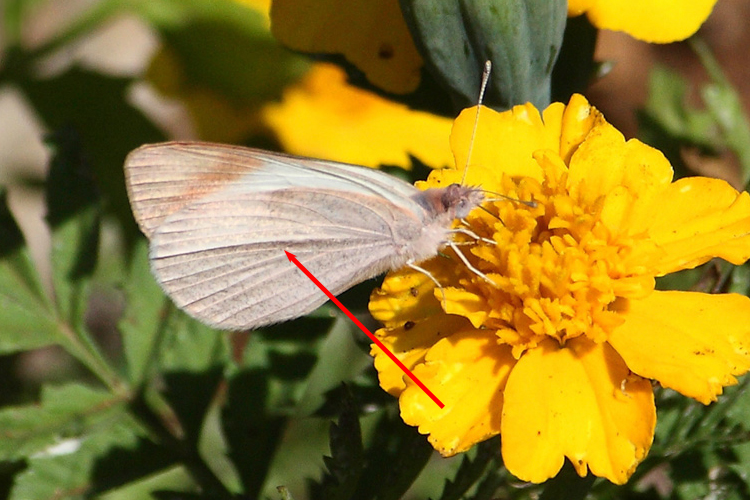
The forewing underside tip has an orange patch. The hindwing underside may be plain white or yellow; wet season forms have a square postdiscal band with a corner towards the margin in area M2 or M3 (arrowed). Dry season form deidamioides has a pink hindwing underside speckled with grey, and a white-edged dark diagonal stripe running from base to middle of the hind wing underside margin at M3 (arrowed). The dry season male lacks the black basal border to the orange forewing tip.

Waterberg Sunset Copper ♂
Erikssonia edgei
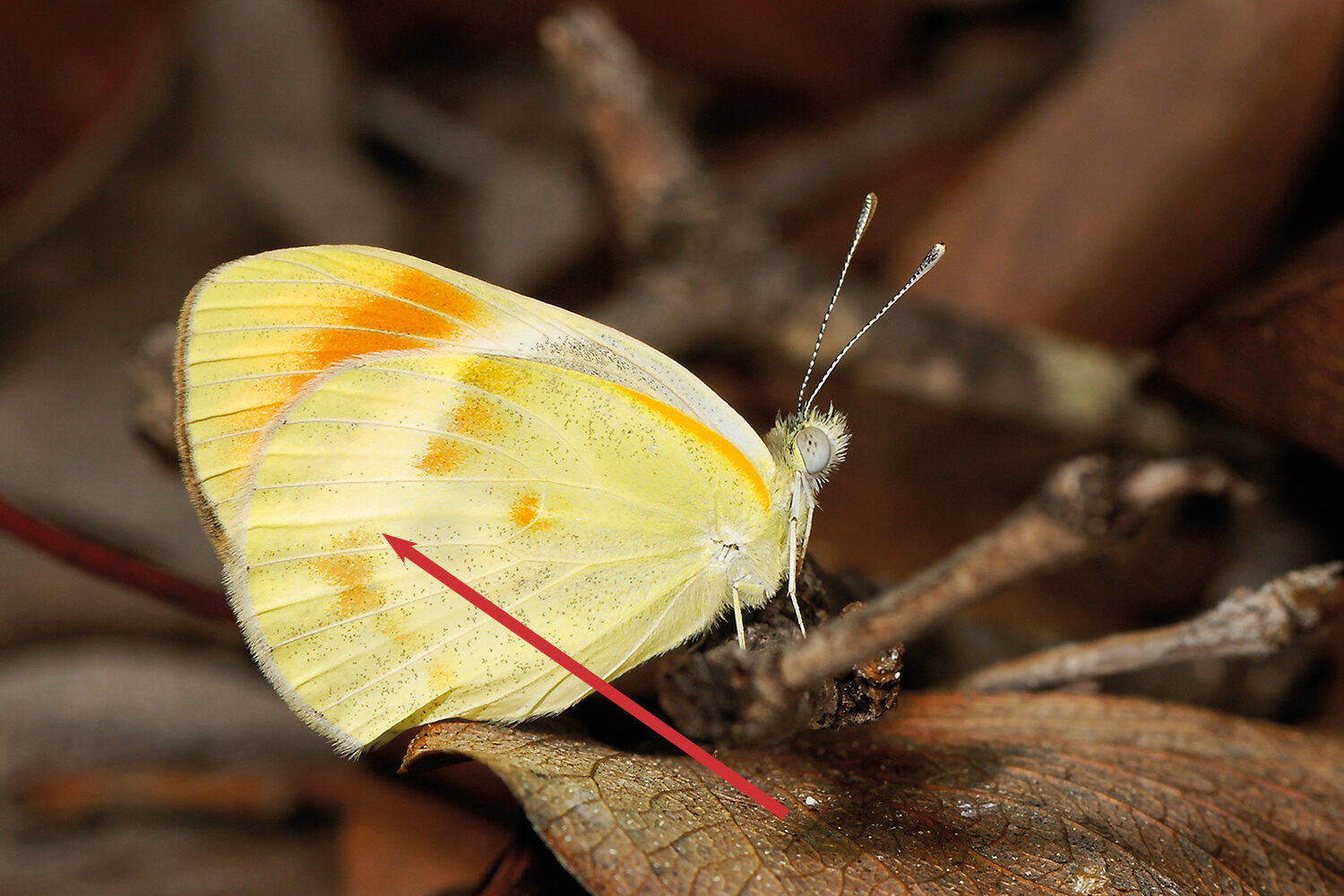
African Orange Tip ♀
Colotis evenina evenina form deidamioides
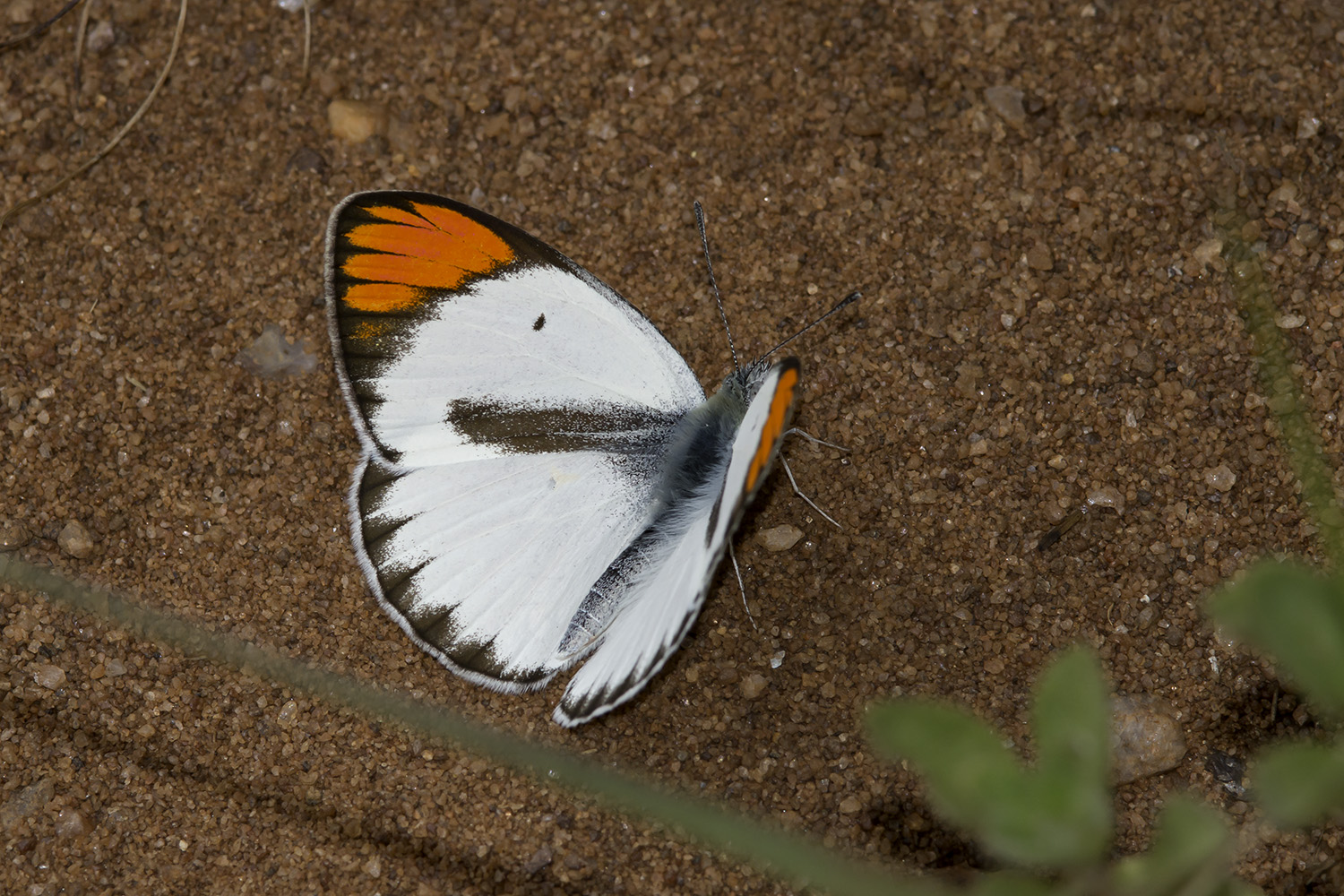
Colotis antevippe gavisa, the Southern Red Tip,is another medium-sized ‘Tip’; the same size or slightly larger than the Southern Round-winged Orange Tip, 40–45mm. This species has a more reddish hue to the orange, at least in the males.

Southern Red Tip ♂
Colotis antevippe gavisa form gavisa
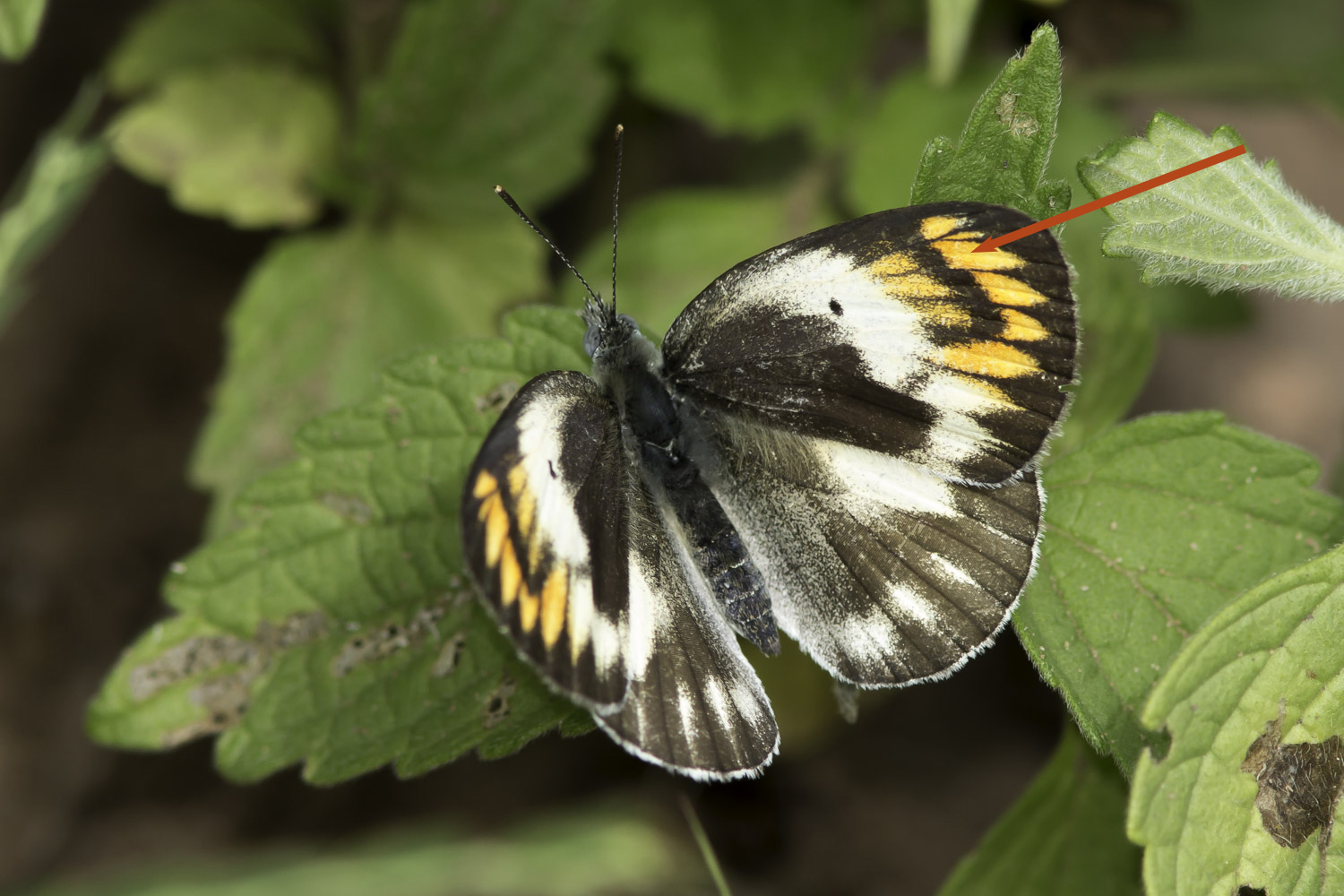
This Southern Red Tip male Colotis antevippe gavisa wet season form gavisa is a good example of this species. It has a distinct cell spot on both wings. The male’s apical third of the forewing upperside is vermilion-red, more or less edged with black, has black marginal hind wing border or spots, with a black ‘moustache’ mark formed by the black basal edge of forewing and hind wing costal edge. Compared to the male Southern Round-winged Orange Tip Colotis euippe omphale, it lacks the bulge in basal dark edge of the forewing tip.

Southern Red Tip ♀
Colotis antevippe gavisa form gavisa
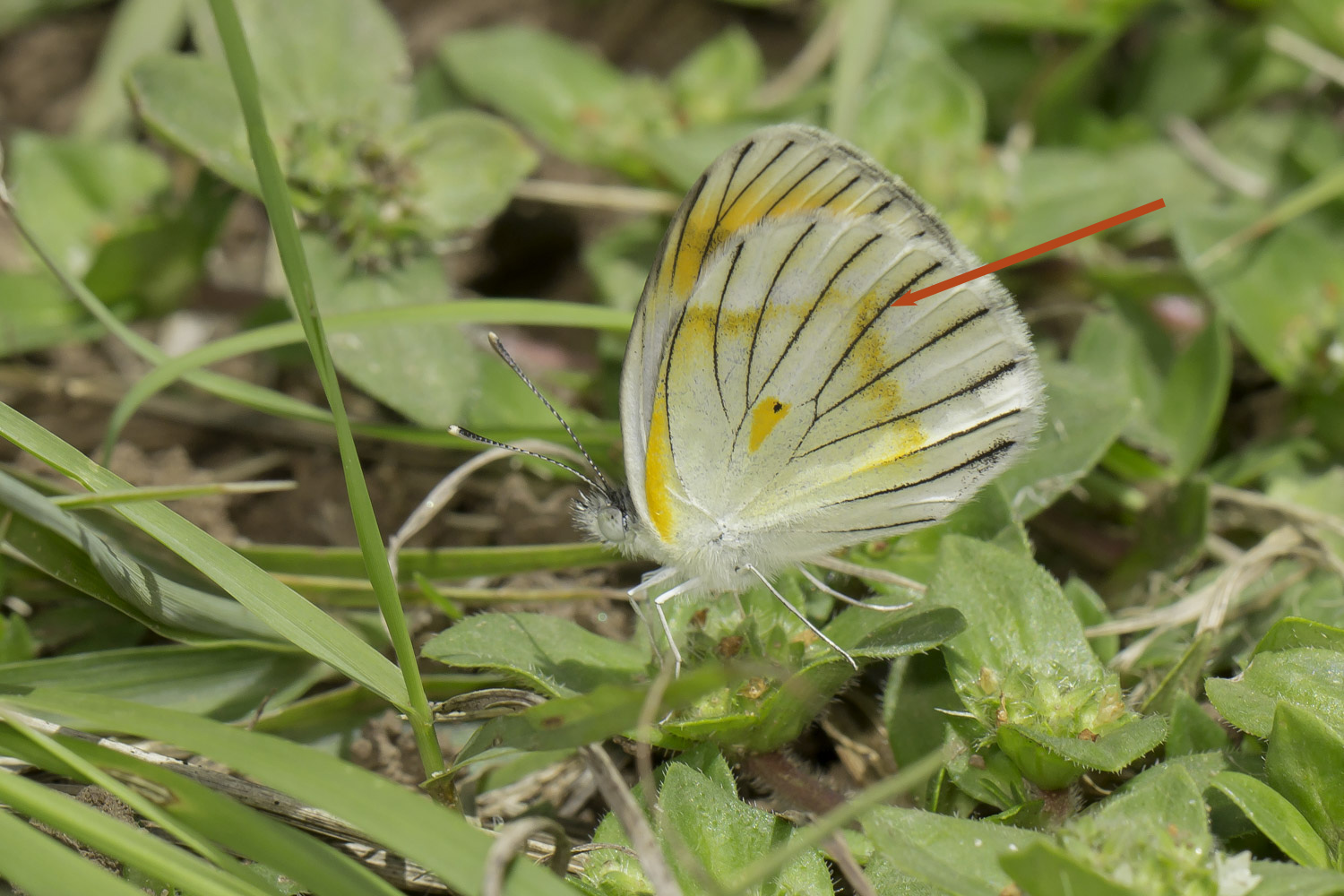
Southern Red Tip ♀
Colotis antevippe gavisa form gavisa
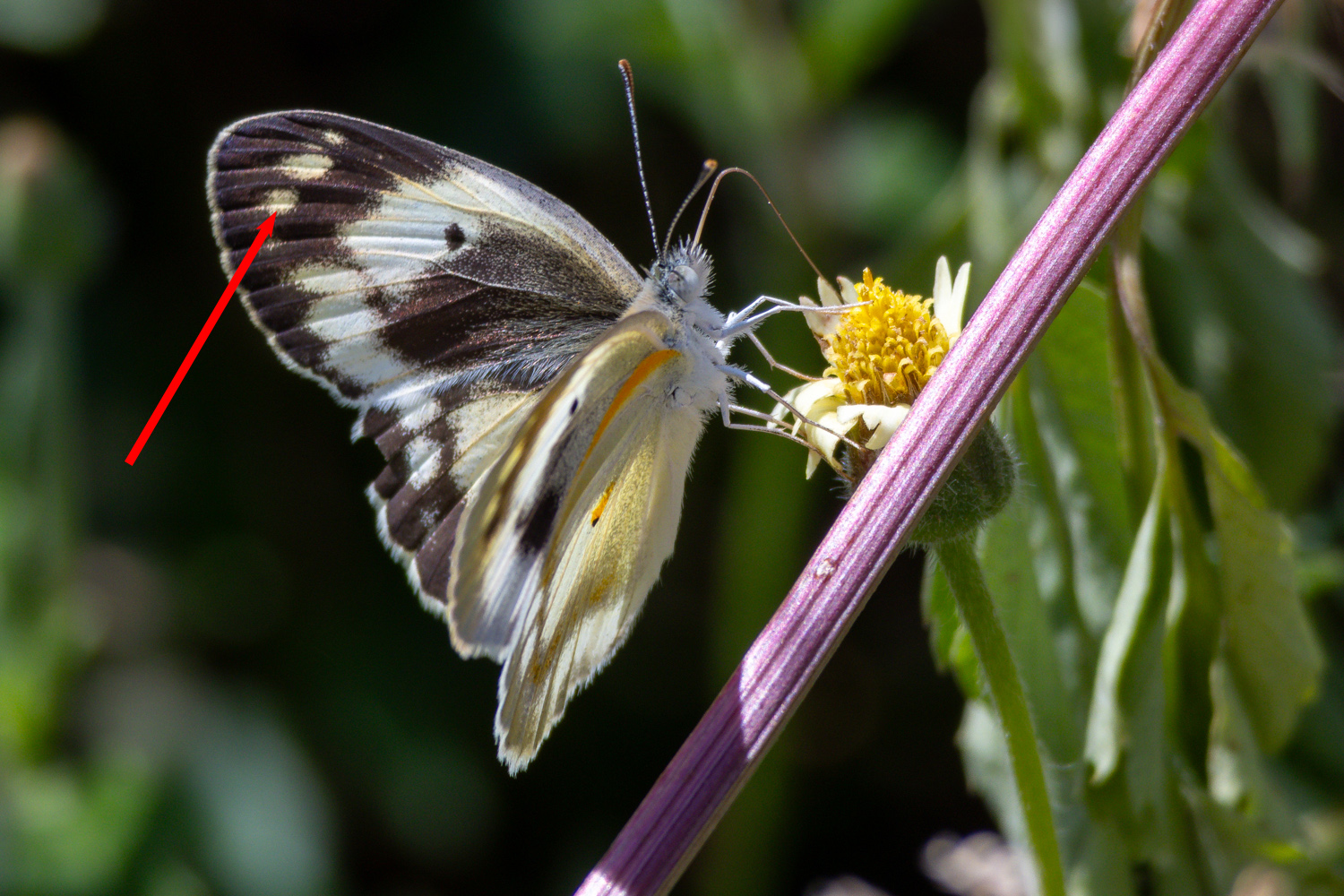
Southern Red Tip ♀
Colotis antevippe gavisa form hero
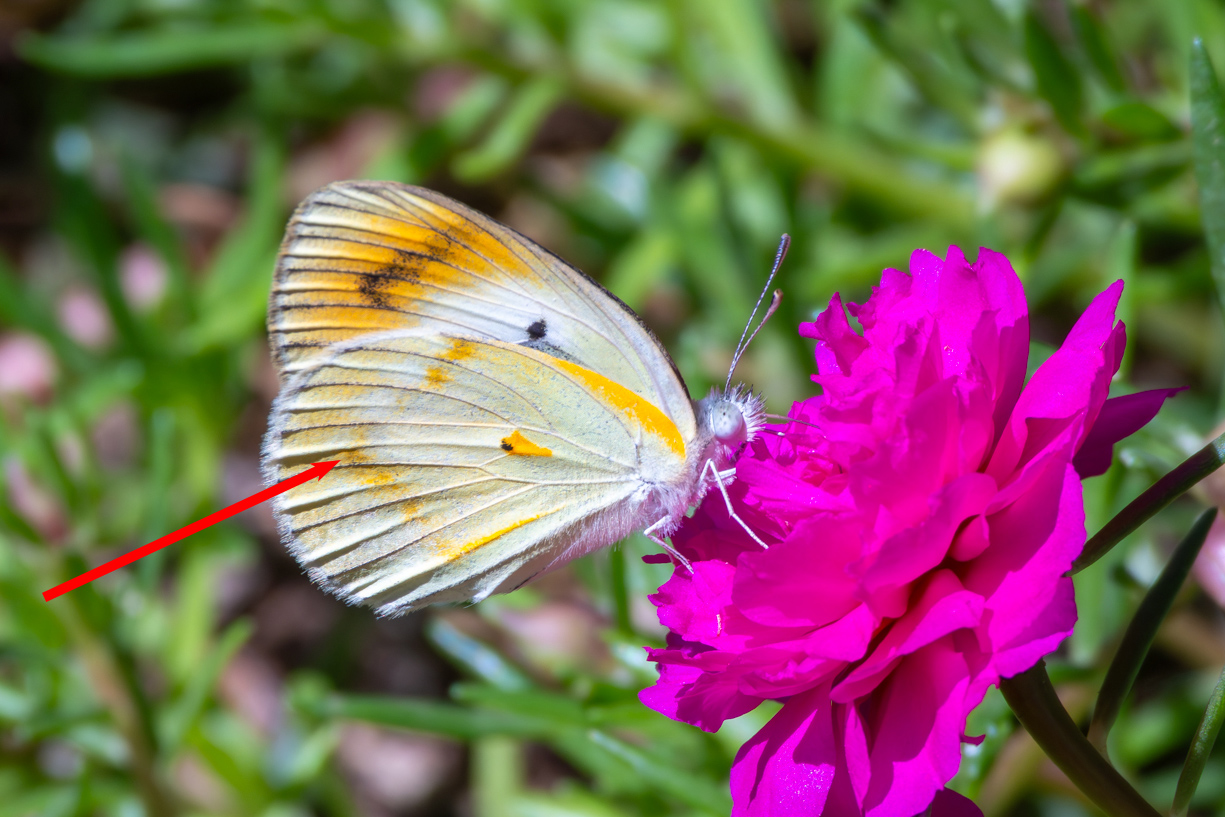
Southern Red Tip ♀
Colotis antevippe gavisa form hero
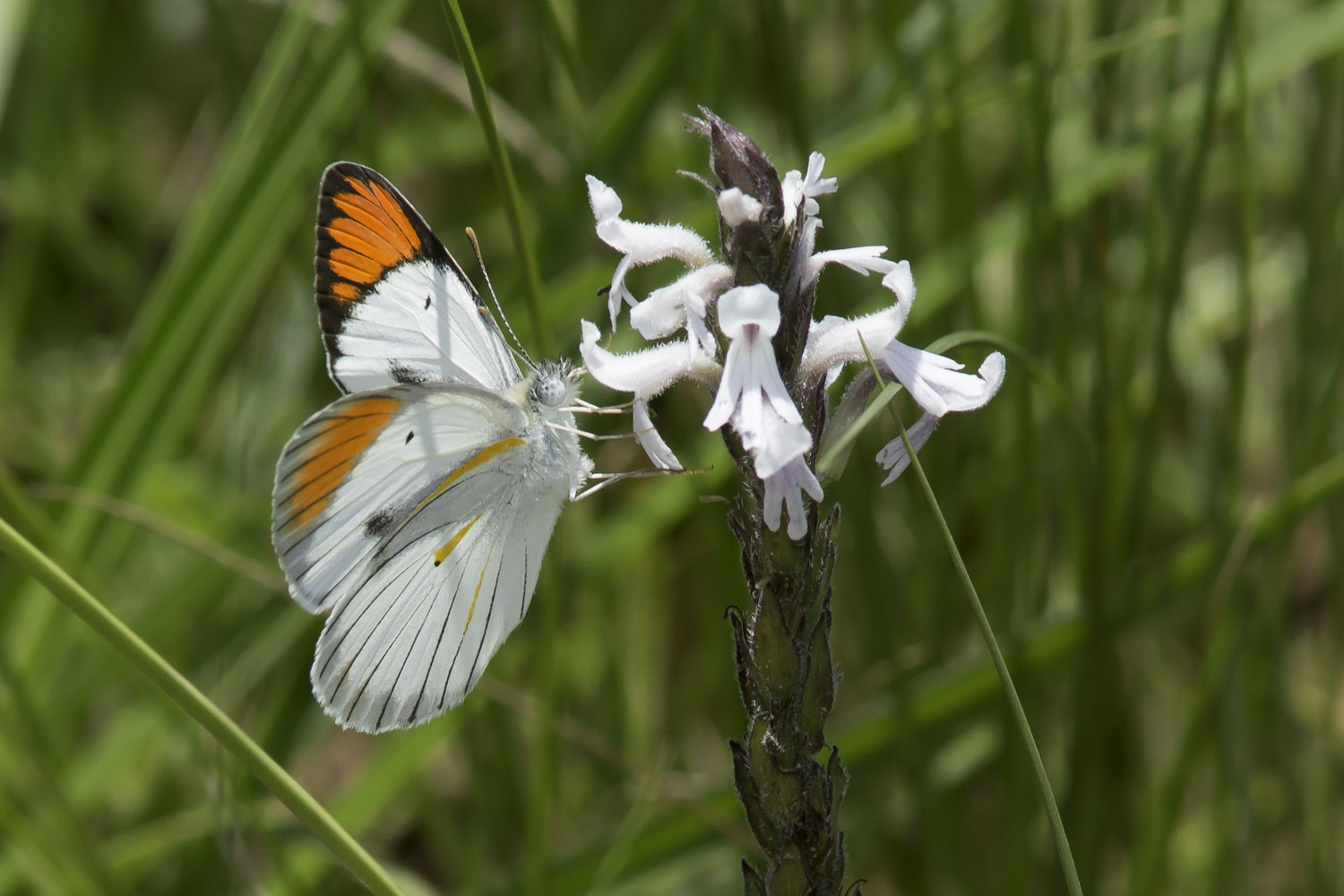
Females of Colotis antevippe gavisa have forewing tips are more orange than red. All female forms have extensive dark upper side markings; varying as to seasonal form. The forewing tip is seldom red, usually orange or orange-yellow, in some forms, cream. It usually has a dark margin and a dark band running down from the costal margin (arrowed). Extreme wet season forms (hero, gavisa) have more extensive dark markings than any other female Tip.
As with several other female forms of ‘Tips’, Colotis antevippe gavisa has dark and light morphs. Form gavisa has extensive orange patches whereas form hero has restricted cream coloured cells (arrowed) at the forewing tip.
Wet season forms’ undersides (both sexes) often have prominent black wing veins although this is not stable – some forms lack them. The forewing tip usually has a red or orange patch. The hindwing underside often has a square postdiscal band with a corner towards the margin in area M2 or M3 (arrowed in both images).

Southern Red Tip ♂
Colotis antevippe gavisa form gavisa

Southern Red Tip ♂
Colotis antevippe gavisa form zera
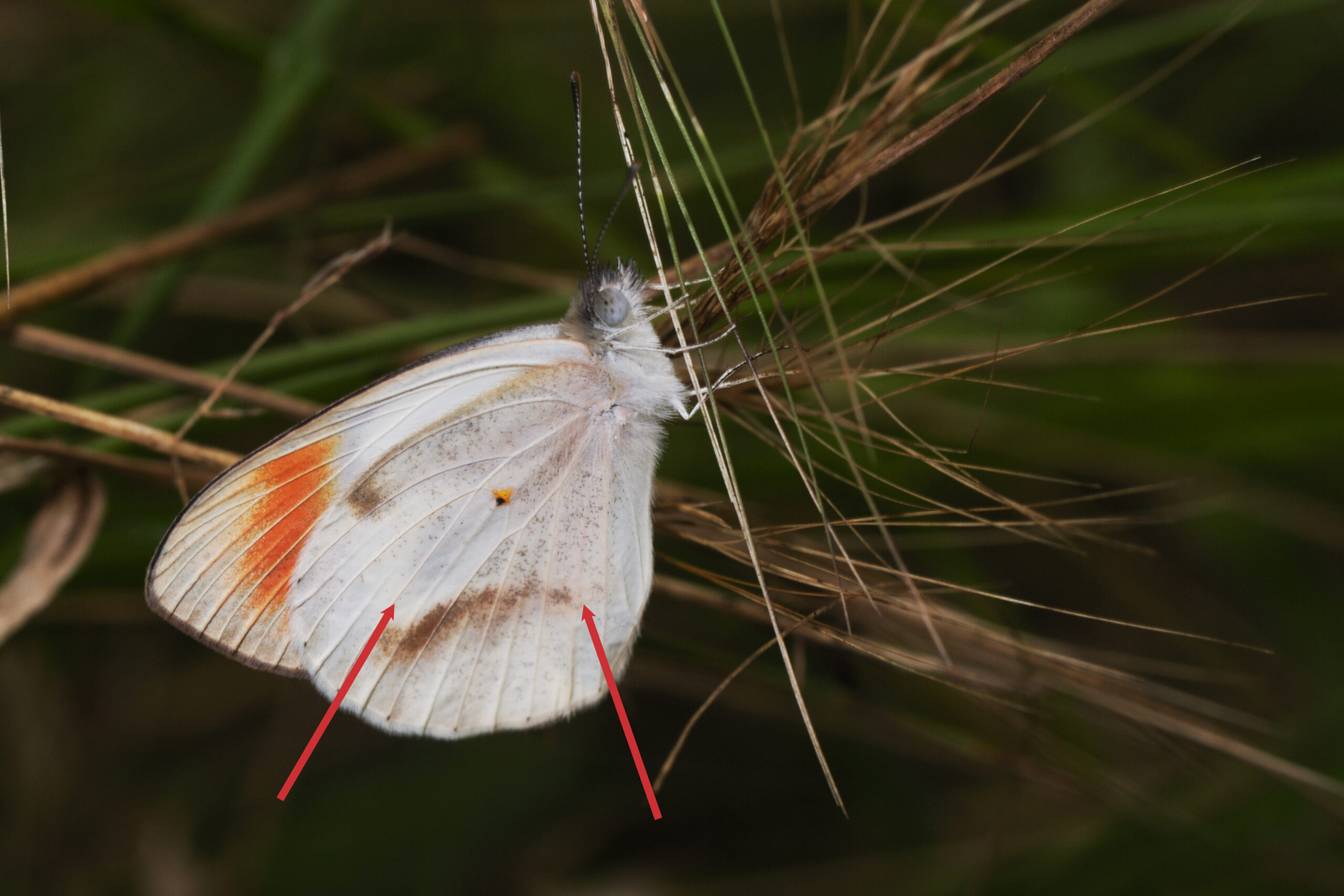
Southern Red Tip ♂
Colotis antevippe gavisa form helle
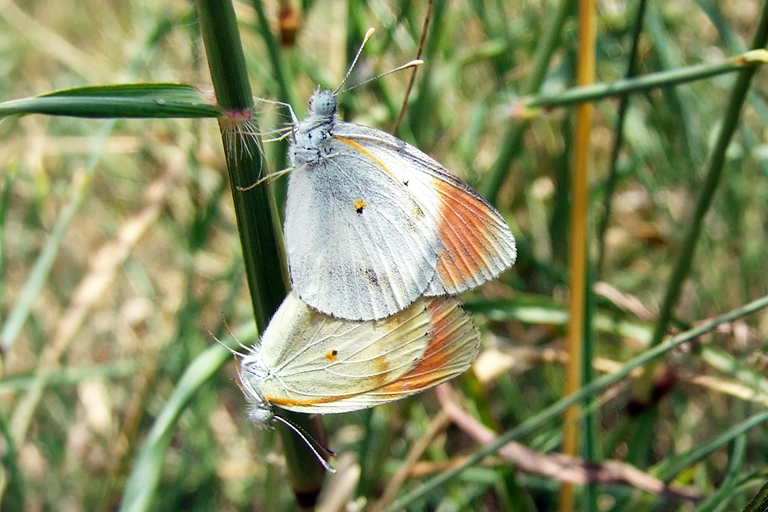
Southern Red Tip mating pair, ♂ above
Colotis antevippe gavisa form zera
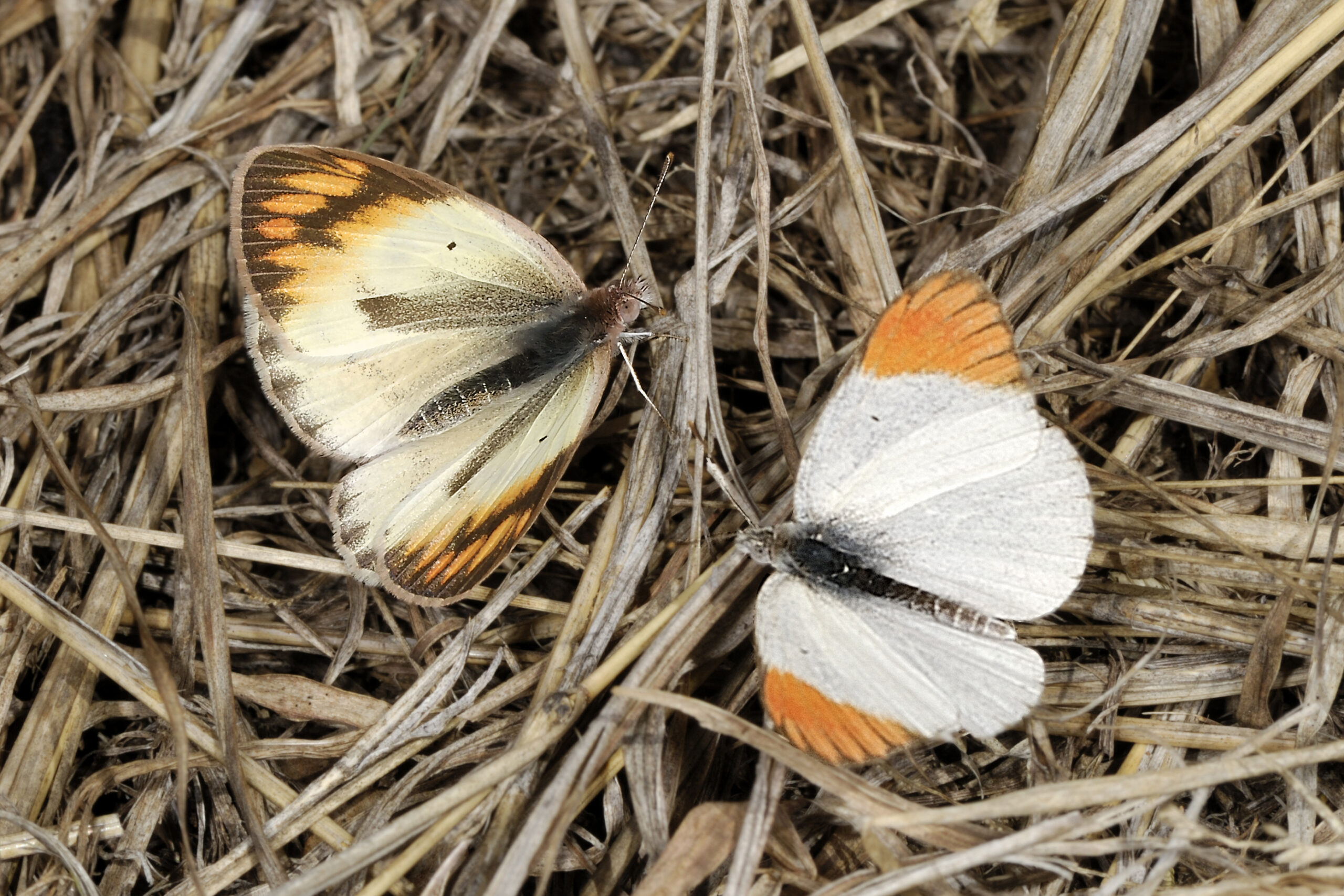
Intermediate forms of Southern Red Tip have underside markings transitional between the wet and dry season forms. Form helle has a pink-tinged underside with a diagonal postdiscal band between veins M1 and CuA2 (arrowed).
Form zera has a whitish or cream underside hindwing with reduced postdiscal markings as can be seen on this mating pair.
The extreme dry season form of Colotis antevippe gavisa is form harmonides. The males’ forewing tips only have a tinge of red, and the females’ upper sides have much reduced dark markings. Like many DSF ‘Tips’ the female’s white may carry a tinge of cream. The hindwing underside has the ‘dead leaf’ pink colour flecked with grey.

Southern Red Tip courting pair, ♀ L
Colotis antevippe gavisa form harmonides
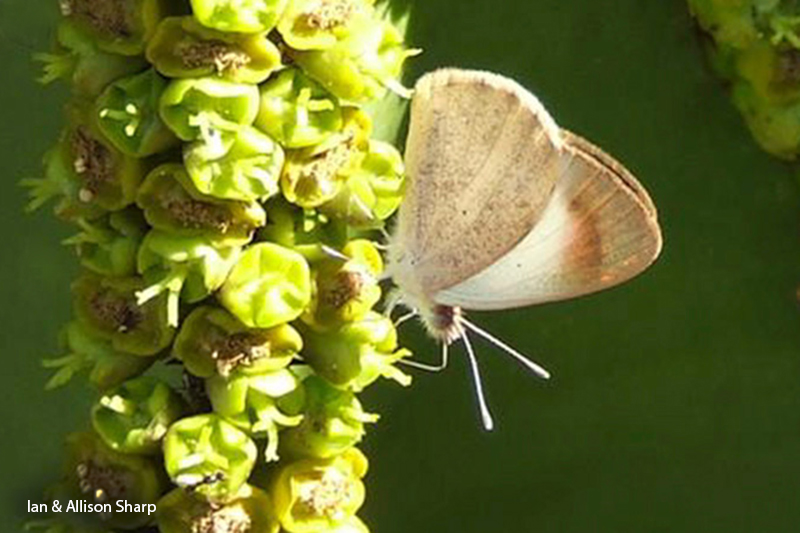
Southern Red Tip ♂
Colotis antevippe gavisa form harmonides
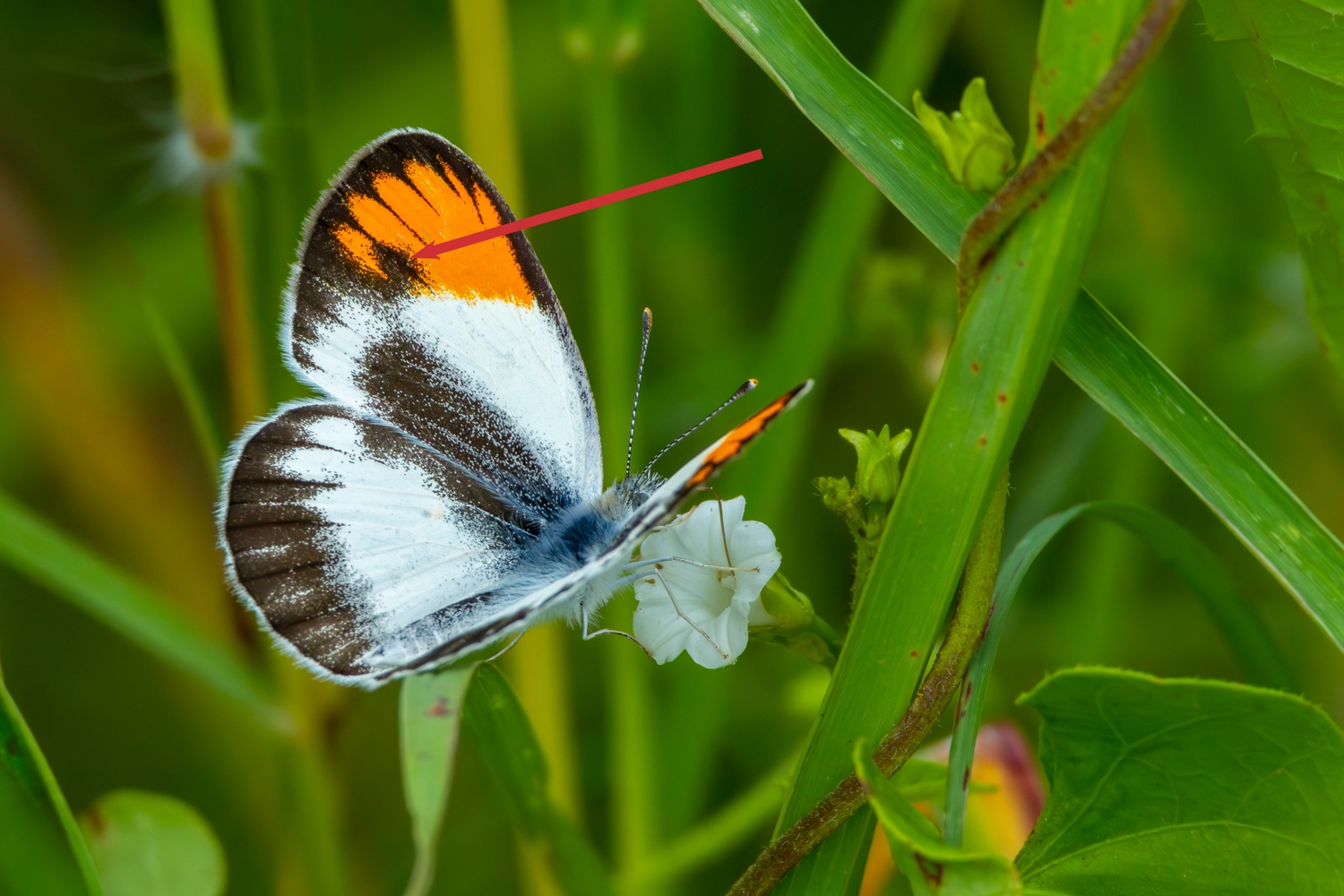
Our smallest Tip is the African Small Orange Tip Colotis evagore antigone. Males are 28–35mm across; females slightly larger – 28–38mm Males are unmistakable; the black basal edge of the forewing upperside apical tip only reaches one-third of the way from the margin to the costa. Where this ends, in M3, it bends towards the wing apex, forming an elbow penetrating the orange. That is diagnostic for the species. In form emini the dark ‘mustache’ formed by the ufw inner margin and uhw costa is extensive as is the outer margin on both wings. Extreme form emini individuals can almost be black butterflies with white bands, and the basal ‘elbow’ inside the forewing tips gets lost among them.

African Small Orange Tip ♂
Colotis evagore antigone form emini
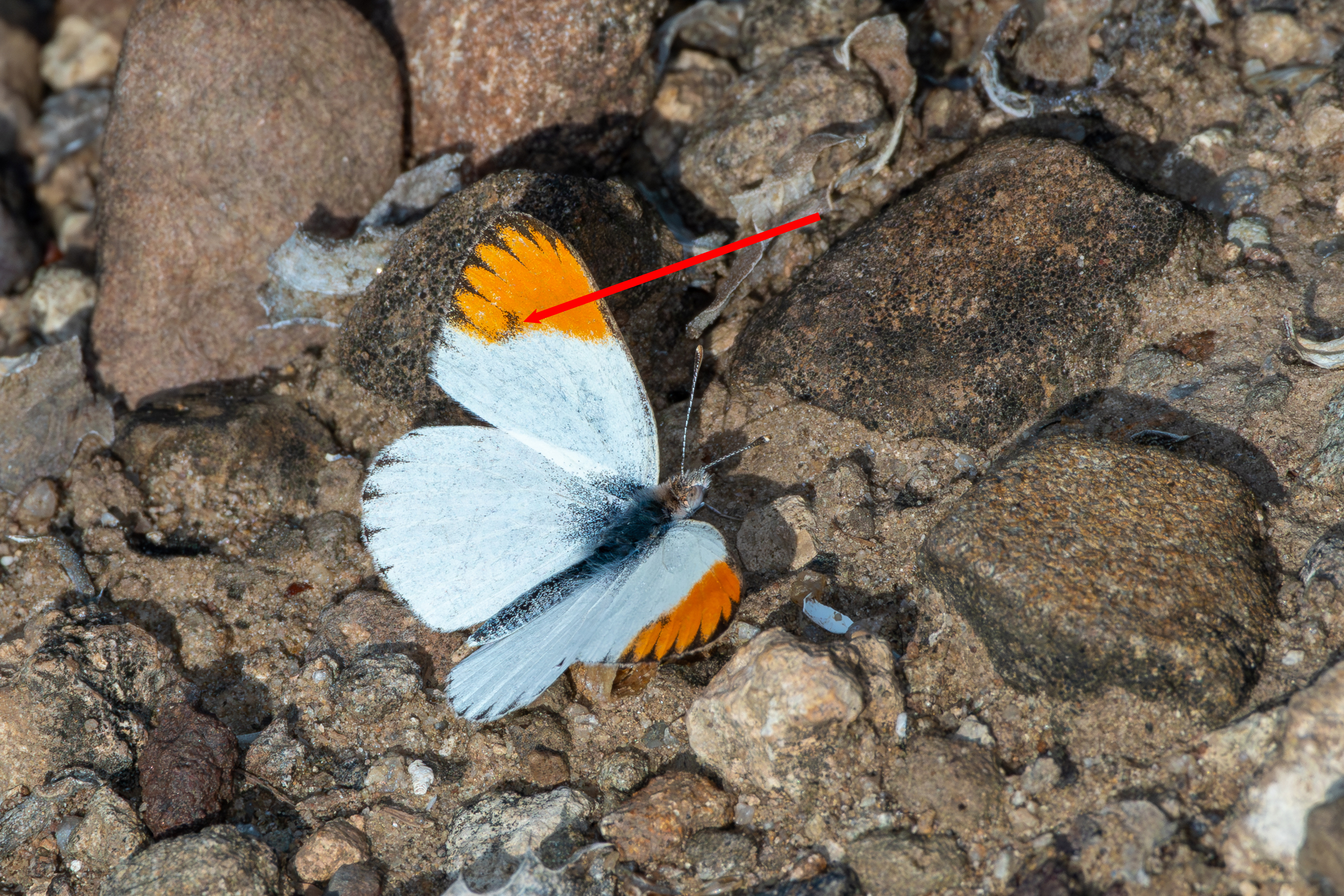
African Small Orange Tip ♂
Colotis evagore antigone form delphine
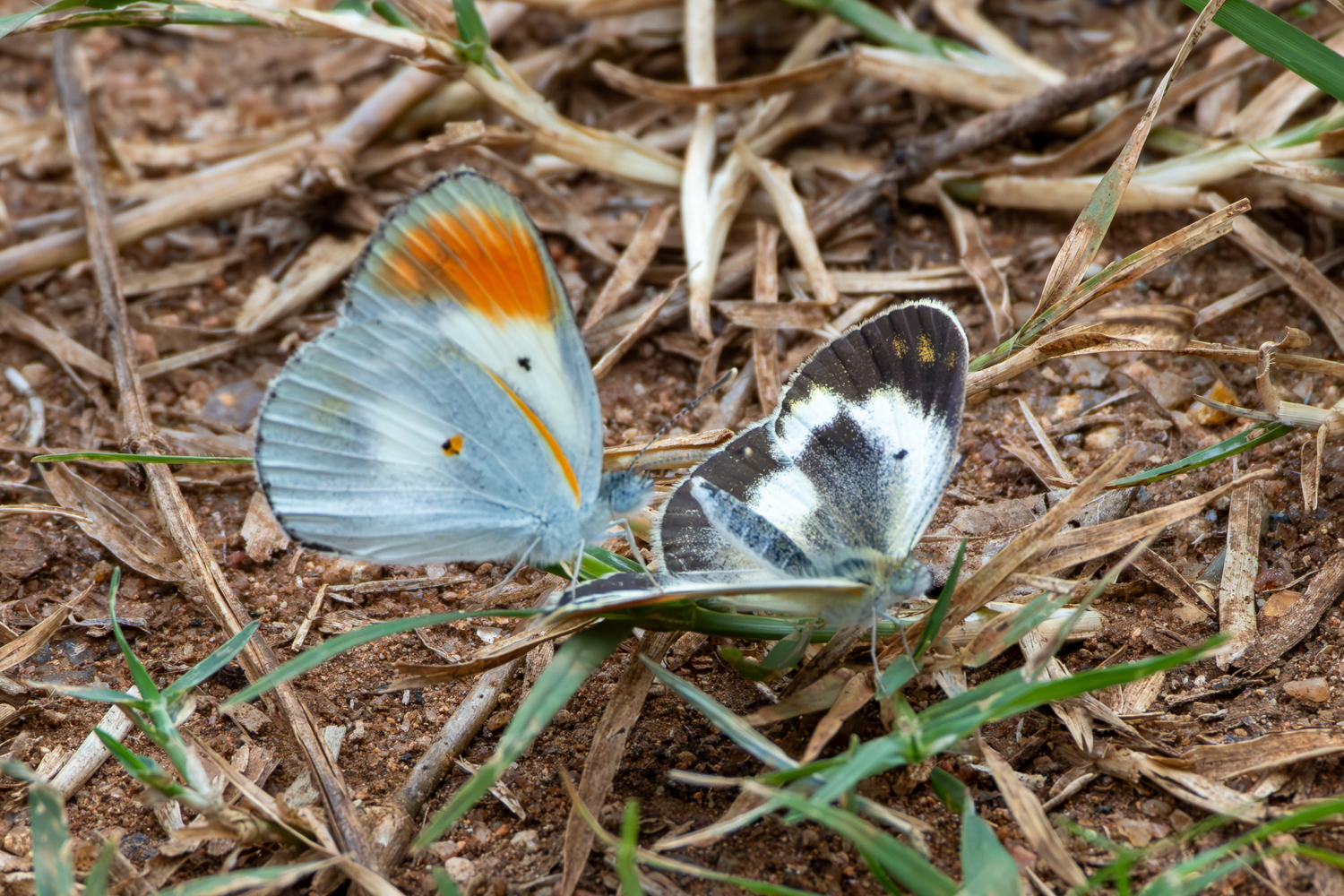
African Small Orange Tip mating pair ♂ L
Colotis evagore antigone both form emini
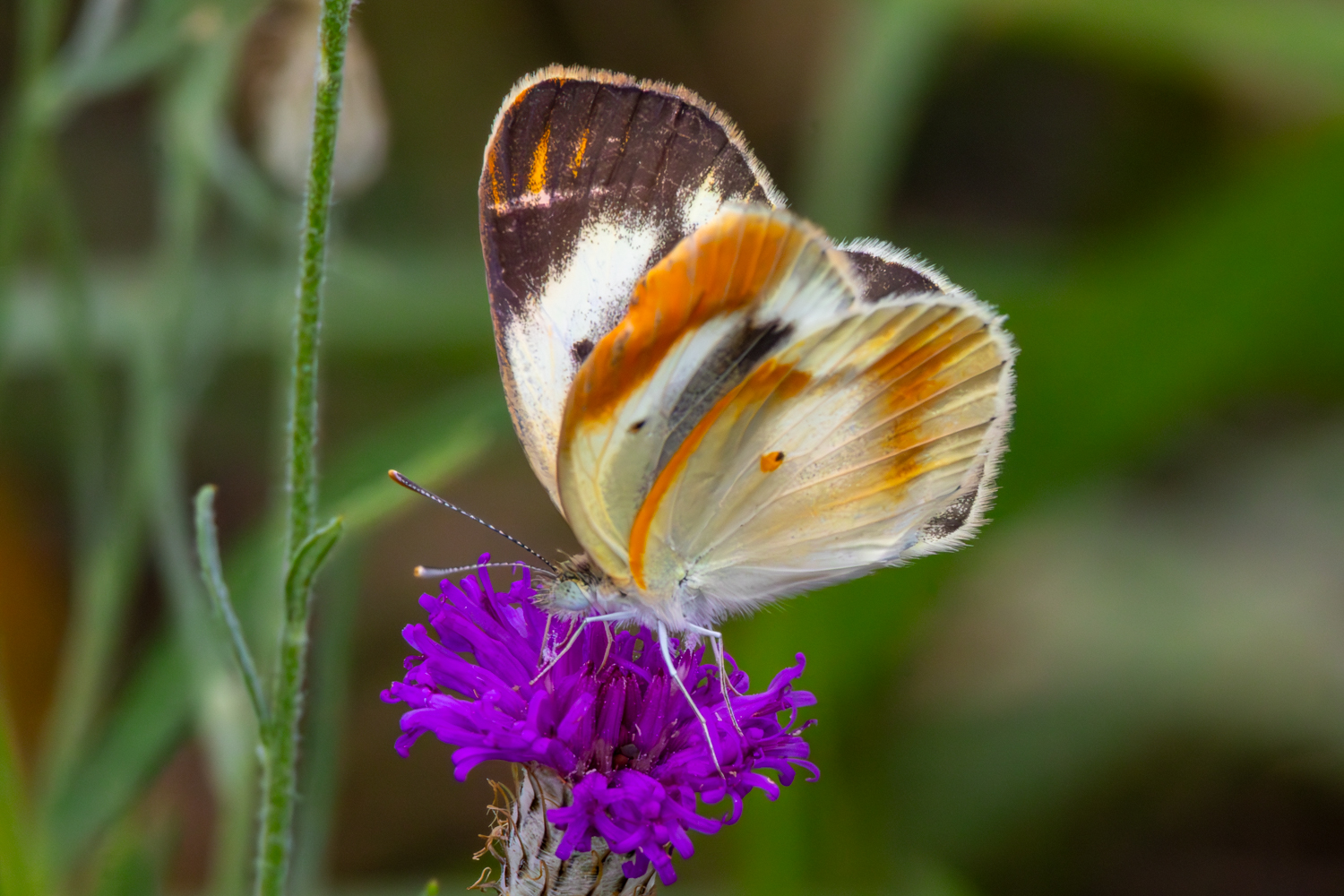
African Small Orange Tip ♀
Colotis evagore antigone form emini
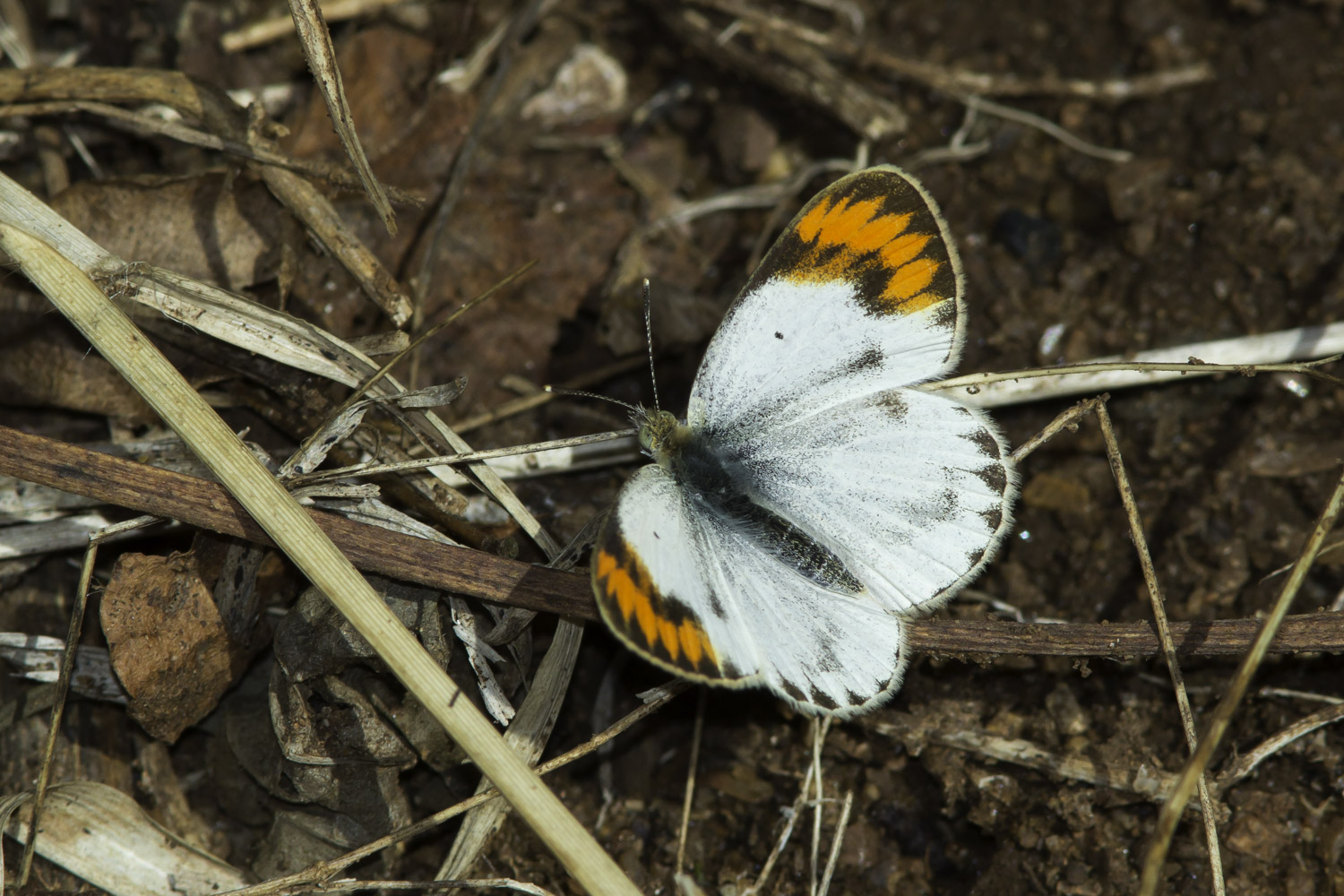
African Small Orange Tip ♀
Colotis evagore antigone form delphine
Colotis evagore antigone has considerable seasonal variation; dry season individuals have reduced dark markings. The extreme wet season form is emini; form delphine is the extreme dry season form, found in desert conditions and in the dry season in the eastern parts of its range. Females follow the same pattern – form emini often having wide black forewing tips with hardly any orange. Form delphine (above) has much reduced dark markings and a band of black along the basal edge of the tip.
In between these there are transitional forms like galathinus and phlegetonia, with the basal spot in the orange tip immediately indicating males. Females are more difficult; there are variations in form emini that have the broad dark markings but extensive orange in the forewing tip. Forms galathinus and phlegetonia have orange tipped and dark tipped forms.
Then there are the extreme dry season female forms like xanthotes and pseudetrida that have highly reduced upper side markings. The forewing tips are usually yellowish buff or pale orange, and the ground colour may be tinged with yellow.

African Small Orange Tip ♀
Colotis evagore antigone form emini orange tipped form
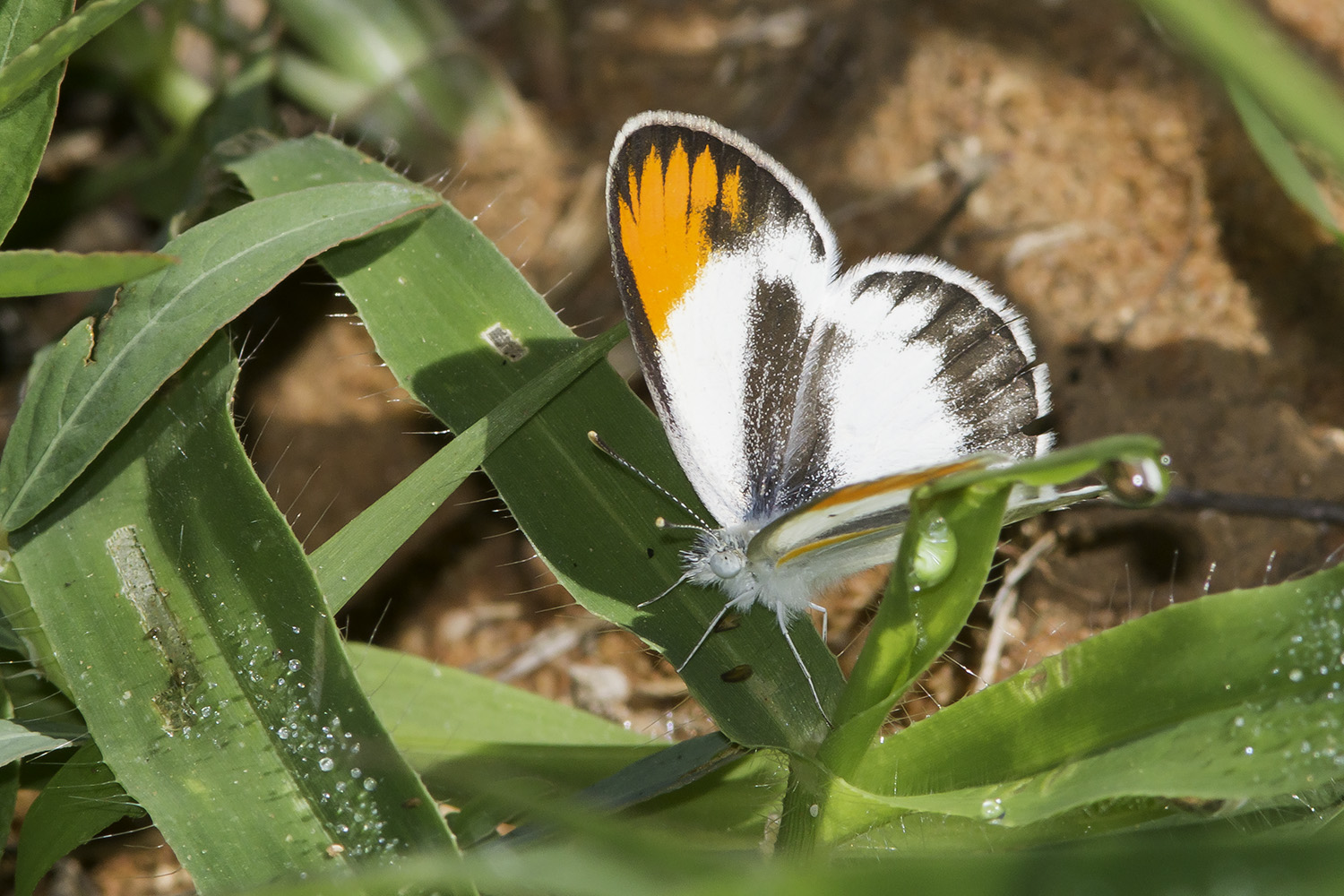
African Small Orange Tip ♂
Colotis evagore antigone form phlegetonia
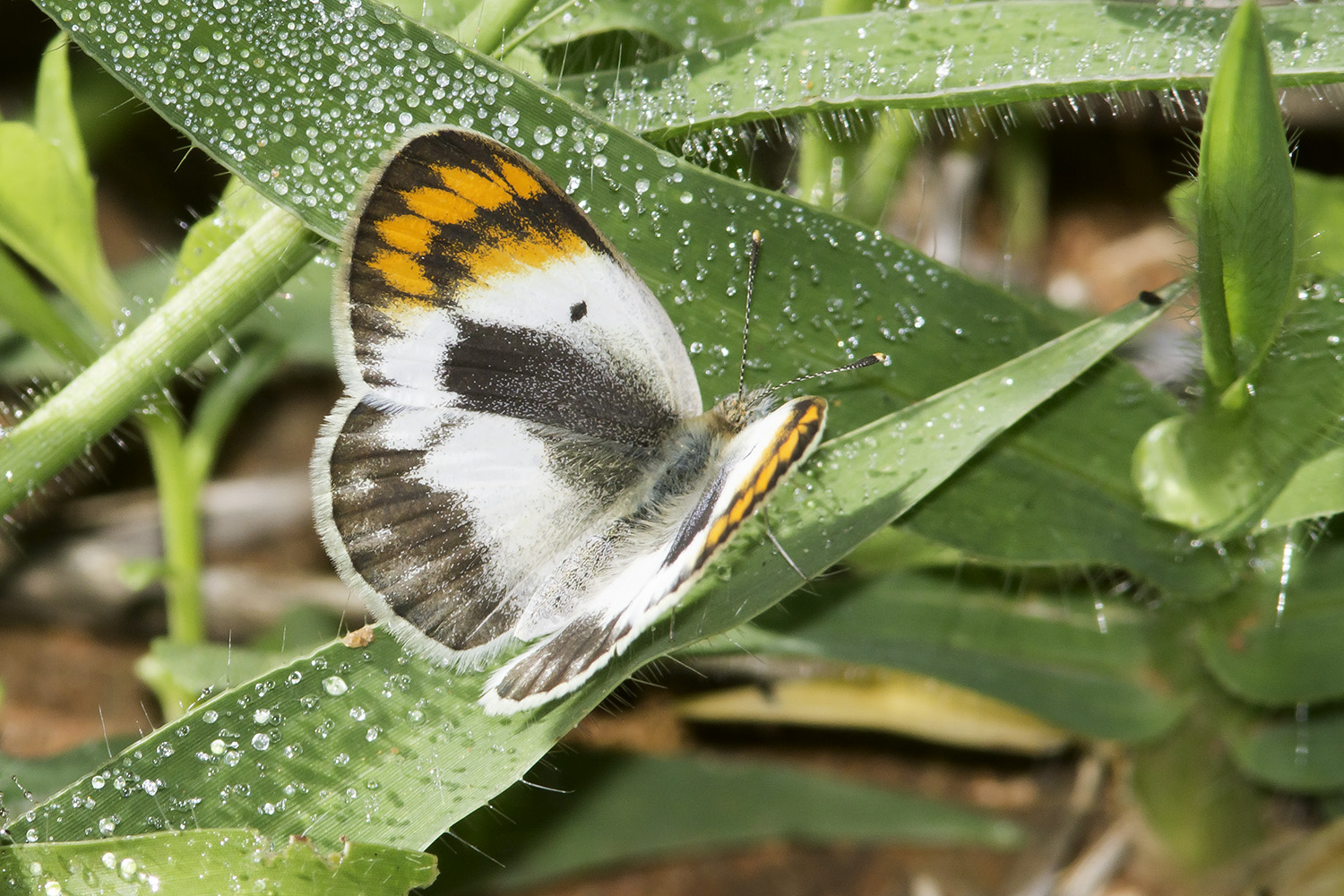
African Small Orange Tip ♀
Colotis evagore antigone form phlegetonia orange type
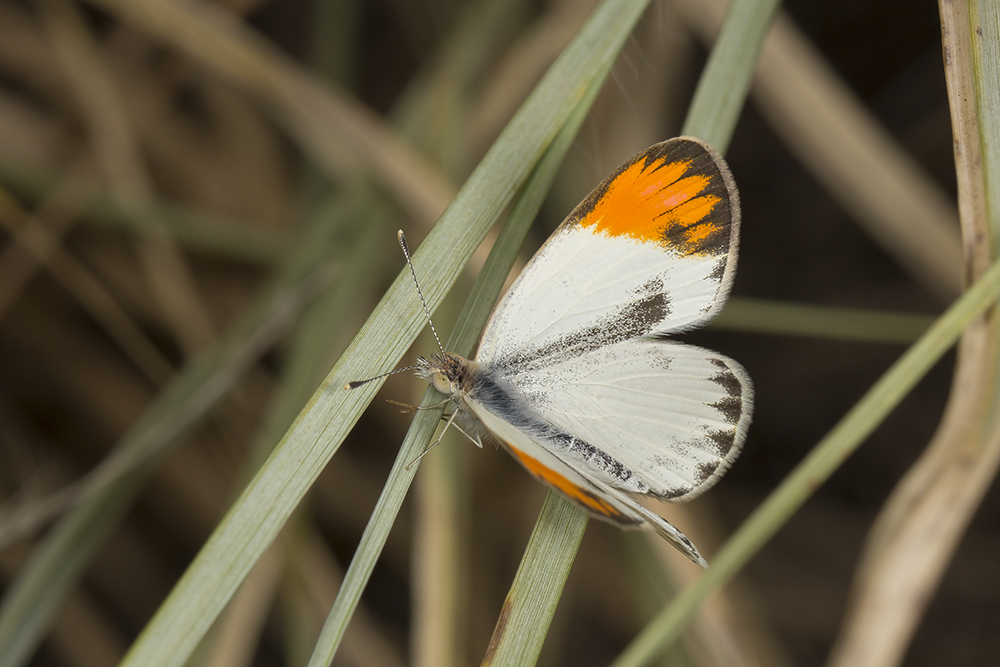
African Small Orange Tip ♂
Colotis evagore antigone form galathinus
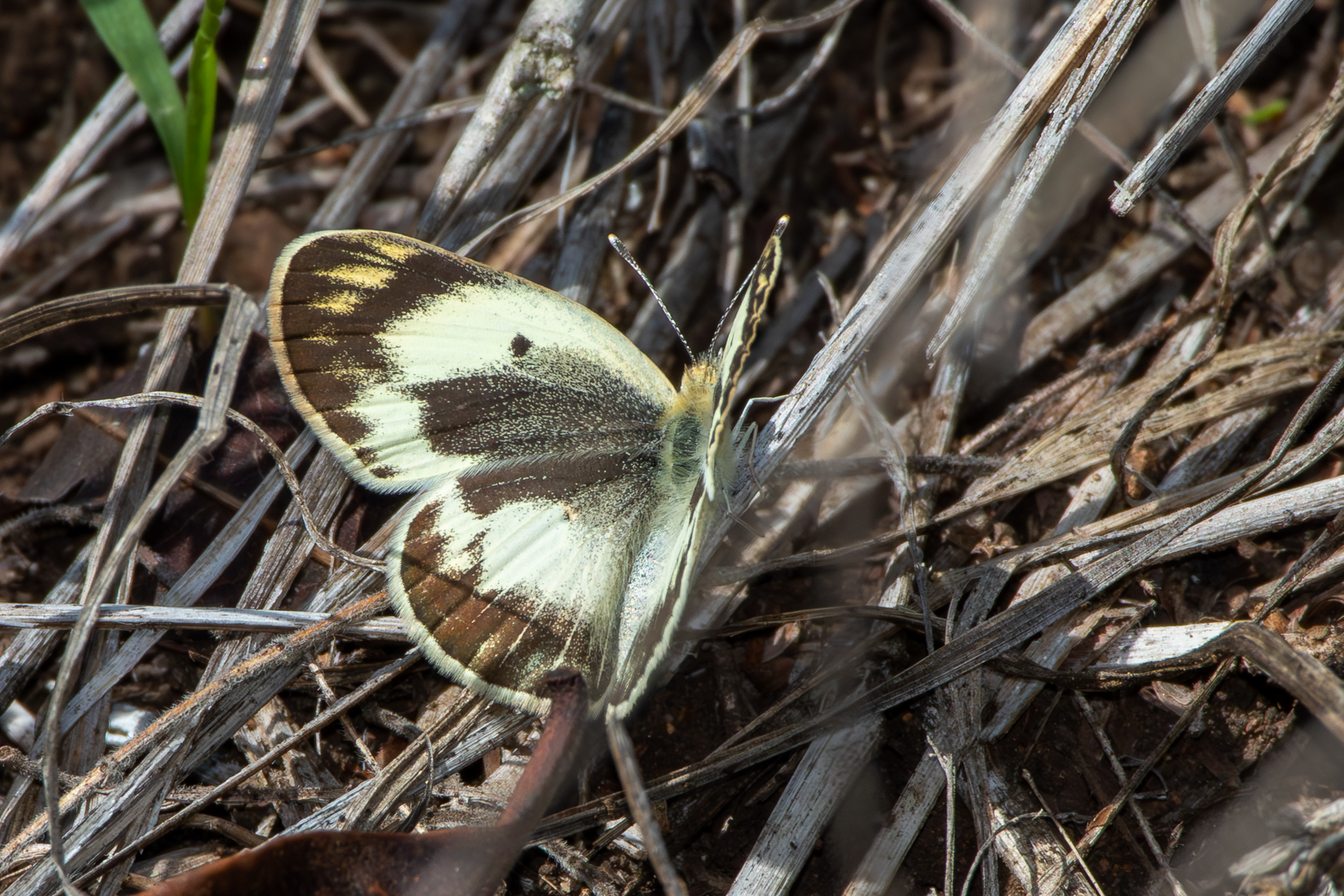
African Small Orange Tip ♀
Colotis evagore antigone form galathinus dark type
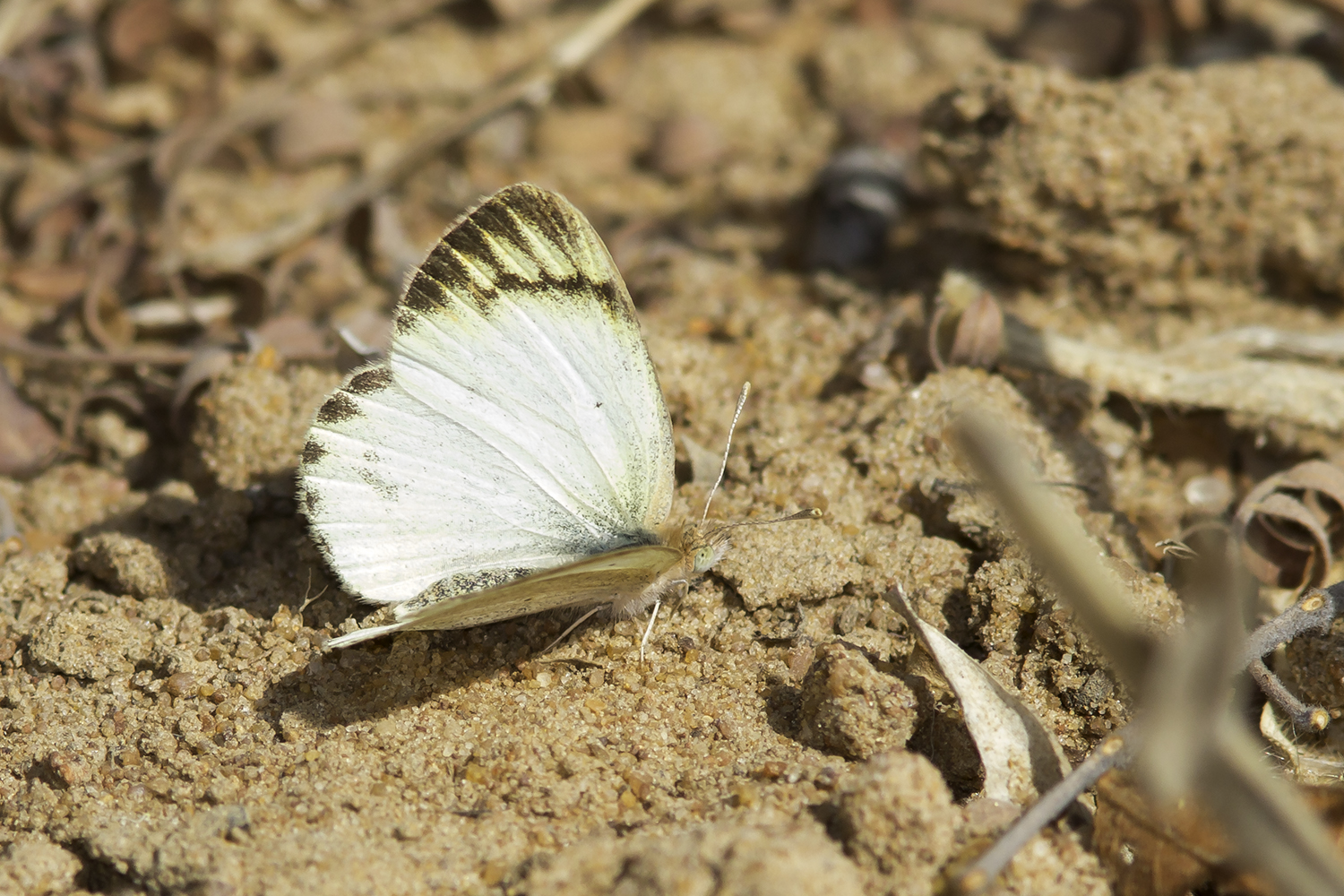
African Small Orange Tip ♀
Colotis evagore antigone form xanthotes

African Small Orange Tip ♀
Colotis evagore antigone form pseudetrida
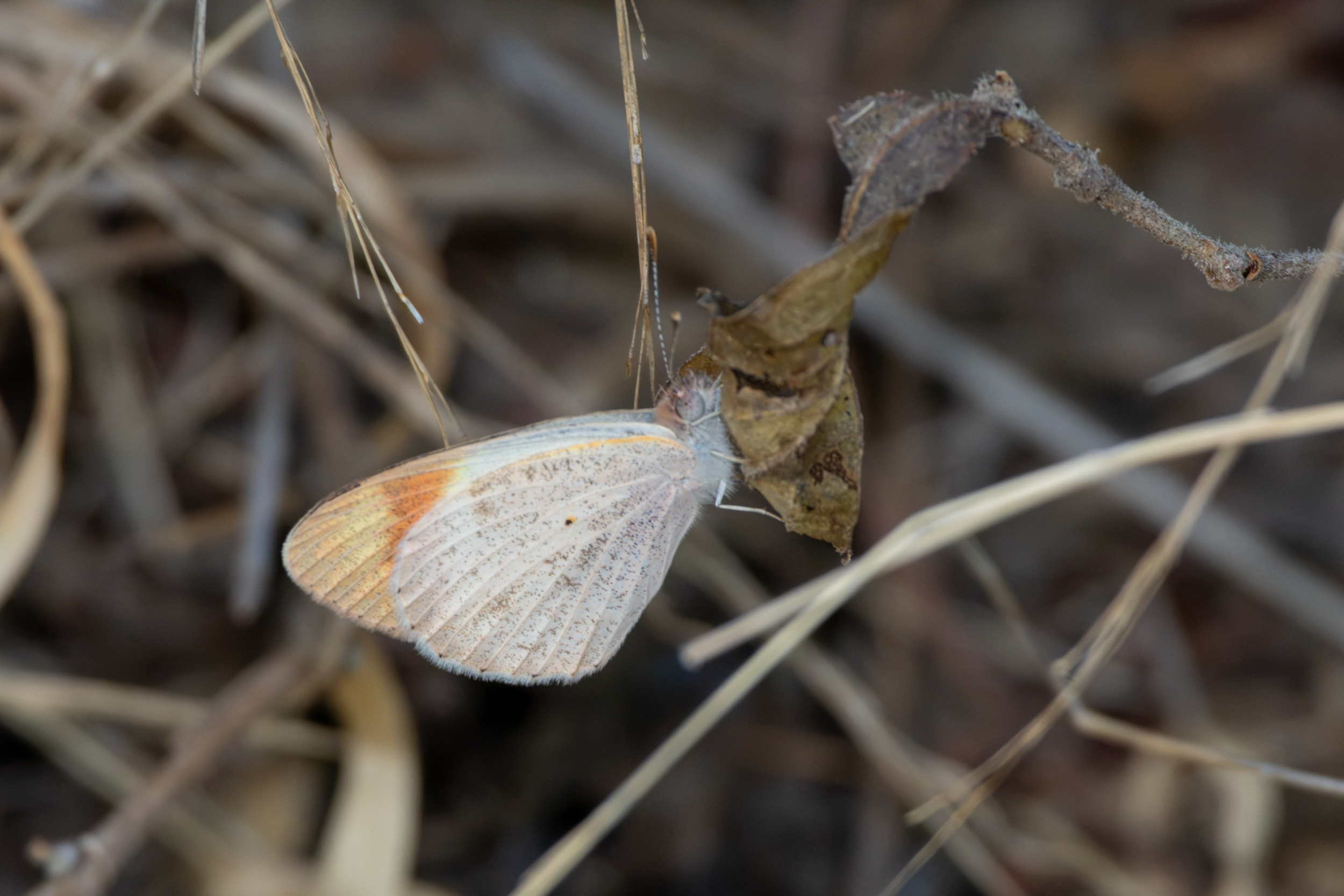
African Small Orange Tip ♂
Colotis evagore antigone form delphine underside
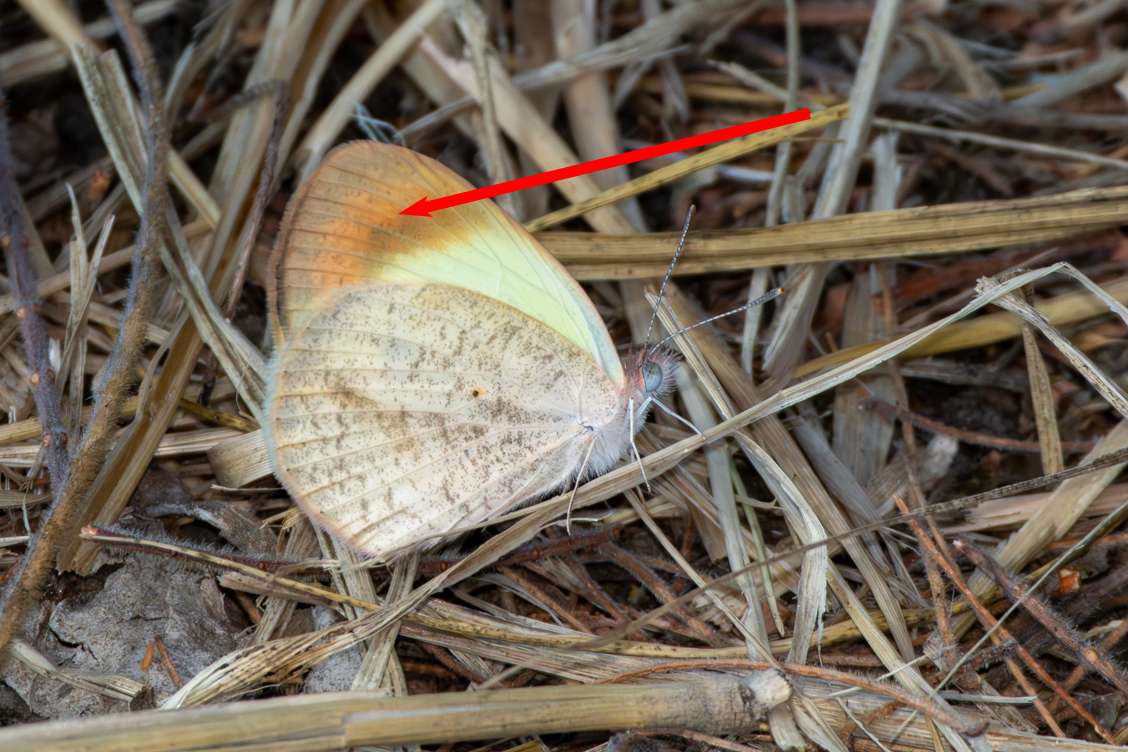
The undersides also show seasonal variation. Heavily marked wet season forms like emini and phlegetonia tend to have colourful hindwing undersides with a white ground colour on the hindwing. Dry season forms generally have similar pinkish buff underside hindwings flecked with grey, like the form delphine shown above.
Undersides can be confusingly similar to Colotis euippe omphale or Colotis antevippe gavisa even to the hindwing underside square postdiscal band with a corner towards the margin in area M2 or M3. Comparing to those species, the small size of Colotis evagore antigone separates it. The wing area is less than half the extent. It is a more challenging task separating it from the similarly sized Colotis pallene, especially on photos that lack a scale comparator.
If the orange patch on the underside forewing tip is visible, as it is on these images, that indicates Colotis evagore antigone. If it’s missing, it’s probably Colotis pallene but on extreme dry season forms like delphine or pseudetrida there may only be a touch of orange. This is why I usually err on the side of caution when identifying these on iNaturalist; I often stop the chain of identification at the Colotis genus level!

African Small Orange Tip ♀
Colotis evagore antigone form delphine showing forewing underside orange patch
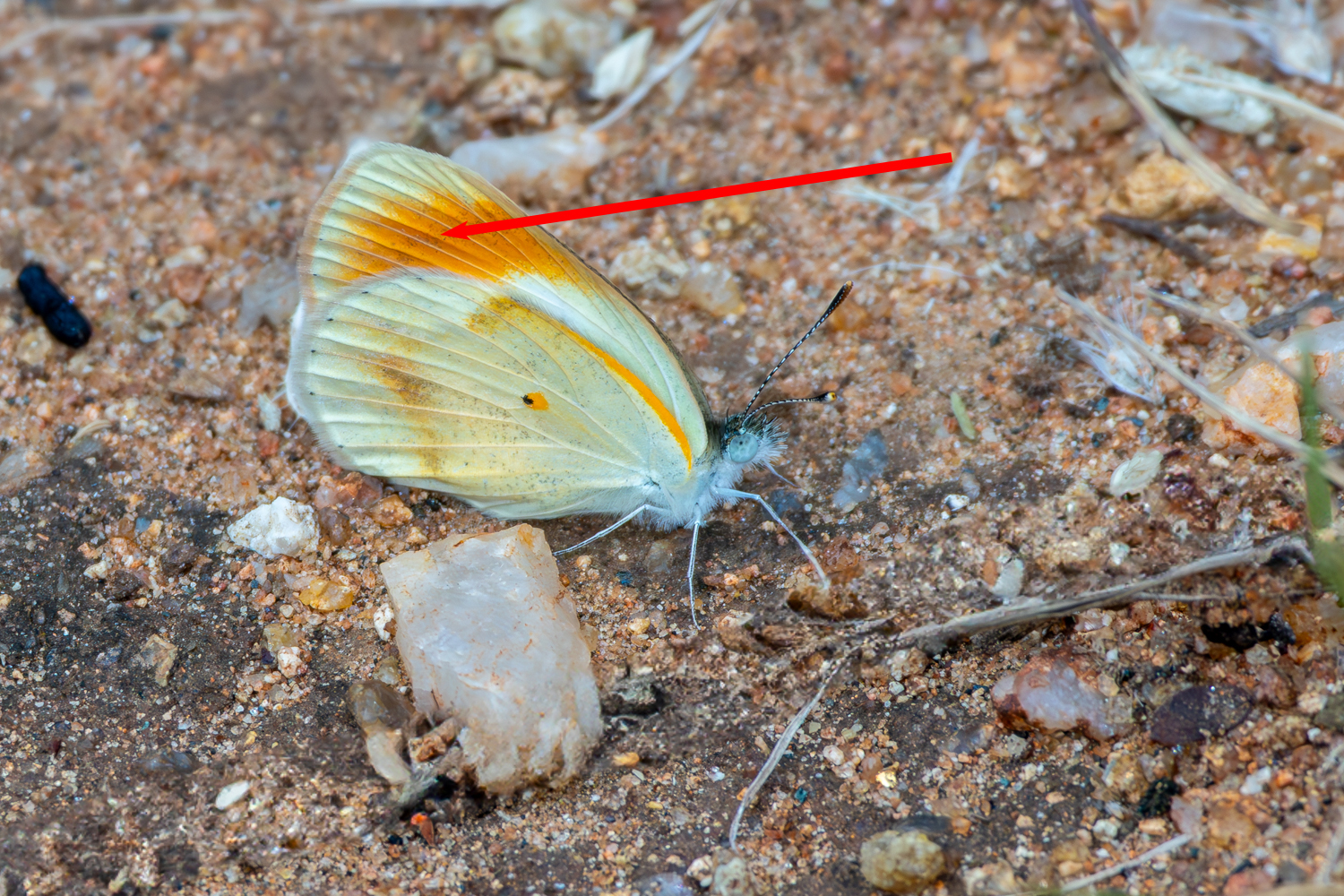
African Small Orange Tip ♀
Colotis evagore antigone form emini showing forewing underside orange patch
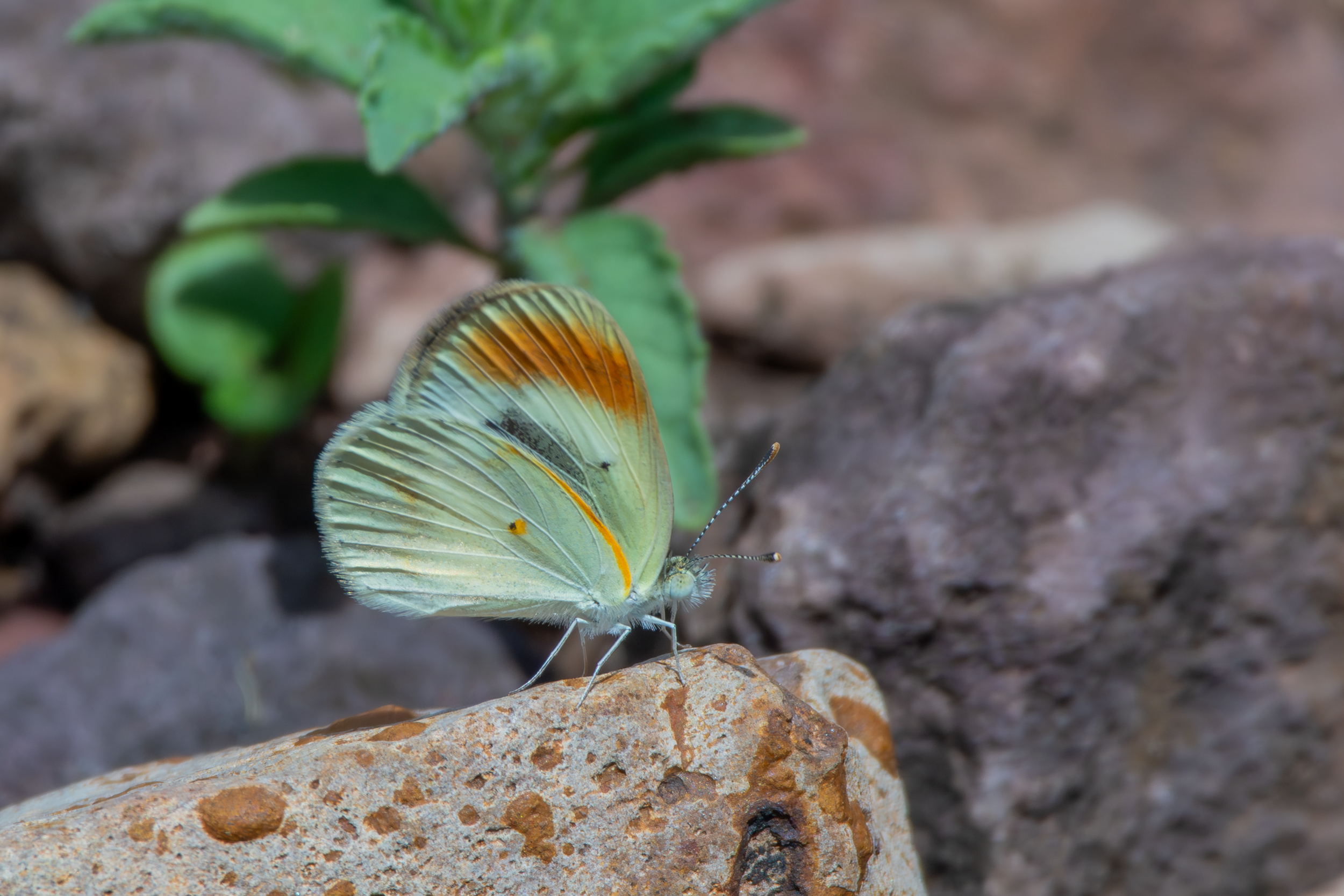
African Small Orange Tip ♀
Colotis evagore antigone form phlegetonia
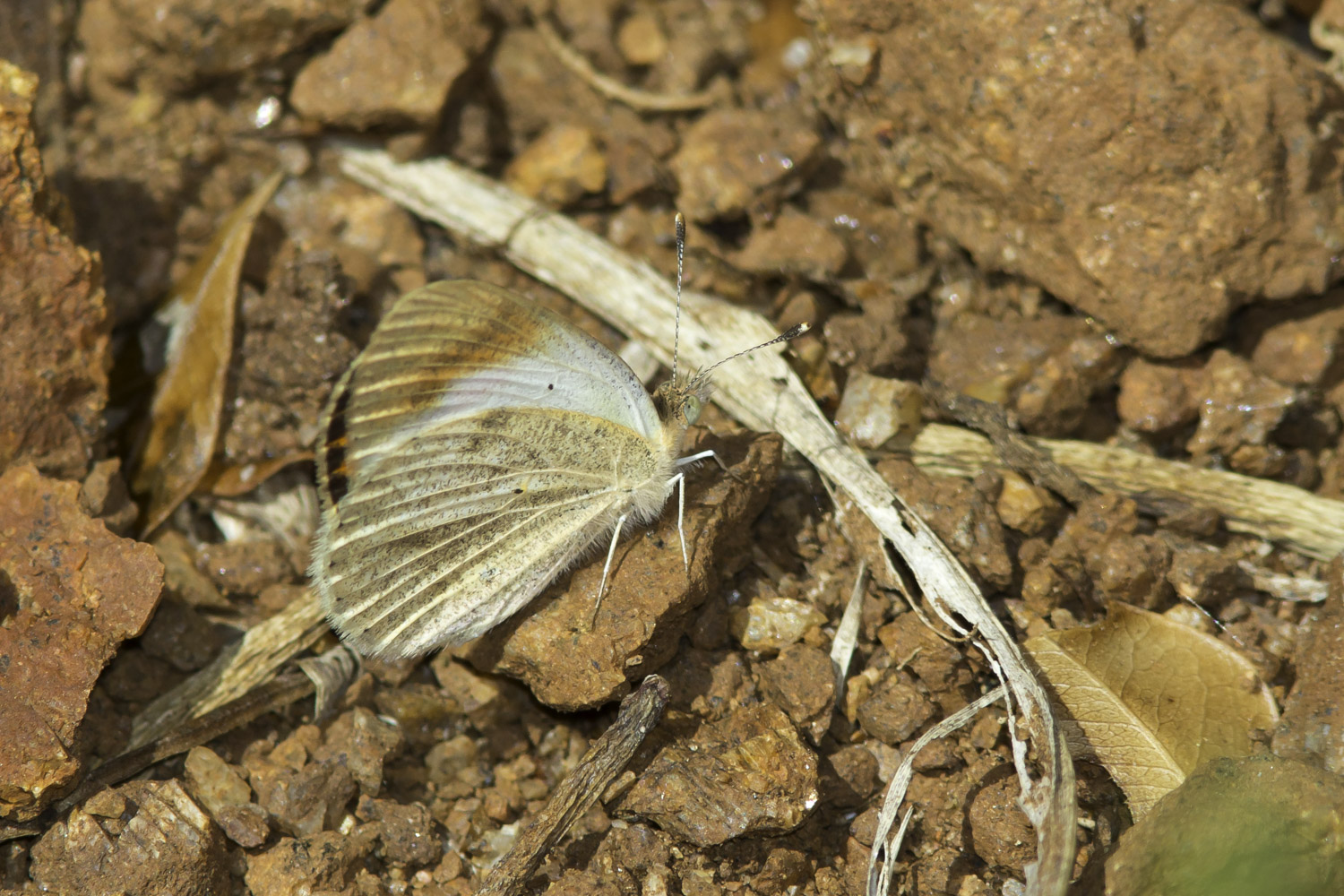
African Small Orange Tip ♂
Colotis evagore antigone form delphine
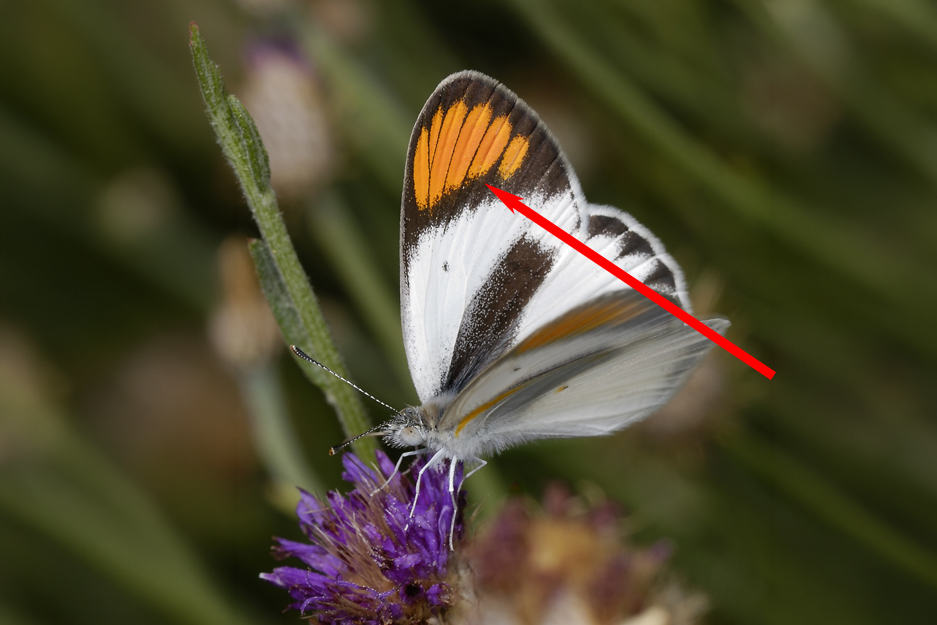
Bushveld Orange Tip ♂
Colotis pallene form infumatus
Bushveld Orange Tip Colotis pallene is another small species with a wingspan of 28–35mm. Its main recognition cue is that it’s noticeably small (as small as Colotis evagore) with no orange patch on the underside forewing tip. The male upperside resembles a small Southern Red Tip Colotis antevippe gavisa, with wings more rounded, orange forewing tips duller. In wet season forms the forewing tip has a black basal edge (arrowed). The male is easy to distinguish from African Small Orange Tip Colotis evagore antigone by the lack of the small black ‘elbow’ at outer basal edge of tip.
The forewing of both sexes often has a distinct black spot at the end of the cell. Wet season males have a ‘moustache’ as in Southern Red Tip; in dry season forms, this is reduced to a basal dark patch or may be absent.
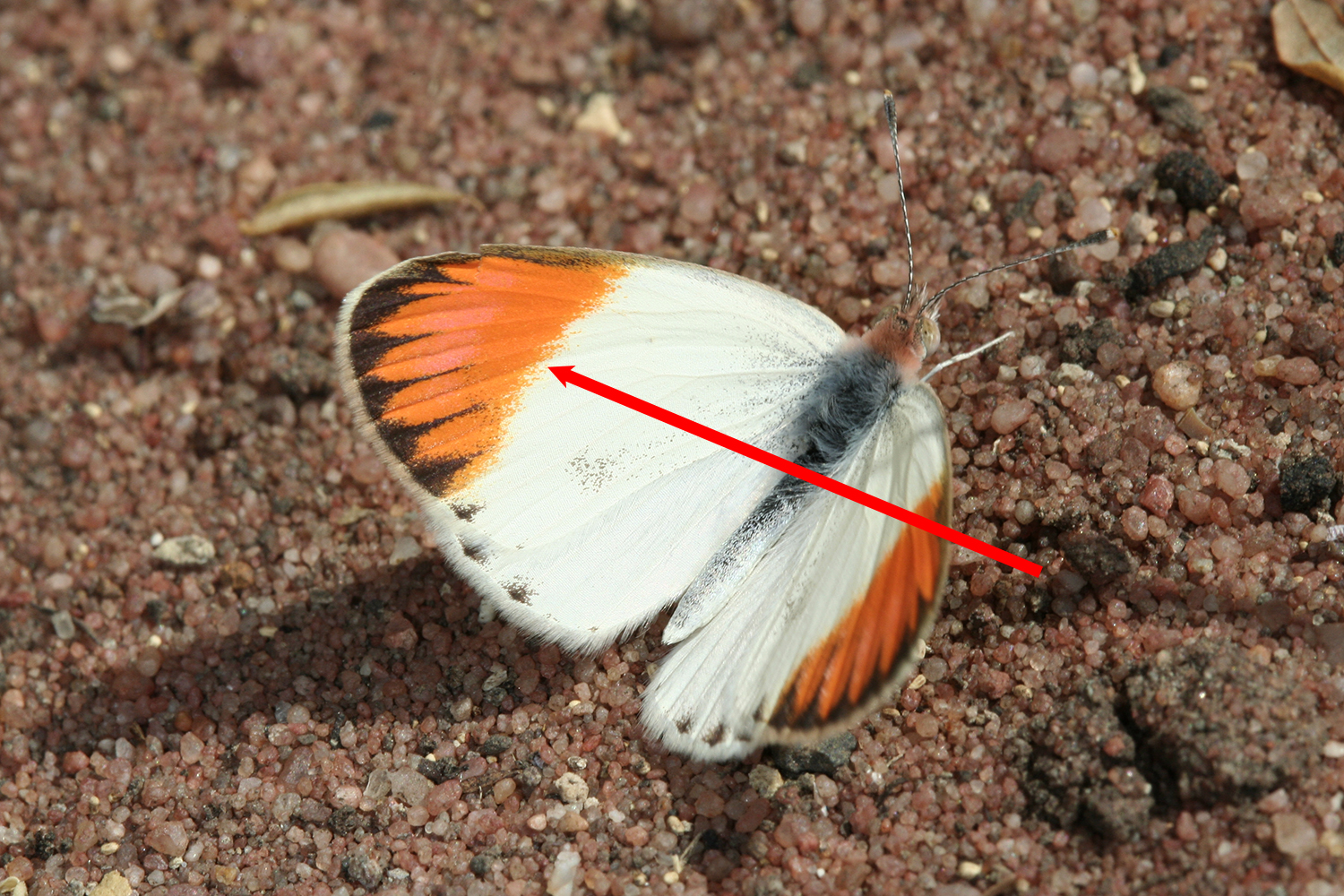
The form shown above is infumatus, an extreme wet season form common in South Africa during summer. It shows well the dark line at the basal edge of the orange tip of even thickness or tapering slightly towards the costa. It lacks the ‘bulge’ towards the apex that is seen in Colotis euippe omphale. Even if absent (as in extreme DSF pallida – arrowed below) the edge is straight (or gently curved) and does not bend noticeably in an apical direction.

Bushveld Orange Tip ♂
Colotis pallene form pallida

Bushveld Orange Tip ♂
Colotis pallene form halyattes
Females are another story…

Bushveld Orange Tip ♀
Colotis pallene form halyattes
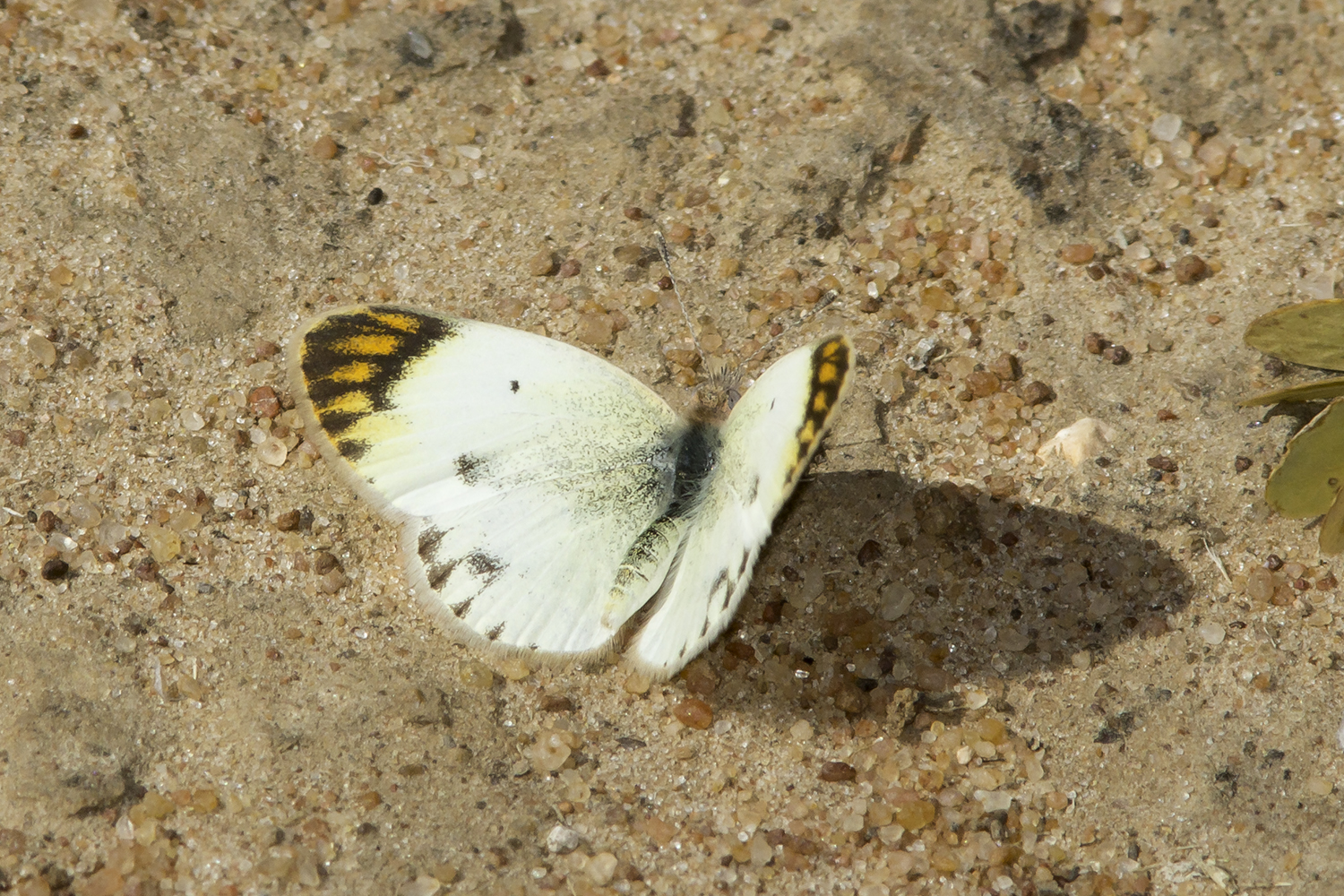
Bushveld Orange Tip ♀
Colotis pallene form pallida
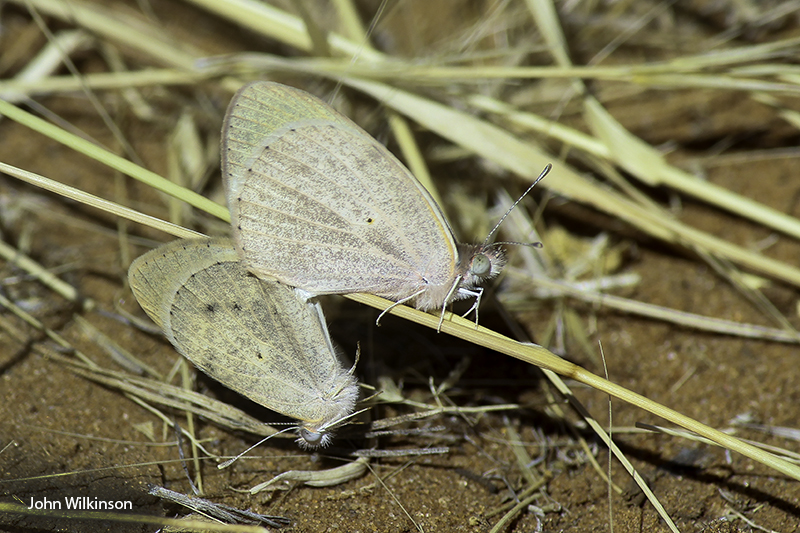
Bushveld Orange Tip ♀
Colotis pallene form pallida
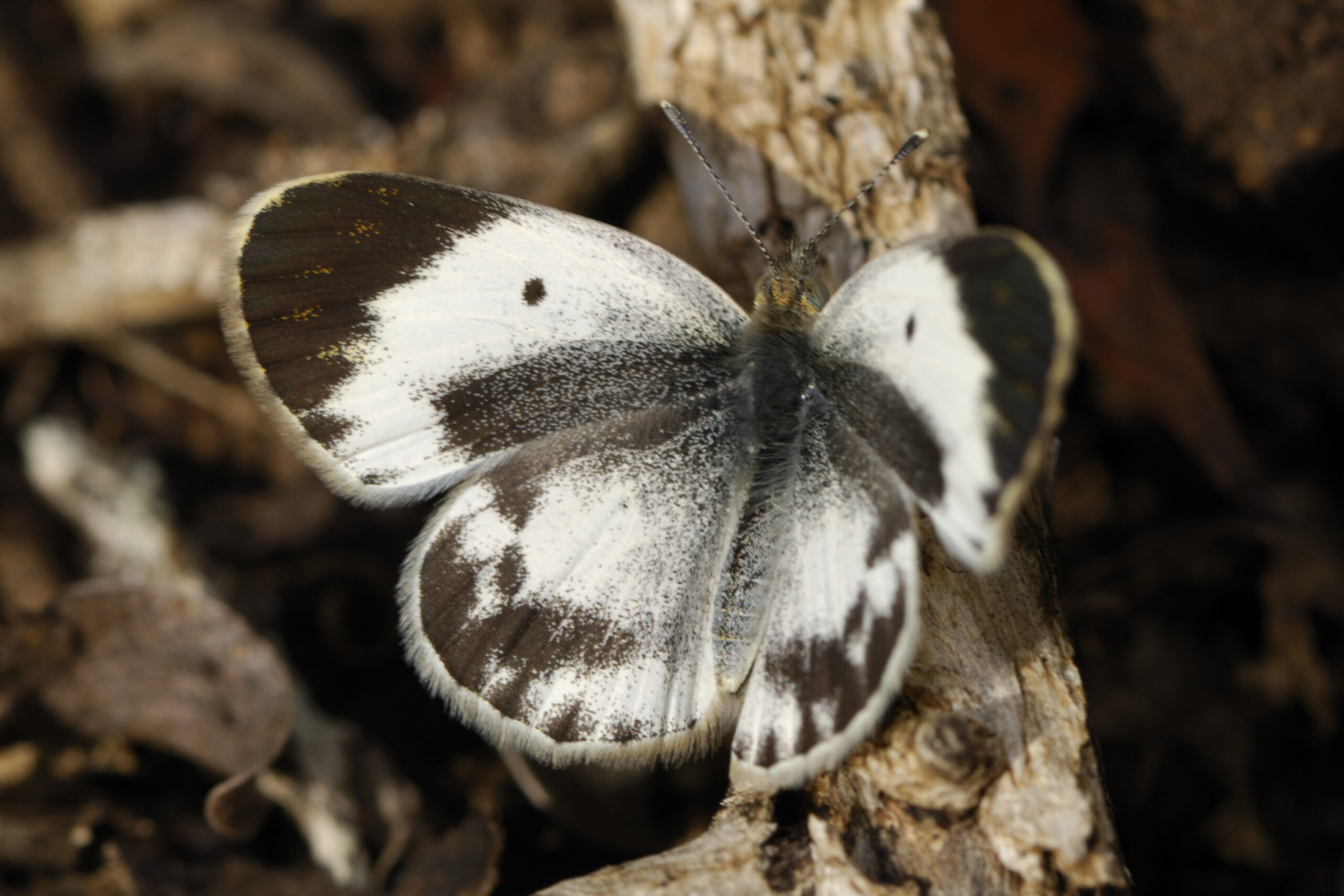
Bushveld Orange Tip ♀
Colotis pallene form absurda
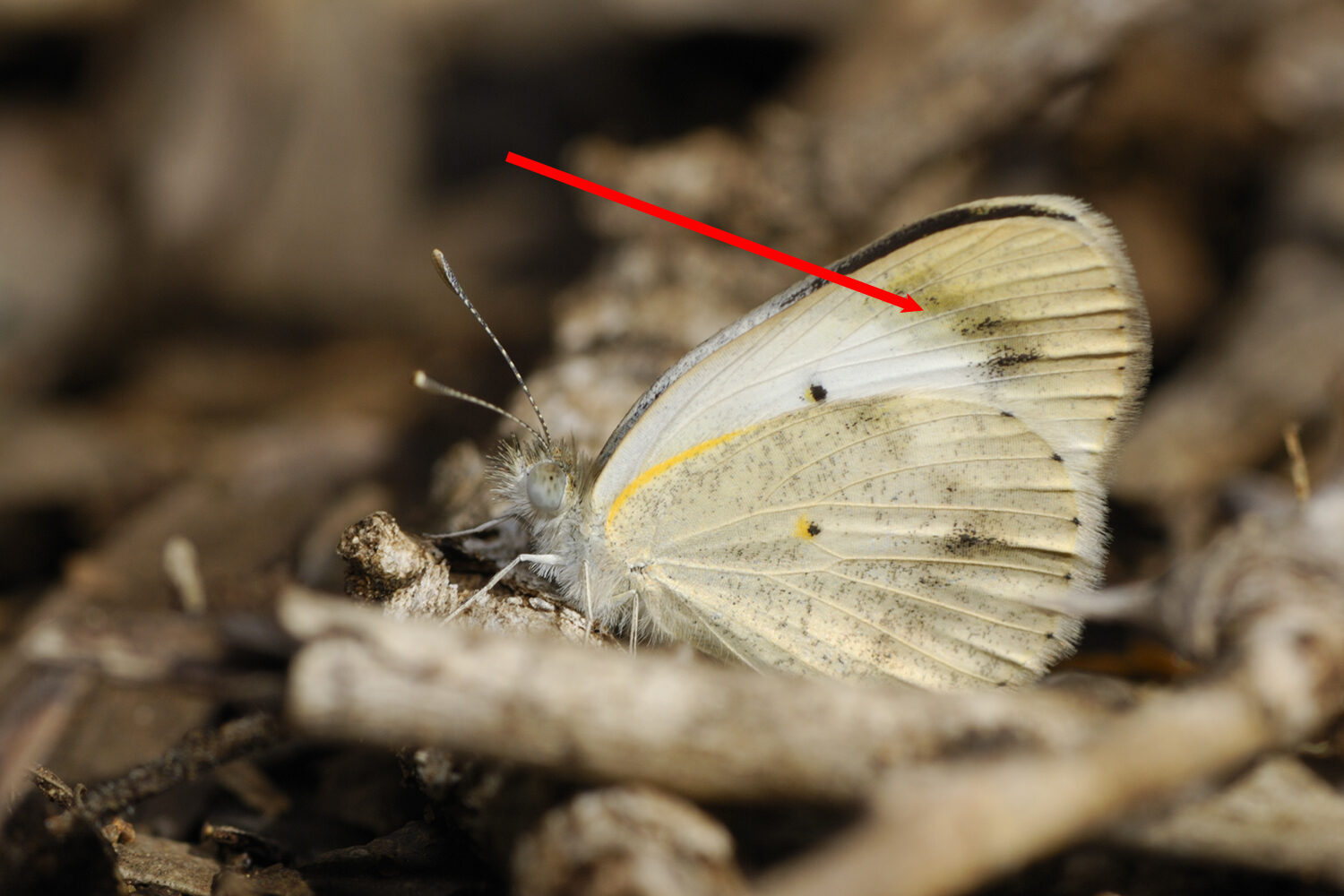
Bushveld Orange Tip ♀
Colotis pallene form halyattes
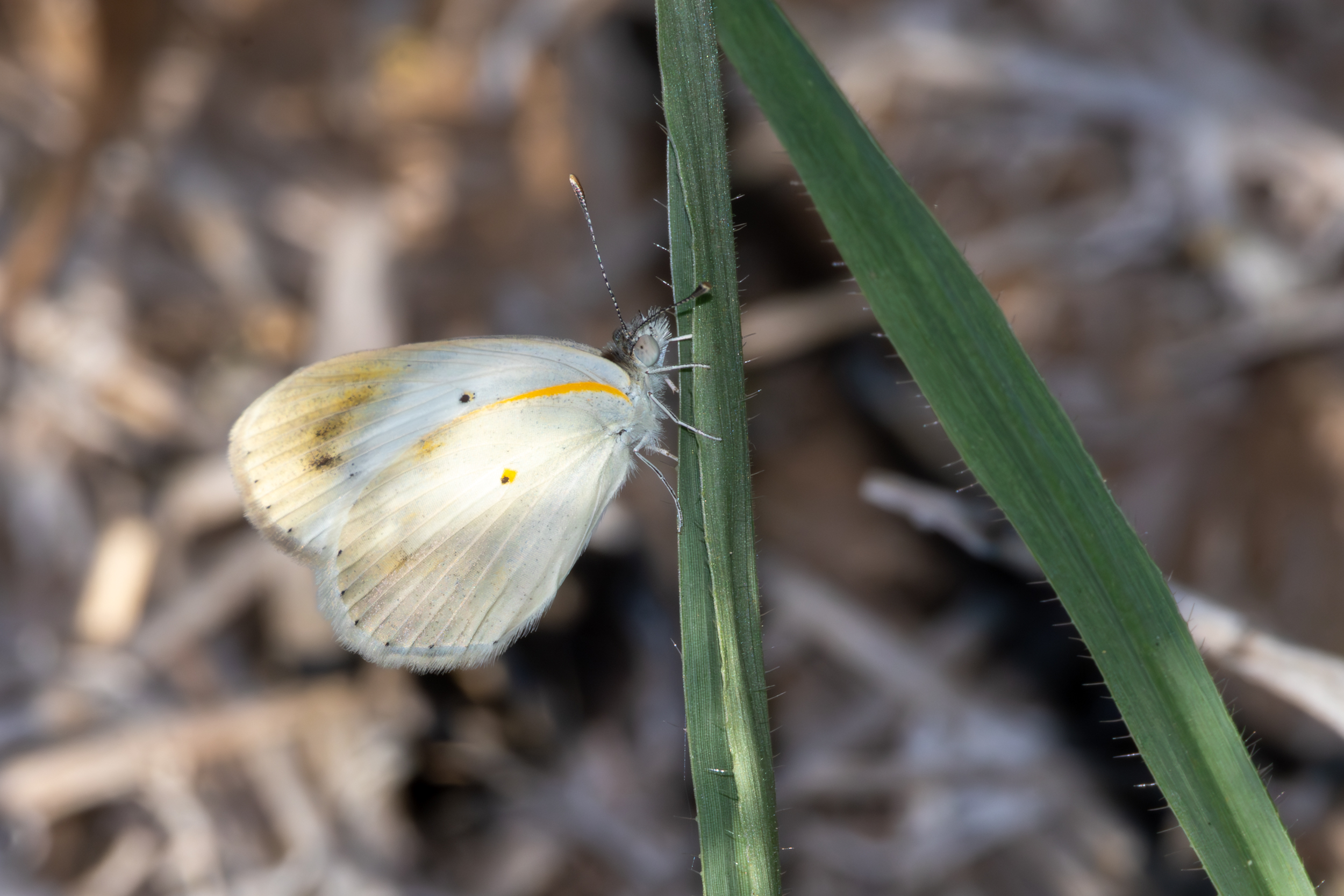
Bushveld Orange Tip ♀
Colotis pallene form pallene
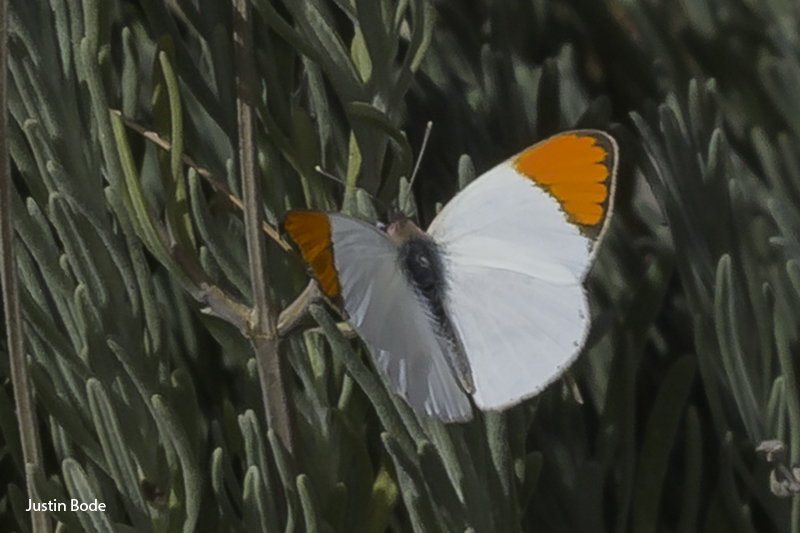
Female Bushveld Orange Tips can be confusingly similar to those of African Small Orange Tips Colotis evagore antigone. They vary from very pale dry season types like form pallida through darker forms like halyattes to the extreme wet season form absurda. They also share resemblances to the larger species the African Small Orange Tip gets confused with when a photo has no sense of scale.
One way to tell them apart is that both sexes’ undersides are not as colourful as Colotis evagore antigone, even in wet season forms. Most have a greyish buff colour with fine grey scaling. The main difference is the undersides of the forewing tips. As shown, Colotis pallene lacks the orange patch that the African Small Orange Tip has in that area.

Kalahari Orange Tip ♂
Colotis lais form felthami
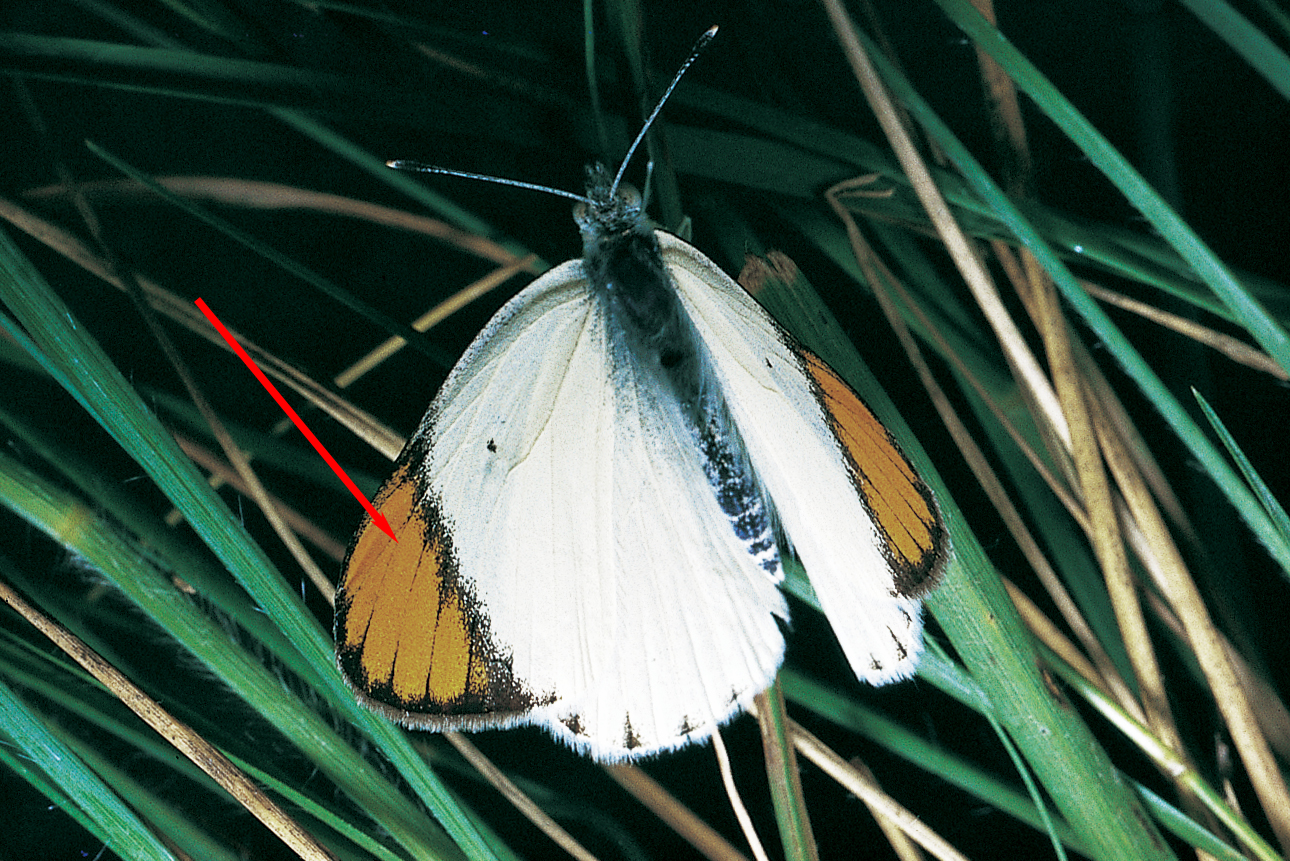
Kalahari Orange Tip ♂
Colotis lais form lais
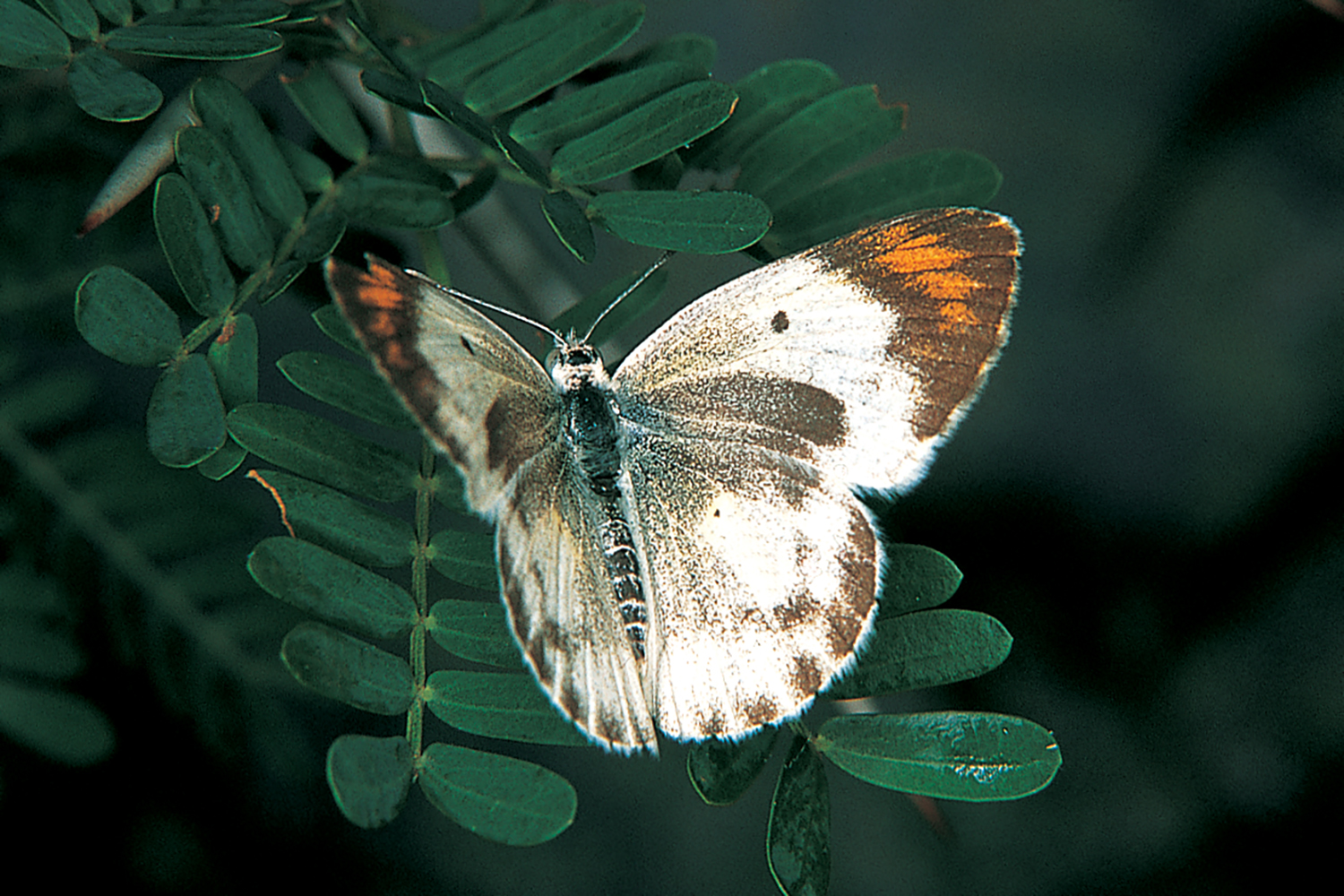
Kalahari Orange Tip ♀
Colotis lais form lais
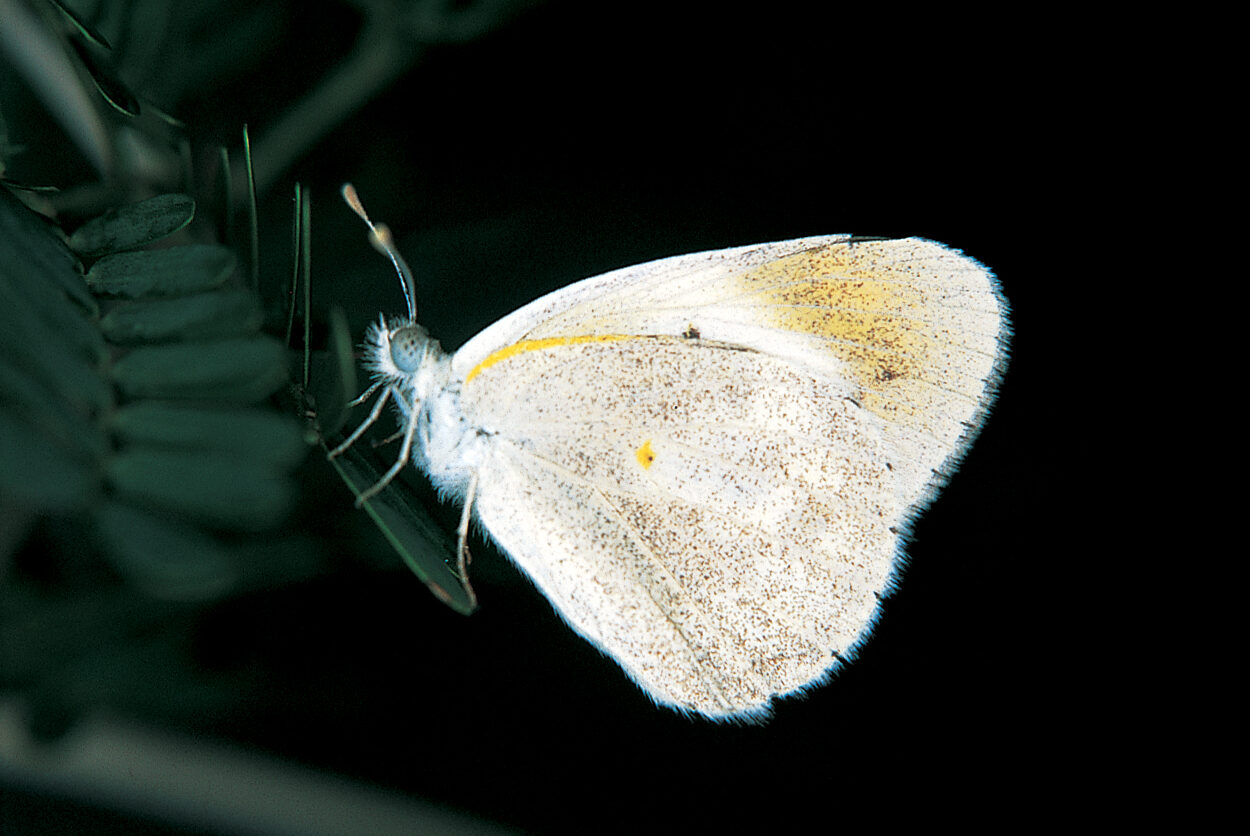
Kalahari Orange Tip ♂
Colotis lais form lais
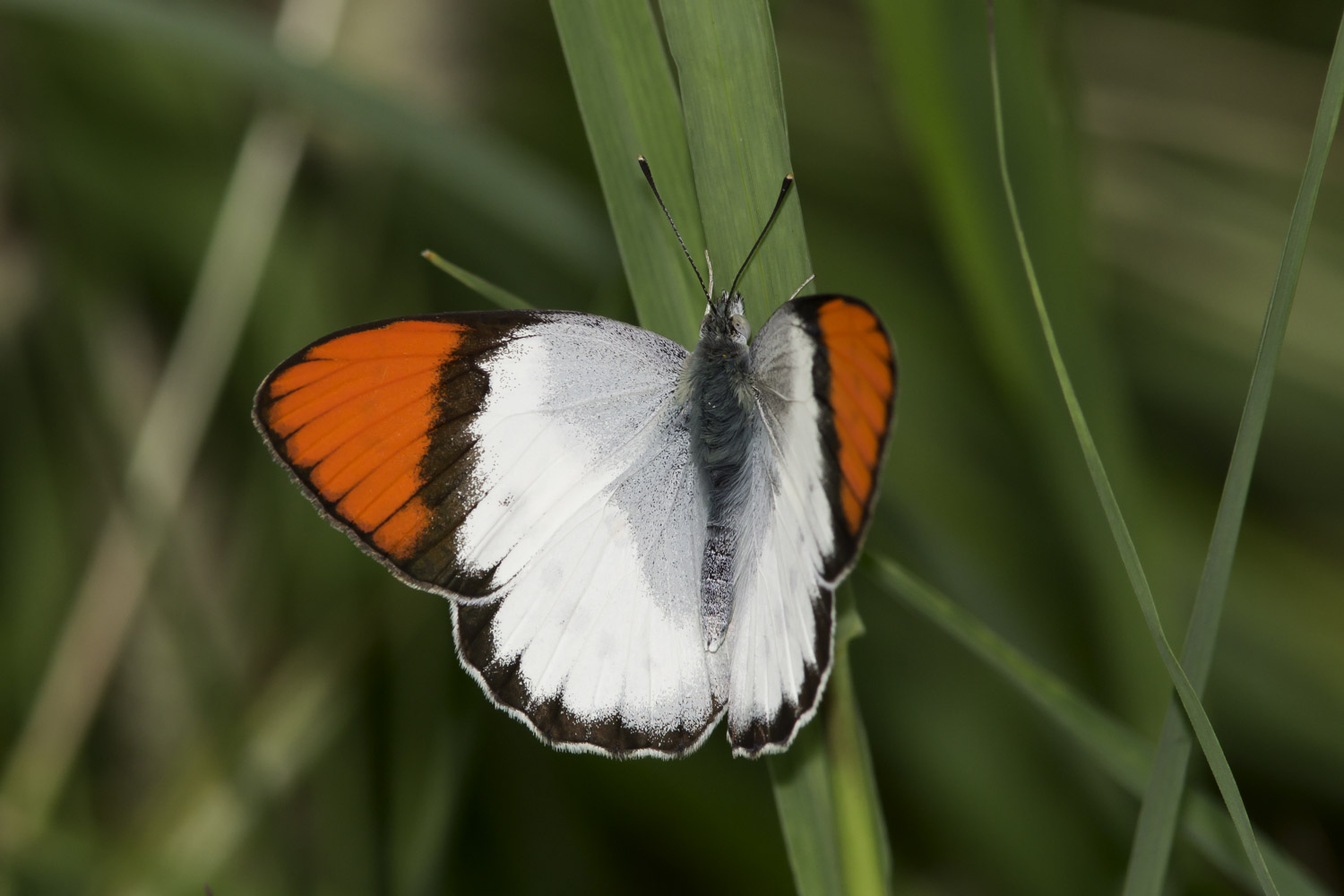
Kalahari Orange Tip, Colotis lais is a small to medium sized Tip, with a wingspan of 30–38mm. It’s confined to arid Kalahari bushveld. The orange markings tend to have a reddish or brownish tinge. It’s similar to Colotis pallene with females carrying more extensive upper side dark markings than the males. The hindwing underside is plain white with at most a faint diagonal postdiscal band running from vein M1 to CuA2. DSF form felthami male has almost no upperside dark markings; those of female much reduced, to spots on the hind wing. Hind wing underside ground colour pale pink, irrorated with grey scales.
The dry season form felthami, like many dry season Tips, has minimal dark markings on the upperside,
We now come to two closely related Colotis species that don’t follow the ‘white butterfly with orange tips’ rule. Colotis annae annae, Savanna Scarlet Tip, is one of the most conspicuous of the group. The wingspan varies from 35 to 55mm, the variation occurring in the size of seasonal forms. It has large scarlet forewing tips covering at least a third of the wing; females’ wing tips may also be buff to orange. Both sexes have dark basal patches on all wings, particularly in wet season forms. There is an ‘S’-shaped row of six to eight postdiscal spots starting at the costa and continuing to the anal vein on the hindwing (arrowed below). It’s a very attractive and popular species that’s found across large areas of Africa.

Savanna Scarlet Tip ♂
Coloris annae annae form annae
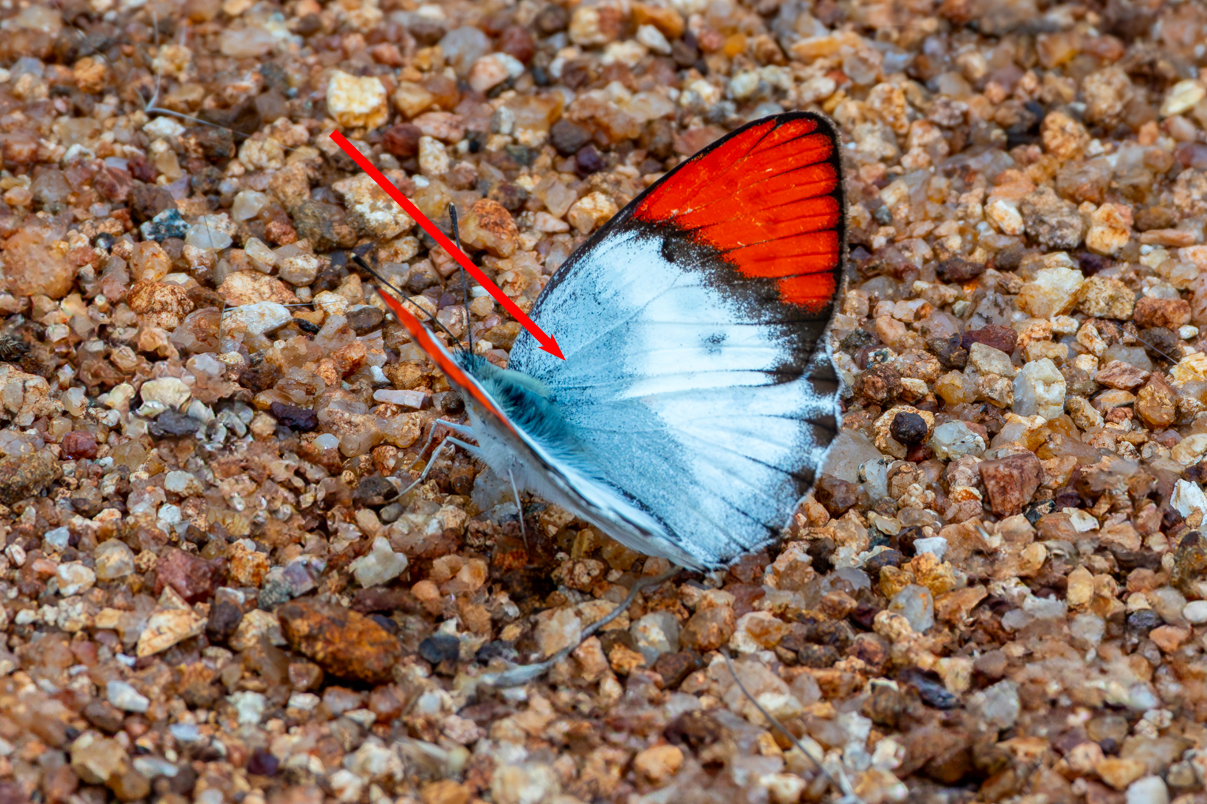
Savanna Scarlet Tip ♂
Coloris annae annae form annae
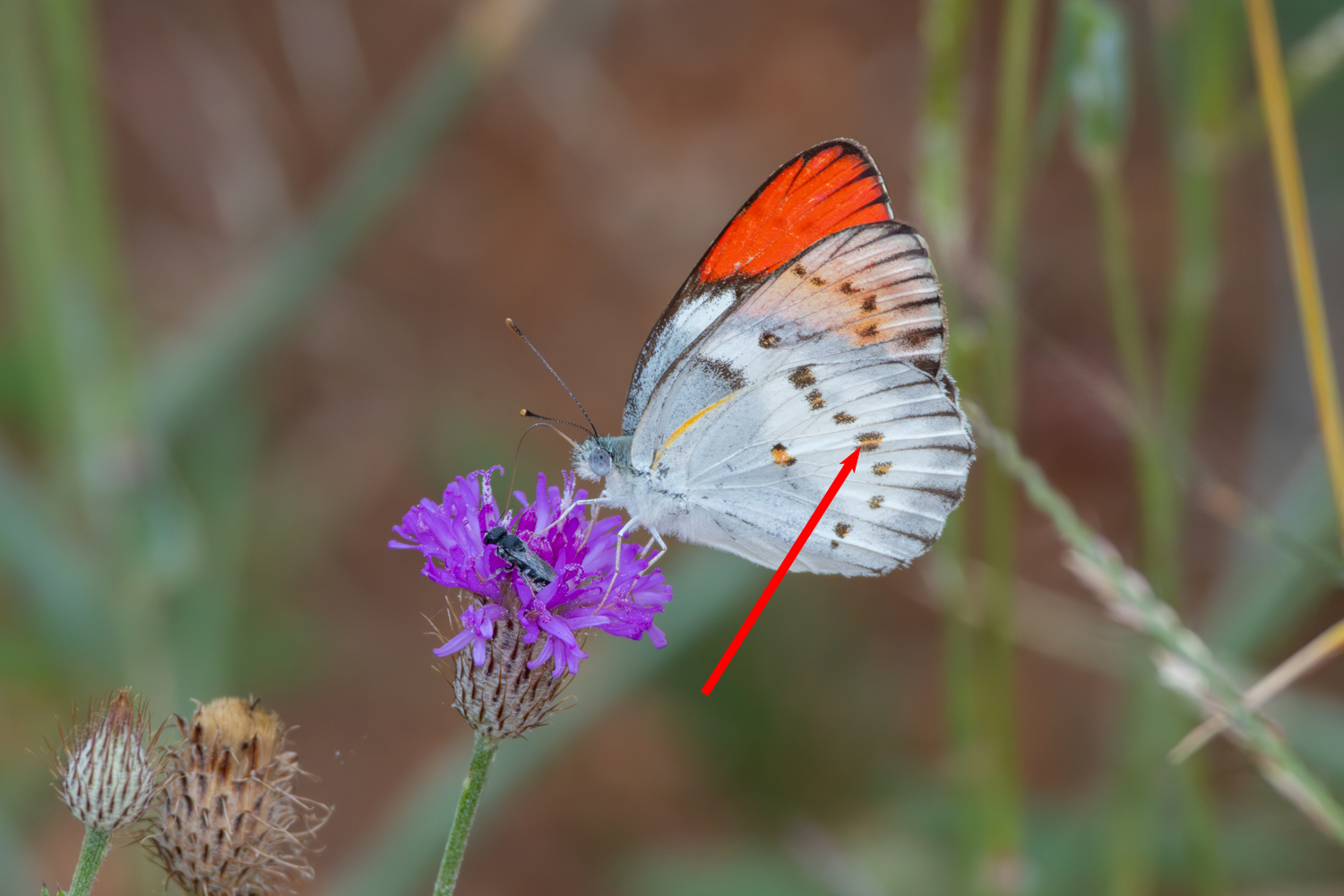
Savanna Scarlet Tip ♂ underside
Coloris annae annae form annae
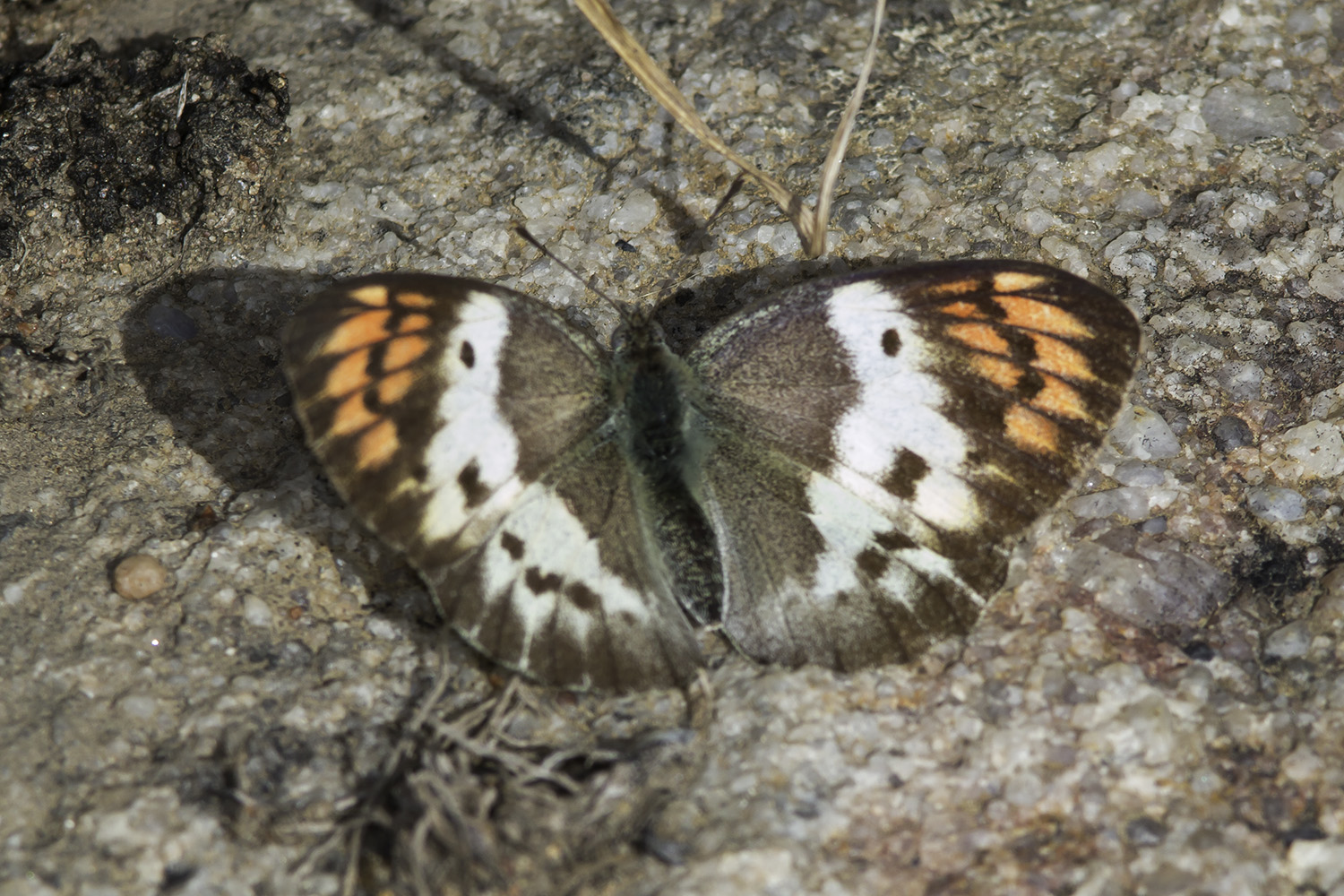
Savanna Scarlet Tip ♀
Coloris annae annae red tipped form annae
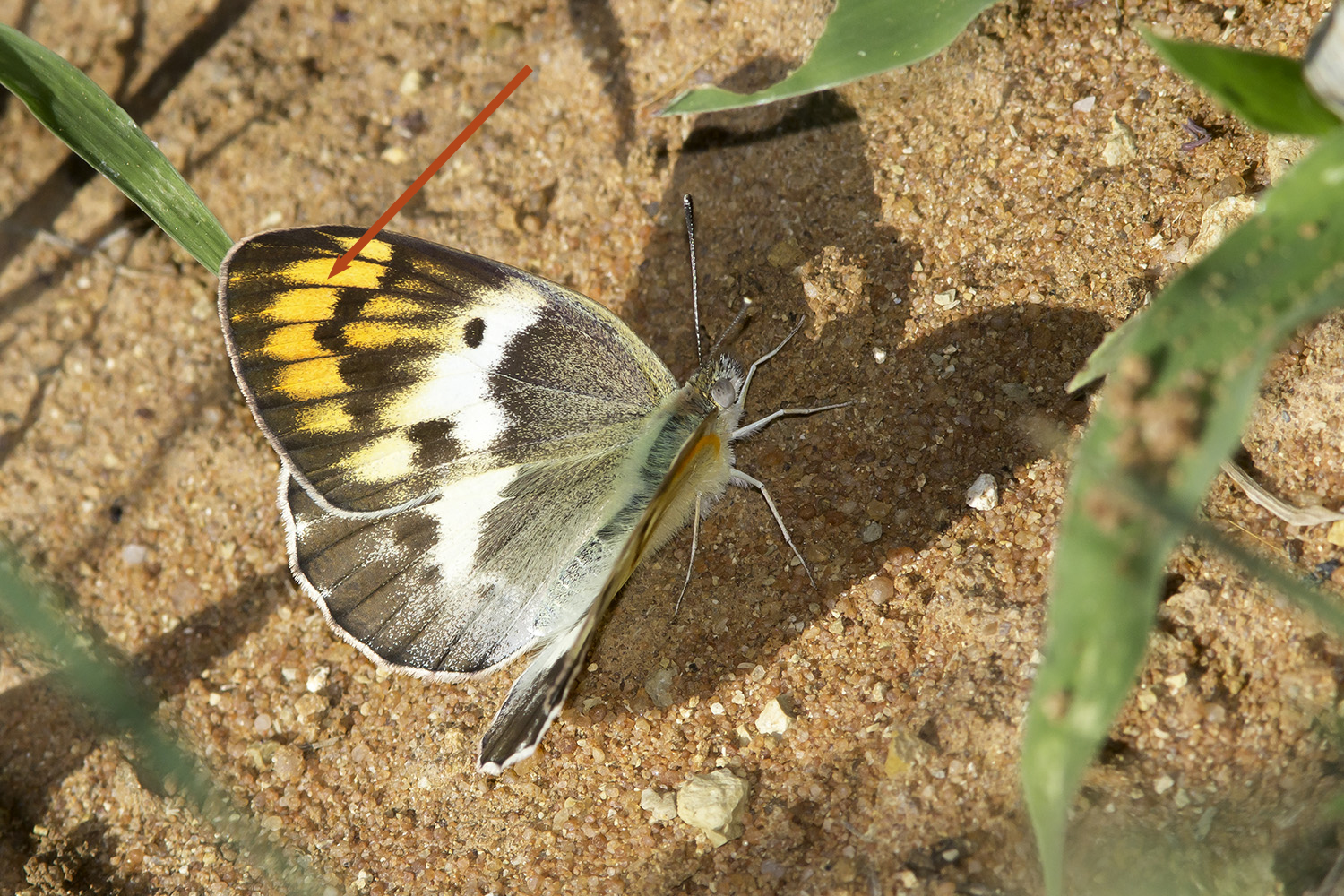
Savanna Scarlet Tip ♀
Coloris annae annae yellow tipped form annae
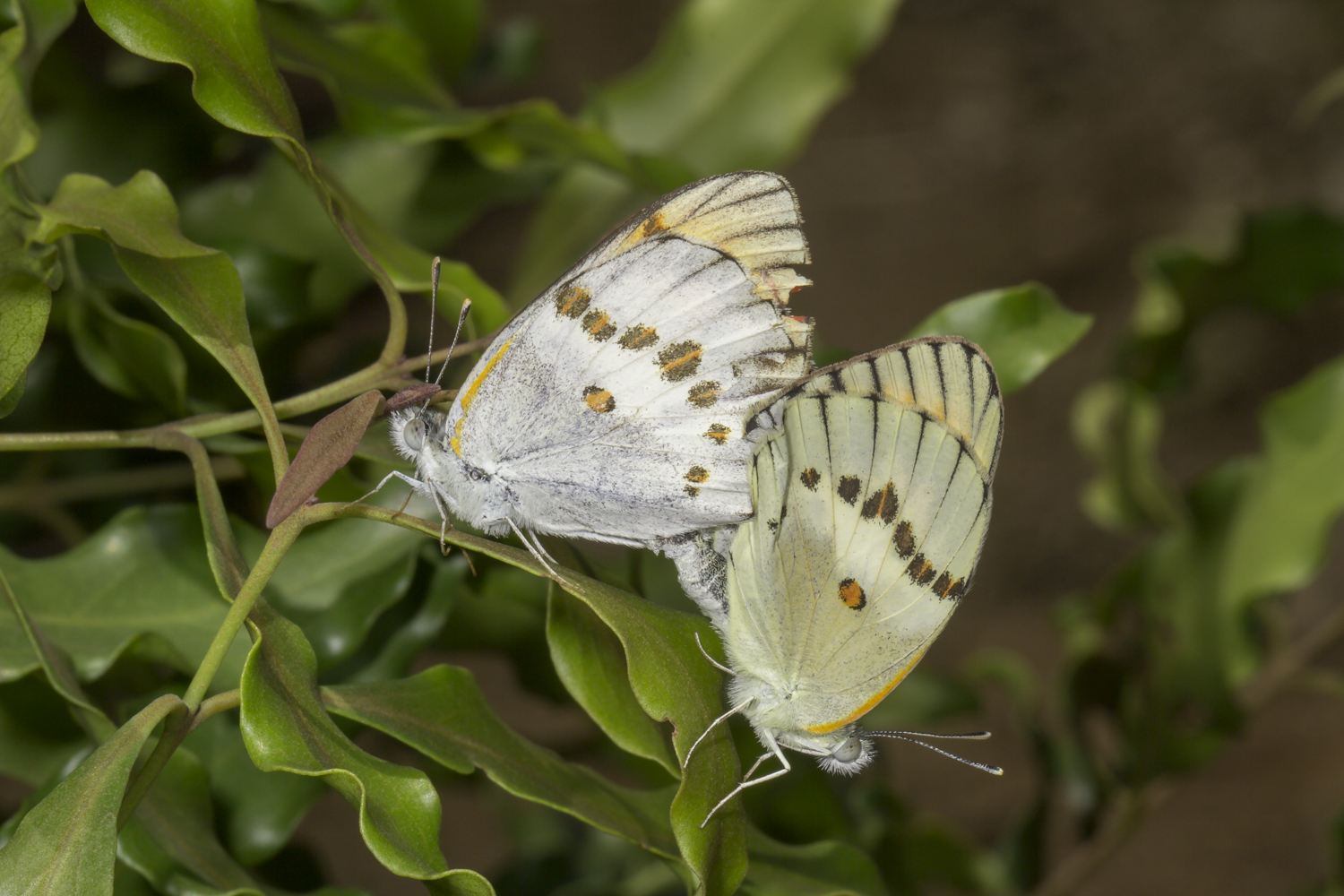
Savanna Scarlet Tip mating pair ♀ to R
Coloris annae annae form annae
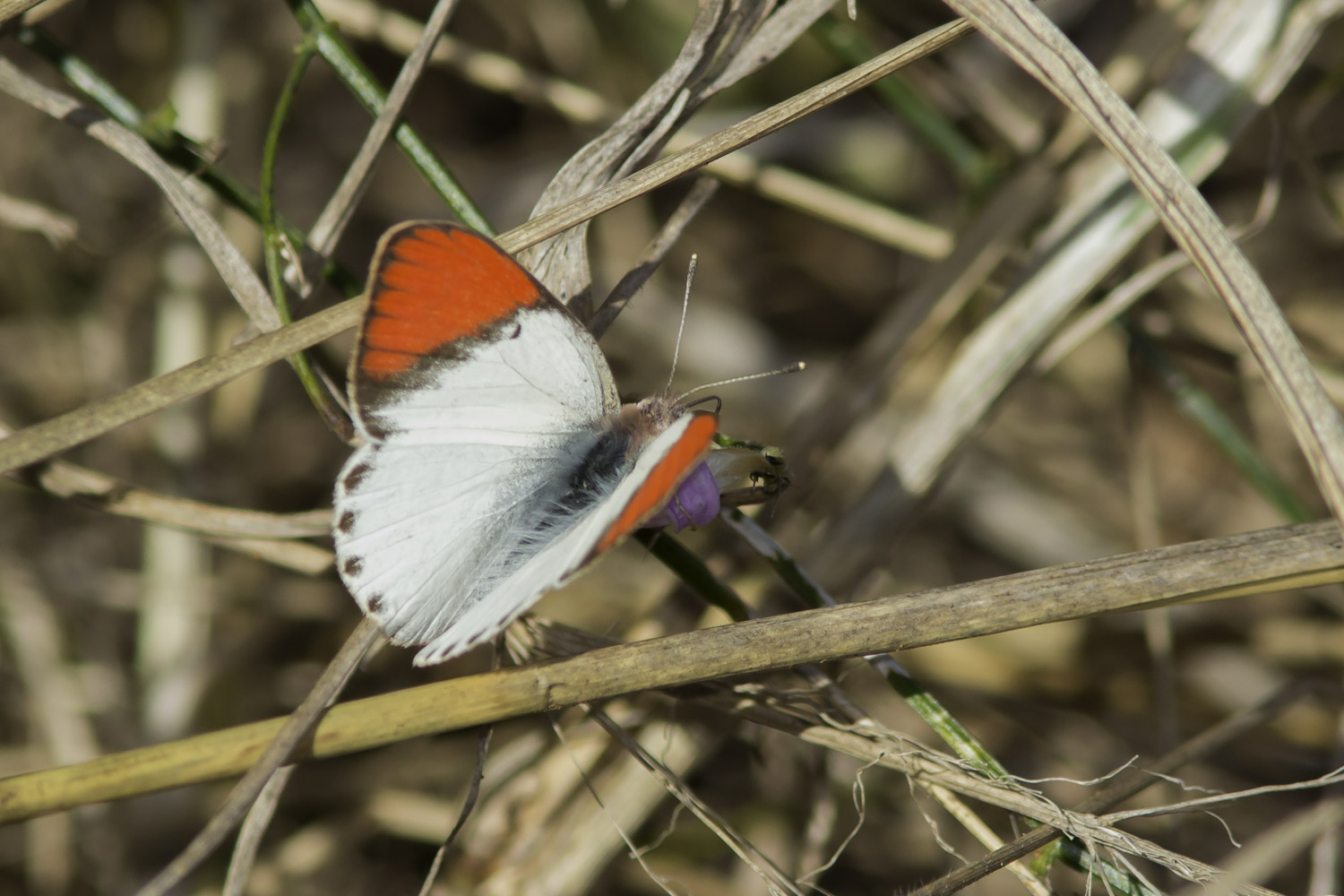
Savanna Scarlet Tip ♂
Coloris annae annae dry season form wallengrenii
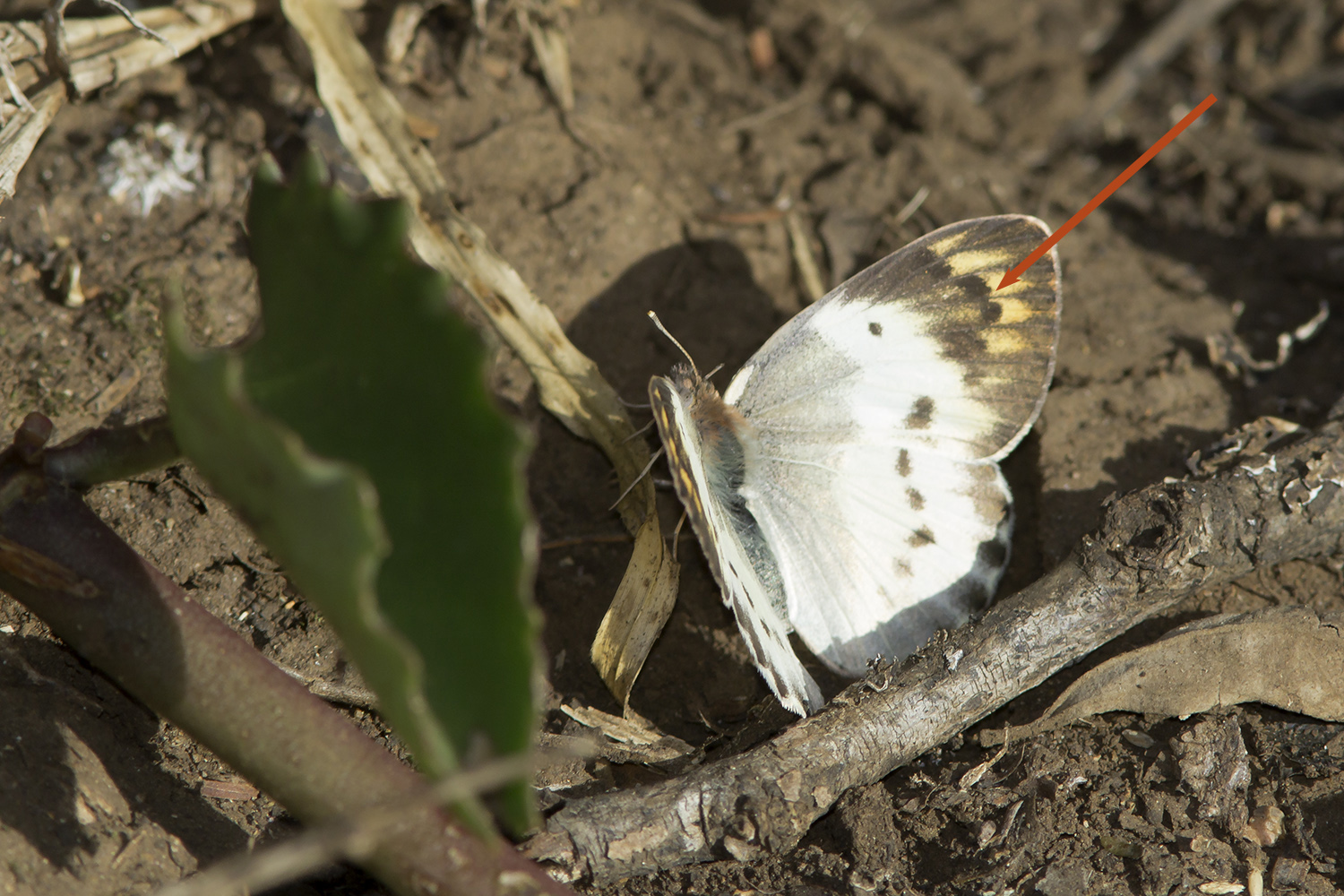
Savanna Scarlet Tip ♀
Coloris annae annae buff tipped dry season form wallengrenii
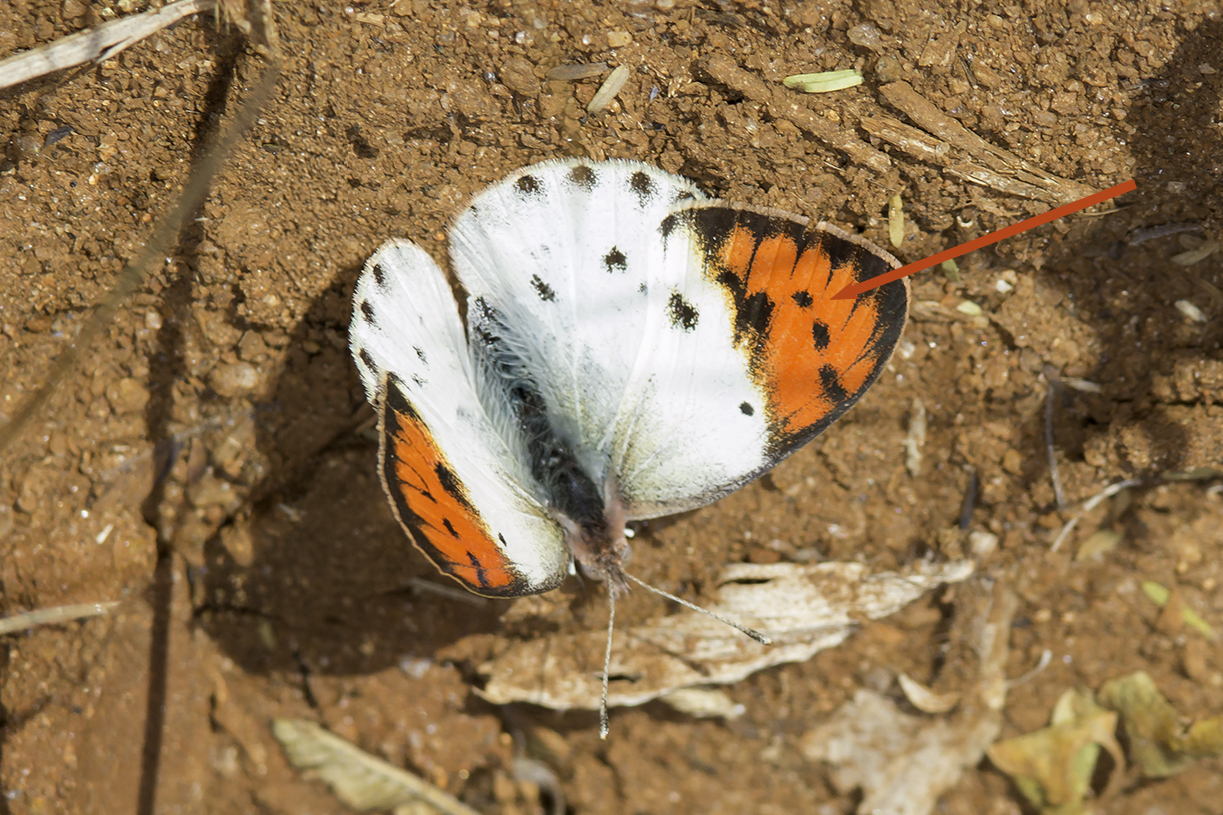
Savanna Scarlet Tip ♀
Coloris annae annae orange tipped dry season form wallengrenii
The dry season form wallengrenii has restricted dark markings especially at the wing bases. Like the wet season form there are two colour morphs of the female, a buff one and a red-orange one (arrowed).
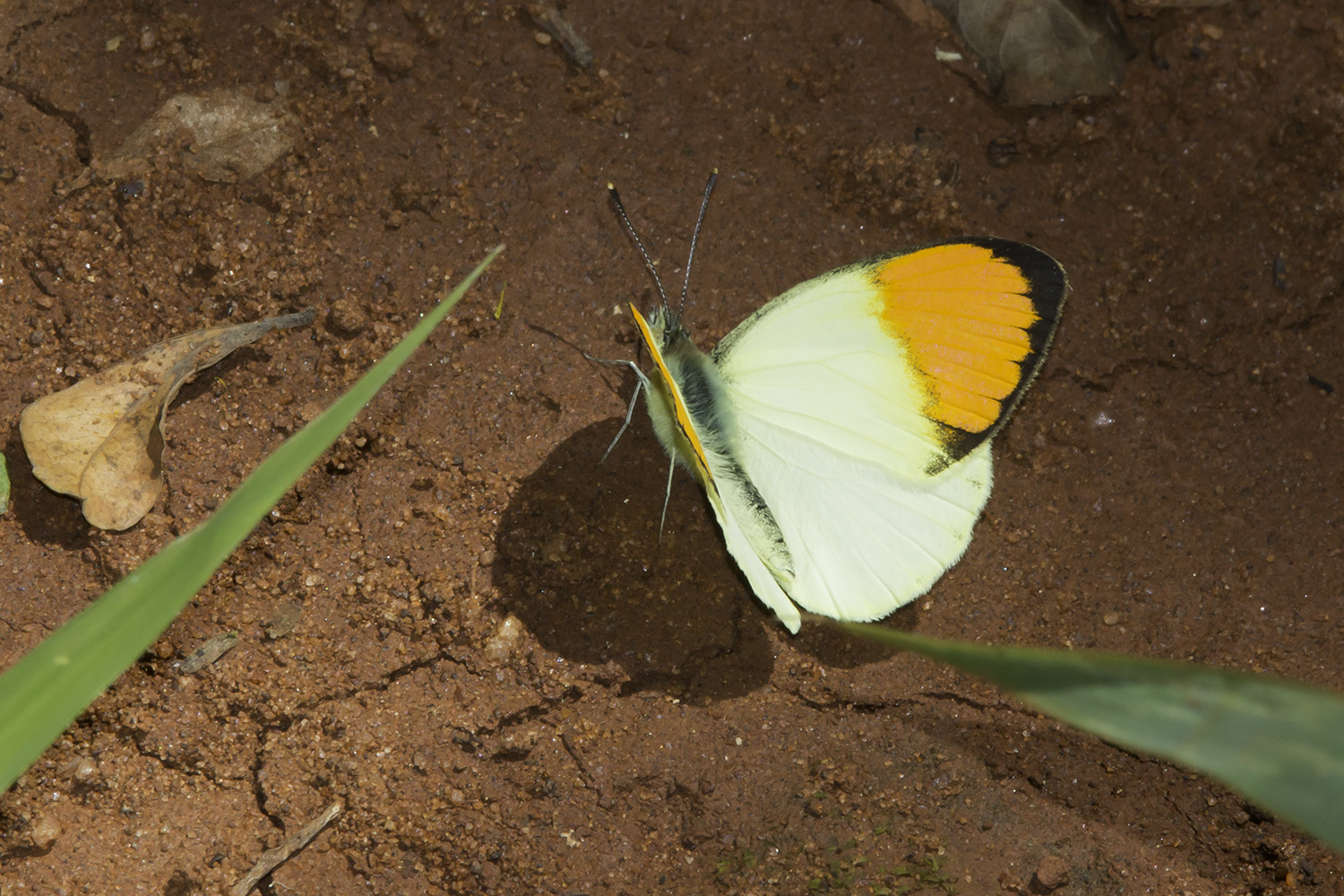
The Sulphur Orange Tip Colotis auxo auxo is essentially a yellow butterfly with orange forewing tips. Its close relationship to the Savanna Scarlet Tip is shown in the spotting pattern of the female. It’s a smaller species with a wingspan of 35–45mm; like the Savanna Scarlet Tip the variation is mostly in the size of seasonal forms. Its favoured larval host plant is the same as Colotis annae annae – Worm Bushes, Cadaba species. Concentrations of them are usually found near this plant. Normal female form auxo is yellow with orange forewing tips.

Sulphur Orange Tip ♂
Coloris auxo auxo form auxo
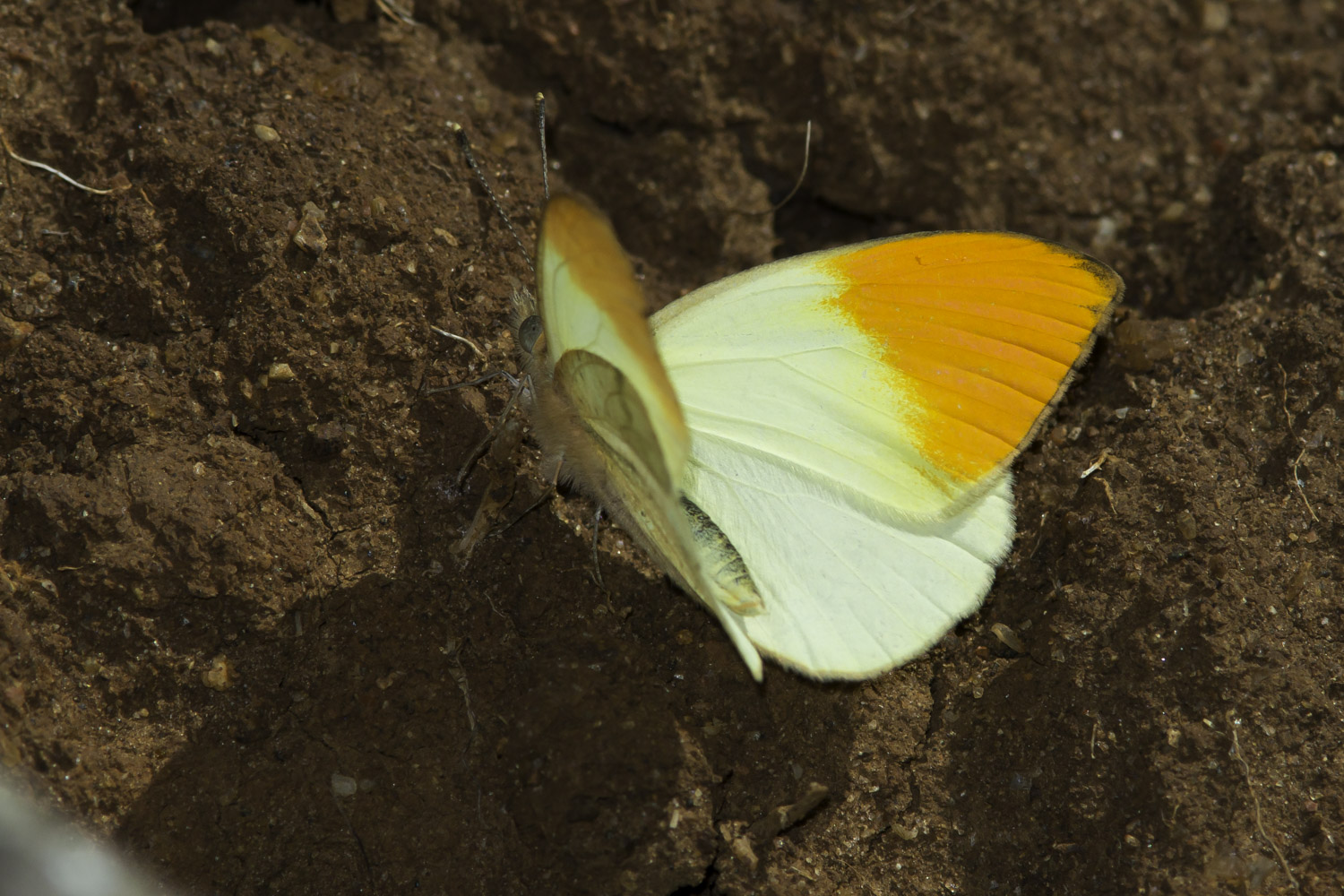
Sulphur Orange Tip ♂
Coloris auxo auxo form topha
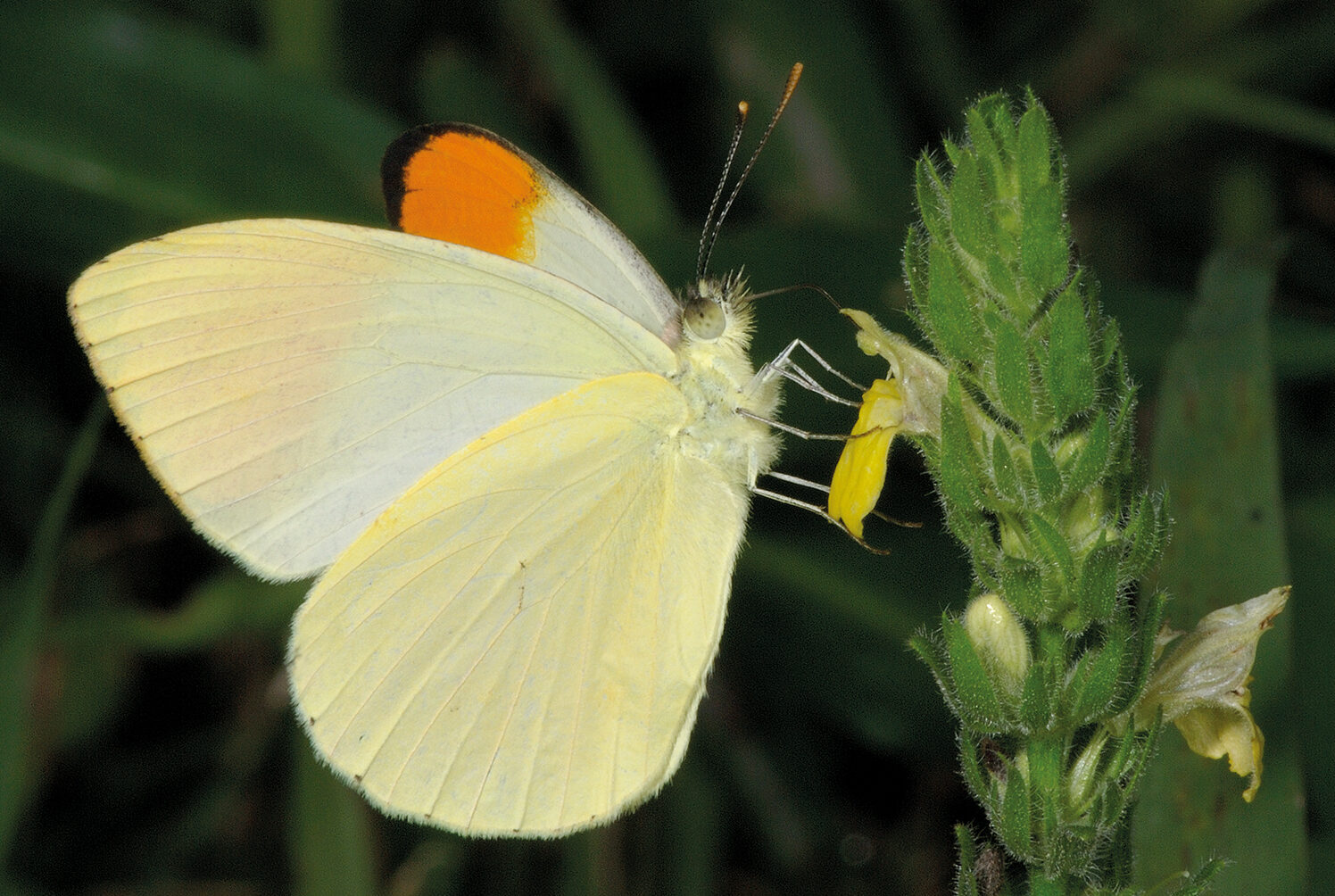
Sulphur Orange Tip ♂ underside
Coloris auxo auxo form auxo
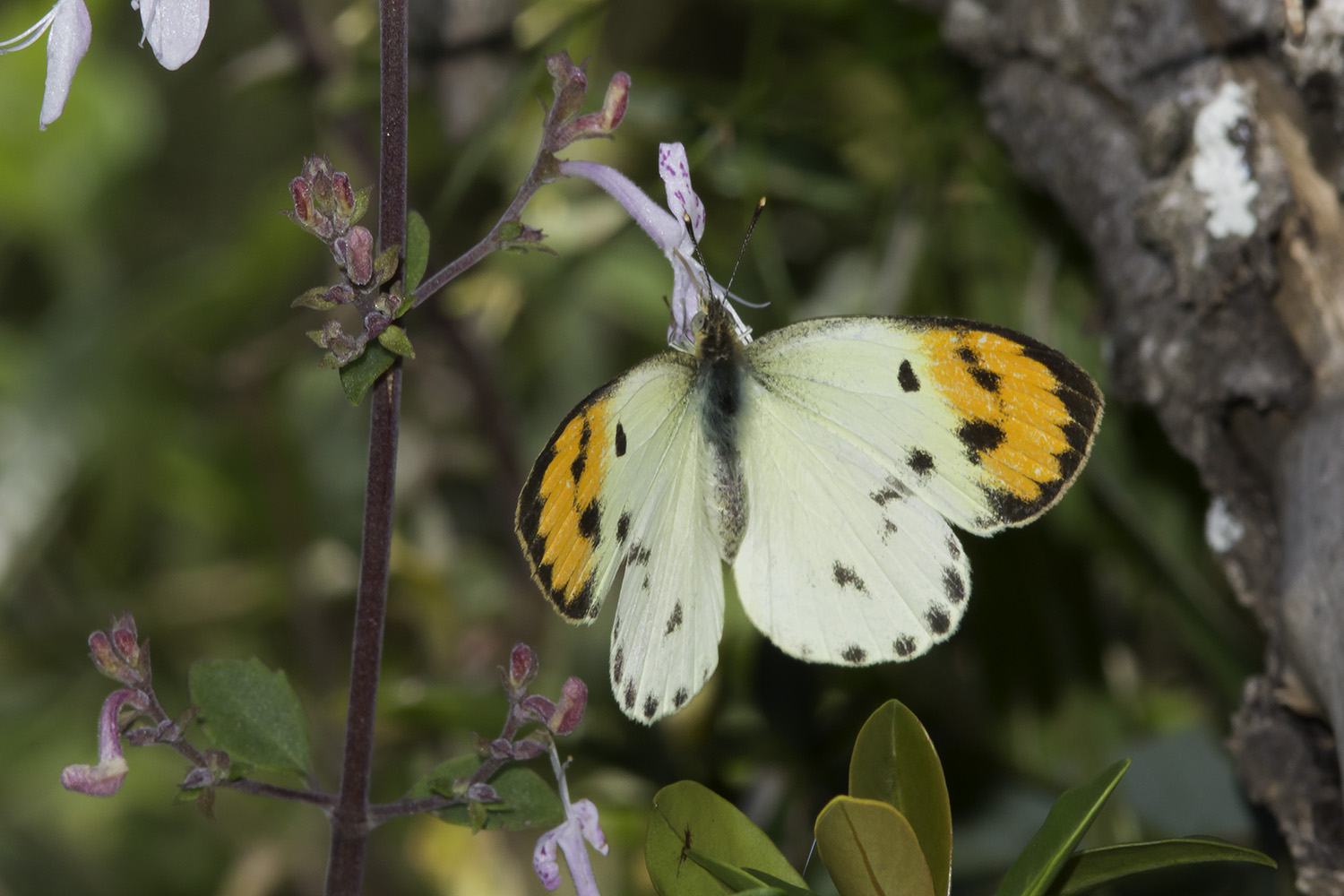
Sulphur Orange Tip ♀ yellow form
Coloris auxo auxo form auxo
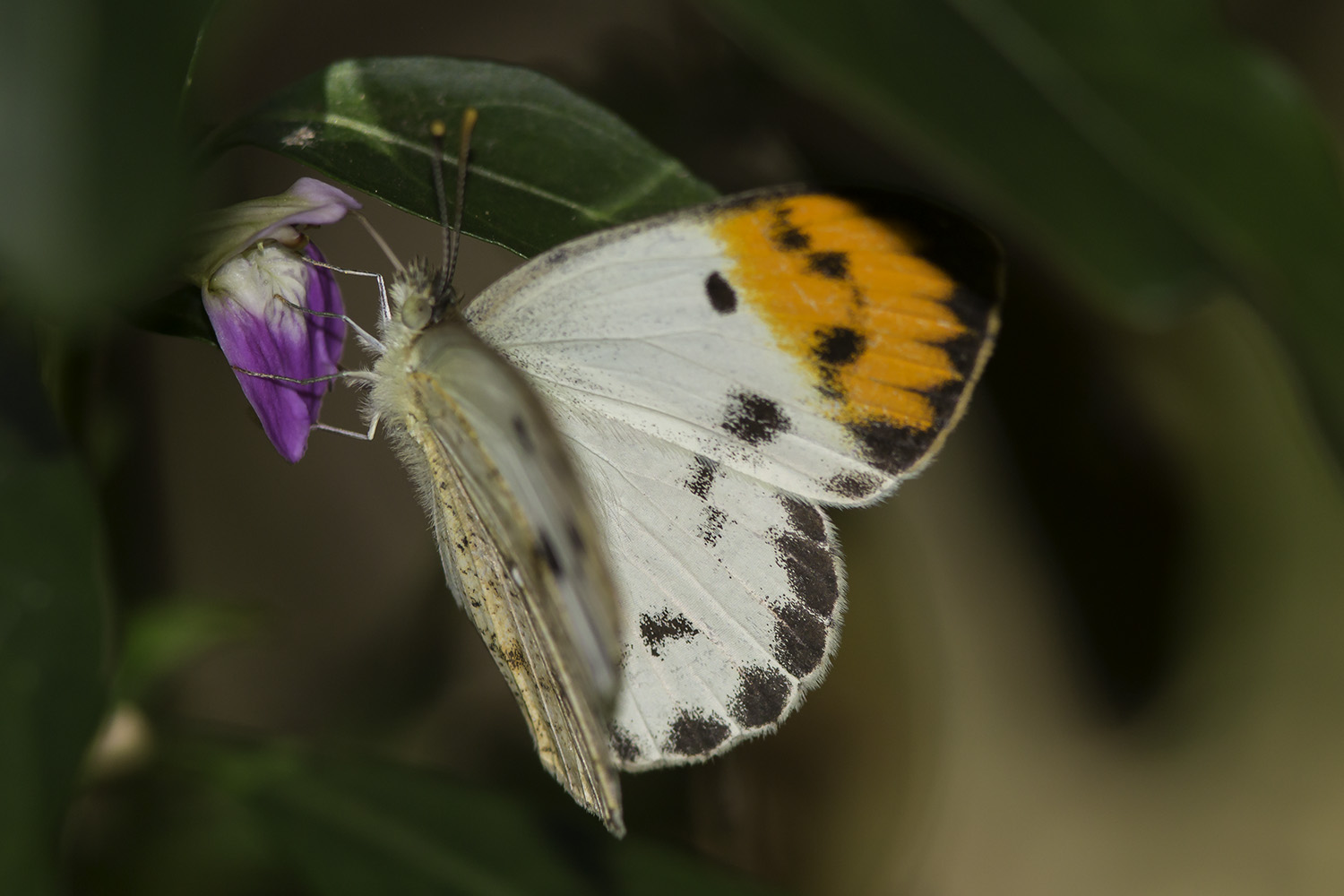
Sulphur Orange Tip ♀ white form
Coloris auxo auxo form topha
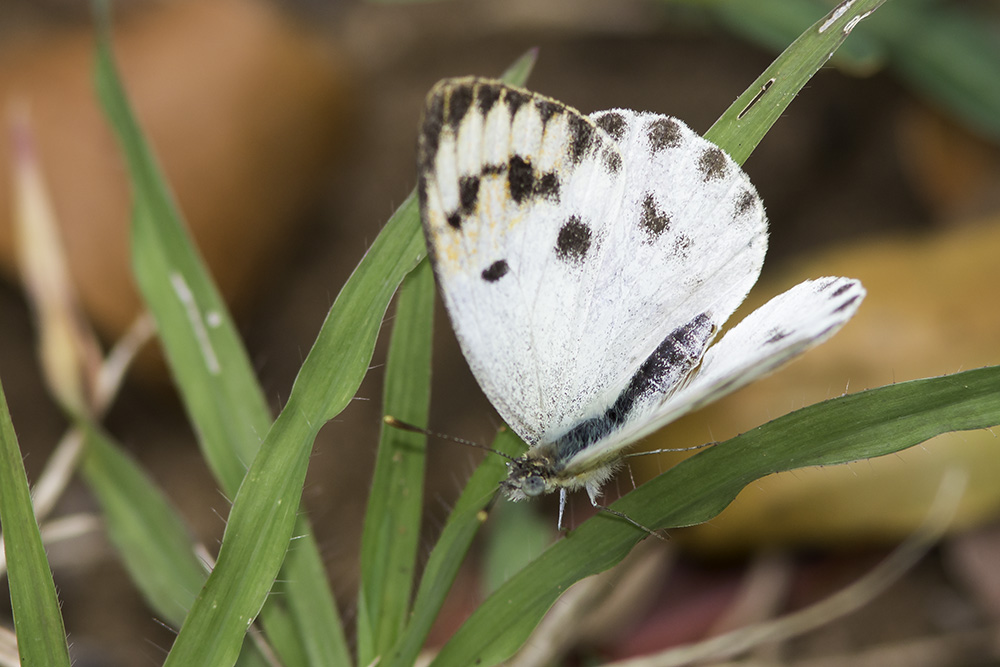
Sulphur Orange Tip ♀ pale form
Coloris auxo auxo form topha
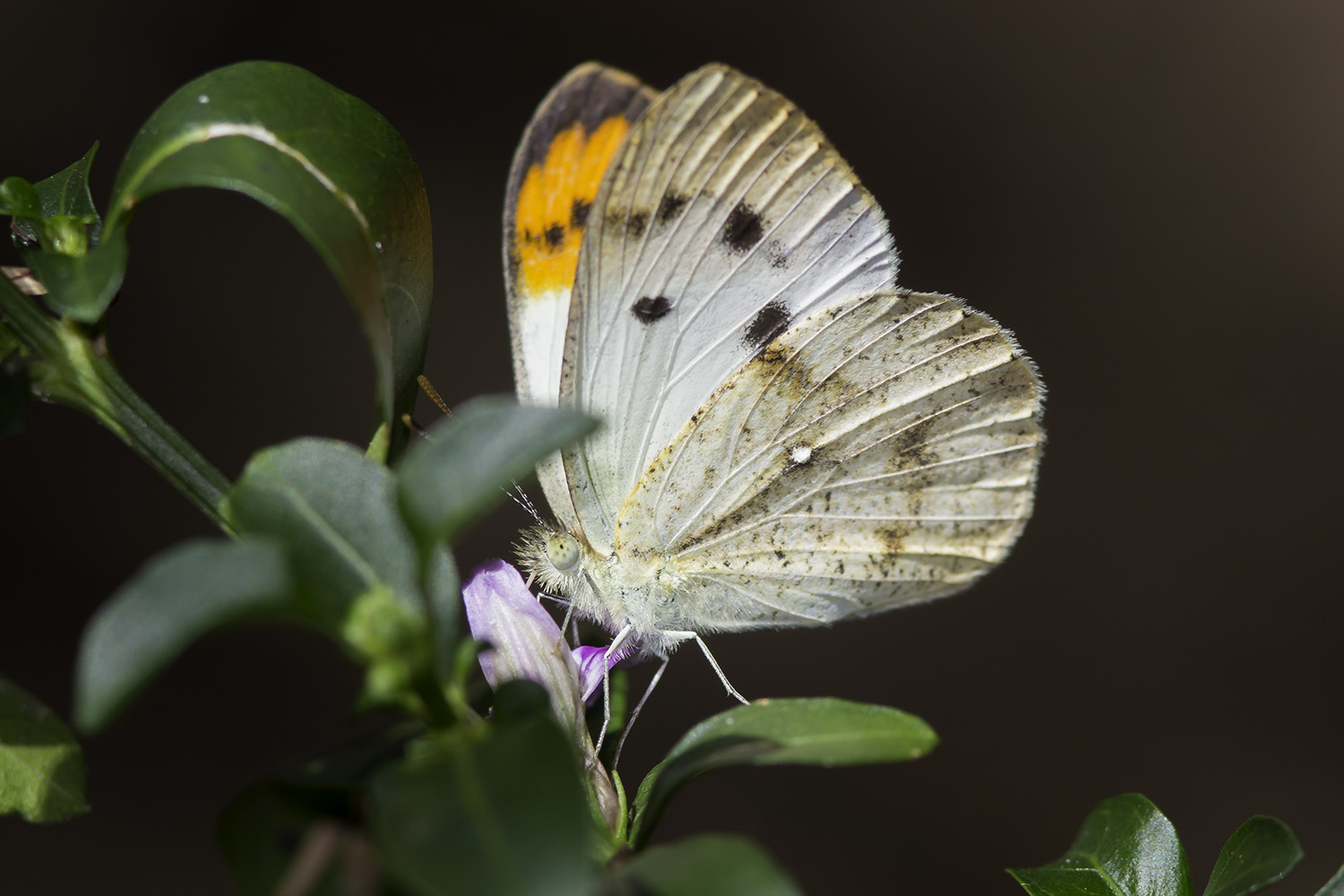
Sulphur Orange Tip ♂ underside
Coloris auxo auxo form topha
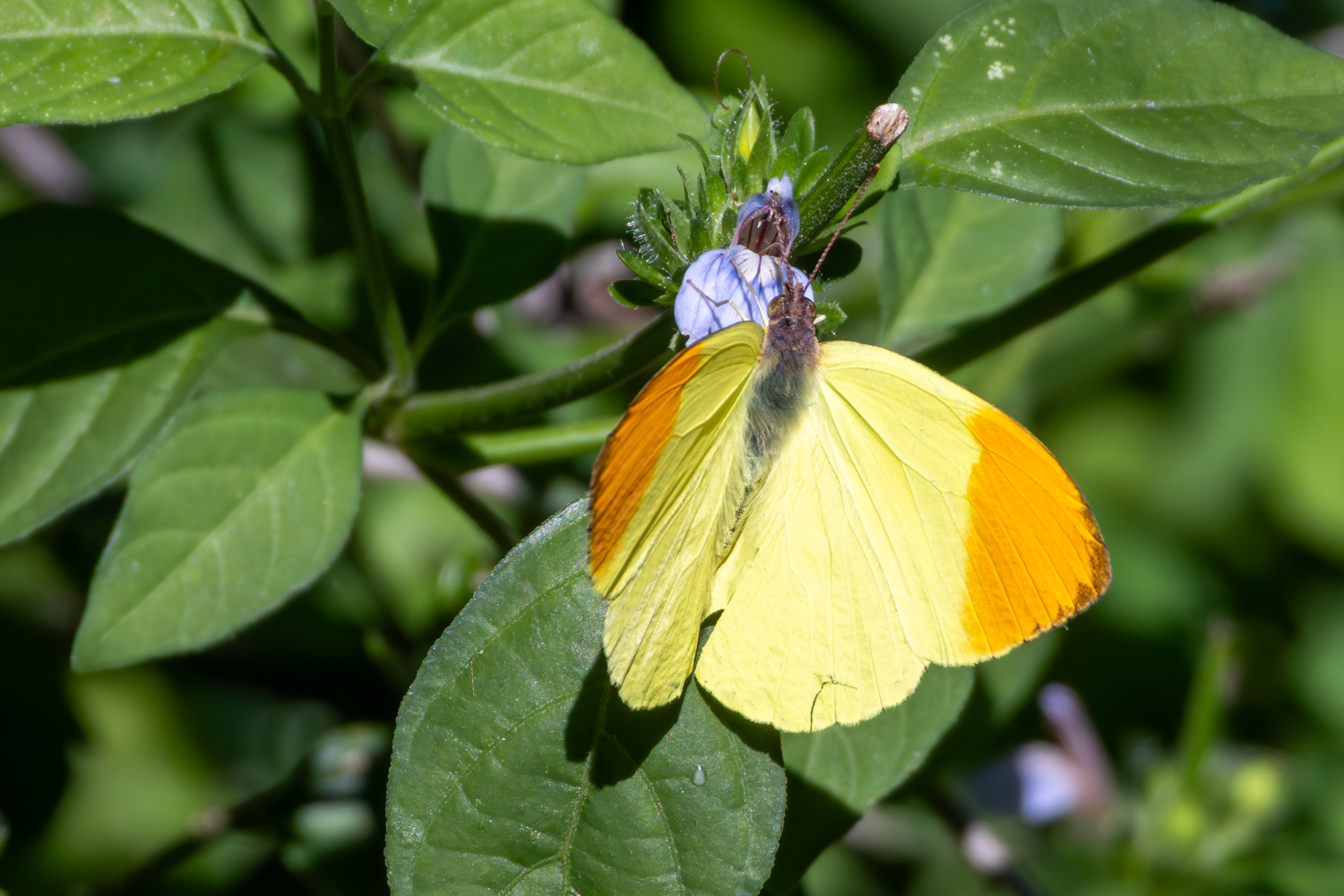
The male of the dry season form topha has less black edging to the orange tip. There are two forms of the female. One has a normal orange tip with the rest of the wings being white. The other only has a faint orange tip and is mostly a white butterfly with black spots.
The undersides of form topha differ from form auxo. They have a ‘dead-leaf’ pattern that probably allows them better camouflage when resting among dead leaves in the dry season.
There is one Pierid butterfly that isn’t in the genus Colotis but has definite orange tips so I’ve included it here. Autumn-leaf Vagrant Afrodryas leda is almost twice the size of the Sulphur Orange Tip but it often gets mistaken for it and vice versa. Its wingspan is 45–50mm in males and 48–56mm in females. The males are a brighter, sunnier yellow than any Colotis and the forewing tips are almost dayglo orange. It’s a real treat for the eyes and is extremely fast on the wing. Fortunately, they are attracted to flowers (they look really good on blue ones) and may settle on the ground on cool days to warm themselves in the sun’s rays.
The males never have dark marks inside their orange forewing tips. The wet season form leda has a pure yellow hindwing underside.
Like many yellow butterflies they show a fondness for hiding among yellowed leaves. Pierids are known to have excellent colour vision which allows them to find the right refuges!

Autumn-leaf Vagrant ♂
Afrodryas leda form leda
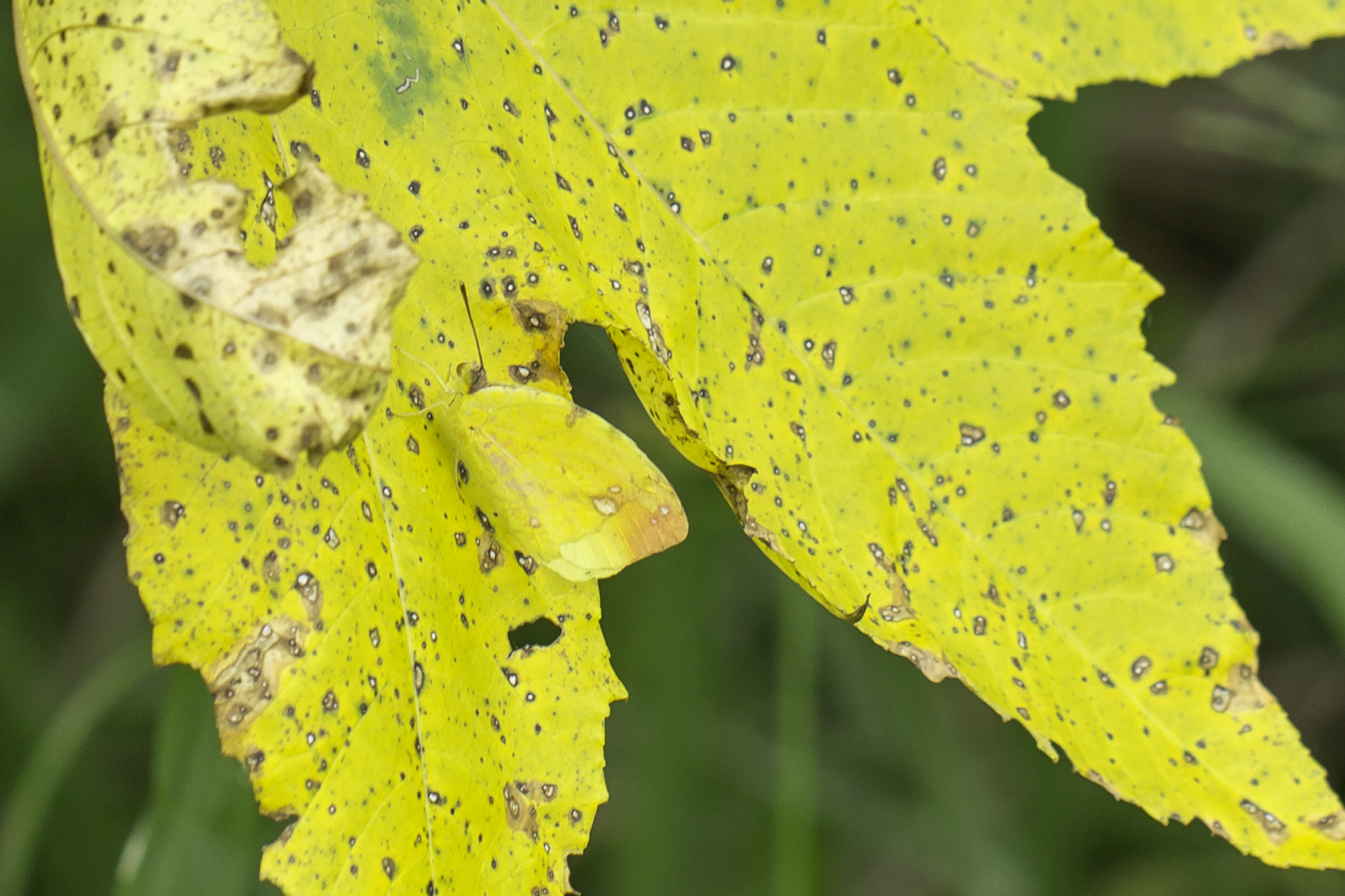
Autumn-leaf Vagrant ♀
Afrodryas leda form trimeni hiding among yellow leaves
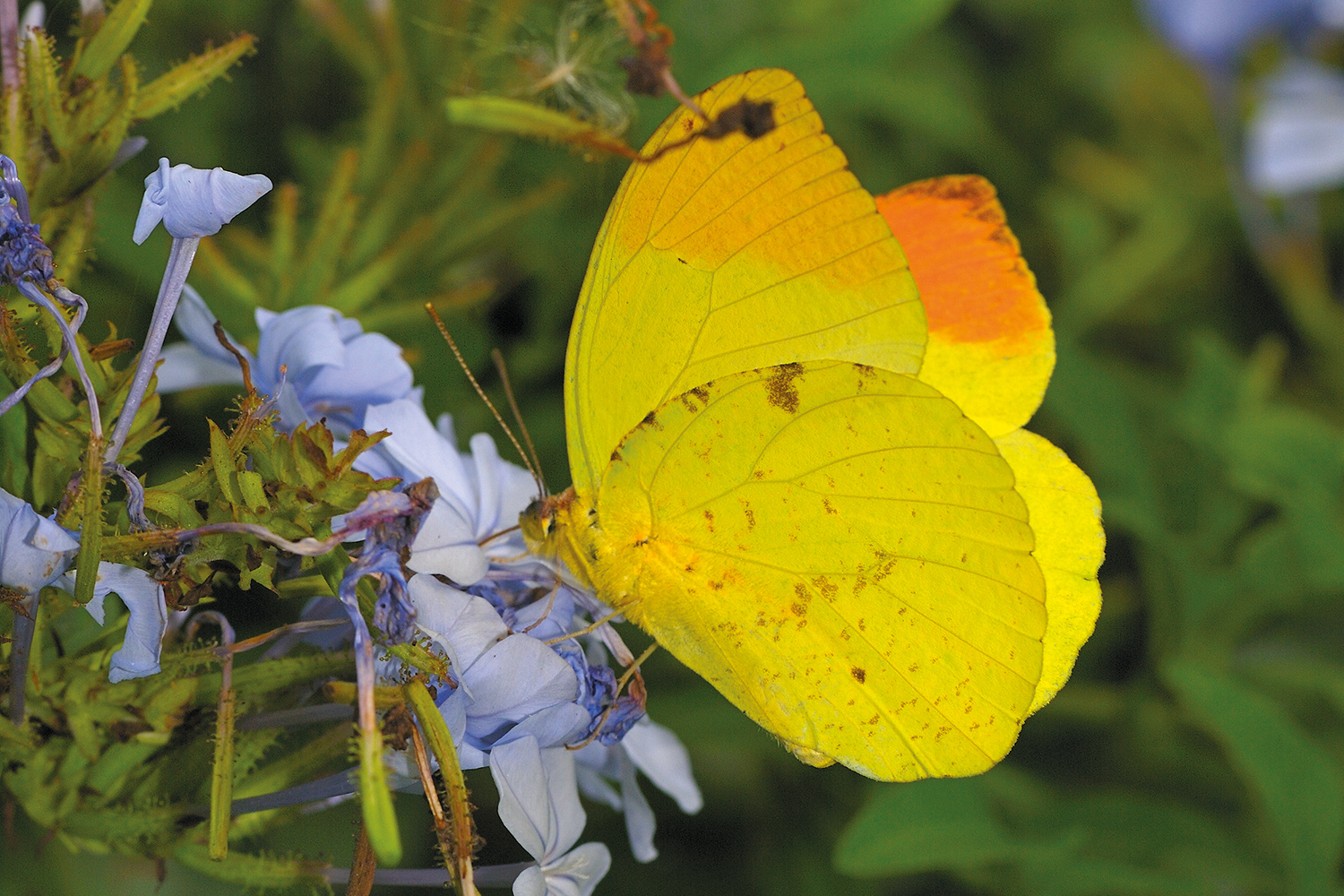
Autumn-leaf Vagrant ♂
Afrodryas leda form leda
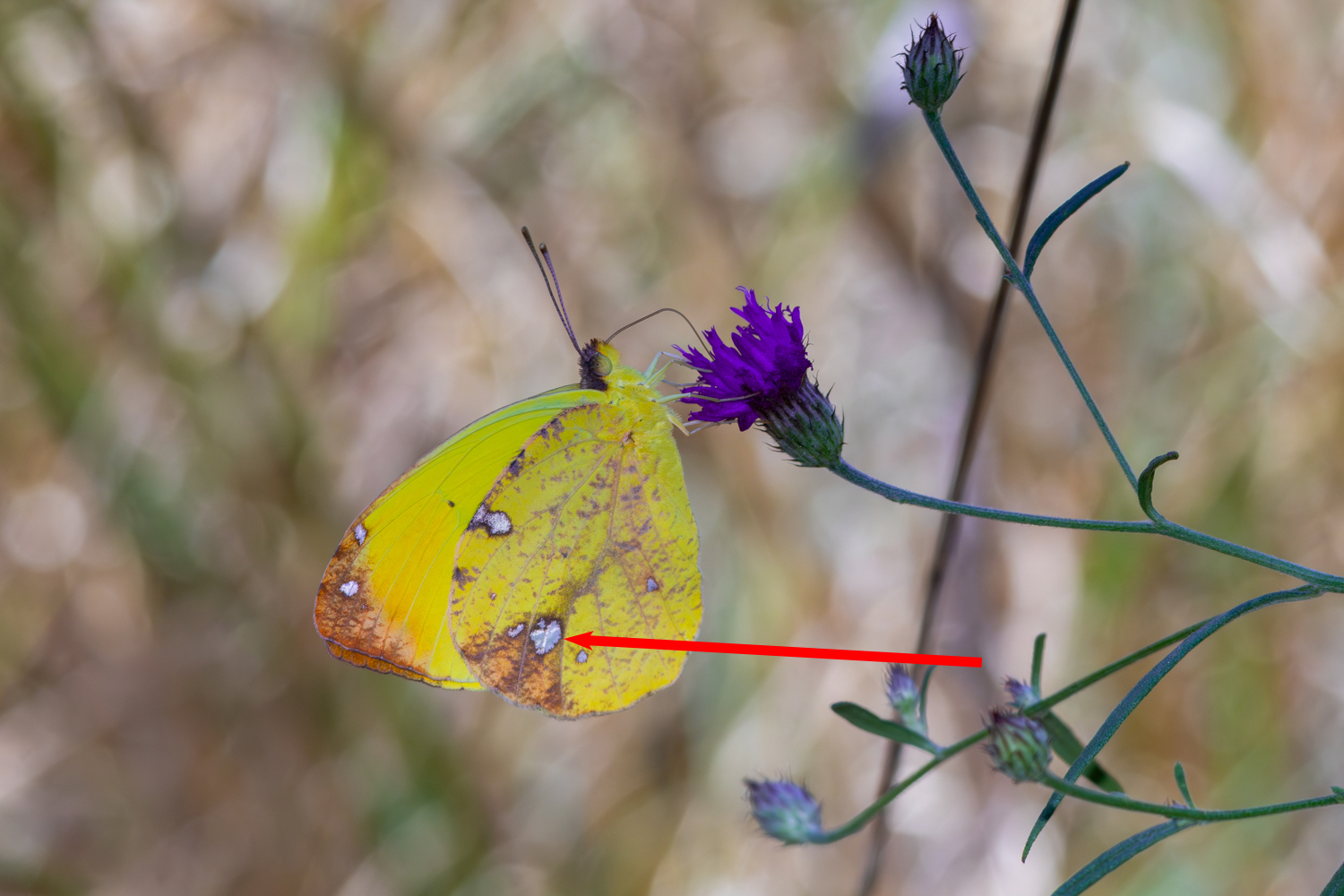
Dry season specimens of Autumn-leaf Vagrant Afrodryas leda have well marked camouflaged undersides. Many have pearly white spots (arrowed) that give the impression of a dead, yellowed leaf with holes eaten in it. This is next-level camouflage!
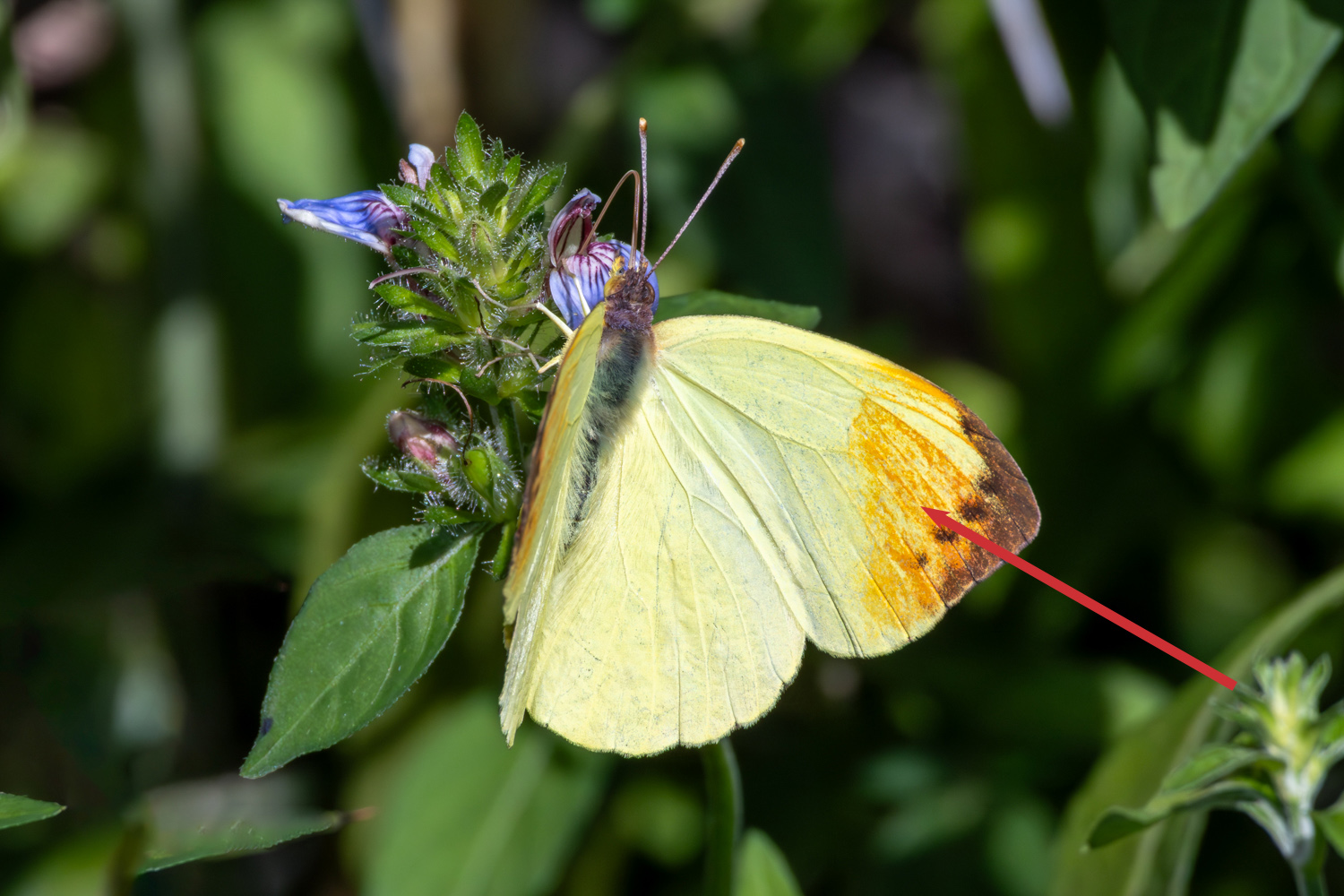
Female Autumn-leaf Vagrants don’t have pure orange forewing tips like the males. They have a row of five or six dark submarginal spots in the upper side forewing tip running down from the apex.

Autumn-leaf Vagrant ♀
Afrodryas leda form trimeni showing the pearly white underside spots
Autumn-leaf Vagrant ♀
Afrodryas leda form trimeni
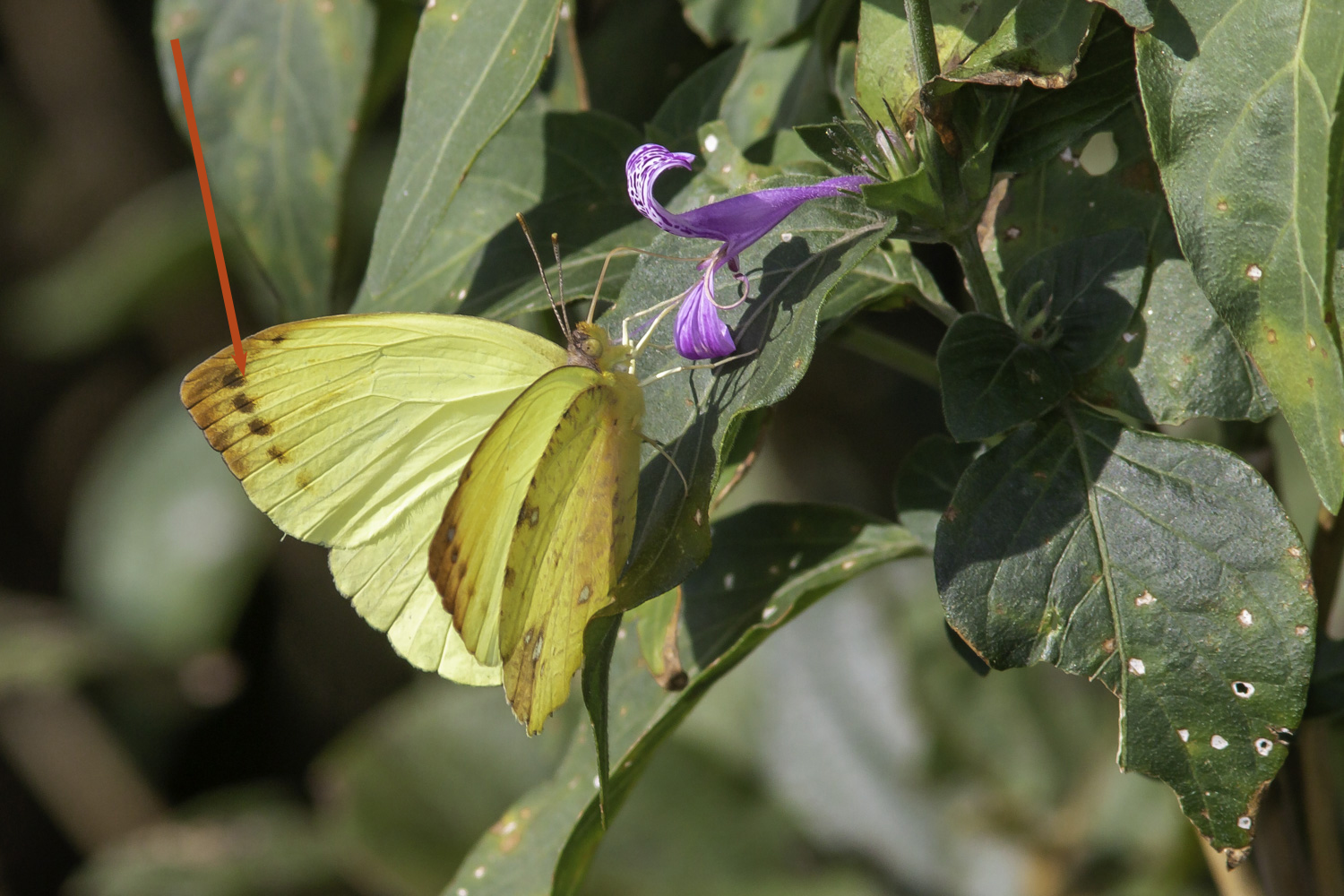
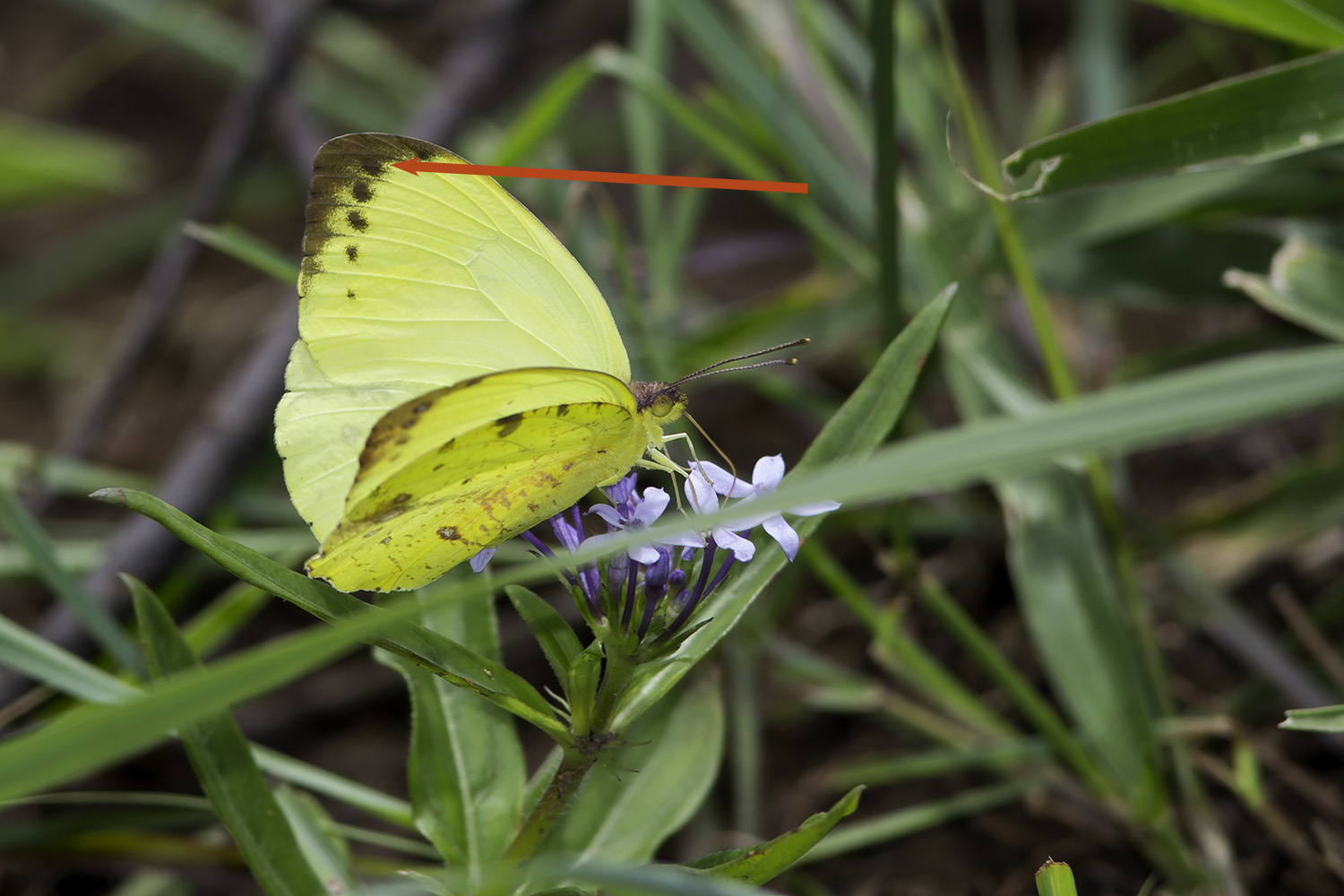
There are three female forms:
Form trimeni has orange tips, but they are less extensive or bright than the males’.
Form pupillata has a tinge of orange and warm coloured spots.
Form leda has no orange in the wingtip, it is yellow with the dark spots standing out against the base colour.

Autumn-leaf Vagrant ♀
Afrodryas leda form pupillata
Autumn-leaf Vagrant ♀
Afrodryas leda form leda
Confused? Don’t be! These butterflies can be difficult to separate but if you learn the clues and apply them, they can be decoded. They are nowhere near as bad as some of the Blues and Opals in the Lycaenidae, where you may need a dissecting microscope or a DNA sequencer to untangle them!
This is Part One of the Tips, concentrating on the species that have orange tips in both sexes. Many other Tips have purple, gold, or black forewing tips with extreme sexual dimorphism thrown in to confuse you further… more about those in Part Two.
If you’ve enjoyed this please drop me a message at steve@butterflygear.co.za to say so, and if there is anything I can improve upon, please let me know.